







When it comes to transporting a vehicle — especially across long distances — it can be a treacherous feat. When relocating, or selling a vehicle to someone in a different state, it is important to make sure that the car makes it to its destination safely. If the vehicle is prepared ahead of time and properly, multiple issues could be avoided, and shipping it would become a much easier process. This guide provides the vital steps to prepare a vehicle for a hassle-free transport process.
The first step you need to take is to choose a reliable and trustworthy shipping company. Be sure to explore your options and locate someone with reviews to back them, and clients who have found what they are searching for. You might have also been able to make an informed decision by comparing rates and services. You want to make sure that the company is licensed and insured so that you can feel relaxed during the time your vehicle is being transported. Use Georgia Car Shipping.
Make sure to wash the vehicle before handing it over — washing the exterior gives a clear view of how well the car is kept, and also helps to pick up on any body damage before the car is handed over. Also, ensure the inside is free from personal items. Providers of shipping services usually recommend not to leave anything inside since these items can move around when transporting and they can break.
Photograph the Vehicle — Take detailed photographs of the vehicle from all angles, documenting scratches, dents, and other damage. Provide documentation and evidence of the condition of your car before it is shipped. A detailed report of these observations is also helpful. If anything gets damaged en route, these records can be very useful when negotiating with the shipping company regarding any claim.
Before shipping, the vehicle must be in good running condition. Check the fluid level, battery charge, tire air pressure, and more. If the trailer has leaks or mechanical faults, make sure they are fixed before loading and unloading to prevent complications. Notify the shipping company if the car is not running because they need special equipment to load it.
Eliminate or secure any loose items or add-ons like antennae, spoilers, and rooftops. Such things are more prone to breaking in transit. Folding in side mirrors and retracting antennas are additional precautions. Secure a convertible top on a vehicle if applicable, and fully close it
So shipping the tank only a quarter full or so is often recommended by gas companies. This reduces the weight of the application, which may help prevent the shipping weight from being excessive. And, transport of less fuel means a lower risk of leaks or spills. Make sure you have enough petrol for loading/unloading, but do not fill the tank!
Disable any alarms so they don’t go off in transit. A triggered alarm can be a nuisance and lead to unnecessary downtime. Make sure to also remove or disable any toll tags on the vehicle so you don’t get charged as you go through the toll stations.
Provide the shipping company with a set of spare keys. This will allow them to shift the car as needed without the chance of misplacing the owner’s physical key. This is an easy measure; however, it can help avoid challenges related to transport.
Confirmation of All Details With The Transport Company before The Day of Shipping. Verify the pickup and delivery locations, your contact number, and any additional information. When you say what you mean and mean what you say, both parties are on the same page; ordinarily, there is less room for miscommunication.
Understanding the insurance coverage provided by the shipping company is essential. Ensure the policy includes transportation-related damages. Buy extra insurance if necessary for consumer protection. Being aware of the level of coverage assists in making smart choices and offers peace of mind.
The transport preparation of a vehicle is meticulous work. This way, everything will be hassle-free for the individuals. Everything from picking a good shipping company to strapping down any loose parts, everything is important to ensure the car does not get damaged in transport. Transporting a vehicle can be an easy, stress-free process when it is properly prepared.

“Adventure calls—and now, Ovrlnd answers.”
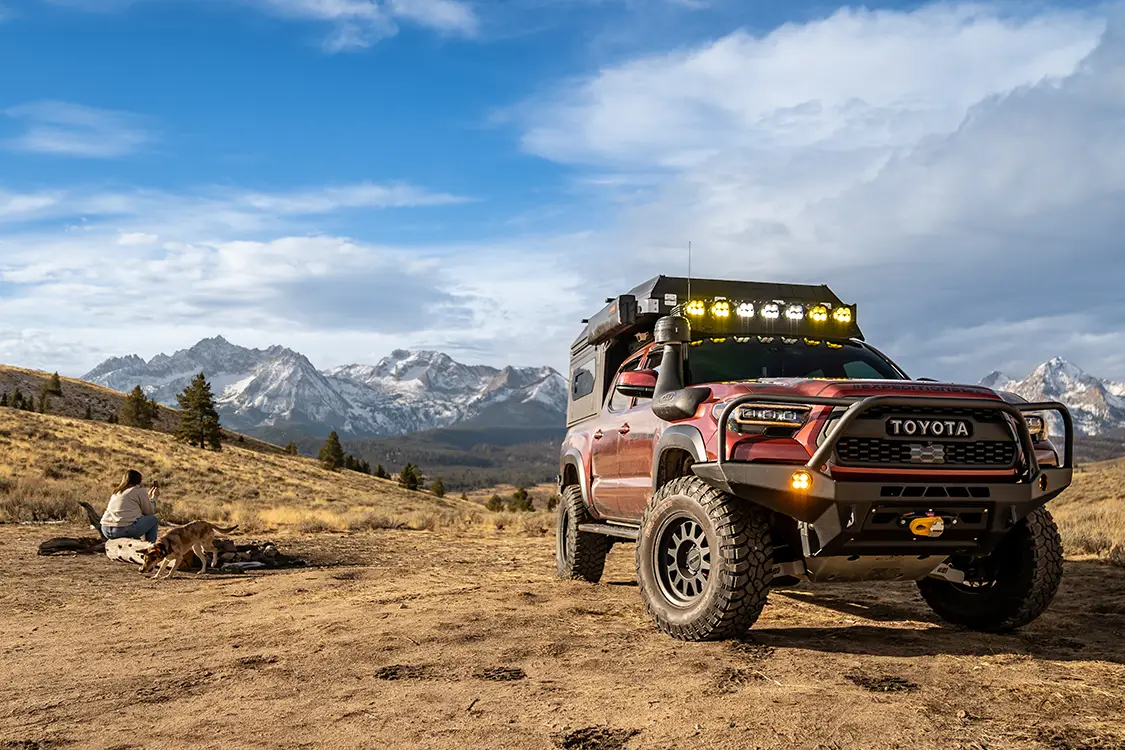
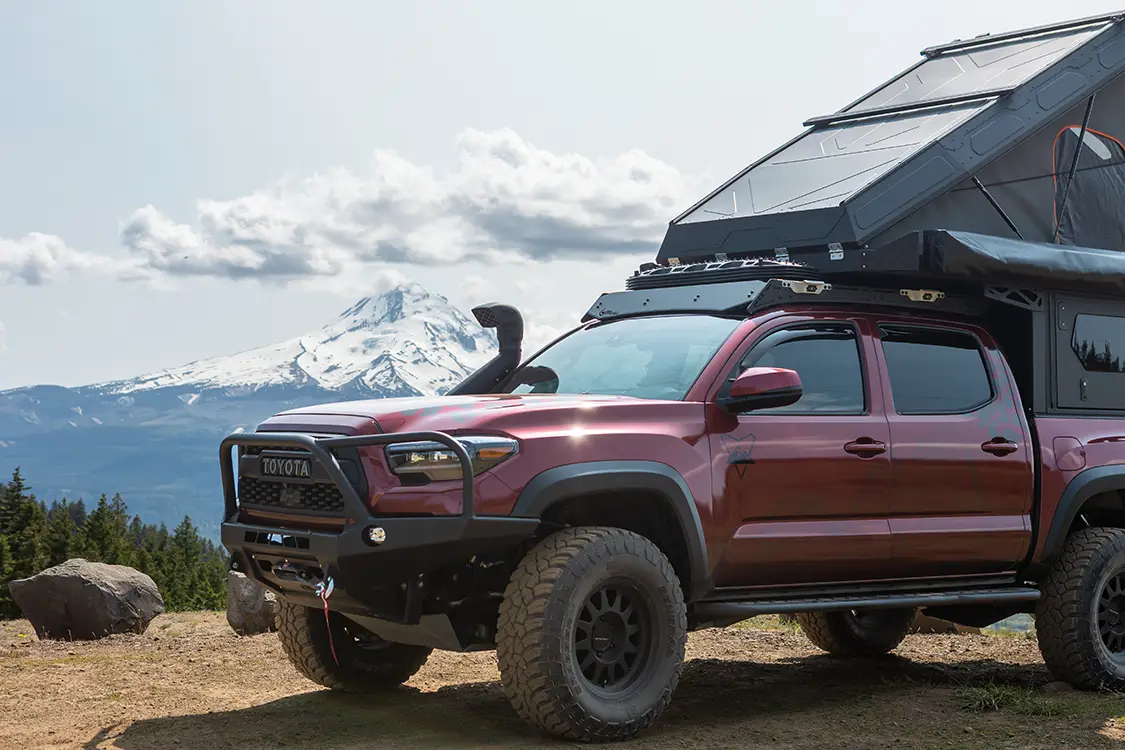
In the world of overlanding, where rugged terrain meets mindful stewardship, Ovrlnd.com launches this August (2025) with a promise far beyond gear: offering quality gear, a chance to win —and a commitment to the planet. The new brand marks its debut with an over-the-top giveaway: a fully custom 2021 Toyota Tacoma TRD Off Road, outfitted like a dream rig, plus a hefty $25,000 in cash. And for every item sold? Ovrlnd plants a tree.
Ovrlnd.com —short for “Overland”—springs from a dispersed yet tight-knit team scattered across the U.S., bonded by a passion for adventure and protecting wild places. Ovrlnd has partnered with Eric & Amanda Green from Discoverexpeditions for the first giveaway.
The product line may be small, but each piece is made to order: premium outdoor clothing and gear made-to-order, minimizing waste and overproduction.
But gear alone doesn’t define Ovrlnd.com . The brand’s real backbone is its partnership with TheGoodAPI, enabling the planting of one tree for every completed order. Each tree planted can absorb roughly 300 kg of CO₂ over its lifetime—small in isolation, significant in aggregation as the orders—and the forest—grow.
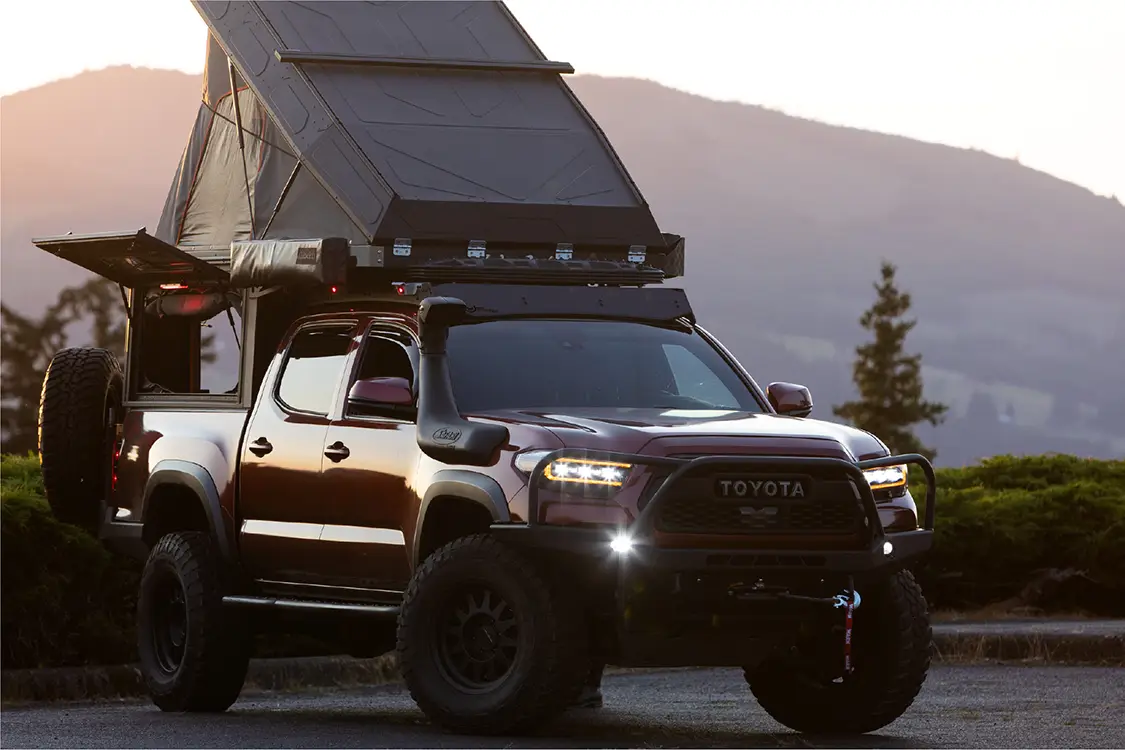
Since its introduction to the US market in 1995 the Tacoma has continued to forge a reputation for excellence and remains the mid-size benchmark. The third-gen is the best selling to date with 234,768 units sold in 2023 alone (despite the announcement of the much-anticipated fourth-gen) and is without question the mid size darling of the overlanding community.
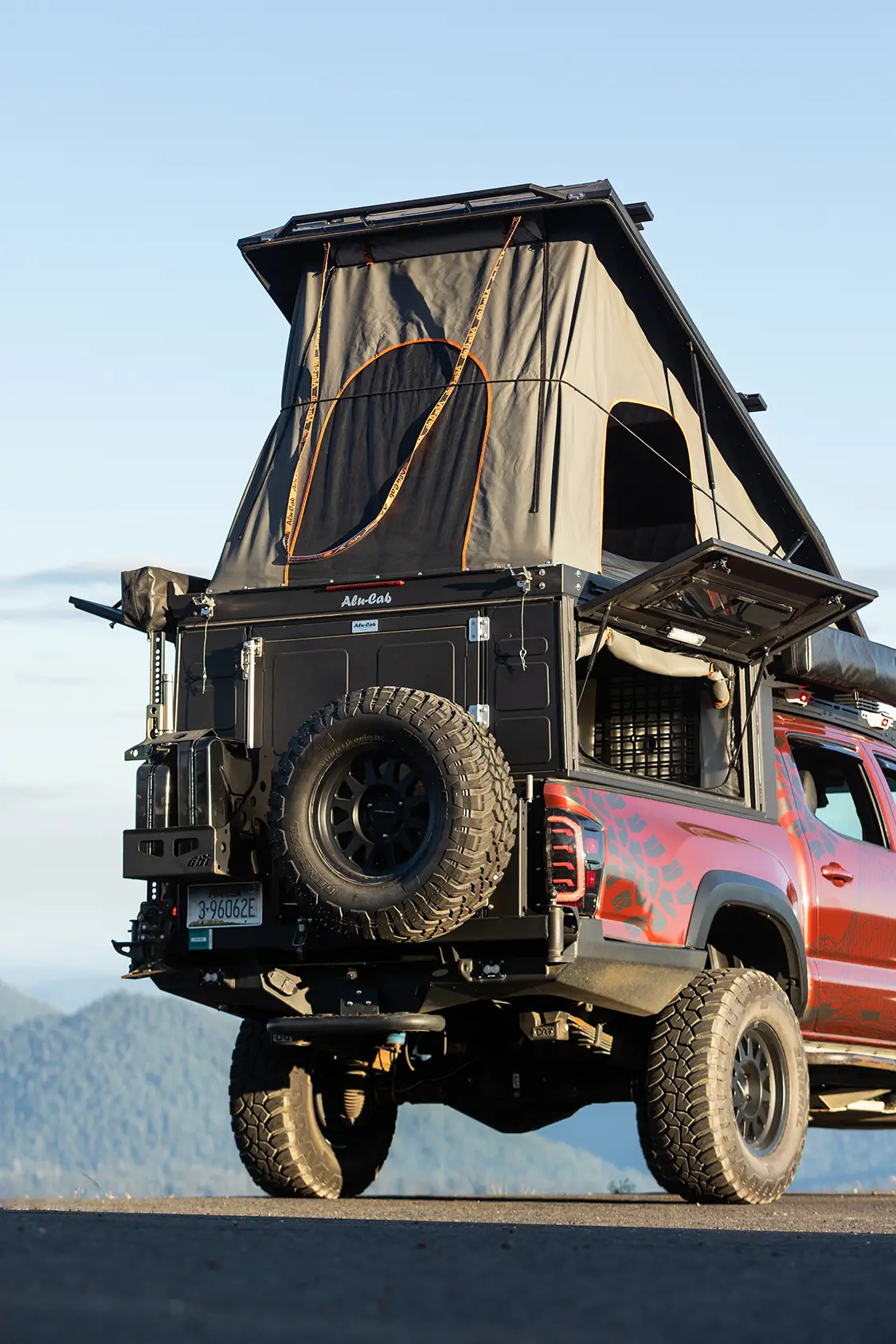
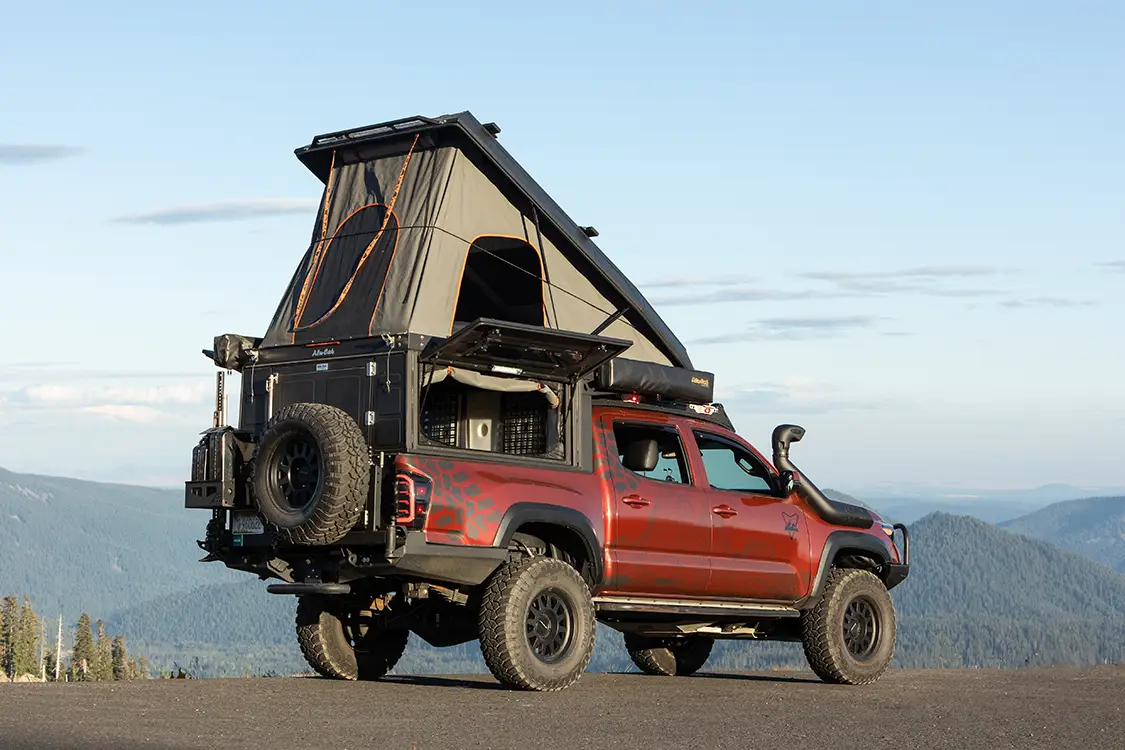
As travelers, we ask a lot from our 4WDs, expecting durability, capability, comfort, and capacity, all while hoping for a great value and even some rugged good looks thrown in. The Tacoma is all of that and so much more, and has become an icon for North American overlanders.” Cue this giveaway, a 2021 Toyota Tacoma DCSB TRD Off Road, which showcases a huge list of premium upgrades and is topped with an Alu-Cab ModCap camper.
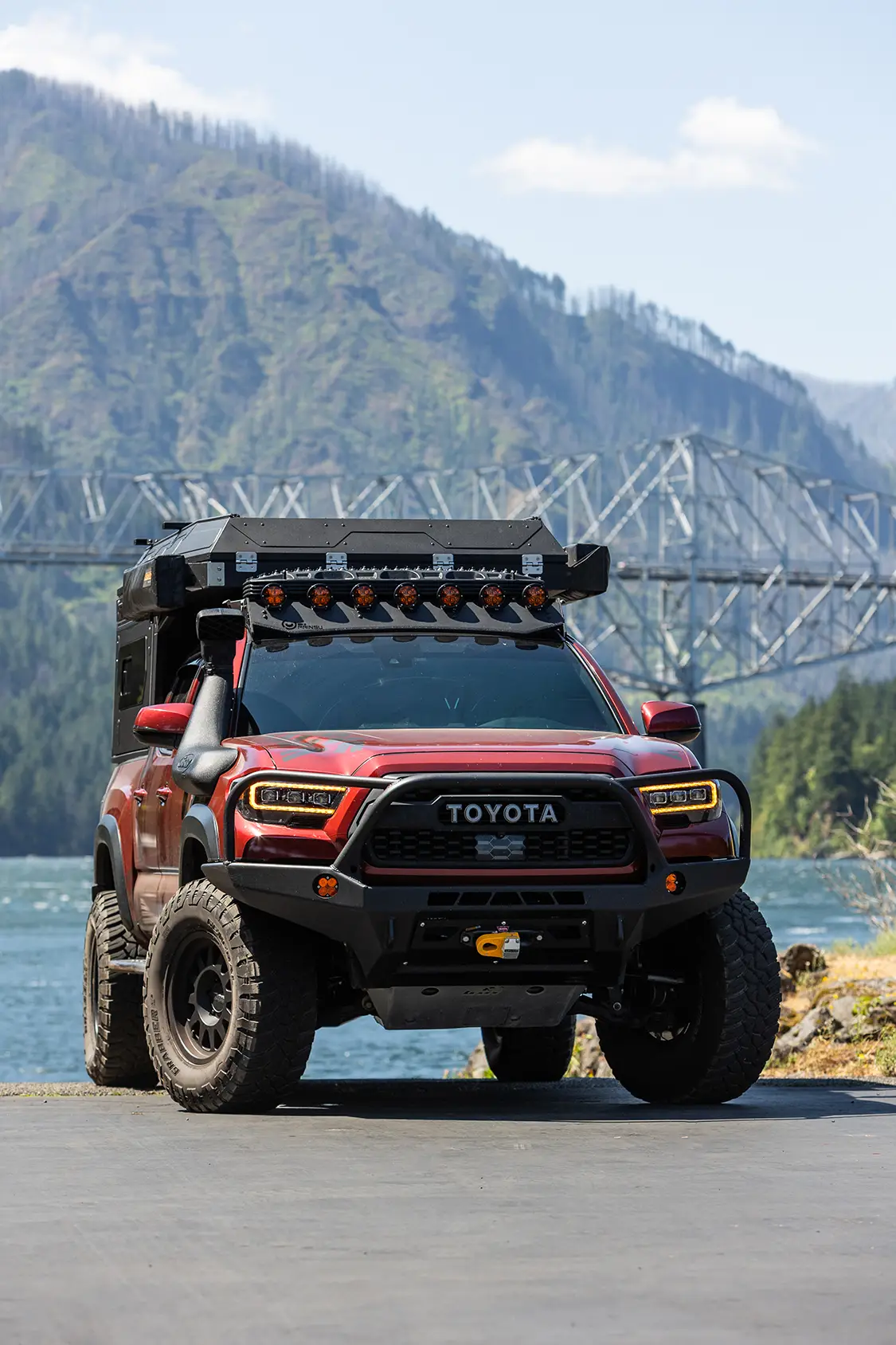
The Tacoma is fitted with a 3.5-liter V6 that delivers 278 horsepower, 265 pound-feet of torque, and returns a combined 20 mpg. A long-lived engine is mated with excellent capability, thanks to 4WD, a rear locking differential (with Freedom Locker mod to use factory locker anytime), skid plates, a lifted and uprated suspension, ARB snorkel, and intelligent onboard systems such as multi-terrain select, hill start assist, and Crawl Control. Inside, these rugged backcountry attributes are balanced with a well-equipped interior with driver comforts that include:
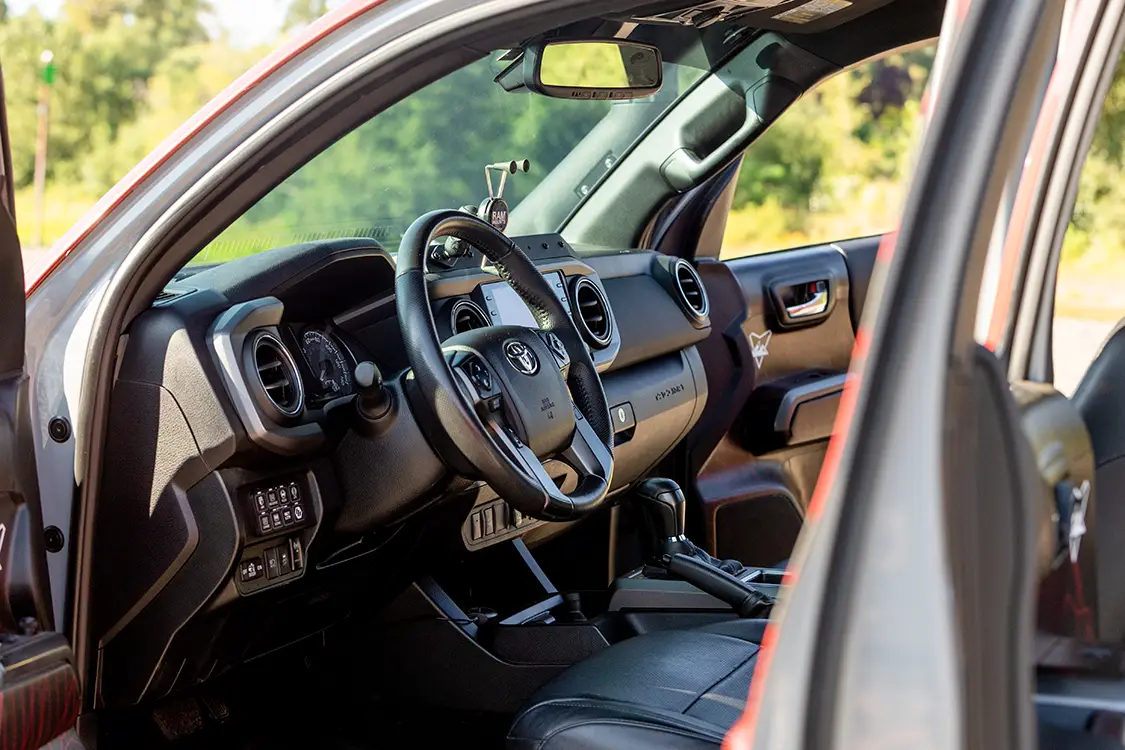
Notable Modifications:
The giveaway isn’t just flash—it’s a statement. Every purchase sends customers a dual message: you equip for adventure, we equip the Earth. For every dollar spent, you get ten entries into the sweepstakes; orders of $99+ qualify for free shipping. The promotion runs through October 30, 2025, with a winner drawn randomly and notified shortly thereafter. Available to residents in both the U.S. and Canada.
With each order, Ovrlnd teams with TheGoodAPI to plant a tree. This isn’t greenwashing—it’s quantifiable impact: 300 kg of carbon savings per tree.
This kind of launch doesn’t just sell products—it tells a story: of wild places, careful craftsmanship, and actionable climate care. Overland journeys are as much about preserving the paths we take as they are about blazing new ones.
With Ovrlnd’s debut, we see more than just another gear brand. We see a brand rooted in the landscape, committed to tangible conservation while fueling adventure. It’s a launch story worth following: whether you’re lusting after a rig, shopping with purpose, or plotting your next backcountry escape. And maybe—just maybe—that forest of future trees will be the single greatest trail marker of an overlanding brand done right.
| Make sure you check them out at the following links:
|
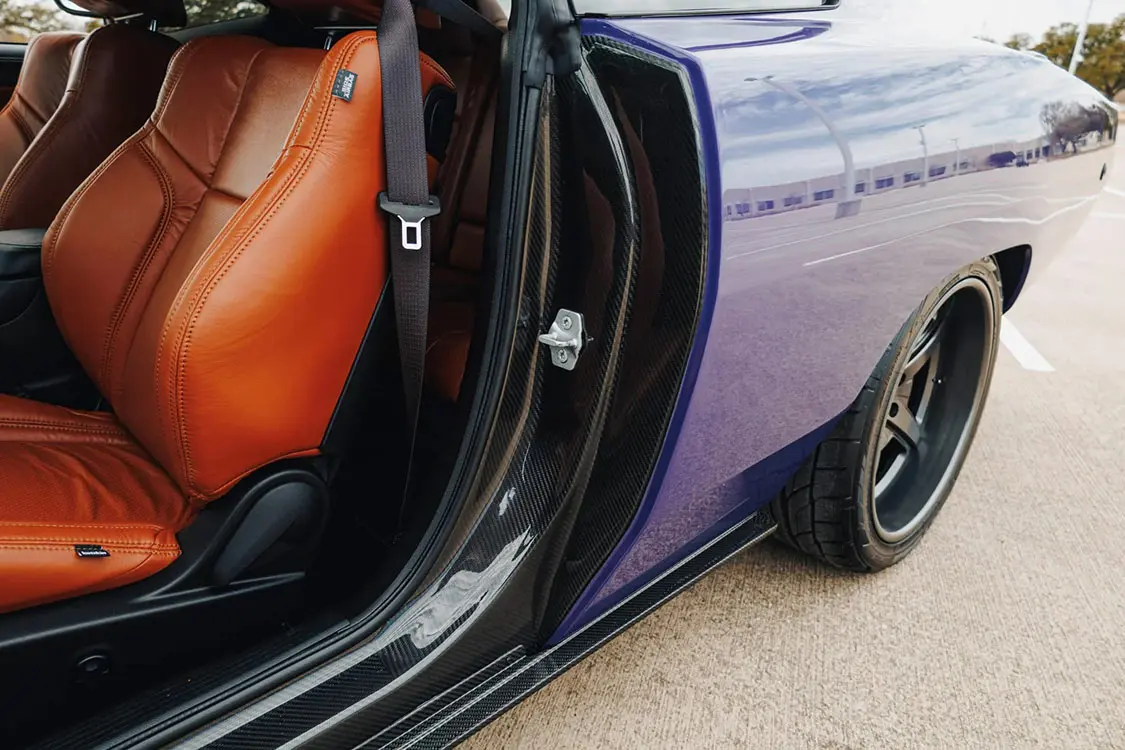
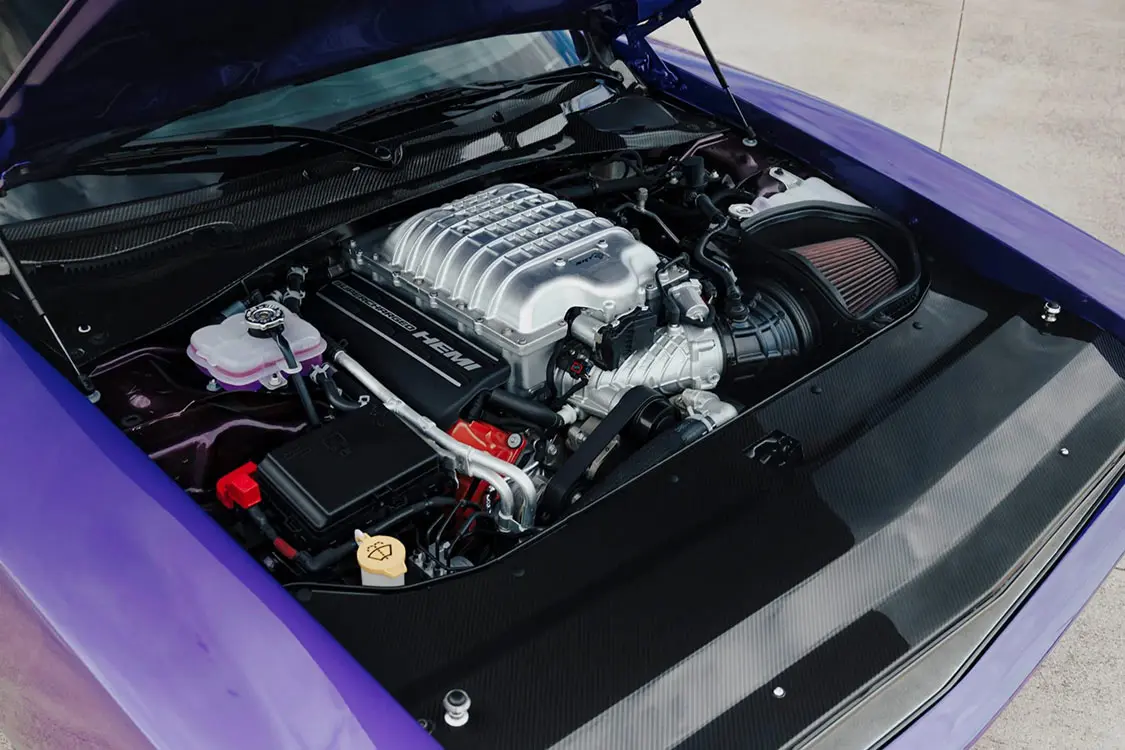
This 2021 Dodge Challenger SRT Hellcat was modified for the 2022 SEMA show by eXoMod Concepts of Greenville, Pennsylvania, and fitted with a bespoke 1968 Dodge Charger–style carbon-fiber exoskeleton body, which features a slatted front grille, center-exit dual-exhaust finishers, HID Air-Catcher headlamps, and LED taillamps as well as exposed carbon fiber on the functional dual-scoop hood, front valance, rear diffuser, rocker panels, and door jambs. Power is provided by a supercharged 6.2-liter Hemi V8 mated to an eight-speed automatic transmission and a limited-slip differential, and the car is finished in Plum Crazy Pearl. Additional features include a competition suspension, electric power steering, 20” Forgeline Rodster wheels, Brembo brakes, C68 Carbon badging, a flip-up fuel cap, Katzkin Italian Amaretto leather seat covers and door panels, a suede headliner, an 18-speaker Harman Kardon sound system, and UConnect touchscreen infotainment with navigation. The car was acquired by the current owner in spring 2022 and the build was completed in October 2022. This modified Hellcat is now offered on dealer consignment in Texas with a clean Carfax report and a clean Montana title in the name of the owner’s business.
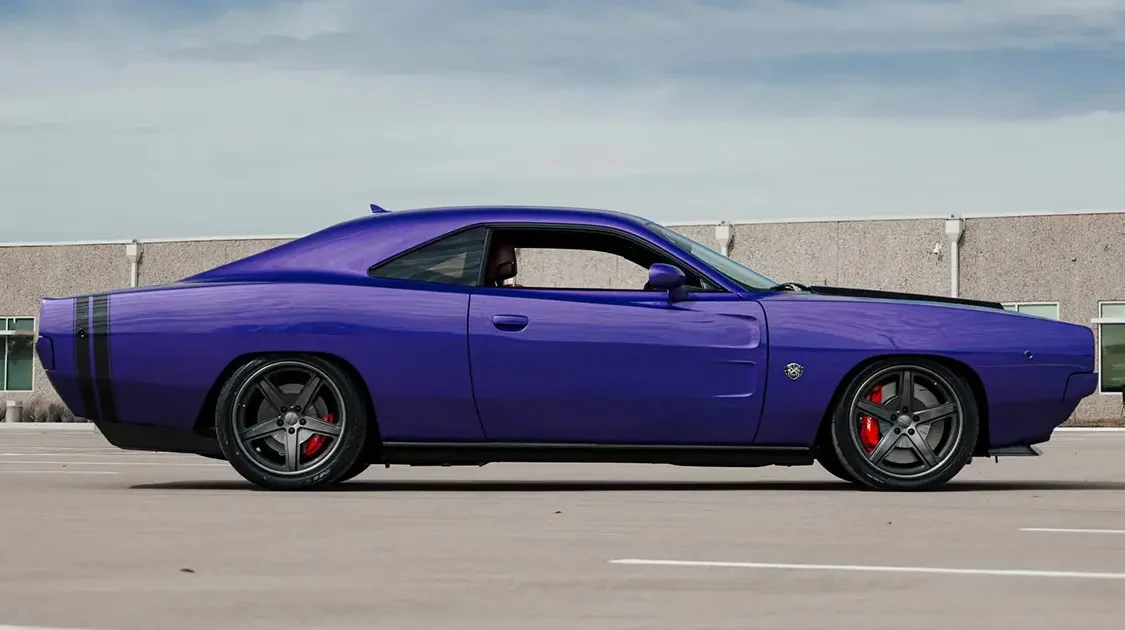
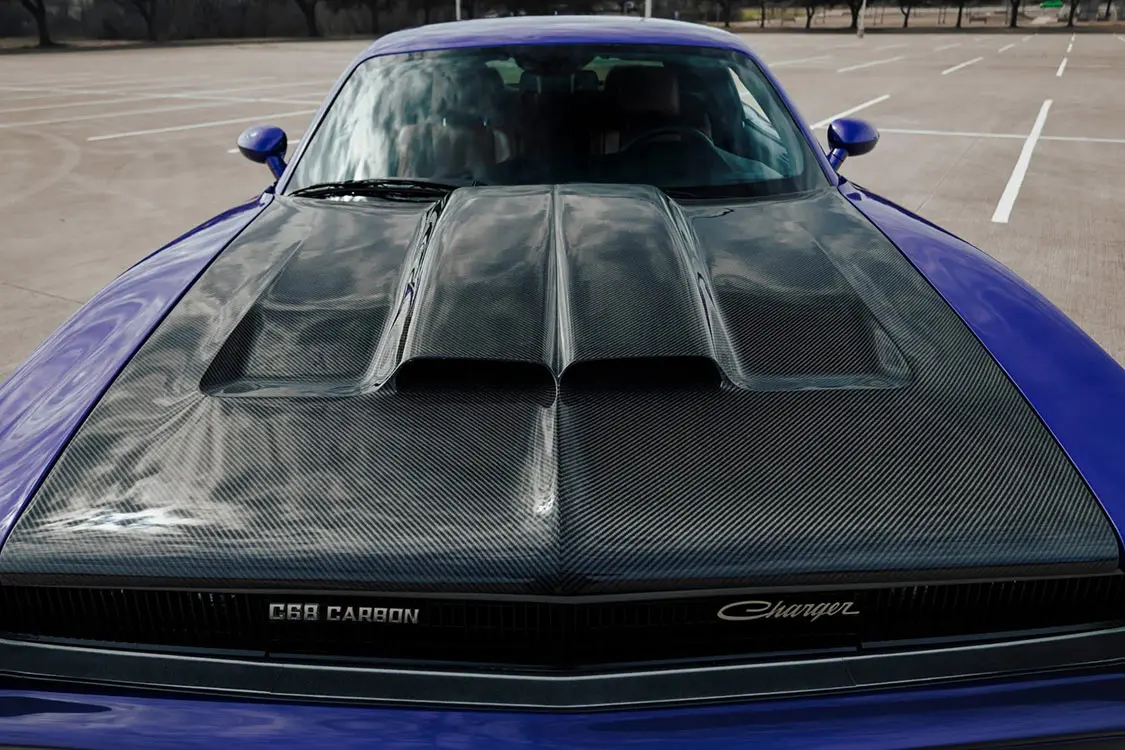
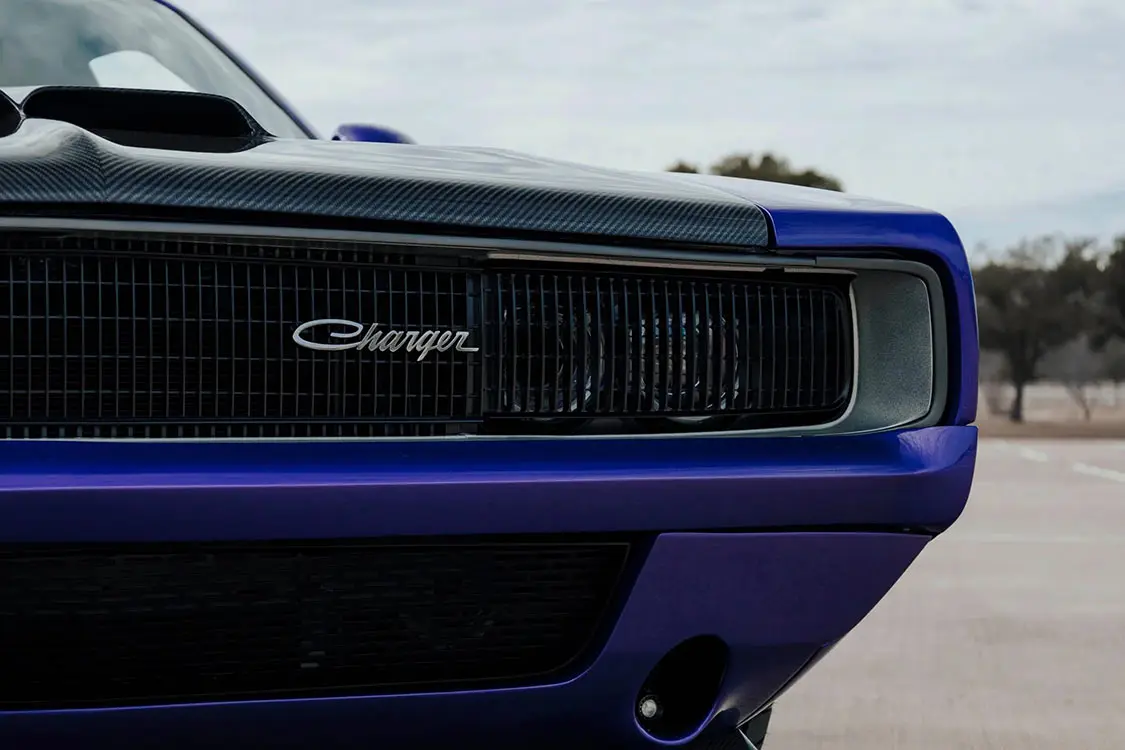
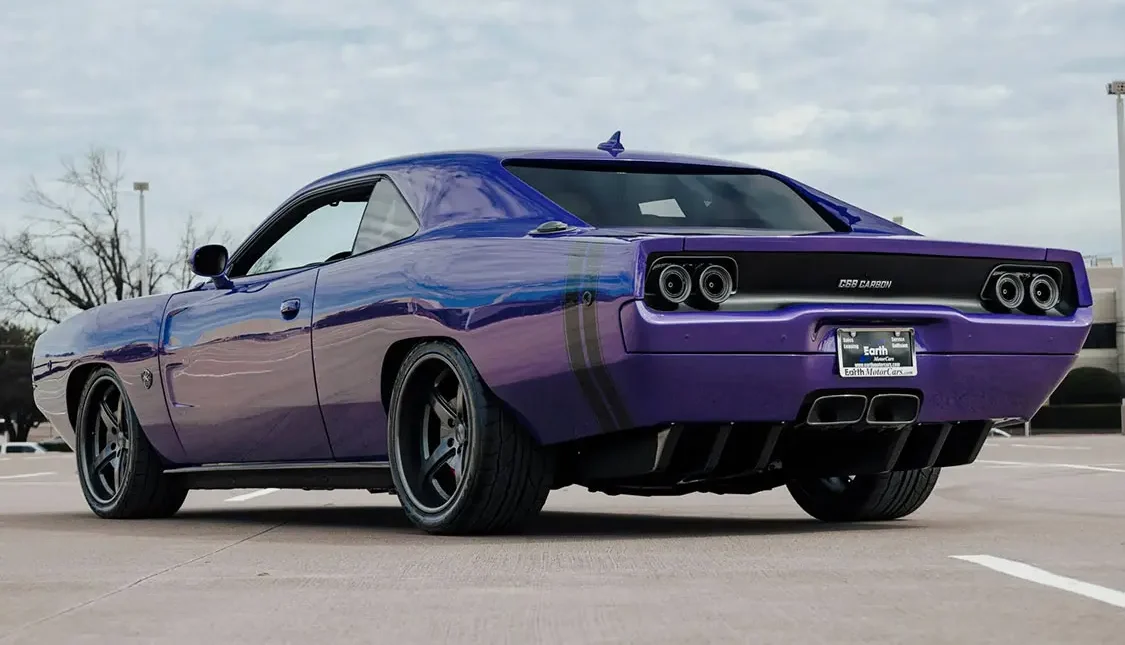
The Challenger SRT Hellcat chassis was fitted with a 1968 Dodge Charger–style molded-carbon-fiber exoskeleton body and reportedly painted in a shade of Plum Crazy Pearl with exposed-carbon-fiber bumblebee tail stripes. Additional modifications include a slatted front grille, machined headlight doors, argent grille surrounds, scalloped doors, a satin-black tail panel, and center-exit dual-exhaust finishers as well as an exposed-carbon-fiber dual-scoop hood, front valance, rear diffuser, and rocker panels. Said to measure 4” wider than a 1968 Dodge Charger, the car also has HID Air-Catcher headlamps, C68 CARBON and eXoMod Concepts badging, a gunmetal flip-up fuel cap, fitted body-color bumpers, smoked LED sequential taillamps, and 1968 Charger-style round side-marker lights. The car was unveiled at the 2022 SEMA show in Las Vegas, Nevada.
The Challenger SRT Hellcat chassis was fitted with a 1968 Dodge Charger–style molded-carbon-fiber exoskeleton body…
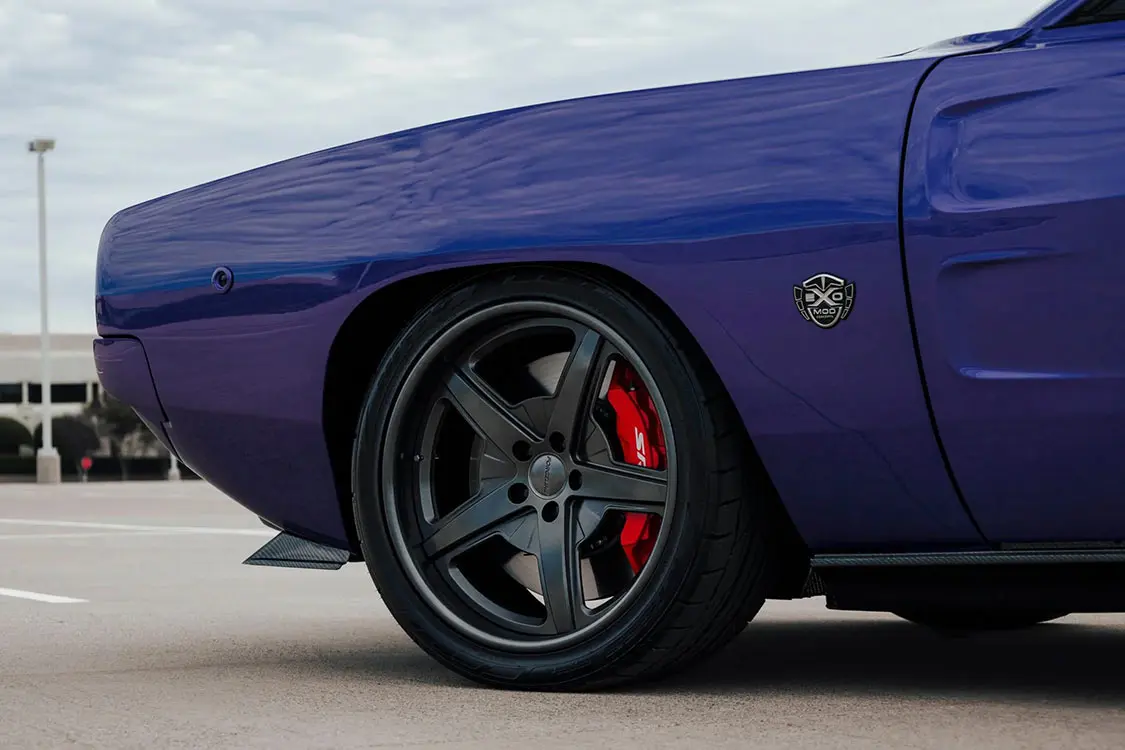
Custom 20” Forgeline Rodster wheels are mounted with Nitto NT555 G2 tires measuring 285/35 up front and 315/35 at the rear. Braking is handled by red-finished six-piston front and four-piston rear Brembo calipers with 15.7” slotted discs, and the competition suspension features Bilstein adaptive damping.
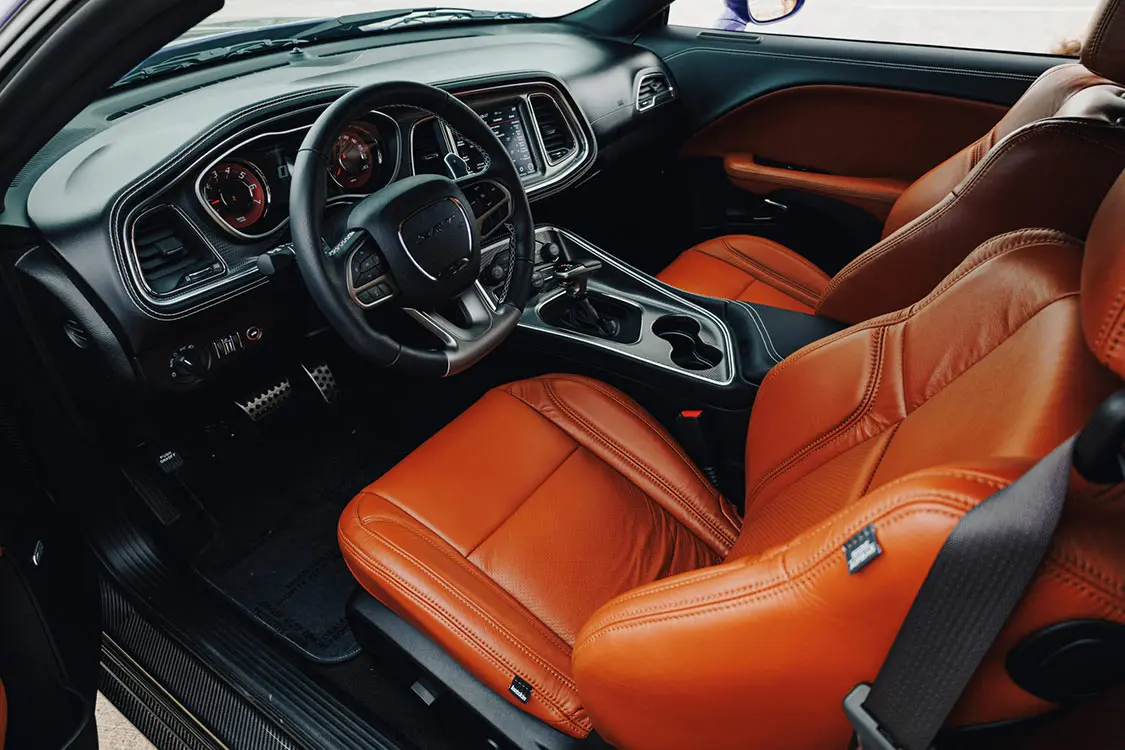
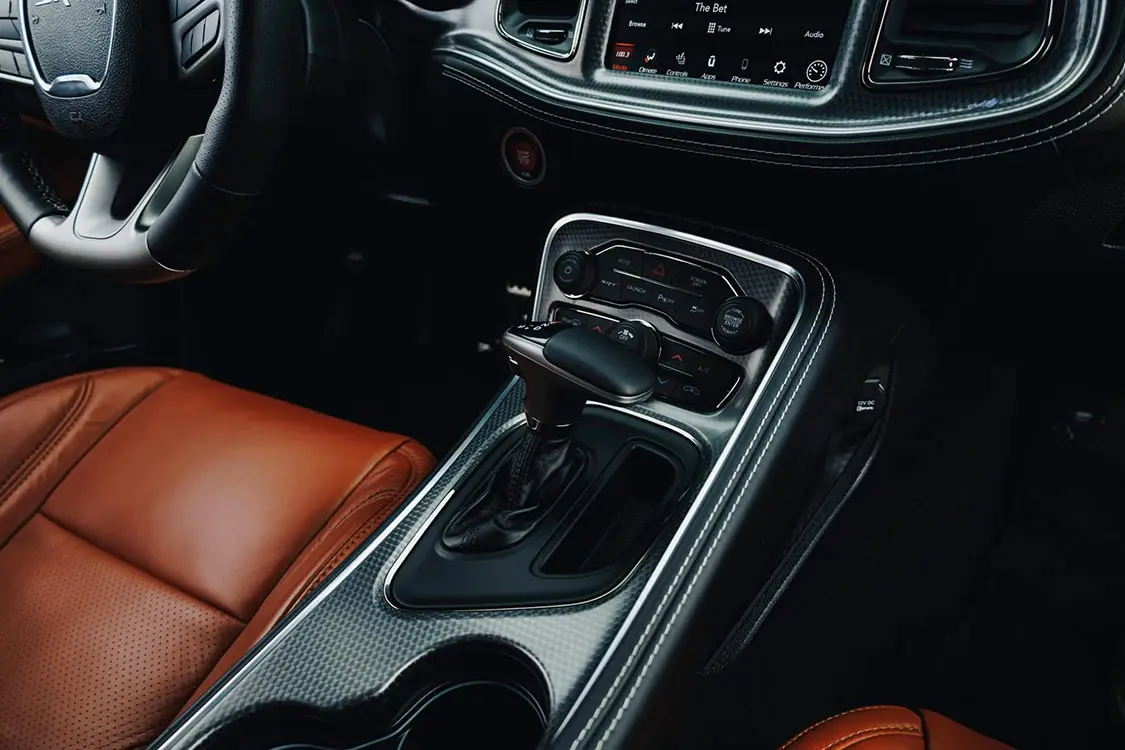
The cockpit offers heated and ventilated front bucket seats and a contoured rear bench reupholstered in Katzkin Italian Amaretto leather complemented by matching door-panel inserts. Additional equipment includes a suede headliner, exposed-carbon-fiber door jambs, remote start, SRT badging, dual-zone automatic climate control, an 18-speaker Harman Kardon sound system with a trunk-mounted subwoofer, and UConnect infotainment with navigation.
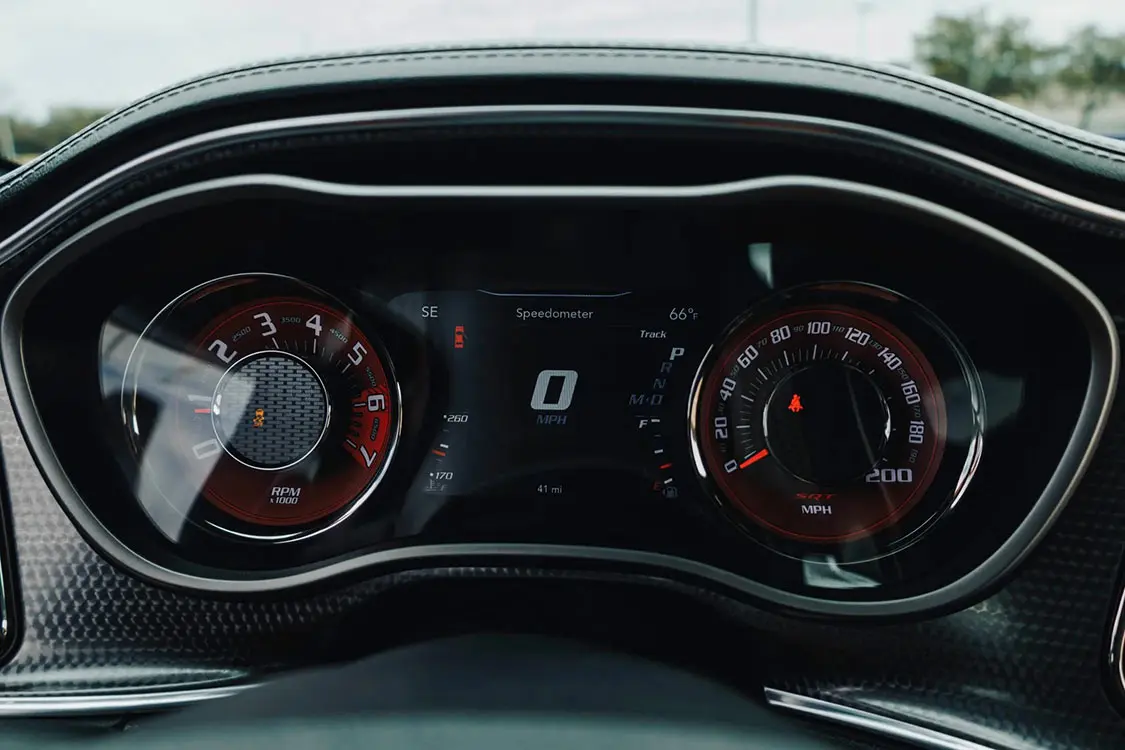
The multifunction SRT steering wheel is wrapped in black Laguna leather and features paddle shifters. Instrumentation includes a central configurable display flanked by a 200-mph speedometer and a tachometer with a 6,000-rpm redline. The digital odometer indicates 49 miles.
The supercharged and intercooled 6.2-liter Hemi V8 was factory rated at 717 horsepower and 656 lb-ft of torque. A fluid service was performed in February 2023. An exposed-carbon-fiber close-out panel and cowl panel have been fitted in the engine compartment.
Power is sent to the rear wheels through a TorqueFlite eight-speed automatic transmission and a limited-slip differential. The car is equipped with launch control and a line lock.
The supercharged and intercooled 6.2-liter Hemi V8 was factory rated at 717 horsepower and 656 lb-ft of torque.
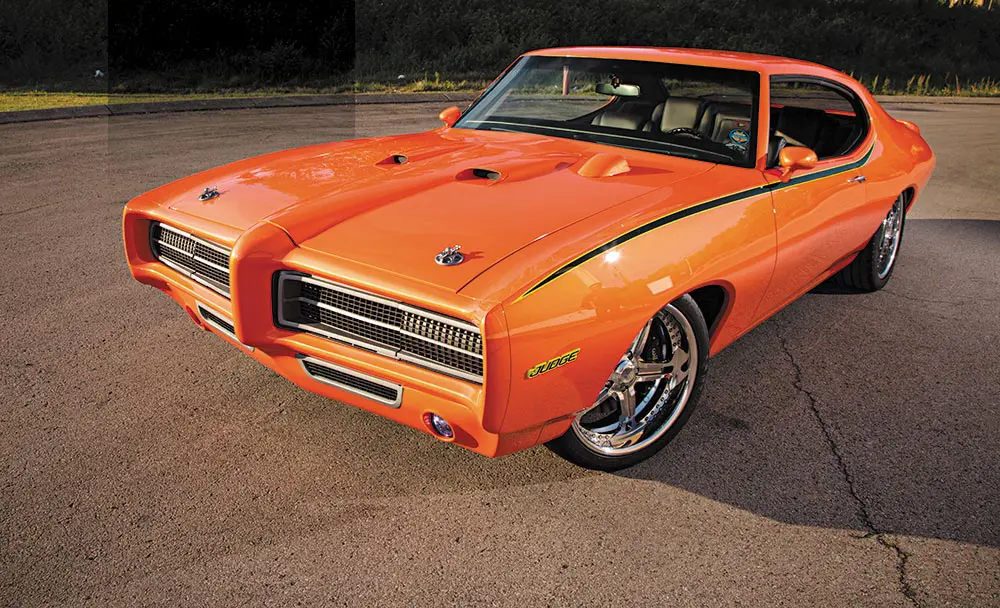
During the build or restoration of any car, there are a few big decisions and millions of smaller ones. Usually the major issues become the easiest to make as in which car, what color to paint it, which engine to build, etc. It’s the multitude of little dilemmas that often cause the greatest angst. These smaller quandaries often mean the difference between a nice car and an awesome build. For Tom Farnsworth of Pinedale, Wyoming, the act of standing in judgment of his own instincts is what made his ’69 Pontiac GTO Judge the crowd-pleaser it is.
Tom was first exposed to Pontiac’s marketing genius in the spring of 1969. By that time the GTO was already one of the staples of the muscle car scene. The new A-body debuted in 1968 with a shorter wheelbase shared with the Chevelle and 442; however, the GTO was the only A-body with the new Endura color-matched front bumper. This made it look even better and further established the model as the biggest influencer in its class.
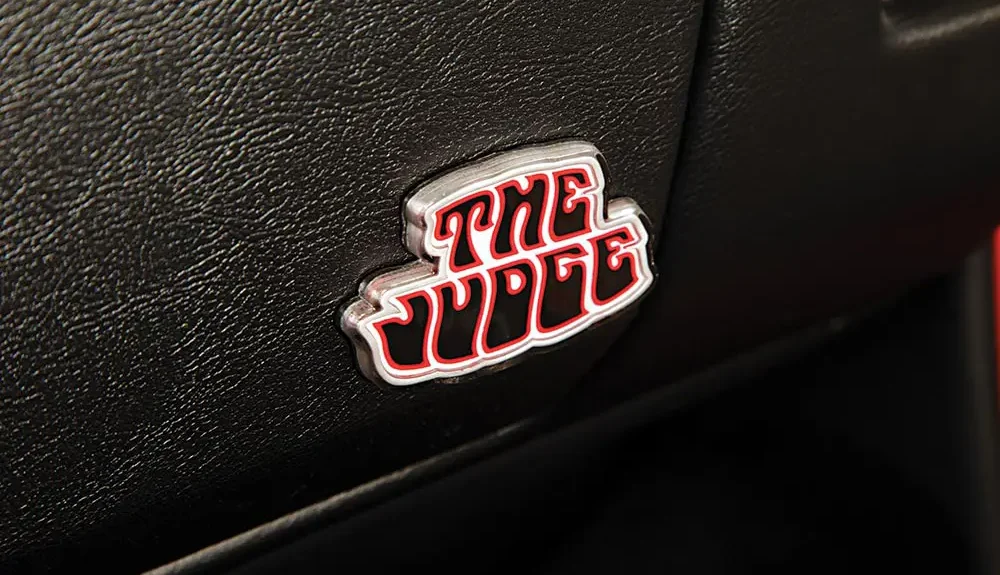
During the ’60s, each division of General Motors had its own distinct personality. Cadillac was the aspirational upper crust. Buick was the refined, conservative brand. Oldsmobile was looked upon as unique and innovative. Chevrolet was all about youthful appeal and blue-collar work ethic. Pontiac was the wild and creative one, and nothing confirmed this more than the release of the GTO Judge.
The Judge was an over the top variant believed to be inspired by Flip Wilson’s character on the hit NBC variety comedy show “Laugh In.” As a boy living in New Castle, Wyoming, Tom first saw a Judge via a friend’s older brother. “I was 13 when I saw this bright orange GTO. It was amazing with the fender licks, hood-mounted tach, rear wing and the word ‘Judge’ on the nose of each front fender. It was the coolest car I’d ever seen,” Tom said. The image of the Judge stuck with him for the next 30 years. During that time he owned many muscle cars, but there was always an open parking space waiting for a Judge.
“Thank goodness for eBay,” Tom proclaimed. Twelve years ago, while browsing the online auction site, he came across a ’69 GTO Judge. There it was, a slightly modified version in the famous bright orange (actually called Carousel Red). After reading the full description, he learned that it was not an original Judge, but a GTO Judge tribute car. At first he was slightly disappointed, but after further consideration, Tom assessed the possibilities and opportunities. Here was a chance to build a better, personalized Judge without destroying one of the 6,725 that came off the Pontiac assembly line. He also realized the entry level price would be far less than starting with an actual Judge. He was right about one of those thoughts.
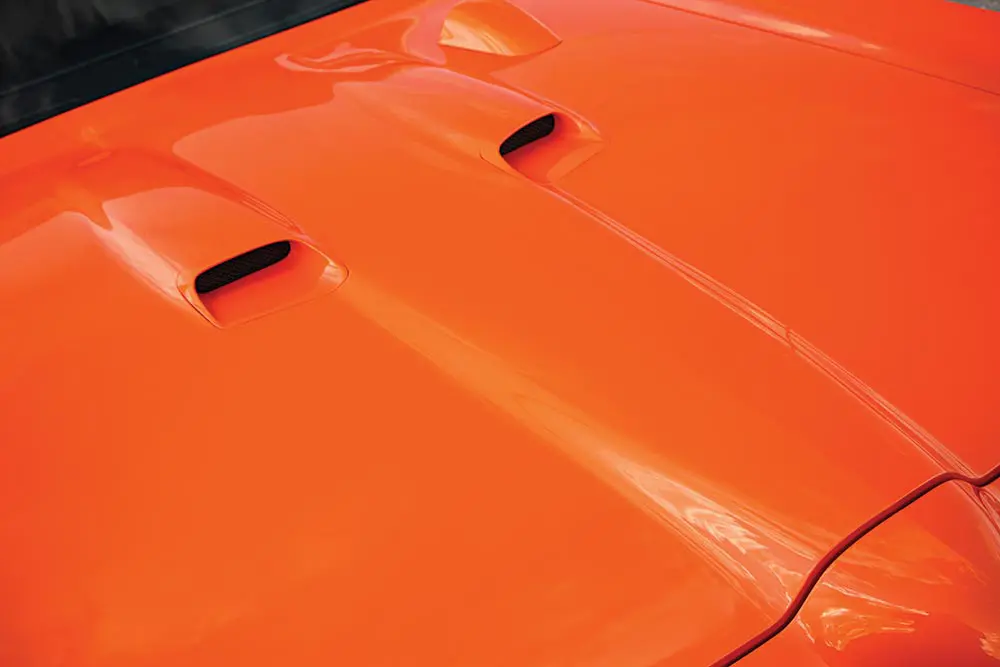
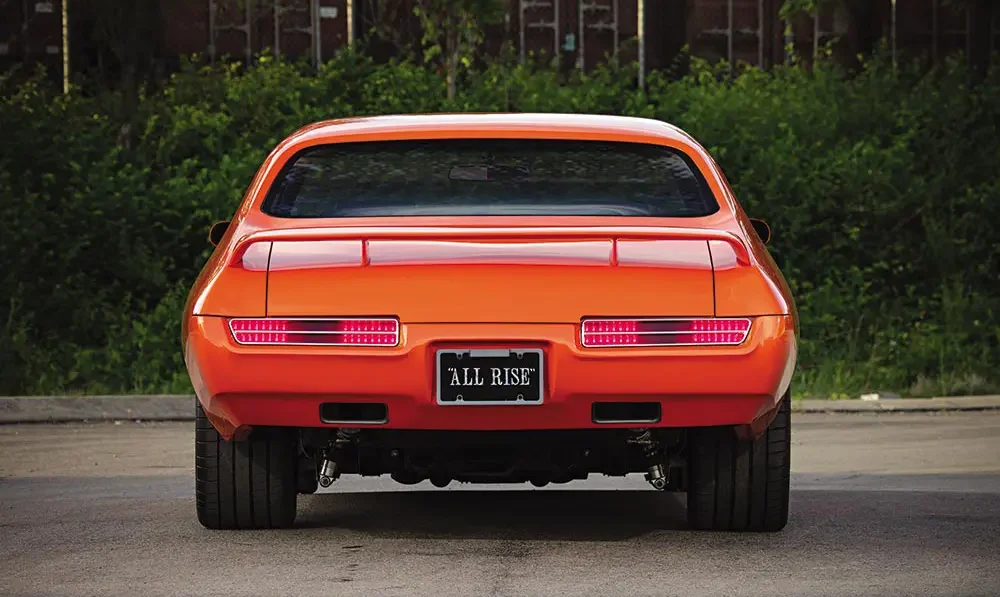
The long distance purchase was made, and the car was shipped from Phoenix to Pinedale, Wyoming, a town whose motto is “All the Civilization You Need.” If you’re a car guy, then Tom’s garage is where civilization begins in the western part of the state, and life was about to get quite a bit wilder.
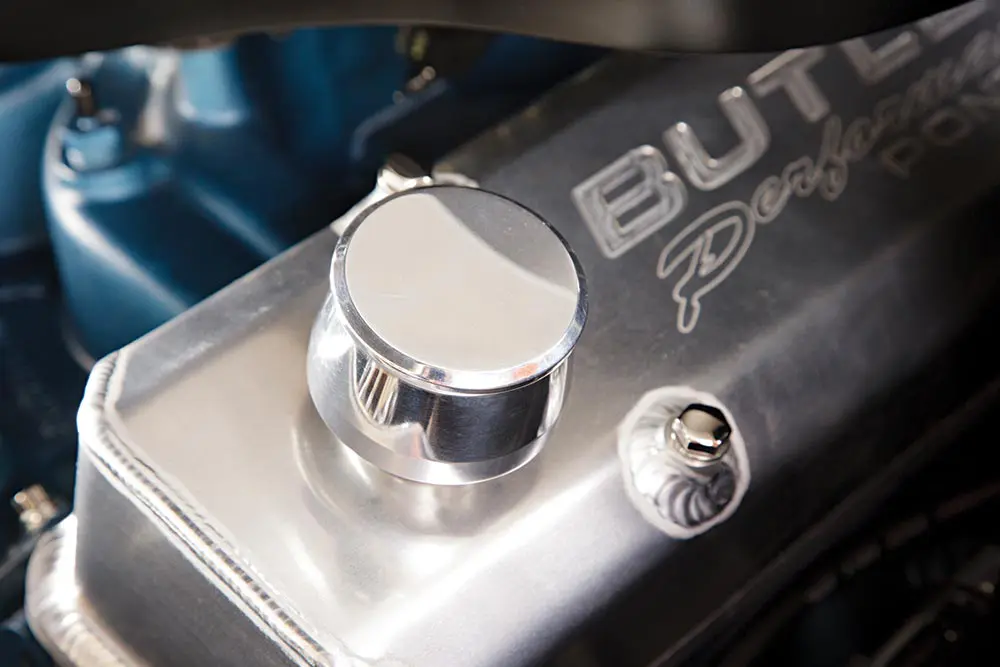
The Judge was a driver for a short while before major changes took place. The first step was a full-tilt Butler 468-cid engine built by Pat Monan at Southside Service in Deadwood, Wyoming—yes, that Deadwood. A tricked-out GM 700R4 tranny was added to handle the 650-hp. “Once the engine was in, it didn’t take long to convince myself that too much is never enough,” Tom admitted. There was only one way to go, full out.
Tom had trusted G3 Rods of Rapid City, South Dakota with several other projects, so turning the Judge over to Ryan Gruba and his brothers was natural. According to Tom, there was a rather unique beginning to the project. “When it was sent to G3, I had just put a new set of BFGs on it. Shortly after it arrived at their shop, I was sent a video of the Judge doing a smoky burnout. When I went to check on the progress of the build a few months later, the front tires still had the stickers on them. The backs, however, were toast. I gave them the okay to give the 468 engine a test, so it was all on me. In good fun, though, I still kid them that they owe me a set of tires.” ‘
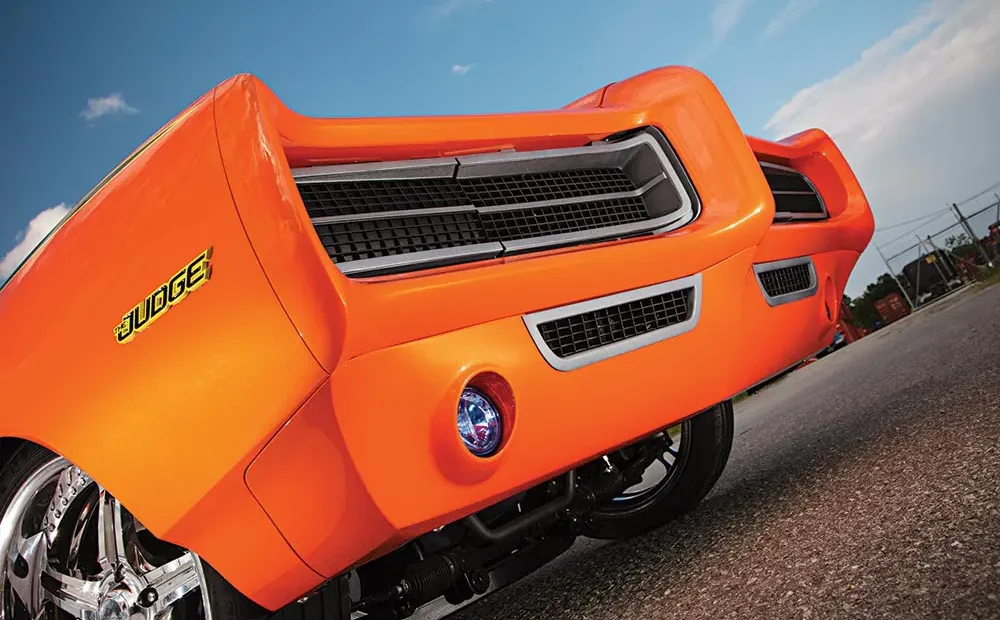
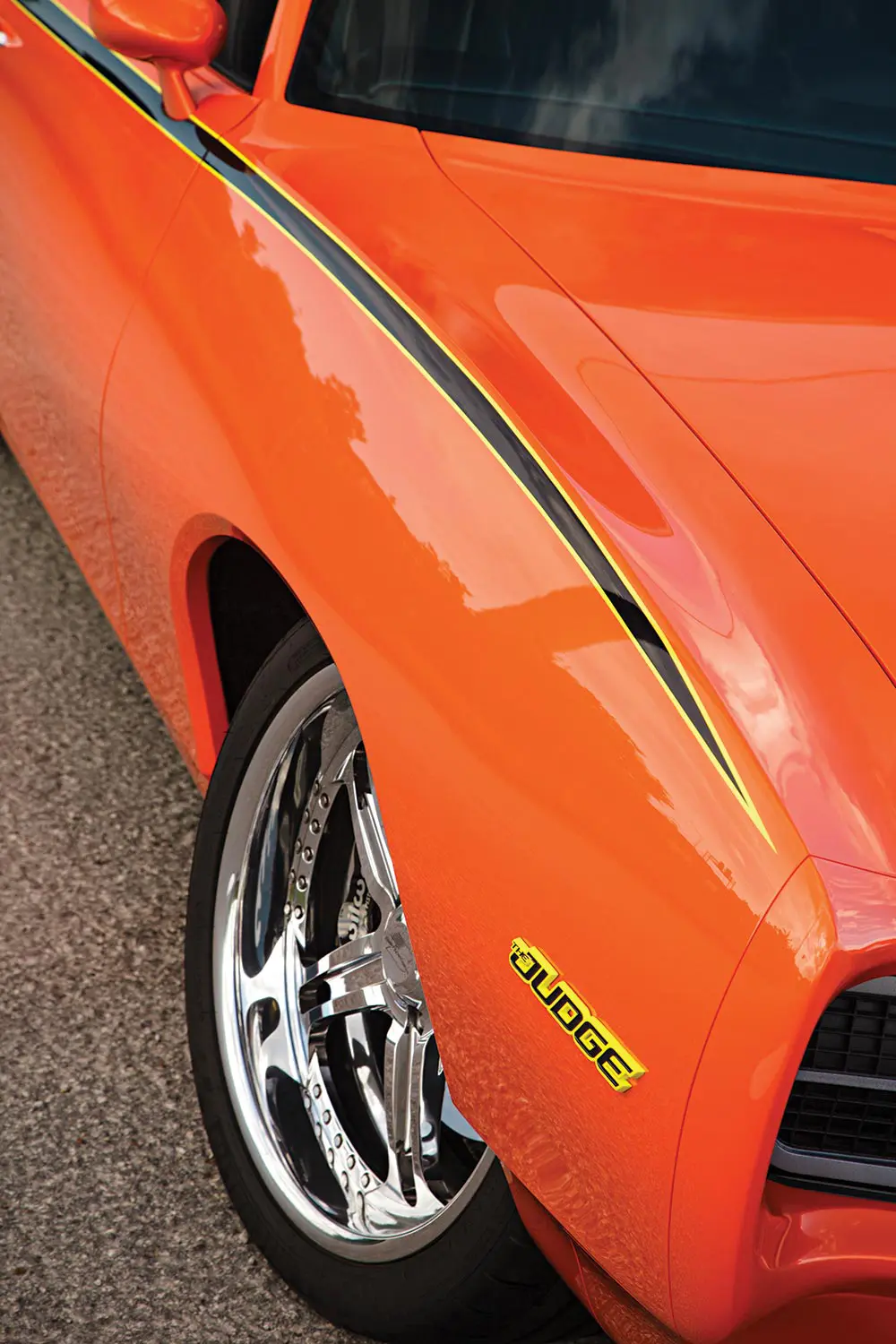
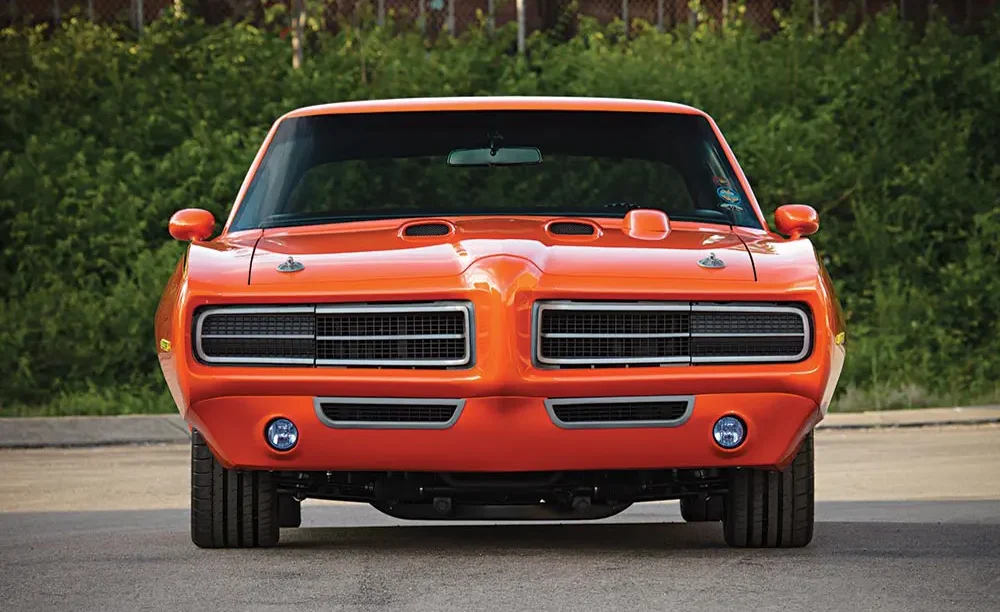
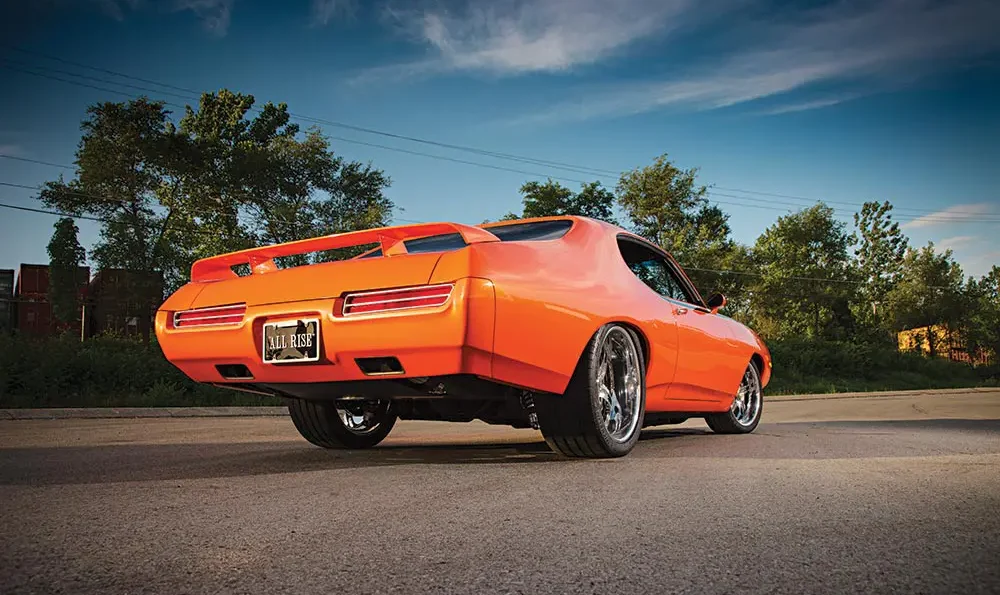
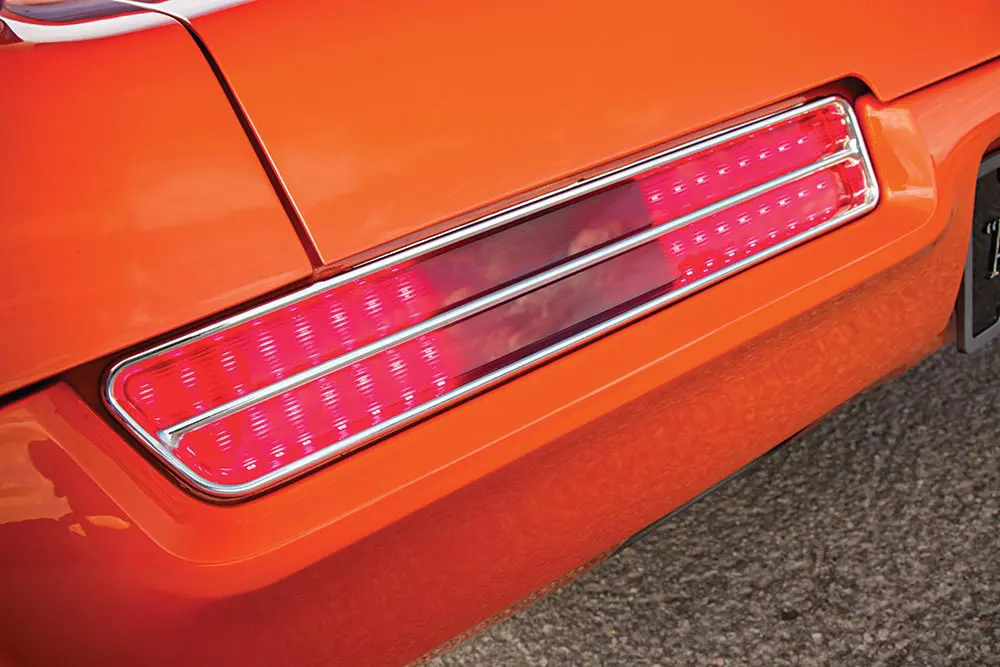
The plan was to execute a number of subtle changes to the classic Pontiac A-body design. These included flush-mounted glass and a slight change to the arch of the rear window. More radical modifications included reforming the tail section. The massive factory chrome bumper was cut into multiple pieces, reassembled, then stripped, primed and painted. It was blended with a section that integrates into the body line as it dives toward the ground. The taillights were also custom crafted to better contour into the overall shape of the car. The signature rear deck wing remains to keep the look familiar, yet different.
If it worked for the rear, it’ll work for the nose. The Endura front bumper was removed and replaced with a steel bumper from a 1968 Le Mans. Like the rear bumper, the front unit was sliced and diced until the fit was perfect. It was acid dripped and stripped, primed and painted to match the body color. A new lower valance was formed with round running light ports and special air ducts. The work was so well planned and executed you would think it was performed by one of the old masters of customizing like Carl Casper, Gene Winfield or Darryl Starbird.
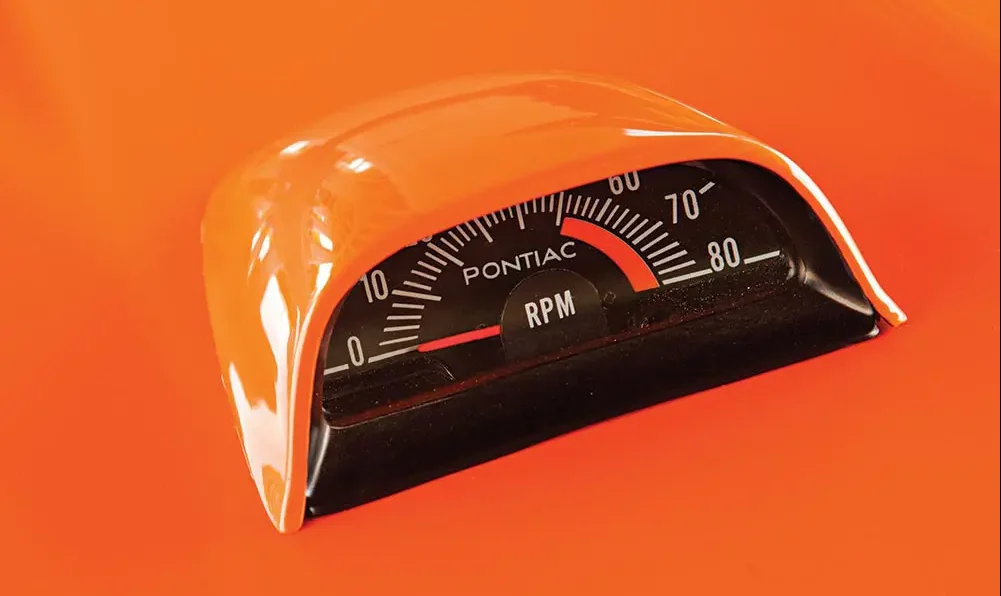
One item that was on the chopping block was the original hood-mounted tachometer. “I said, ‘No way, that’s got to stay’ and kept to my guns.” Tom said. In the end, all agreed that the customer is always right, especially in this instance. As healthy as the big engine was, G3 gave it a makeover with a full menu of new performance and cosmetic components, including a Billet Specialties Serpentine system, Doug’s headers and Lokar cables. The tranny was swapped out for a Gearstar 200R4. Suspension improvements were performed using an Art Morrison GT Sport chassis, Wilwood braking system and a Strangebuilt Ford 9-inch rear end. Progressive rate coil-over springs replaced the old blacksmith leafs. Finally, Billet Specialties wheels were selected in a modern version of “bigs and little” with 18×9 front and 20×10 in back with appropriate Michelin Pilot Sport rubber. It was designed to nicely tuck in the mini-tubs of the narrowed rear end. There was plenty of regular bodywork to perform, and then the G3 crew took to doing things to the extreme. Once the car was down to metal, issues arose. This was not unexpected. After all, we’re talking about a General Motors car built in the late-’60s. Original panels don’t last forever and new rocker panels, door skins and a roof panel were graphed in. Perfection, or as close as humanly possible, was the goal. It took a great deal of time to achieve precise body fit with consistent door, trunk and hood gaps.
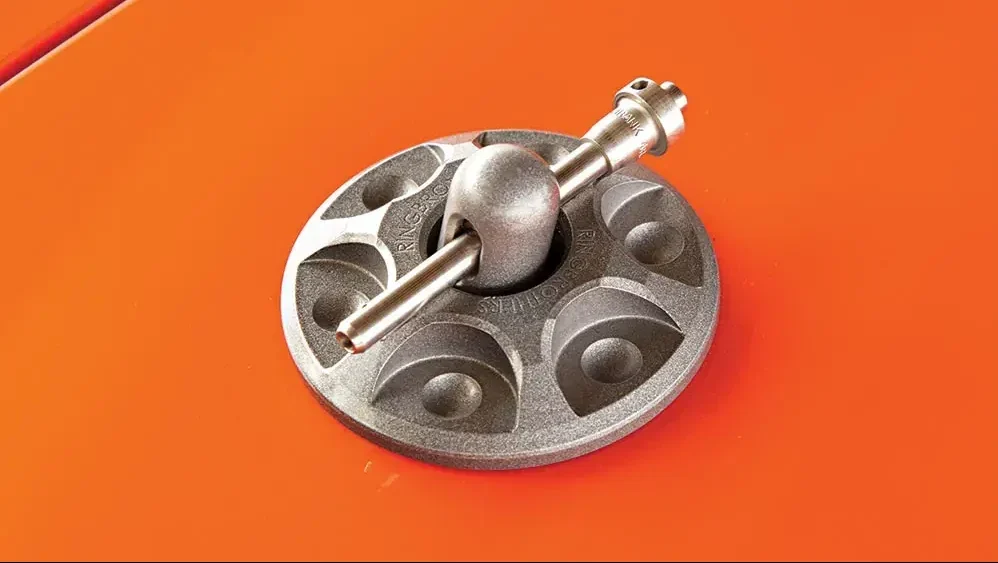
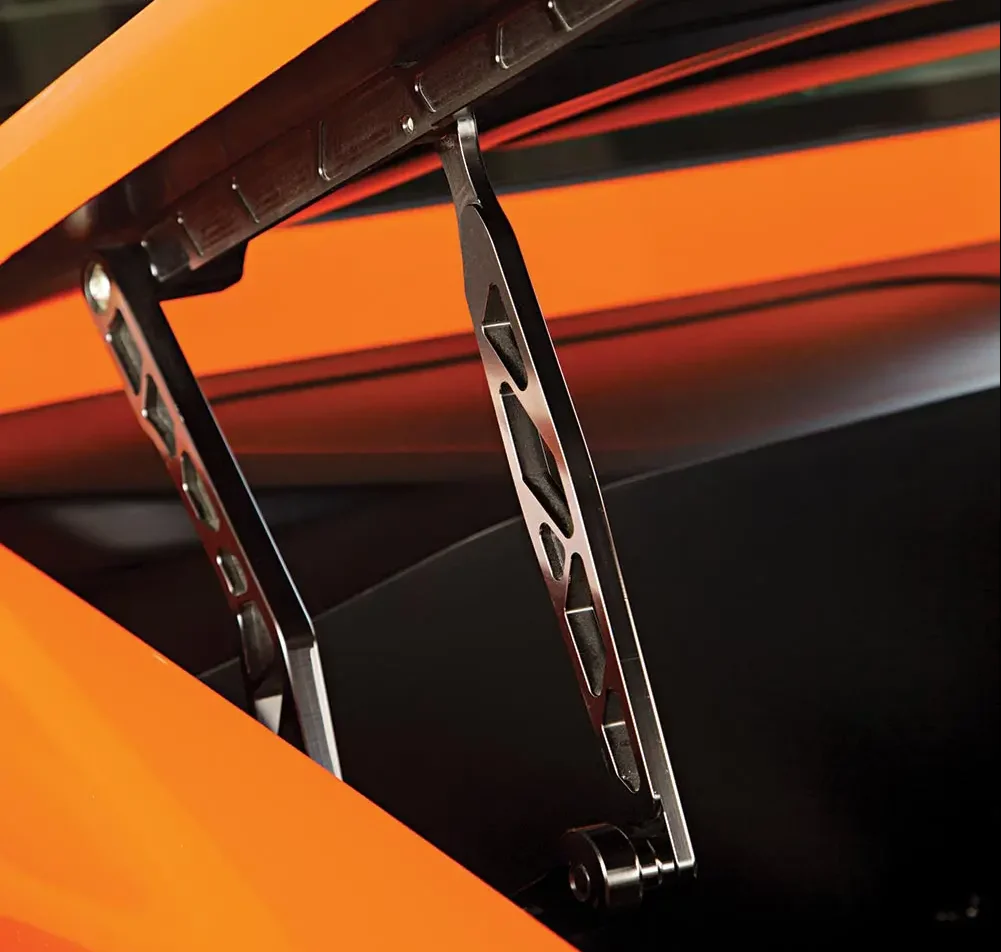
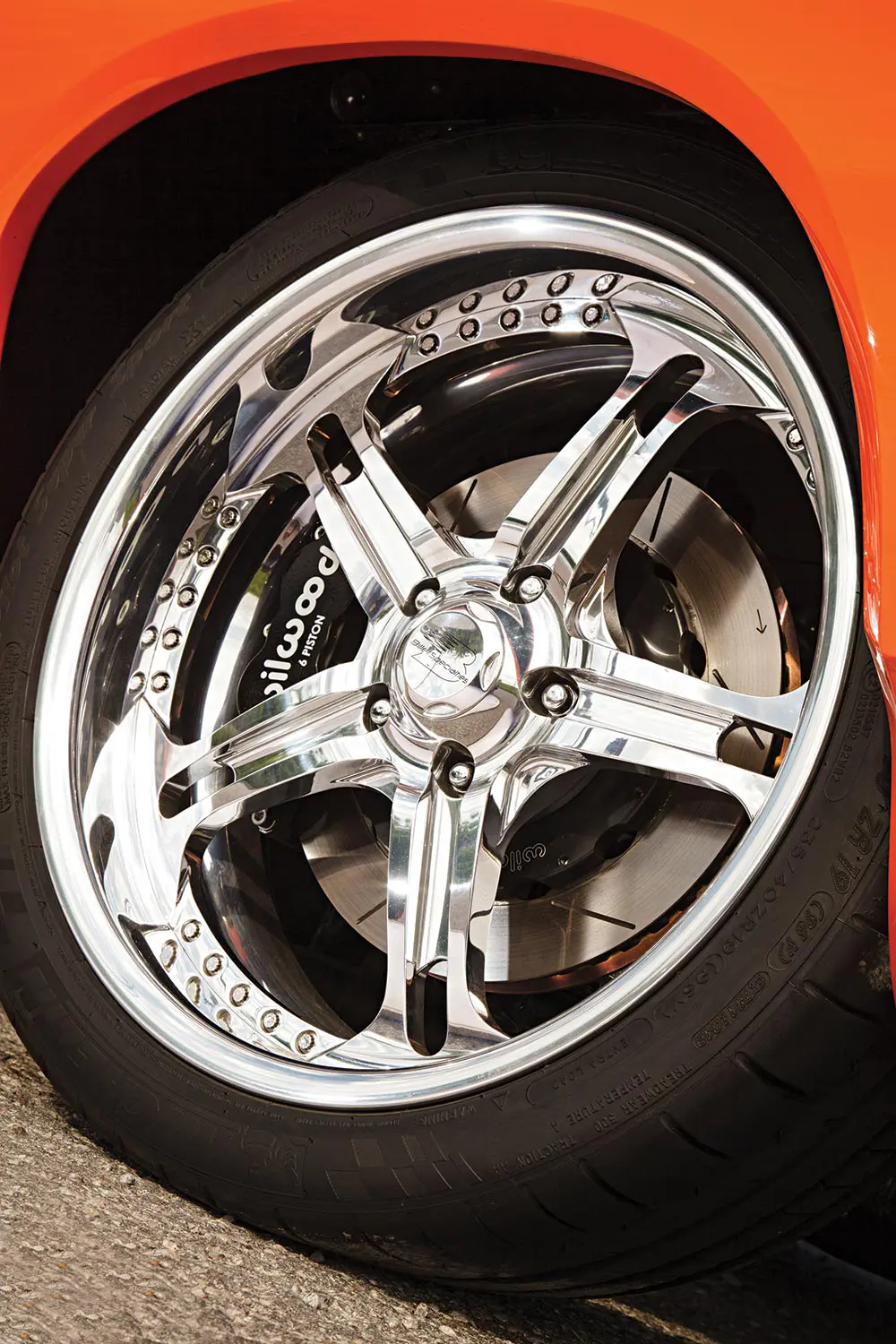
When the body was straight and the fit tight, Glasurit primer was applied, sanded and applied again. The two-stage Carousel Red was sprayed and covered in clear. When the body was colorsanded and buffed, the results were stunning.
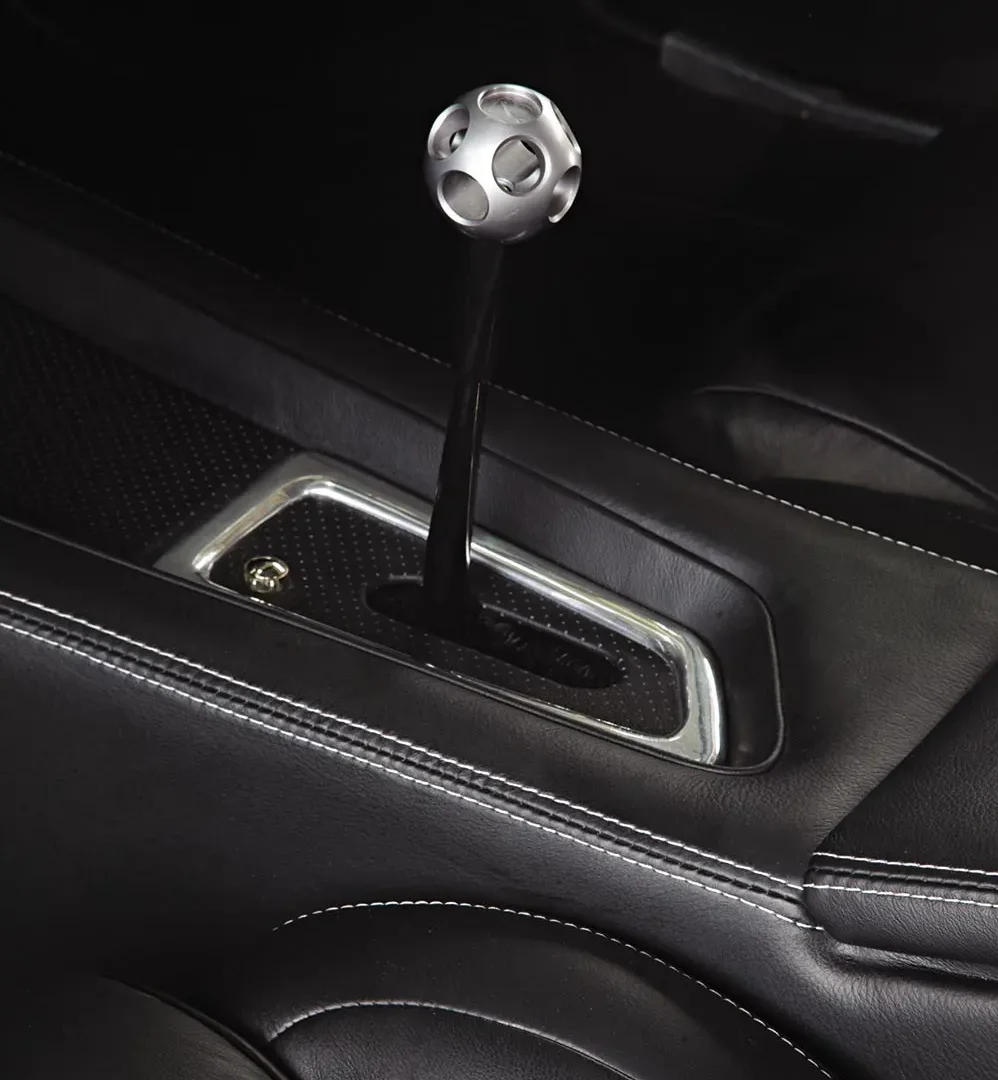
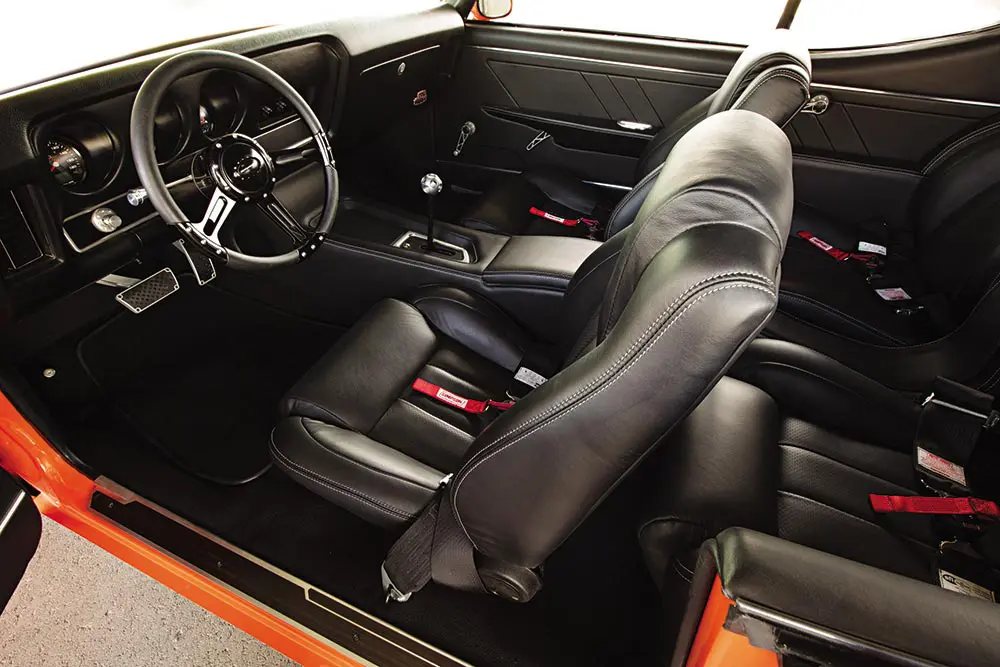
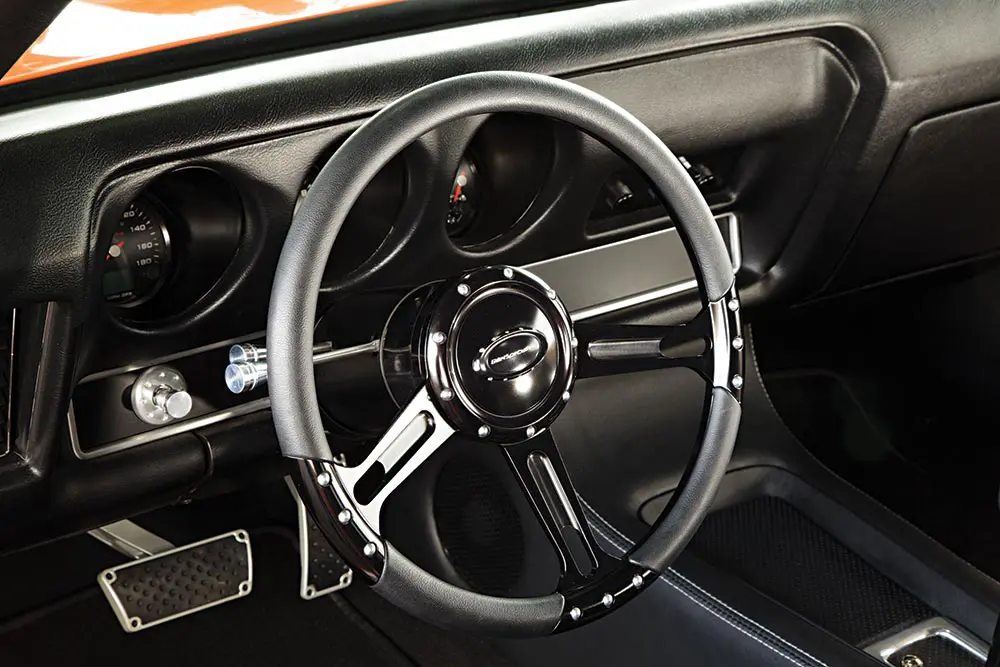
All this time, the interior panels and seats were being crafted at Weber Interiors in Minneapolis. The rich black leather with gray stitching covered the ProCar bucket seats, custom center console, kick panels and rear seat. Weber also worked its magic on the Billet Specialties steering wheel.
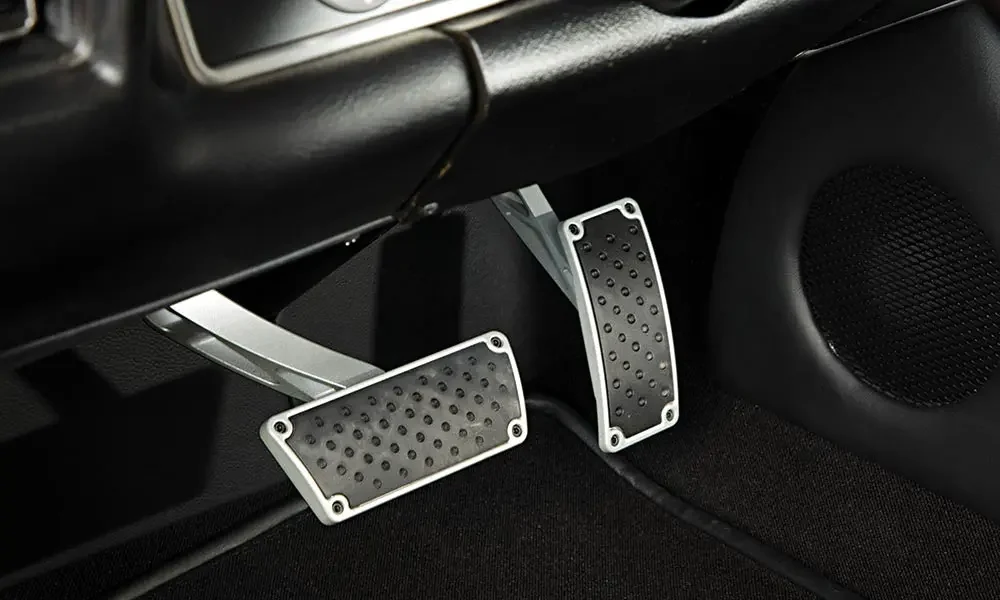
G3 hid all of the audio components in strategic trunk compartments. Weber then matched the look of the interior with custom panels and carpeting. When all of the interior pieces were completed, G3 laid down a foundation of Dynamat before performing a white glove installation and finished off the cabin with Speed Hut gauges, Lokar shifter, Bowler shift handle, Clayton pedals and door handles.
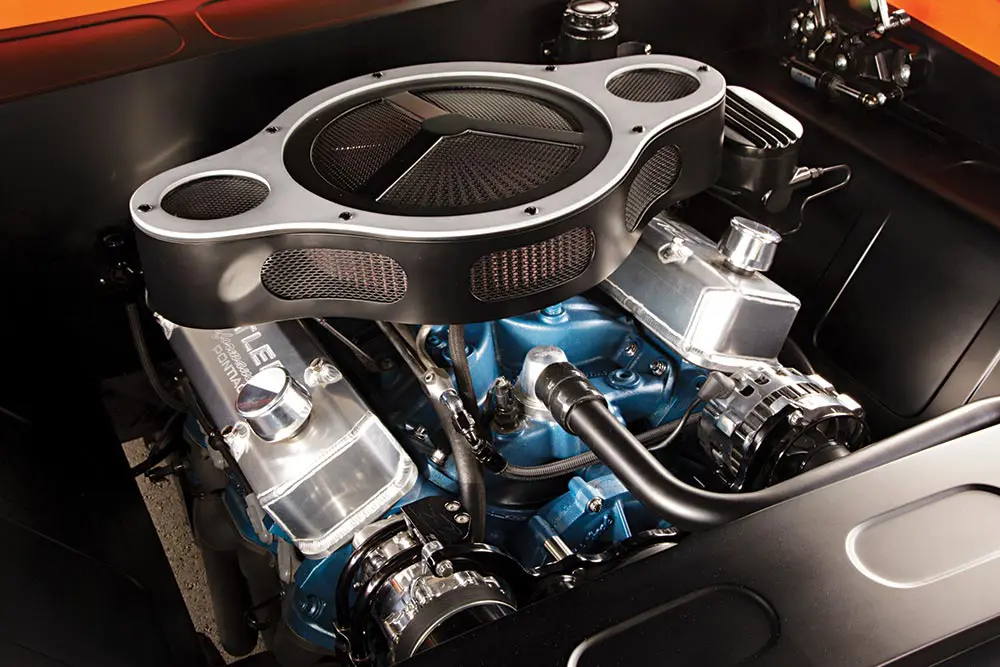
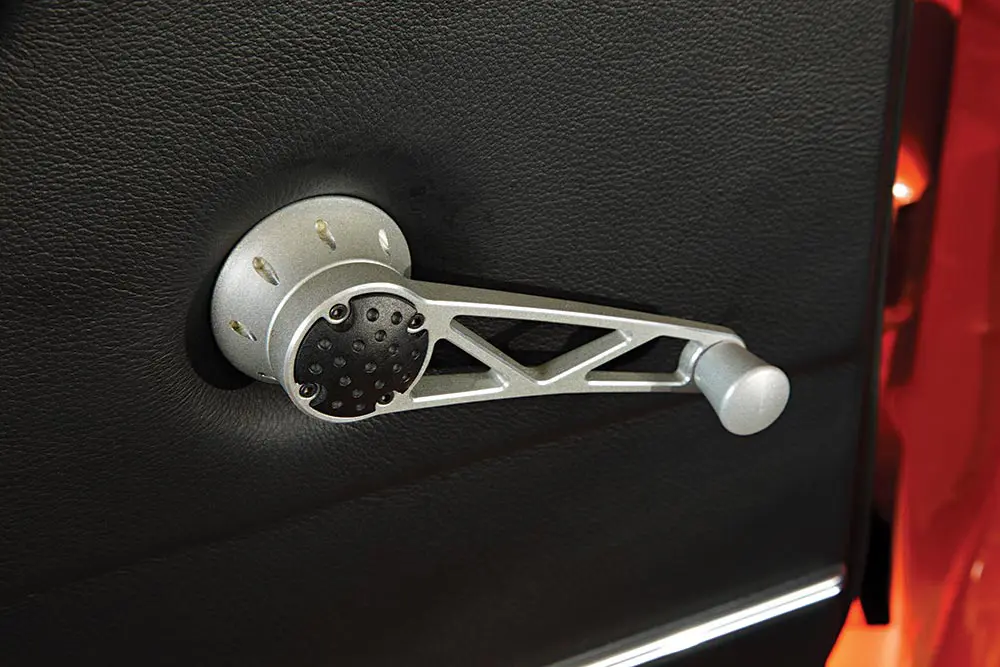
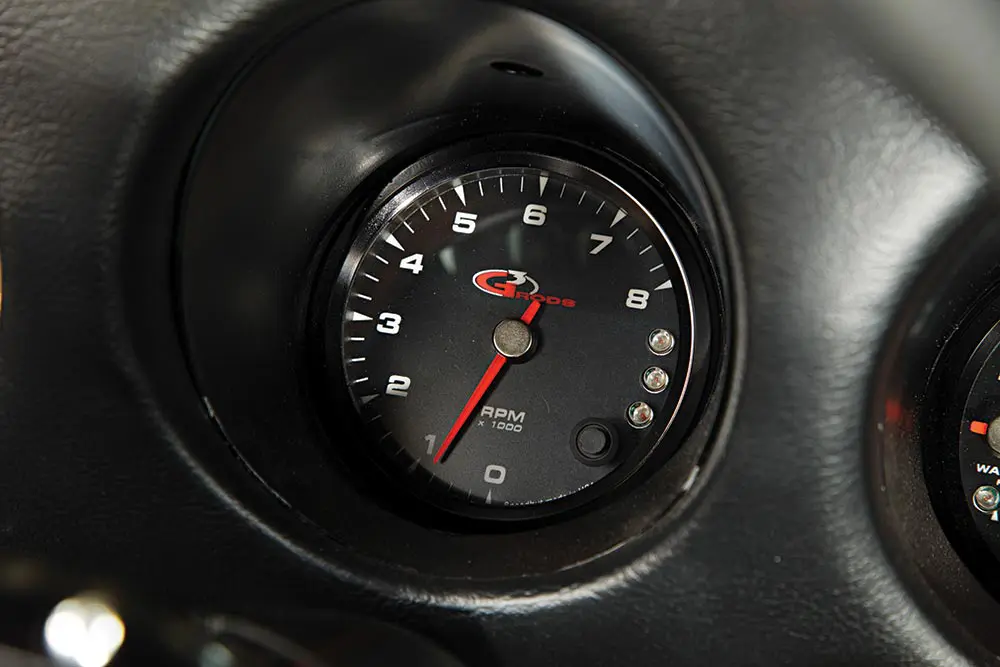
G3 delivered the custom Judge back to Tom two years ago. Since that time it has seen action at events from Reno to Oklahoma City. Tom insists the pristine Goat is a driver. That makes sense since Pinedale (population 2,100) isn’t exactly what anyone would call a hotbed of automotive activity.
The car’s aura attracts a great deal of attention no matter where Tom takes it. “It just seems to draw people in. Maybe it’s the color, or the details, or the overall execution, but it does create a crowd,” Tom admitted. Getting noticed is what the Judge was all about when it was introduced in 1969. Tom’s ride proves the lasting allure the GTO Judge was designed to achieve. His version, tribute or not, may be the country’s prime example of the essence and influence Pontiac once had on the American automotive market.
We always know when something feels off with our cars. Maybe it is a strange noise, a jitter in the steering, or a warning light you have never seen before. But when the oil pressure reading suddenly dips below normal, that is not a moment to brush off. Buried among the dials on your dashboard, the oil pressure gauge is always keeping tabs on your engine’s well-being, and if it starts acting up, it’s doing so for a reason.
That drop on the oil pressure gauge might not seem urgent at first, but it is often a sign that your engine is not getting the lubrication it desperately needs. And without that smooth oil flow, things can go south very quickly.
Motor oil cushions moving parts, carries heat away from the engine, and sweeps away gunk that would otherwise clog things up. When the pressure behind that oil drops, it cannot do those jobs properly.
Imagine sprinting without any water in your system, your engine feels the same stress without oil coursing through its veins. That pressure drop could mean your oil is too low, too thin, or that something deeper is going on mechanically. Either way, it is not something you should ignore as a driver.
Several things can trigger a pressure dip, and they are not always that serious at first. Often, it is as simple as not having enough oil, maybe there’s a leak, or it’s just been too long since your last change. Oil breaks down over time, especially under heat, and when it thins out, it can’t build up enough pressure.
Another cause can be a failing oil pump, which is the heart of the oil circulation system, or a clogged oil filter choking the flow. In older engines, worn bearings and internal wear can also allow pressure to escape, gradually sapping your engine’s performance and lifespan.
Don’t wait for the engine to start knocking before you take it seriously. If your dashboard suddenly lights up with an oil warning or you notice your gauge dipping, don’t try to just make it home.
Driving with low oil pressure is like flying blind through a storm, it might be okay for a minute or two, but the odds are against you. Engines run on tight tolerances, and without proper lubrication, metal starts grinding against metal. That is when real damage happens, often resulting in warped parts, worn bearings, and in the worst-case scenario, a seized engine.
It is a common mistake to assume the warning is just a glitch. But without checking the oil level, listening for unusual sounds, or looking for leaks, you are making a risky bet. And unlike some other issues that might resolve themselves, low oil pressure doesn’t magically get better on its own.
Think of the oil pressure gauge as your early-warning system. Where a check engine light might give you a general alert, this dial gives you live feedback. If you are paying attention, you will often catch gradual drops in pressure long before things spiral into major repairs.
A high-quality, responsive gauge can help you stay one step ahead. Especially if you drive older vehicles or regularly push your engine with towing or high-speed runs, having a trustworthy gauge could save you thousands in damage. It is one of those underrated dashboard tools that only gets attention when it’s too late.
Routine maintenance involves making sure your engine always has clean, fresh oil, and that it is circulating properly. Regular oil changes, the right filter, and attention to what your car is telling you can extend your engine’s life dramatically.
Keep an eye on how your oil pressure behaves during different conditions, cold starts, highway drives, or idling in traffic. If something feels off, don’t wait.
Picture a quiet North Carolina road. You stop at an old farm, and instead of crops and hay, you find vintage cars, some bought at local sales, others saved for their forgotten race pedigree. That’s exactly what one 84-year-old farmer has created over a lifetime on his rural North Carolina homestead. For over eight decades, Waynnie has lived on the same farm, gathering an impressive collection of vintage cars and memorabilia, whose historical and sentimental values deepen with every passing year. Waynnie demonstrates that with passion, patience, and ingenuity, an ordinary barn can be transformed into a dream garage.
Of course, putting together a collection like that doesn’t just happen overnight. It takes time, space, patience, and a real love for old machines. Waynnie spent decades working with what he had—tinkering in his barn, tracking down parts, and slowly bringing each car back to life. His story has inspired others across North Carolina to start their collections, hoping to capture that same sense of history and pride.
But starting from scratch isn’t always easy. Restoring classic cars takes dedication—and it can get expensive, especially when you’re chasing rare parts or trying to bring something truly special back on the road. That’s why some turn to North Carolina loans for car enthusiasts as a practical way to fund a project they’re passionate about. Everyone has their path, but it often starts the same way: with one car, one idea, and the drive to keep something meaningful alive.
At the heart of Waynnie’s collection sits a gorgeous 1955 Chevy Bel Air, perhaps his most cherished car. This classic two-tone Chevy with its chrome accents and iconic tailfins is the crown jewel of his garage. Waynnie bought the Bel Air from his neighbor way back in 1957..
Over the ensuing 68 years, Waynnie has driven and cared for this Bel Air, ensuring it remains both roadworthy and beautiful. He’s put over 180,000 miles on the Chevy. Waynnie performed modest improvements and regular maintenance over the years, keeping the car in top-notch condition. It’s a car that tells its own story—one tied closely to the broader history of the Chevy Bel Air, a model that defined mid-century American style and cruising culture. For Waynnie, it’s more than just a car—it’s a memory on wheels.
Some important characteristics of this model are:
One more car in Waynnie’s trove is a 1967 Chevrolet Impala, a classic full-size auto from the height of the muscle car era. Waynnie found the ’67 Chevy in a junkyard years ago, recognizing that it still had good bones. Many people might have written it off as scrap, but Waynnie saw potential in it.
The restoration was a labor-intensive process that spanned several months. He had to replace parts, mend bodywork, and rebuild the engine. But bit by bit, the old Chevy regained its shine. This Impala is a Convertible model (with a soft top that folds down), which makes it even more special, and the main specialties are:
Waynnie also owns a 1971 Chevrolet Caprice, a full-size family sedan from the early 1970s. The car has its subtle charm. In 1971, the Caprice was Chevrolet’s top model, often referred to as a “baby Cadillac” because it was luxurious for a Chevy. Waynnie’s 1971 Caprice holds a special place in his barns, perhaps because it represents an era he lived through and remembers well.
Perhaps it’s the car you’d imagine seeing at a drive-in movie on a summer night in the ’70s. It’s a unique piece of history that adds diversity to Waynnie’s collection. It reminds us that vintage car collecting is about preserving the everyday vehicles in which people and their families made memories. Well, this model differs in its specifics: maintaining and preserving a classic car collection takes commitment. Each vehicle needs to be cleaned, serviced, and driven occasionally to keep it in good shape—and Waynnie makes sure none of them are forgotten.
Well, this model differs in its specifics:
No farm collection would be complete without a trusty pickup truck. Waynnie’s fleet includes a 1979 Chevrolet pickup that he acquired from Virginia. This truck is special for a couple of reasons. First, it dates back to the late 1970s, making it one of the newer “classic” vehicles on the property. Second, it had just 66,000 miles on it when Waynnie got it – a low mileage for a working truck of that vintage.
The 1973–1979 Chevy/GMC pickups are part of the “Square Body” era of GM trucks, known for their boxy, angular styling. Classic American pickup trucks that are perfect for restorations include many models from this period, and the 1973–1979 Chevy/GMC is no exception. With its durable build and timeless design, it continues to attract those looking for restoration projects that are both rewarding and realistic. Enthusiasts love them for their simplicity, ruggedness, and the nostalgia of an era when trucks were becoming mainstream. And for Waynnie, who remembers when trucks like this were new, it’s a reminder that time can turn yesterday’s common vehicle into today’s classic:
Waynnie’s passion for cars didn’t stop in the mid-century. He even brought home a 1988 Chevrolet Monte Carlo SS, which is a modern classic and one of Chevy’s last rear-wheel-drive V-8 coupes. With its sleek nose and optional T-tops, this ’80s muscle car earned a well-deserved place in his barn.
For years, the Monte Carlo sat quietly, until recently, when it was brought out, washed, and started up for the first time in many years, much to the delight of viewers on The Appalachian Channel. Seeing the Monte Carlo SS run again proves Waynnie’s love of cars isn’t stuck in the past. Well, today you can still find Chevrolet Monte Carlo SS classic cars for sale, but they don’t come cheap. Their rising value reflects just how special these cars have become among collectors and enthusiasts alike.
Here are the main characteristics:
Waynnie’s journey embodies the dream that so many car enthusiasts share: to one day have the time, space, and freedom to surround oneself with the machines that spark joy. Waynnie proves you don’t need deep pockets or a city garage to build a cool lineup of sports machines. Waynnie offers a plan: start small, be patient, cover each ride with the right insurance, and love what you do. For every car enthusiast reading about this North Carolina farm, there’s a sense of “if he can do it, maybe I can too.”
When you’re building out a rig that’s got to perform on the trail and look good doing it, there’s a balancing act between form, function, and longevity. Aggressive tread design, sidewall styling, and real off-road capability usually mean you’re sacrificing something—but that doesn’t need to be durability and long-term value of your tires.
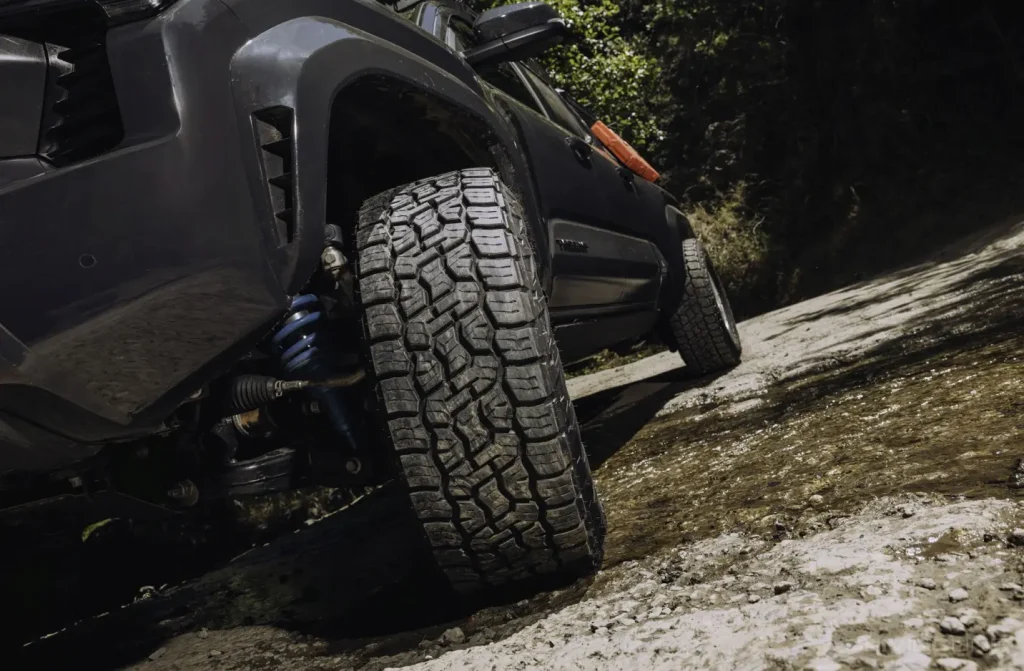
We dug into the warranties behind the most aggressive-looking, off-road-ready all-terrain tires on the market. These aren’t mall-crawler specials. Every tire here is offered in both hard metric and LT metric sizes with 35” overall diameter options and 3PMS-certification for year-round confidence. Whether your setup leans overland, pre-runner, or heavy-duty daily with a weekend trail schedule, these tires are made to look tough and work even tougher.
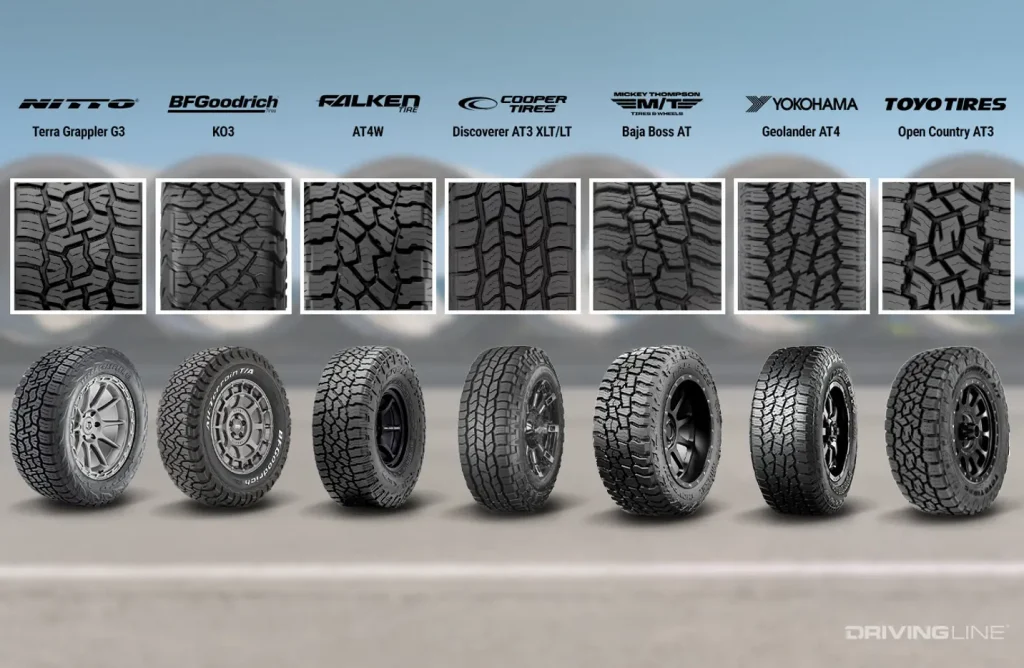
Here are the A/T tires we stacked up:
| Tire Model | P/Hard Metric Warranty | LT/Flotation Warranty |
| Nitto Terra Grappler G3 | 70,000 miles | 55,000 miles |
| BFG KO3 | N/A | 50,000 miles |
| Falken Wildpeak A/T4W | 65,000 miles | 60,000 miles |
| Cooper Discoverer AT3 XLT | 60,000 miles | 60,000 miles |
| Mickey Thompson Baja Boss A/T | 60,000 miles | 50,000 miles |
| Yokohama Geolandar A/T4 | 65,000 miles | 55,000 miles |
| Toyo Open Country A/T3 | 65,000 miles | 50,000 miles |
The Nitto Terra Grappler G3 takes the win here, offering the highest mileage warranty of the bunch—70,000 miles on hard metric sizes and a solid 55,000 miles for LT/flotation. For an A/T that delivers aggressive curb appeal and all-terrain capability, that’s a serious standout.
It’s not just about surviving the daily commute, either. The G3 delivers stable highway manners while still packing the beefy shoulder blocks and deep sidewall lugs you want when the asphalt ends. For enthusiasts who demand both looks and longevity—whether it’s hauling gear, towing toys, or chasing trails—it’s the rare combo that doesn’t ask you to choose.
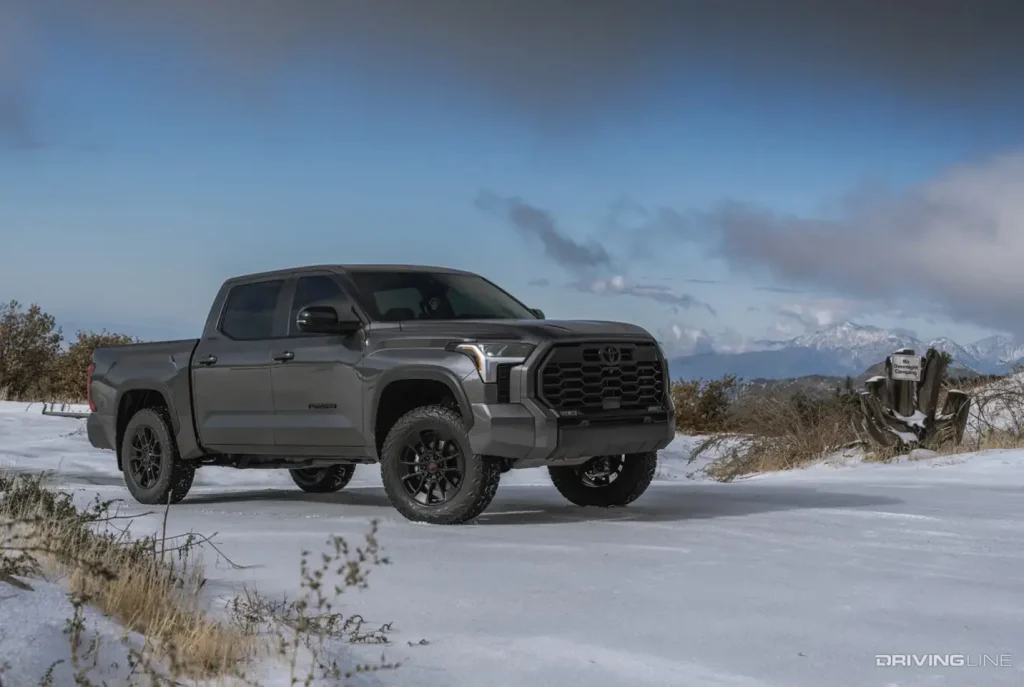
From daily drivers to work trucks and beyond, your tires have a lot rolling on them. When most of your driving time is spent on-road, today’s aggressive all-terrains strike a near-perfect balance of capability, looks and solid performance you can trust no matter where you drive. Choosing your tire purchase carefully can mean you get years more of wear.
For our money, the Nitto Terra Grappler G3 brings the best blend of style, performance, and mileage-backed confidence. If you’re modding your rig for weekend adventures and weekday reliability, this tire keeps you rolling longer—and looking good doing it.
For more info visit www.nittotire.com