







Macy Buchanan will be the first to admit that trucks never used to be her thing—especially big, bad diesel trucks. Of course, she’d always take notice of nice, new pickups on the road, but never did she ever imagine herself sitting behind the wheel of a customized Ford F250. Hey, things change and tastes hardly ever stay the same. Macy found that the world of performance diesel was heavily appealing, so much so that she didn’t even put up a fight against becoming fully entangled in the coal rolling lifestyle.
“I started dating Tyson Underwood, the owner of Pointblank Performance, back in 2019 when I was 24 years old,” Macy reports. “I had just quit my job as a dental assistant, and he was looking for someone to run the office. I agreed to help out, but little did I know what I was really getting myself into.”
Every day at Pointblank HQ was full of excitement for Macy. She quickly familiarized herself with all the diesel-powered make and model trucks that were coming into the shop for quick upgrades and in-depth builds. Each pickup that pulled in and left seemed to be different than the last, and rarely were two jobs exactly the same. It was this ever-changing flow that kept her intrigued and on her toes.
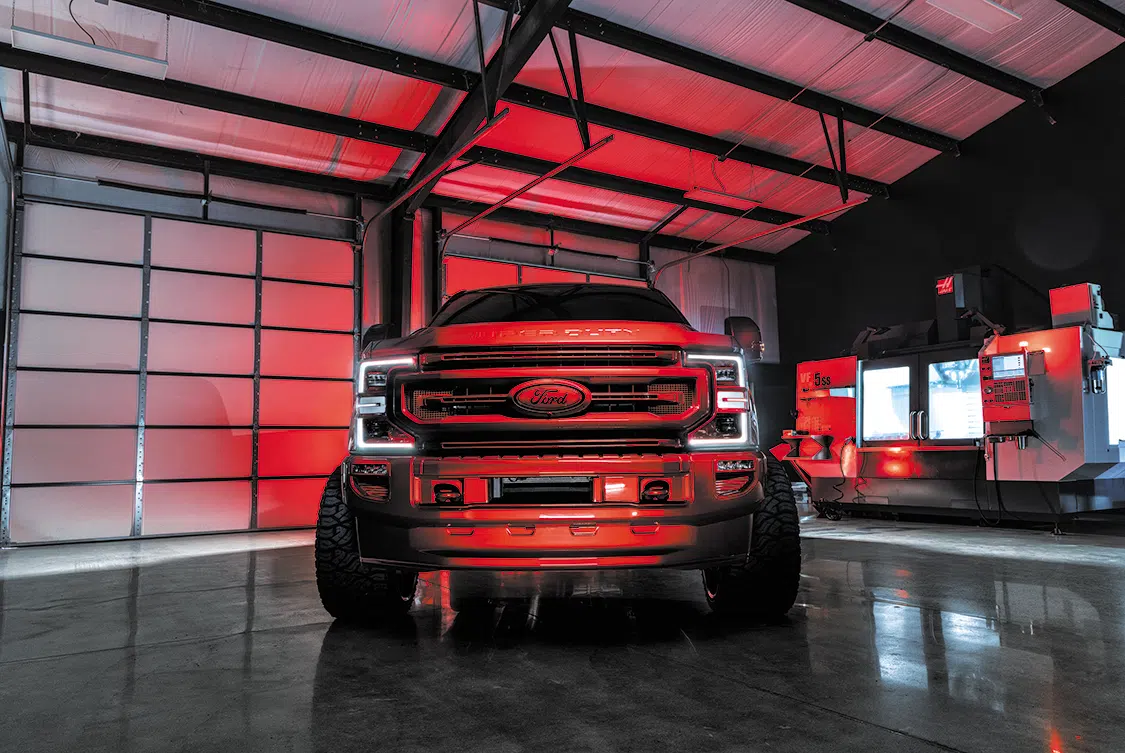
“It was all so fascinating to me. This wasn’t just an ordinary repair shop. Tyson had a standard and a vision for the company that I had not seen anywhere else. I soon realized I was getting to be a part of something really special here, and for that, I still am very grateful for the opportunity.”
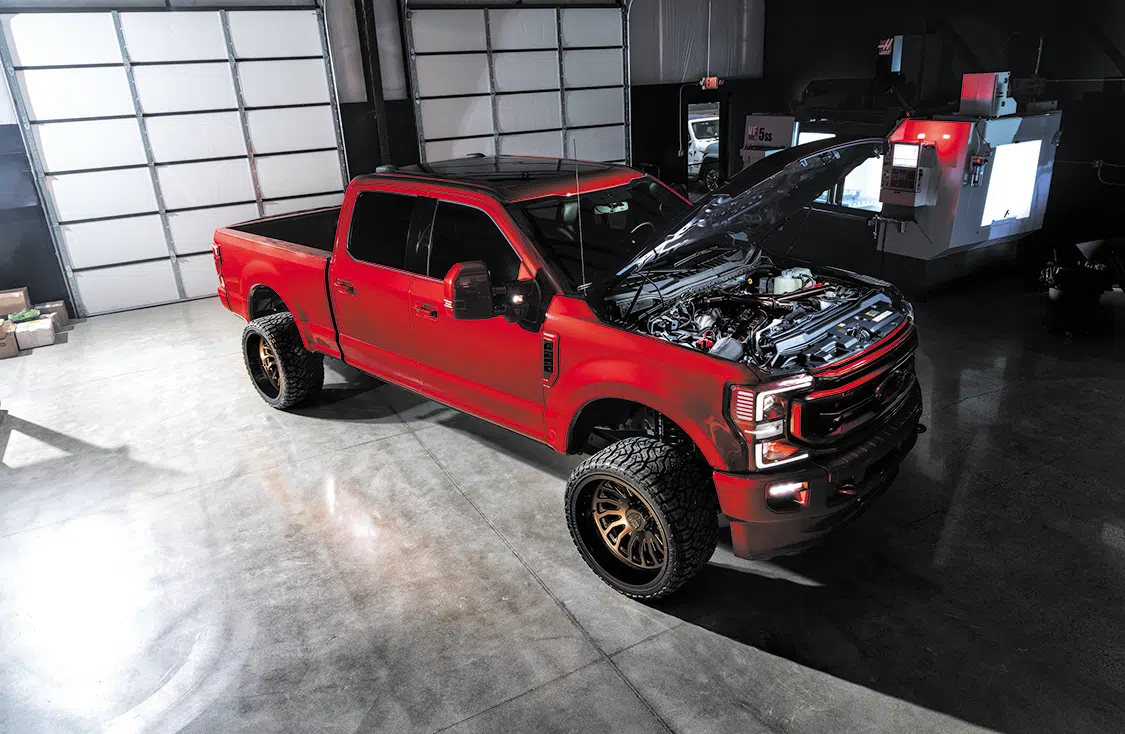
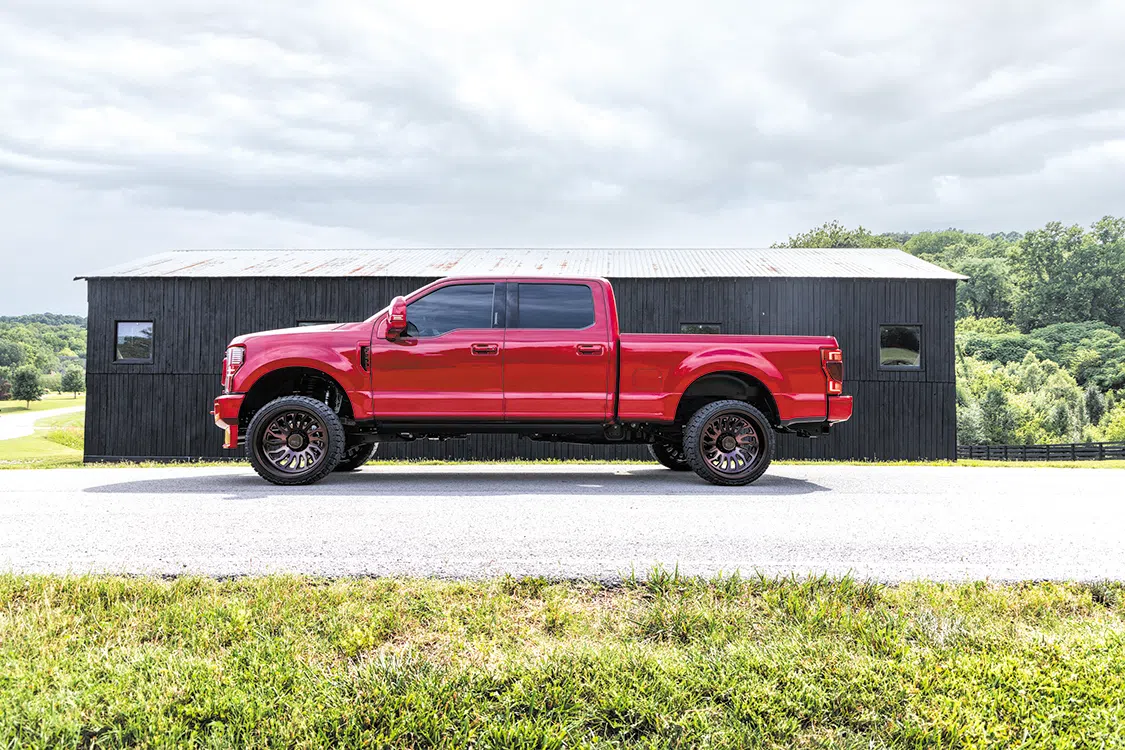
Even though Macy was in an environment she wouldn’t have thought she’d be in, she once again found herself in yet another unthinkable spot in January of 2021. “It all happened so fast, but before I knew it I was standing in a Ford dealership in Texas picking up a new 2021 F250 Platinum for myself,” she exclaims. “I did not grow up around trucks, but after working for Pointblank for a bit, I guess you could say that I was inspired by all the ones that come through the shop.”
During the drive back home, Macy had already begun daydreaming of all the things she’d want to do with her new F250. Obviously, she wasn’t interested in keeping it stock. “I did want to customize it my own way, and Tyson was a big help with that,” she shares.
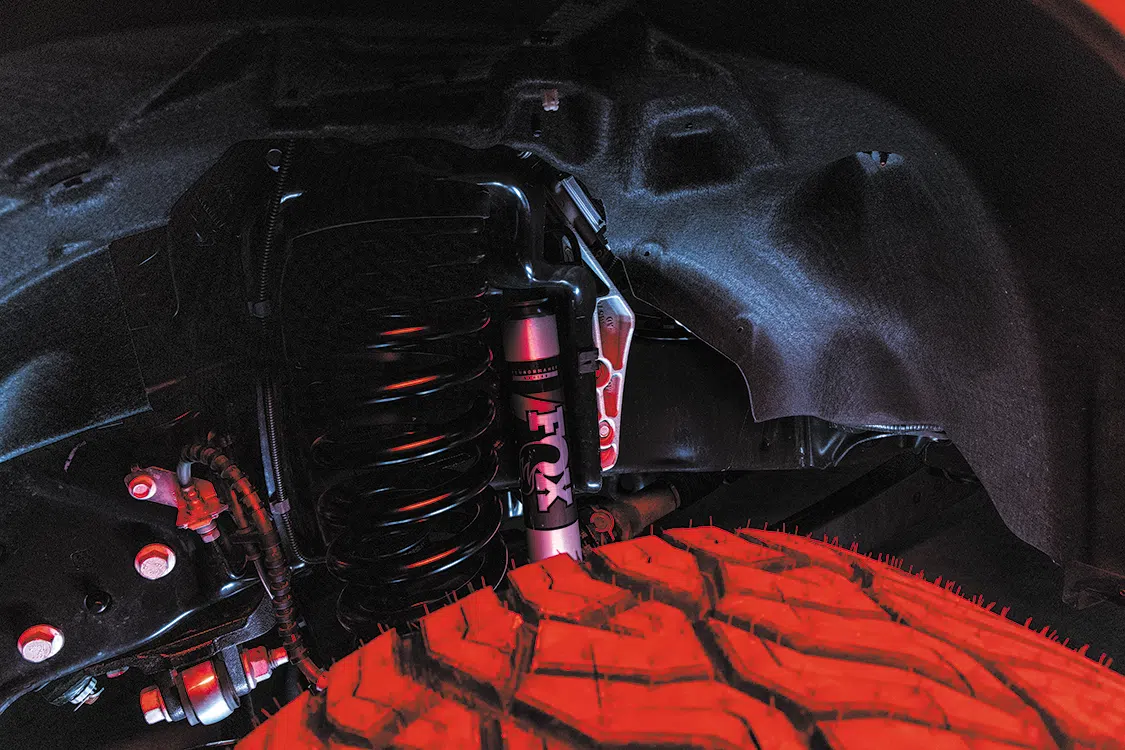
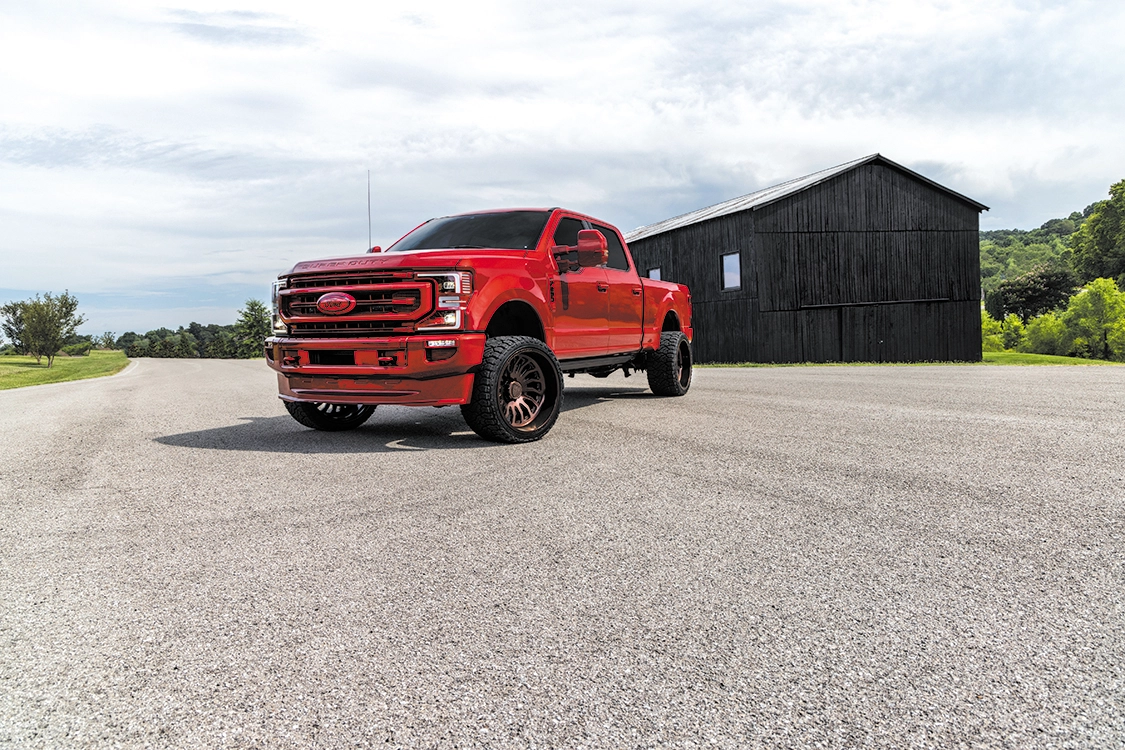
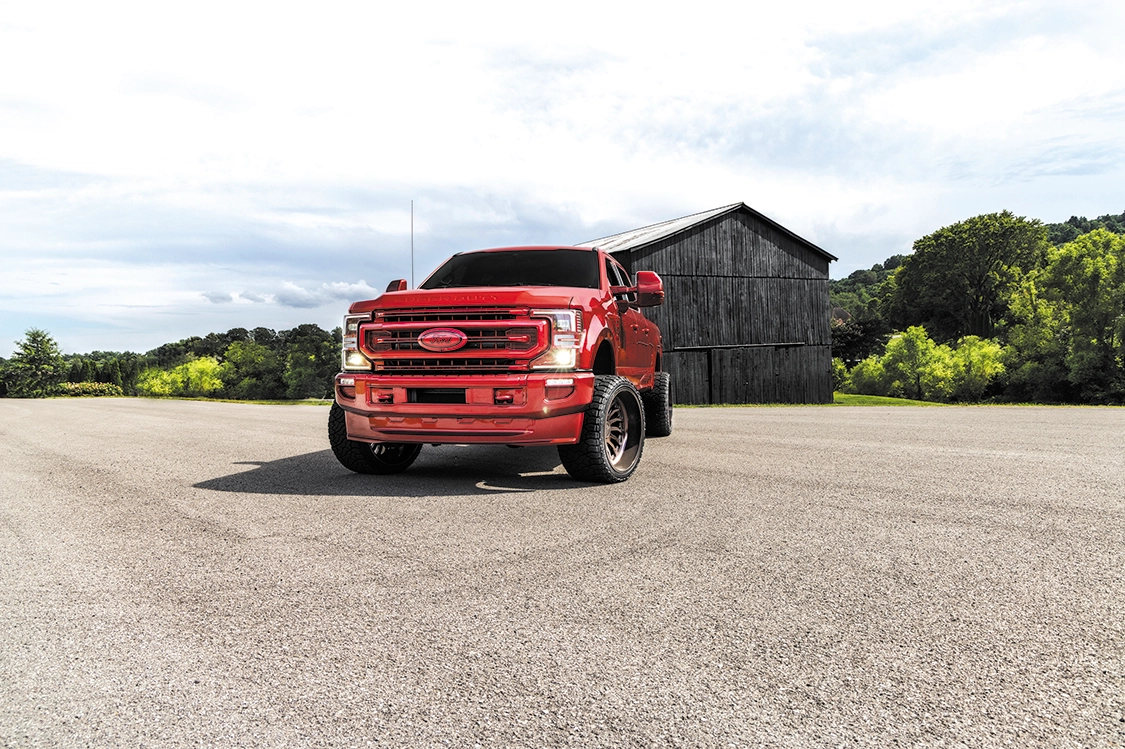
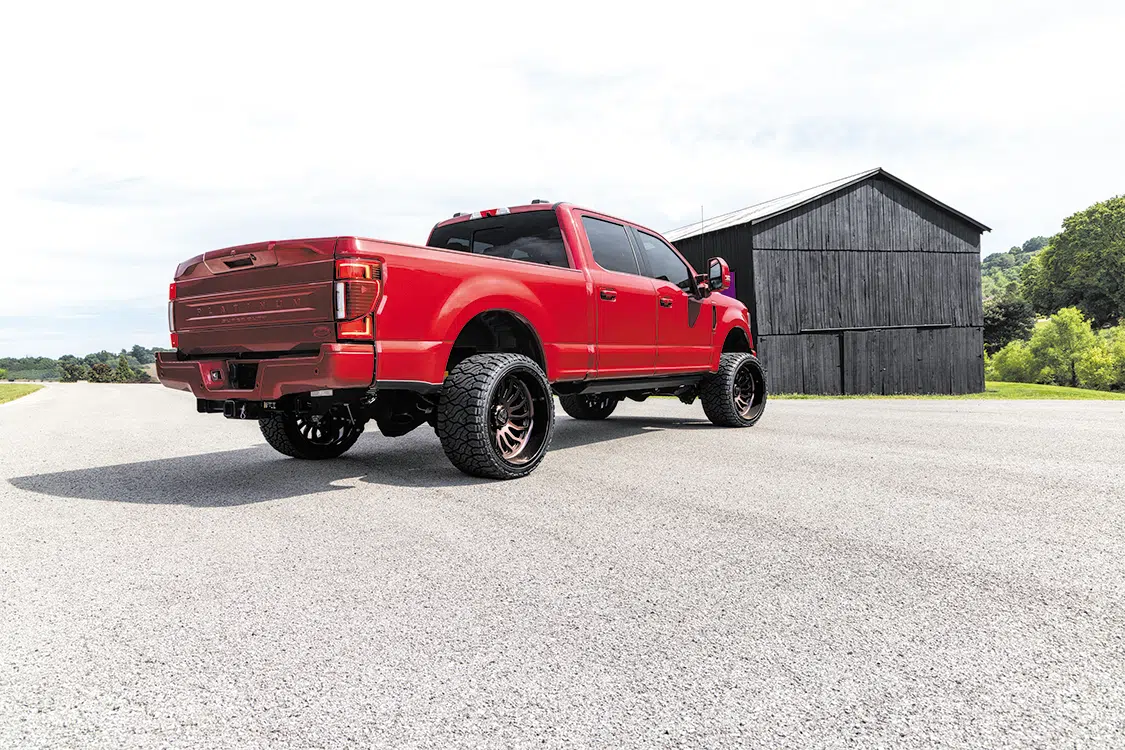
“The first upgrade we did was to install a PMF 2.5-inch leveling kit that included an adjustable track bar and 2.5-inch Icon springs. This gave the truck a bigger look without going too overboard. Then we began the process of shopping for the right set of wheels and tires to complete the upgraded suspension package.”
With what felt like an endless amount of wheel options to choose from, Macy finally landed on a set that she thought would look great on her truck. She had enough room under the truck now thanks to the front end level, so she opted for 24×14 Specialty Forged Elite Concave Series C703 units at each corner. The wheels came with a polished finish, and while they looked great as-is, she had a different look for them in mind. Black Label Coatings in Chuckey, TN was utilized to powdercoat the wheels in a black copper finish, which added a much more unique overall look to the truck. In terms of rubber, Macy chose a set of rugged 33-inch Venom Power Terra Hunter R/T tires to create the exact look she was hoping for. “I think the front lift and the wheel/tire combination makes the truck look sportier, and the powdercoating on the wheels is my favorite part since the polished look just wasn’t my style.”
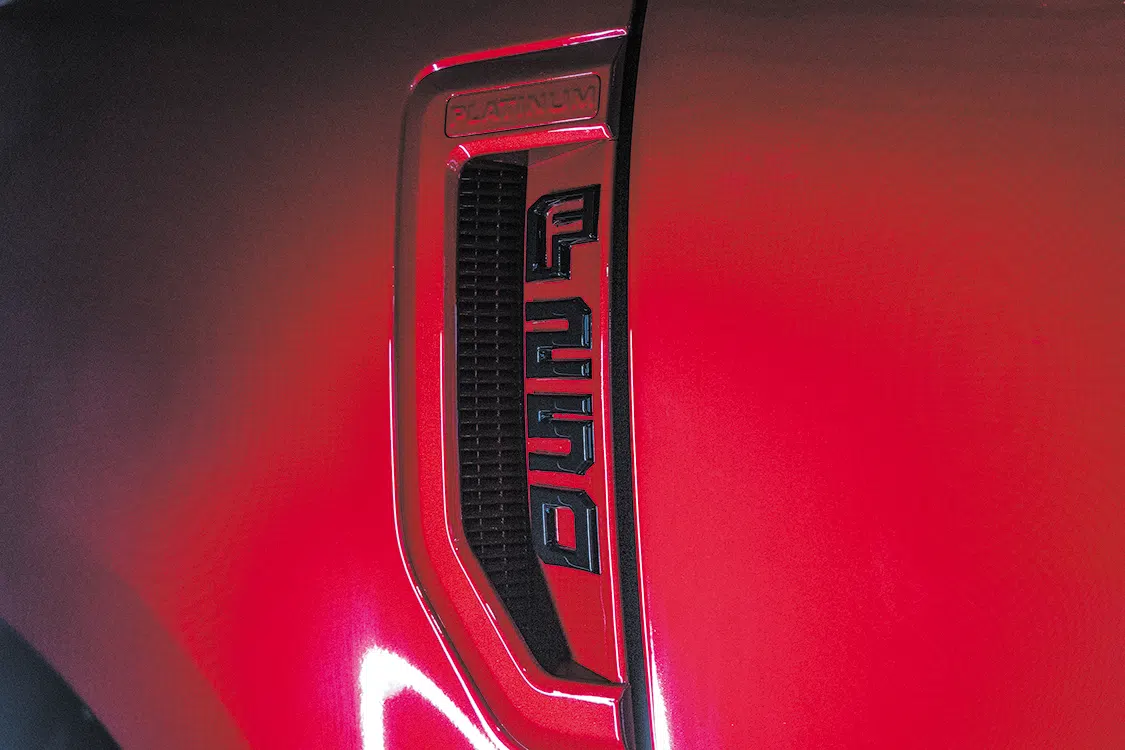
Macy ran into a similar situation while dialing in the look of her F250’s exterior. Since the truck is a Platinum package, it came loaded with all the chrome accessories one could ask for, but none of those were going to stick around for the long haul. To address this issue, all of the chrome and plastic parts were pulled off and sent to Retro Shop Custom Lighting in St. Charles, MO to be painted to match the truck’s factory Rapid Red metallic color. The headlight housings were sent to be painted on the inside, as were the mirrors and grille, bed caps, rear bumper step, lower valance, and all the door handles, too. “Once we received all the freshly painted parts back, we installed them and called it a wrap on the outer portion of the project. Next, it was time to move onto the engine bay—the last upgrade on the truck for now.”
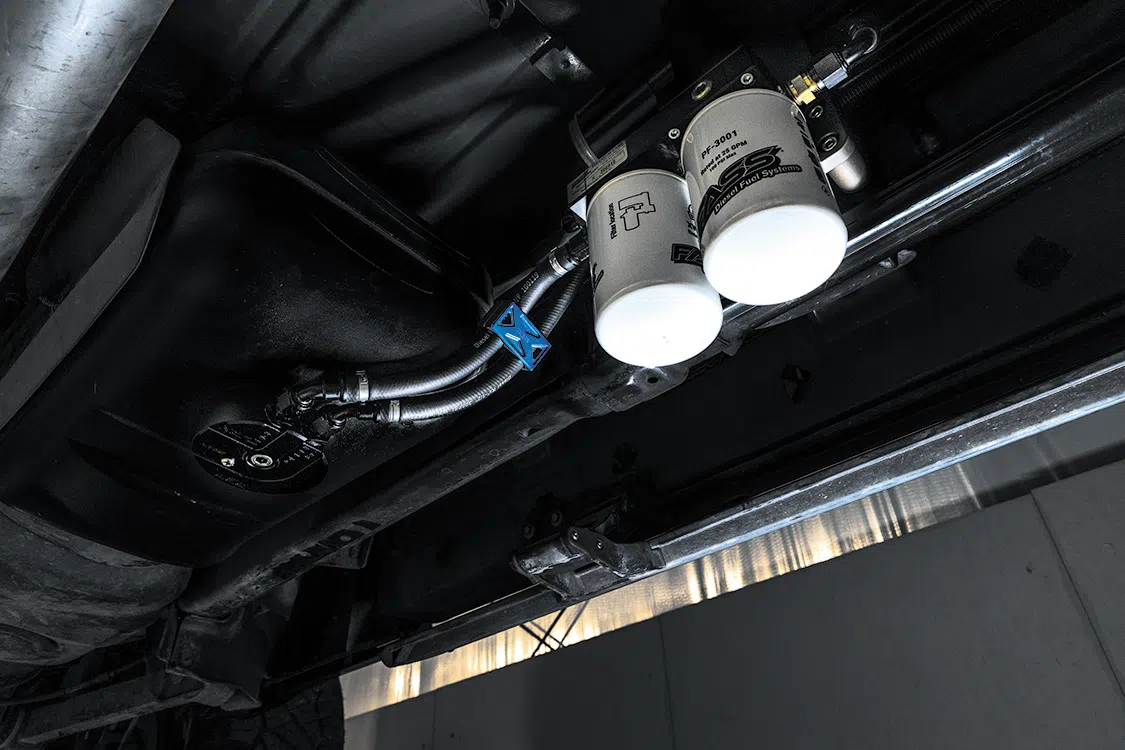
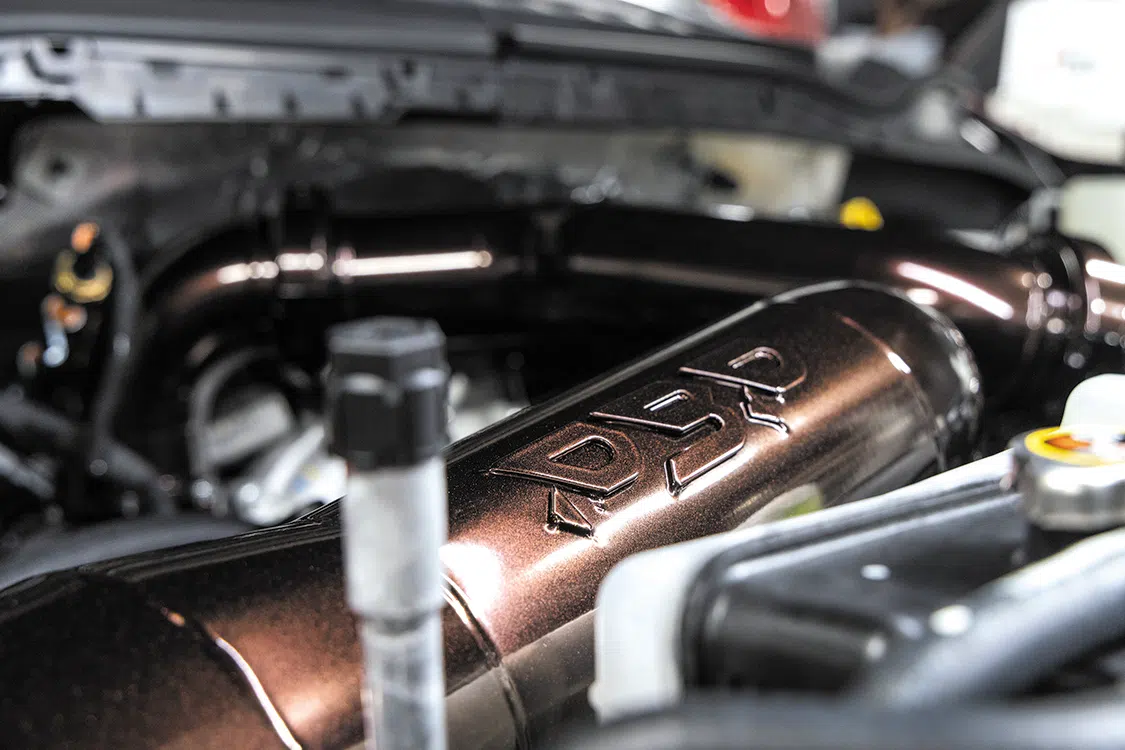
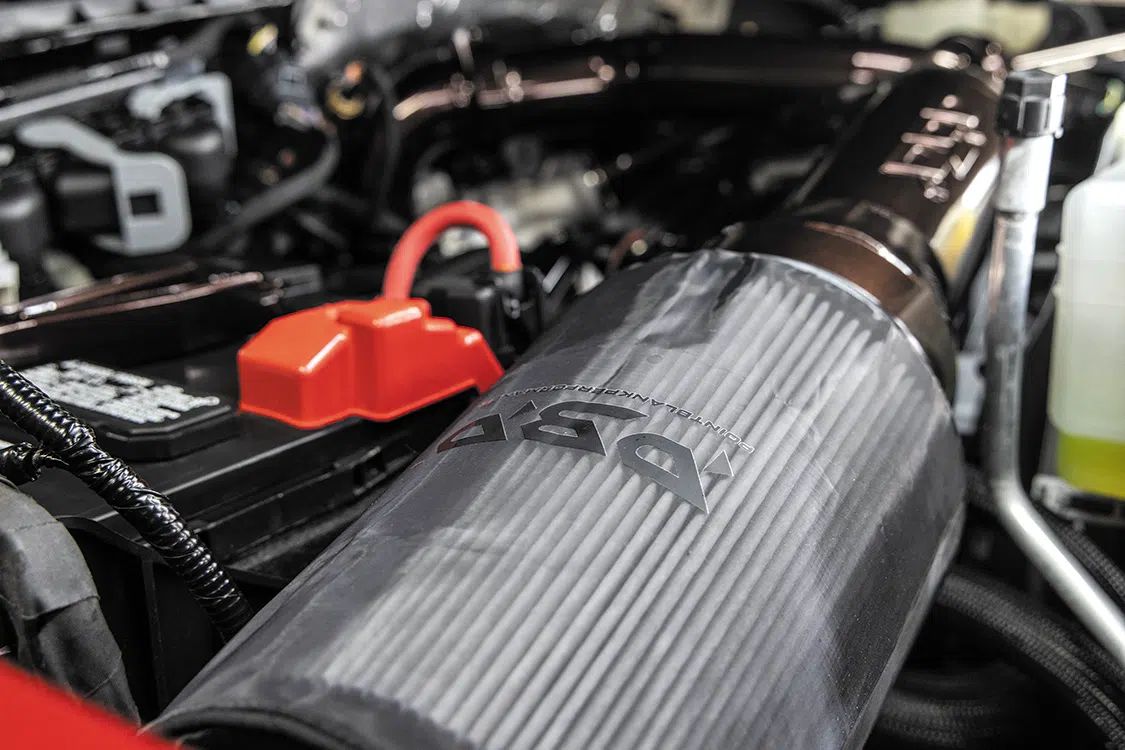
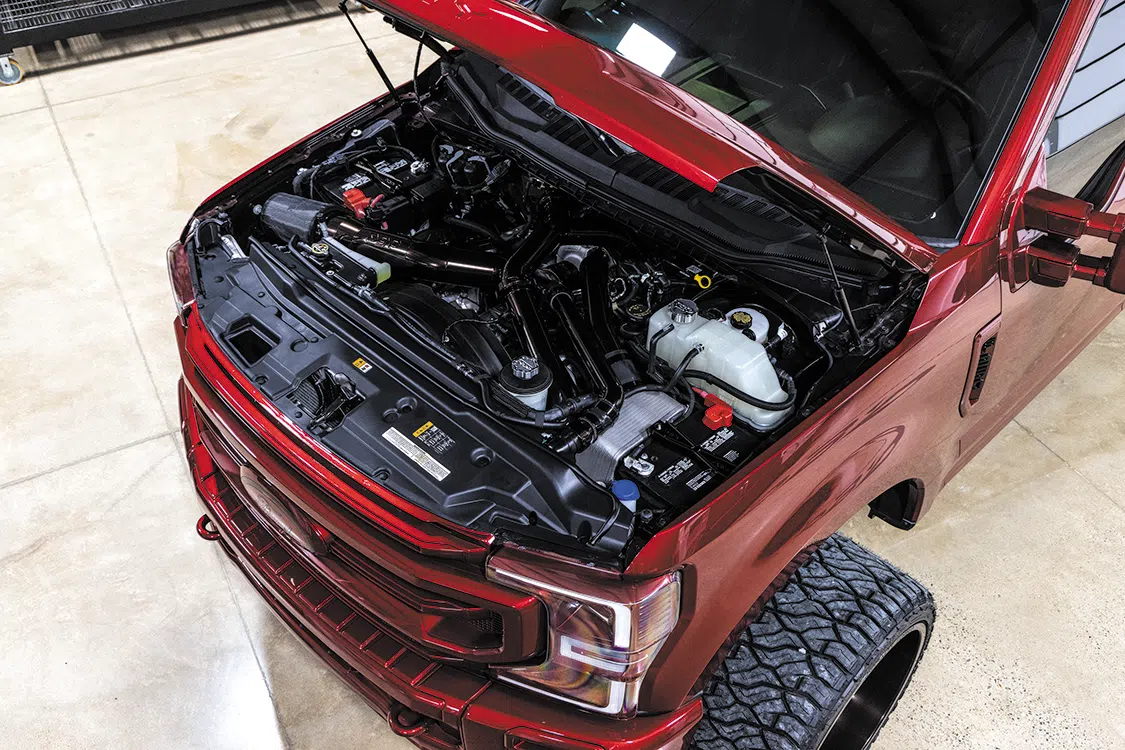
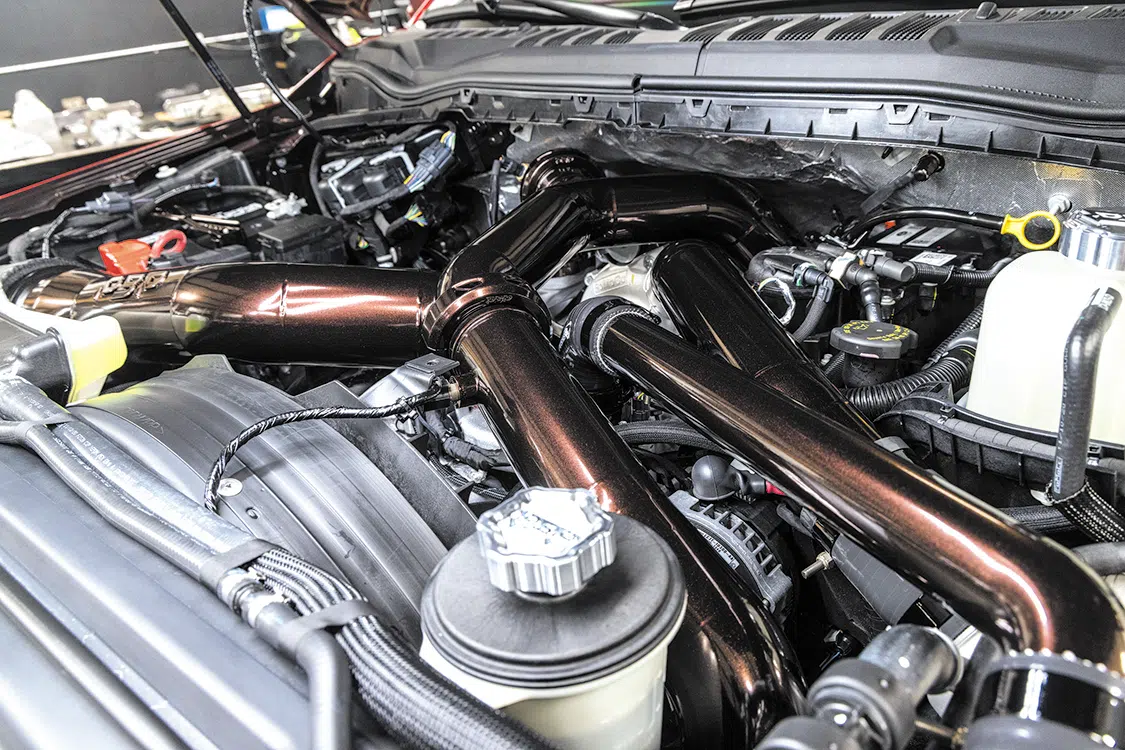
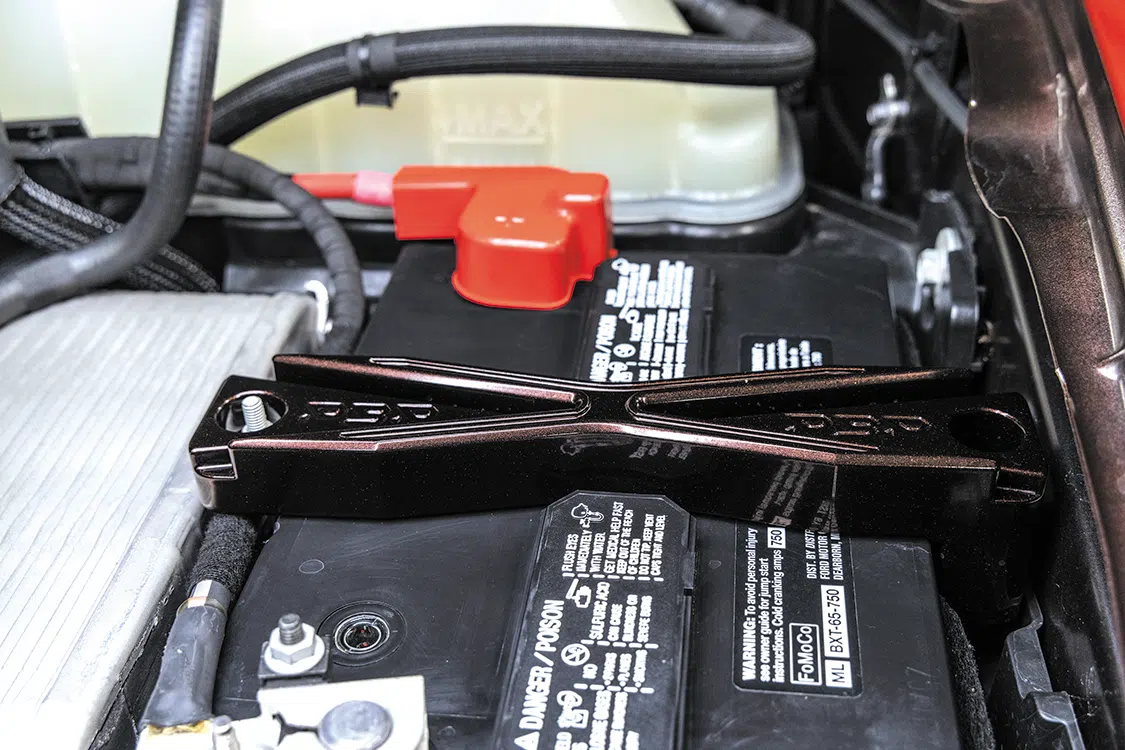
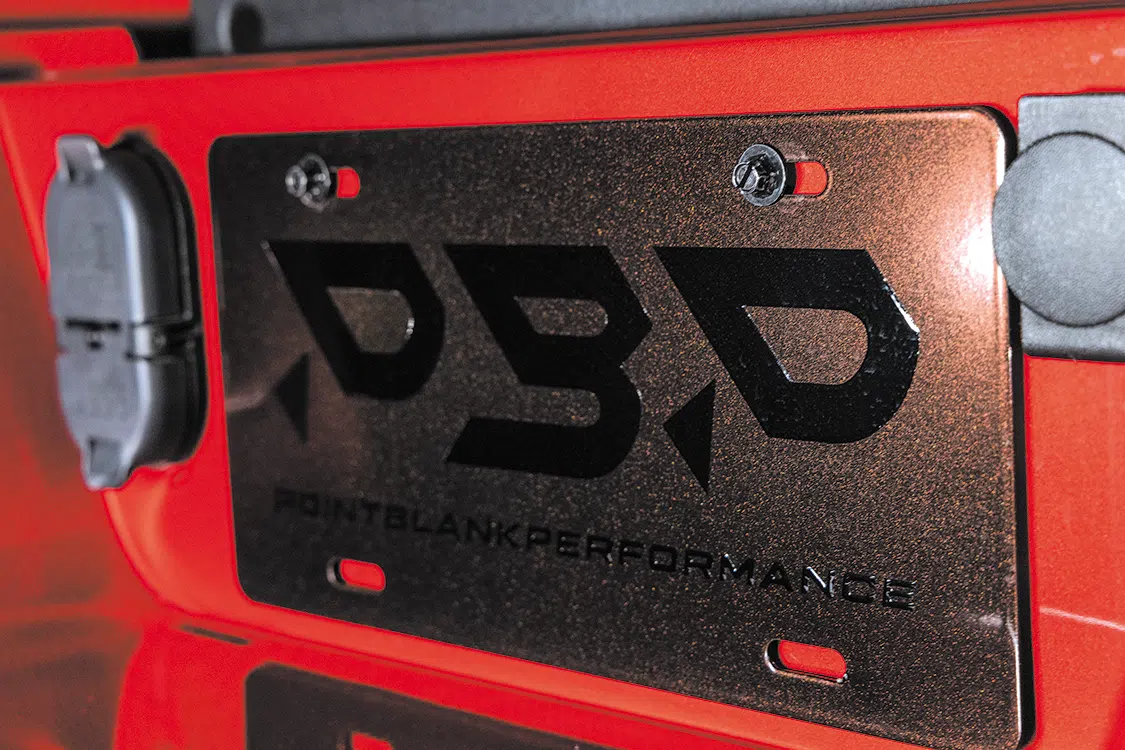
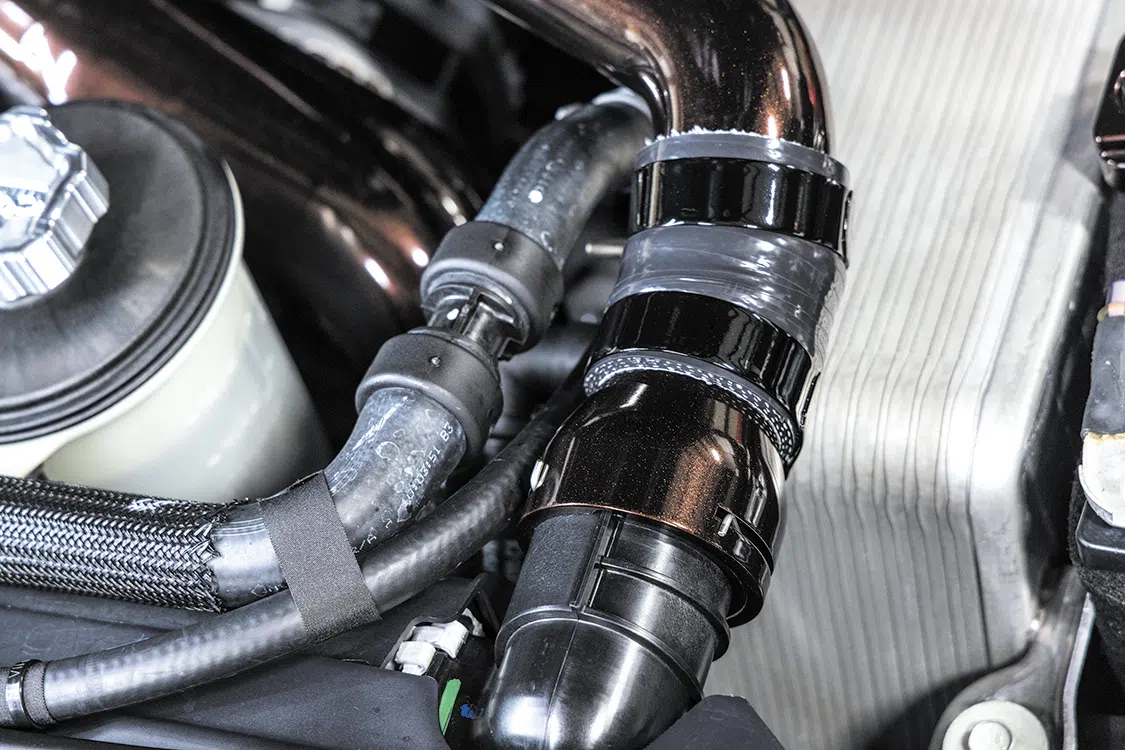
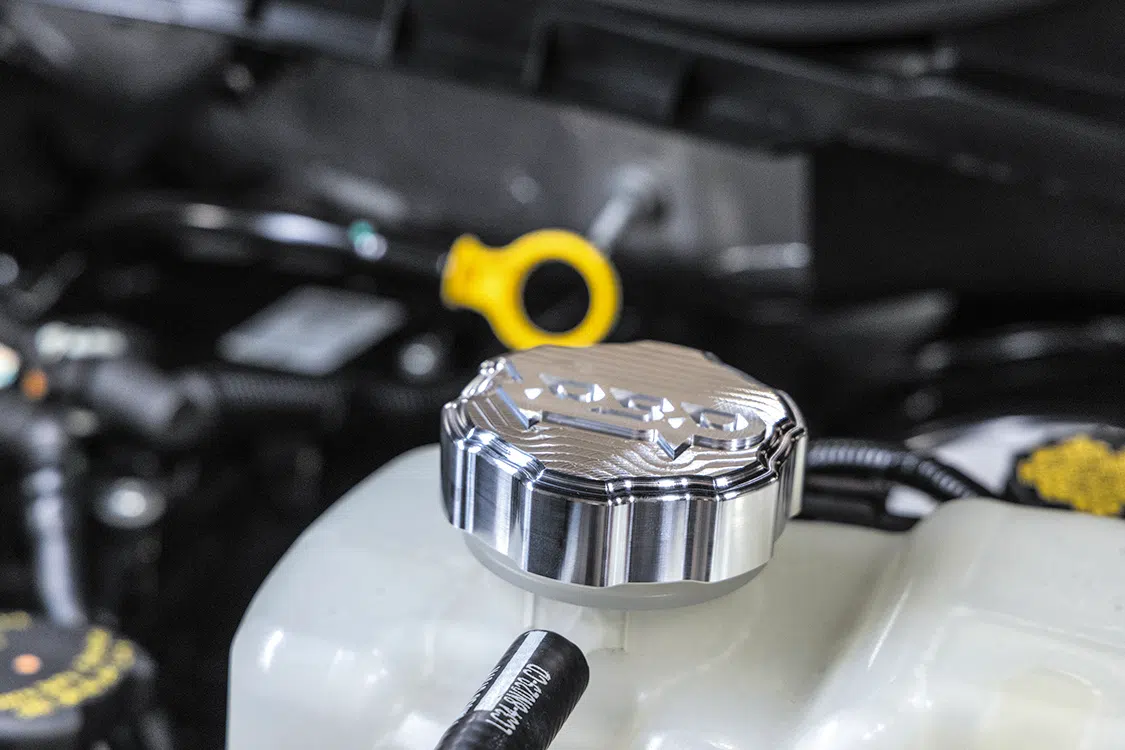
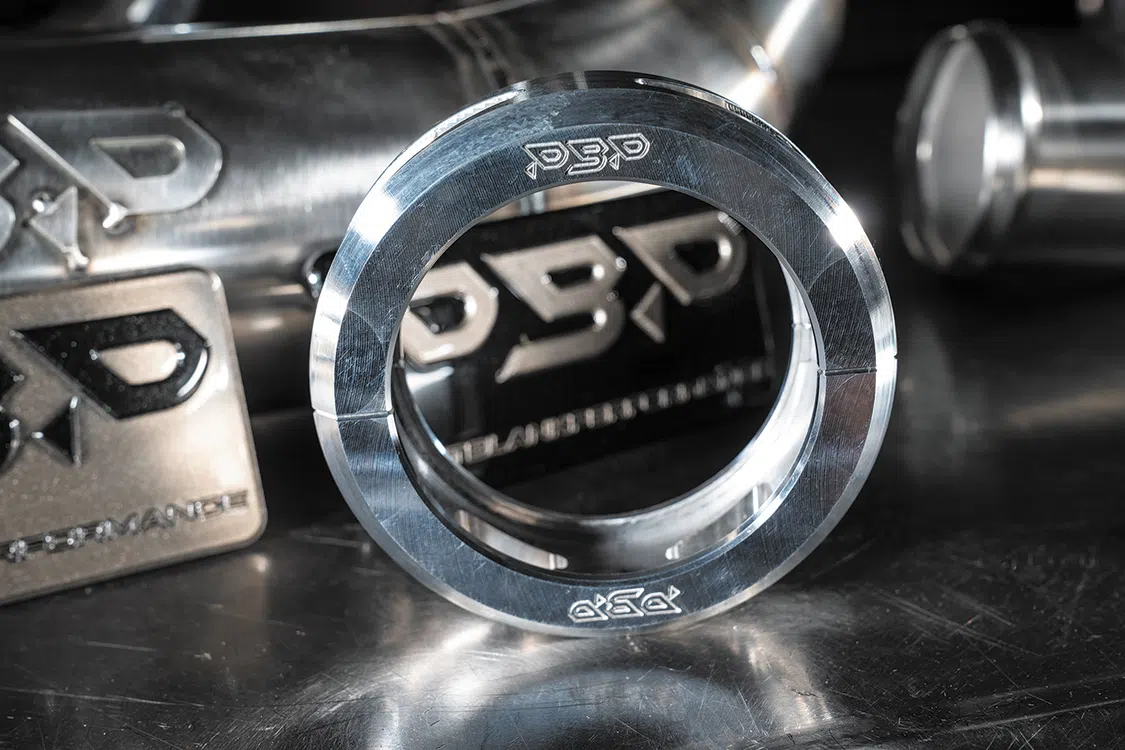
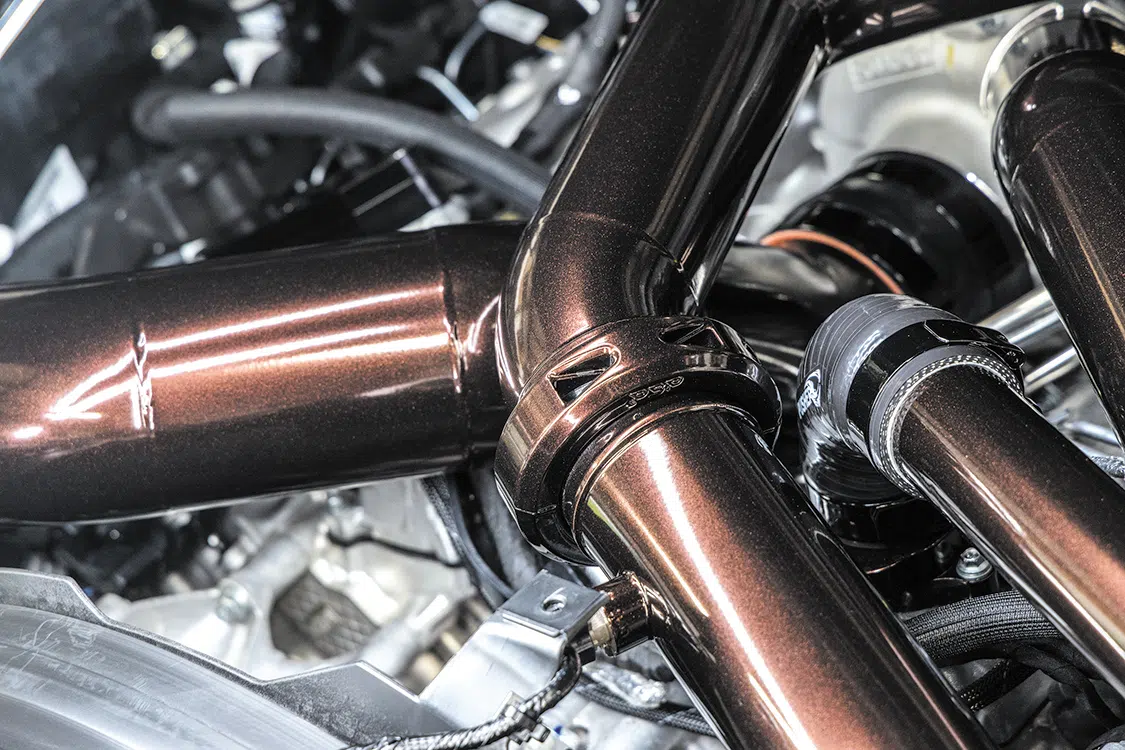
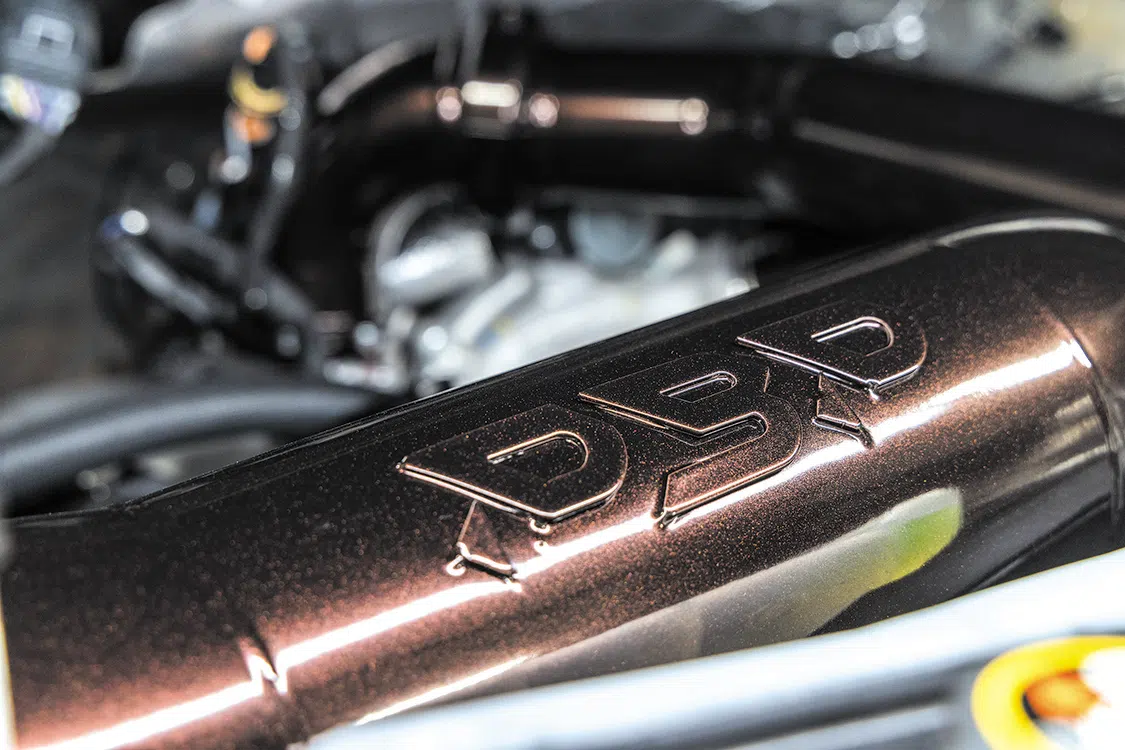
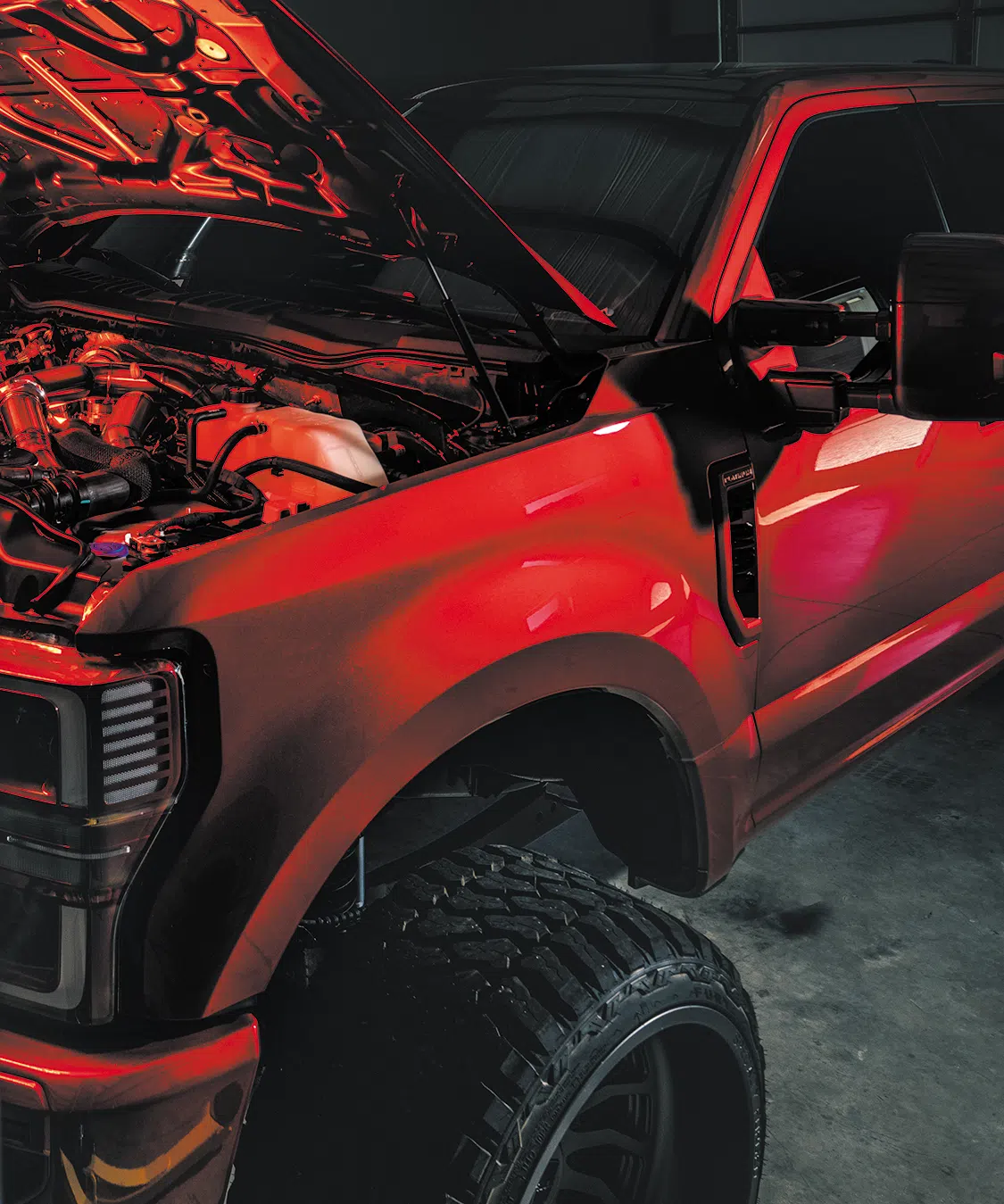
Macy and Tyson both wanted to test the limits on the factory 6.7L turbo, so they had a piping kit fabricated to bolt on directly to the turbocharger utilizing Pointblank’s own billet HD clamps. While they were at it, Pointblank’s other billet accessory offerings in the way of battery brackets and power steering and coolant caps were thrown into the mix, for good measure. To increase the visual appeal of the engine bay, all these parts were sent off to Black Label Coatings for powdercoating to match up with the same black copper used on the wheels. There was a little downtime for the truck while waiting for the parts to come back, but it was well worth the wait for Macy.
“For now, the build is done”, she says. “I am sure there will be some minor upgrades in the future, but nothing too wild, I’m sure. I can say that I am genuinely happy with how everything came out so far. None of it would have been possible without Tyson’s keen eye and attention to detail. He has helped me from start to finish and I have learned so much along the way. I am excited to see what the future holds for Pointblank Performance, as well as my truck and my expanding experience within the diesel truck community.”
Owner: Macy Buchanan
Jonesboro, AR
Engine/Drivetrain
Chassis/Suspension
Wheels, Tires & Brakes
Body/Paint

Photos by the Editor Chris Hamilton
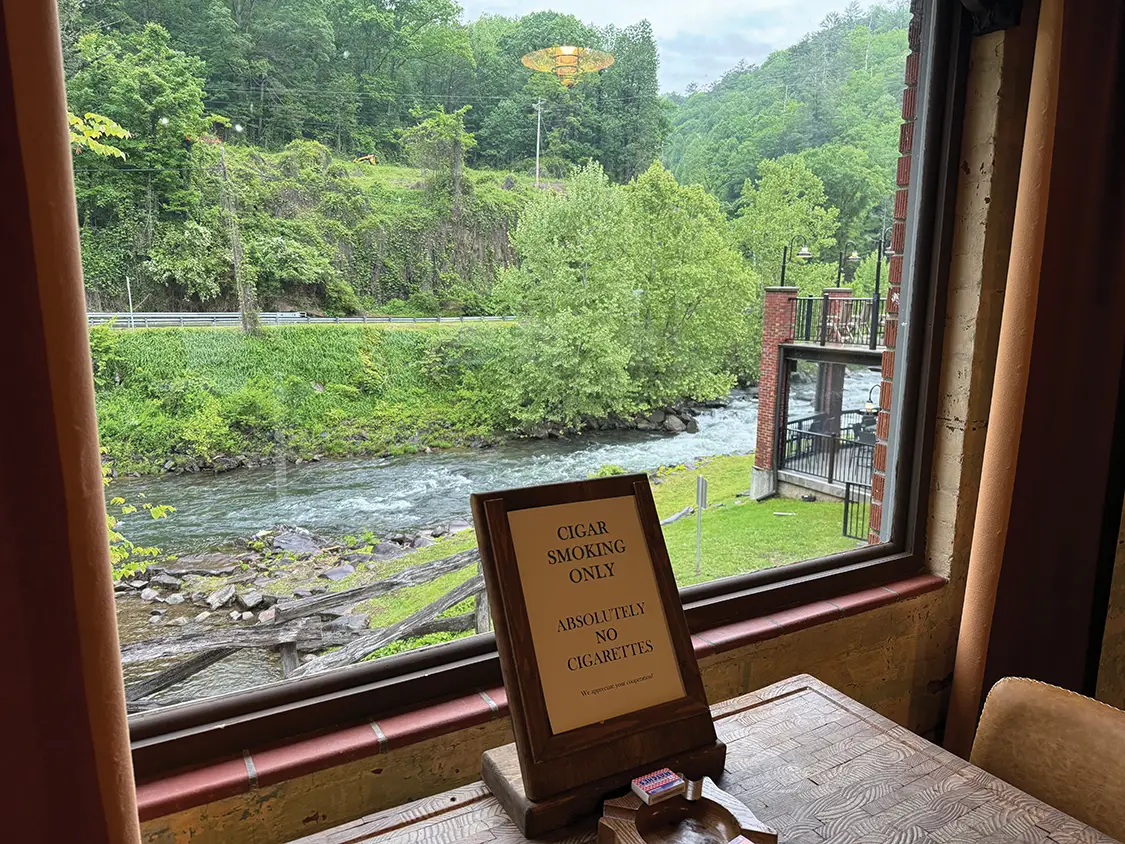
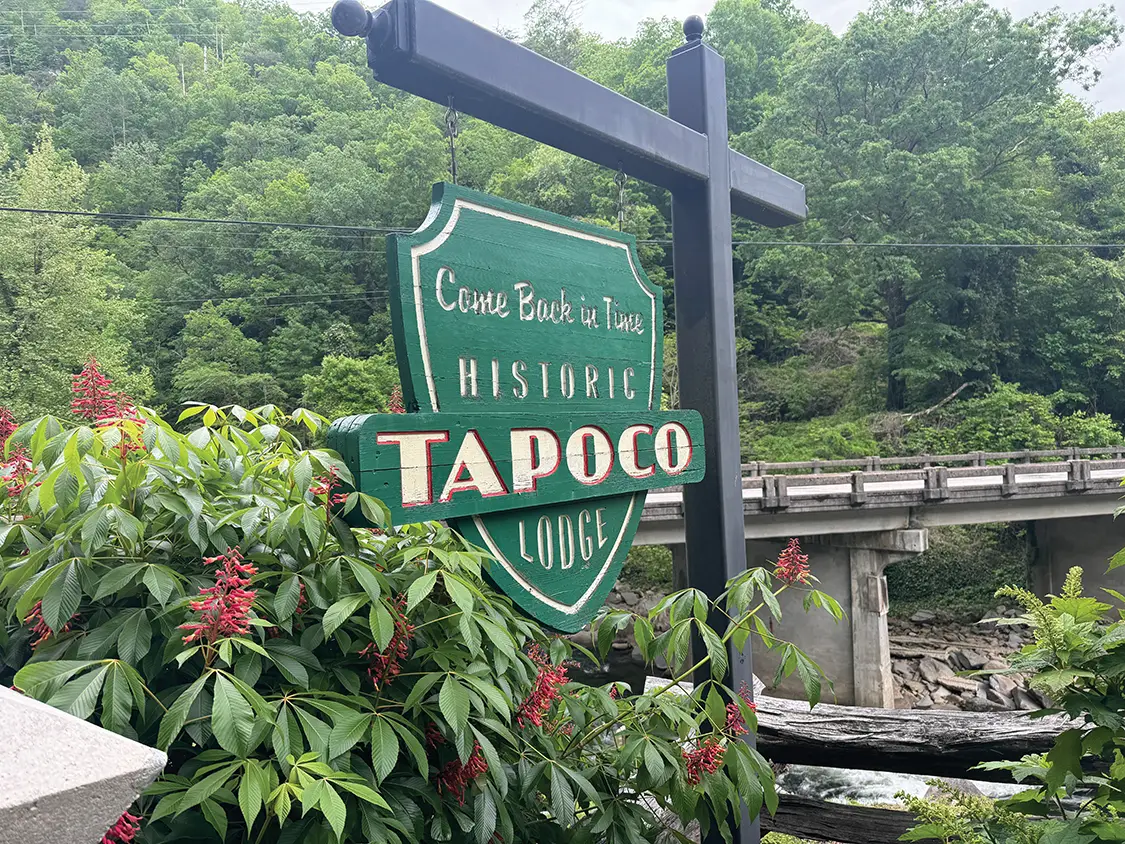
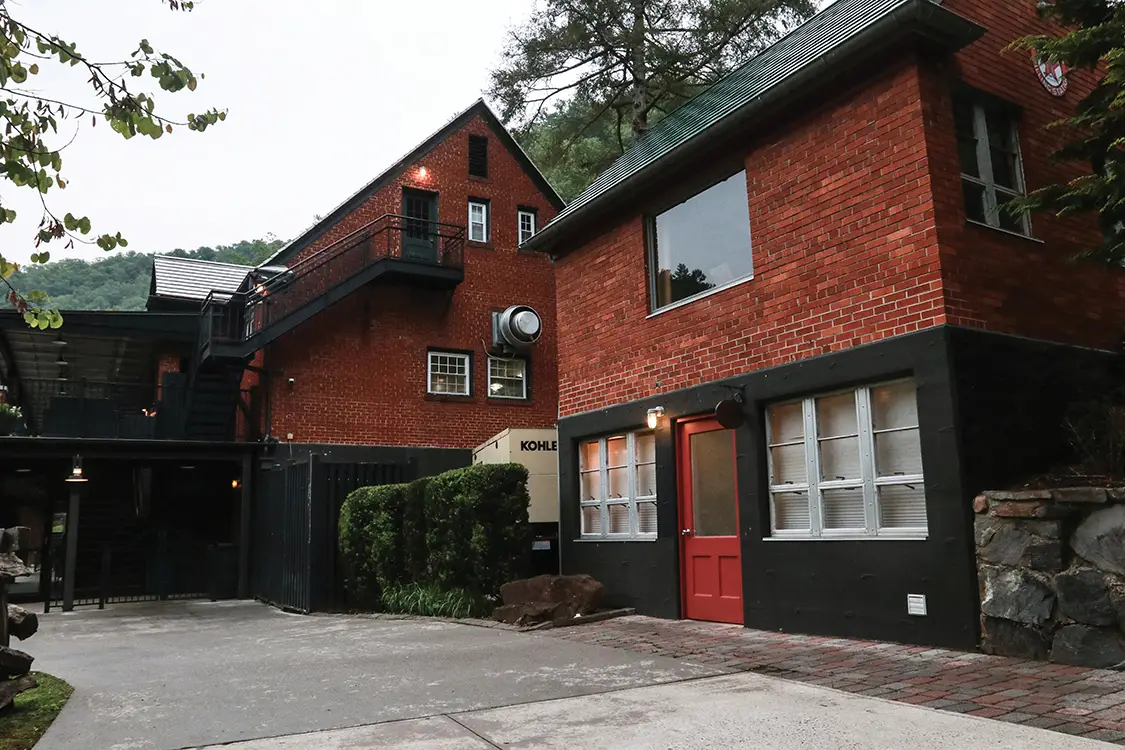
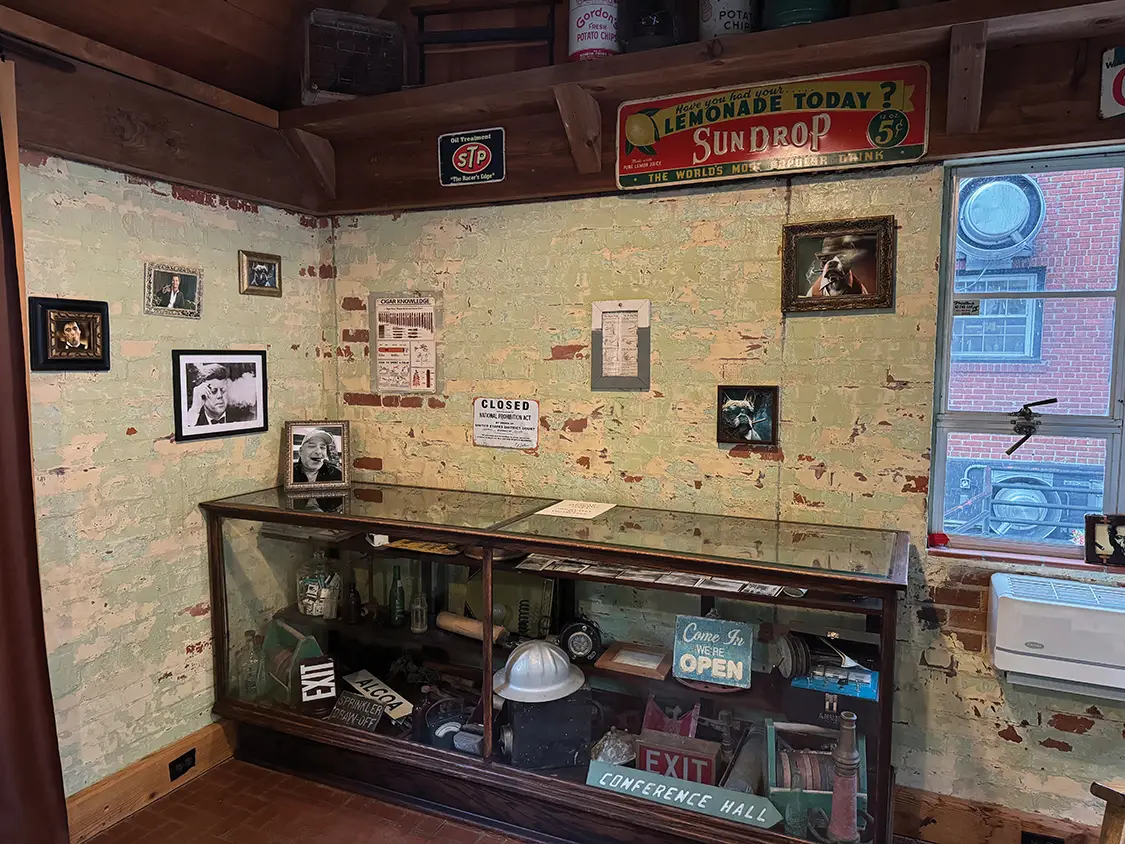
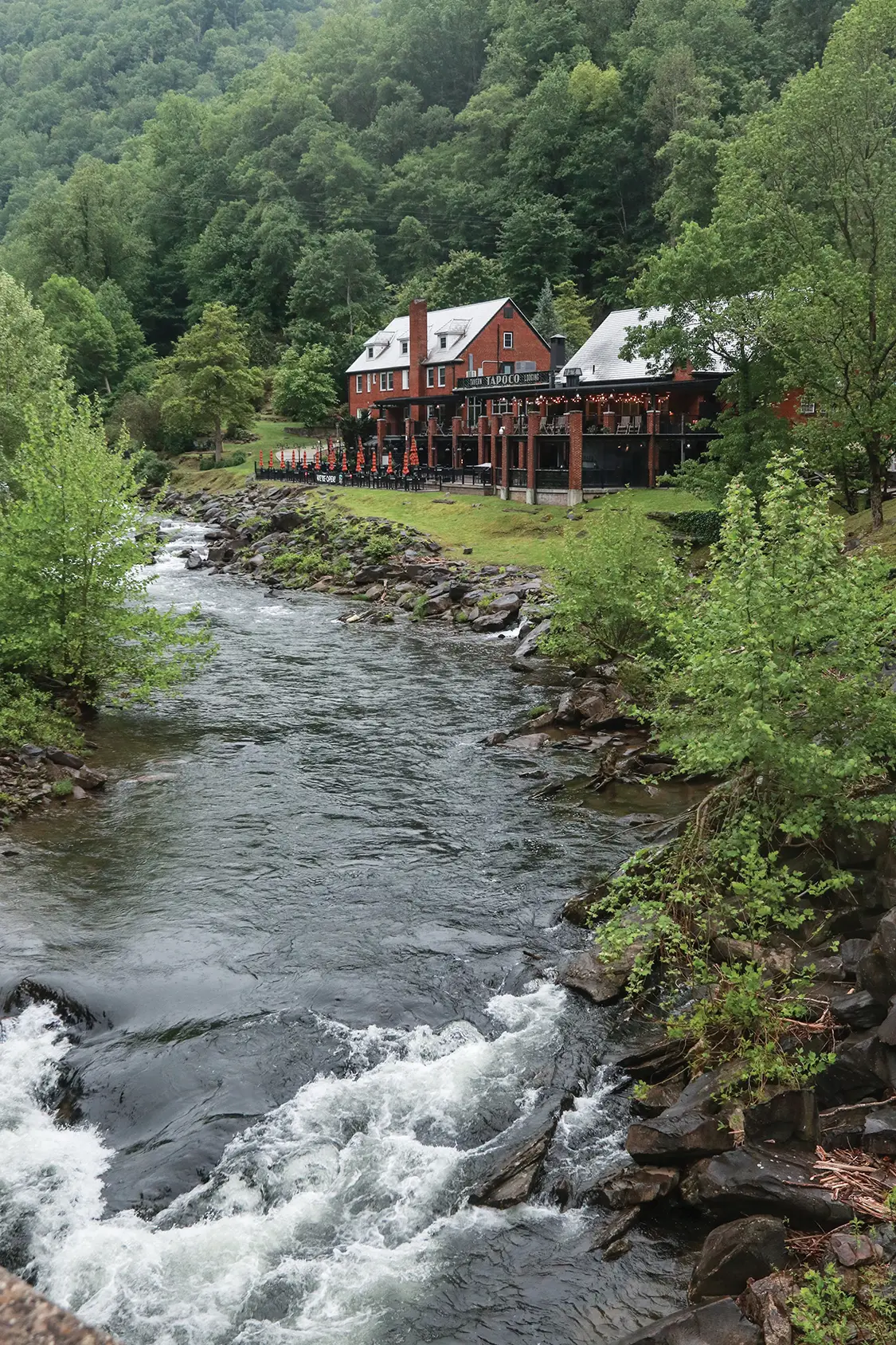
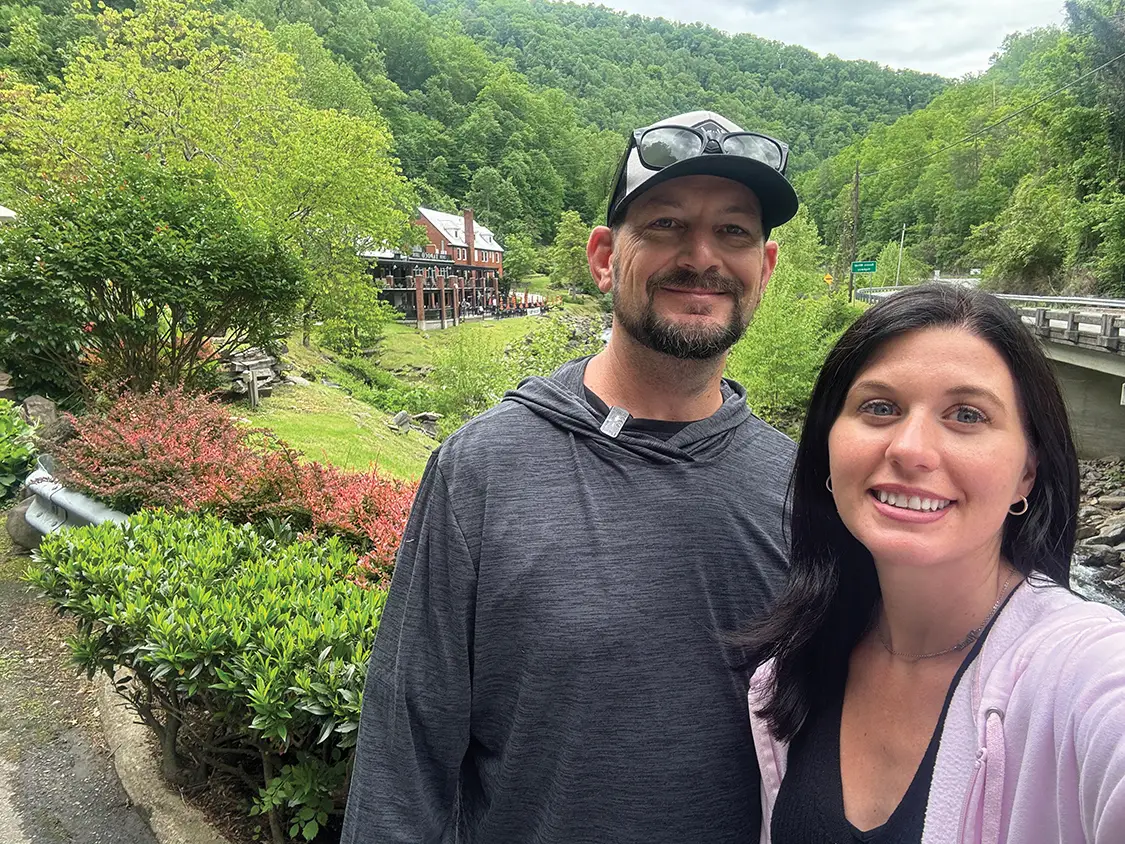
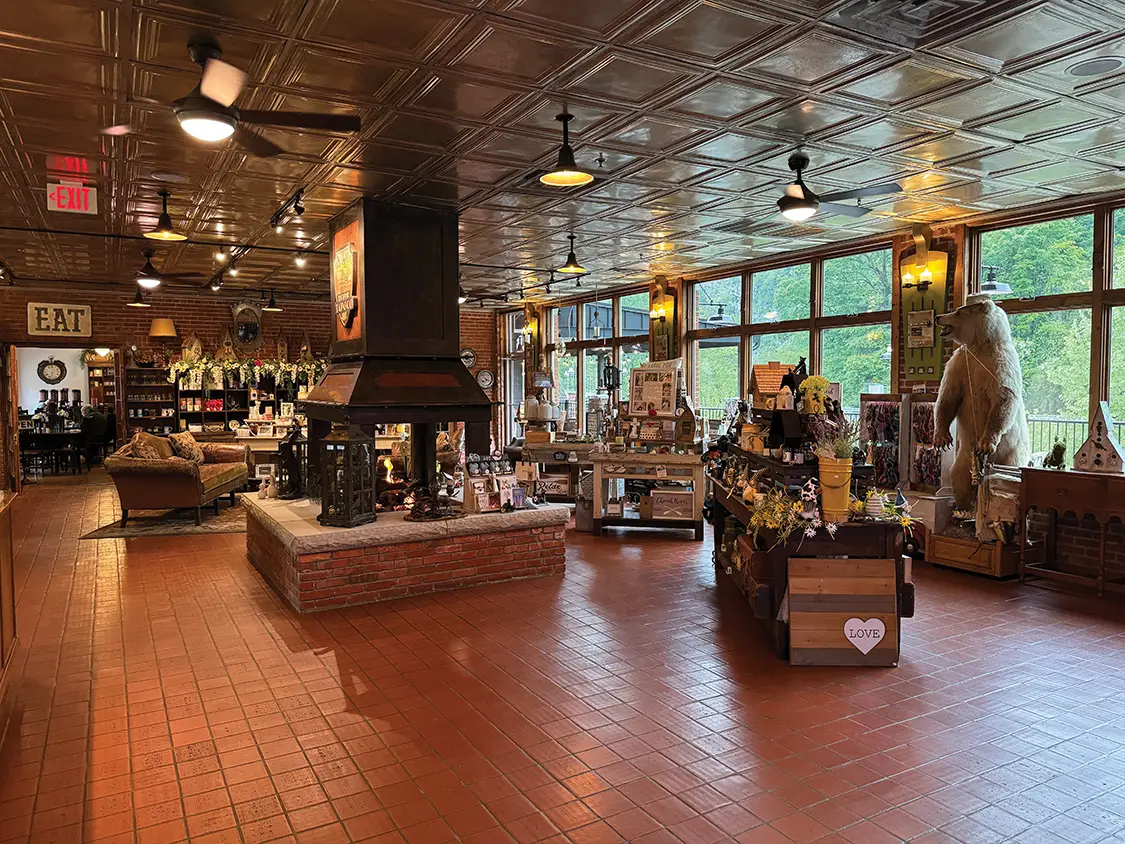
When you spend your days behind the wheel and your nights dreaming of the next road trip, there’s a place tucked into the Smoky Mountains that feels like it was built just for folks like us. On a recent adventure through western North Carolina, we had the pleasure of spending two nights at the legendary Tapoco Lodge, a century-old hideout that’s as full of history as the engines roaring past it on US 129, better known as the Tail of the Dragon.
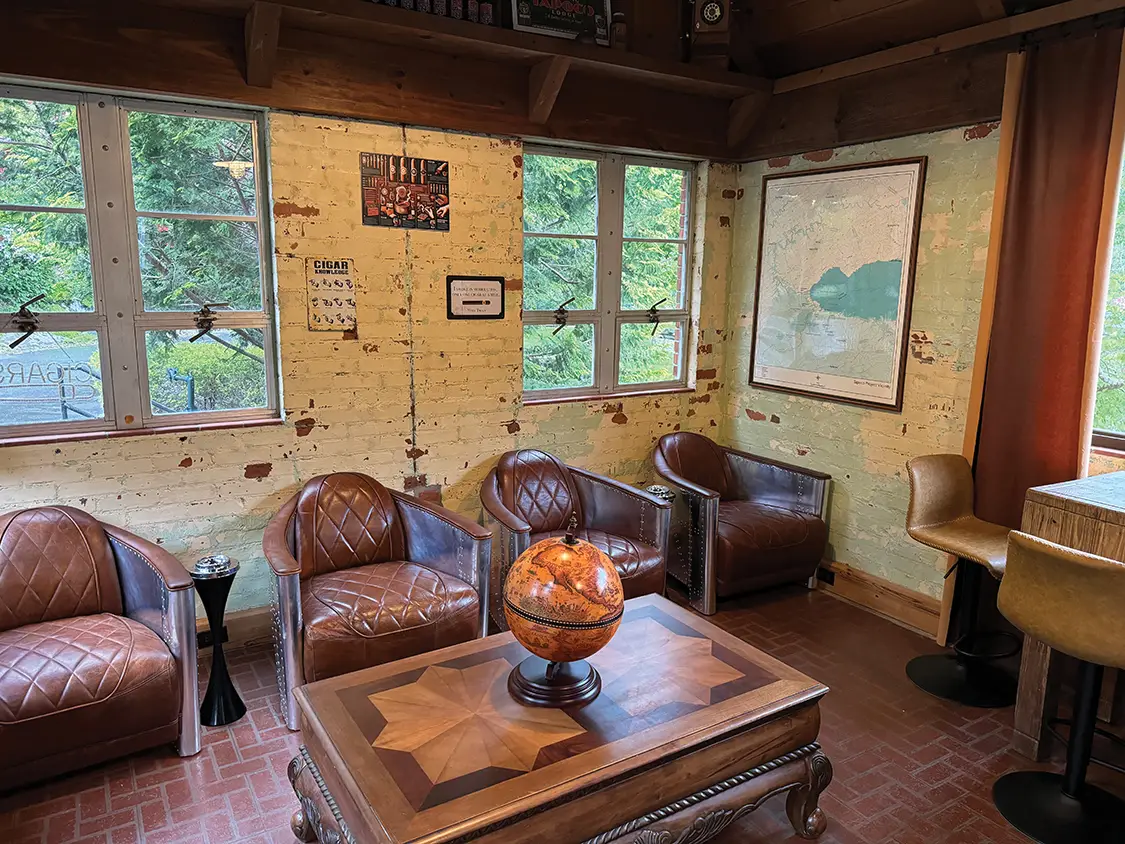
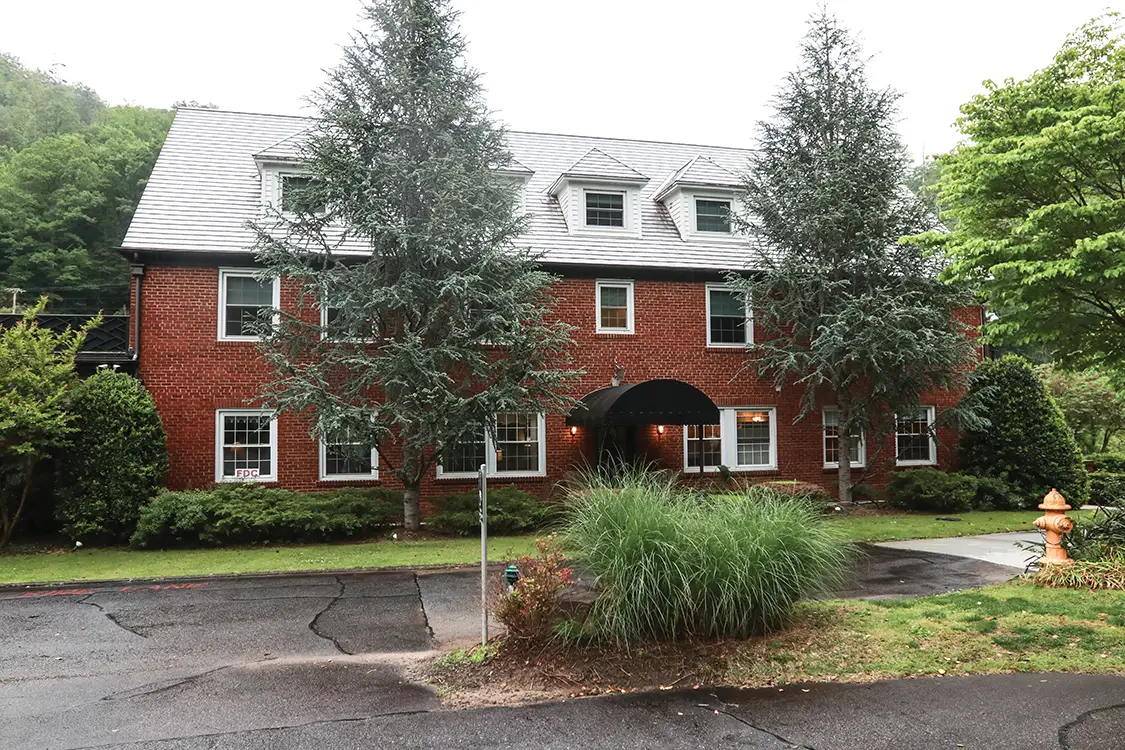
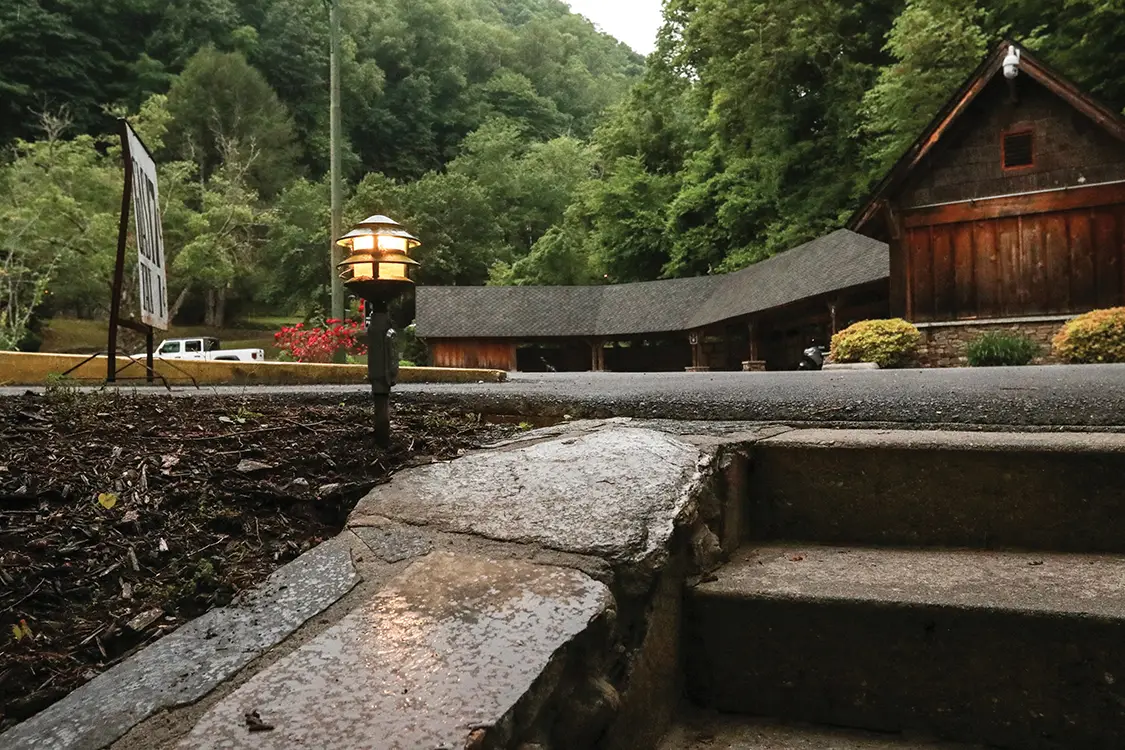
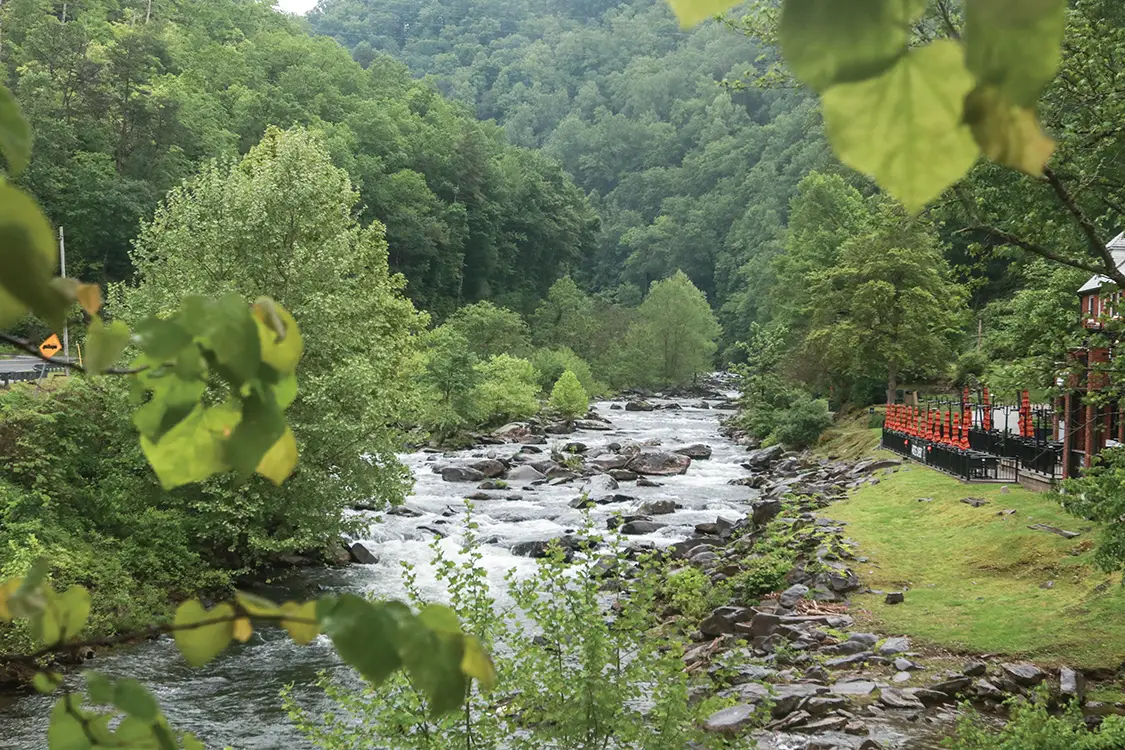
Founded in 1930 as part of a hydroelectric project, Tapoco Lodge started as a private retreat for workers from the Tallassee Power Company (hence the name: TA-PO-CO). Today, it’s been beautifully restored and updated, but it still holds tight to its roots, solid craftsmanship, a riverside location, and that old-school charm that’s hard to replicate.
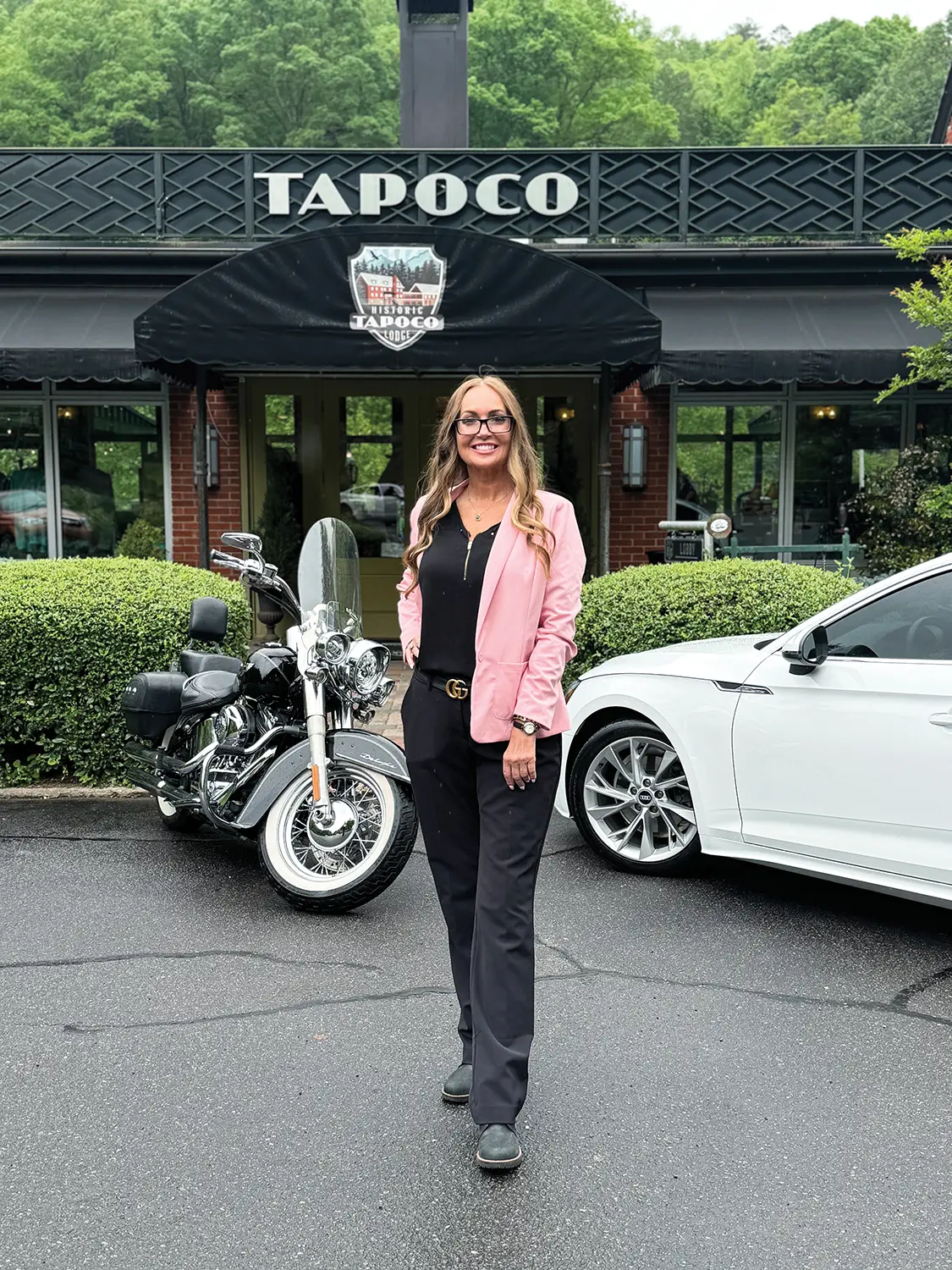
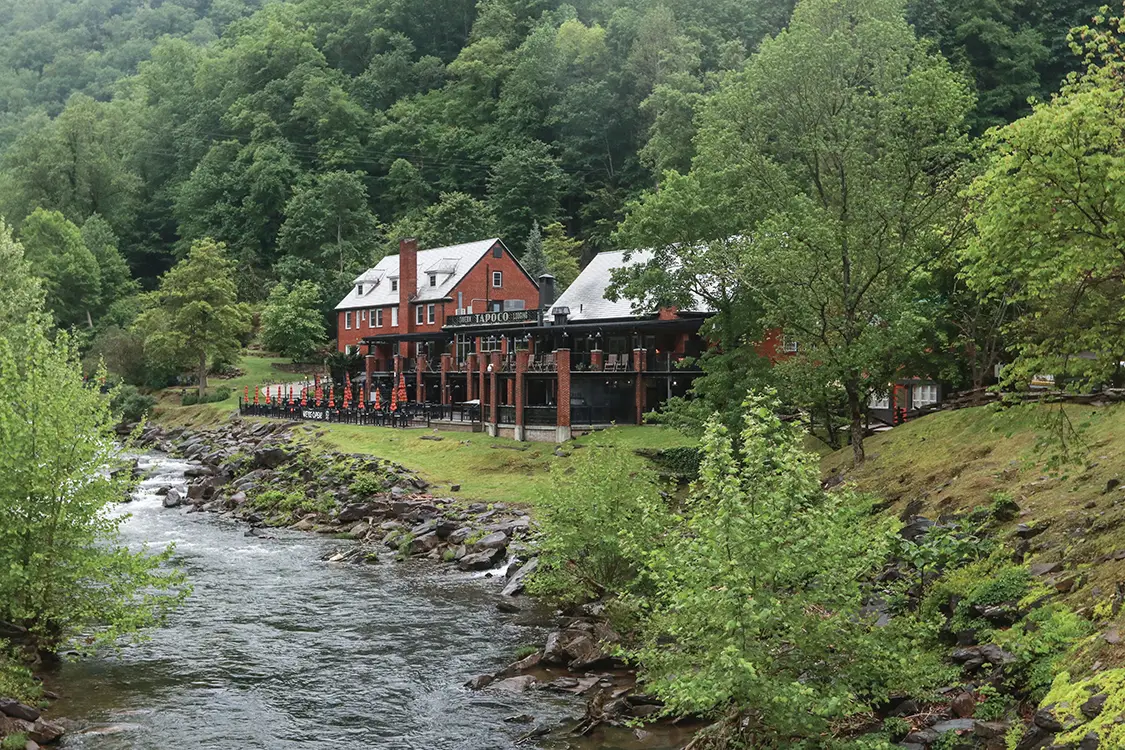
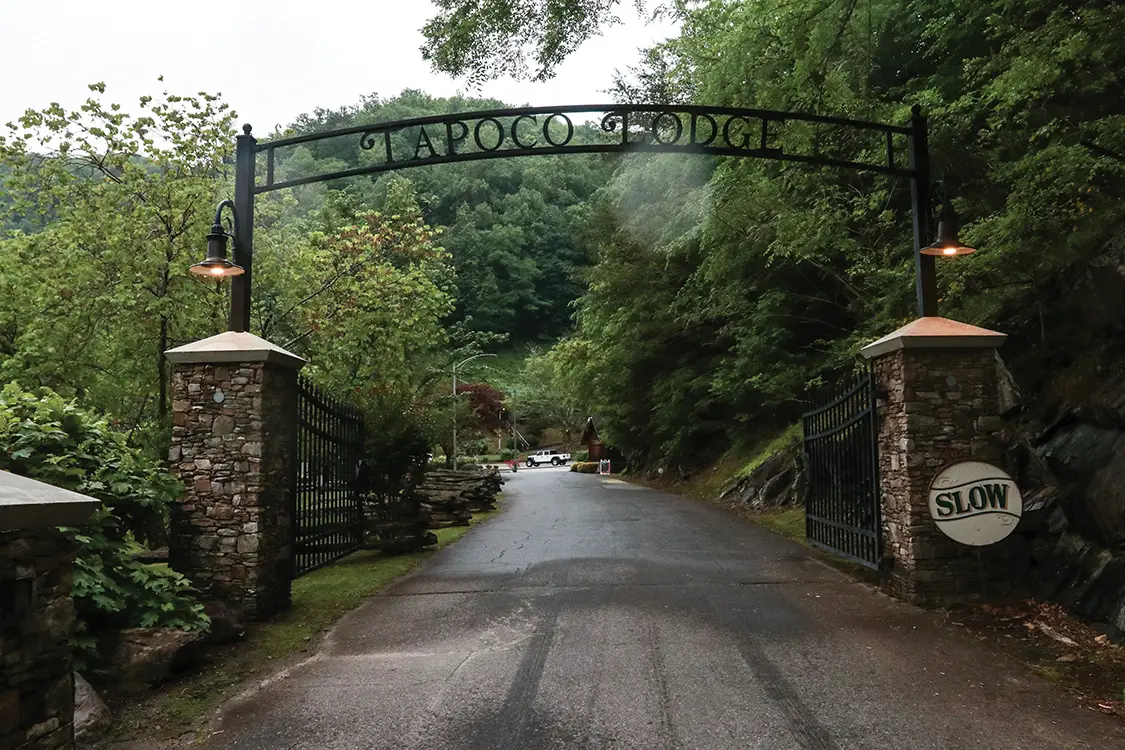
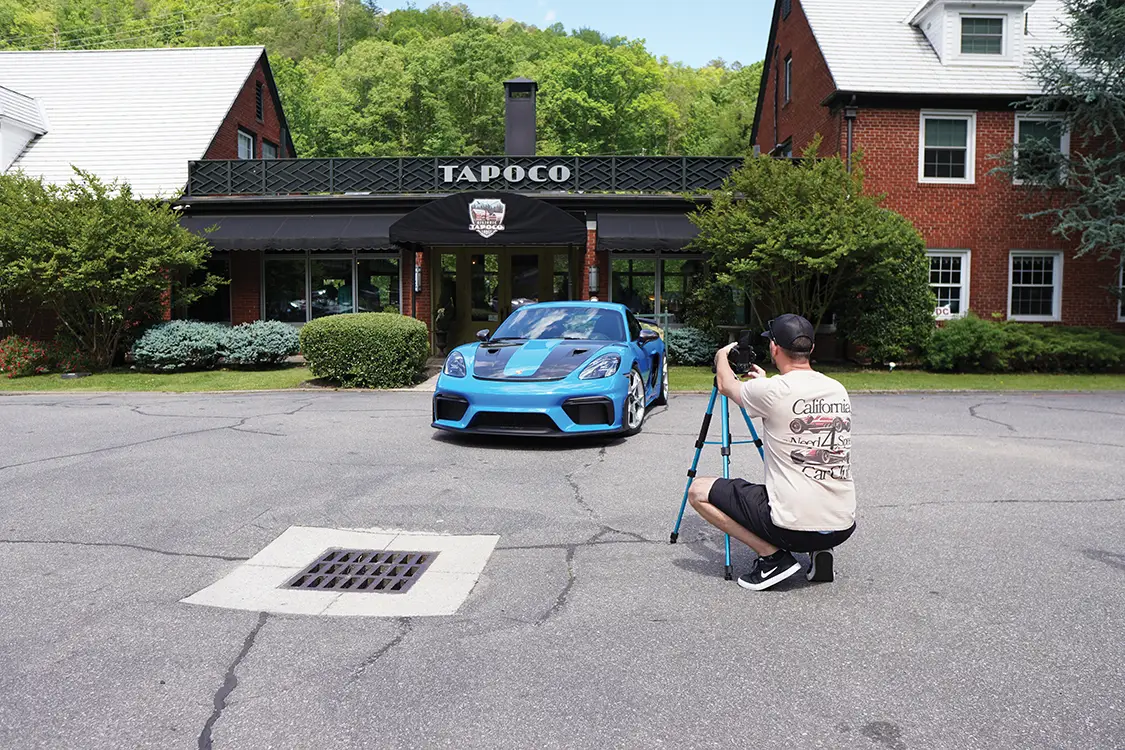
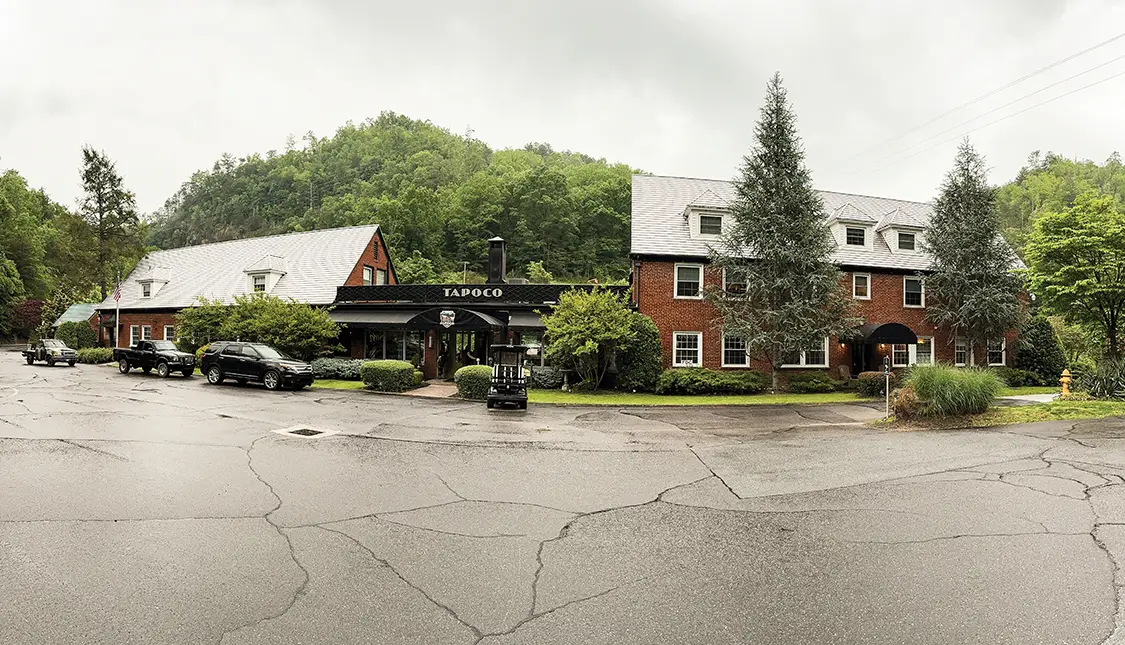
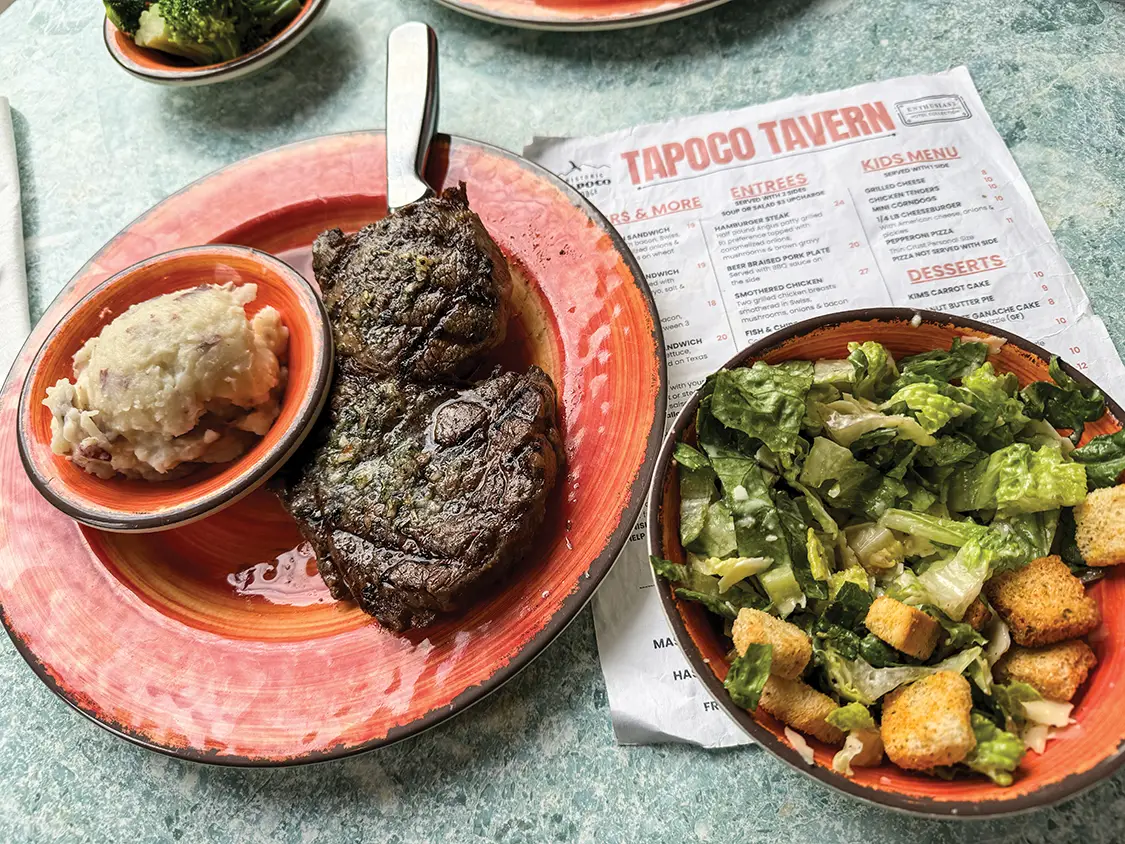
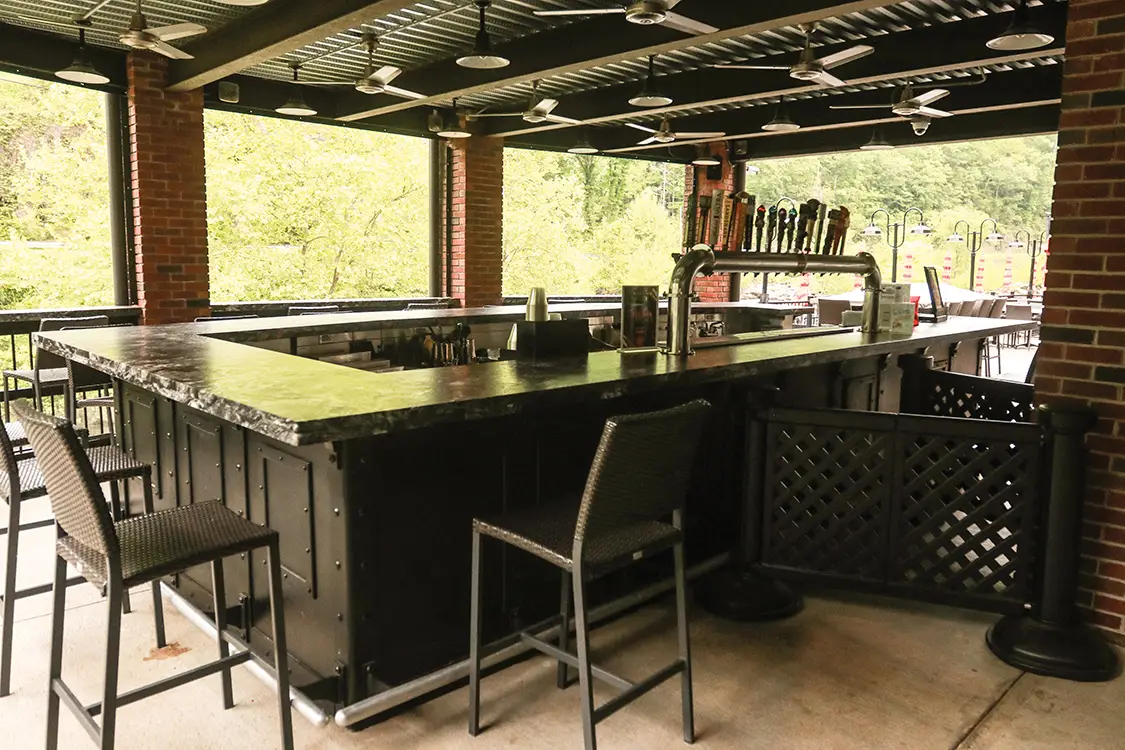
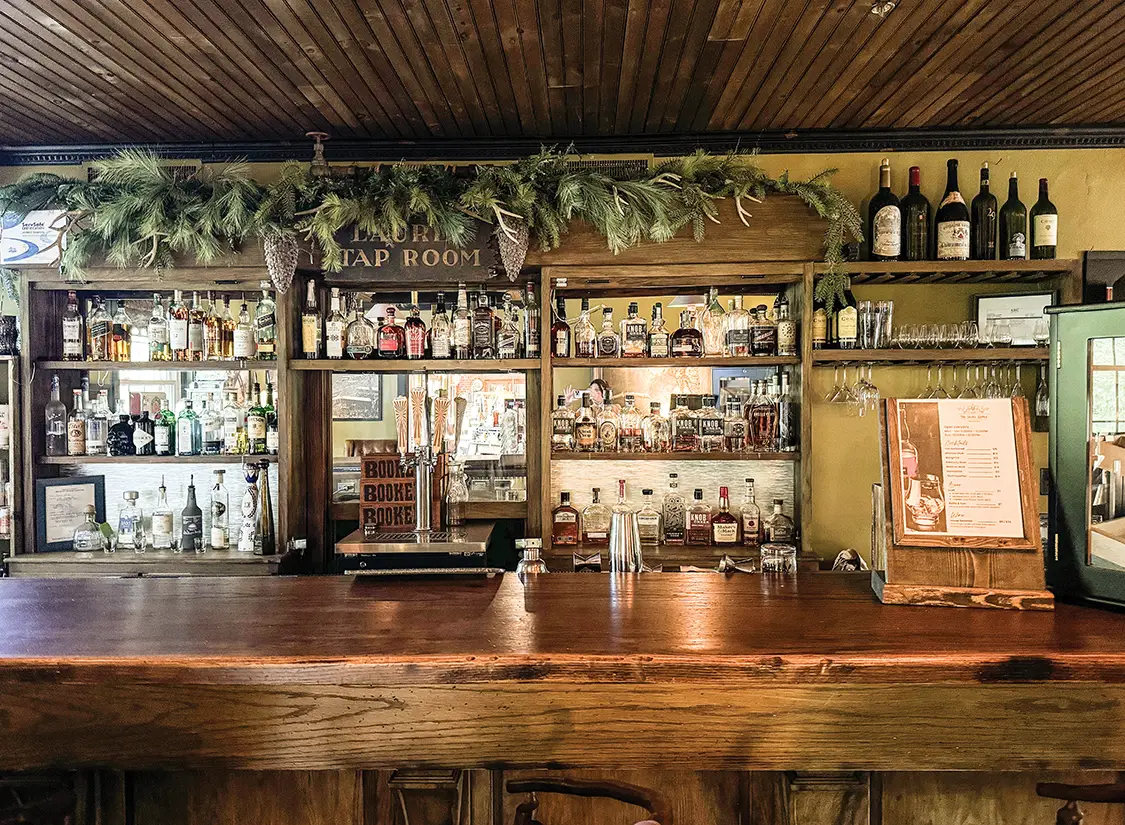
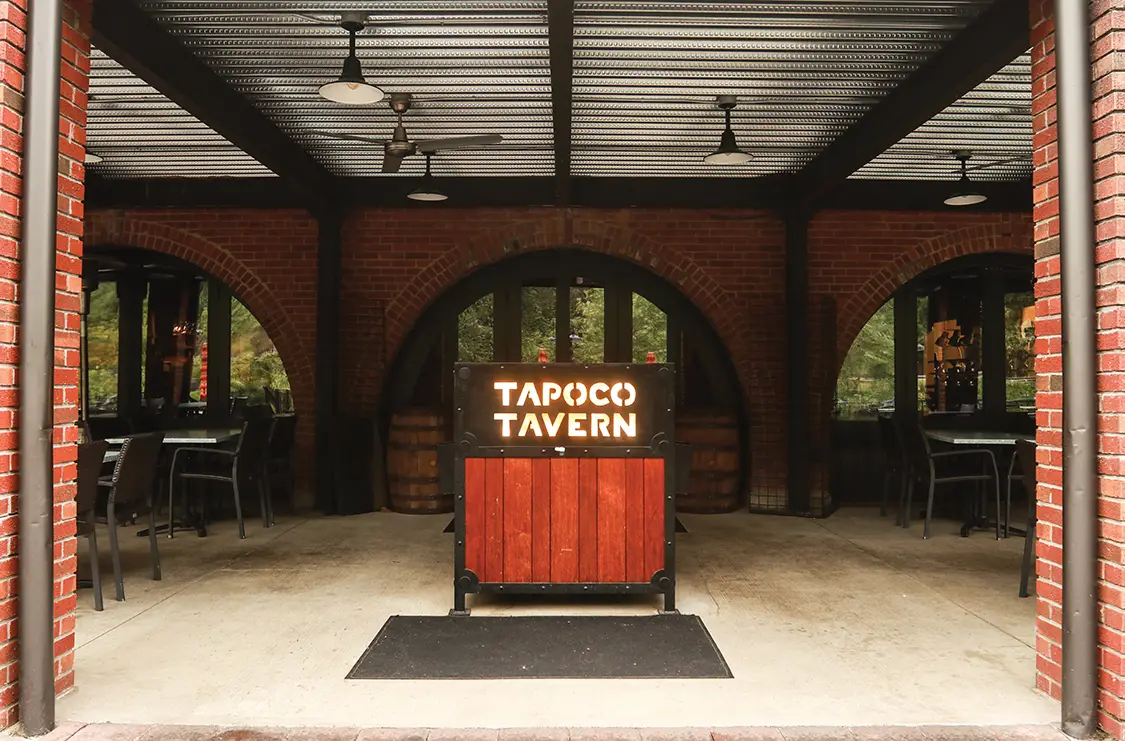
From the moment we pulled in, we were greeted with southern hospitality that hits just right. Valerie Frapp, the general manager, gave us the full tour, showing off everything from the classic lodge-style rooms and cozy cabins to the on-site tavern and riverside restaurant. Let me tell you, the food is just as good as the scenery. Whether you’re snacking on a burger after a day of carving corners or sipping something cold with friends under the stars, Tapoco Lodge has you covered.
And speaking of corners, this trip wouldn’t be complete without tackling the Tail of the Dragon. With 318 curves packed into just 11 miles, it’s a holy grail for gearheads of all stripes. We shared the motorway with motorcycles, muscle cars, slammed imports, and even a few lifted rigs. No matter what you drive, the Dragon demands respect, and rewards it with one hell of a ride.
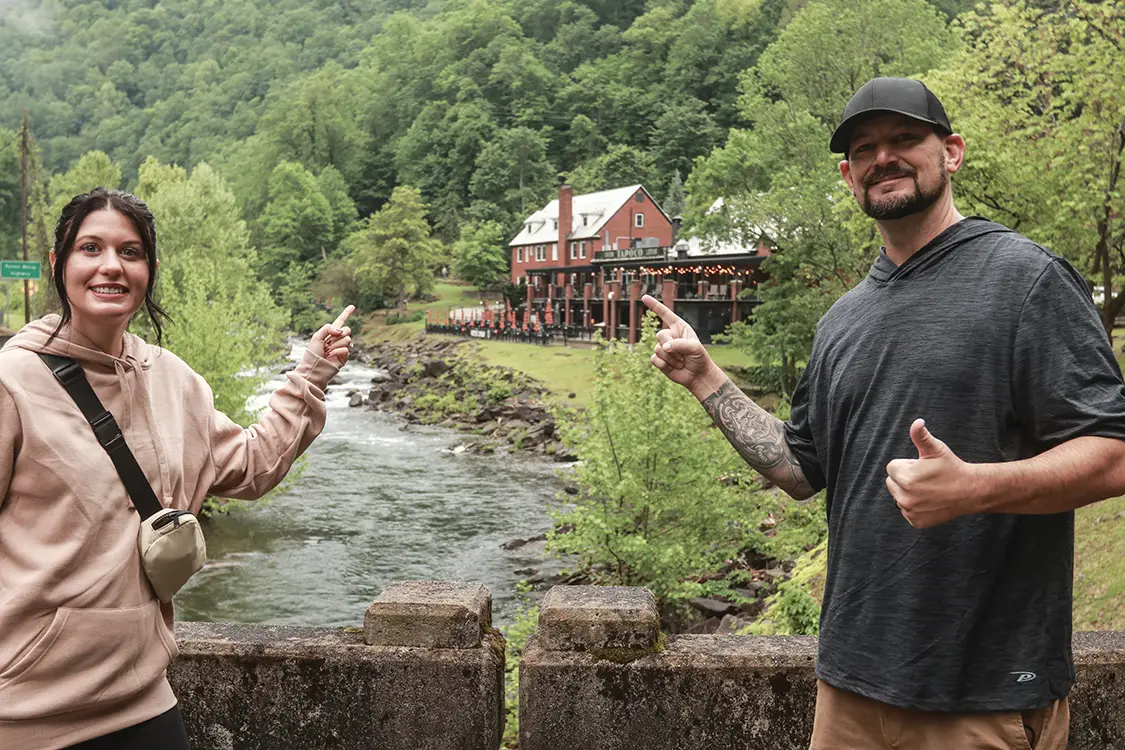
Tapoco Lodge makes the perfect basecamp for this kind of action. You roll in grinning, grab a hot meal, crash in a clean, comfy room, and do it all again the next day. Whether you’re out here solo or cruising with your crew, it’s the kind of place you’ll want to come back to every season. We highly recommend adding this stop to your next road trip itinerary. You won’t regret it.
Gearhead Travel Tips: Tapoco Lodge + Tail of the Dragon Edition
The Dragon draws a serious crowd between spring and fall. If you’re planning a trip between April and October, lock in your room or cabin at Tapoco Lodge early. Weekends fill up fast!
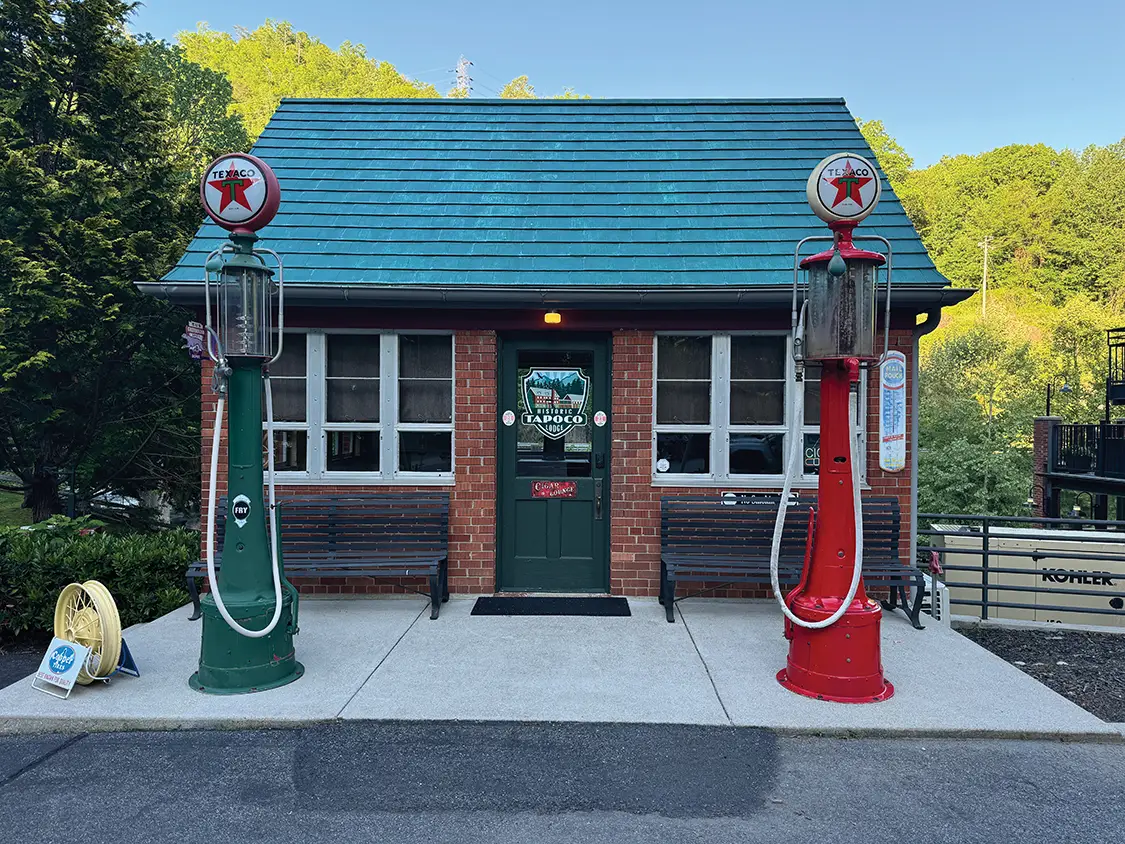
There are no gas stations on the Dragon itself. Top off in Robbinsville or Deals Gap before you start carving corners; you don’t want to be stranded mid-ride.
It’s 318 curves in 11 miles for a reason. Stay in your lane, drive smart, and watch for motorcycles and sports cars, everyone’s there to have a good time, not trade paint. Luckily there are plenty of pull off areas to let the faster rides pass you by.
Whether you’re rolling through in a bagged truck or riding your Harley, this road deserves to be captured. Mount up a cam, hit record, and relive the ride later.
The ride to Tapoco is almost as good as the Dragon itself. Plan your route to include the Cherohala Skyway or Foothills Parkway for more curves, killer views, and less traffic.
The Smokies can flip weather on you fast, sunny at breakfast, rain by lunch. Bring layers, and don’t forget rain gear if you’re riding.
No need to head into town, Tapoco’s on-site tavern is excellent. Big portions, cold beer, and a patio right next to the river. Can’t beat it after a long drive.
Everyone from the lodge crew to the sheriff’s deputies is used to gearheads rolling through. Show respect and you’ll get it back tenfold.
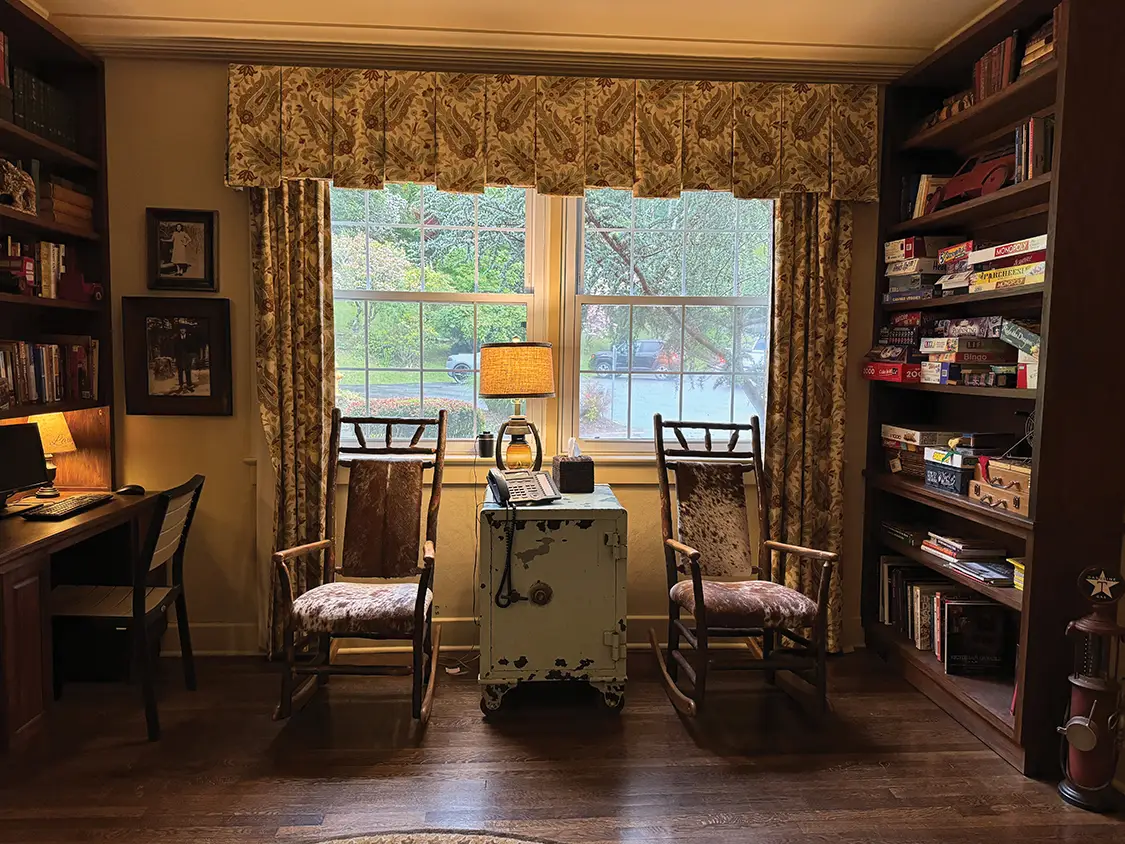
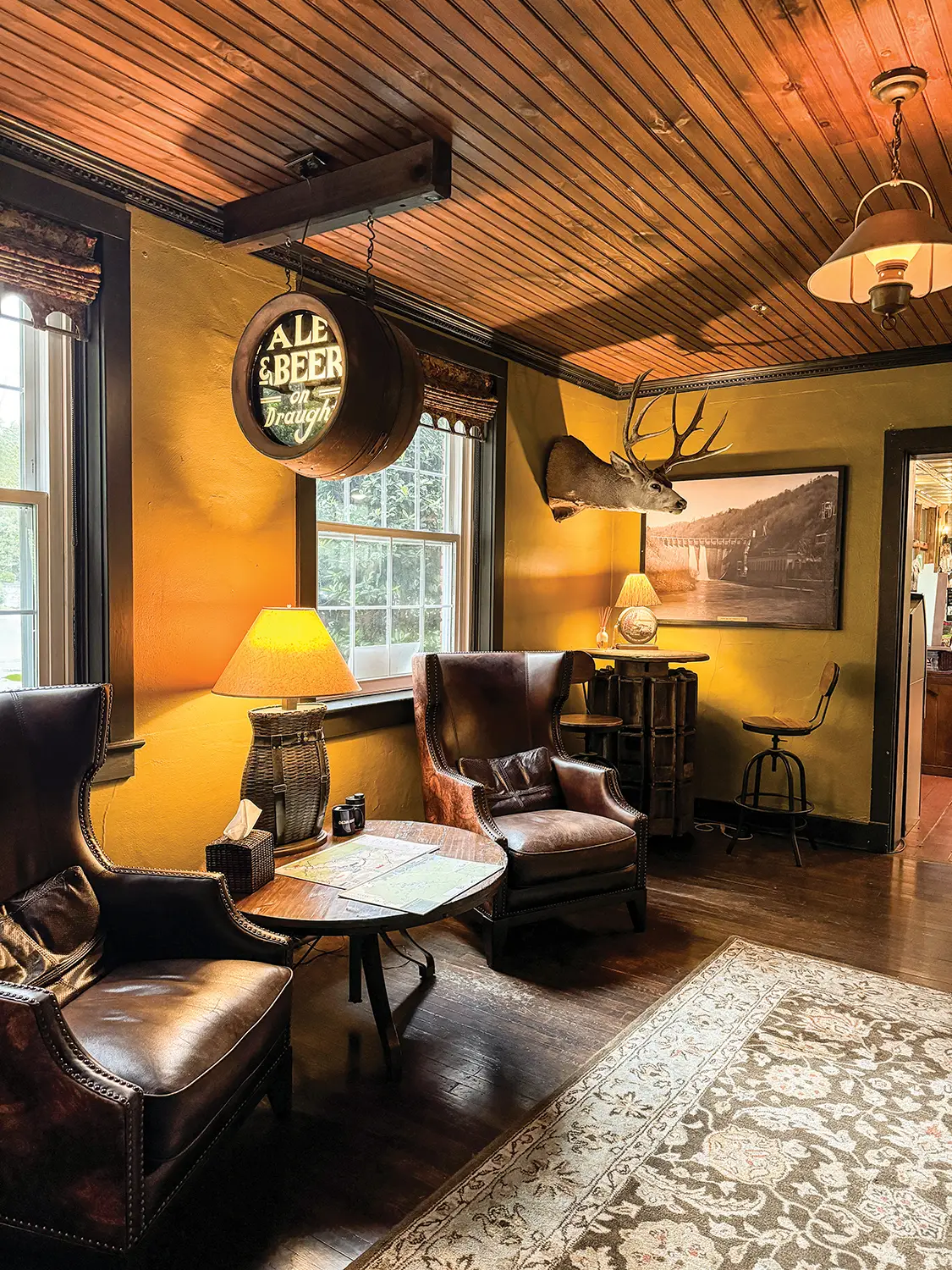
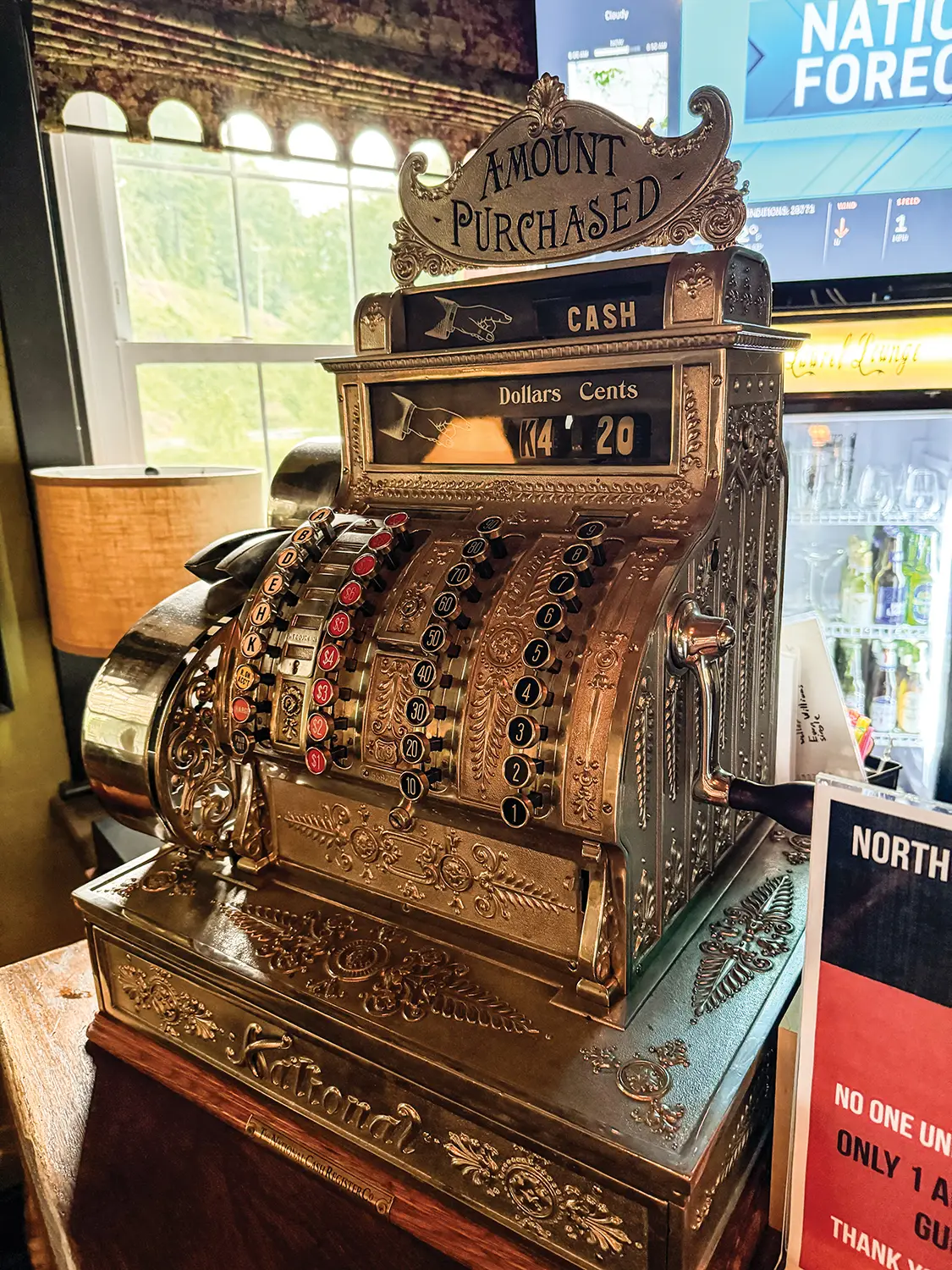
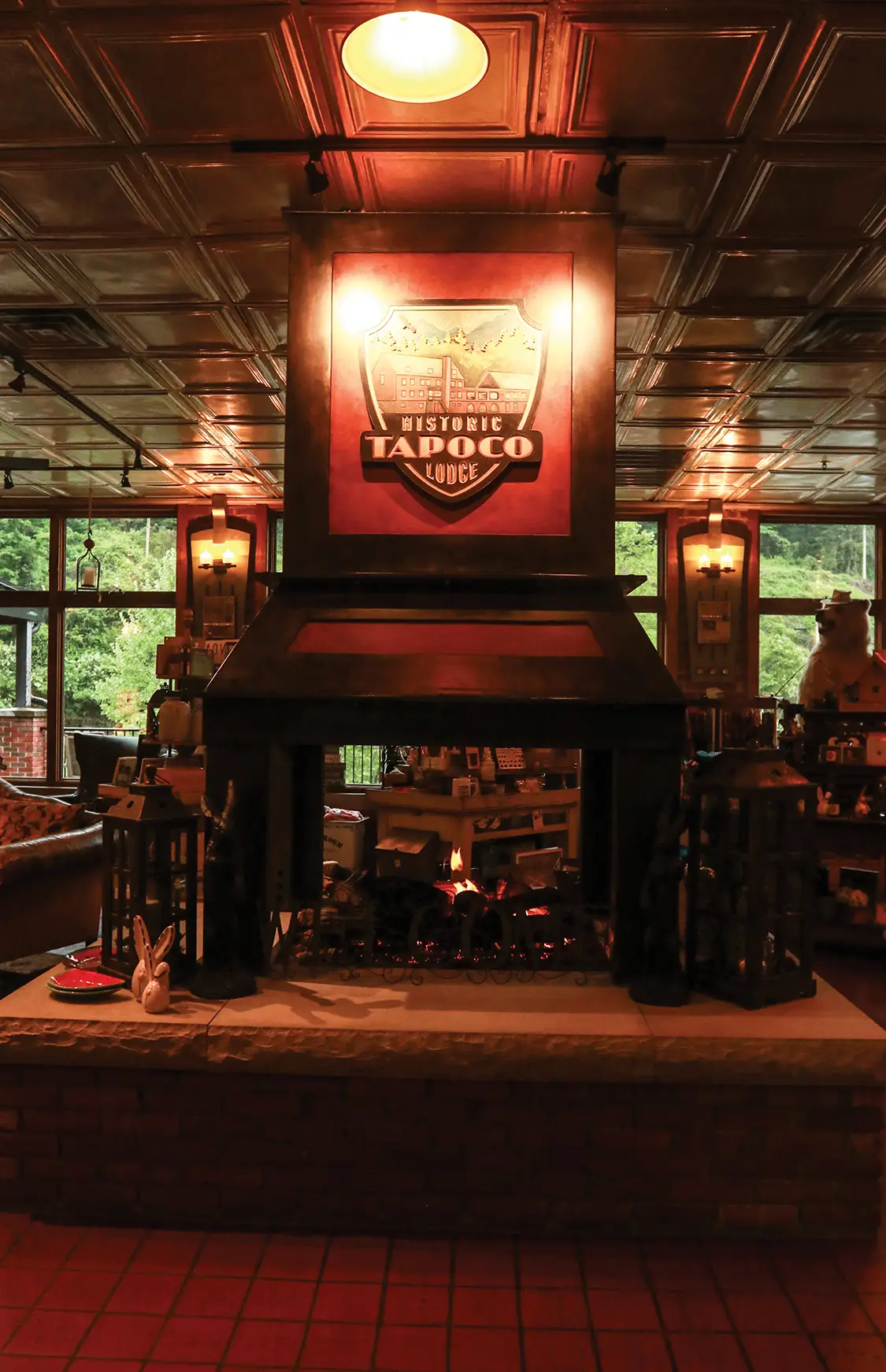
Photos by JOSE VALDEZ
The story behind the Tjin Edition Ford Mustang Mach-E California Route 1 showcases the passion and dedication of a true automotive enthusiast. Neil Tjin from Laguna Niguel, California, has been immersed in the automotive industry since 1996, turning his hobby into a full-time job and a lifelong passion, building award-winning show EVs and electric trucks—and organizing one of the coolest EV events in the US: Electrify Expo’s Showdown.
“I am a huge fan of the EV space, and even though it is still new and upcoming, it is freaking awesome,” Neil says. “And being the director of the showoff, I get to meet fellow EV builders, we get to set the trends for the future, and I get to see cool EVs across the country. The space is hot, new, and exciting, just as I like!”
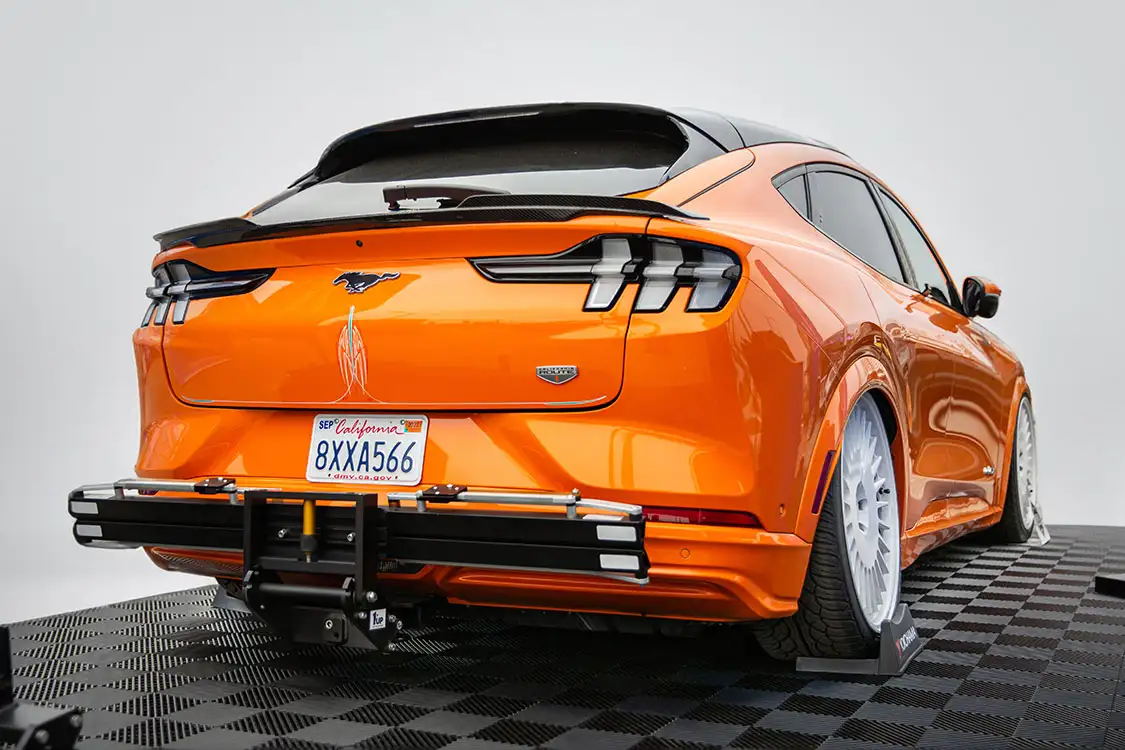
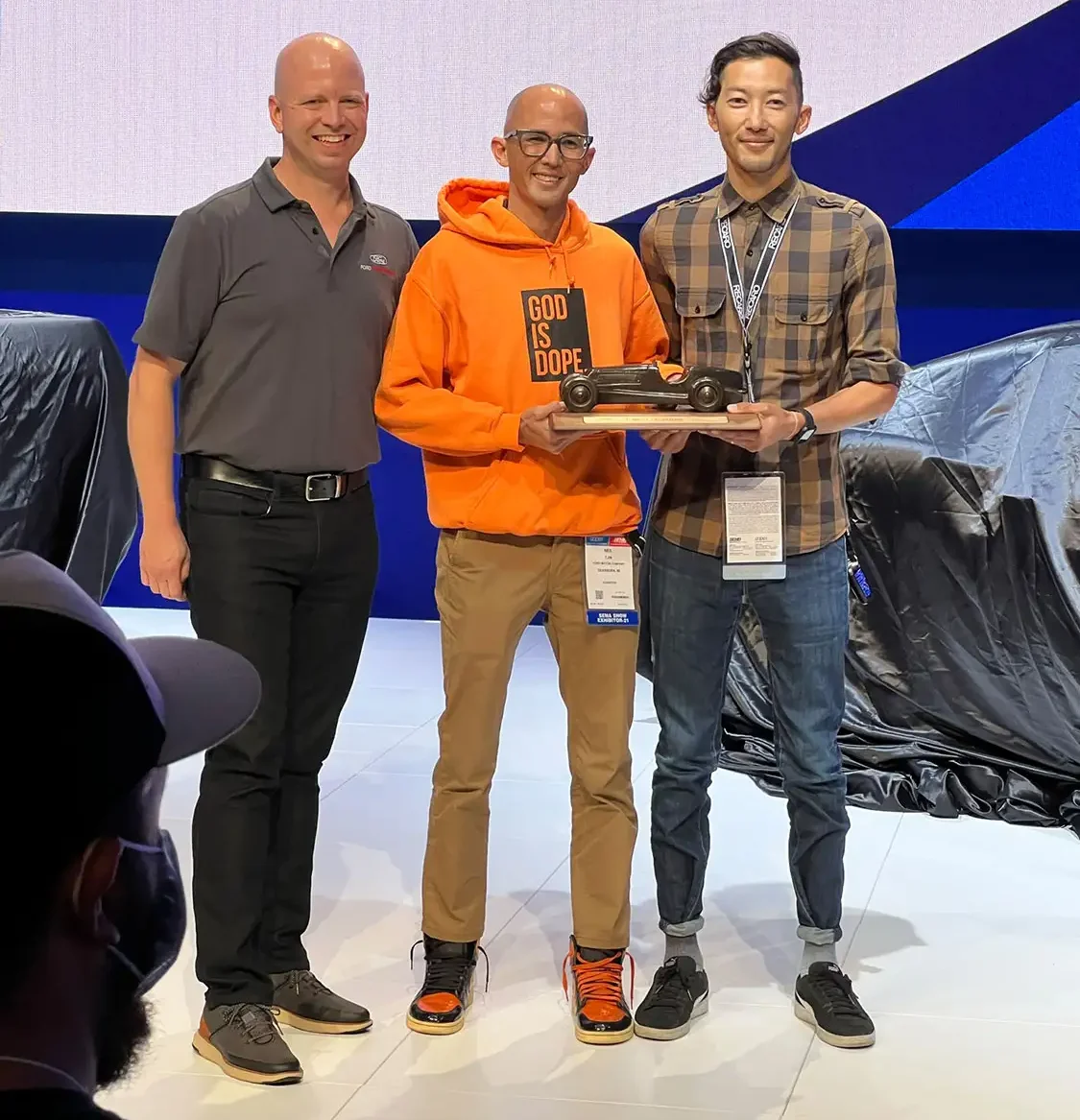
Having worked with Ford since 2009 on SEMA cars, in early 2020 he was again approached by the Blue Oval team and designers to take on the challenge of building and designing the all-new Mach-E for the prestigious Las Vegas trade show. The project kicked into high gear in August of that year as the car was delivered and parts started pouring in. With relentless determination, Neil and his team worked tirelessly for two months. Finally, the Tjin Edition Mach-E was completed, proudly occupying the spotlight at the legendary blue-carpeted Ford booth at the SEMA Show, where it won Best of Show Ford at SEMA! Winning was historic as the Tjin Edition Mach-E became the first-ever EV to clinch this esteemed honor.
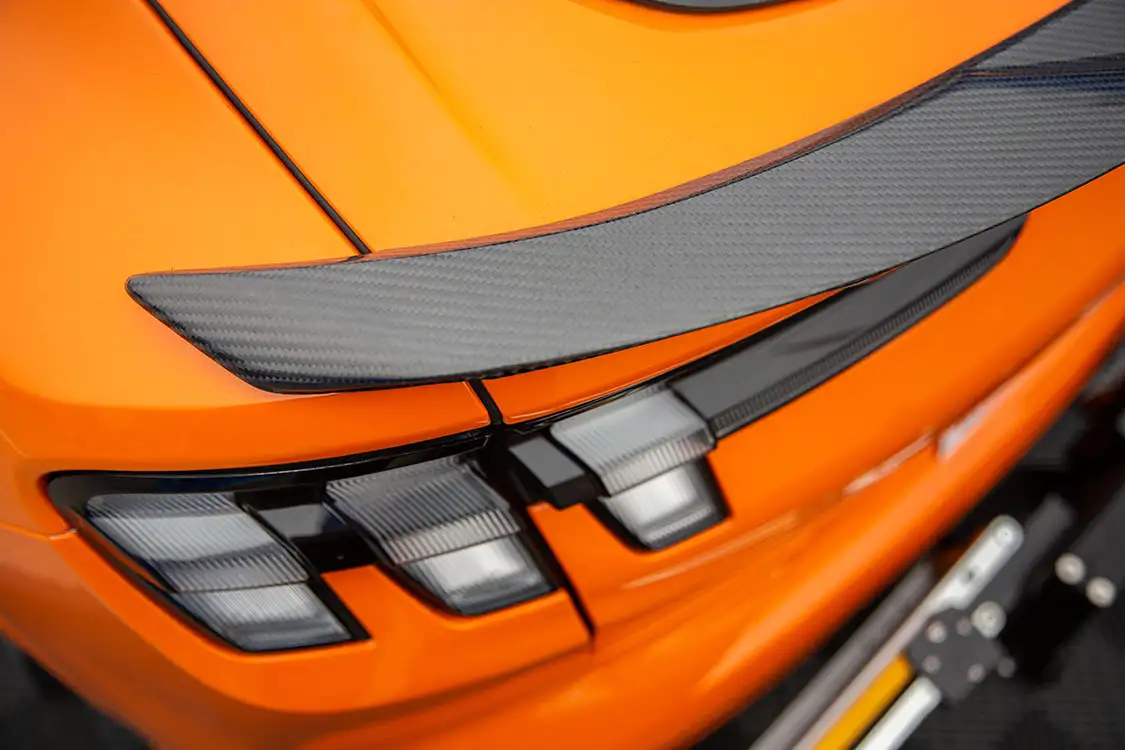
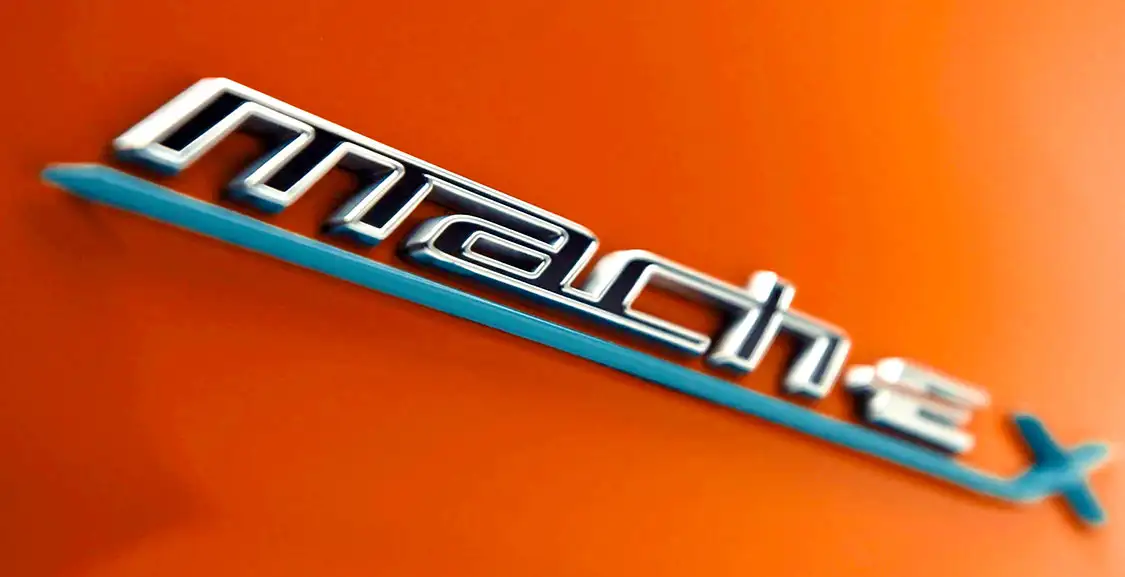
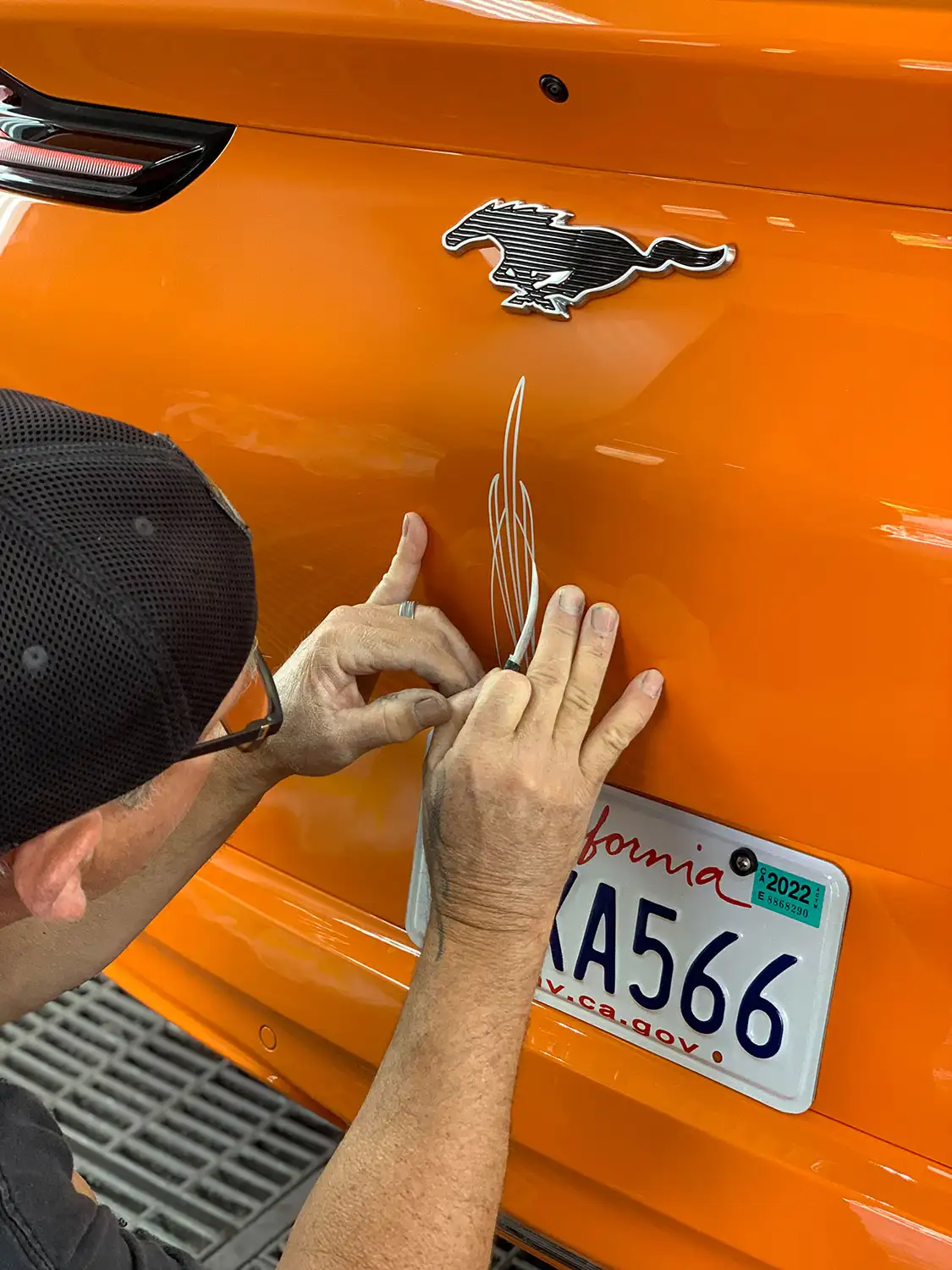
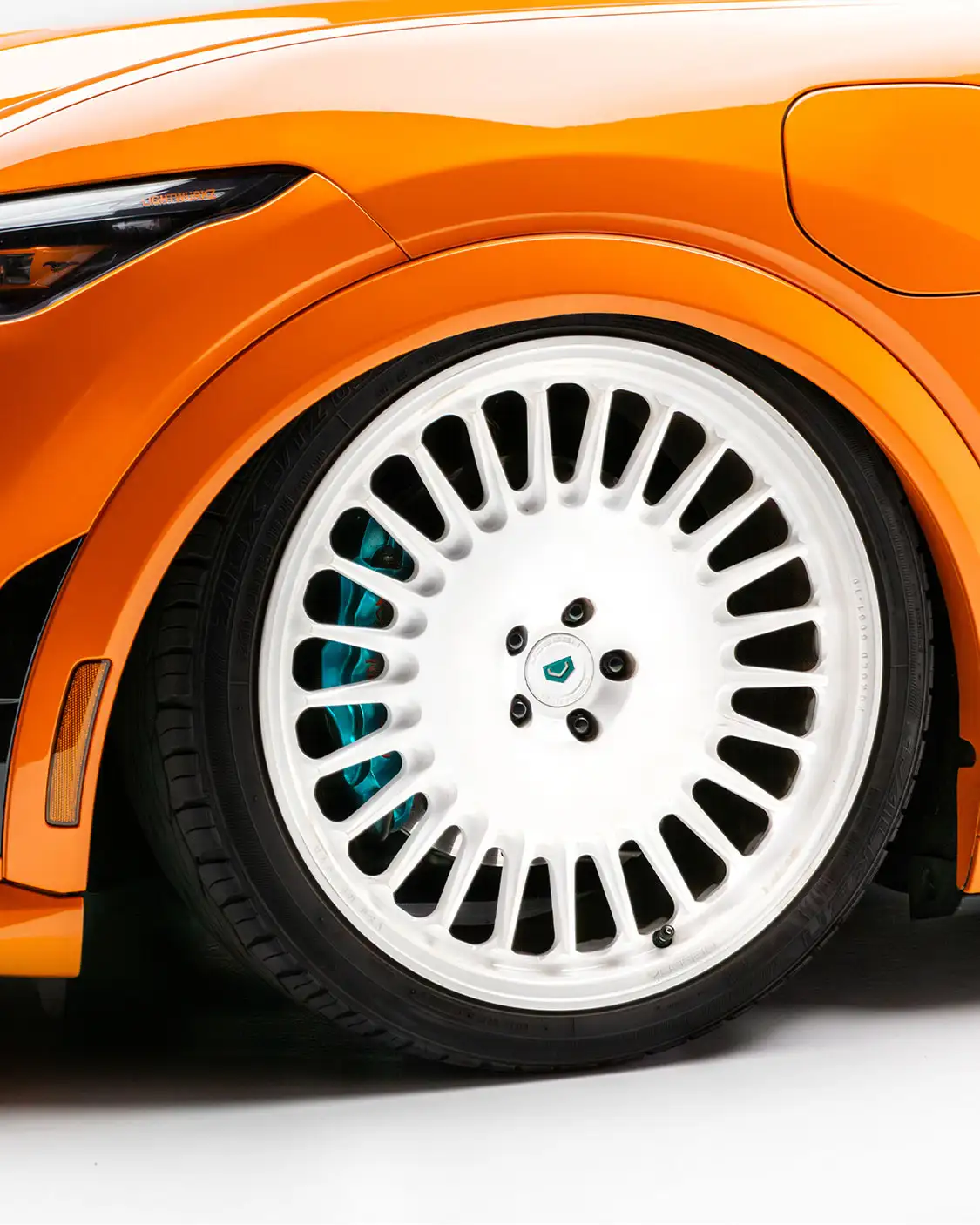
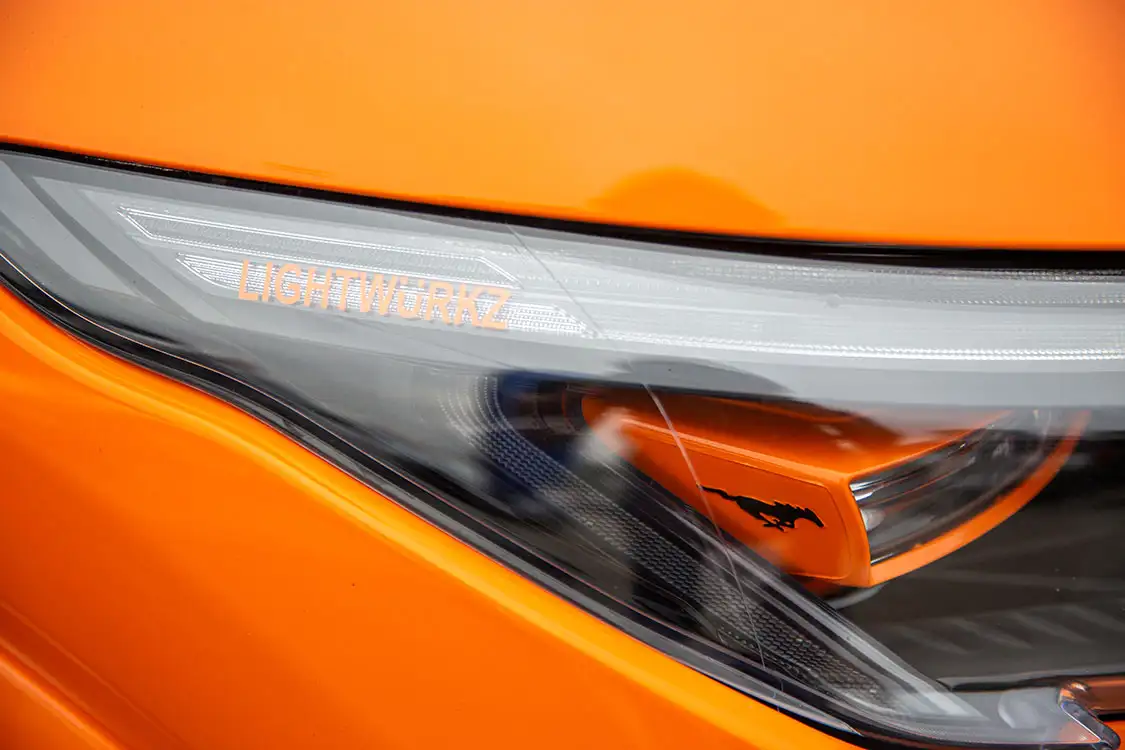
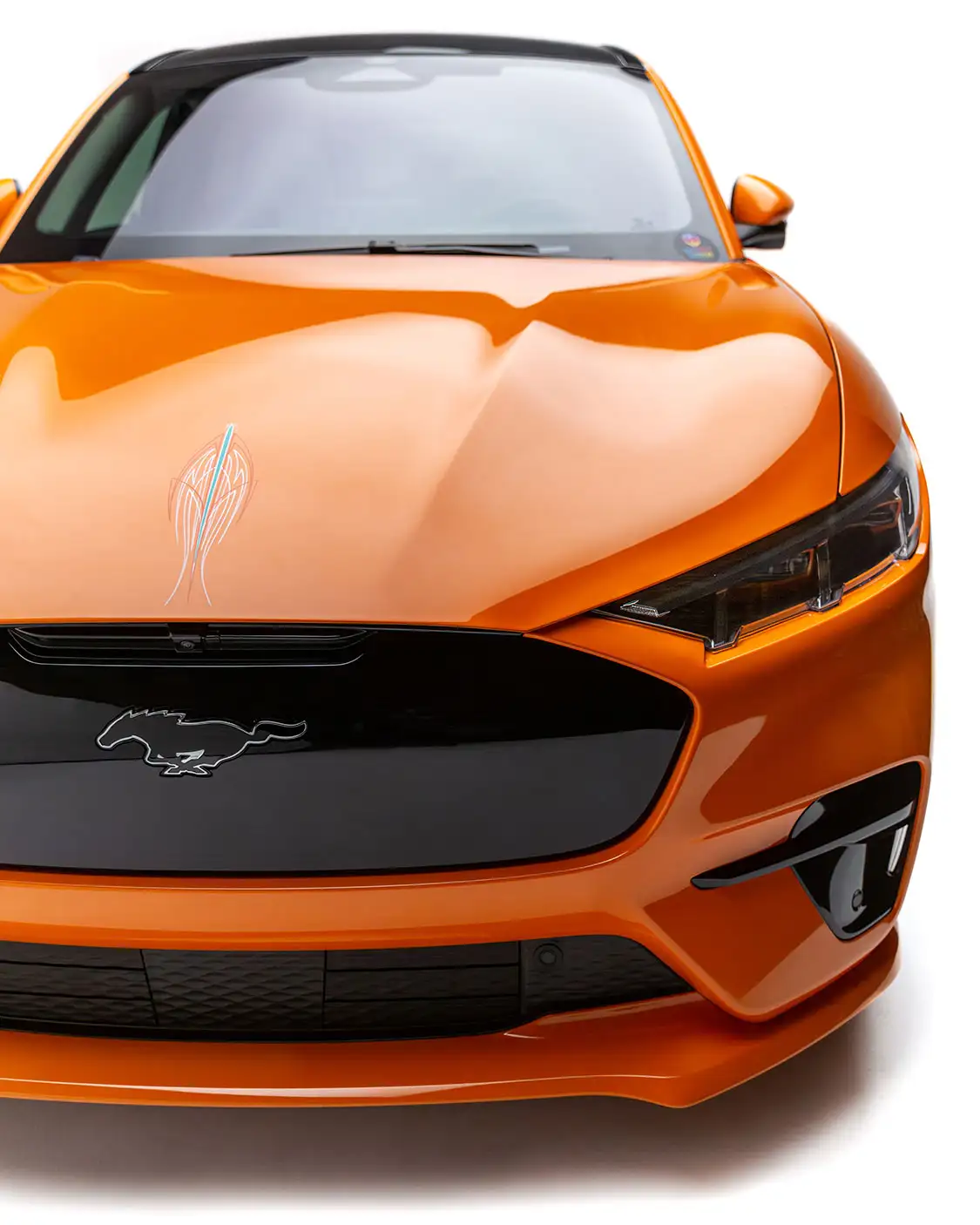
As you lay your eyes upon the Tjin Edition Mach-E, you can’t help but be captivated by its flawless custom paintjob. With a striking orange hue expertly applied by Neil’s brother, Gene, who runs Tjin Paint and Body, this immaculate paint job is enhanced even more by the BLK LBT DTL ceramic coating. The Vossen ERA-3 wheels measuring a jaw-dropping 22×9.5 inches and wrapped in Yokohama Parada Spec X also bring a new dimension to the Mach-E.
But it doesn’t stop there. Neil has gone above and beyond, fitting his Mustang with an Air Lift suspension system meticulously installed Mr. Alex from Hoppo’s Suspension. With Air Lift struts and Viair compressors working harmoniously, the Tjin Edition Mach-E glides effortlessly along California freeways in comfort. To top it off, the Baer 6S 6-piston front and rear brakes guarantee precise stopping power, instilling confidence in any driving situation.
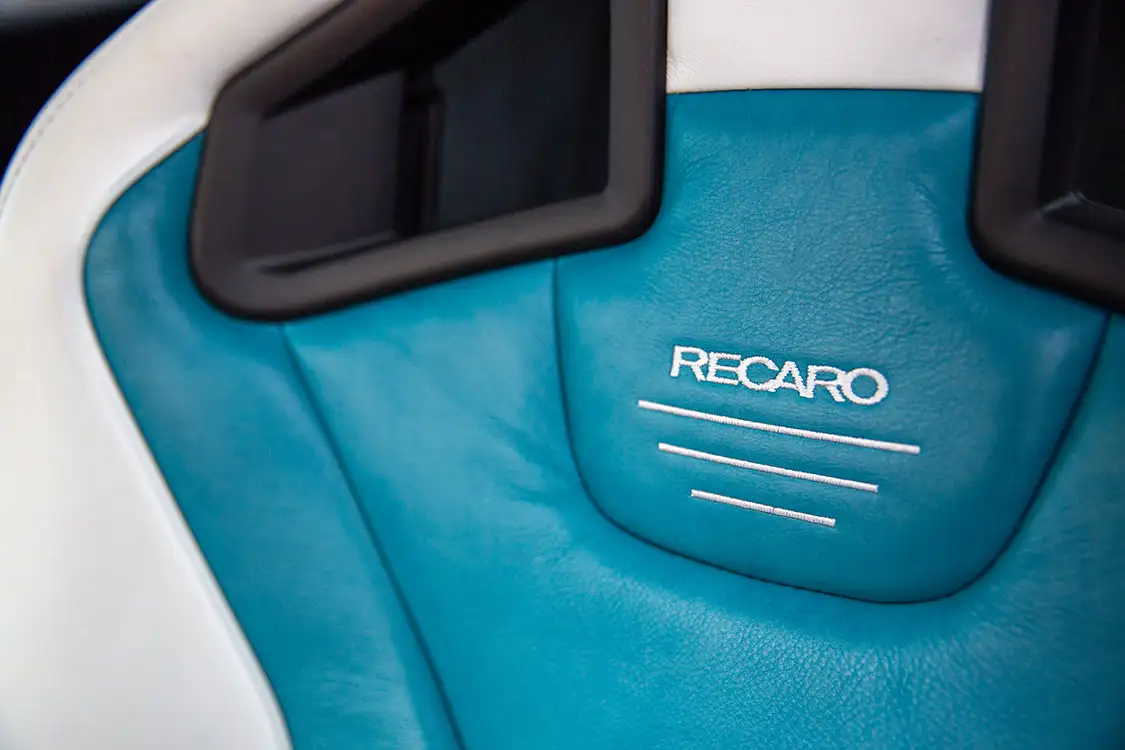
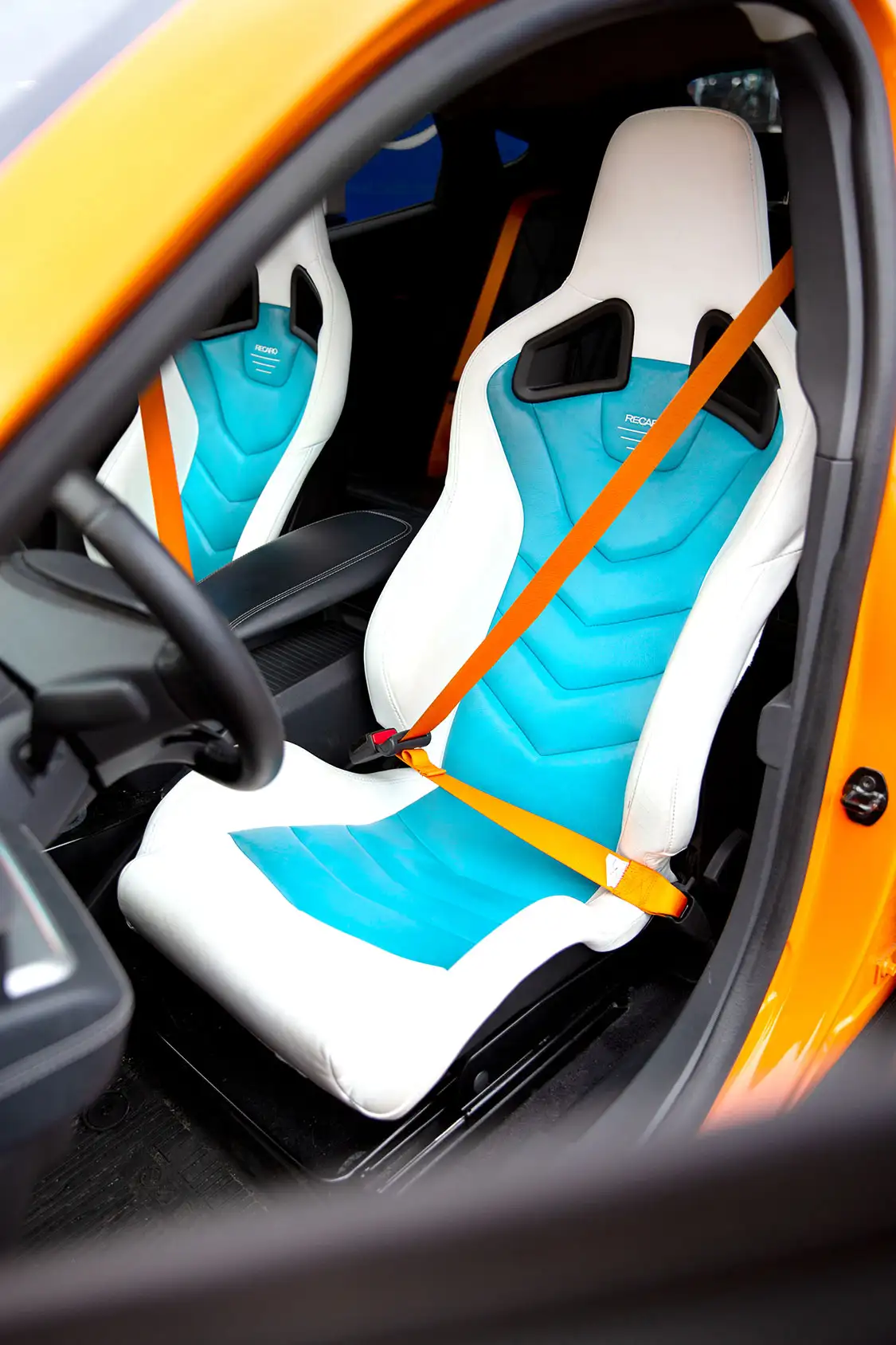
Step inside, and you’ll be greeted by two custom white Recaro seats adorned with teal highlights, creating an ambiance of pure elegance. Neil doesn’t skimp on the details, outfitting the interior with custom orange Seatbelt Planet seatbelts and a selection of electric two-wheeled rides from Razor and Super73 e-bikes, which is mounted to the rear of the Mach-E witha custom 1up bike rack. It’s clear that every aspect of the Tjin Edition Mach-E has been carefully crafted to create a cohesive package.
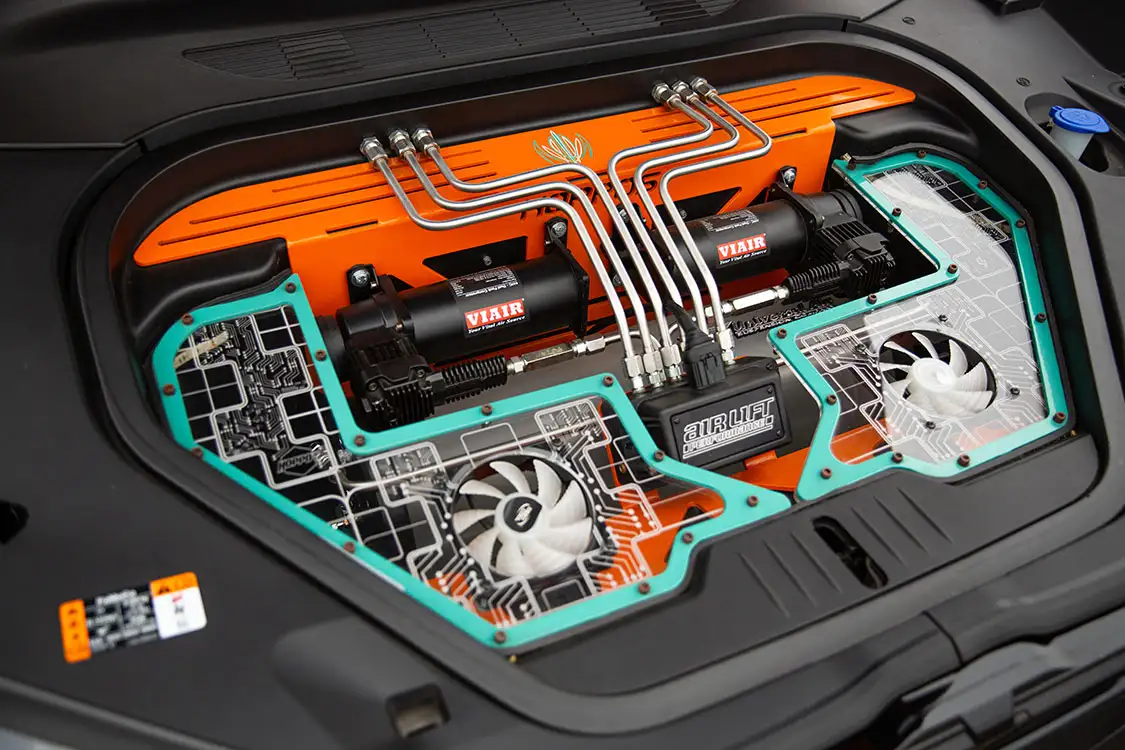
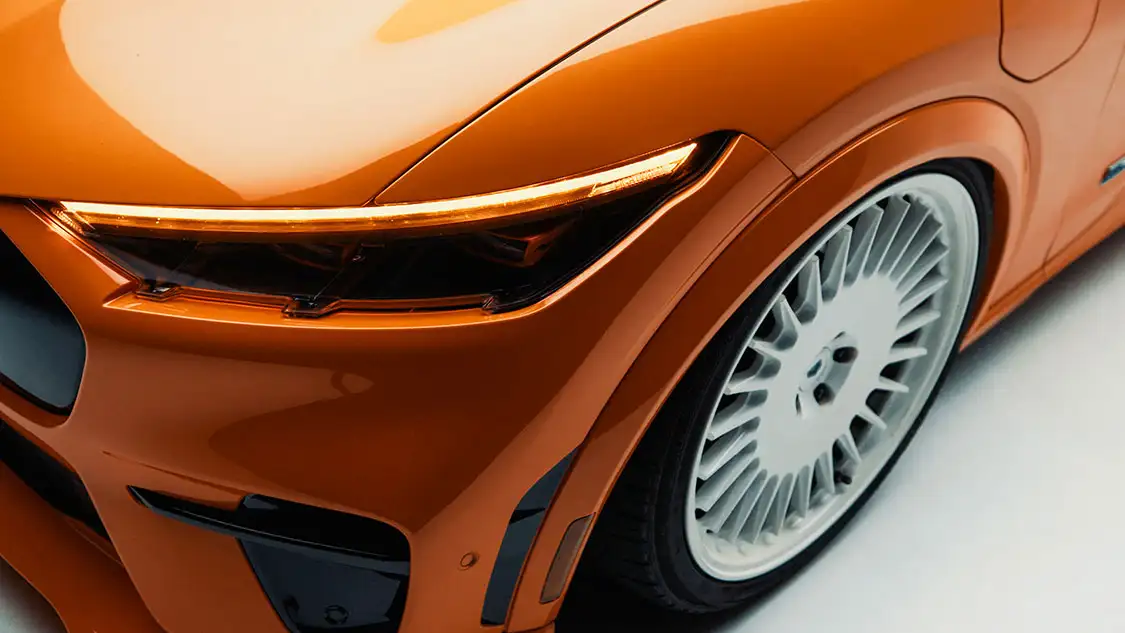
Since the Tjin Edition Mach-E has become a fixture in its creator’s short-term and long-term plans, Neil has been driving the Mach-E for the last 20 months as his daily driver. It has also become a regular participant in West Coast events and various automotive gatherings, including the LA Auto Show and the Electrify Expo Showoff in Long Beach, California.
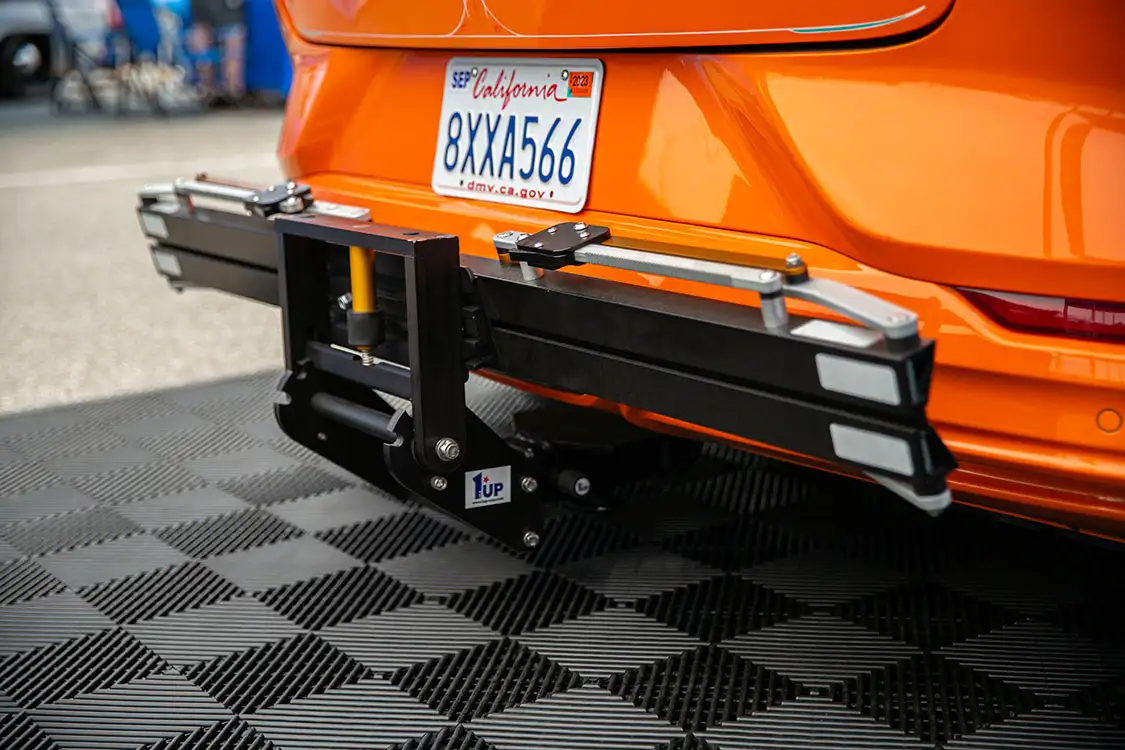
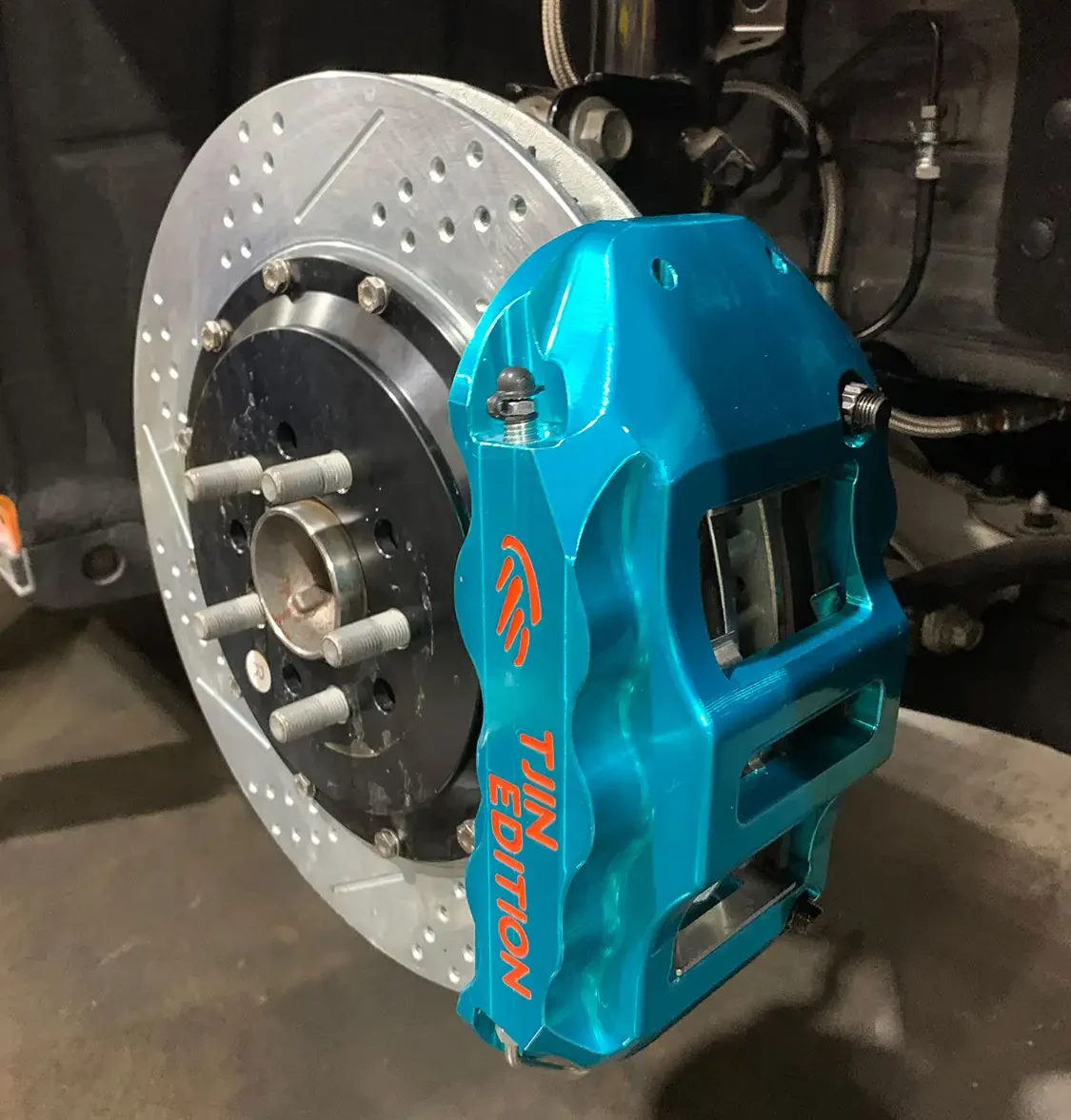
Building the Mach-E was no easy task. Numerous challenges existed as the Mustang was a brand-new vehicle at the time of the build with little aftermarket equipment. Neil humorously admits that nothing was easy, but if he had to choose, the full-color change paintwork stood out as a relatively smooth process, thanks to the car’s pristine condition. However, every other aspect posed a challenge since nothing was readily available for modifications.
Neil emphasizes the importance of taking your time when tackling a similar project, conducting thorough research in advance, and, most importantly, having fun. With the EV aftermarket becoming more accessible, the possibilities are limitless, and the Ford Mustang Mach-E presents itself as an incredible platform with immense potential—just like its grandmother in the ’60s!
OWNER: Neil Tjin
CHASSIS
WHEELS & TIRES
EXTERIOR
INTERIOR
CREATED BY:
PHOTOS BY MICK COYNE
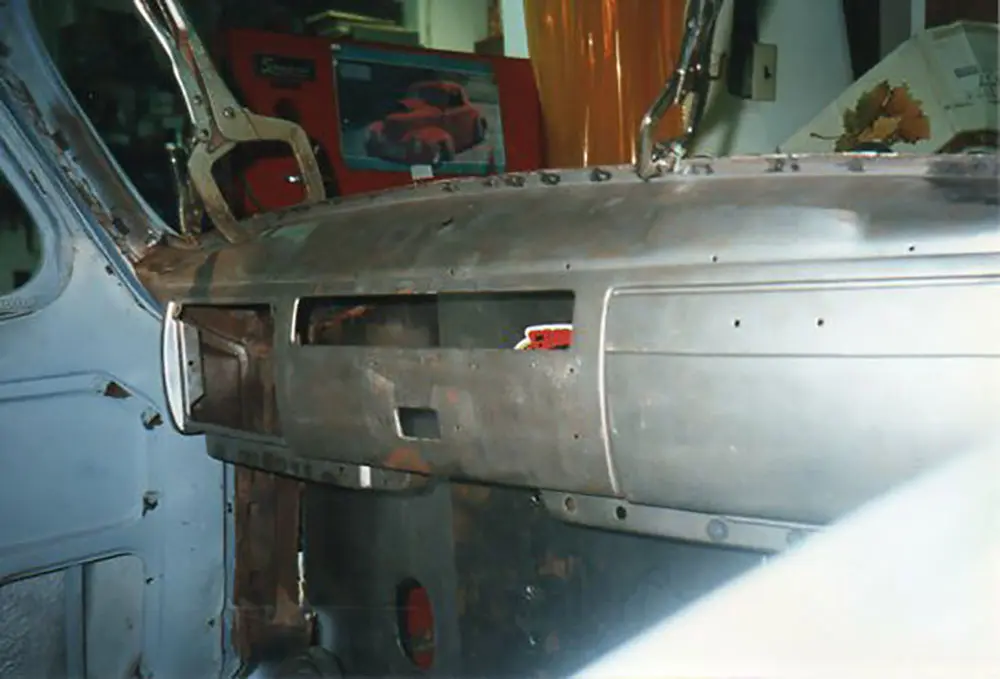
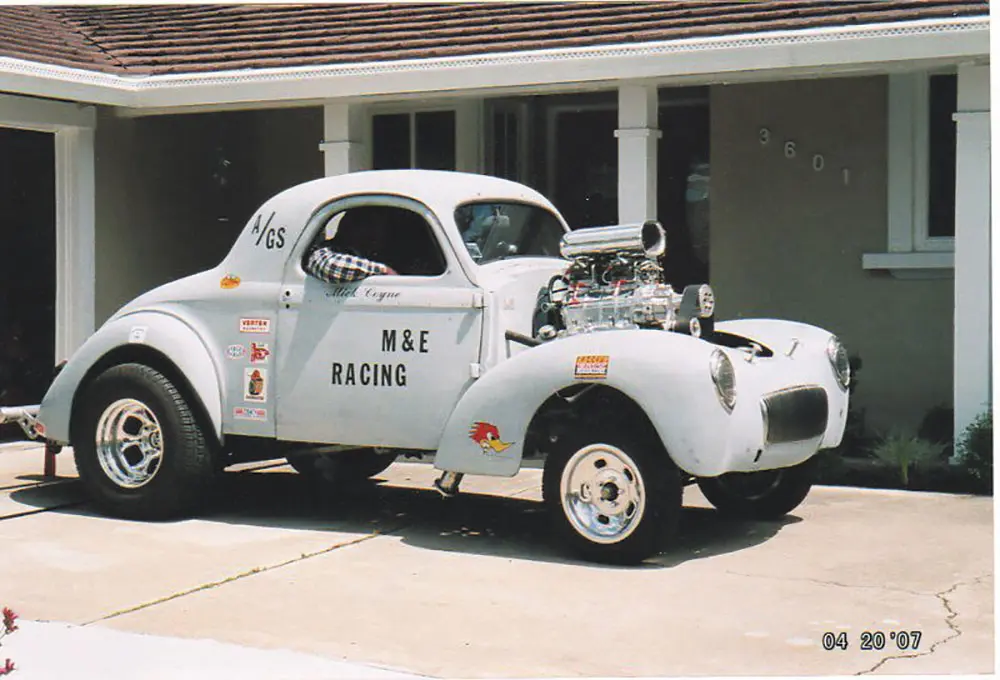
Starting in the mid-1960s, I would watch Willys Gassers at the local drags in Half Moon Bay. I told myself “One of these days I’m going to have one.” I was in the Vietnam War in 1968 so this is my attempt to build a period correct 1968 Gasser.
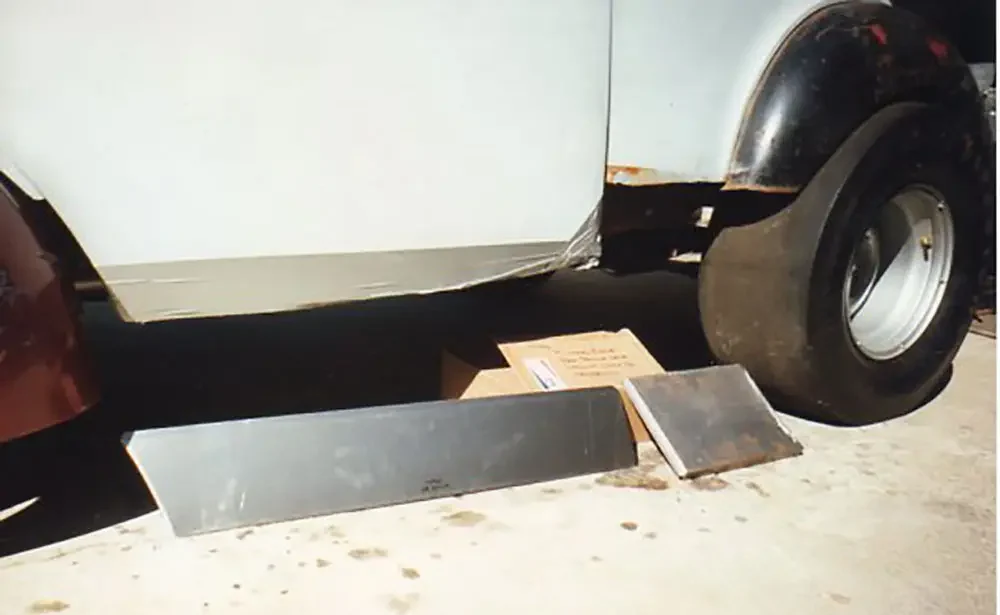
In 1995, I found a steel body. It was really rough. This was a roundy-round dirt racer before bought it. It had been rolled twice and a foot was torched off the bottom of the entire car. What a project. But if I squinted my eyes real tight I could see a possibility.
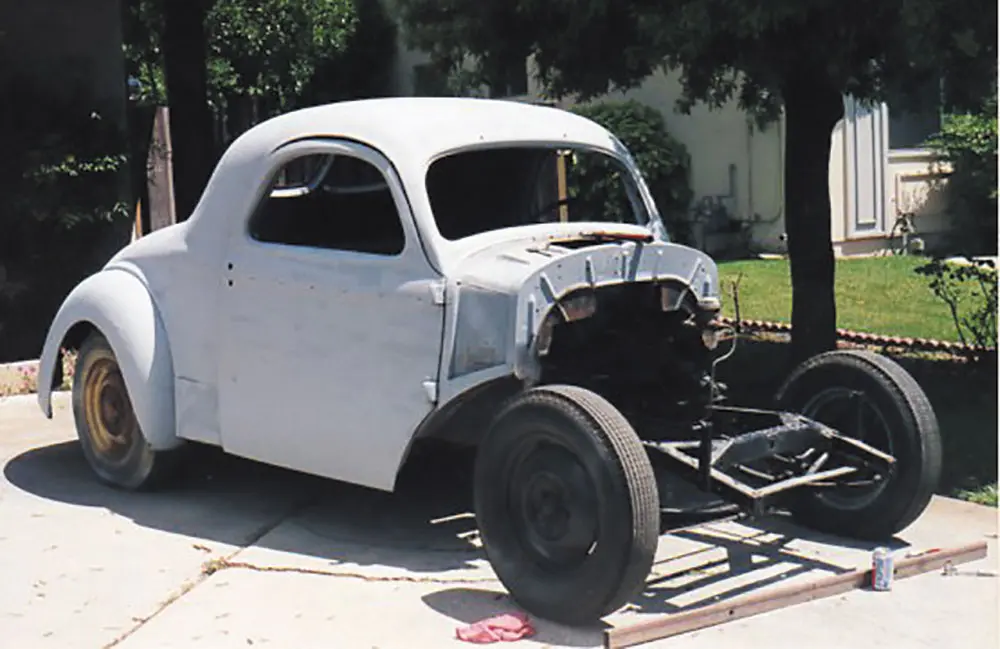
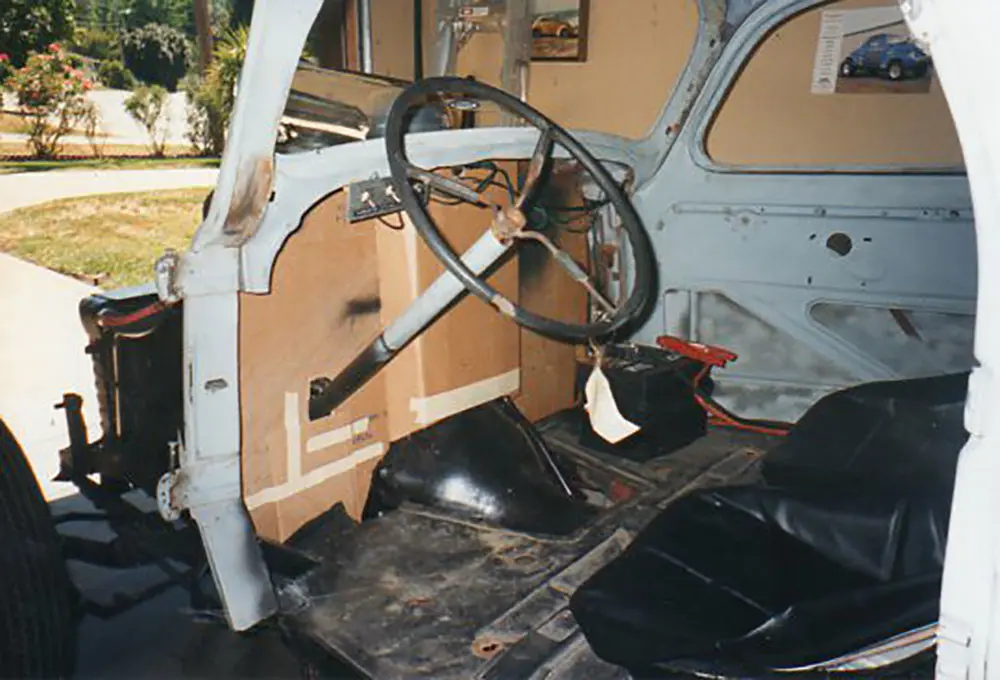
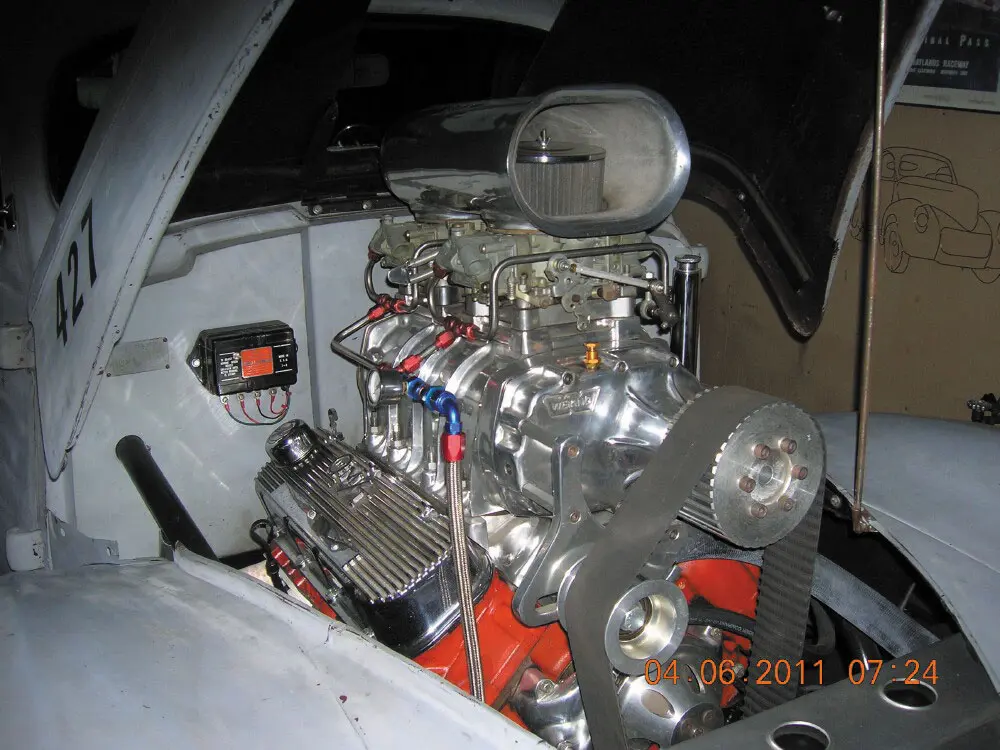
I found a 41 Willys steel front end off a drag race truck in southern California. Welding, welding, and welding, it started to take shape. Patch panels came in handy. I got it to a point where I could actually drive it in 1996. It had a blown SBC, later switched to a blown BBC. Although it was a strong runner the SBC just looked too small under the hood.
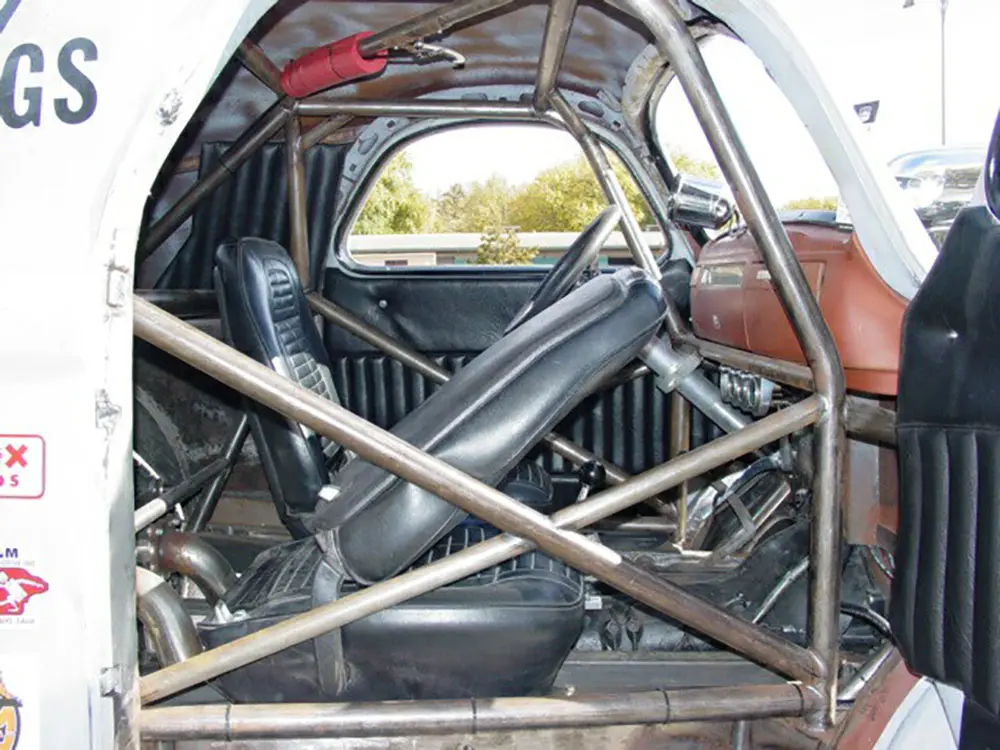
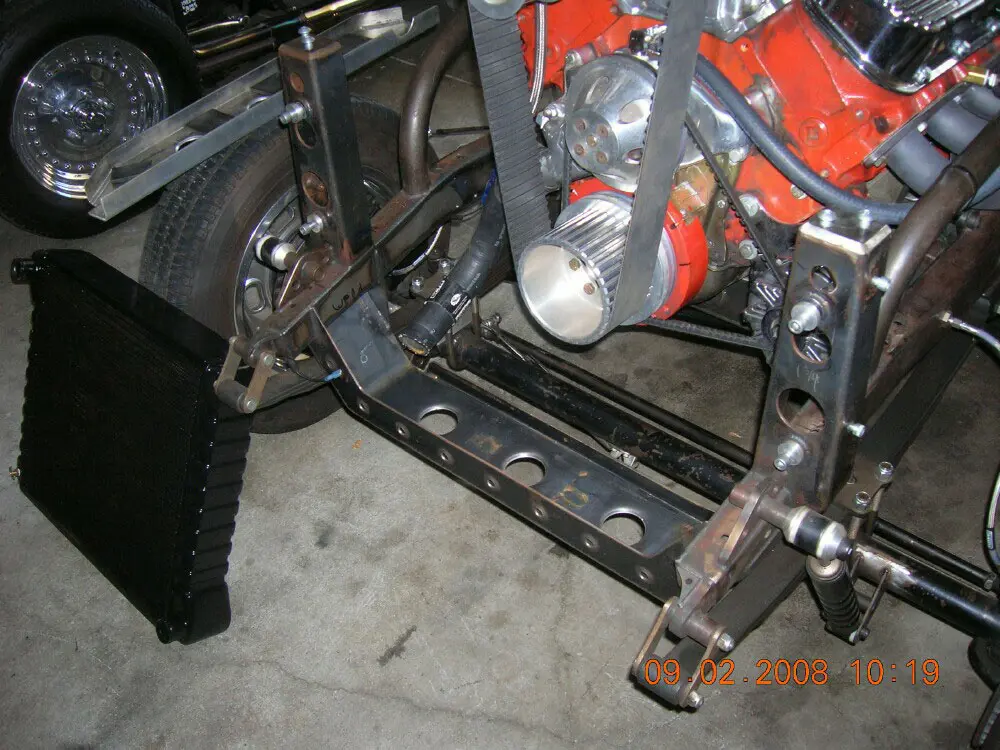
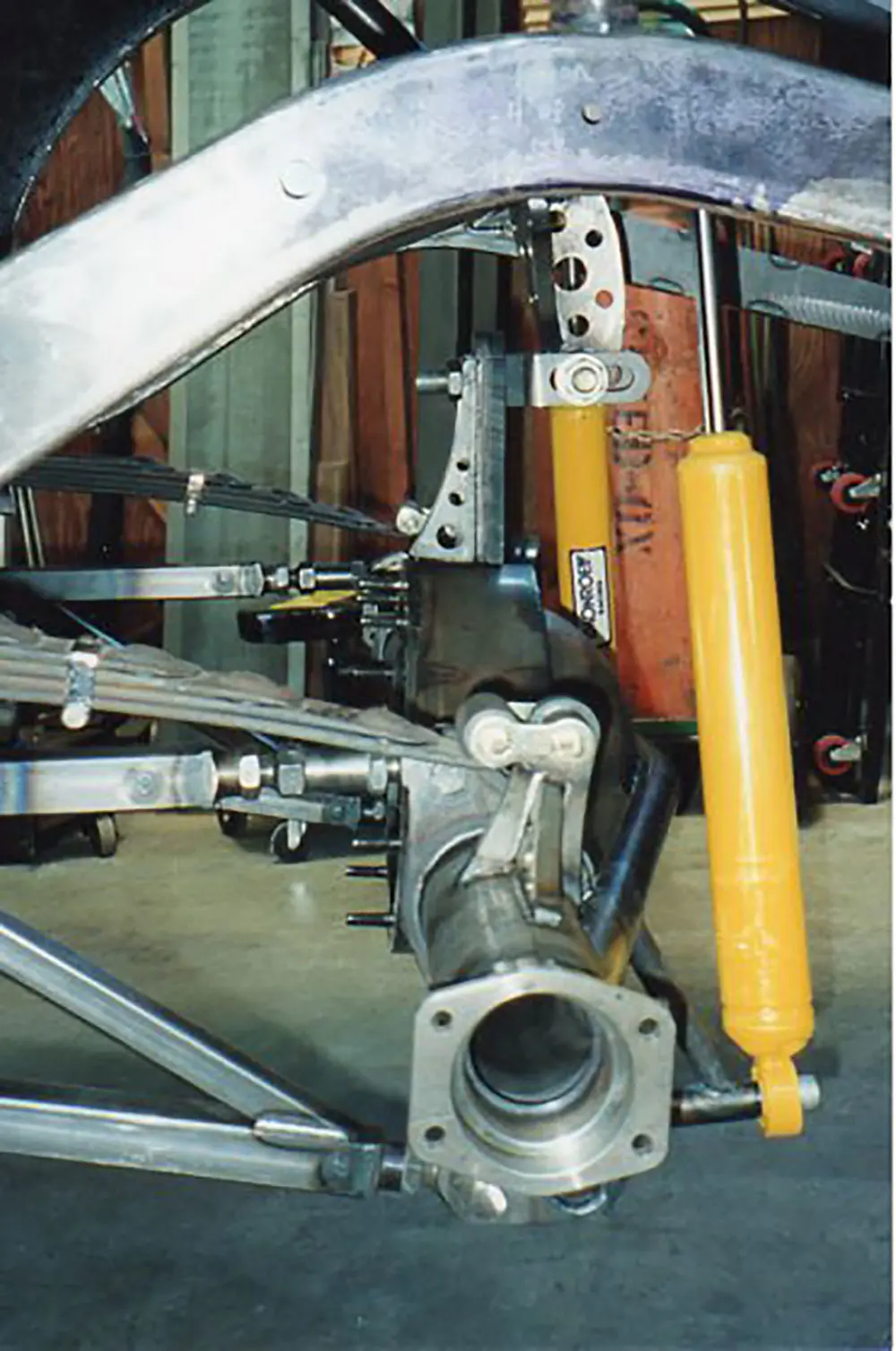
Then it went to my friend’s [fabricator] “Choke’s” home shop in Sebastopol, Ca. He had previously built a roll cage in my ‘30 pickup so I knew his work was excellent to say the least. He built a full roll cage for it, a one-off rear suspension utilizing quarter elliptic springs and with ladder bars, slides up and down off the rear end housing. He boxed the frame, made new cross members, made an aluminum rear bumper, an aluminum steering column, and drop [not store-bought]. He even made the wheelie bars, again nothing store-bought; he made the exhaust system [with flanges] so no gaskets were needed. We did a lot of horse trading, parts for labor.
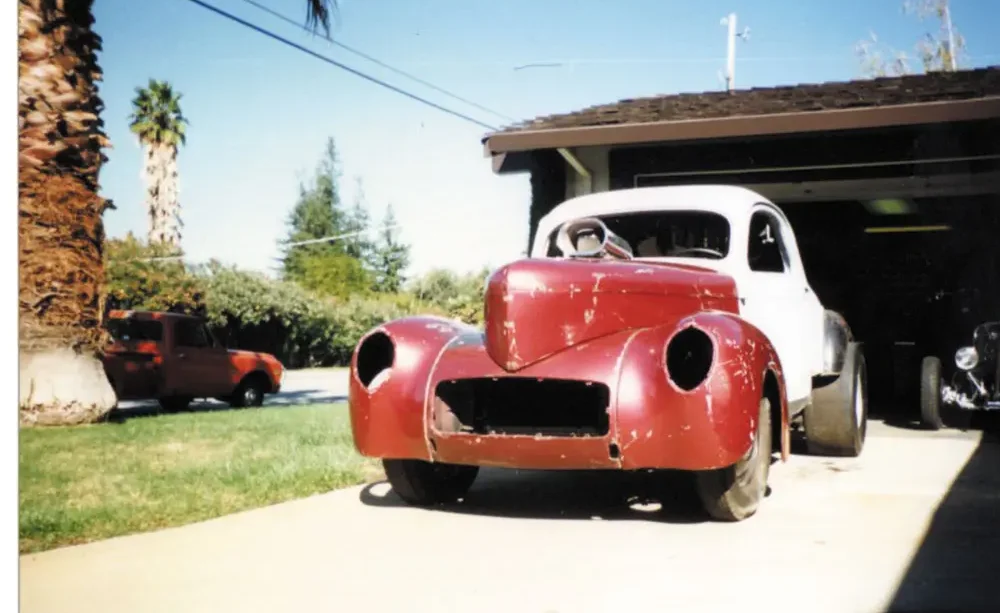
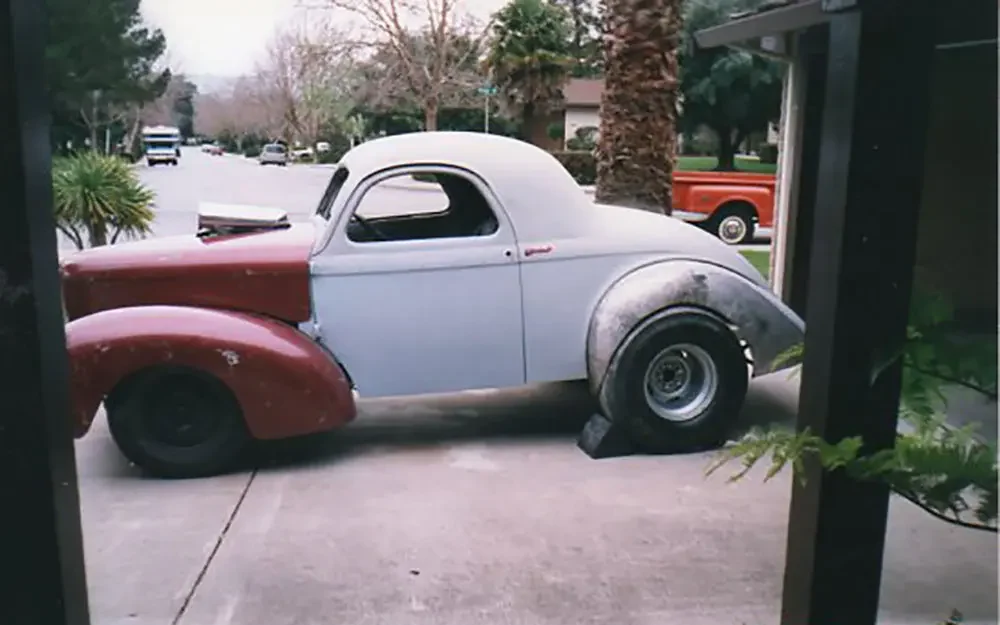
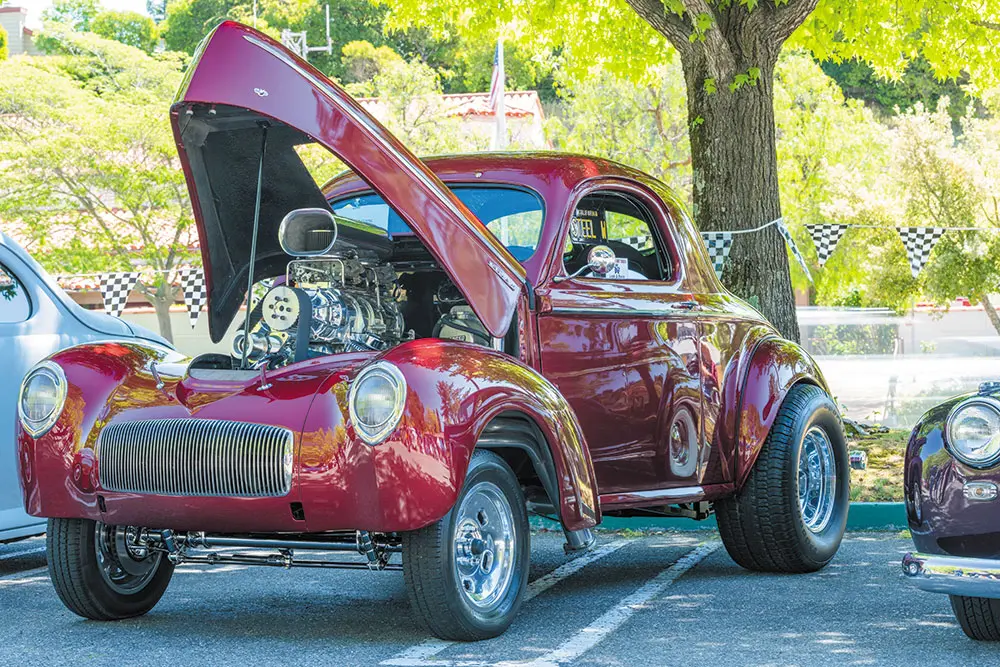
The engine is a 468 [454 bored], Isky hydraulic blower cam, with a 671 Supercharger, fender well headers with collectors, tricked TH400, and a 9” Nodular Ford rear end by Strange Engineering. Detroit Locker with 35 spline axles, and drive studs.
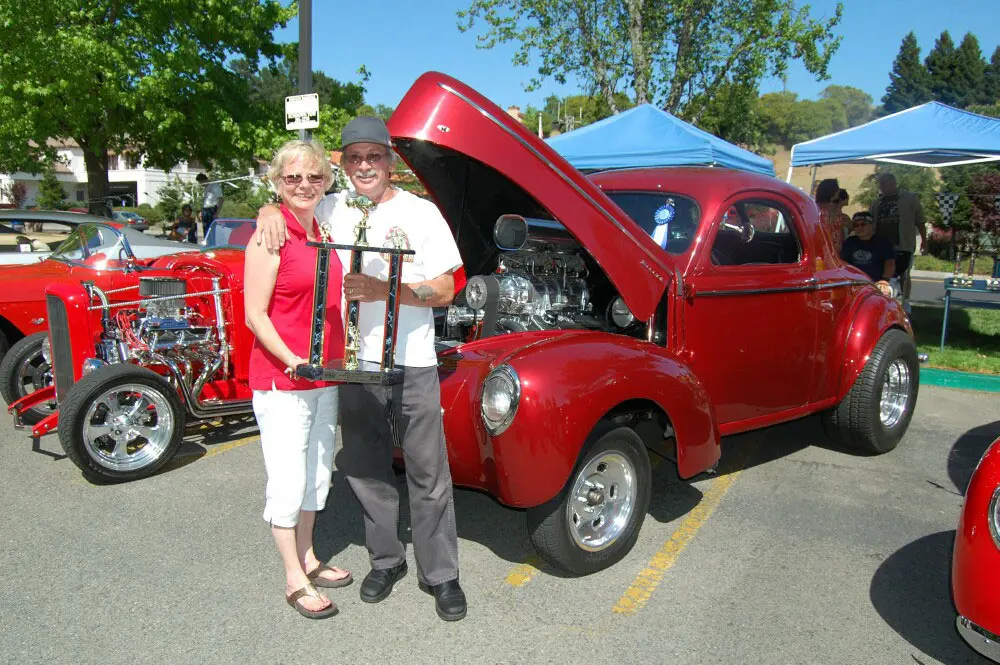
I had it painted 2008 Lamborghini red by Blackdog Customs. The wife had the front axle and parts chromed for my birthday… “if it don’t go – chrome it.”
I had it upholstered at Freddie’s Upholstery Shop in Concord, Ca. Black tuck-n-roll with a “not so secret/secret compartment. ”The headliner was a real challenge with the roll cage being so close to the roof.
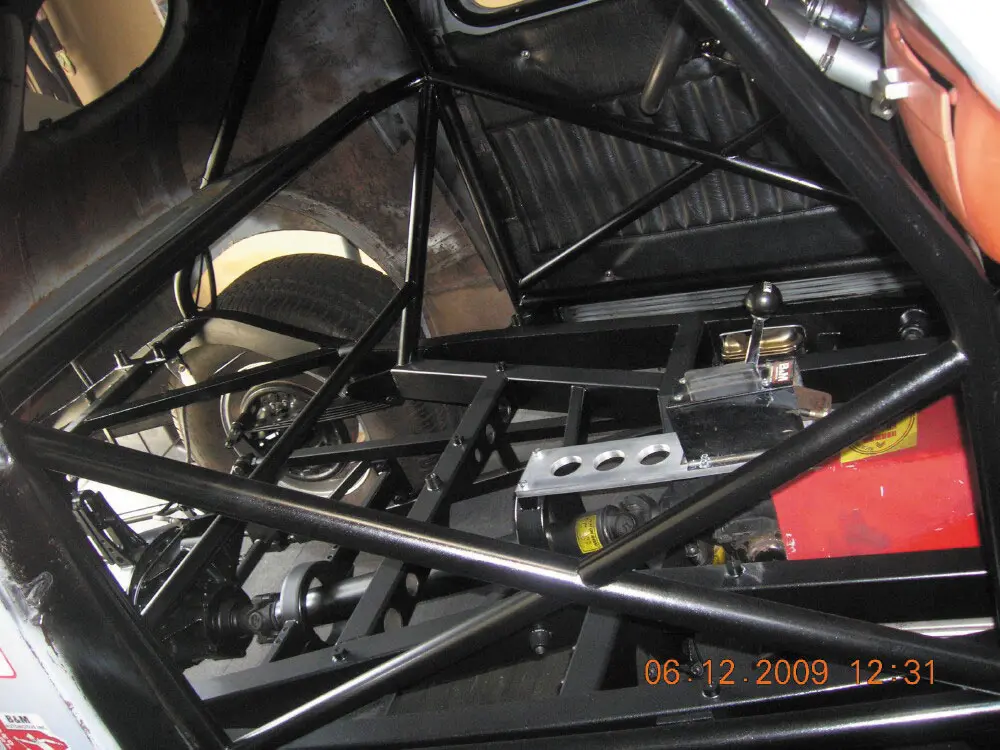
I initially planned to drag race it in C/Gas [9.60et] but it took so long to locate these rare parts I decided to just drive it on the street. As an example, I found a dashboard in the state of Washington, one glove box door [they have two] in Palm Springs, and the other in NY. Stock gauge cluster in Saratoga California, dash trim in Pennsylvania, a used Sun tach with sending unit at a swap meet in Bakersfield… and that’s just the dash. This was all prior to the internet so my resources were magazines, swap meets, phone calls, traveling, and word of mouth. Incredible.
We’ve trailered it to several race tracks like Famoso in Bakersfield, Lodi, etc. but mostly drive it on the street.
Many thanks to my wife Elaine: she has been right there with me at my side every minute of the build. She’s a huge help. Yes, she does tune ups, brakes, you name it.
Photos by AJ and Matt Nelson
In Clifton, New Jersey, a new era in electric vehicle modification has emerged. AJ Velasco, a software solution engineer, embarked on a journey to transform his 2020 Tesla Model 3 Performance into a masterpiece of automotive artistry and metal craftsmanship.
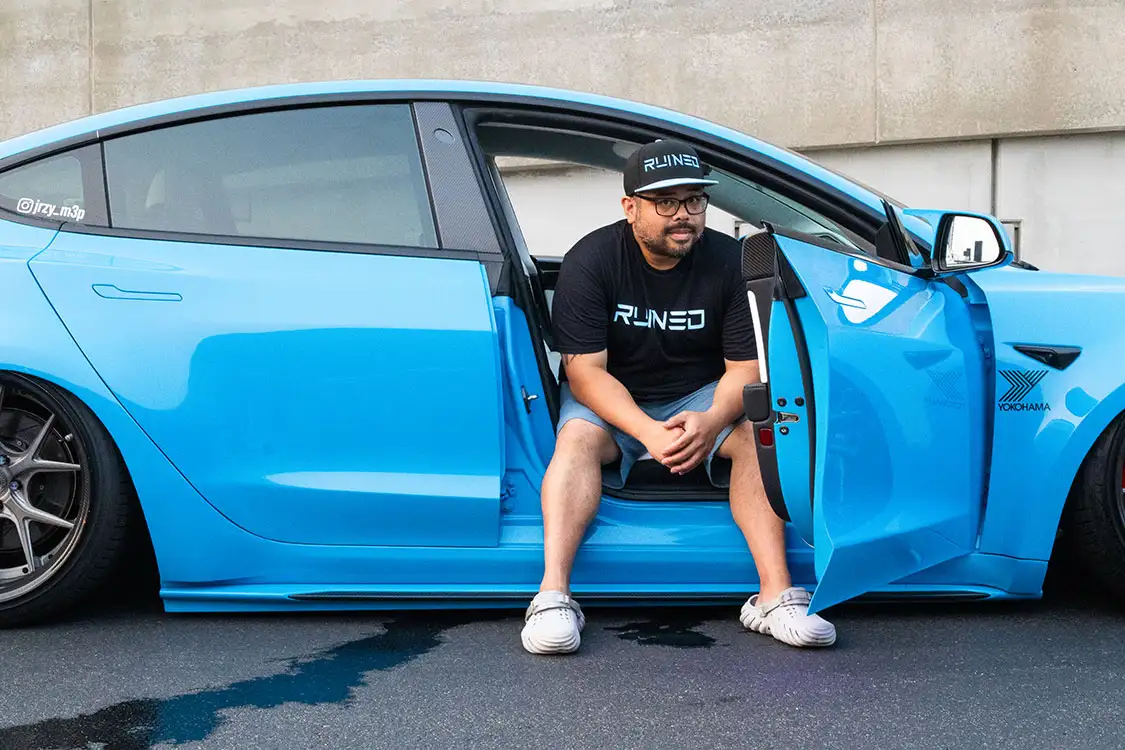
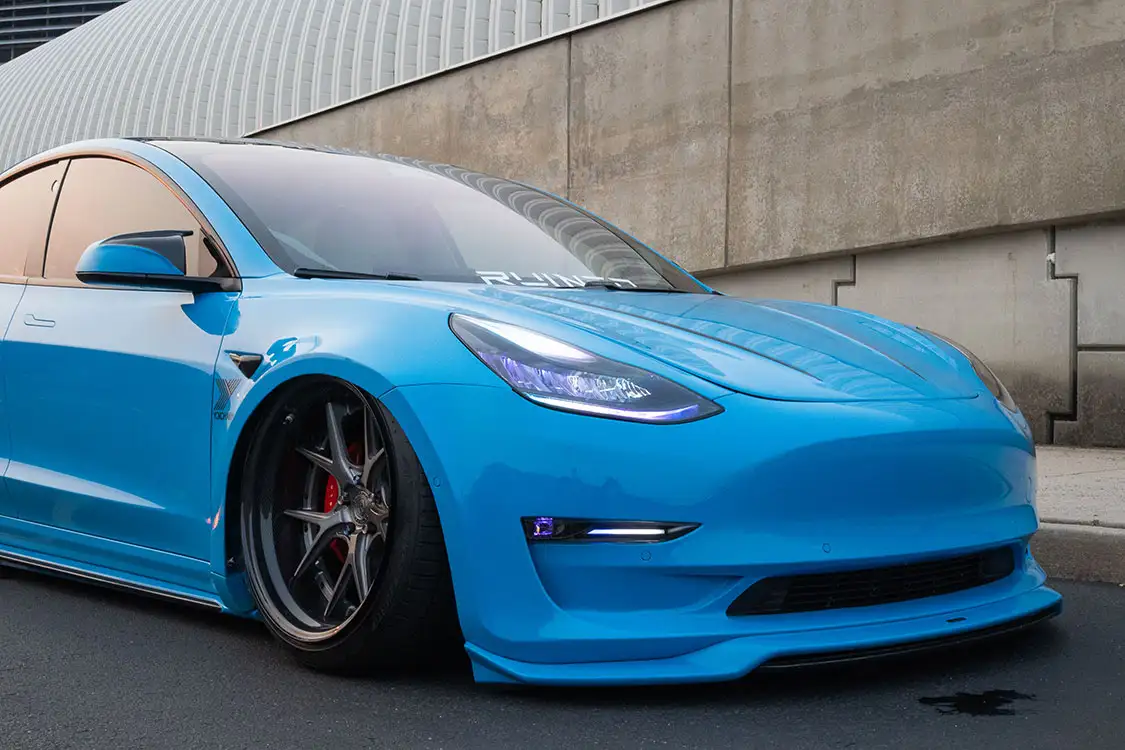
Named Project 3.36, this endeavor embodies years of determination, passion, and an unwavering aspiration to push the boundaries of modified EVs. With its Porsche Mexico Blue finish, meticulously designed interior, and distinctive all-steel widebody extensions, AJ’s 3.2-second 0-to-60 creation stands as a testament to the growing potential within the realm of modified Teslas.
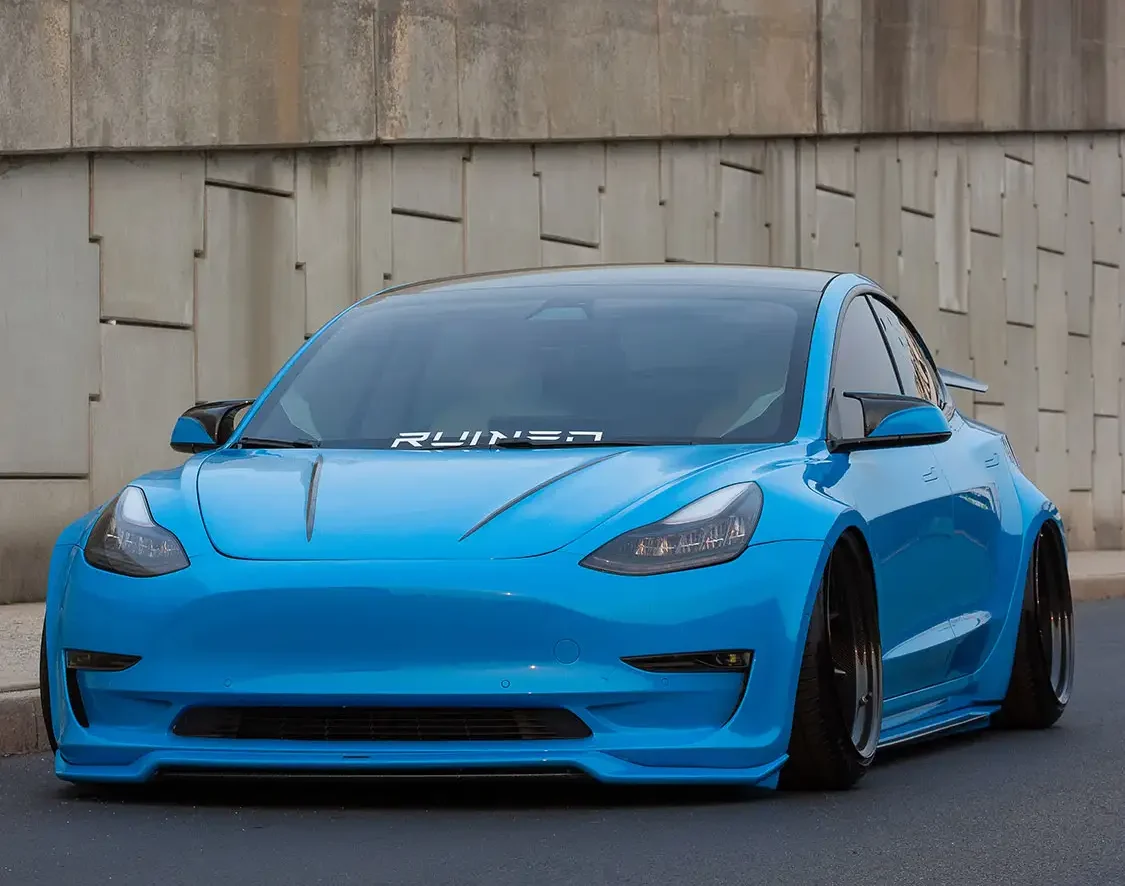
AJ’s path to EV innovation began with this Tesla Model 3 Performance. Considering traditional performance cars like the BMW M3 and Audi RS3, he was intrigued by Tesla’s affordability. A transformative test drive solidified his decision, setting him on a course that would lead to the realization of an extraordinary automotive achievement. After ordering his TM3P with just a few taps on his phone, AJ was soon the proud owner of his first EV, something he never thought he would even consider!
AJ’s journey continues, marked by an unwavering commitment to innovation.
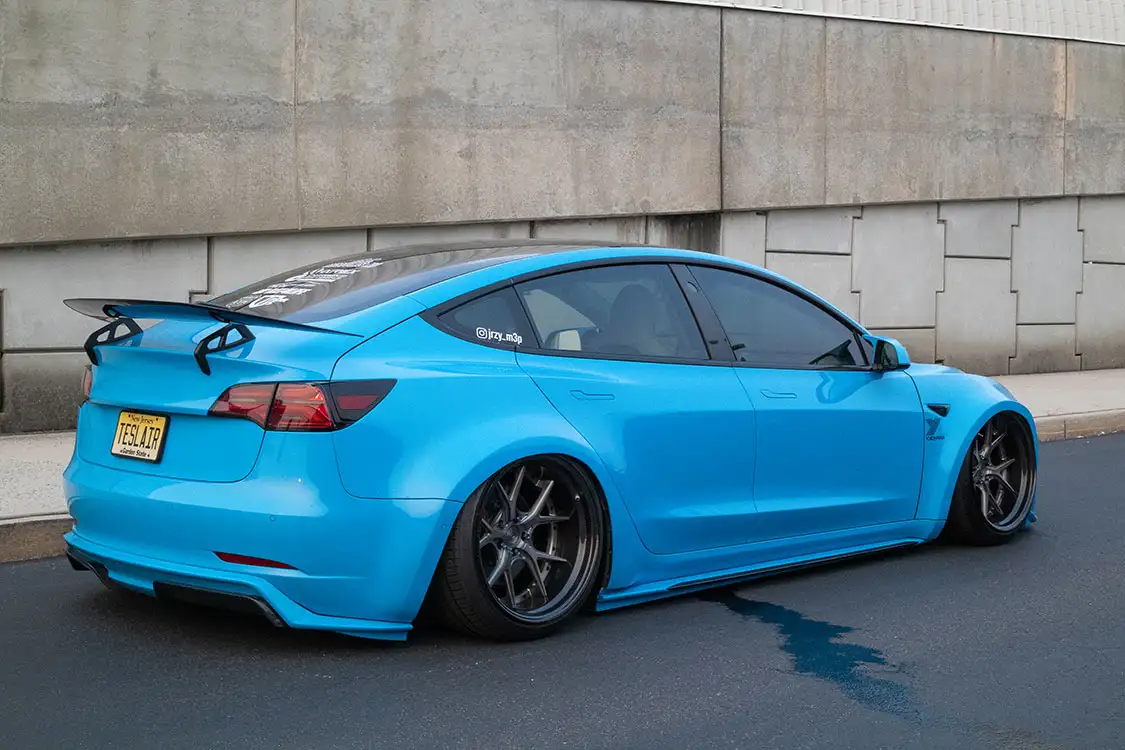
Mods came immediately upon receiving the car. What began as a simple wheel replacement due to a curb mishap evolved into a new set of wheels, and it all spiraled from there. A partnership with Alessandro “Alex” Tourtounis of 66 Customs NJ marked the turning point. Over a year of discussions, the project transitioned from simple mods to a bespoke metal widebody design.
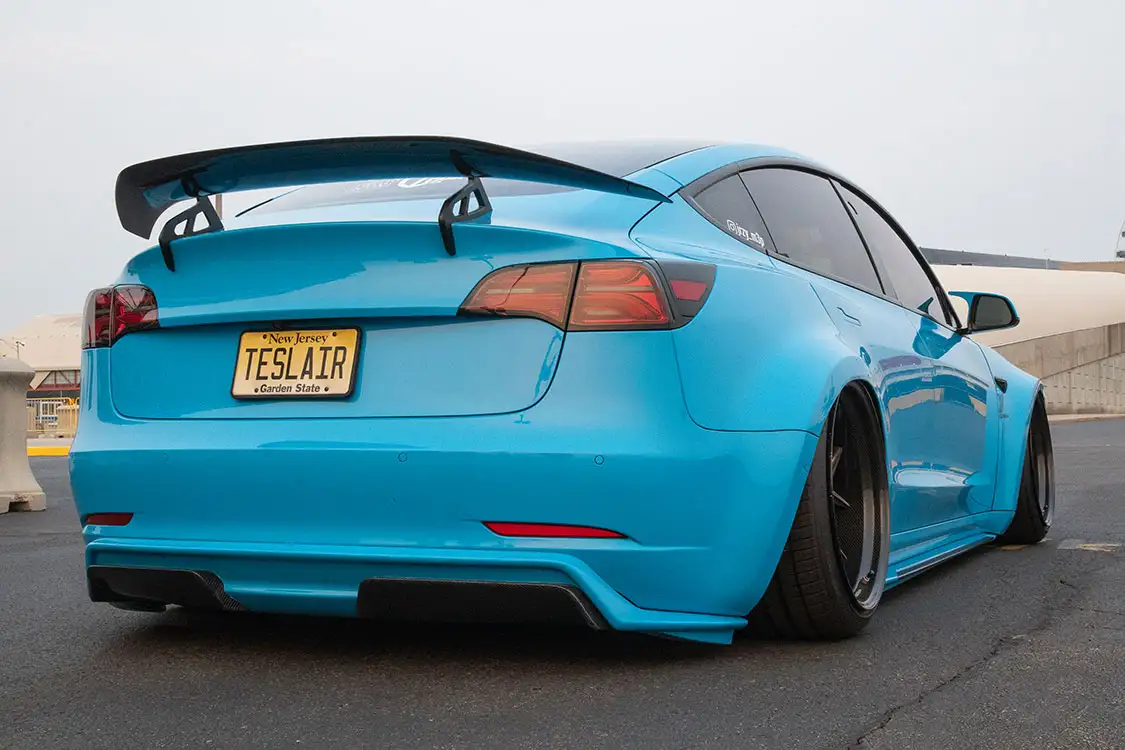
Alex’s craftsmanship and dedication took center stage as he undertook the ambitious task of creating the metal widebody within a two-month timeframe for SEMA 2022. Sleepless nights and tireless effort breathed life into this visionary project, embodying Velasco’s unwavering commitment to advancing the realm of EV customization. The realization of the metal widebody project demanded four weeks of nonstop effort, with Alex working tirelessly for 21 to 24 hours daily. External expertise was enlisted, and AJ’s past experience from his time at a bodyshop proved invaluable as he gave a helping hand.
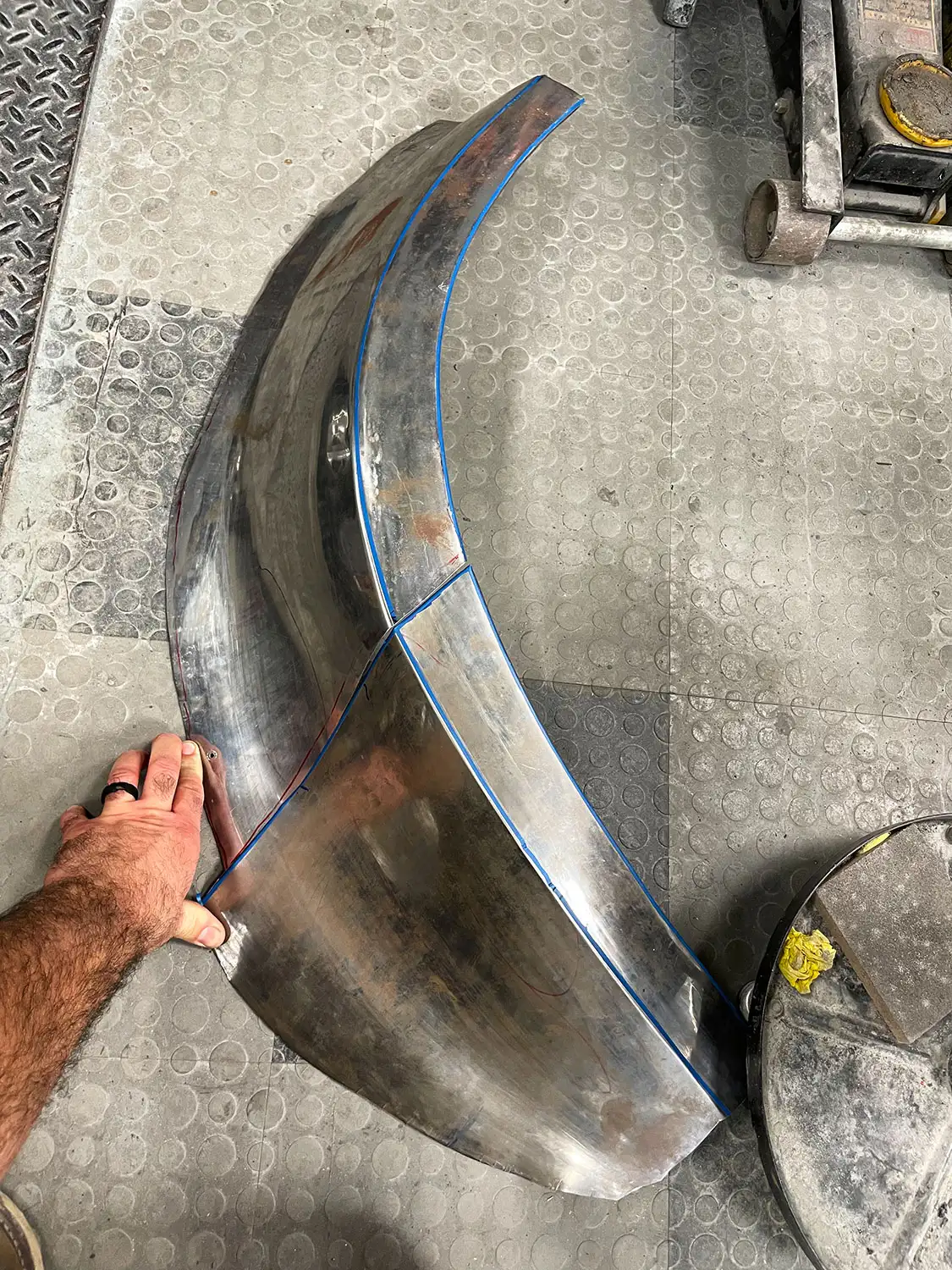
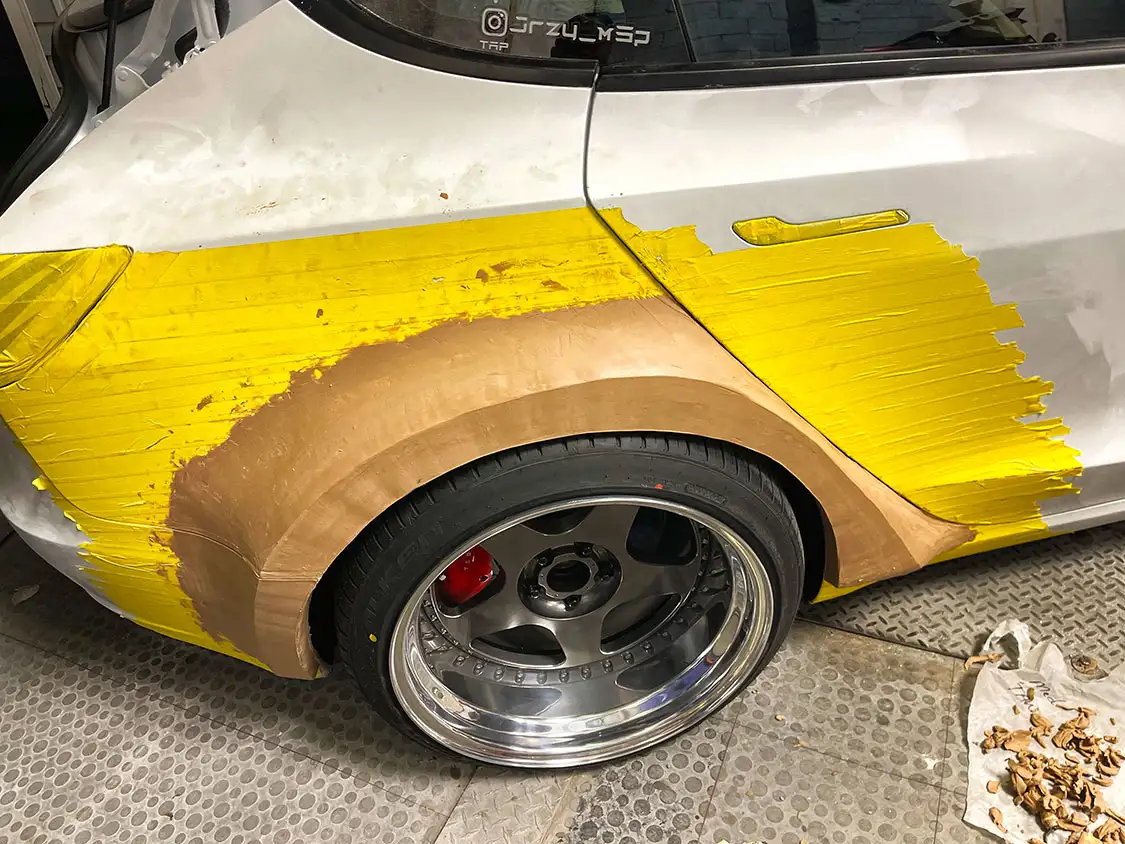
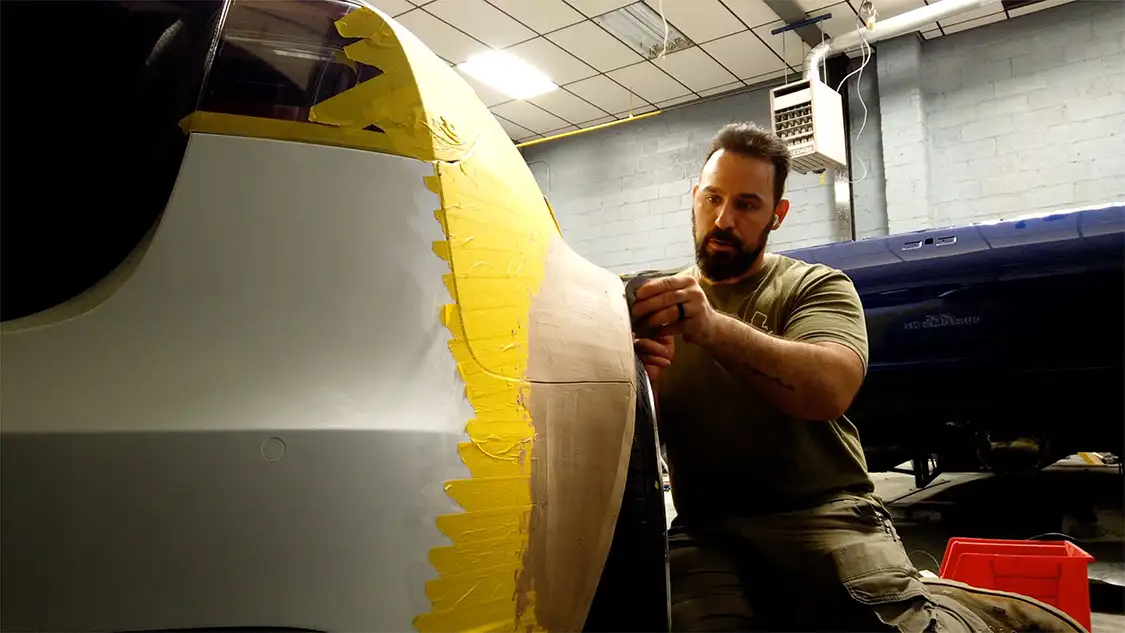
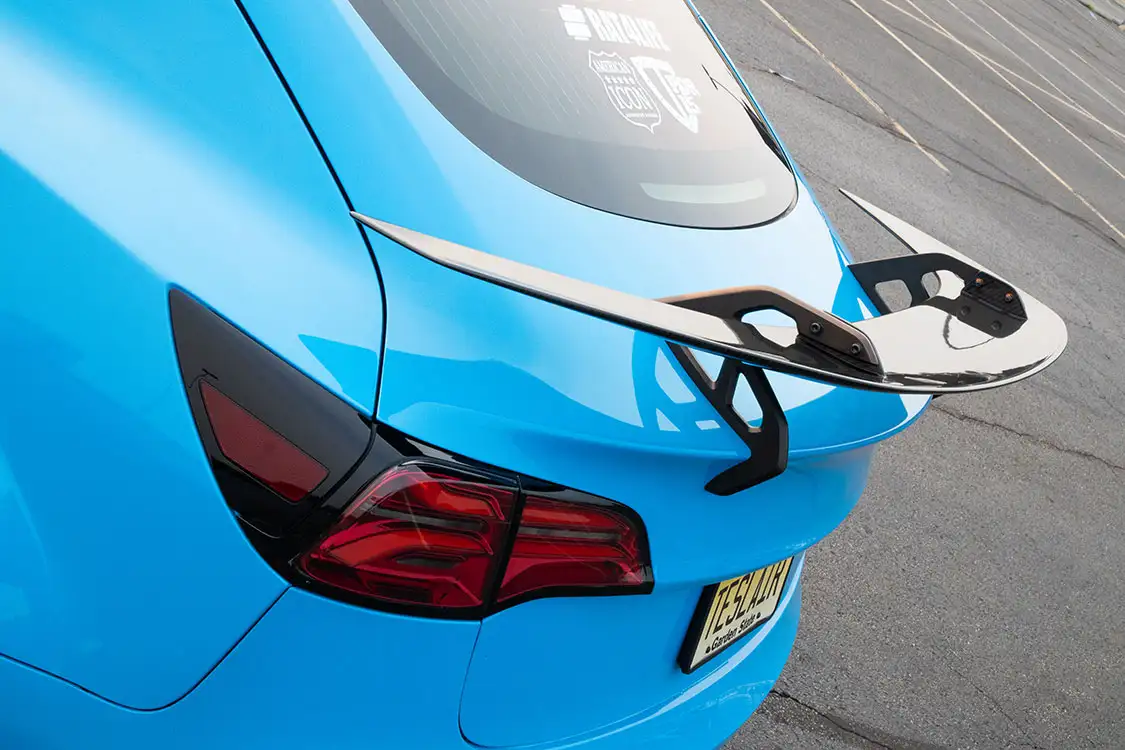
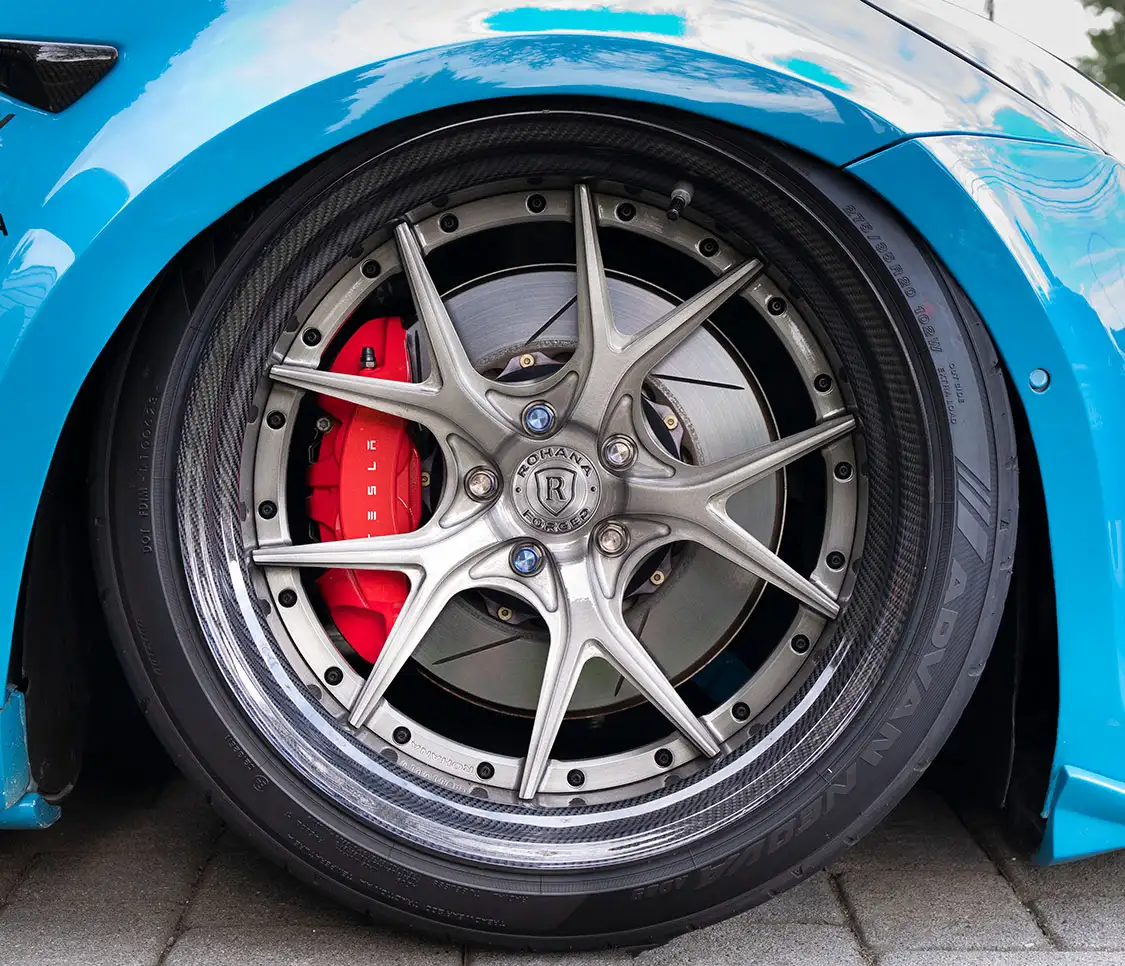
The pursuit of excellence extended to the wheels and spoiler, where collaborations with Rohana Wheels and Adro resulted in striking outcomes. The Rohana RFG15 rims with carbon fiber overlays, wrapped in Yokohama Advan Neova 275/35R20, complement the unique Adro swan-neck design, achieving a seamless blend of aesthetics and function.
The path from concept to masterpiece was marked by challenges. Three years of dedicated work and an investment of $75,000 were essential to shape a vehicle that would captivate both automotive enthusiasts and EV aficionados.
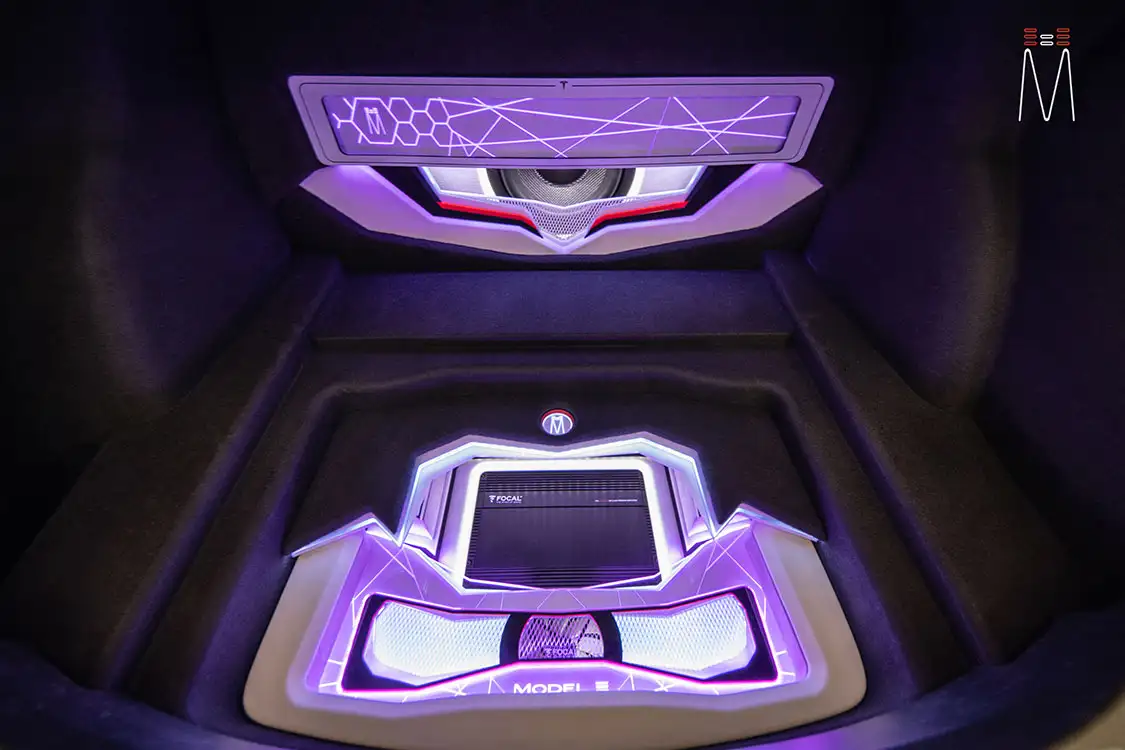
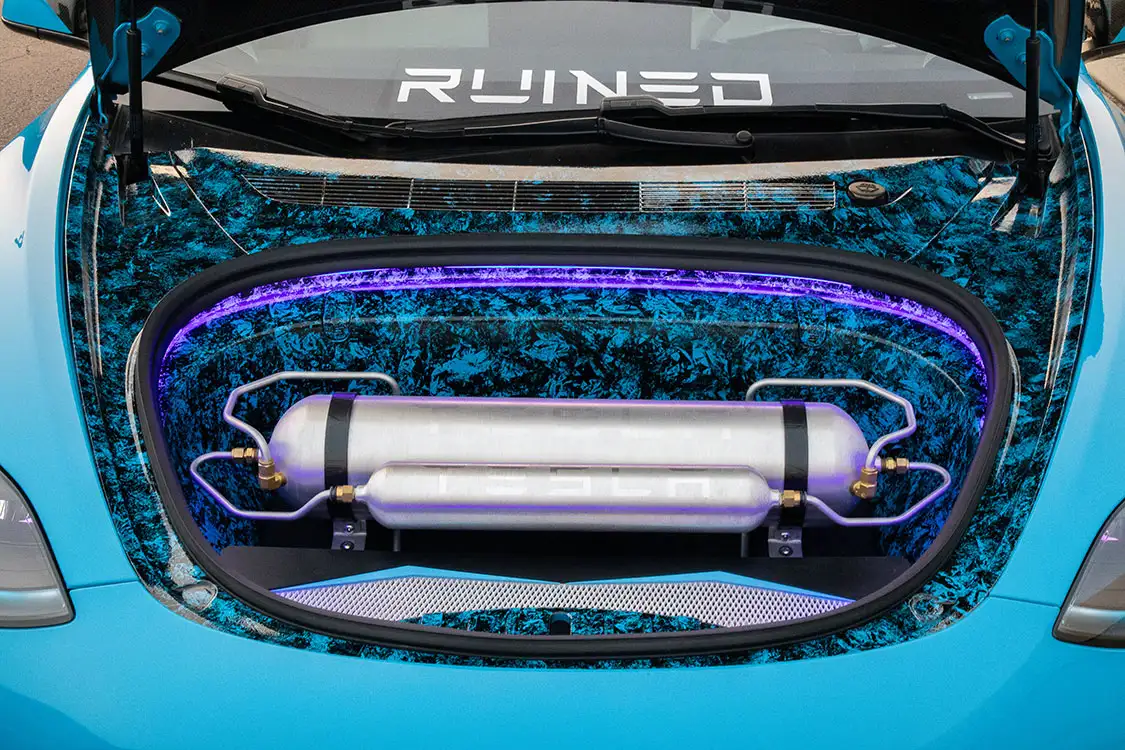
AJ’s commitment to detail was exemplified in the chassis and suspension. Renowned builder Mikhail Katashev, known as Rat4life, painstakingly crafted the suspension. With Unplugged Performance sway bars, end links, and control arms, Mikhail installed an air-ride system composed of Universal Air bags, Viair compressors, and Seamless tanks.
Project 3.36 commands attention with its exterior aesthetics. The vibrant Porsche Mexico Blue, meticulously applied by 66Customs NJ, envelopes the bespoke widebody, creating a striking visual impact. Adding the Artisan Spirits Black Label carbon fiber lip kit and Teslux Innovations Plaid Series RGB headlights elevate its allure, while the Alpharex taillights add a unique touch.
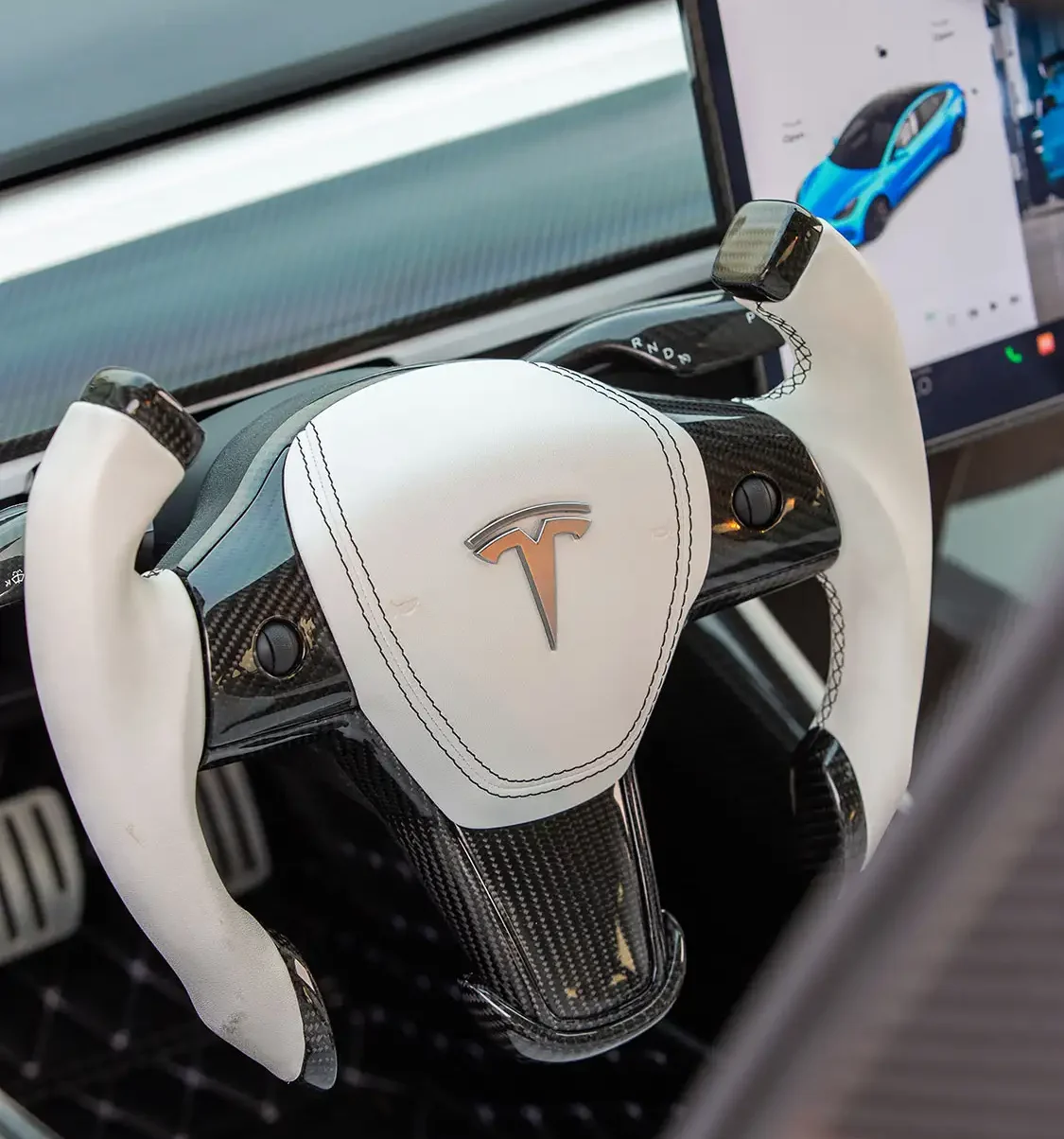
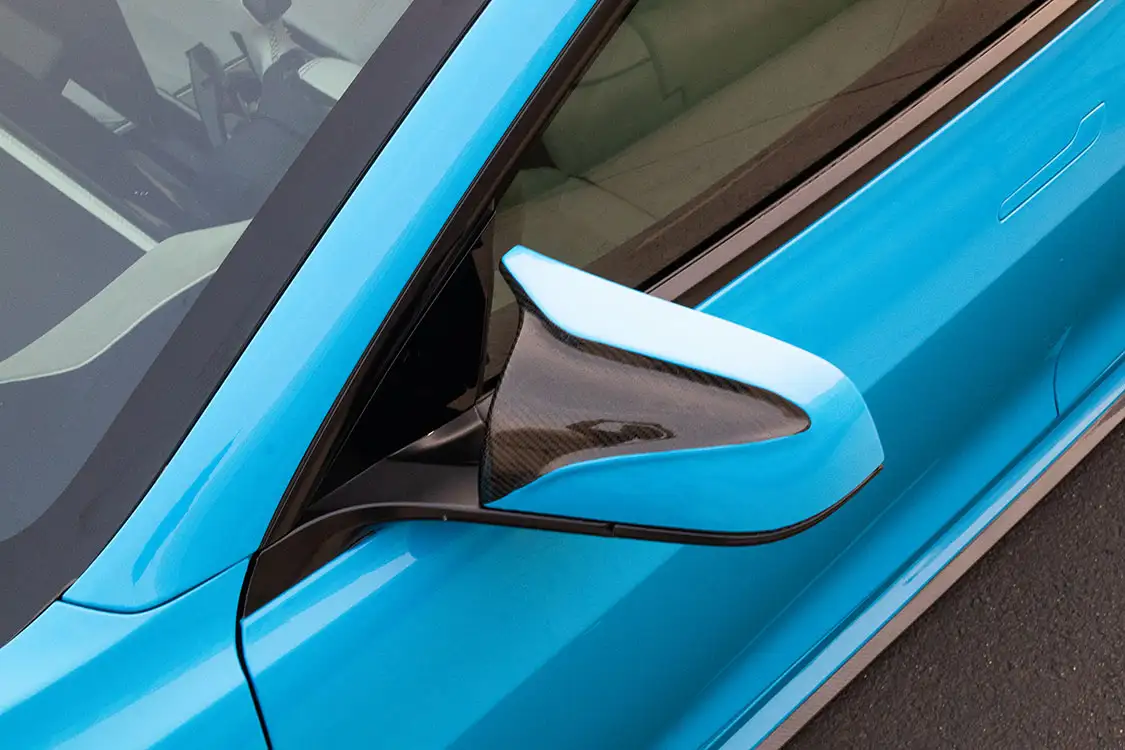
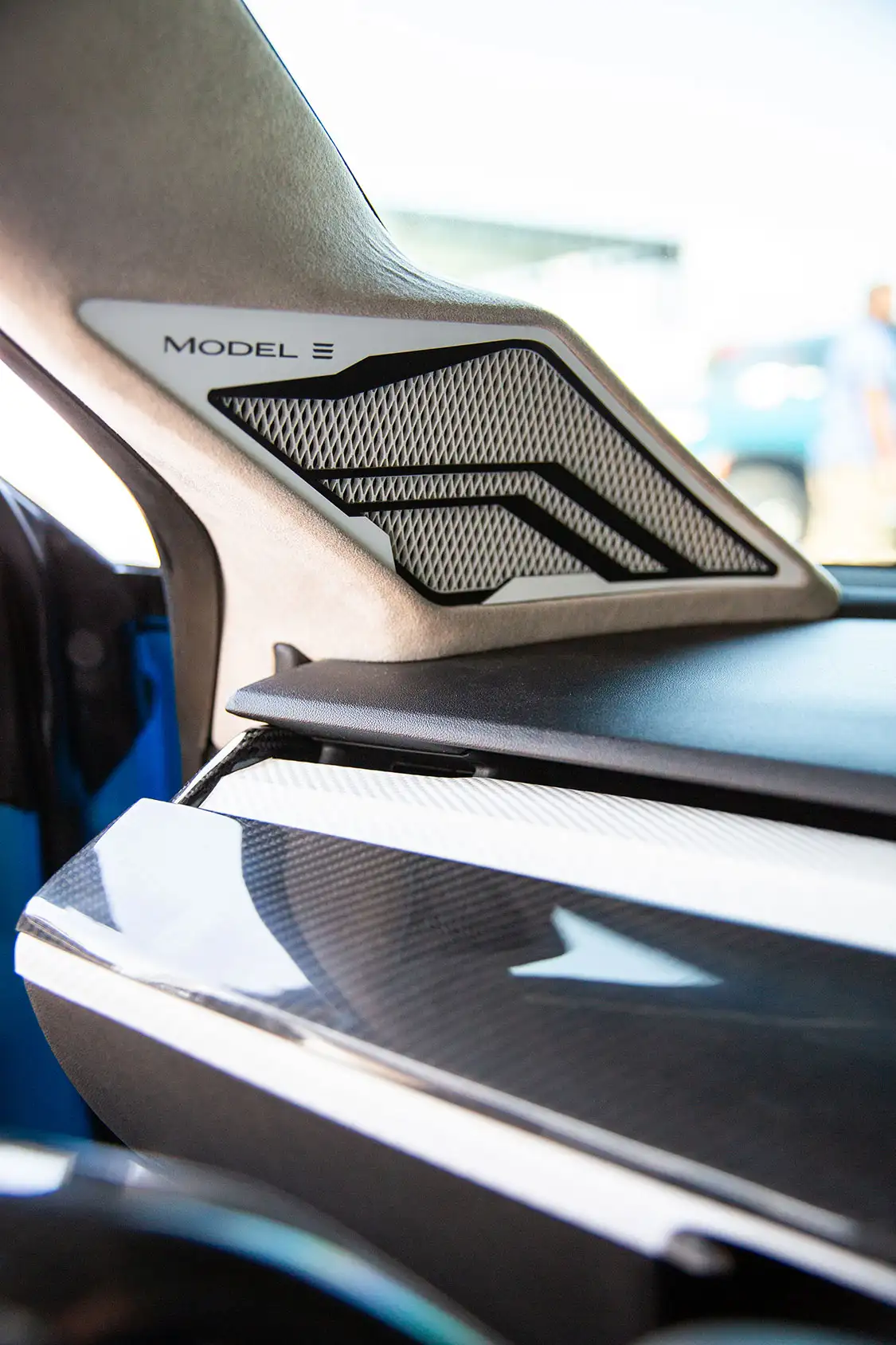
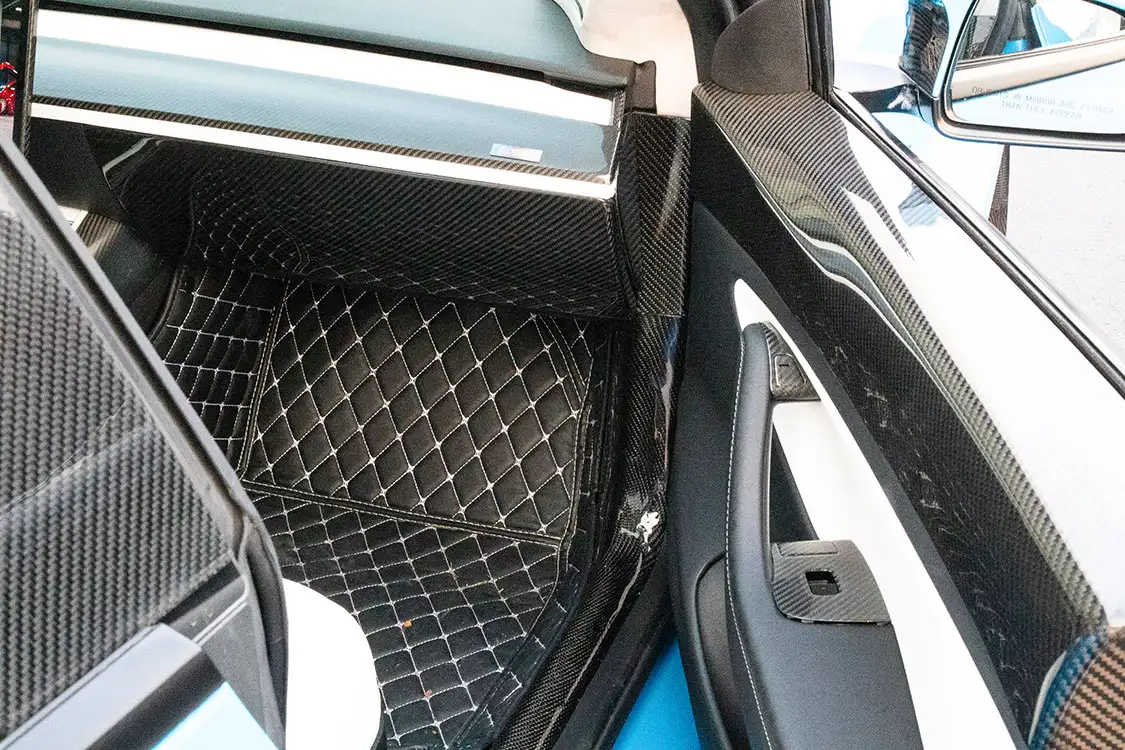
Crafted by Musaic Design, the interior boasts carbon fiber seatbacks and a Carismo Design Tai Fighter carbon fiber steering wheel. Illusion Audio components, including the Carbon C10XL Subwoofer, Focal amplifiers, and Soundshield Acoustic Foam Treatment, enhance the auditory experience. The Astell Kern SE200 High Res Music Player delivers an immersive audio experience.
AJ’s journey continues, marked by an unwavering commitment to innovation. His next steps involve reimagining the air frunk setup with Squaretank components and integrating motion sensor RGB lights into the audio system, blending aesthetics and innovation. Eventually, he will complete his vision with a comprehensive reupholster of the interior, combining leather and Alcantara with the distinctive touch of tartan fabric.
As the vice president of the Ruined EV club, AJ’s influence transcends his individual project. He actively fosters the growth of the aftermarket EV sector and cultivates a vibrant community for enthusiasts. His pioneering spirit and meticulous approach stand as inspiration, inviting future builders to explore the boundless potential of EV customization.
“For some reason, there’s much hate around EVs,” AJ says. “I imagine it’s from the fear of future mandates around new car EV requirements. There’s also a stigma out there that EVs are ‘soulless.’ I personally hope that gas cars don’t go away. I’m a car guy at heart. I would also like to think that EVs aren’t soulless … meaning, there are some of us as EV builders who put our heart and ‘soul’ into our builds.”
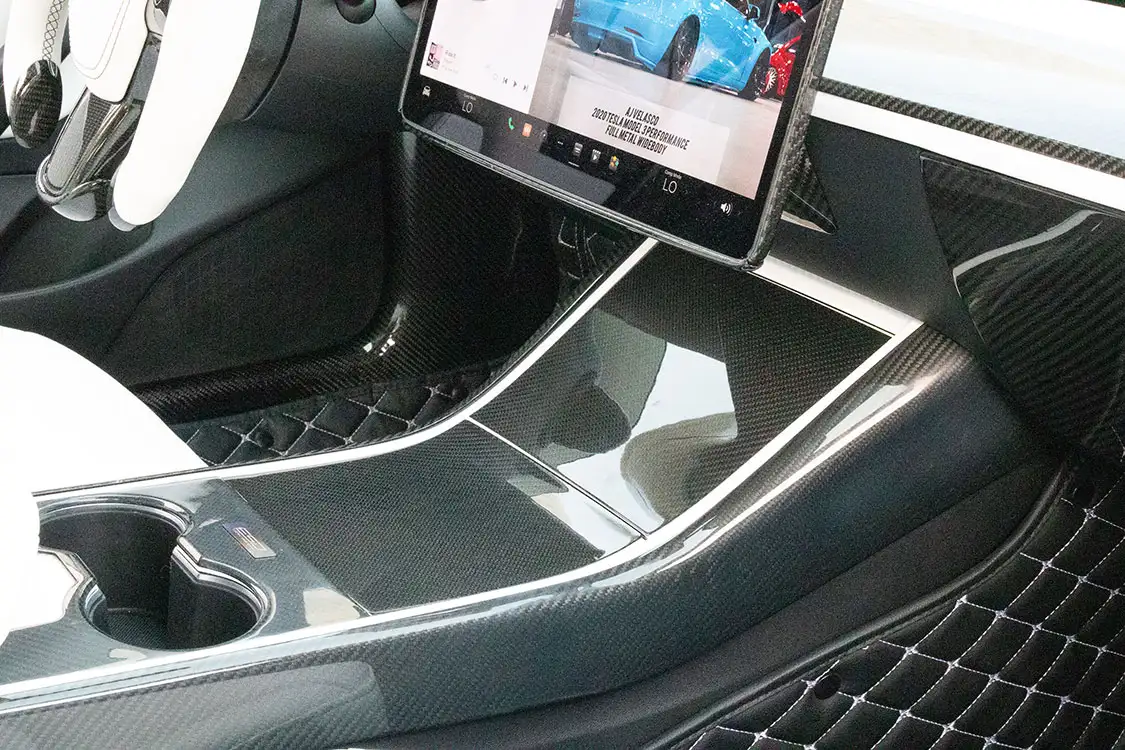
AJ’s journey remains a testament to the fusion of passion, innovation, and determination. From envisioning electrified overland vehicle builds in the near future to currently crafting electric bikes, his forthcoming projects promise to redefine conventions anew. In an era where the EV aftermarket segment is gaining momentum, AJ’s presence in the industry is set to expand, steering electric mobility toward an exciting new era.
‘‘I currently struggle with if I want to go with an OEM EV build such as a Taycan or an Audi,” he says. “My gut tells me I want an EV conversion, like a classic MG, but the challenge is that it’ll be another car, and the build would probably be very similar to my Tesla.’’
The road ahead for AJ is defined by ceaseless curiosity, creativity, and dedication to shaping the electric vehicle landscape. As electrification gains traction, AJ’s story and transformative creations serve as a beacon for those seeking to redefine the limits of automotive ingenuity. With each project, he not only modifies vehicles but transforms an entire industry, encapsulating the boundless possibilities of an electrified automotive future.
AJ’s journey was made possible by the unwavering support of sponsors like 66CustomsNJ, Rat4Life, American Icon Finishes, POR15, Rohana Wheels, Yokohama Tires, Charged Up Performance, Always Clean Detailing, Electric Speed Design, MTM Autoworks, and MGM Paint & Autobody. Special thanks also go to Teslux Innovations, Mountain Pass Performance, Benny aka OEMPlusm3, Misha (Rat4life), Alex (66customsNJ), Jason (POR15), and the Ruined Tesla team.
Ruined EV had humble origins as a hashtag for the first bagged Teslas. With no ready-made kits available, enthusiasts gathered on Instagram to share ideas, troubleshoot, and support one another. This digital camaraderie evolved into a sought-after social media crew. Their journey progressed as they represented the group at car shows, culminating in a memorable gathering at SEMA 2022 that solidified their unity.
SEMA marked a turning point. Randi Bentia’s introduction of Neil Tjin, event manager at Electrify Expo, aligned their visions. What started as a hashtag became an industry-leading partner, driving EV brand awareness. Initially exclusive to top-tier Tesla builds, Ruined EV expanded its horizons to include all modern EV builds, bikes, and conversions, reflecting the industry’s shift.
The VP of Ruined EV is at the helm, responsible for industry strategy and overseeing the North East chapter. They forge partnerships, guide the team’s vision, and offer unwavering support. As the industry evolves, Ruined EV seeks partnerships to shape the future of the EV aftermarket. Contact AJ at aj@ruined.cc to collaborate.
AJ Velasco
Motor & Drivetrain
Battery System & Charger
Chassis/Suspension
Wheels, Tires & Brakes
Body/Paint
Interior
In the heart of Greenville, PA, a remarkable transformation is taking place, one that captures the essence of American muscle and melds it seamlessly with cutting-edge technology. We at Drive Magazine are thrilled to introduce EXOMOD’s latest marvel: The D69 Carbon Daytona. As we celebrate our 38th year in print, it’s moments like these that remind us why the automotive world continues to captivate us.
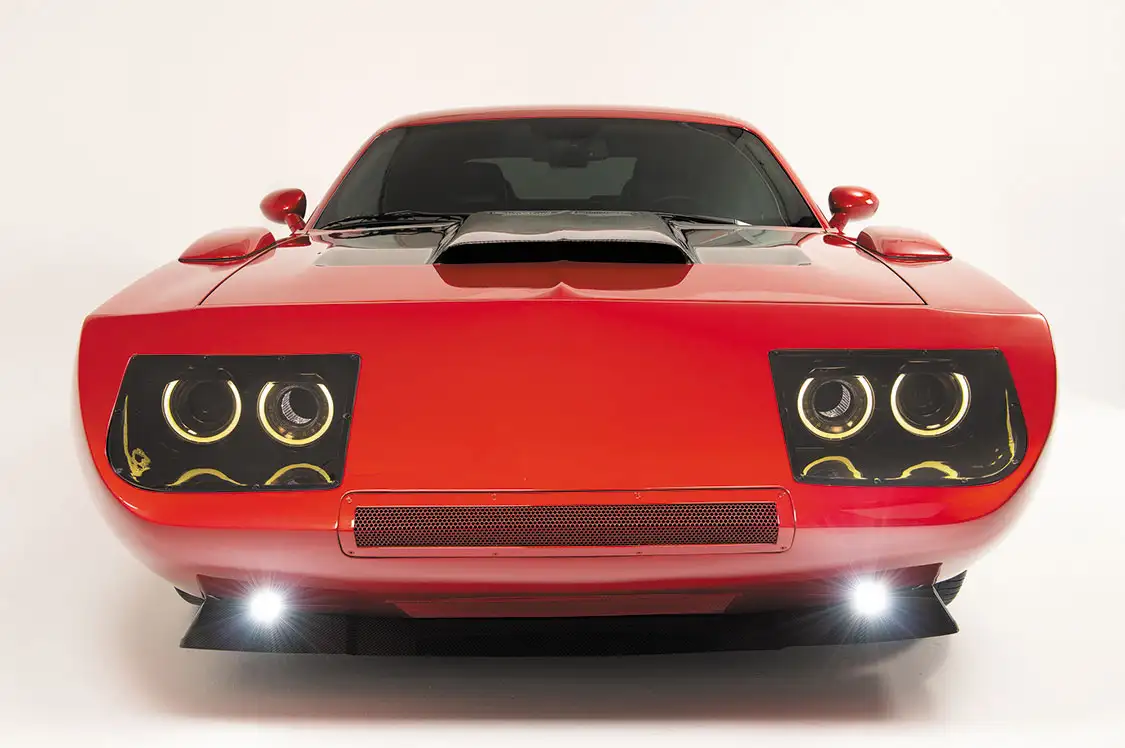
What was once a potent 807hp Redeye Challenger Hellcat has evolved into the D69 Carbon Daytona, a widebody 1969 Dodge Daytona reincarnated in modernity. EXOMOD’s artistry takes the form of a complete carbon fiber Aero Body, enveloping the Redeye Challenger’s modern chassis. This fusion of past and present is not just a car; it’s an automotive masterpiece, aptly dubbed the ultimate RetroMod.
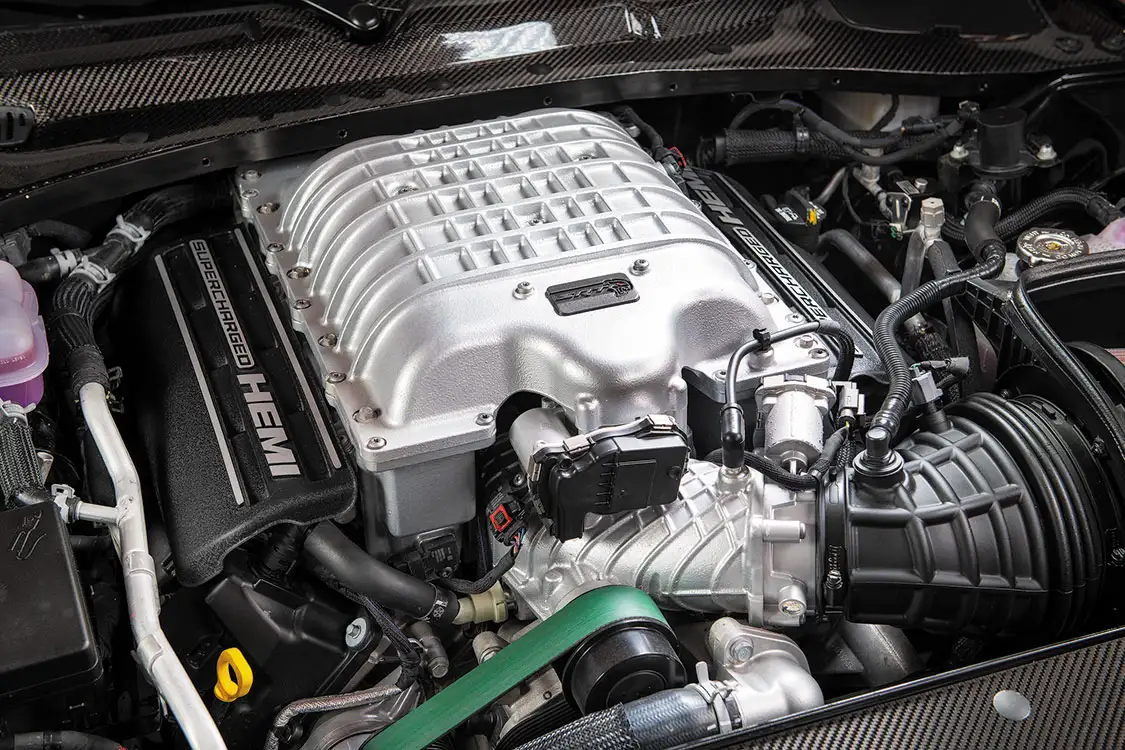
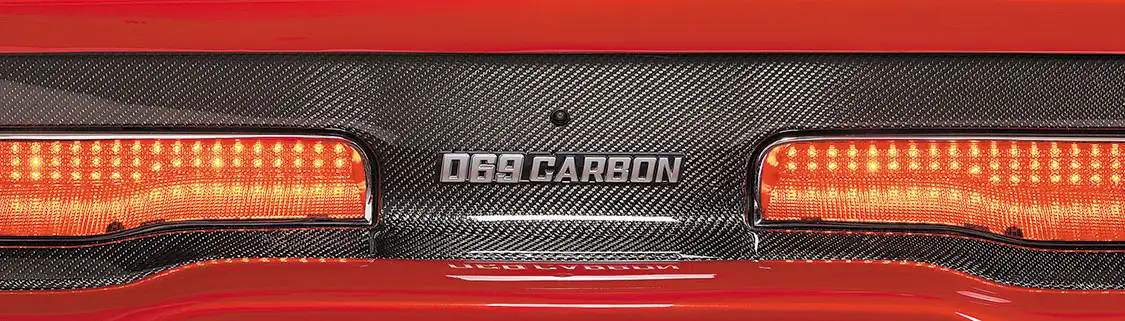
The D69 Carbon Daytona stands as a testament to EXOMOD’s dedication. Over 2,000 hours of meticulous craftsmanship go into each creation, ensuring that no two vehicles are alike. It starts with a brand-new Dodge Challenger Hellcat Redeye, stripped down to its essence, and then reborn with EXOMOD’s custom carbon fiber Aero Body. The result is a harmonious blend of tradition and technology, a car that not only roars with 807 horsepower but also boasts modern supercar reliability, comfort, and performance.
Underneath its classic exterior lies a 6.2-liter supercharged V8, Brembo Brakes, SRT Power Chiller, and a bespoke carbon fiber body that captures the Daytona’s essence. Every detail, from the sequential LED taillights to the two-tone Italian leather interior, has been carefully curated to provide a driving experience that’s as iconic as it is exhilarating.
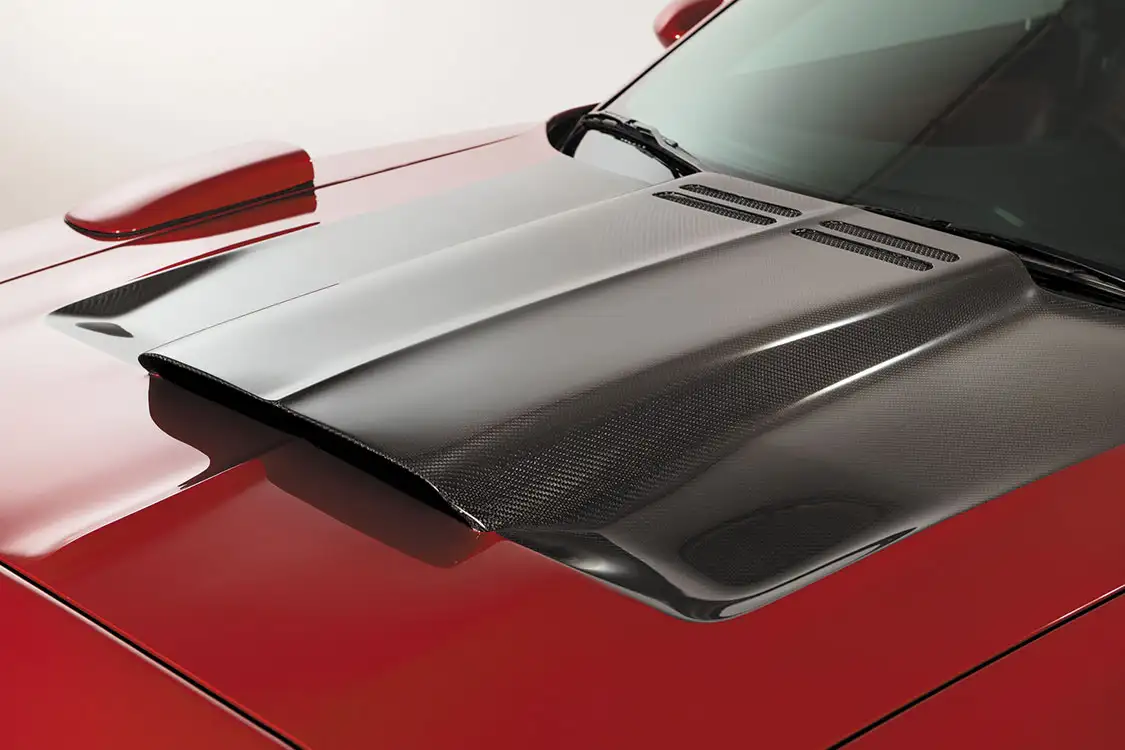
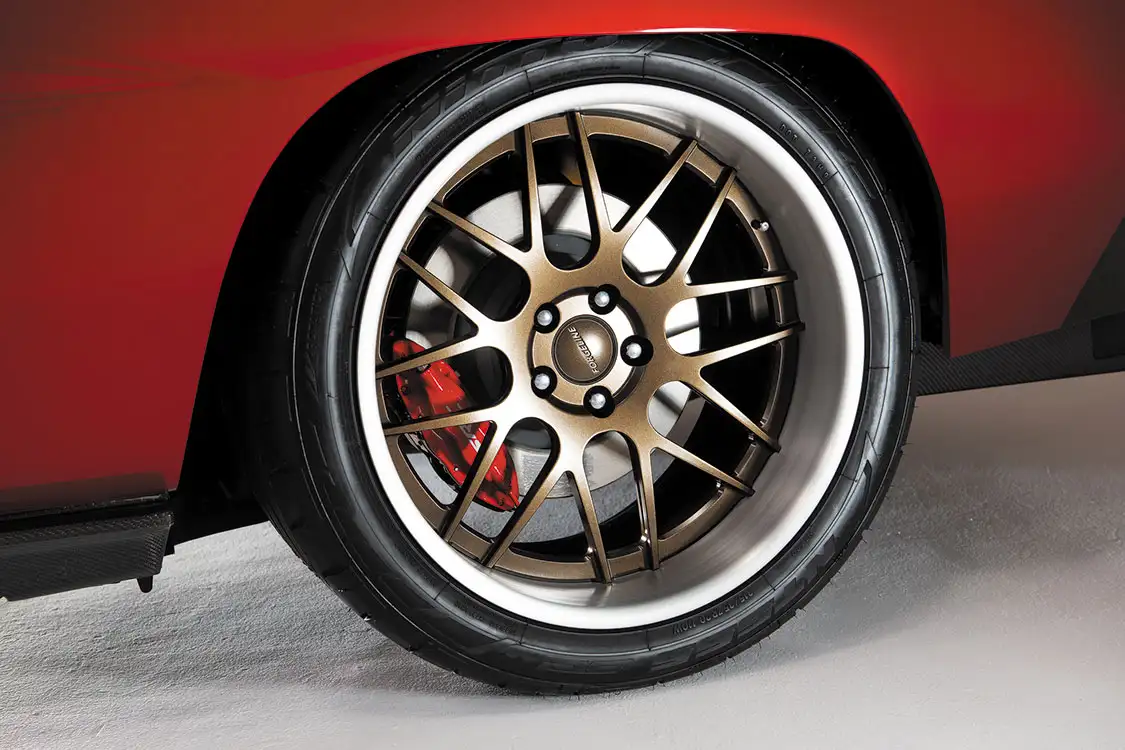
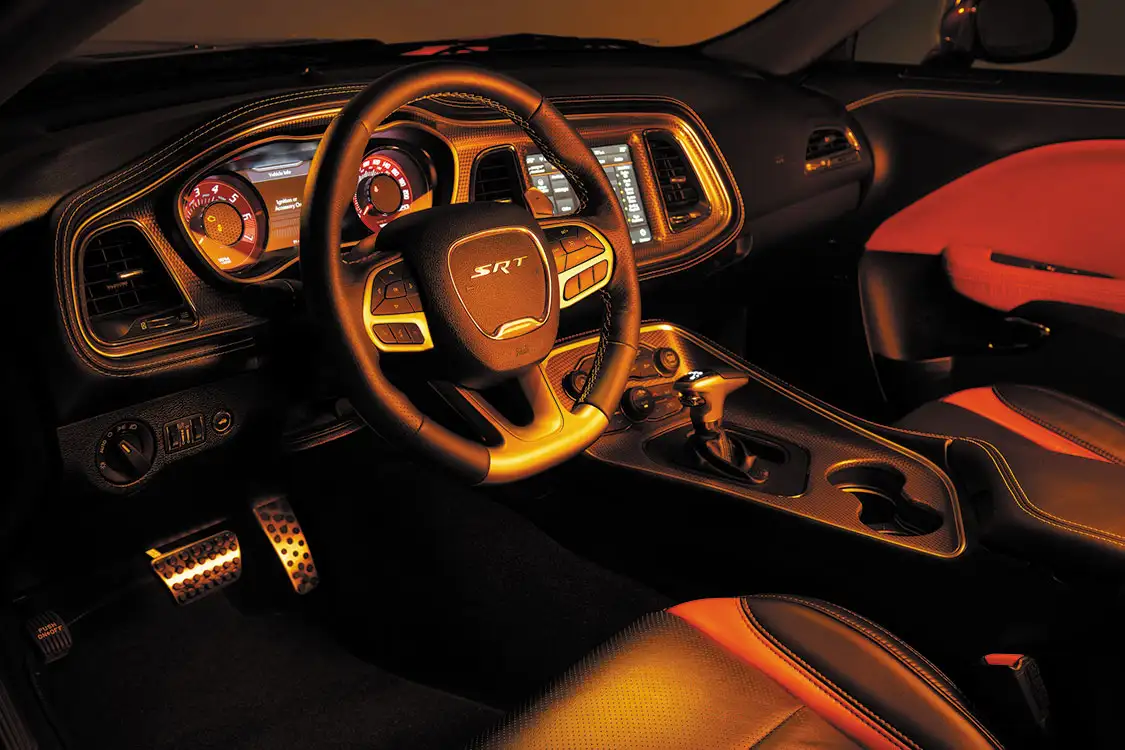
For $395,000, you’re not just purchasing a car; you’re investing in a piece of automotive history, reimagined for the modern era. As CEO Rick Katzeff aptly puts it, “The Dodge Daytona represents raw power and aesthetics that continue to captivate enthusiasts. Building a D69 Daytona has been a dream of mine for years, and I’m thrilled that we can now offer this vehicle to our clients with modern-day performance and peace of mind.”
In the world of automotive excellence, the D69 Carbon Daytona stands tall, a beacon of innovation and craftsmanship. It’s more than a car; it’s a legacy, and we’re privileged to witness and share in its glory.
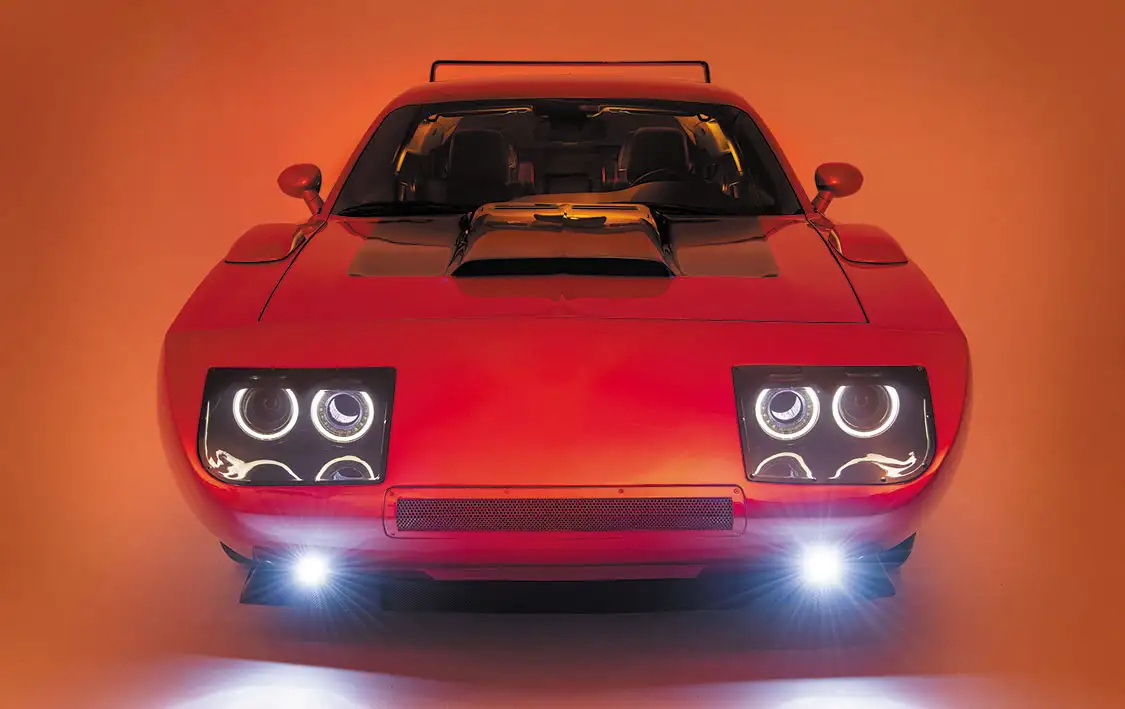
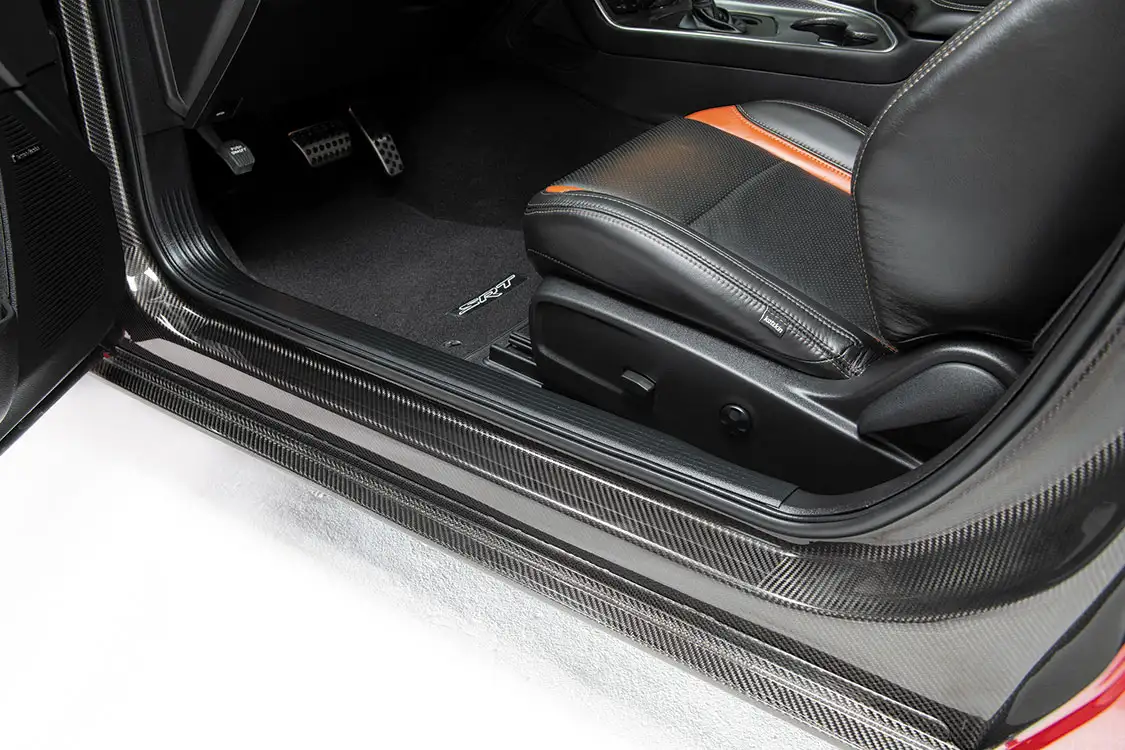
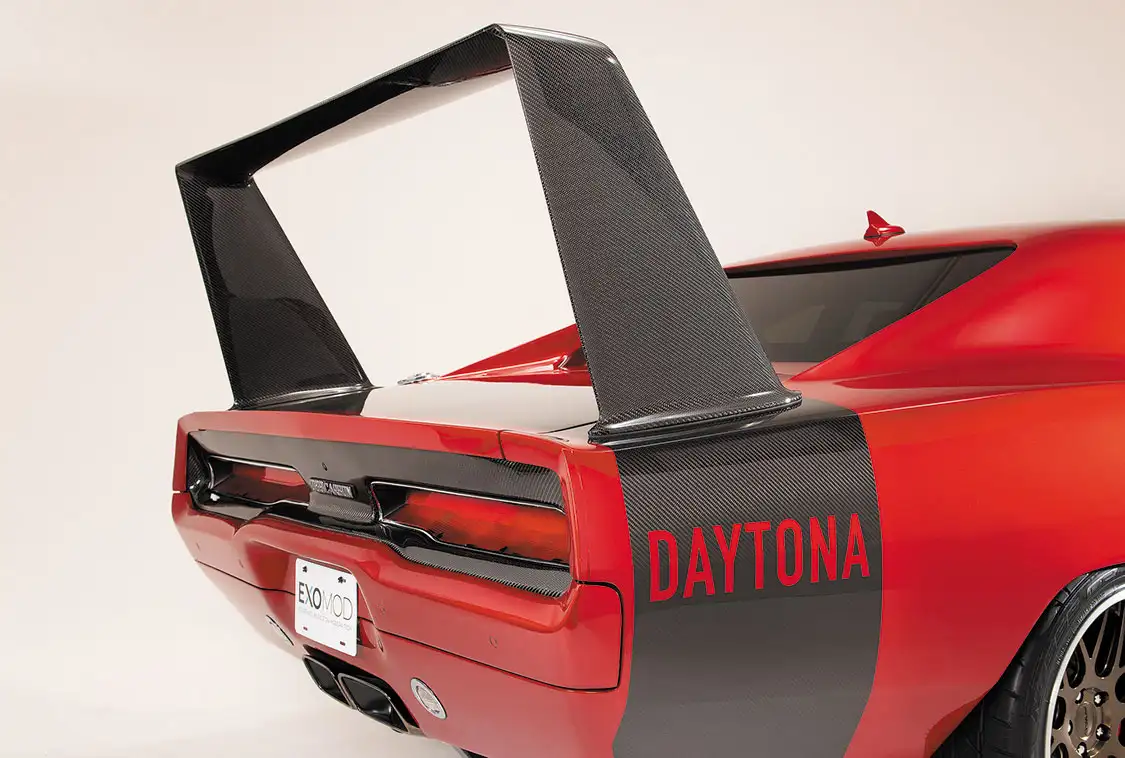
The EXOMOD D69 Carbon Daytona build includes:
It almost always happens when you set out to customize a car: the project inevitably snowballs into a massive build-up. Before you know it, a simple fix or mild restoration morphs into a long-term project. This was the case for Phoenix residents Steve Edling and his wife Karlene and their ’68 Chevrolet Chevelle. It all started innocently enough when Steve’s friend Doug was out cruising his own classic car. At a stoplight, the guy in the next lane motioned to him, and told Doug that his brother had an old car for sale that he should check out. Doug knew that Steve was in the market for a Chevelle, so he followed the guy to have a look. The car wasn’t in the best shape, it’d been sitting in a yard for years, but Steve saw its potential. The owner agreed to take a paltry $100 for it as long as Steve and Doug would dig the car out of the backyard themselves—it had been in the yard for a really long time.
Rather than the mild restoration he’d initially planned, he decided to take it to the next level instead.
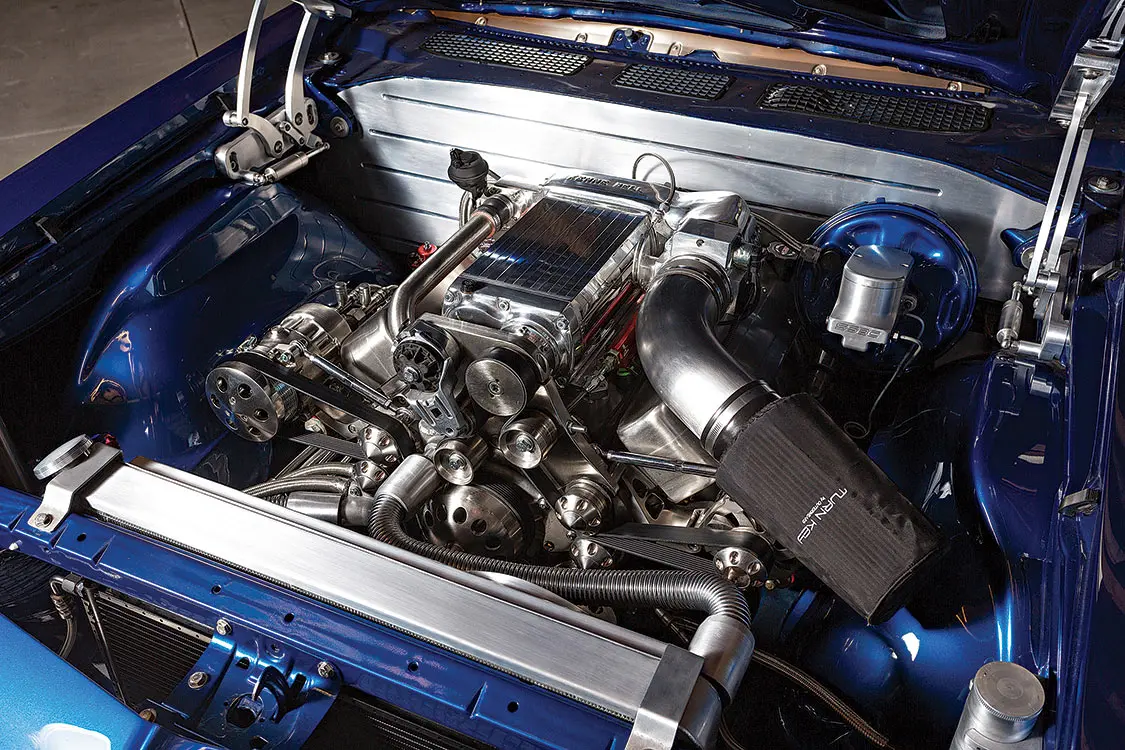
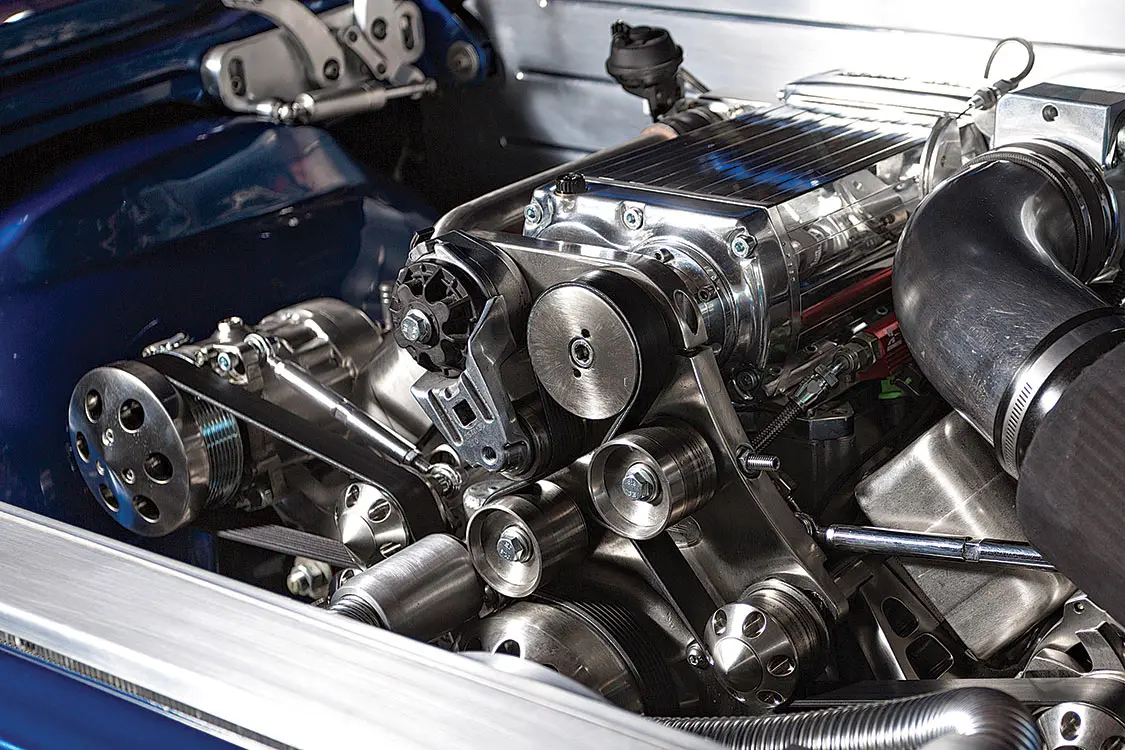
Steve planned to mildly restore the Chevelle, just enough to turn the heap into a cruiser, so Doug and his buddy Cadillac Joe got to work repairing the rust and stripping the car down to the bare frame.
Steve spent many years building up his business, Shelves That Slide, and after thinking about his new project Chevelle for a while, he felt he owed it to himself to have a little fun. Rather than the mild restoration he’d initially planned, he decided to take it to the next level instead. Cadillac Joe introduced Steve to Pin of Pindidit, and the pair designed and plotted out the build for a modernized protouring beast. The goal was to blend influences from street rods, luxury cars and laid-out customs into one clean package packed to the roof with custom details.
Meanwhile, Doug and Cadillac Joe had already stripped the car down and placed it on a rotisserie to repair any rust. They’d also sent the chassis off to be powder coated. The suspension needed some modern upgrades, so up front, a set of tubular control arms from Heidt’s was installed along with a set of Slam Specialties RE7 airbags and Bilstein shocks. To handle the high horsepower that would soon find its way under the hood, the old rearend was tossed aside in favor of a custombuilt Ford 9-inch from Currie Enterprises that was mounted with a 4-link setup. For the air suspension management, a full set of GC air valves controlled by an AVS switch box was installed, with air supplied by custom air tanks and Viair compressors.
A set of fully brushed Budnik Revolver wheels (20×8.5 inches front and 22×10 inches rear) wrapped in Falken Azenis FK453 tires (245/45/R20 front and 295/25/R22 rear) finish off the rolling stock. In order to bring the billet rollers to a quick stop, Wilwood brakes, featuring 14- inch rotors and six- and four-piston calipers in the front and rear, respectively, were installed.
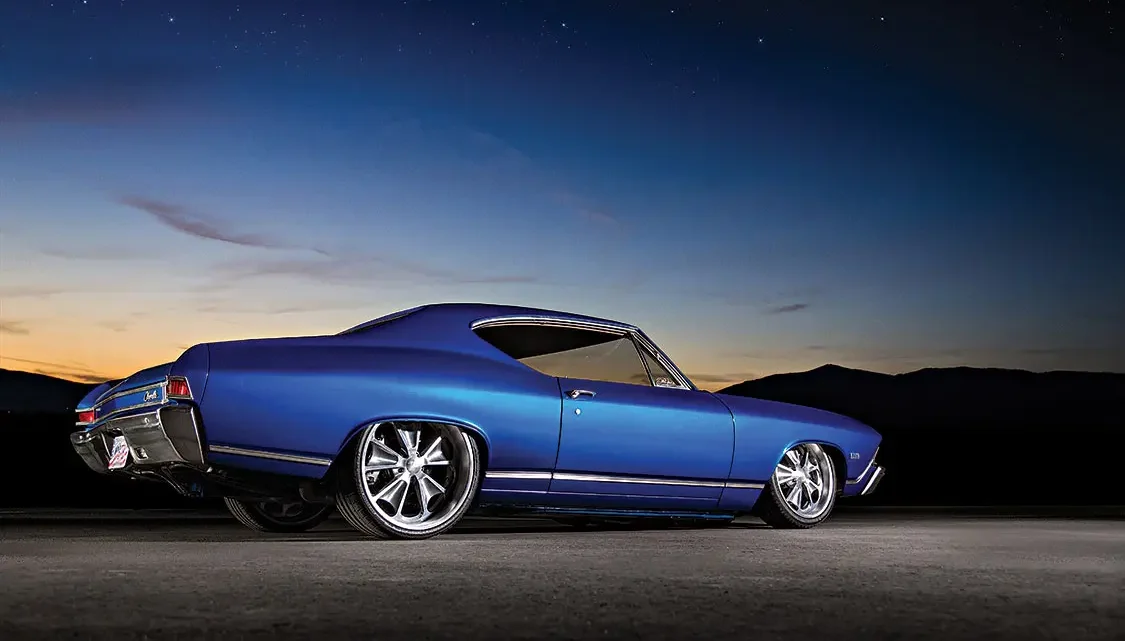
A brushed finish covers the entire the body, even the power plant. First, the body was sent to Lucky Luciano’s for a coating of PPG Arrival Blue, and all of the factory trim and bumpers headed south to Royal Plating in Tuscon, Arizona for brushed nickel plating. Once all of the pieces were reunited, the Chevelle’s weatherstripping was replaced with new Steele Rubber Products components.
The goal was to blend influences from street rods, luxury cars and laid-out customs into one clean package packed to the roof with custom details.

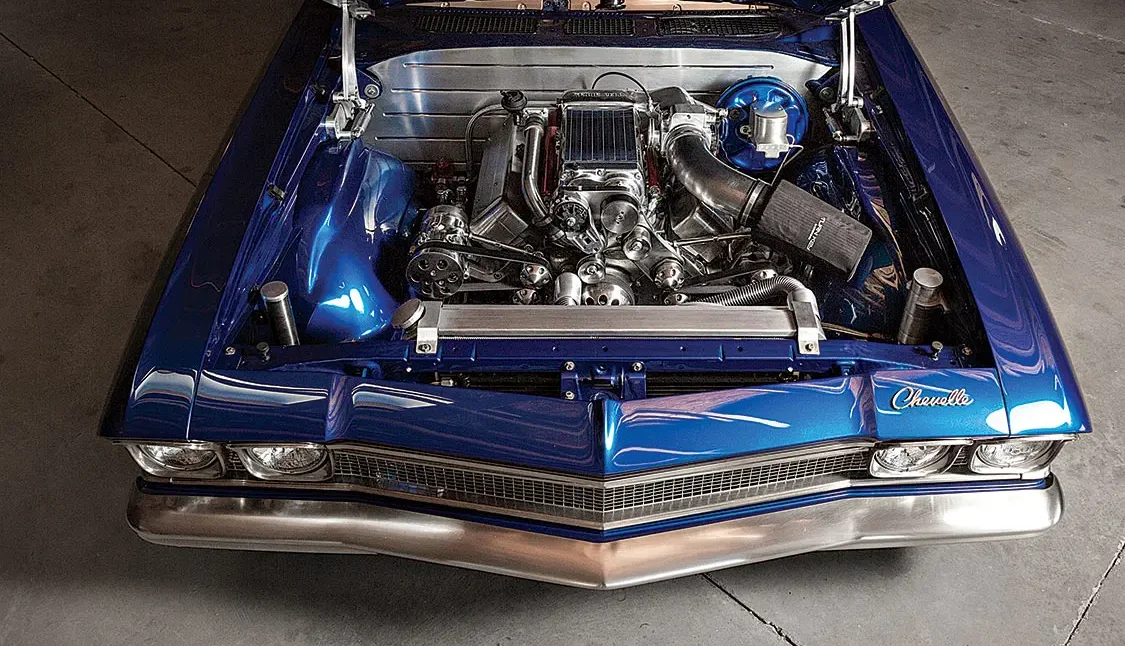
The outside of the car shows a lot of class and a hint of attitude, but pop the hood and you’ll reveal a true monster. A Turn Key Engine 740-hp Kenne Bell supercharged LS2 was dropped in to provide a massive amount of power and modern reliability. To cool down the engine on hot Phoenix days (and let’s face it, nights, too), a Ron Davis radiator and a custom intercooler were installed. Providing cooling for the Chevelle’s occupants is a full Vintage Air Gen IV A/C unit complete with Front Runner accessory drive. Every wire was hidden, and anything that could be was plated in brushed nickel. A TCI six-speed automatic transmission backs up the powerful modern engine and once the pedal is pushed to the floor, a custom-tuned stainless exhaust system from Magnaflow expels spent gasses.
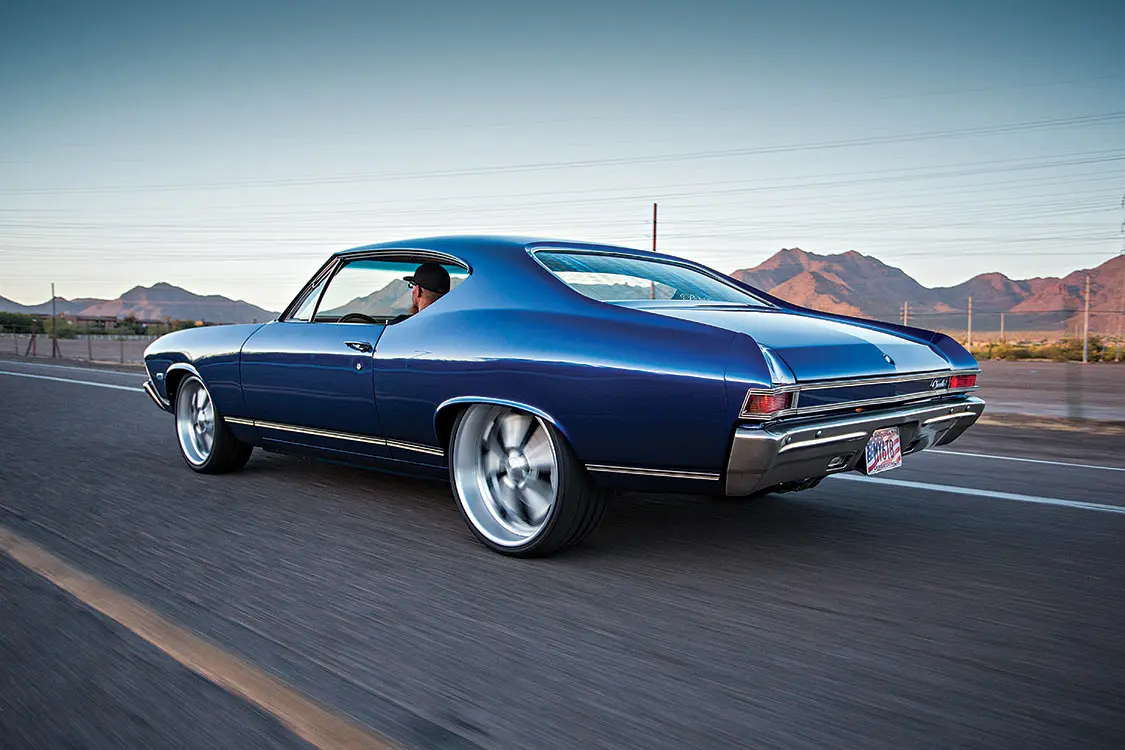
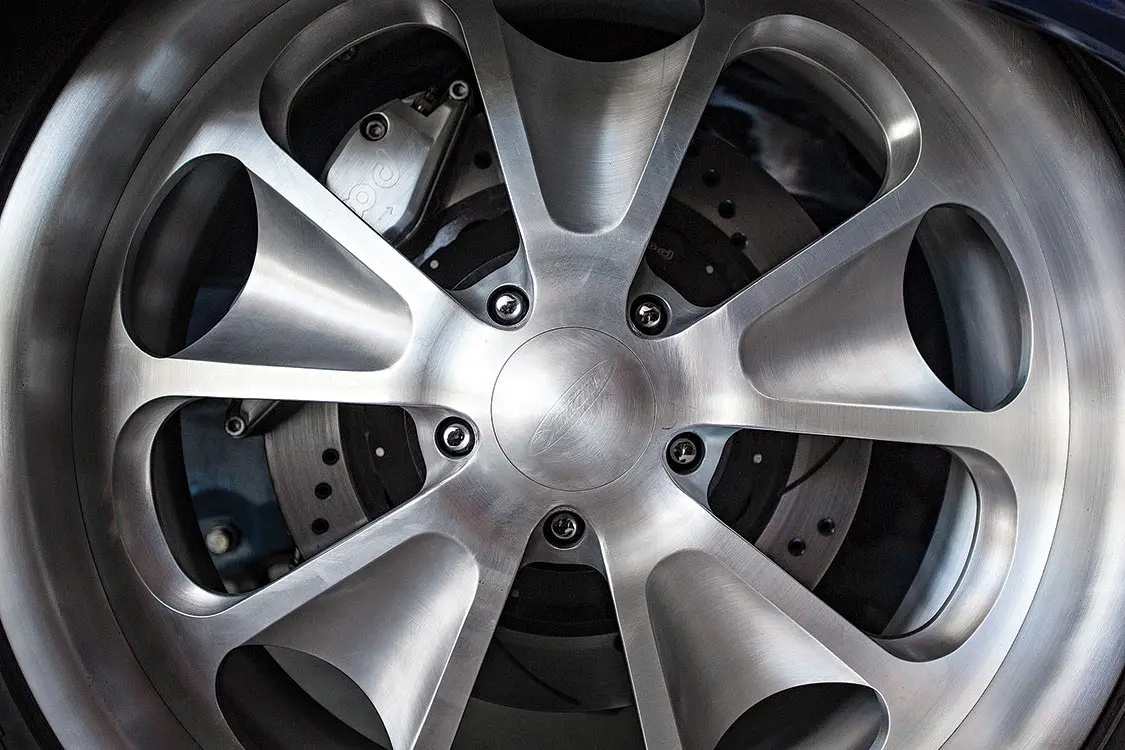
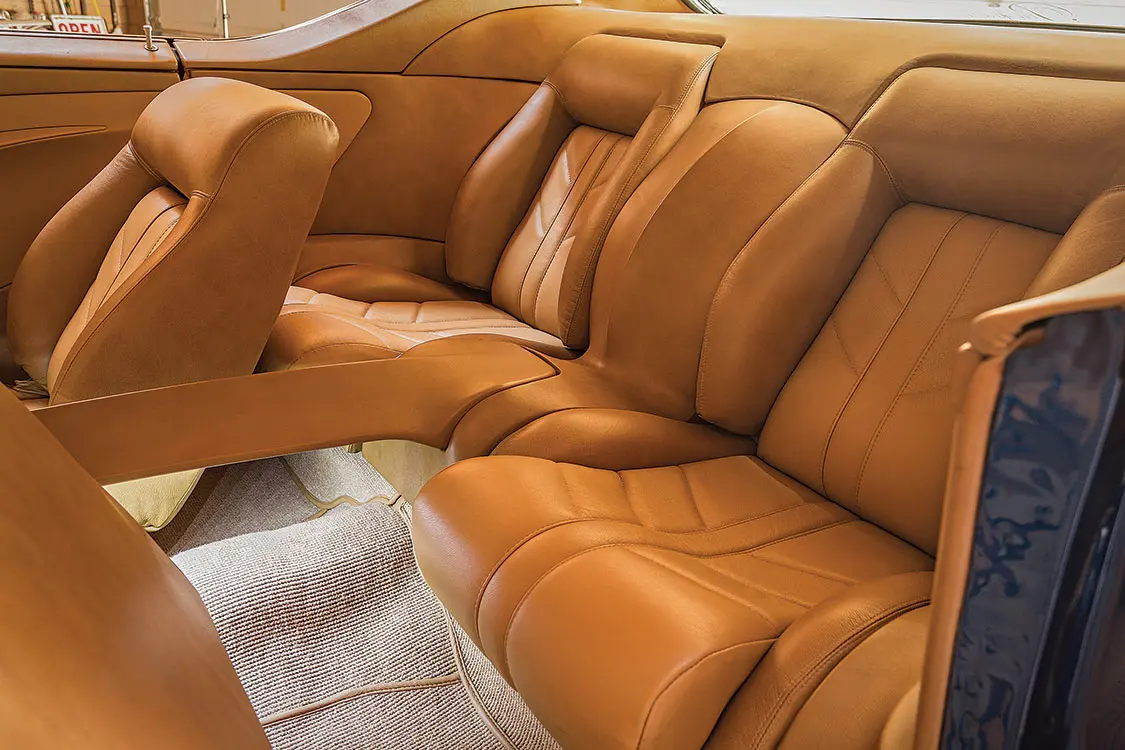
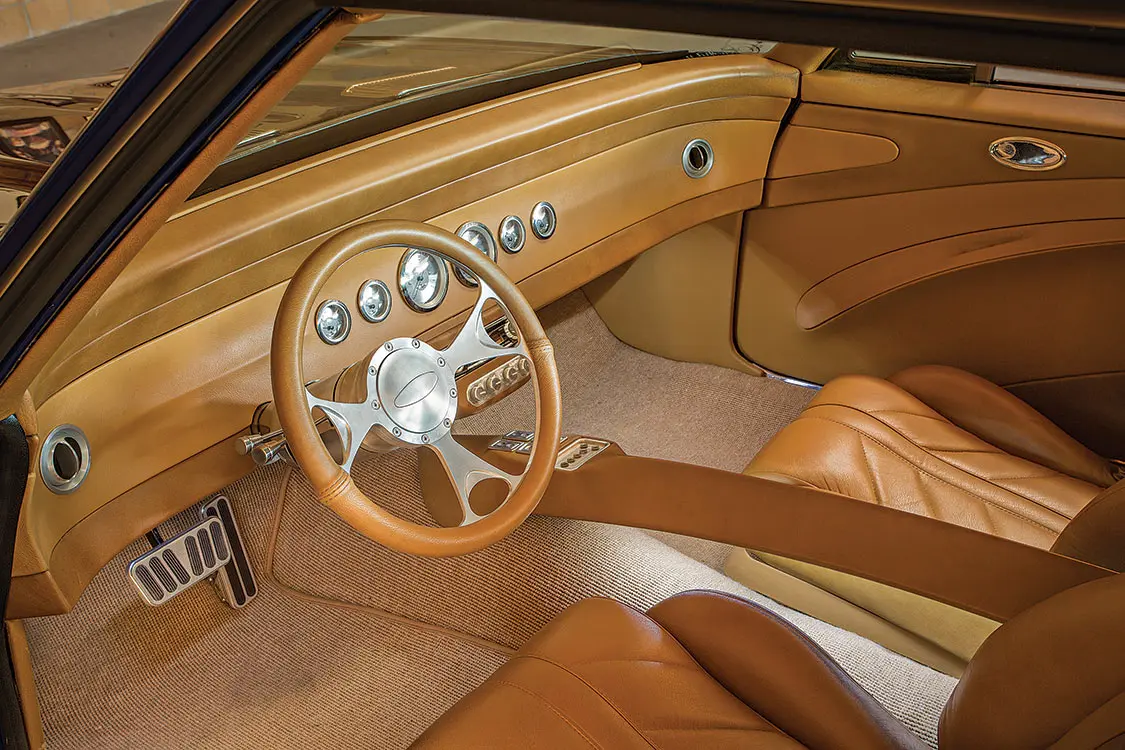
With a modern pro-touring suspension, and a pure performance muscle engine, the interior reflects street rod styling and unadulterated luxury. Since the car was a bare slate, Pin opted to go the custom route and enlisted help from Todd Jubert of The Interior Shop and Aaron Ruddy. A custom-formed dashboard was outfitted with Classic Instruments gauges. The dash flows into custom door panels and a floating center console that houses a Mooneyes pushbutton shifter. A set of four Glide Engineering bucket seats was installed, and everything was wrapped in a total of 13 hides of tan Bentley leather. An ididit steering column with a matching Budnik Revolver steering wheel finishes off the dash. Staying true to the theme of the other components, all of the billet items were brushed. Inside, a Rockford Fosgate sound system is allowed to pound, thanks to Dynamat sound deadener installed throughout. It’s all powered by Kinetik HC2000 series batteries tied in using a Painless Performance wiring harness.
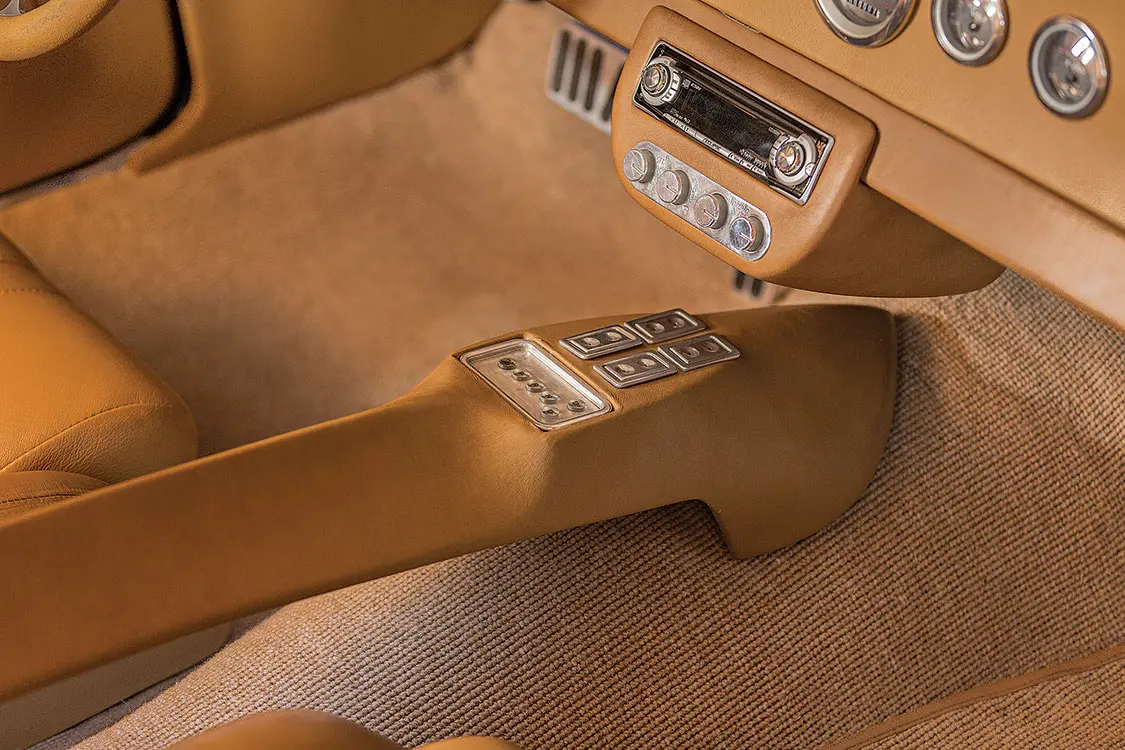

Finally, Chucky Bond buttoned up all of the details and finalized the assembly before the car hit the streets. When the Chevelle was completed, not only did Steve head straight to the local cruise nights and Goodguys shows, but he also had it displayed on a casino floor during SEMA (hosted by Pin).
Steve and Pin would like to thank Doug, Cadillac Joe, Richard Waitas, Todd Jubert, Aaron Ruddy and Chucky Bond for all of their help throughout the build.
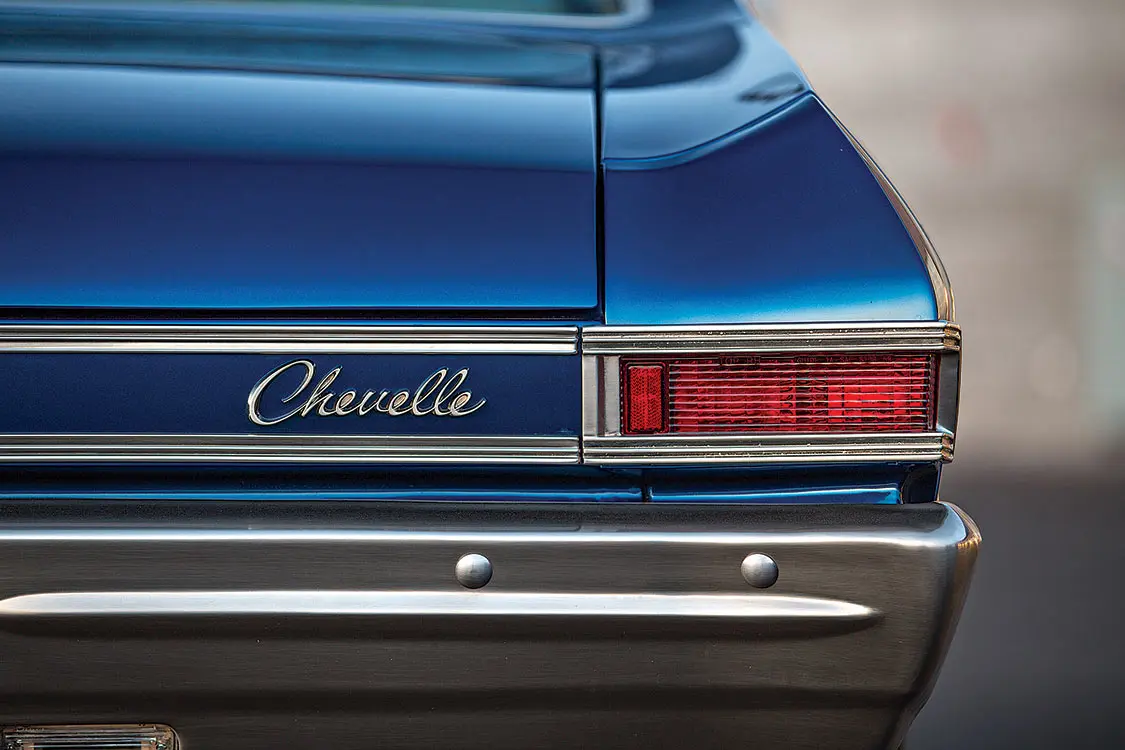

1968 Chevrolet Chevelle
OWNER: Steve and Karlene Edling
Builder:
Pindidit
Suspension:
Shop: Cadillac Joe
Powdercoated chassis, Heidt’s control arms, 4-link, Currie Enterprises Ford 9-inch rearend, Slam Specialties RE7 airbags, Bilstein shocks, AVS air controller, Viair compressors, GC air valves, custom air tanks
Engine:
Shop: Turn Key Engine Supply/Chucky Bond
740-hp LS2, Kenne Bell supercharger, brushed nickel accessories, TCI six-speed transmission, Mooneyes pushbutton shifter, Vintage Air front runner, Magnaflow stainless steel exhaust, Ron Davis radiator, custom intercooler, Painless Performance wiring, Kinetik HC2000 batteries
Brakes:
Front: Wilwood 14-inch, six-piston
Rear: Wilwood 14-inch, four-piston
Wheels / Tires:
Front: 20×8.5-inch Budnik Revolver; rear: 22×10-inch Budnik Revolver
Front: 245/45/R20 Falken Azenis FK453; rear: 295/25/R22 Falken Azenis FK453
Body and Paint:
Shop: Cadillac Joe/Lucky Luciano’s Custom Paint/Royal Plating
Brushed nickel trim and bumpers, PPG Arrival Blue paint, Steele Rubber weatherstripping
Interior:
Shop: The Interior Shop
Custom door panels, custom dash, Classic Instrument gauges, custom floating center console, Vintage Air Gen IV A/C, Glide Engineering bucket seats, Bentley leather, ididit steering column, Budnik Revolver steering wheel, Rockford Fosgate sound system, Dynamat sound deadener
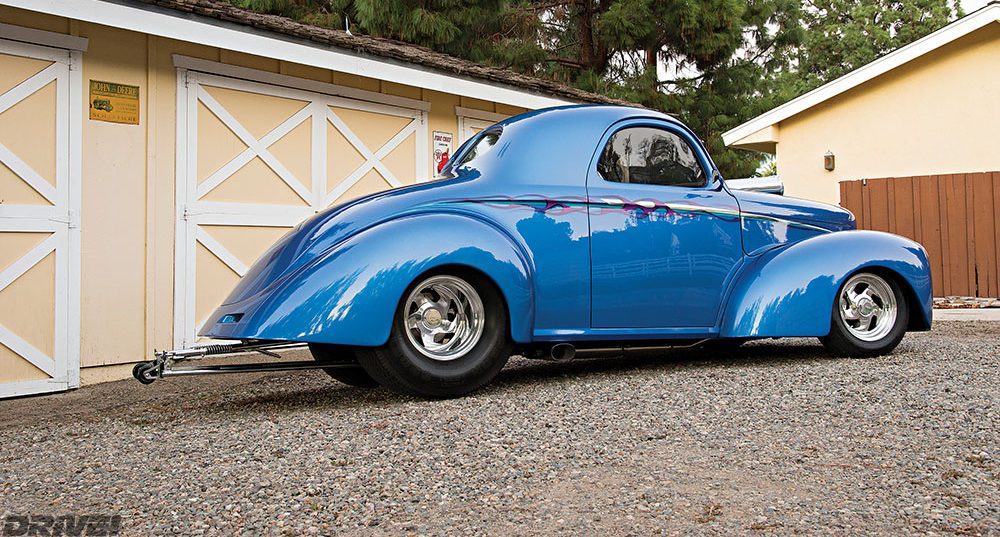
As any true American performance car enthusiast will readily attest to, there are particular makes and models that can raise the blood pressure. Some may get jacked up over a ’57 Nomad or ’32 Ford coupe. Others are grabbed by a trick T-bucket or a chopped Merc. Then there are muscle cars like a GTO, SS 454, Hemi ’Cuda or Boss 429 that make the mouth water. No matter what type of car lights your tires, there is one make and model that seems to transcend all boundaries and interests, the ’41 Willys coupe.
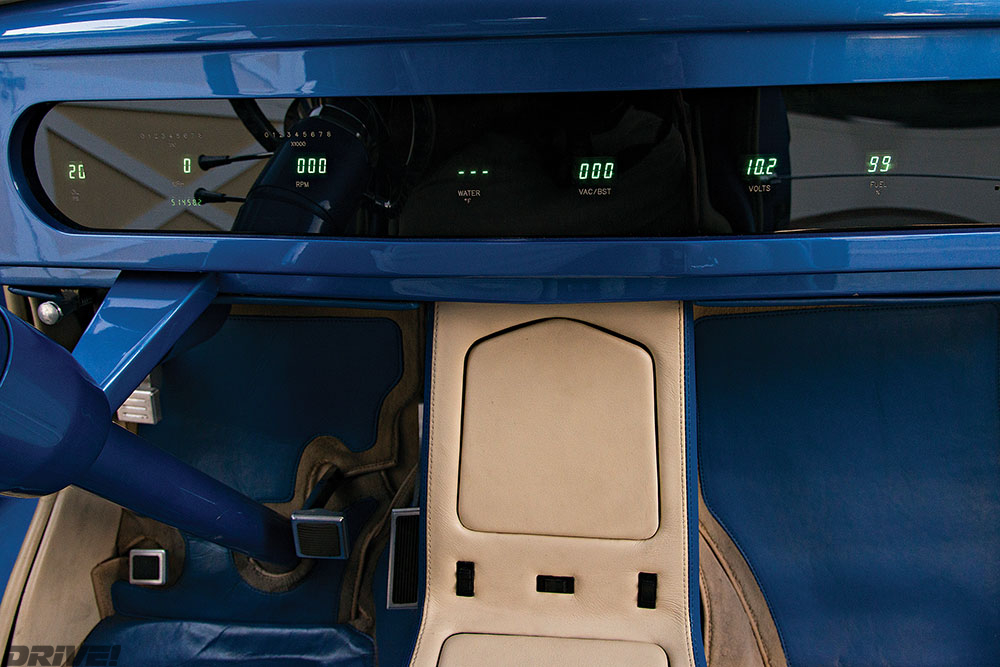 Dakota Digital instrumentation was crafted into a custom-made dash. The console features storage and fuse box compartments. Aluminum go, stop and dead pedals give the feet something to do.
The once lowly pre-war business coupe gained a faithful following during drag racing’s early gasser days. Led by altered cars like those of K.S. Pitman and Stone, Woods & Cook, the distinctive profile launched a million teenage dreams; add to this the fact that Revell made sure that every hobby and toy store in America was stocked 1:25- scale plastic model kits of the racing stars and it’s no surprise that altered cars captured the imagination of young people at the time.
FOR JOSHUA JORDAN, SEEING THIS WILLYS WAS LOVE AT FIRST SIGHT. THE FAMILY OWNS A STABLE OF OUTSTANDING RODS, CUSTOMS AND CLASSICS, BUT THIS MONSTER OF A STREET MACHINE HAS A DOMINANT AURA.
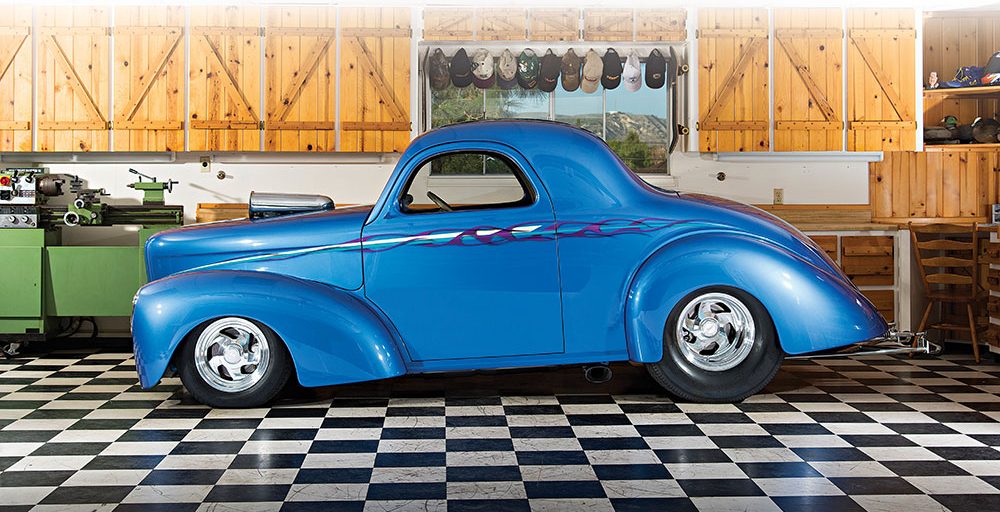
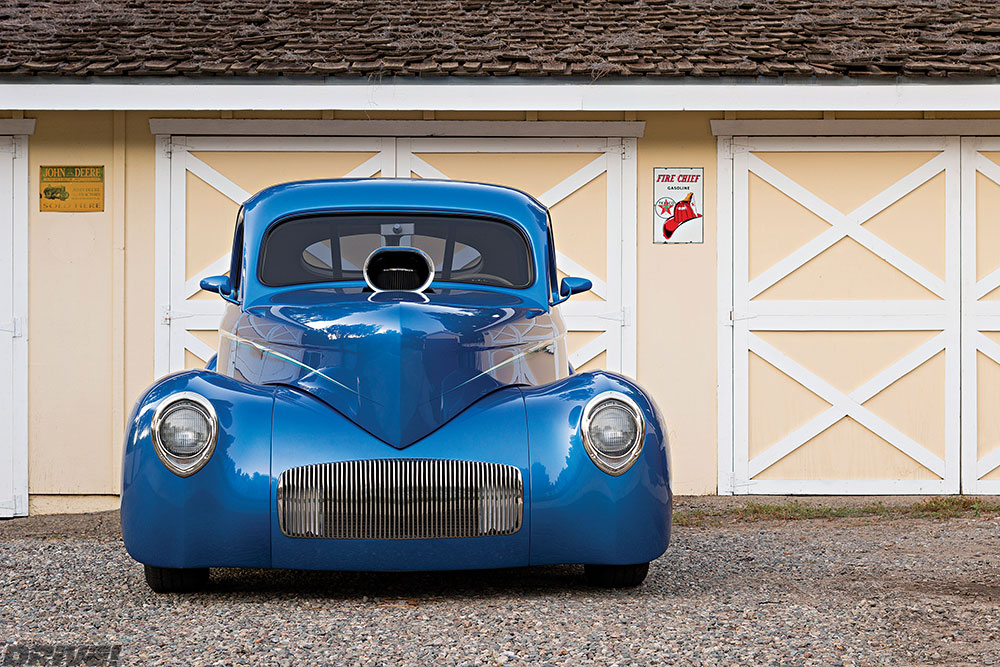
Making the transition from strip racer to street car was not as common as one might think. It was especially odd given the car’s enormous crowd popularity. It was that exact popularity, however, that kept the Willys coupe on the quarter-mile and off Main Street as there just weren’t enough body shells to go around; thus, the 1939-40 Ford Business Coupe became the more abundant hot rod foundation.
As the decades passed, and with the advent of the Funny Car, gassers fell out of favor. All of those Willys racers, once a highlight of the track, were passed along or shoved into shop corners, barns and backyards. Every now and then, one was dusted off and treated to a more practical engine and suspension combination in route to some street time.
When vintage drag racing started to catch fire, all of a sudden everyone was in search of the old Willys race cars. When Mike Cook restored the original SWC machine, the demand for these cars once again overwhelmed the availability. Then, some genius started popping out fiberglass body shells. The cause and street effect was not quite as dramatic as with reproduced T-buckets or Deuce roadsters, but it meant the Willys could find its place on the street scene.
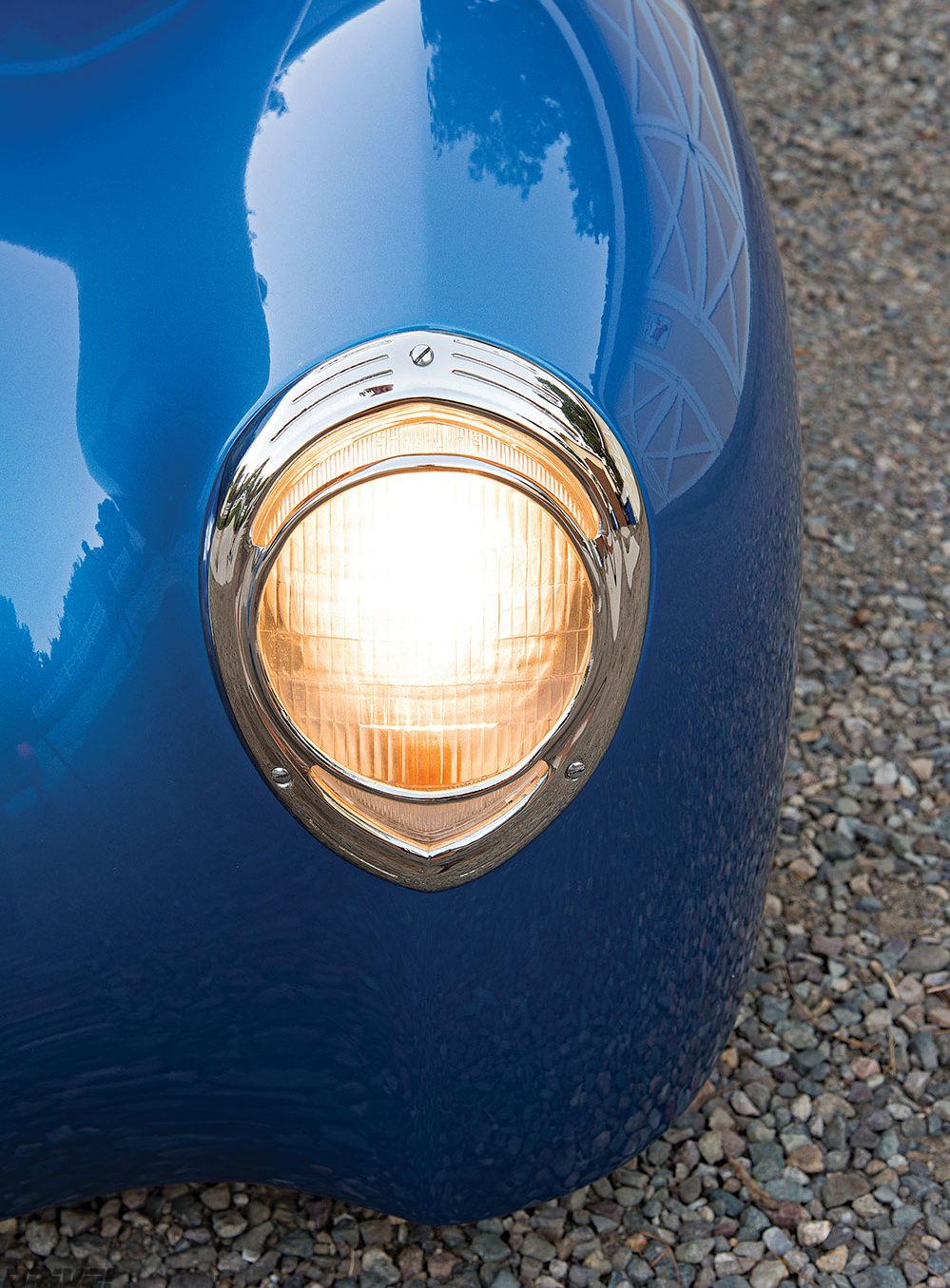
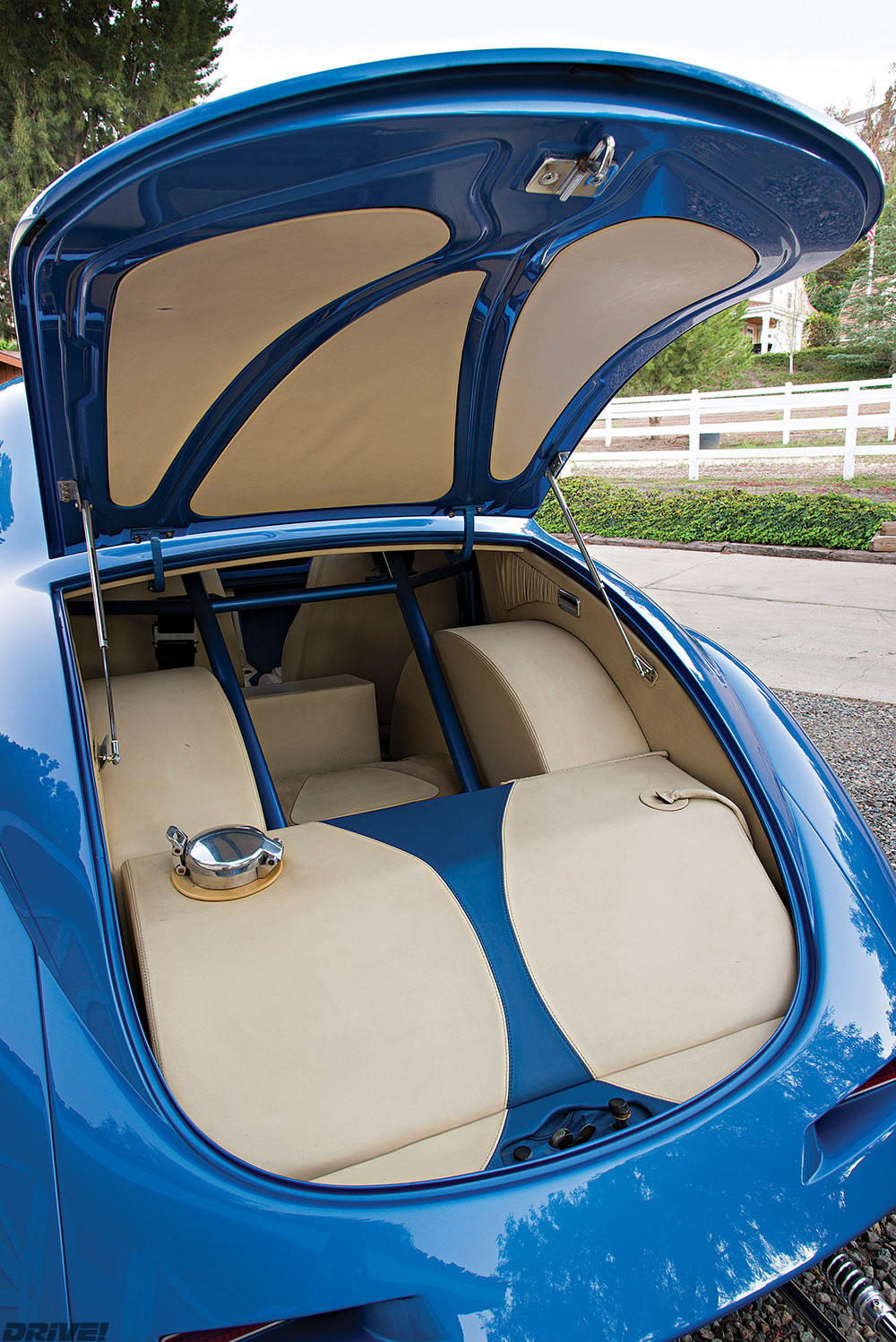 It’s rare that the gas and luggage areas get this level of attention. Under the rear lid is a pristine, well thought out and executed application of workmanship and materials.
Since the reproduction era began, there have been many very fine examples of the Willys street coupe. But perhaps none is more impressive and intimidating than that owned by the Jordan Family collection of Orange County, California. For Joshua Jordan, seeing this Willys was love at first sight. The family owns a stable of outstanding rods, customs and classics, but this monster of a street machine has a dominant aura. And why wouldn’t it? This is a killer build through and through.
WHEN VINTAGE DRAG RACING STARTED TO CATCH FIRE, ALL OF A SUDDEN EVERYONE WAS IN SEARCH OF THE OLD WILLYS RACE CARS.WHEN MIKE COOK RESTORED THE ORIGINALS WC MACHINE, THE DEMAND FOR THESE CARS ONCE AGAIN OVERWHELMED THE AVAILABILITY.
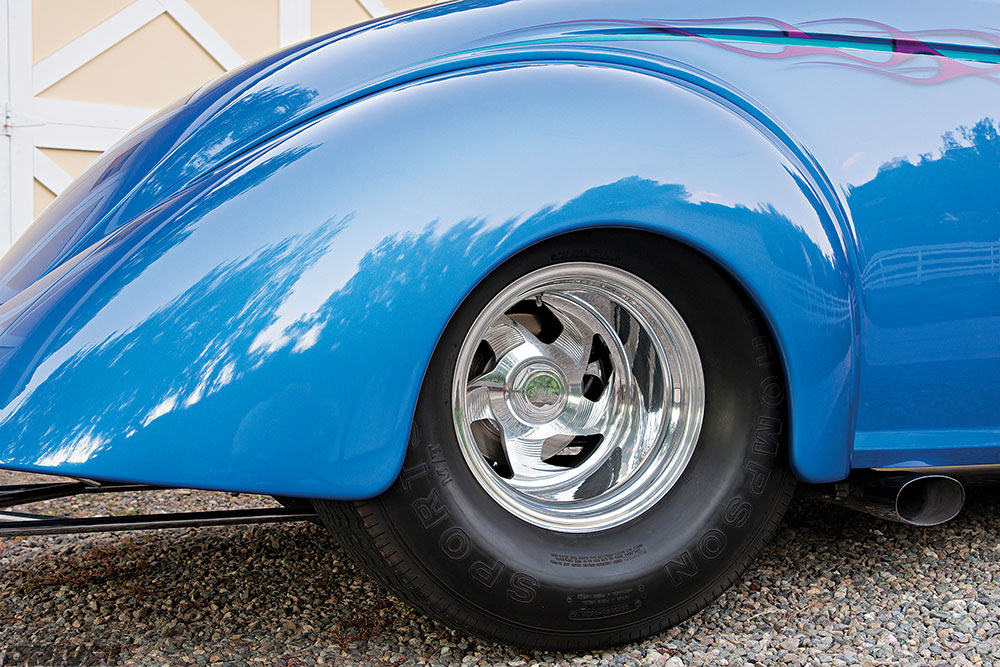 Behind the mammoth Mickey Thompson tires and Budnik wheels are 12- inch disc brakes attached to Strange axles in a narrowed Ford 9-inch rear.
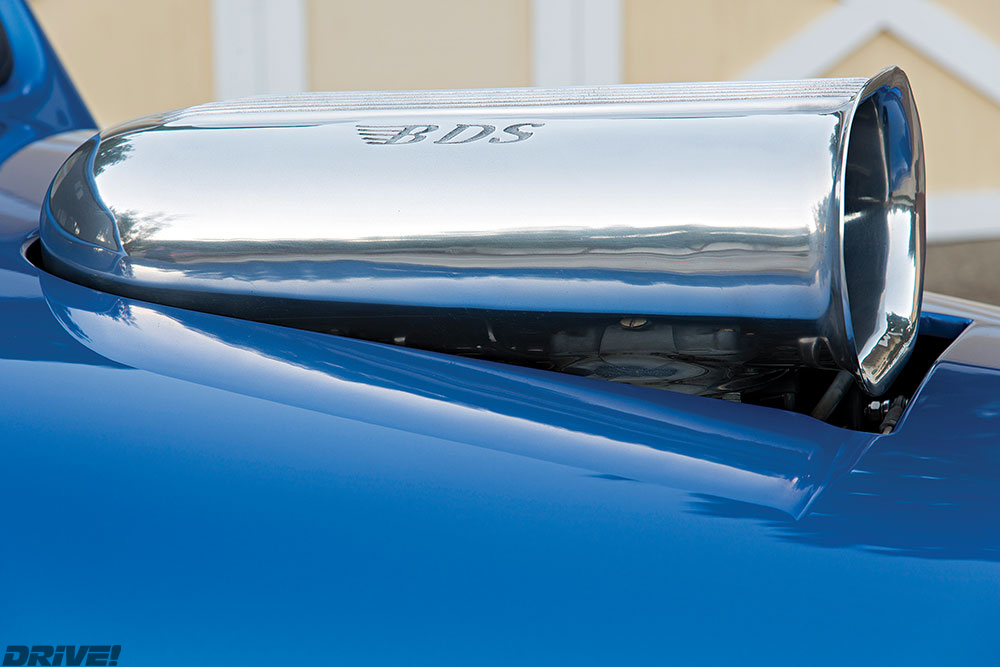
The original construction took place more than a decade ago. Using an Antique & Collectible Autos high-quality shell, it was mated to a specially constructed tube frame chassis. A narrowed Ford 9-inch rearend was set up with parallel 4-link arms with coil-over shocks. Right from the get-go it was decided that this was going to be a beast worthy of its iconic status. The first order of business was to go big, as in big-block. Noted engine builder Wayne Halabura assembled a 454 Rat motor punched out to 513 ci. Next 9.5:1 TRW pistons were added to the solid steel crank. A B&M 420 Mega Blower was added with a pair of Edlebrock fourbarrel carbs. Everything was either plated or polished and all lines were braided steel with aircraft fittings. The goal was to exceed 1,000 hp. Actually dyno numbers confirmed the beast’s potential.
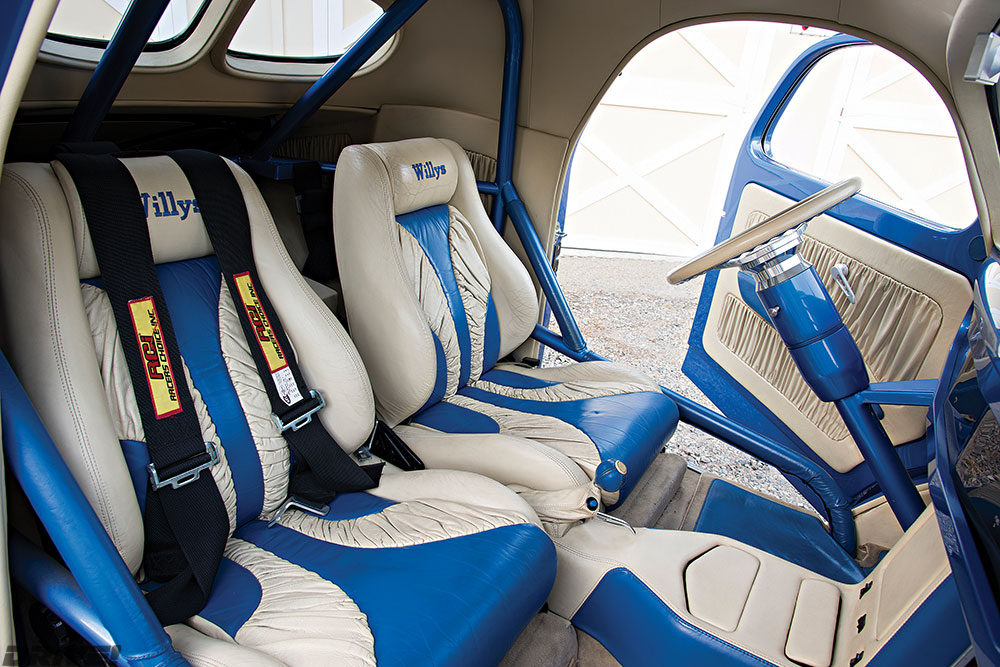 Rick’s Auto Restoration in El Cajon, CA crafted a full high-end leather interior package. The seats are slightly modified Recaro brand. Both lap and four-point harness belts were added.
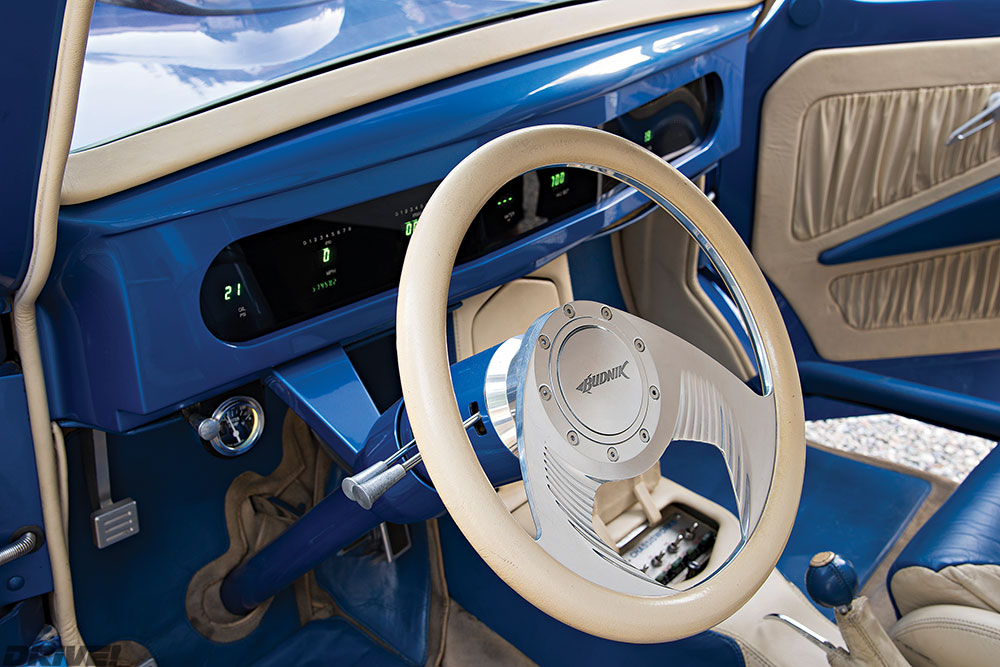 The cut of the Budnik billet aluminum steering wheel matches the road wheels. The wheel was covered in matching leather. Aluminum tilt and turn stems were added.
There was no intent to make the Willys cruise night friendly. The locker-style rear axles were mated to 4.10 gears. The performance-built GM Turbo 350 trans was also beefed up to handle the additional stress.
If you’re going to do something, it pays to do it right. Nothing was more correct than custom-made Budnik wheels with Mickey Thompson 26×15 Sportsman rear tires. The fronts are Dunlop 15×6 radials.
Next on the to-do list was the interior. A multi-point cage was custom made and color matched. The Recaro bucket seats were modified and covered in ivory and blue leather. A custom center console was fabricated, as were door and cab panels. The cab was carefully traced out so matching leather-covered panels could be fitted into place. A tilt steering column with a Budnik wheel and billet stems provide the controls. Pile carpet was laid down and billet door handles finished the job.
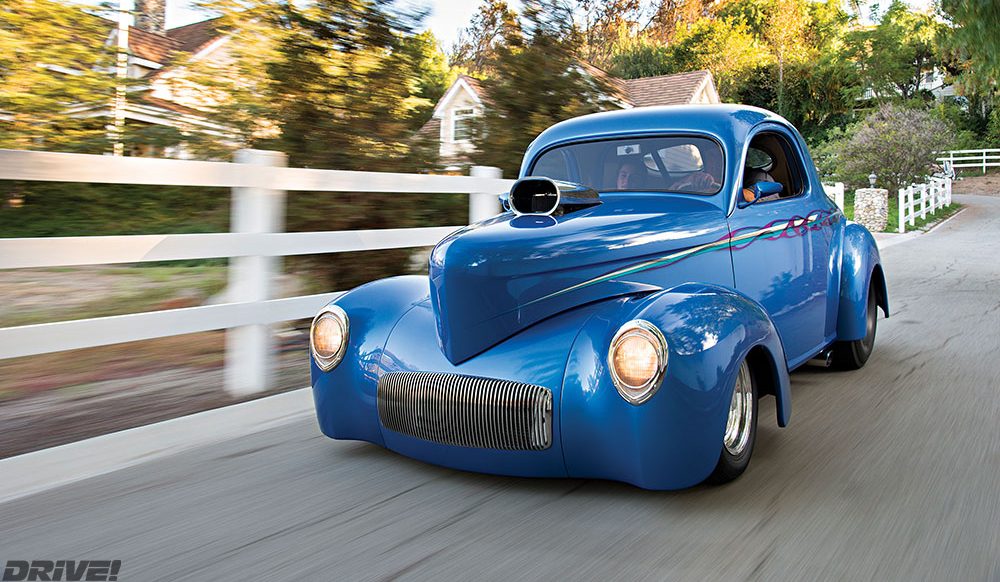 The look of a ’41 Willys is unique and remarkably distinctive. Jordan’s crazy coupe is an intimidating runner. The dual 3-inch exhaust with side exit tips and the whine of the B&M Mega Blower announces its
The custom-made dash is the result of hours of fabricating, fitting, smoothing and finishing in matching PPG paint. It was married to Dakota Digital gauges behind smoked Plexiglas.
A build of this magnitude requires a deep level of commitment. What makes this one even more critical are the childhood and teenaged memories it was bound to rekindle. To live up to that lofty status, the body and paint needed to be dead on, stone cold perfect. The body was sanded to glass-like smoothness. Then, it was primed and graphite sprayed to reveal any and all imperfections. Next it was back for additional hand sanding prior to being sprayed with twostage PPG Blue Wave Metallic for the exterior color, a hue akin to that used on the famous Stone, Woods & Cook gasser.
Just when you believe you’re almost done, you stand back, look at where you are, and discover you’re not even close to finished. The Willys was returned to Rick’s Auto Restoration in El Cajon, California for additional interior modifications. The aluminum gas tank was sealed before being covered in leather and topped with a competition flip cap. Gas pressure lifts were polished and a long list of detail items were handled. While at Rick’s, a 3-inch exhaust system was custom made and installed featuring side-exit paths and plated tapered tips. While testing out the exhaust note, a half-throttle run up a nearby freeway onramp revealed a glaring issue; torque lift, also known as pulling the front wheels off the ground. This was nothing a proper set of wheelie bars couldn’t solve, but common and proper are two different things. Off the rack would work, but custom tailored was better. A special unit was handcrafted using precise spring tensioning, and all components were chromeplated and polished to perfection, of course.
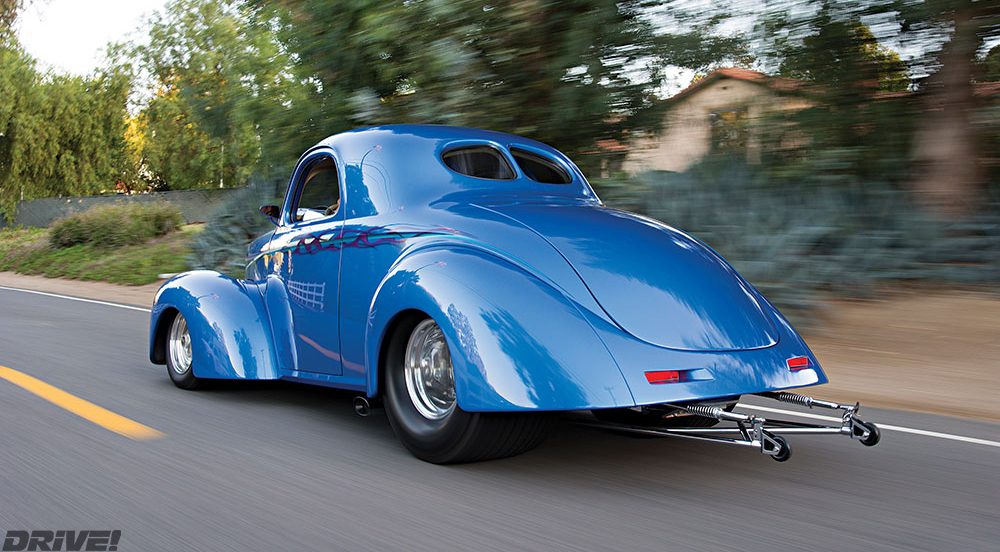 Although it prefers a straight line, this wild machine has been on a crosscountry trek participating in an Americruise and Power Tour.
Now it’s done. No, not quite. There was still something missing. The final touch of custom paint was yet to be added. Here is where the benefits of wisdom and discipline came into play. The impulse would have been to have trendy graphics, vintage scallops or a full flame job executed. However, cooler, classier heads prevailed. Mark Brink, a custom painter known for his innovation and quality work came up with a ribbon overlapped with flames. The subtle, yet effective design was applied on a tamped angle from the hood’s point to the body’s beltline, culminating with a final lick that is in concert with the rear fender contour. That was it. No accenting pinstripes or designs were needed—neat, clean, perfect. Once Brink had done his act, the entire body was cleared once again, cut and buffed.
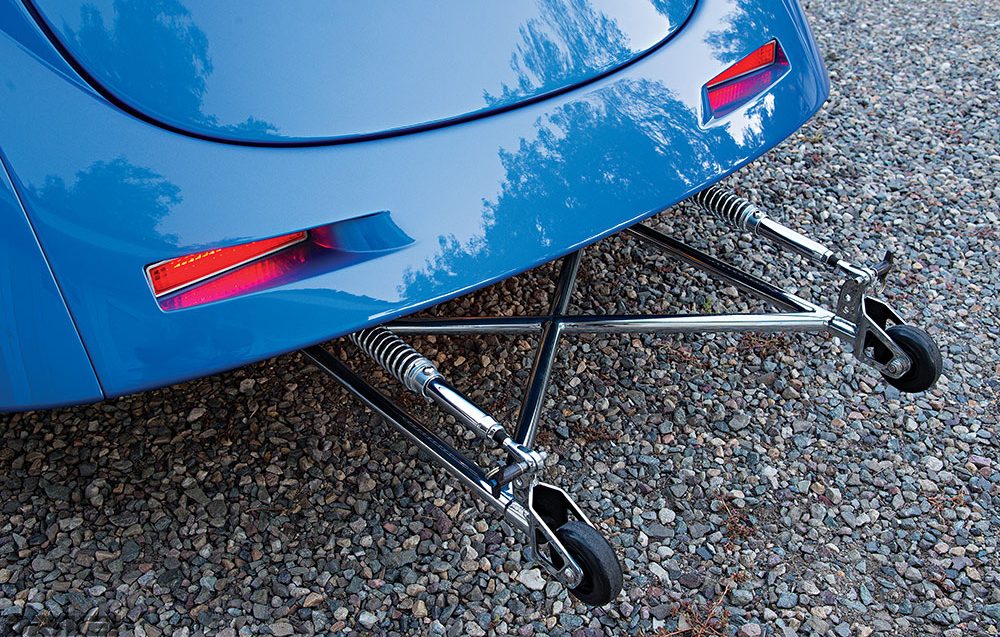 Most Pre-Street cars install wheelie bars for show. Here they were added as a necessity.
With 1,000 hp sitting just a gentle push away from the right foot, and an equal amount of hours going into the build, you’d think this wild ride would become a trailer queen. The fact is it participated in a cross-country Americruise, as well as regional legs of a Power Tour. There was a bit of detuning and a gear change to bring the fuel mileage up to 10 mpg. But, once the events were over, the optimum pulleys and gears were reinstalled to once again make this a wolf on Main Street.
Building a ’41 Willys is a tightrope affair, especially one that dares to have any visual connection to one of history’s famous drag cars. However, the Jordan family collection offers such a ride. Wherever it’s shown, this high-end build has the ability to create new memories and join the list of iconic Willys coupes.
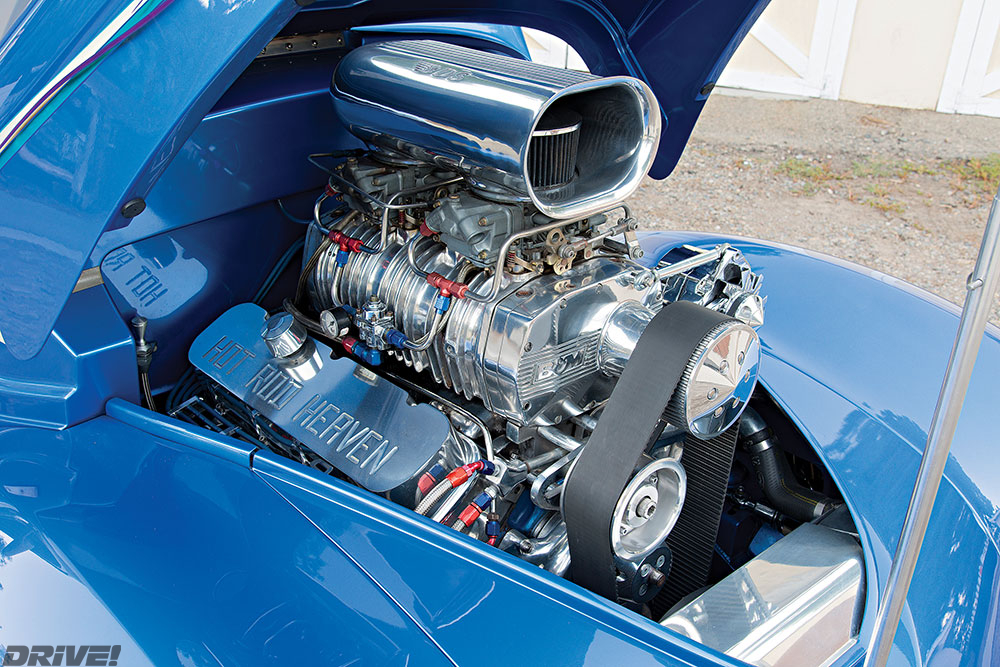 Pumping 1,000 hp from a blown big-block was the job of Wayne Halabura. The engine is a flawless blend of muscle and beauty. This is Pro-Street performance at the top of the game.
Photos by the author and courtesy of the Ramsey family
When a car has been owned by different members of the same family for nearly 8 decades it can truly be called a “family car.” Such is the case with Anji Ramsey’s 1922 Ford Model T Roadster. Acquired by her grandfather in the 1940s, the T was passed from relative to relative for decades to come. After short time (relatively speaking) adrift of the family, Anji brought the estranged car back to the fold and back to its former glory.
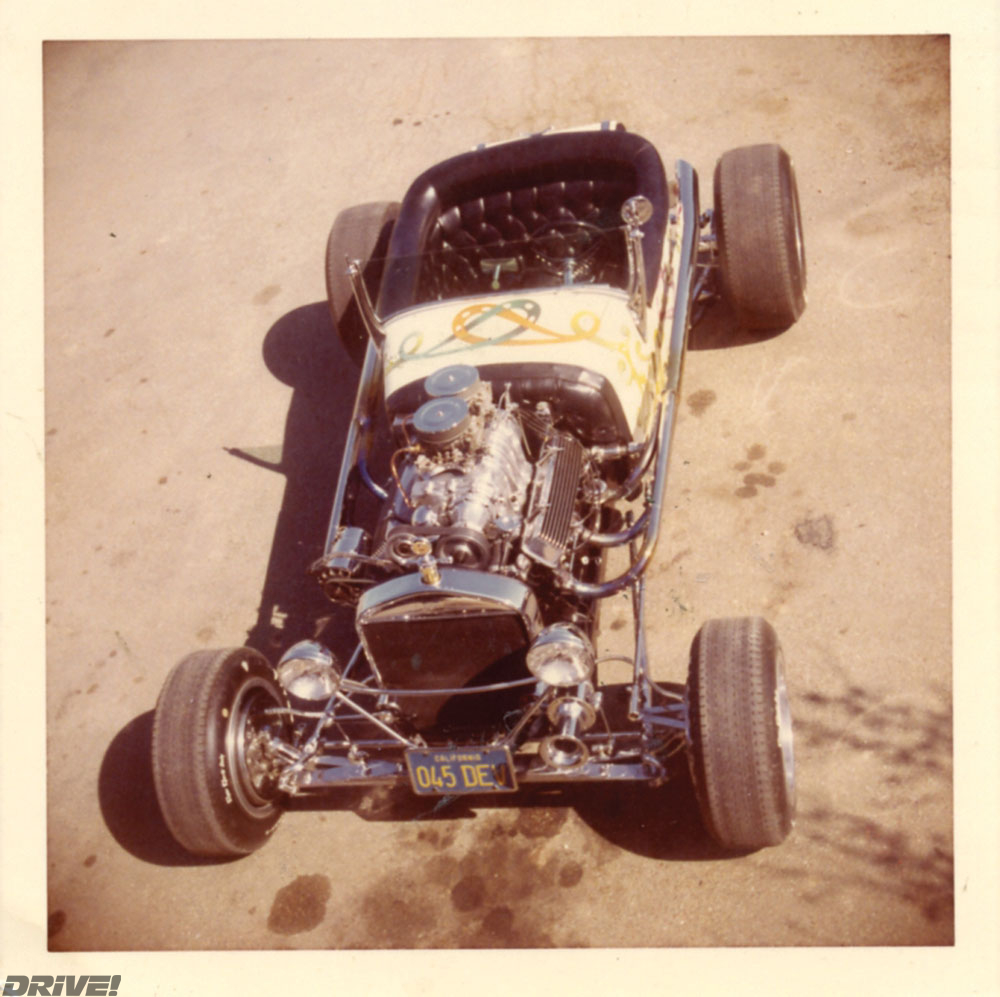 This is the same T as it appeared in 1971
Just as the hot rodding scene began to emerge after the end of World War II, Anji’s grandfather Marlin Hegendeffer found himself in the thick of the movement. Chrome plating your hot rod or motorcycle parts was suddenly in style in the late 1940s. Hegendeffer’s Vallejo Electroplating company was the epicenter for all things shiny in the burgeoning East San Francisco Bay Area hot rod scene. One of Hegendeffer’s friends wanted to chrome out his newly acquired motorcycle, but couldn’t afford the job so he traded his hot rod for plating. At least that is what Heggie, as he was known to family and friends, told his wife. There is a long lingering family rumor that he actually paid $600 for the non-running car.
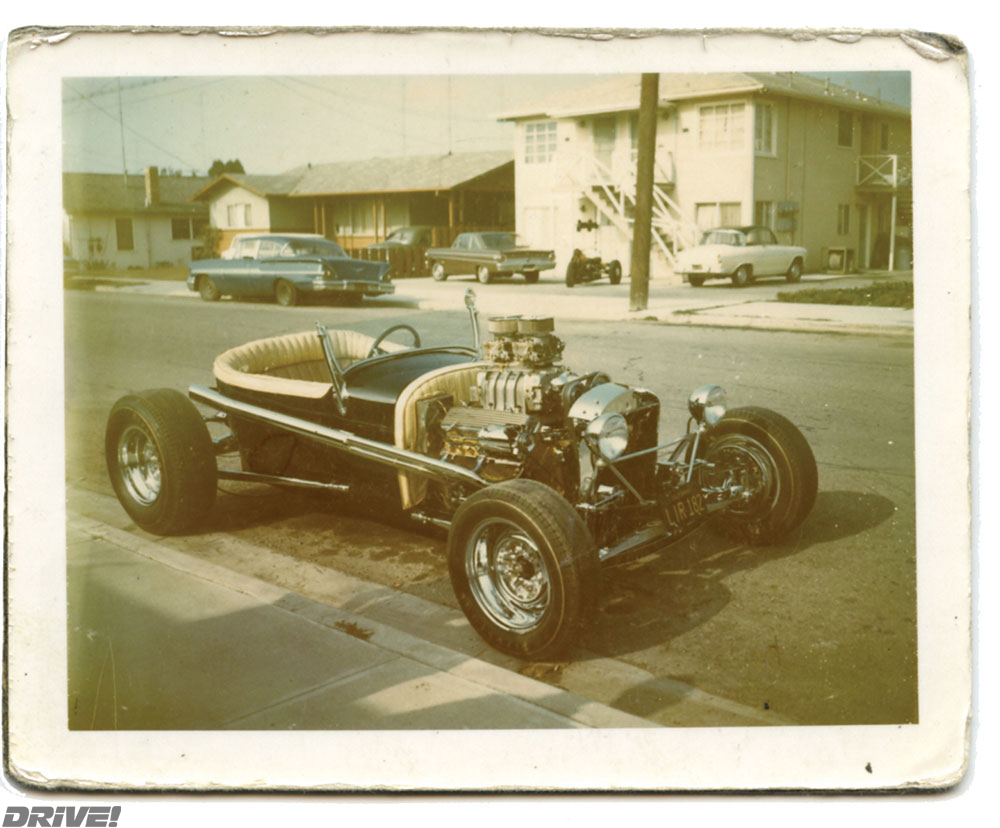 This is the same T as it appeared in 1960
The previous owner was an aviation enthusiast and had fitted the roadster with a Hispano-Suiza airplane engine. Heggie never could get the Spanish powerplant to run right, so he did what any self-respecting hot rodder would do. He tore the car completely down, chrome plated everything he could, made major changes to the frame, and made it his own.
He gave the 1925 Model T truck frame the Z treatment and kicked the chassis up over the rear to accommodate a freshly-chromed banjo rear end and buggy springs. The story goes that Heggie used ½-inch steel from an armored car to box the rear frame members to assure rigid mounting points. He then built a hopped-up bored-and-stroked 297 cubic inch Ford Flathead V8 and mated it to a 1939 Ford top loader transmission. Before the 1927 body was fitted to the frame, family members report that it was painted a deep, dark purple that appears black in the old monochrome family photos. The car rode on some early split reversed and chromed steel wheels. In fact, this car might have been the first to use that style of wheel.
As the decades passed, the old hot rod decayed and at one point in the late 60s the T ended up in Anji’s parents’ garage as nothing but a pile of parts.
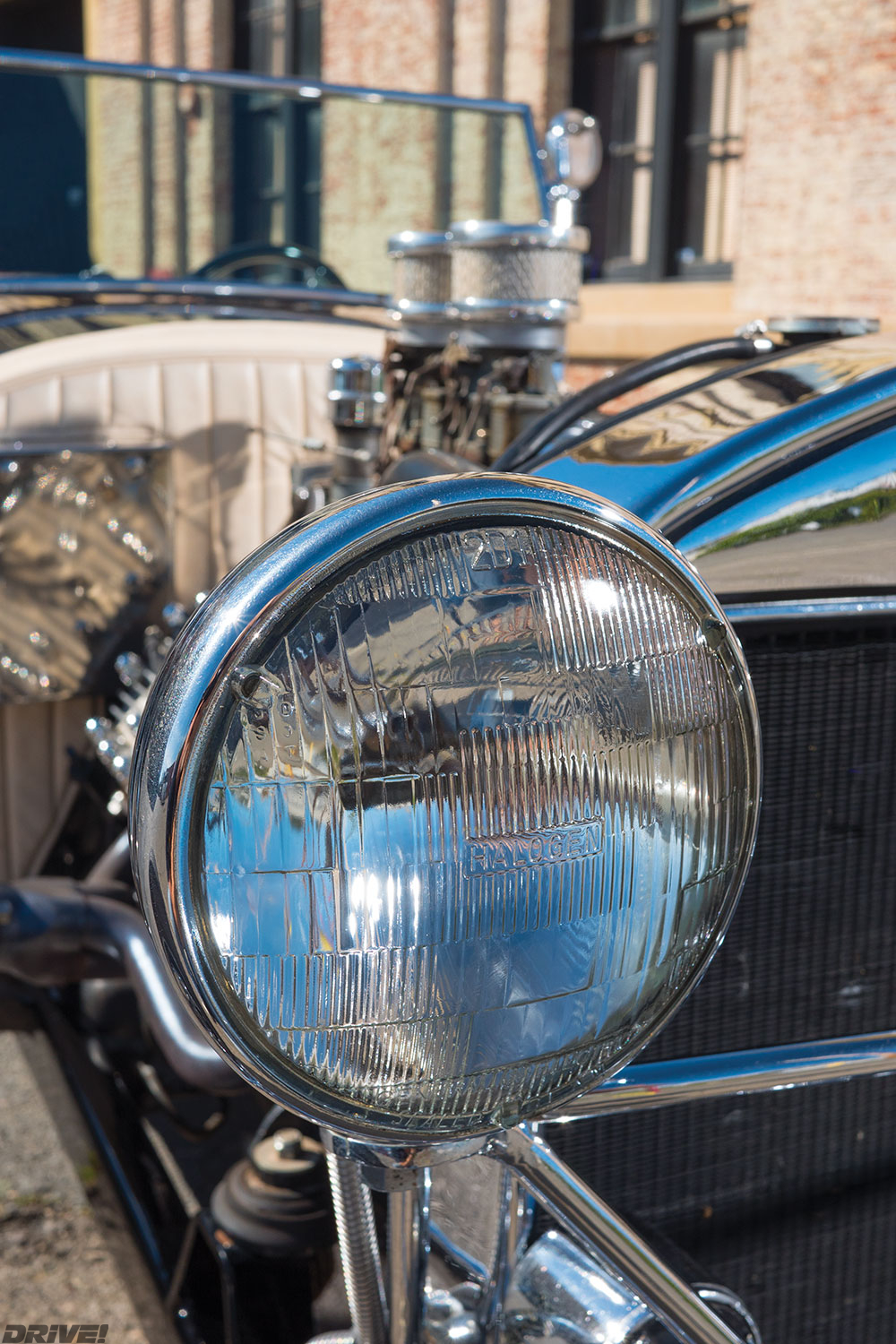
Heggie is also thought to have been one of the first to upholster the outside firewall for an extra custom feature on his hot rod. Once the rod was roadworthy, Heggie convinced someone at the DMV that the hot rod was a 1922 Model T and the car has carried that moniker on the registration slip ever since. As soon as the car was road-legal, Heggie’s extensive chrome plating work ran him afoul of the law. The chrome plated gas tank was deemed “too reflective and a nuisance” by some sensitive-eyed protector of the peace, so it was quickly re-coated in matching paint. The freshly completed car was shown at several local hot rod shows, most notably at the Cal-Neva Roadster Association 2nd Annual Roadster Show held in Vallejo, California in May of 1950.
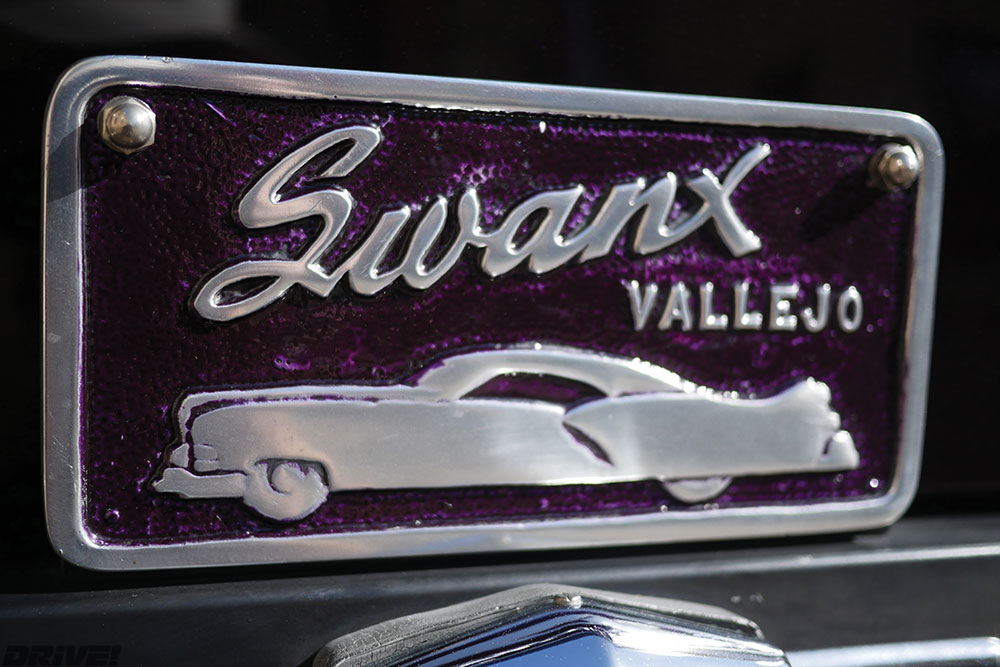 The T has been owned by Swanx Car Club members twice, once in the 50s by Anji’s Great Uncle Rick and now by her.
As the name implies, the Timing Association was bent towards racing and soon Heggie and the T took to the track and the dry lakebeds. A September 1950 Hot Rod Magazine article states that the T ran 89.6 MPH on a dry lake just north of Reno, Nevada. Heggie was not pleased with the results, so the flathead soon sported a S.Co.T. blower, an Offenhauser manifold, an Isky ¾ race cam, Jahns pistons and a Mallory ignition. Running with this setup in 1955, Heggie and the T were photographed drag racing at the Kingdon Airfield in Lodi, Calif. in a 97 MPH pass. After he campaigned the car on the track and the show circuit for nearly a decade, Heggie sold the T to his brother-in-law, Rick Pilling, in the late 1950s. Rick was one of the original members of the Swanx Custom Car Club in Vallejo. Rick and his wife Eileen continued to show the car for many years and received coverage in several magazines, making the cover of the July, 1959 issue of Rod Builder and Customizer.
As the decades passed, the old hot rod decayed and at one point in the late 60s the T ended up in Anji’s parents’ garage as nothing but a pile of parts. Her Uncle Tommy eventually rescued the disassembled hot rod and set about updating its look and vintage powerplant. The old-fashioned flathead was replaced with a supercharged Cadillac 390 pulled from a drag boat. The nearly 20-year-old purple color was covered with a white and psychedelic ribbon paint job that was quite popular at the time. The chromed 1940 Ford rear end was replaced with a 1955 Chevy unit chrome-plated at Heggie’s shop. Tommy showed the refreshed hot rod in the Oakland Roadster Show for years, finally winning his class. Roadster Show rules state that once a trophy is awarded, major modifications must be effected before the car can be shown again. Tommy was not interested in changing up the configuration, so he sold the car out of the family in 1972.
While drilling holes in the rear of the frame for modern brake lines Gunar confirmed an old family rumor, the rear of the frame was indeed boxed using ½-inch armor plate.
 The T restored to its late 1940’s appearance and as it was found in the 1990’s
As the years went by not too many in the family gave a thought to Heggie’s old hot rod, until Anji’s parents purchased a 1940 Ford in 1994 and started attending car shows with it. Anji tagged along for the ride and was soon wondering what happened to the T that was with the family for so long. She began asking fellow show attendees if they had ever seen a similar car. For a year and a half the answer was always “No.” Finally someone slipped her the name of a fellow that had recently retired from the SF Bay Area to the Sierra Foothills and drove a similar hot rod. Luckily, a call to information revealed his listed number and Anji called immediately.
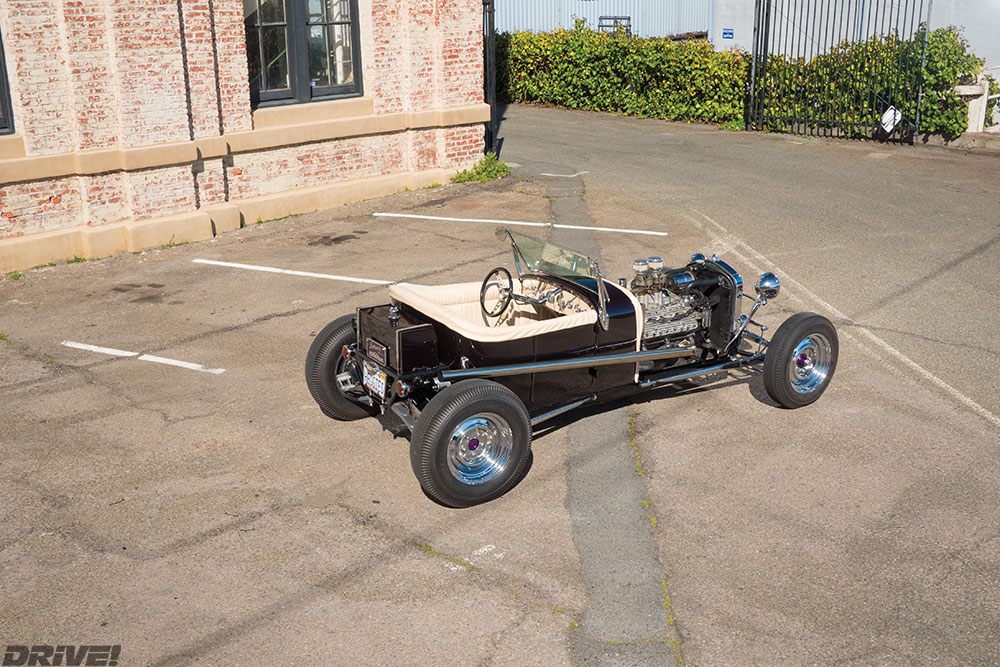 The T restored to its late 1940’s appearance and as it was found in the 1990’s
As the slightly bewildered retiree answered that he did indeed own a 1927-bodied hot rod resting on a zeed 1925 Model T truck frame that was registered as a 1922 Model T, Anji’s heart raced. She relayed the story of the T’s family ownership and asked if he would be willing to sell to the builder’s granddaughter. The answer was a heart stopping No. But that didn’t discourage Anji. Over the next year and a half, she called the owner almost weekly. Eventually, she softened his resolve and finally Anji bought Heggie’s old hot rod and brought it back to the family.
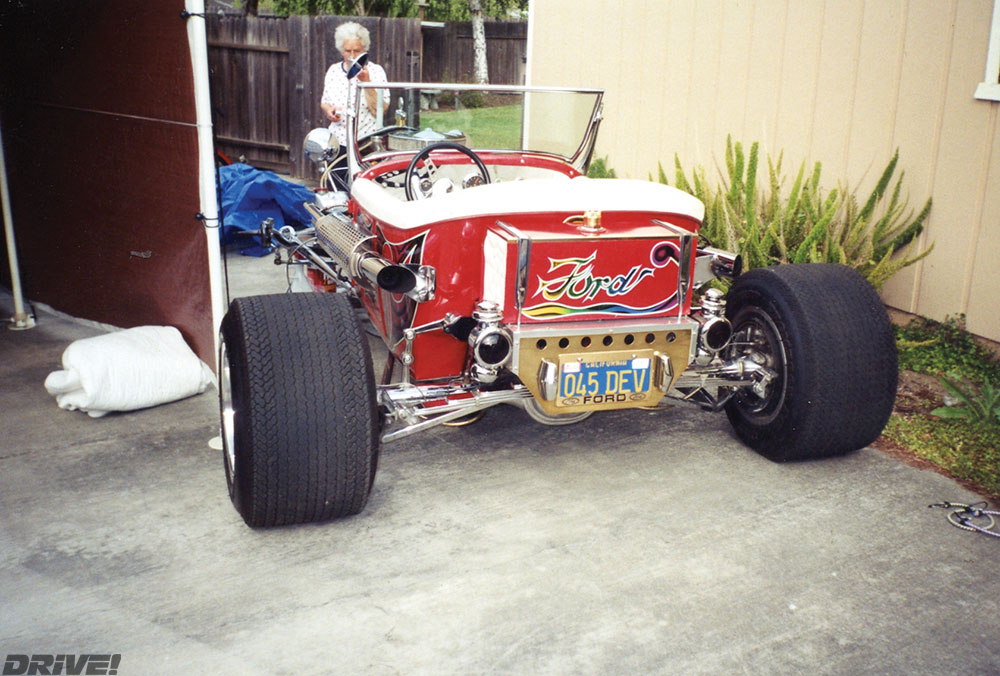
While the hot rod had been covered with an 80s-era red paint job, the original underpinnings remained and Heggie’s original chrome plating from the 1940s still gleamed bright. Anji enlisted current Swanx Car Club member, Gunar Hansken to return the T to its late-40s configuration. The two scoured family albums and old hot rod rod magazines for pictures of the car. From those references, measurements were taken, plans drafted up, and the car was stripped down one more time.
The answer was a heart stopping No. But that didn’t discourage Anji. Over the next year and a half, she called the owner almost weekly.
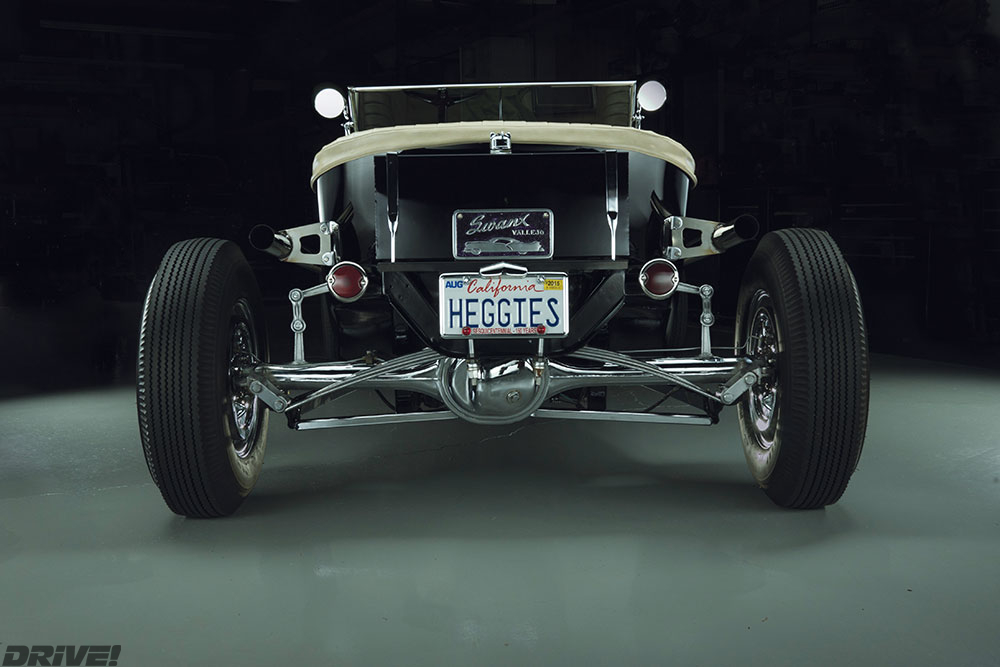
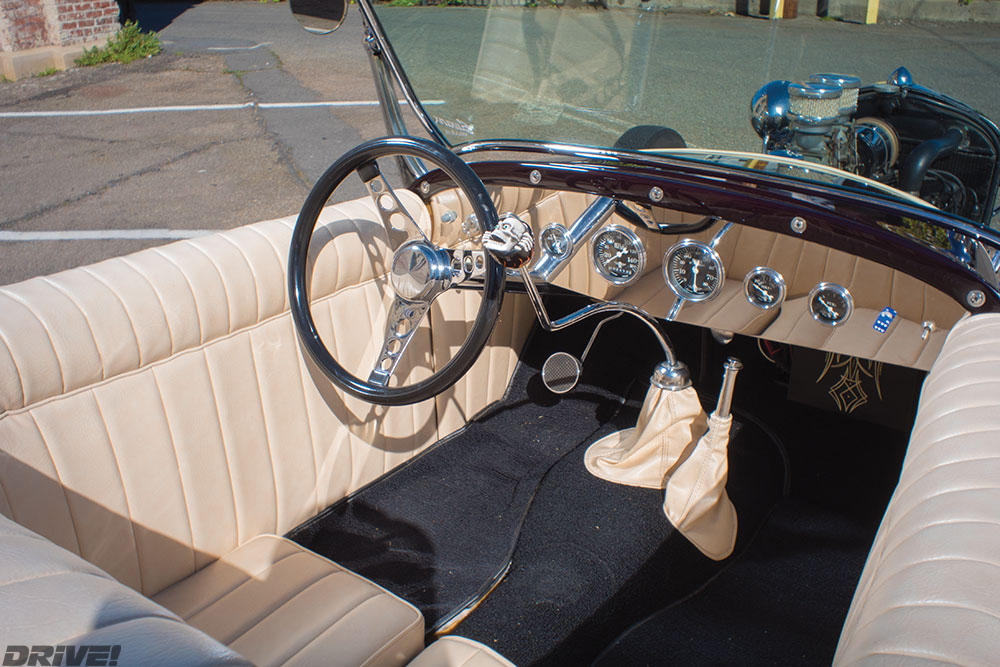
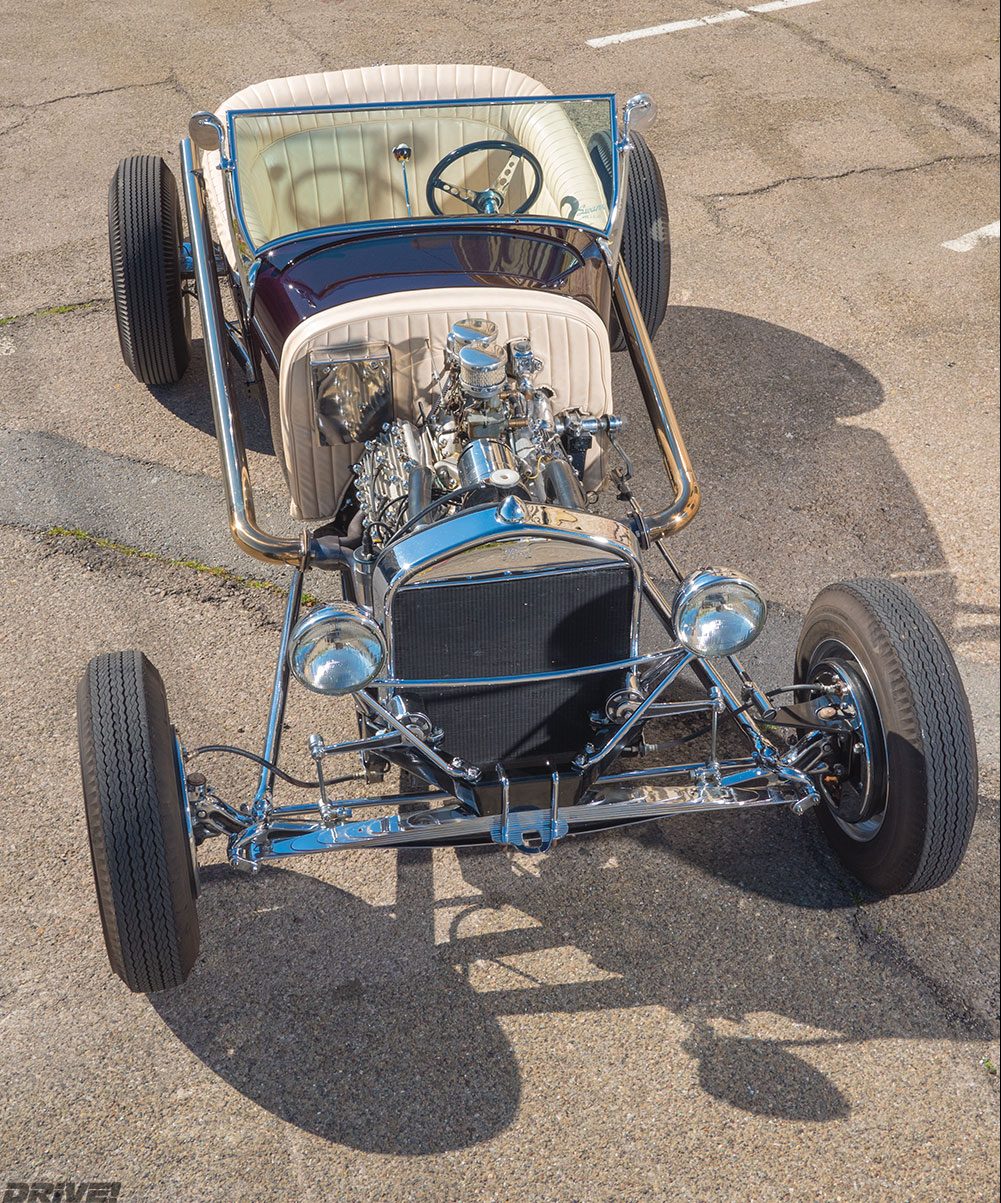
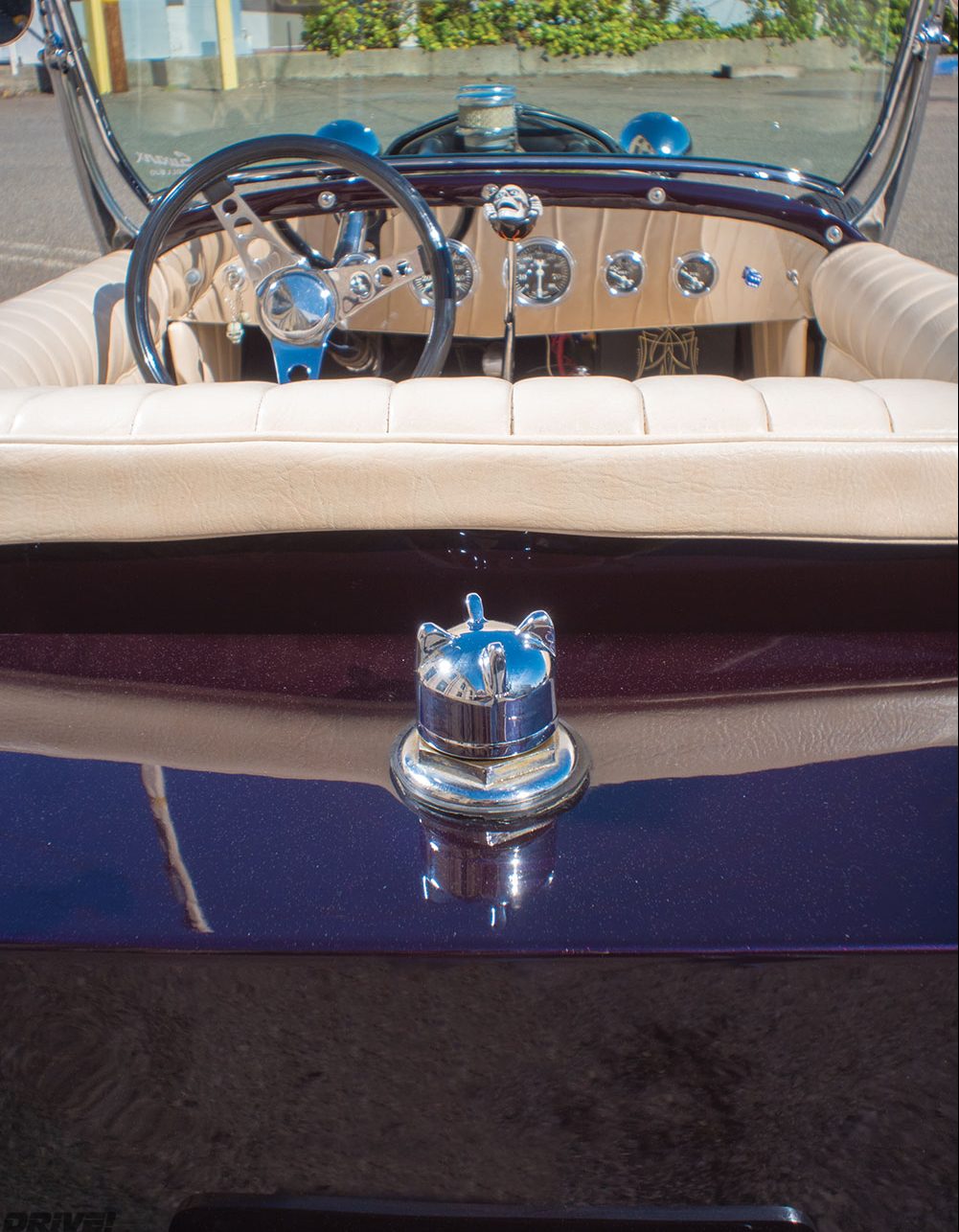
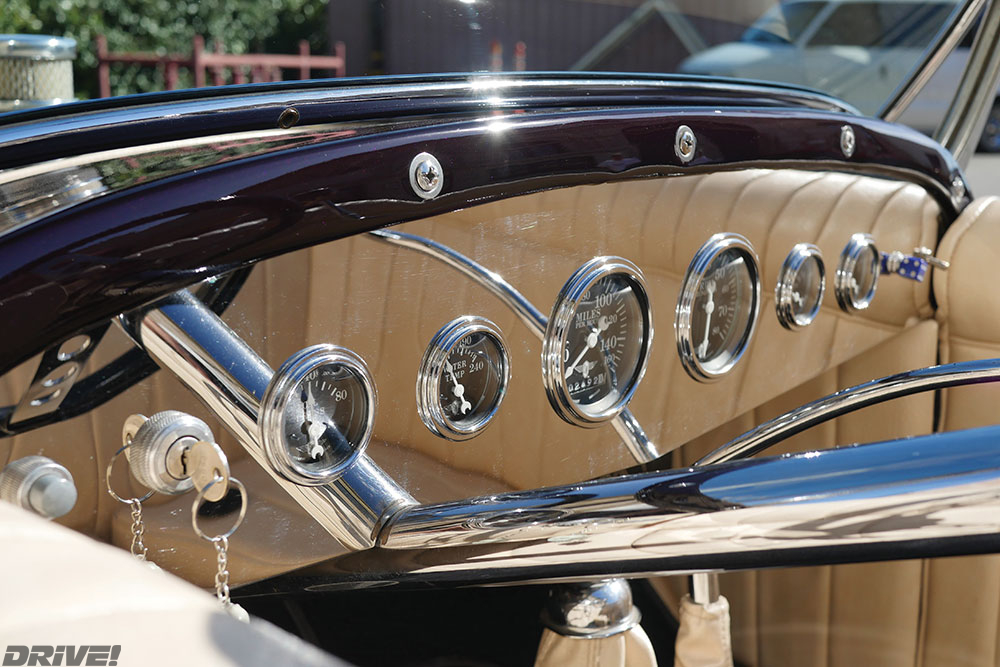
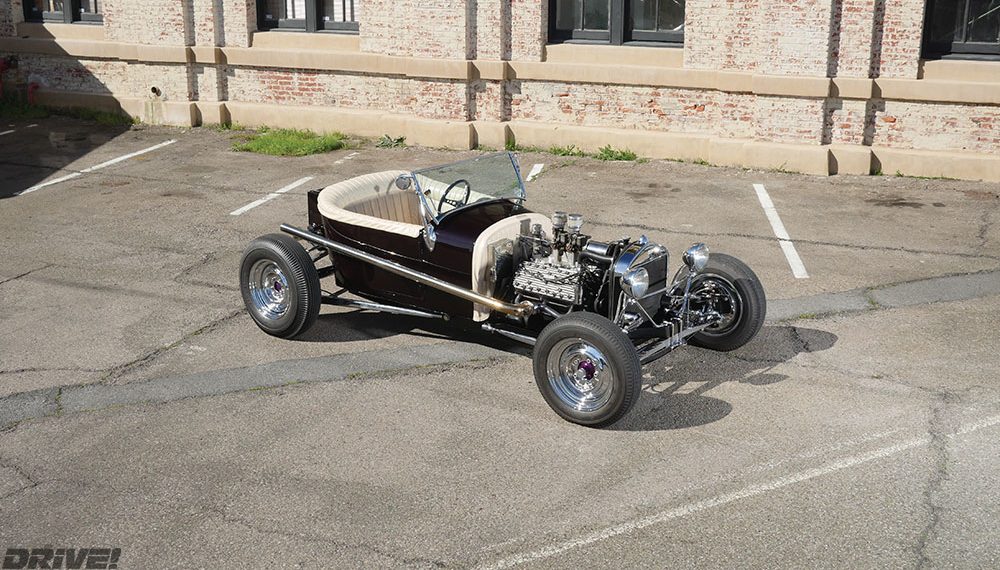
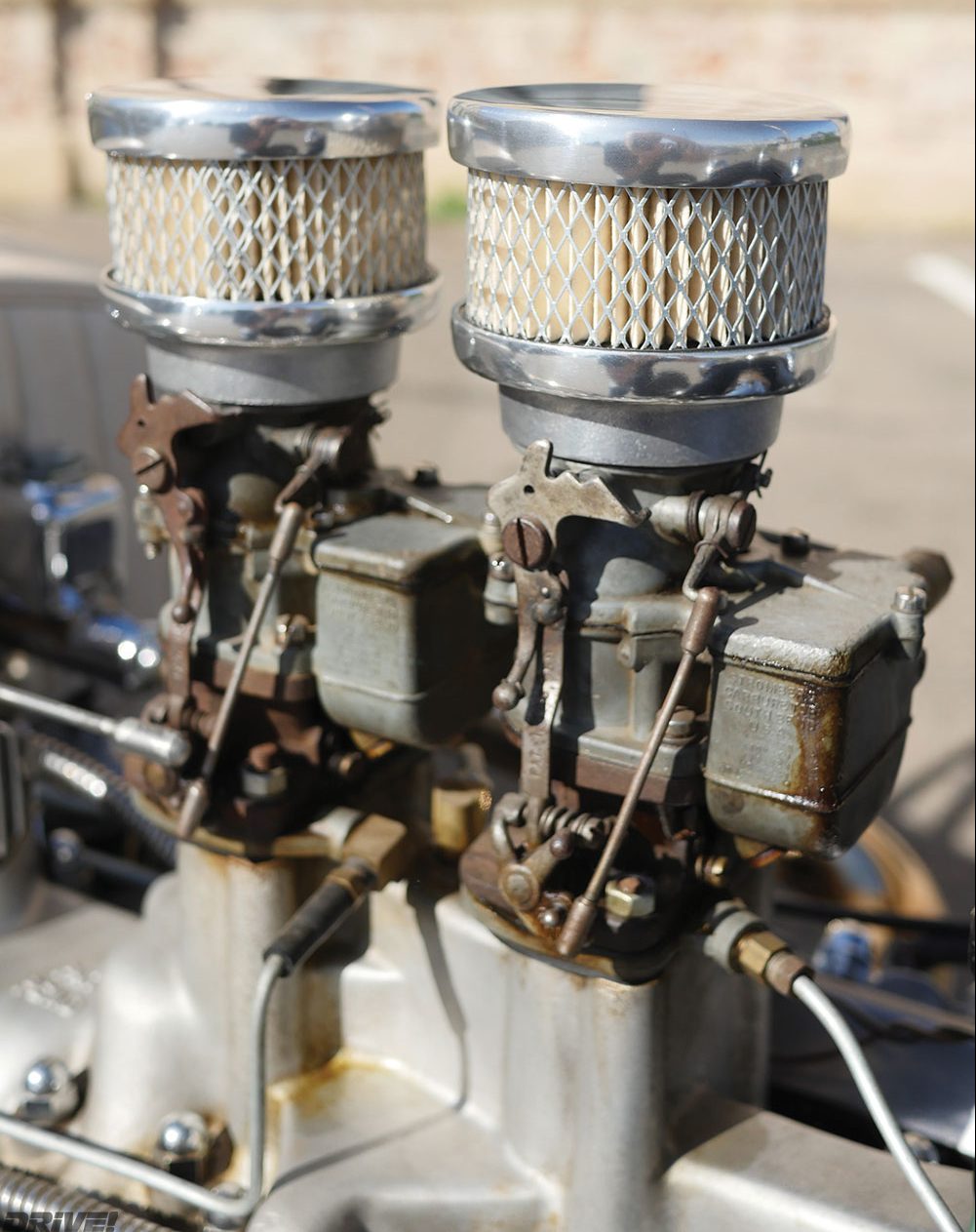
Anji traded the Caddy motor to Gunar for a running 1952 255 cubic inch Ford Truck flathead. Two Stromberg 97’s atop a Thickston intake capped the flathead. New stainless side pipes were mated to block hugger headers that had been reversed in their flanges to point out and away from the block. A Ford C4 auto trans and 1940 Ford shifter were fitted and connected to the original 1955 Chevy rear end. While drilling holes in the rear of the frame for modern brake lines Gunar confirmed an old family rumor, the rear of the frame was indeed boxed using ½-inch armor plate. Several drill bits gave their lives in testament to the strength of the plates. Up front the original Heggie-chromed 1940 Ford axle remained in place. The wide and modern wheels and tires were replaced with reverse chrome steelies and pie crust black wall tires fitted. Recalling family stories of the deep, dark paint color Anji had Manuel’s Auto Body in Vallejo mix a dark purple that appears black under all but the brightest of sunlight. Abel’s Upholstery recreated the snap-in seats, bucket surround and firewall panel in stunning cream.
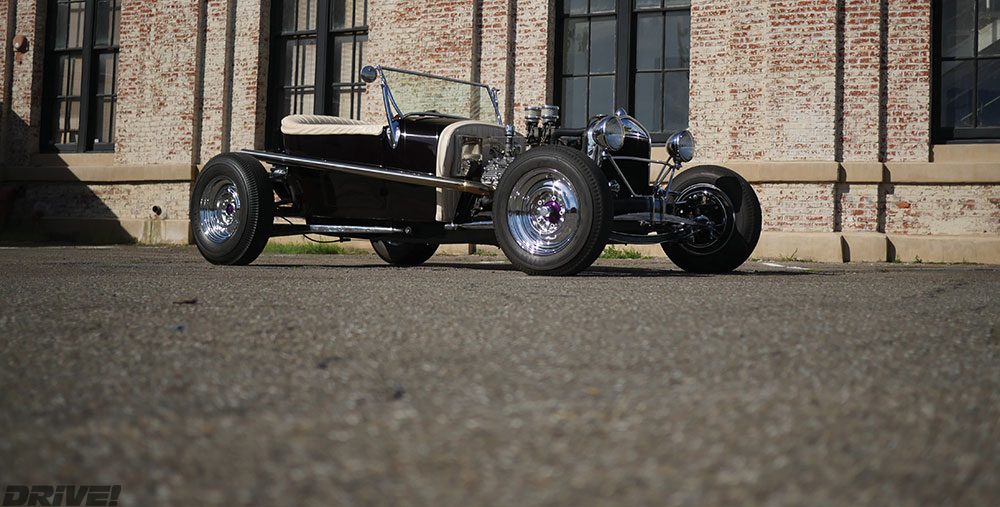
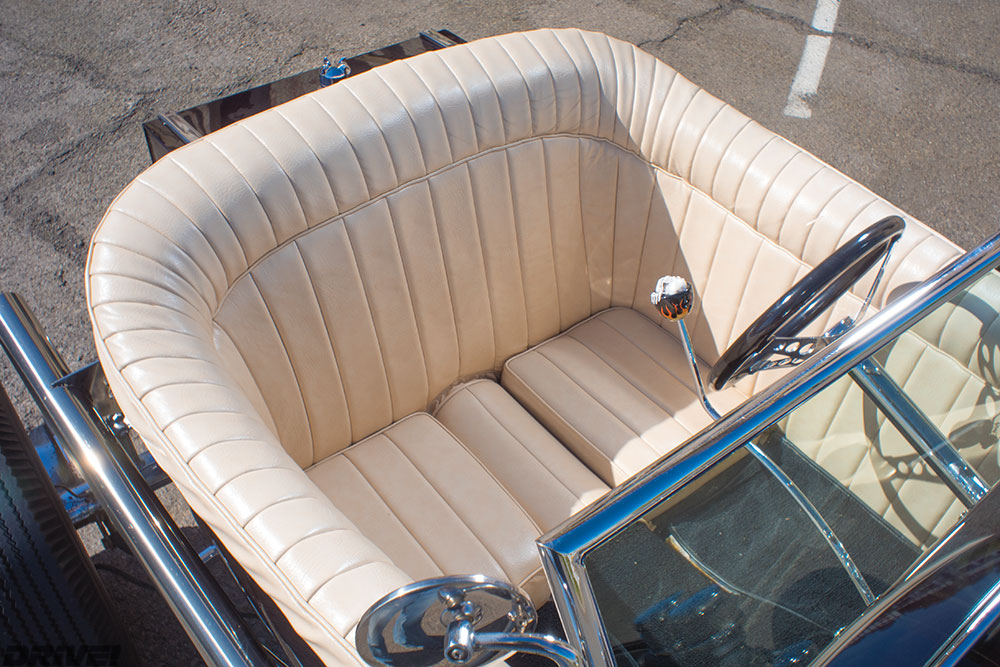
When the 18-month restoration was complete the little family car was put back on the road and shown off. Multiple awards from a wide variety of shows followed. A double legacy, car and member, Anji was asked to join the Swanx car club that her great uncle had helped create with the T many years ago. Upon becoming a member, the hot rod and Anji moved a step closer to their history. Heggie passed away when Anji was just two years old, so this project has really connected her with her grandfather and brought back lots of good memories for other family members. Anji drives the car all over Northern California, showing off the still-pristine chrome plating her grandfather applied in the late 1940s and sharing the T’s history. This time the car will stay in the family as Anji never plans to sell it and will make sure it goes to a family member once she is gone. Everyone is sure Heggie would have approved.
When the 18-month restoration was complete the little family car was put back on the road and shown off. Multiple awards from a wide variety of shows followed.