







In the world of automotive care, ceramic coatings have revolutionized the way car owners protect and maintain the exterior of their vehicles. These advanced coatings offer a wide range of benefits, making them a popular choice among car enthusiasts and professional detailers alike. In this article, we will explore the key advantages of ceramic coatings, highlighting their impact on vehicle maintenance and longevity.
One of the primary benefits of ceramic coatings is their ability to provide exceptional protection against various environmental hazards. Traditional waxes and sealants can offer some level of defense, but they pale in comparison to the durability and resilience of ceramic coatings. These coatings form a strong, transparent layer over the vehicle’s paint, acting as a barrier against harmful UV rays, acid rain, bird droppings, and tree sap. This protection helps to prevent oxidation and fading, ensuring that the vehicle’s paint remains vibrant and glossy for years to come.
Ceramic coatings are known for their remarkable durability and longevity. Unlike waxes and sealants, which require frequent reapplication, car ceramic coatings can last for several years with proper care. This long-lasting protection is due to the specially formulated ingredients by the nano coating manufacturers that provides mainly a chemical bonding that occurs between the coating and the vehicle’s paint. Once applied, the coating forms a permanent bond, creating a hydrophobic surface that repels water, dirt, and contaminants. This hydrophobic effect not only keeps the car cleaner for longer periods but also makes it easier to wash and maintain.
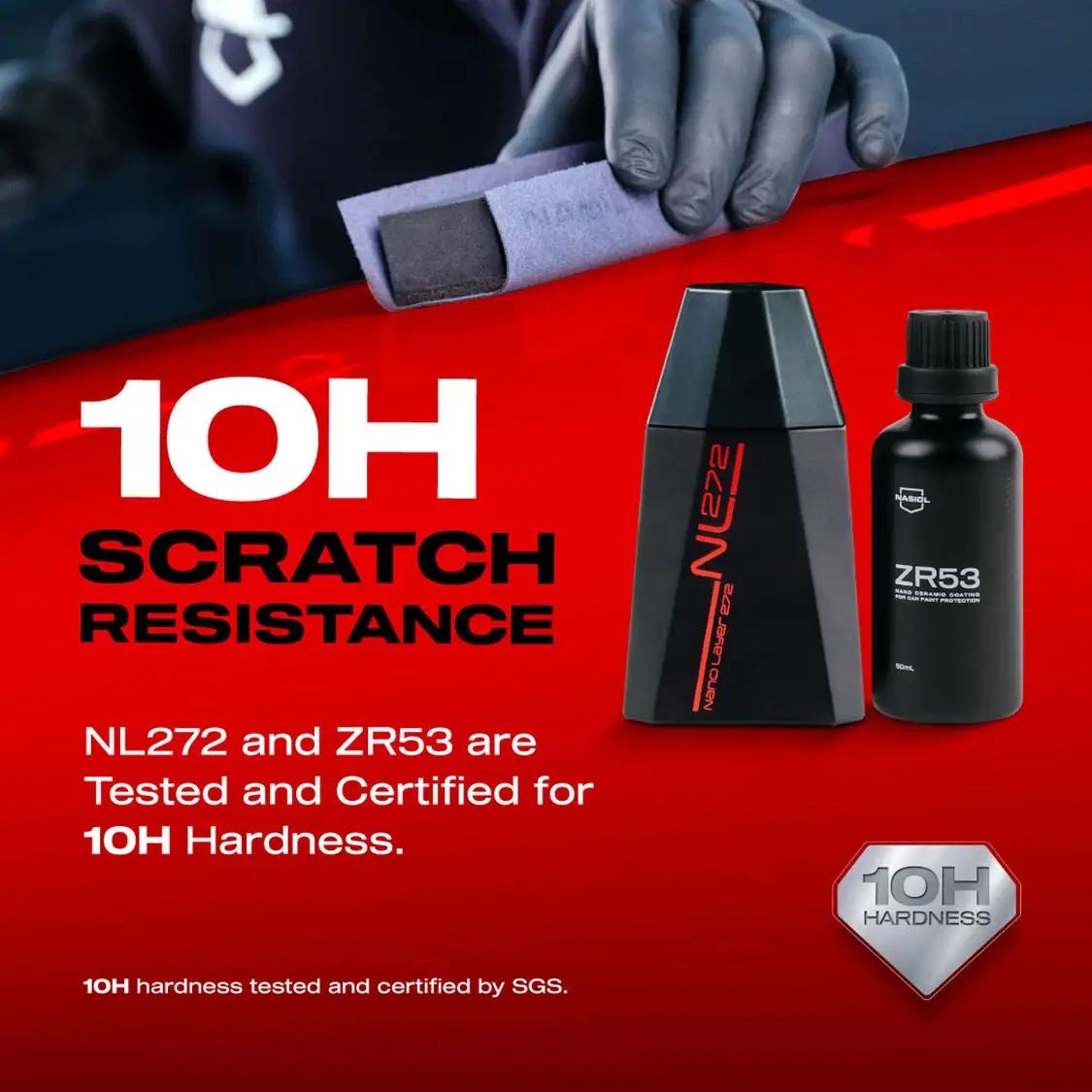
Another significant advantage of ceramic coatings is their resistance to scratches and swirl marks. While no coating can make a car completely scratch-proof, ceramic coatings do provide an extra layer of hardness that can help minimize the impact of minor abrasions and haze occurring on cars paint. Real nano ceramic coatings should have a certificate for pencil hardness or Mohs scratch resistance either 9H or 10H. Users should prefer the ceramic coatings with a certified scratch resistance approved by the independent test associations like TUV, SGS i.e. This is particularly beneficial for car owners who frequently wash their vehicles, as improper washing techniques can often lead to unsightly swirl marks. By applying a ceramic coating, car owners can reduce the risk of these imperfections and maintain a flawless finish.
Ceramic coatings not only protect the vehicle but also enhance its overall appearance. The glossy finish provided by these coatings gives the car a sleek and polished look, making it stand out on the road. The enhanced shine and depth of color can make even older vehicles look brand new. Additionally, the hydrophobic properties of ceramic coatings ensure that water beads off the surface, creating a visually appealing effect during rainy weather. This combination of protection and aesthetic enhancement makes ceramic coatings a worthwhile investment for any car owner.
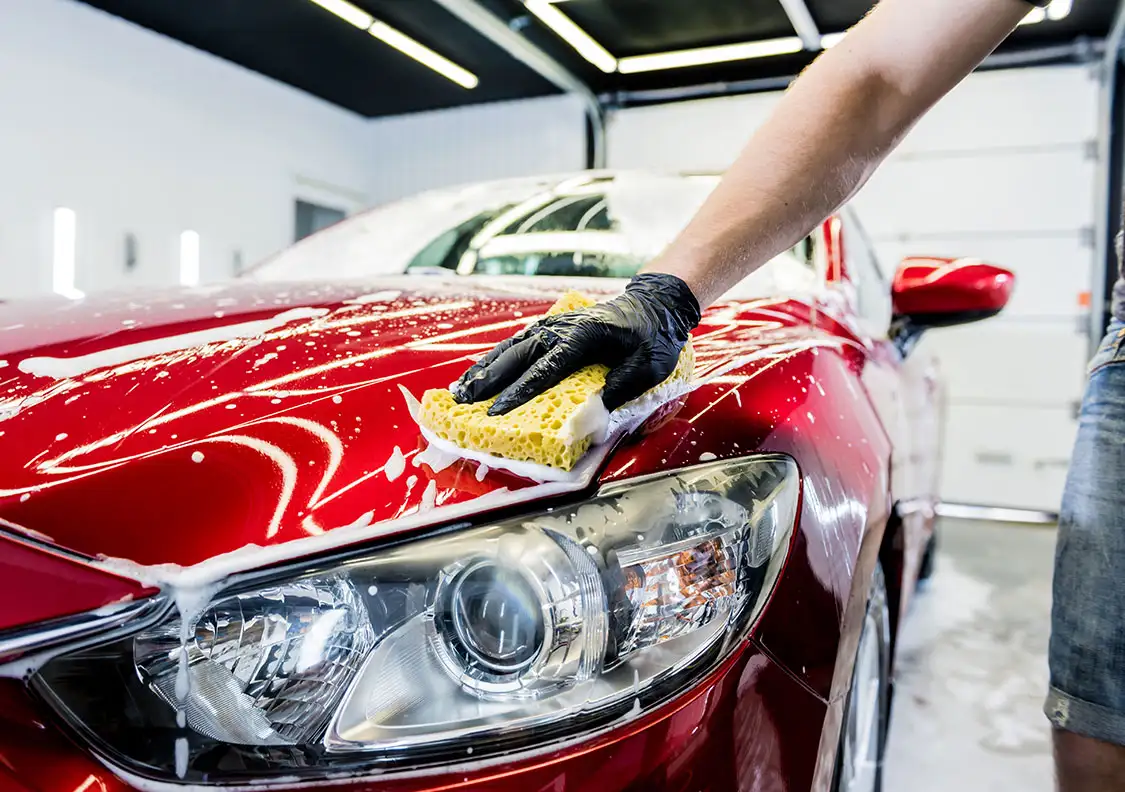
Maintaining a vehicle with a ceramic coating is significantly easier compared to one without. The hydrophobic nature of the coating ensures that water and contaminants slide off the surface effortlessly, reducing the need for vigorous scrubbing. This means that regular washing becomes a breeze, and the risk of introducing new scratches is minimized. Additionally, ceramic coatings make it more difficult for dirt, tar, and other contaminants to adhere to the surface, resulting in a cleaner car for longer periods. This ease of maintenance saves car owners time and effort, allowing them to enjoy their vehicles without the constant worry of upkeep.
While the initial cost of applying a ceramic coating may seem high compared to traditional waxes and sealants, it is important to consider the long-term benefits and savings. The durability and longevity of ceramic coatings mean that car owners do not have to spend money on frequent reapplications. Moreover, the enhanced protection against environmental hazards and minor scratches can help preserve the vehicle’s resale value. By investing in a ceramic coating, car owners can enjoy peace of mind knowing that their vehicle is well-protected and its value is maintained.
Ceramic coatings also offer an eco-friendly solution for car protection. Traditional waxes and sealants often contain harmful chemicals that can be detrimental to the environment. In contrast, many ceramic coatings are formulated to be environmentally friendly, containing fewer volatile organic compounds (VOCs) and other harmful substances. This makes ceramic coatings a responsible choice for car owners who are conscious of their environmental impact.
In summary, car nano ceramic coatings provide a multitude of benefits that make them an excellent choice for protecting and enhancing the appearance of vehicles. From superior protection against environmental hazards to enhanced durability and ease of maintenance, ceramic coatings offer a comprehensive solution for car owners who want to keep their vehicles looking their best. While the initial investment may be higher, the long-term savings and peace of mind make ceramic coatings a worthwhile addition to any car care routine. Whether you are a car enthusiast or simply want to preserve the value of your vehicle, or a professional detailer who wants to offer something beneficial to their cıstomers, ceramic coatings are a smart and effective choice.
To learn more about high-quality ceramic coatings and other advanced car care products, visit Nasiol. Nasiol Nano Coatings offers a range of innovative solutions designed to keep your vehicle looking pristine and protected for years.

Seth Burgett, founder and chief executive officer of Gateway Bronco, has built his company to be one of the leading niche restomod specialists in the world. In fact, Gateway is so steeped in Bronco culture that it owns the very first Bronco prototype, which had once even belonged to the legendary Carroll Shelby. To say that Seth eats, sleeps, and breathes Broncos would be a vast understatement!
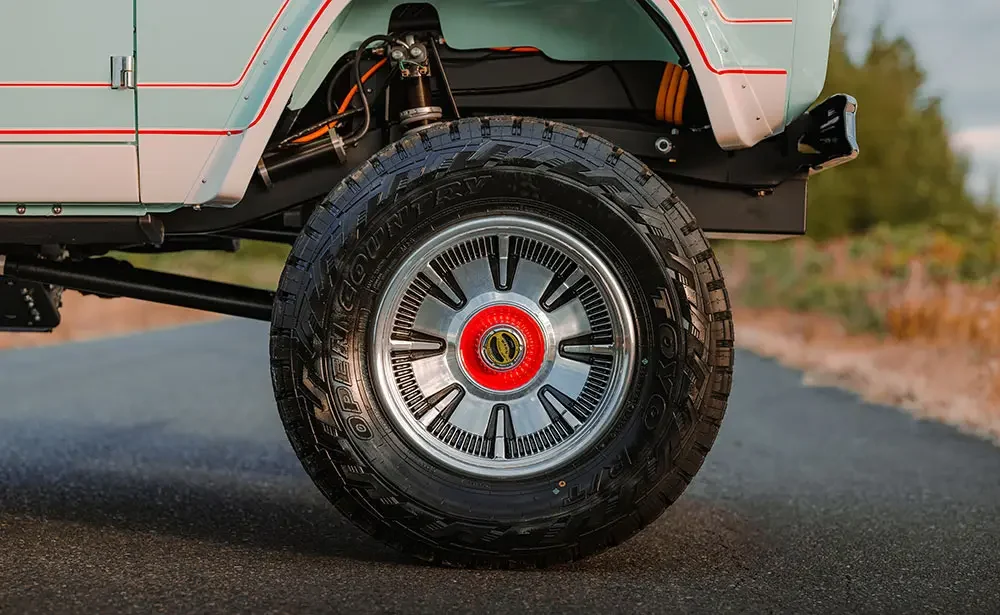
Gateway Bronco has built lots of beautiful Broncos over the years, each better than the one before. With each iteration, the company infused the latest technology to bring classic Broncos into the 21st century. So, it makes complete sense that the company would be involved in the next historic chapter of the Bronco—electric power! And, of course, since all of Gateway Bronco’s builds as capable off road as well as on, this thing had to be able to traverse the toughest terrain while also making good time on the highway.
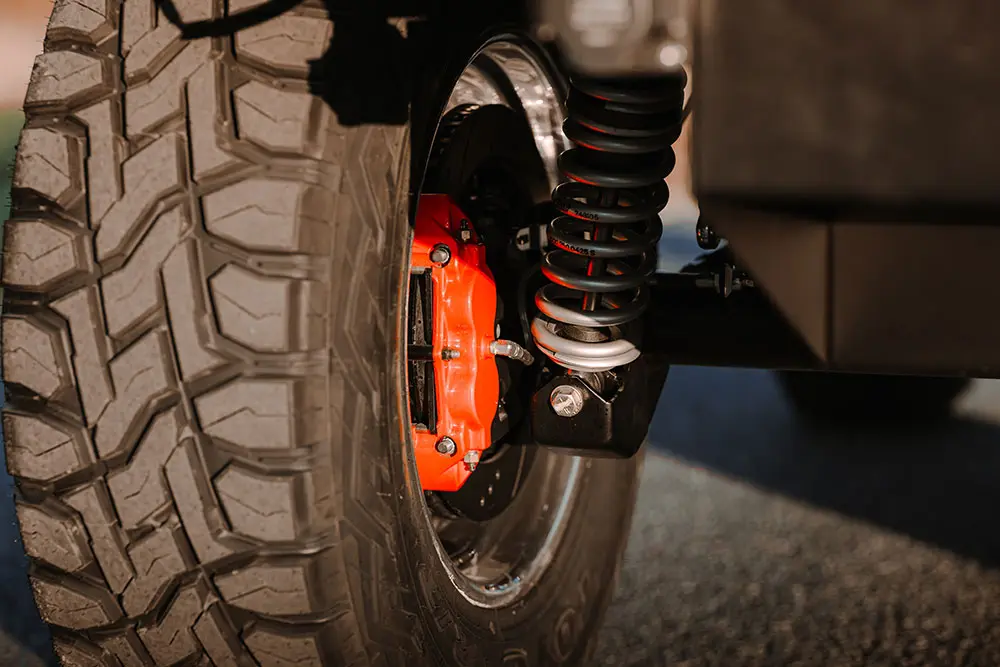
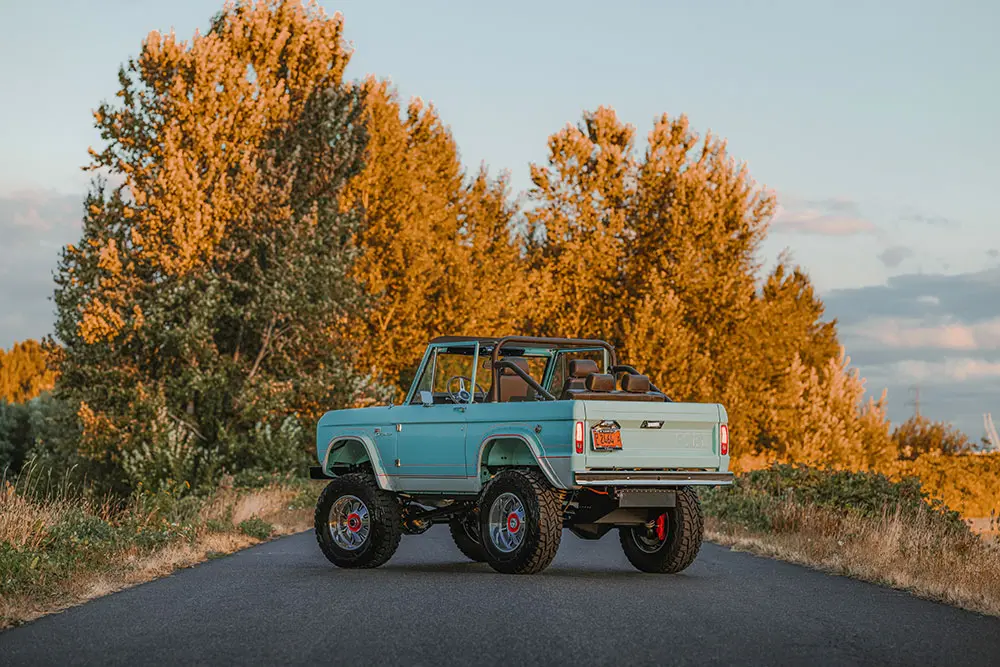
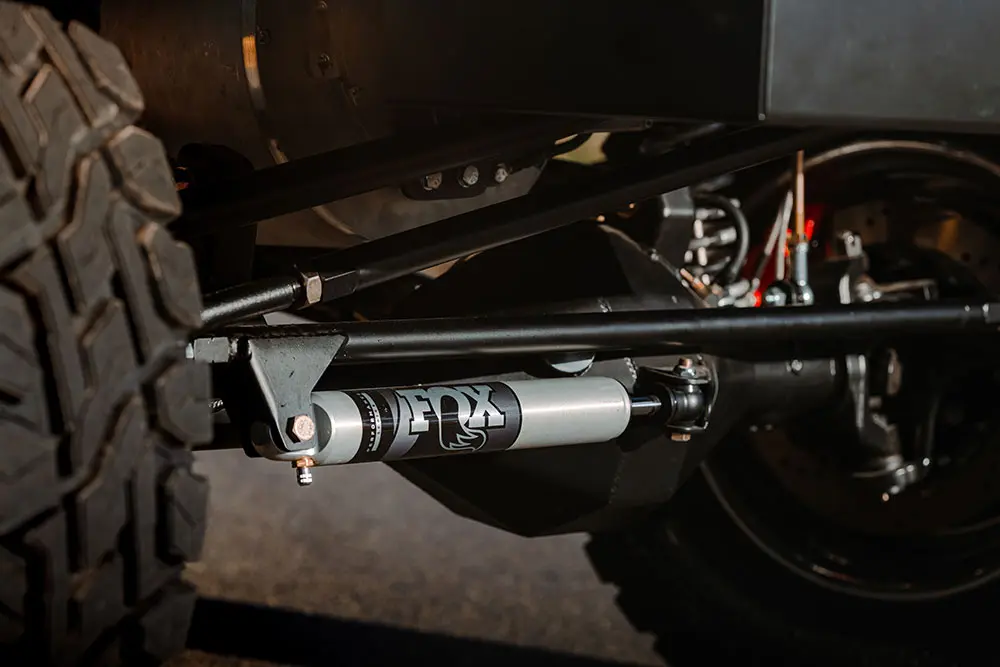
Dubbed the Luxe-GT Electric Bronco, this ’72 was stripped of its original chassis and replaced with a fully linked Kincer chassis with proprietary touches like bespoke coilovers with adjustable active ride and custom 18-inch CNC’d billet wheels with Toyo A/T tires in front of Wilwood brakes. The small-but-tall SUV can not only clear most any obstacle, but its suspension quickly switches between off-road and street settings at the push of a button.
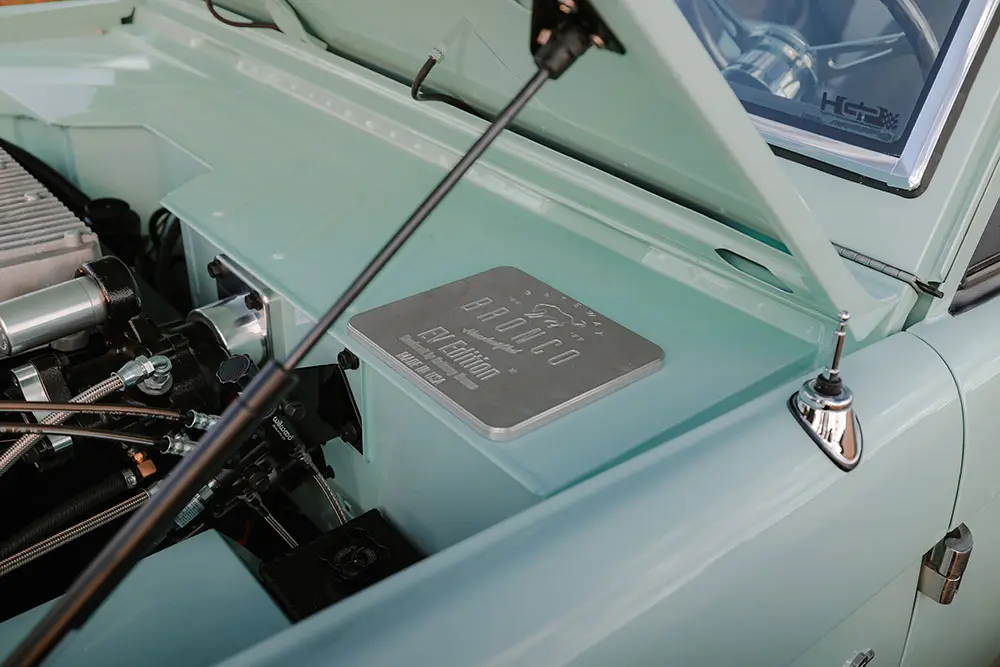
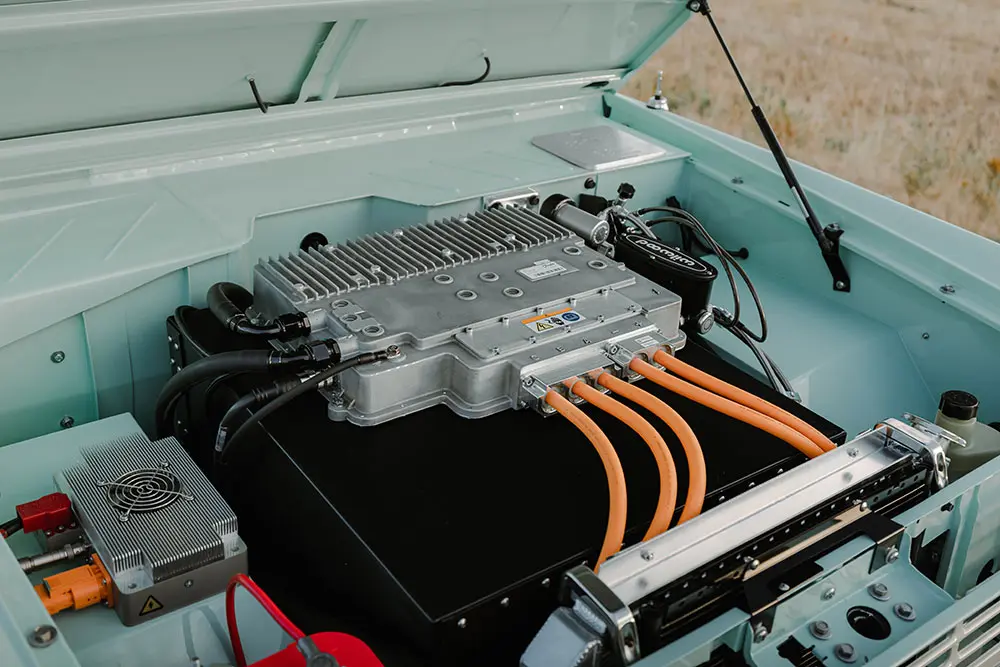
The battery package is a collection of NMC lithium-ion cells, placed both under the hood and in a compartment where the fuel tank would normally be located.
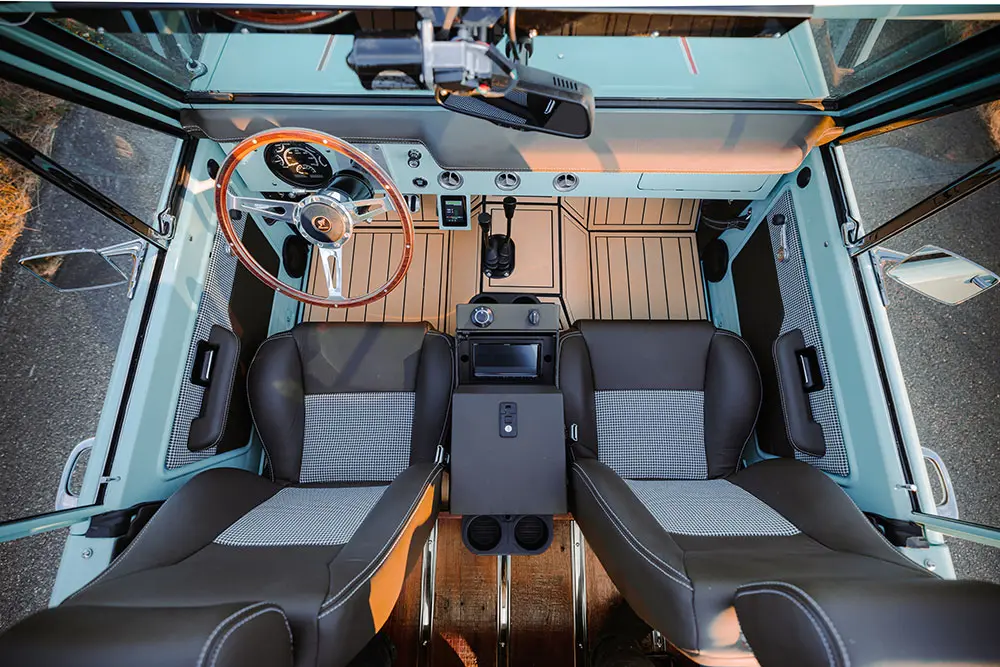
Motivation comes from a complete drivetrain package put together by Legacy EV. A liquid-cooled UQM Danfoss HD-220 motor putting out about 300 horsepower and 980 lb-ft of torque was adapted to the 5-speed transmission, and it maintains its 4WD capabilities while providing the smoothest power the Bronco has ever seen. UQM Motor Diagnostic software was used to seamlessly control power delivery through the signal processor controller.
The battery package is a collection of NMC lithium-ion cells, placed both under the hood and in a compartment where the fuel tank would normally be located. It puts out 300 amp-hours of juice and a range of about 300 miles. At 5,200 pounds, the Bronco can still hit 60 mph in less than 5 seconds!
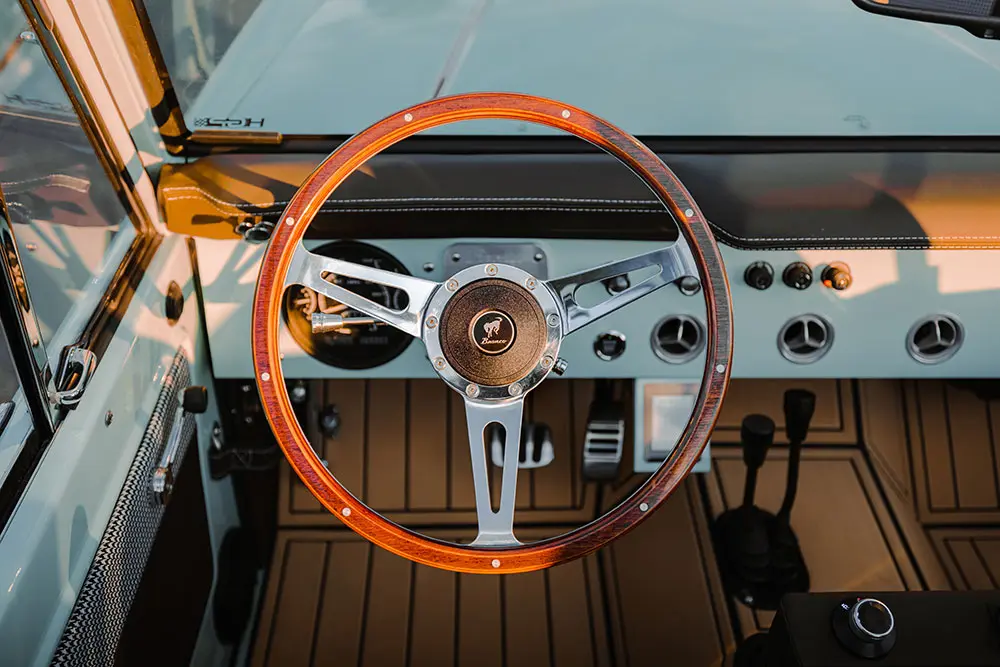
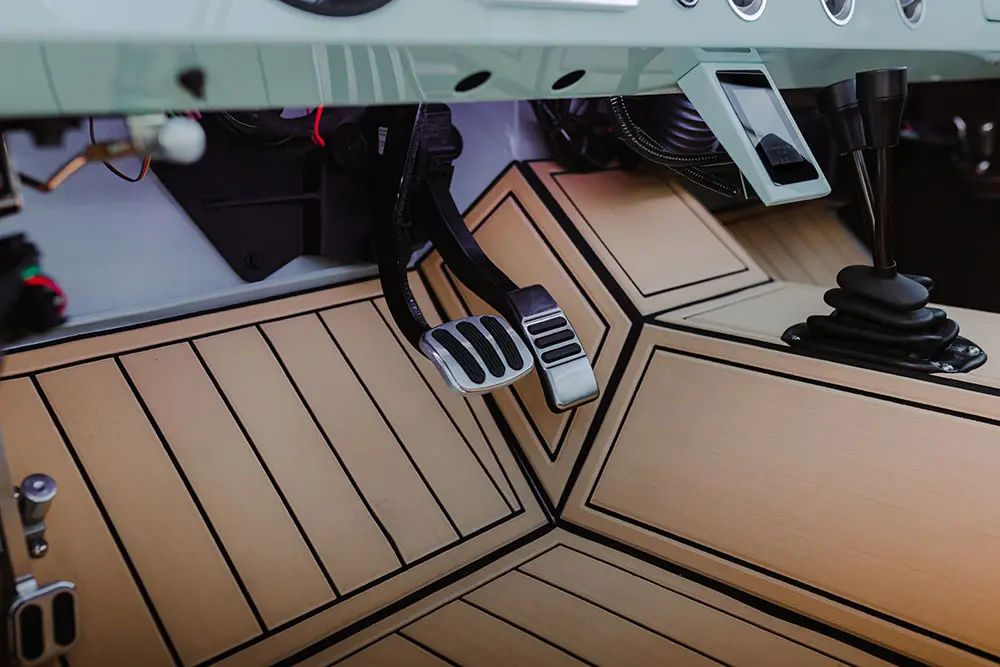
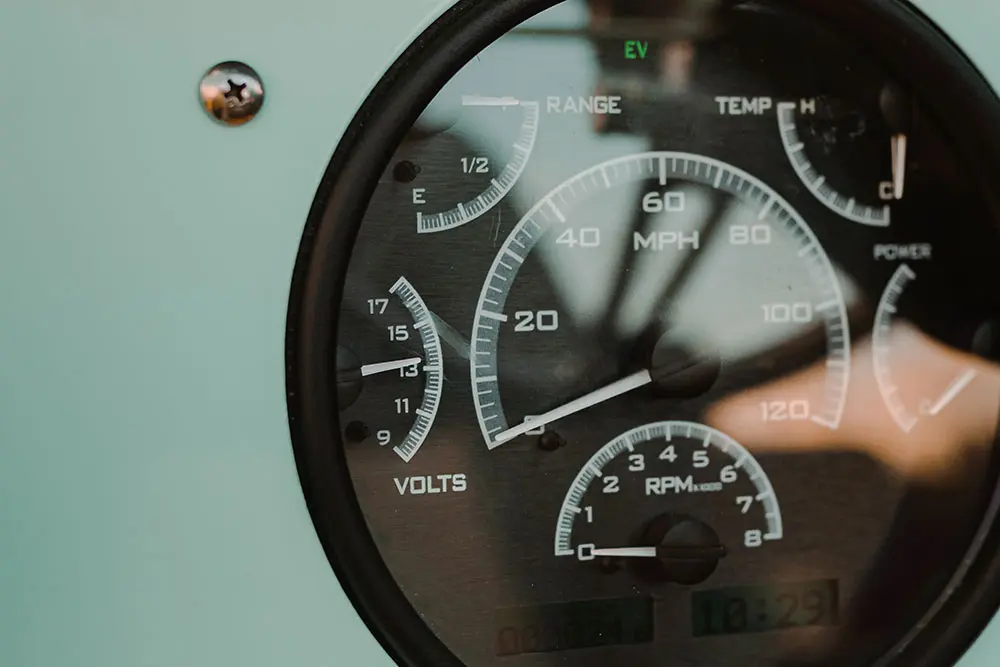
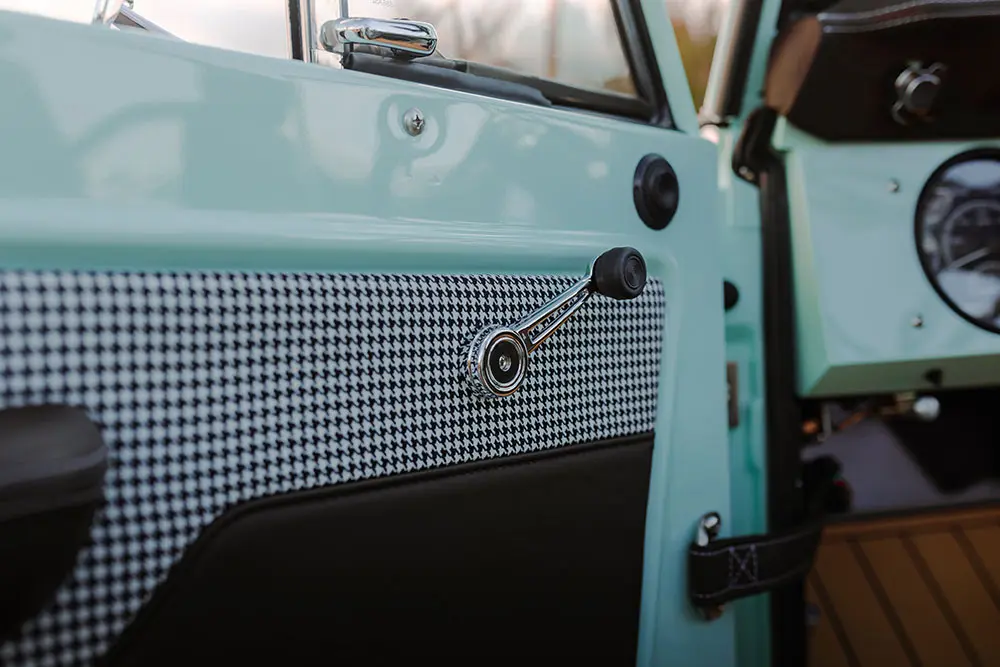
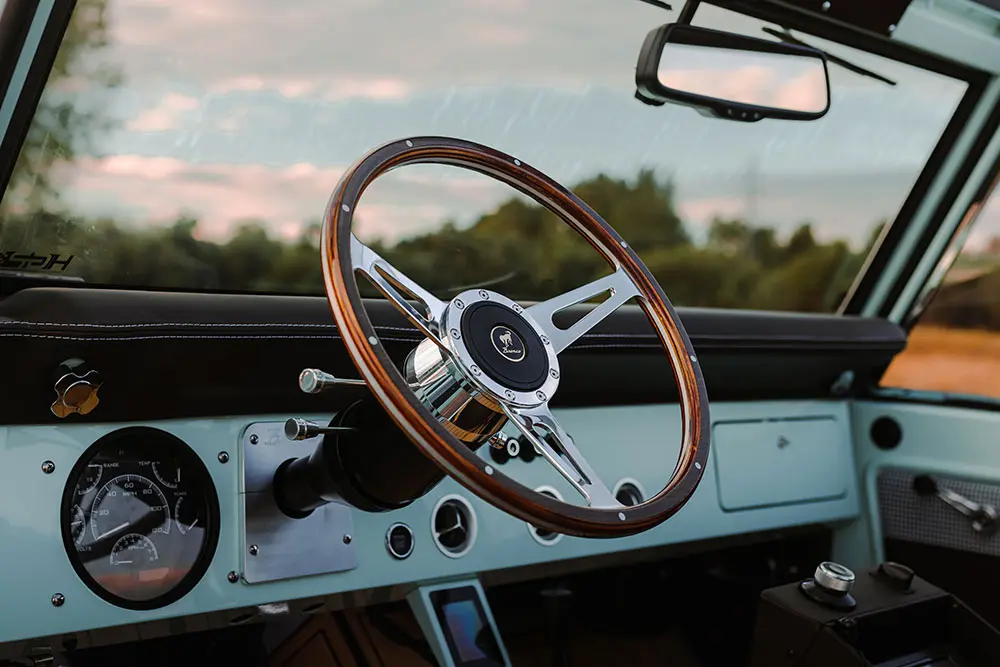
As you’d expect from a Bronco that sports a $265,000-plus price tag, the Luxe-GT is stuffed with creature comforts such as cleverly disguised power windows (the “cranks” are actually switches), power electric steps, climate control, heated/cooled seats (wrapped in Porsche leather), houndstooth inserts, and a Kenwood-based Apple Carplay sound system with Focal speakers. A full array of EV-specific gauges from Dakota Digital provides all of the vital information at a glance.
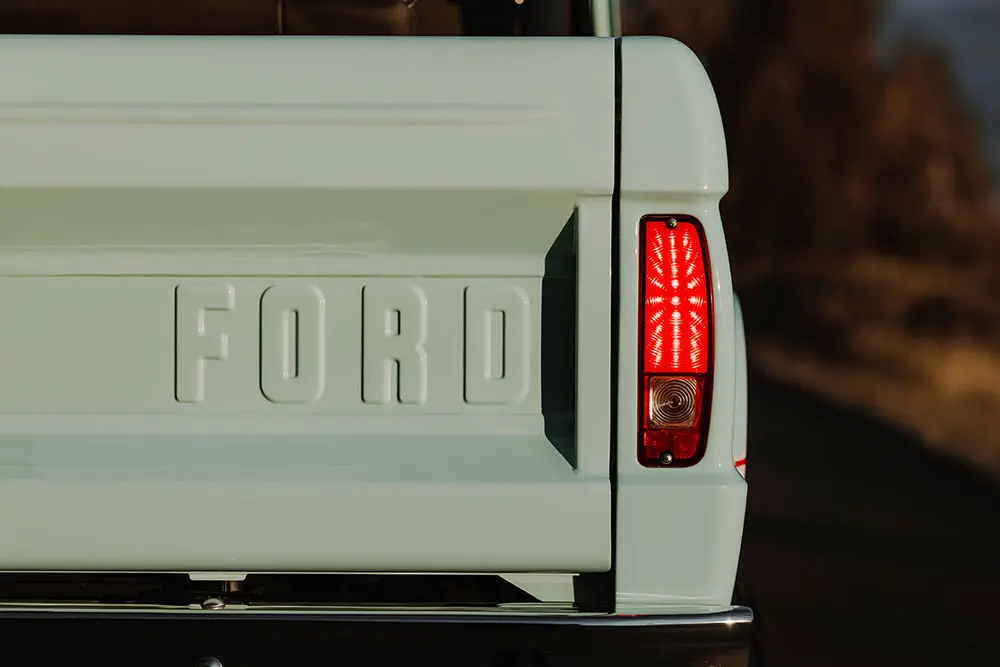
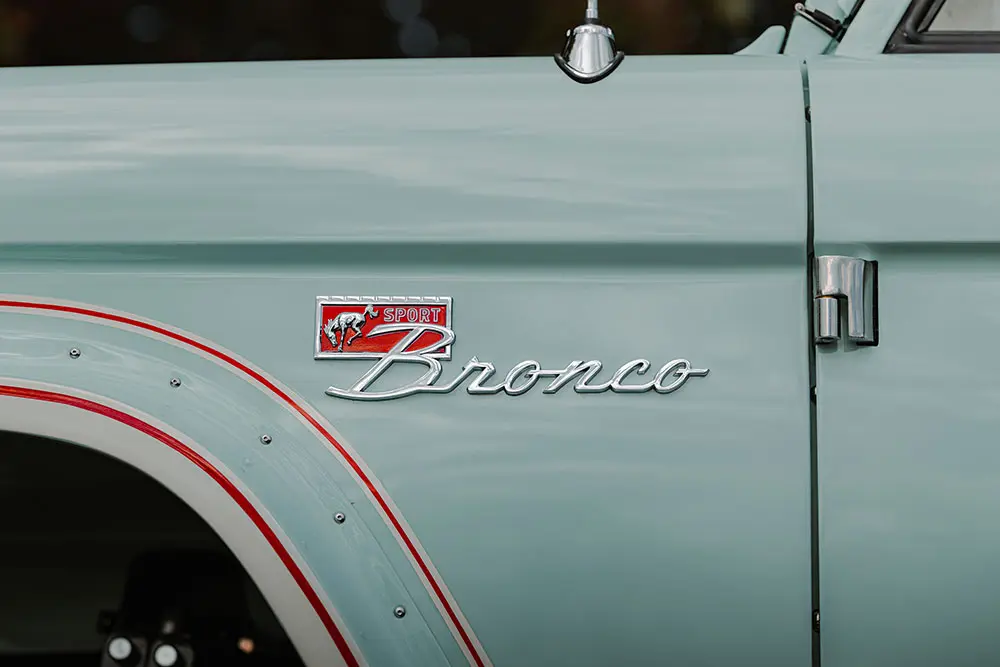
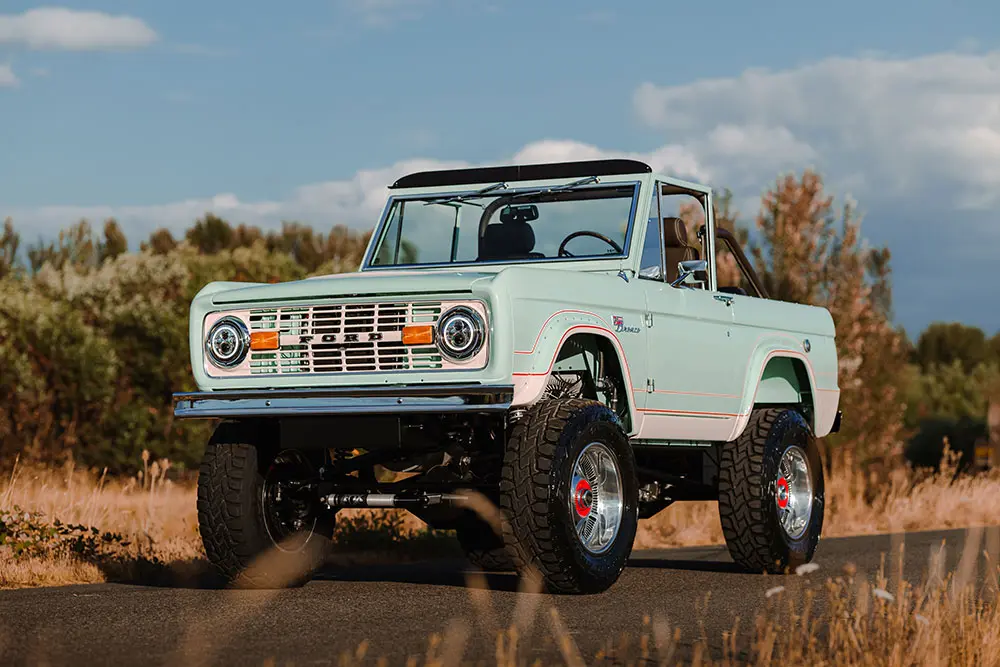
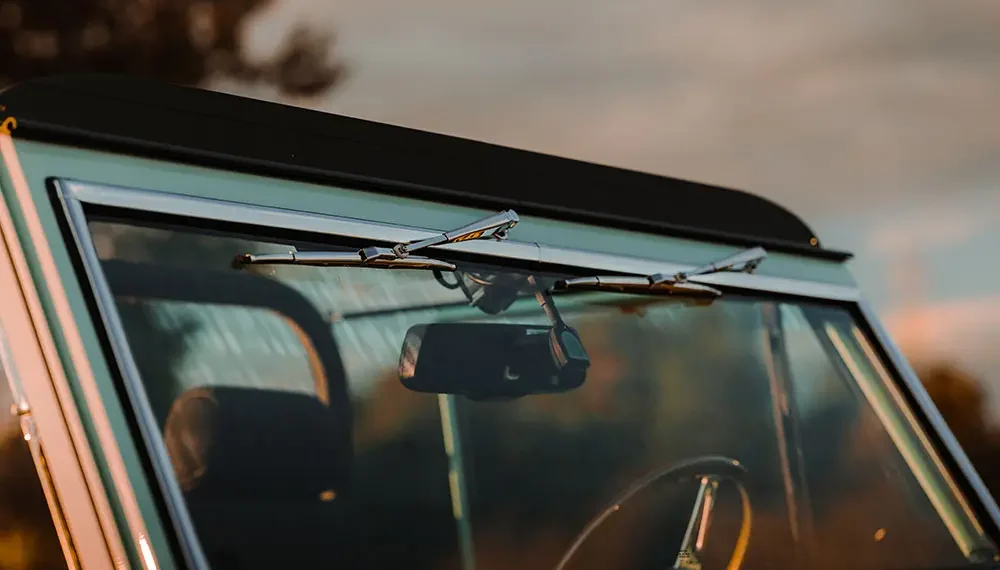
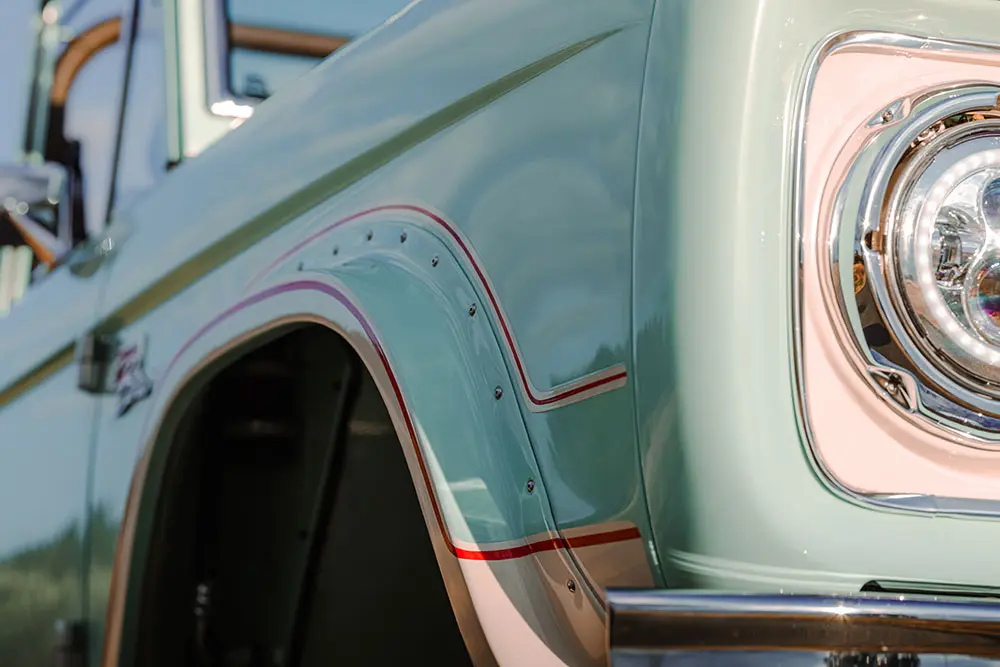
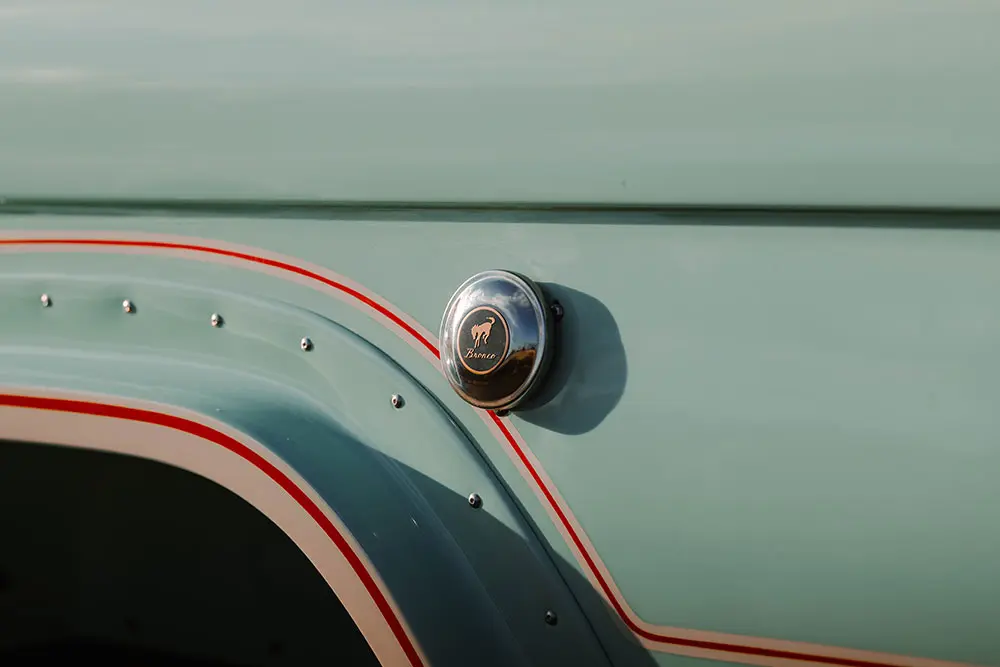
The Bronco is finished in Seafoam Green with brilliant Ranger stripes to break things up just the right amount. LED lighting was installed inside and out for maximum visibility. As you can see from the flawless finish, the Gateway Bronco team was as serious about the outside of the truck as it was with its underpinnings!
To give you an idea of the caliber of this thing, it has not only been featured at SEMA, but it was also a welcomed guest at the Quail Gathering during Monterey Car Week in California last August. If you know you know, but the takeaway is that very few rides get that honor; it’s reserved for the best and most exotic cars in the world.
We can’t wait to see future EV builds from Gateway Bronco, and we’re pretty sure you can’t either!
OWNER:
Gateway Bronco
MOTOR / DRIVETRAIN
CHASSIS/SUSPENSION
WHEELS, TIRES & BRAKES
BODY/PAINT
INTERIOR
For more information visit:
https://krawlersedge.com/stainless-steel-23-gal-early-bronco-fuel-tank/
https://krawlersedge.com/early-bronco-sport-cages-with-built-in-seatbelt-harness/
The most effective way to prevent electrical injury is to eliminate the hazard by establishing an electrically safe work condition. An electrically safe work condition is a state in which a high-voltage electrical conductor or circuit part, excluding the inside of the high voltage battery pack, has been:
The purpose of these criteria is to temporarily eliminate electrical hazards for a period of time while this state is maintained. By creating an electrically safe work condition, the person performing service is no longer required to wear personal protective equipment (PPE).
An electrically safe work condition is a state, not a procedure. Procedures must be developed specific to the component, system, and vehicle that the technician will work on, but in general, should be similar to the following example.
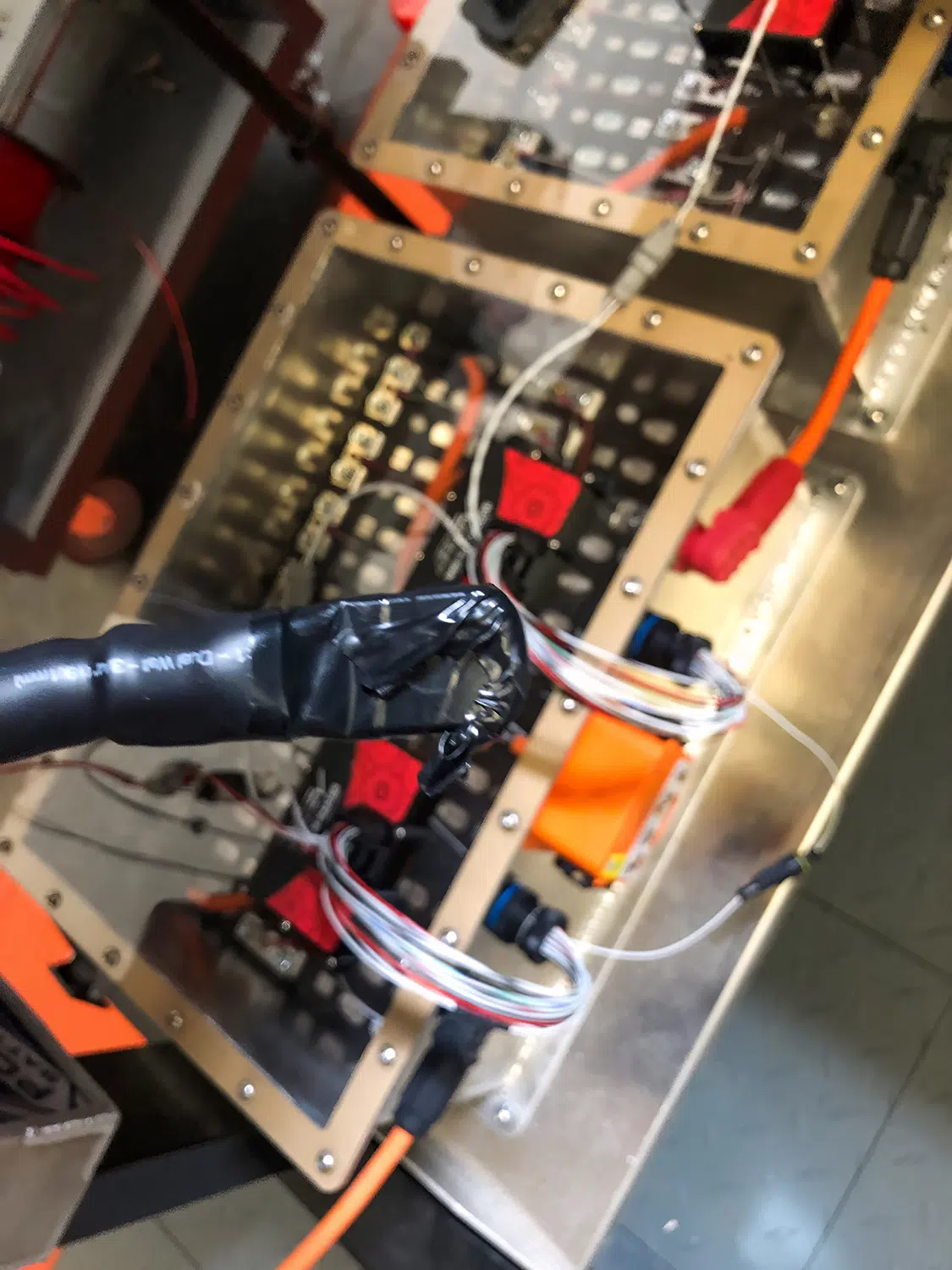
Before performing an HV disconnection procedure:
Workers who Zero Voltage Verify (ZVV) must be able to:
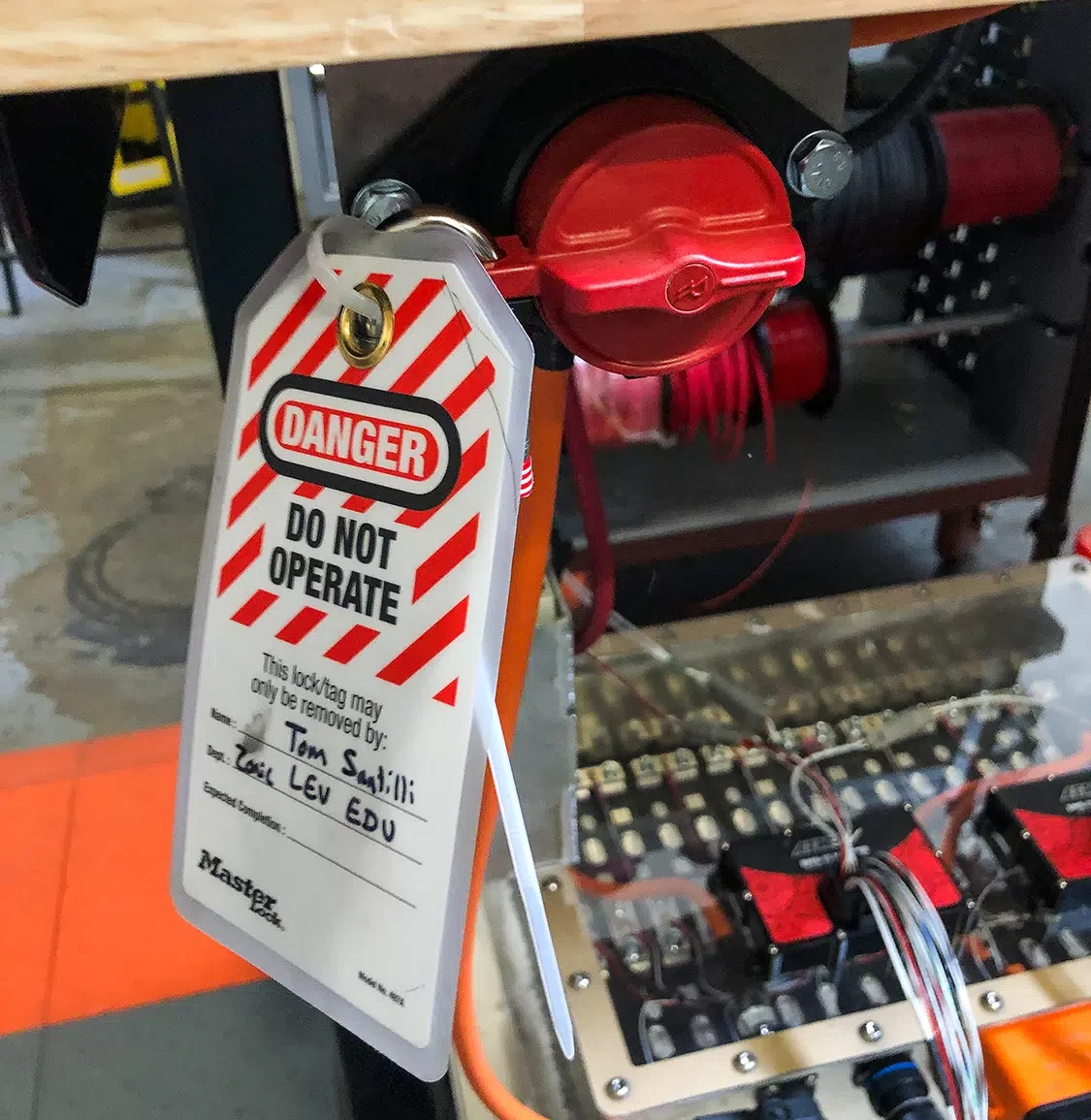
Disconnection Procedure: Low Voltage
The first step to creating a safe working condition is disconnecting your 12V power. In most cases, this will involve first turning the ignition off and moving the keys at least 16 inches from the vehicle. This distance is to prevent key fobs with a proximity sensor from re-enabling the power. By turning the ignition off, the main contactors of the high-voltage battery are opened and the discharge of the inverter capacitors will initiate.
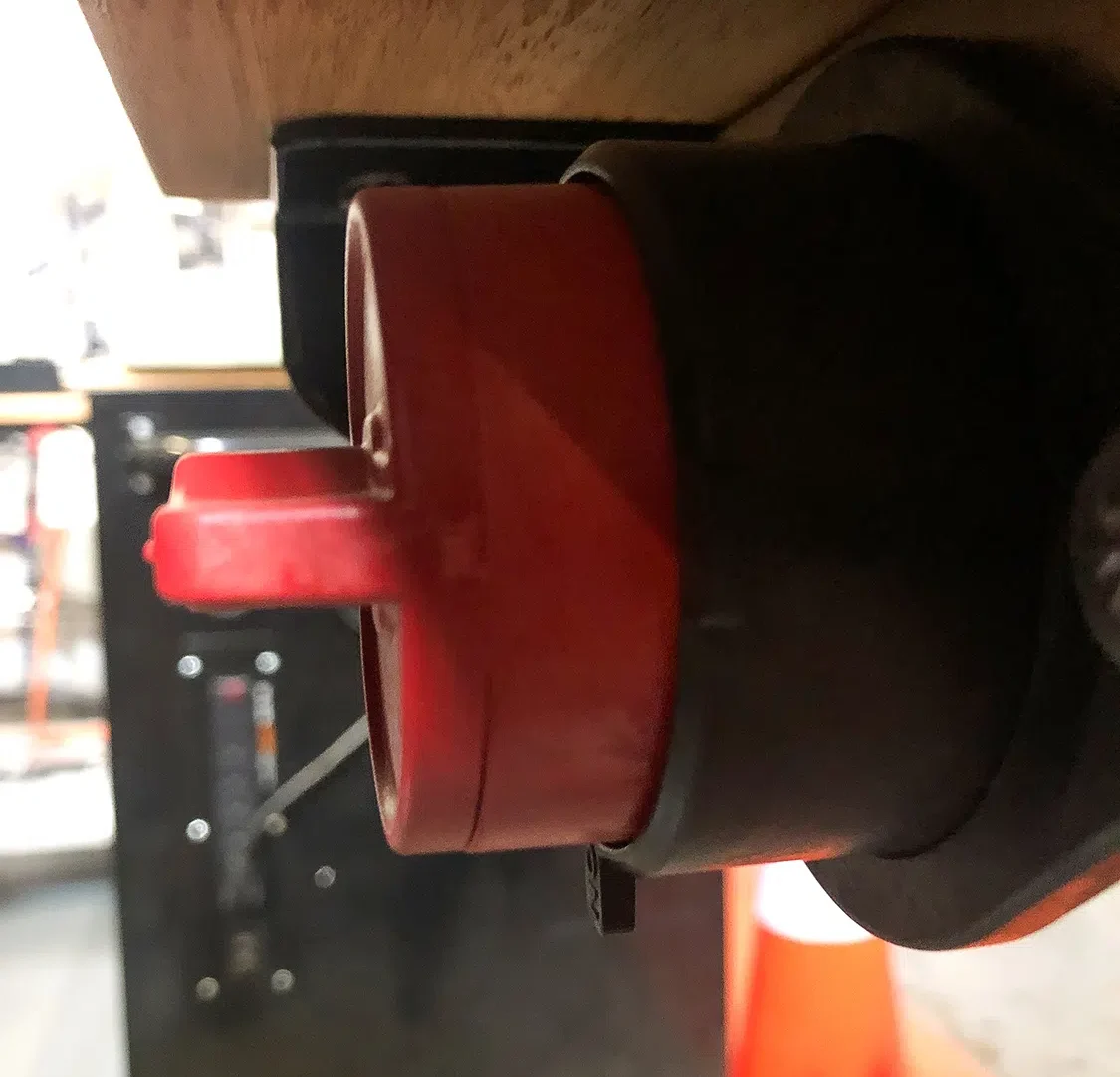
Next, you are going to physically prevent the 12V battery from reconnecting. If your 12V battery has a disconnection switch, use it. Then, remove the cable connected to the 12V negative bolt and wrap it in insulating tape. Tuck the cable somewhere so it cannot come into contact with the negative terminal of the battery. The 12V circuit should now be completely disconnected and protected from reconnection.
If the exact discharge rate is not known, it is recommended to wait at least 10 minutes after disconnection procedures have been completed to ZVV.
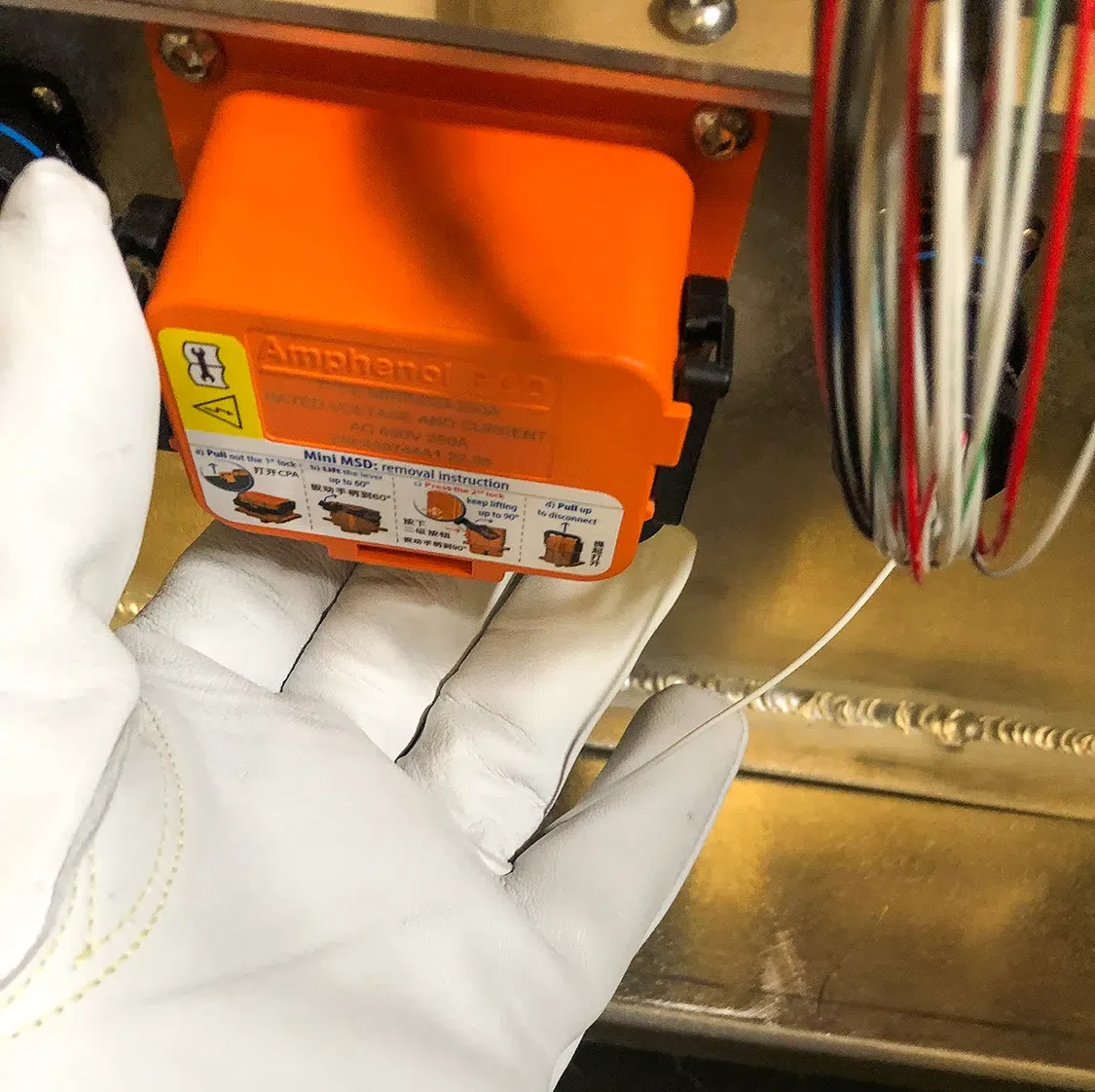
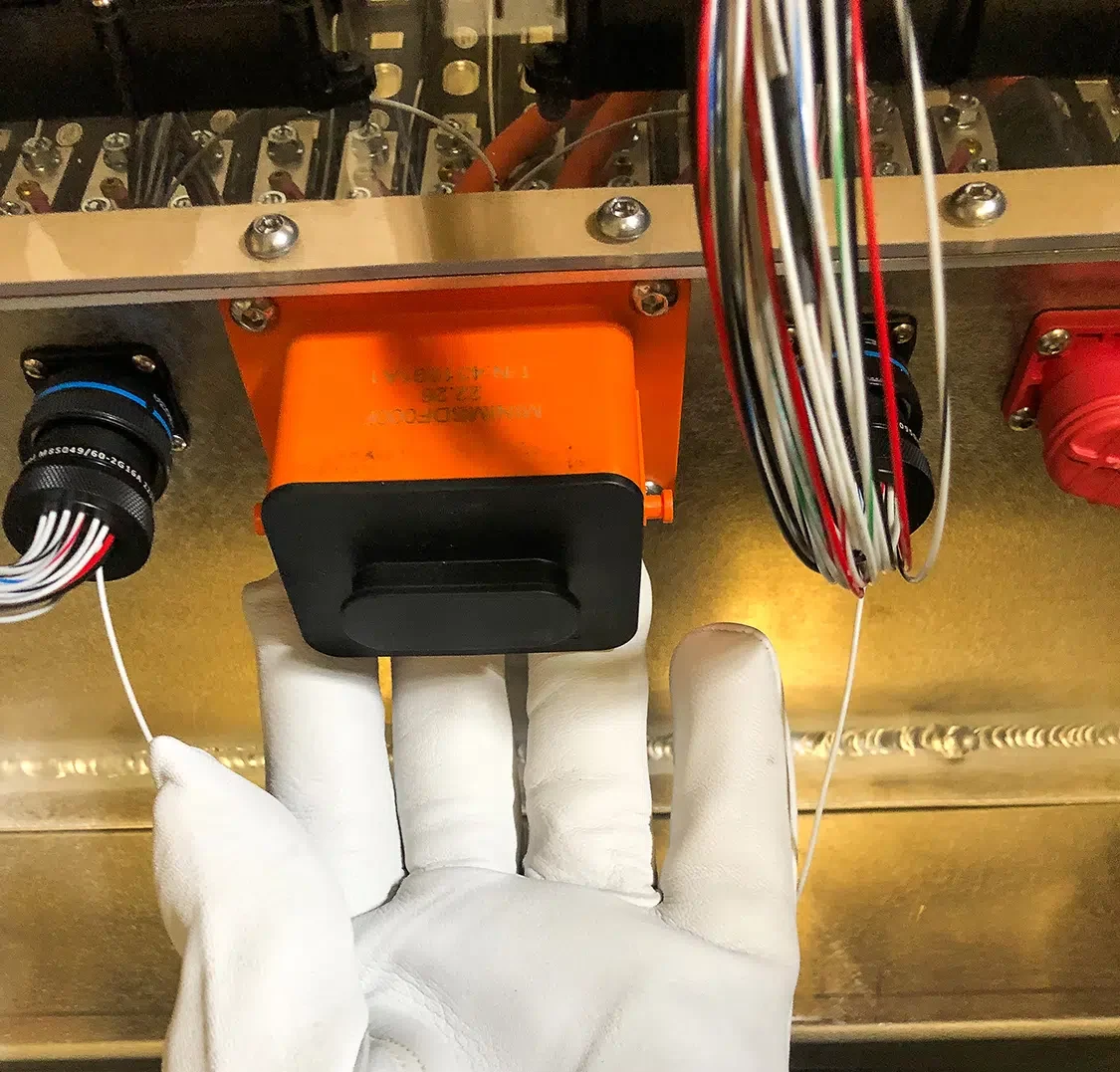
Disconnection Procedure: High Voltage
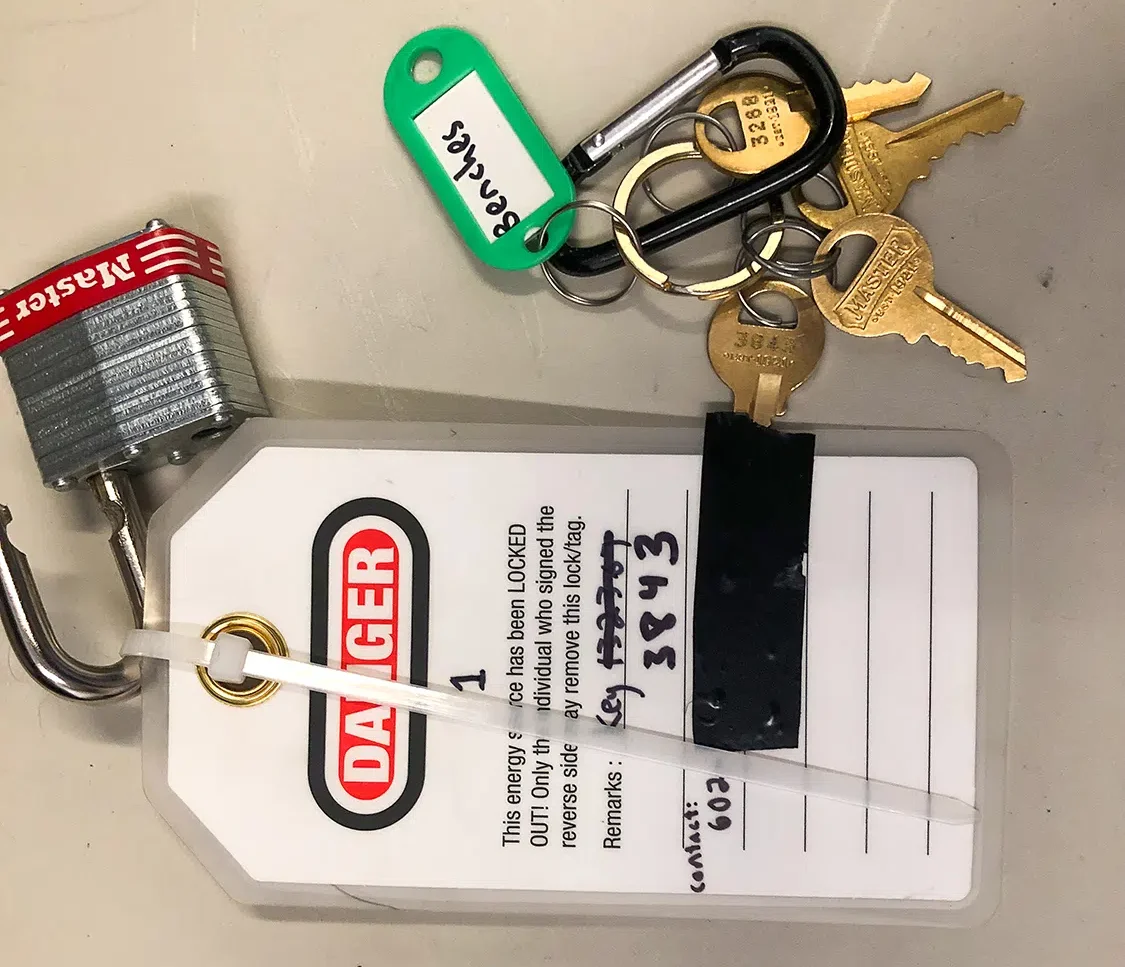
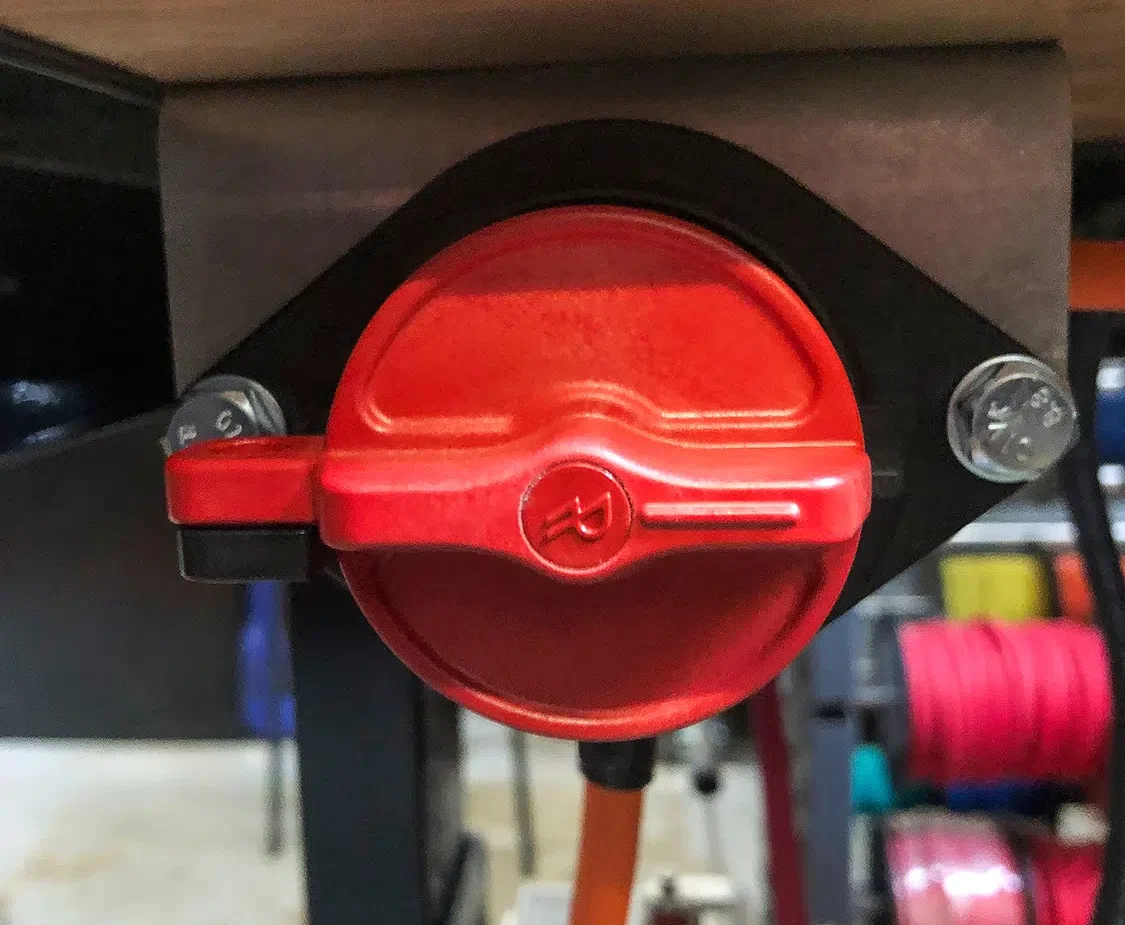
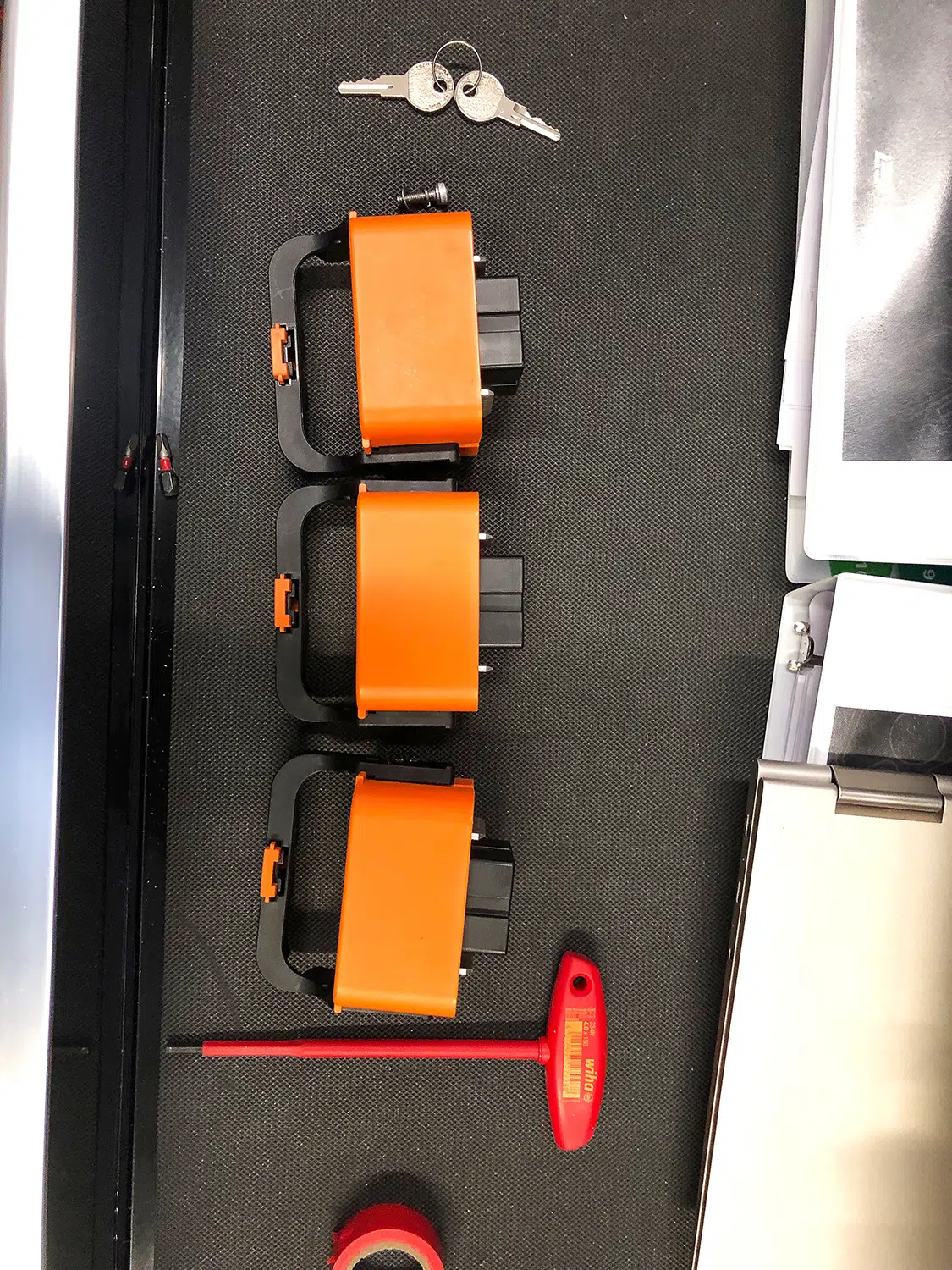
The vehicle should have what is usually called a maintenance switch or High Voltage Battery Disconnect (HVBD). Depending on the manufacturer or aftermarket build, your HV disconnect switch may look different and may have more than one, so check the vehicle manufacturer instructions specific to your build and components before continuing. Once found, turn your maintenance switch into the “open” position, and then check to make sure it is locked into that position to prevent reconnection. Using the correct Lock Out Tag Out padlock for your switch, physically lock the switch into the “open” position. Place a Tag Out tag on the lock with your name, date, and phone number on it, and then lock your LOTO key in your toolbox. It is the responsibility of the technician who locked this HV lock to manage its safety, so unlock it when it is safe to do so. If you change shifts, make sure you communicate with other technicians the ZVV status of this vehicle.
If the vehicle has Manual Service Disconnects (MSD) for the battery packs, you’ll need to disengage those as well. Still wearing PPE, remove each of the MSDs connecting the battery packs. Place a dummy plug or protective cover over the female end of the connection on the battery packs to prevent dust and other contaminants from coming into contact with a high voltage connection.
If the vehicle was recently powered on, it may take the motor inverter a few minutes to passively discharge. If the exact discharge rate is not known, it is recommended to wait at least 10 minutes after disconnection procedures have been completed to ZVV.
Zero Voltage Verify (ZVV)
Now, before you take off your PPE, you need to be certain that your HV circuit is indeed Zero Voltage Verified. This test is more commonly called a Live-Dead-Live test. First you are going to test that your multimeter is working on a known voltage source. Then you’ll test your high voltage component you are going to work on. Then you are going to re-test that your multimeter measured that HV component at zero volts correctly. Only at that point are you safe to remove your PPE and begin your service. Here is a general breakdown of how to Zero Voltage Verify with a multimeter:
An electrically safe work condition is a state, not a procedure.
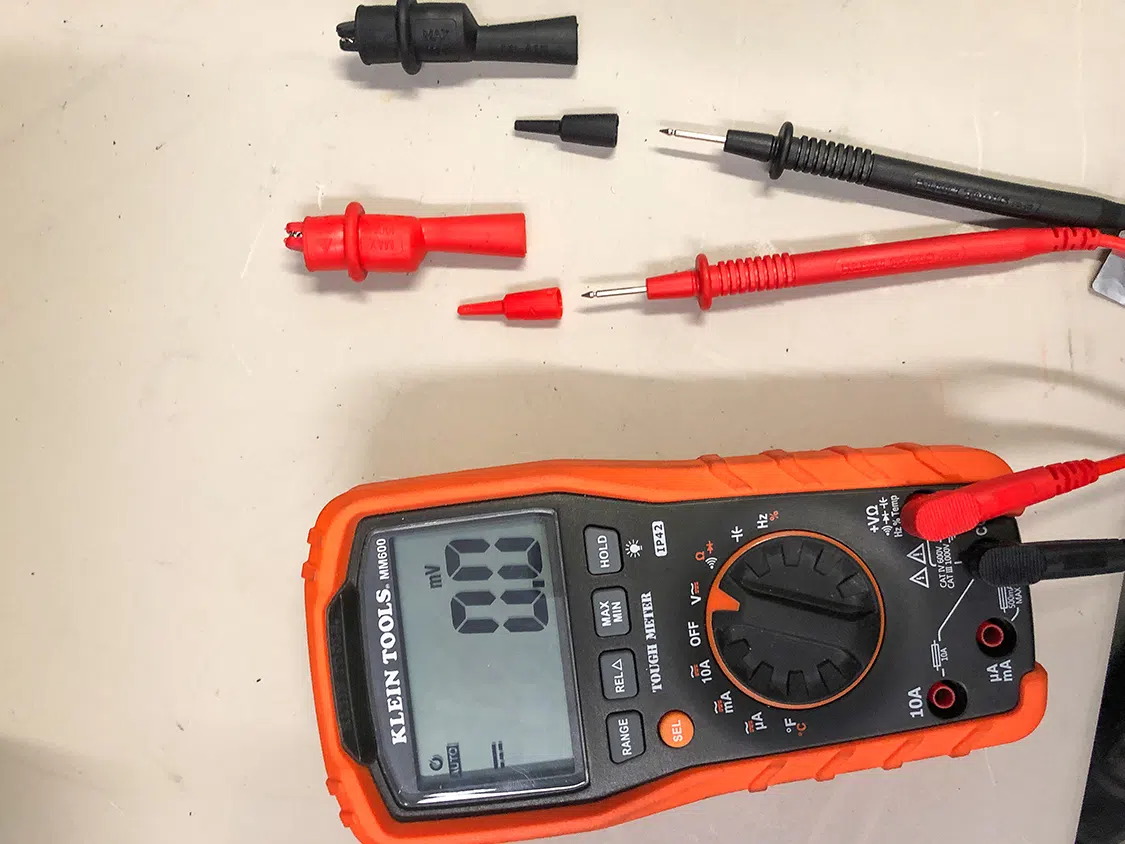
First, verify you are using a Digital Multimeter (DMM) and test the probes that are rated to handle the voltage necessary to ZVV your circuit—CAT III (1000V working voltage) or above is recommended. Plug your leads into the DMM port to measure DC voltage and place insulated caps on your leads. If necessary, to ensure the test probes are CAT III rated.
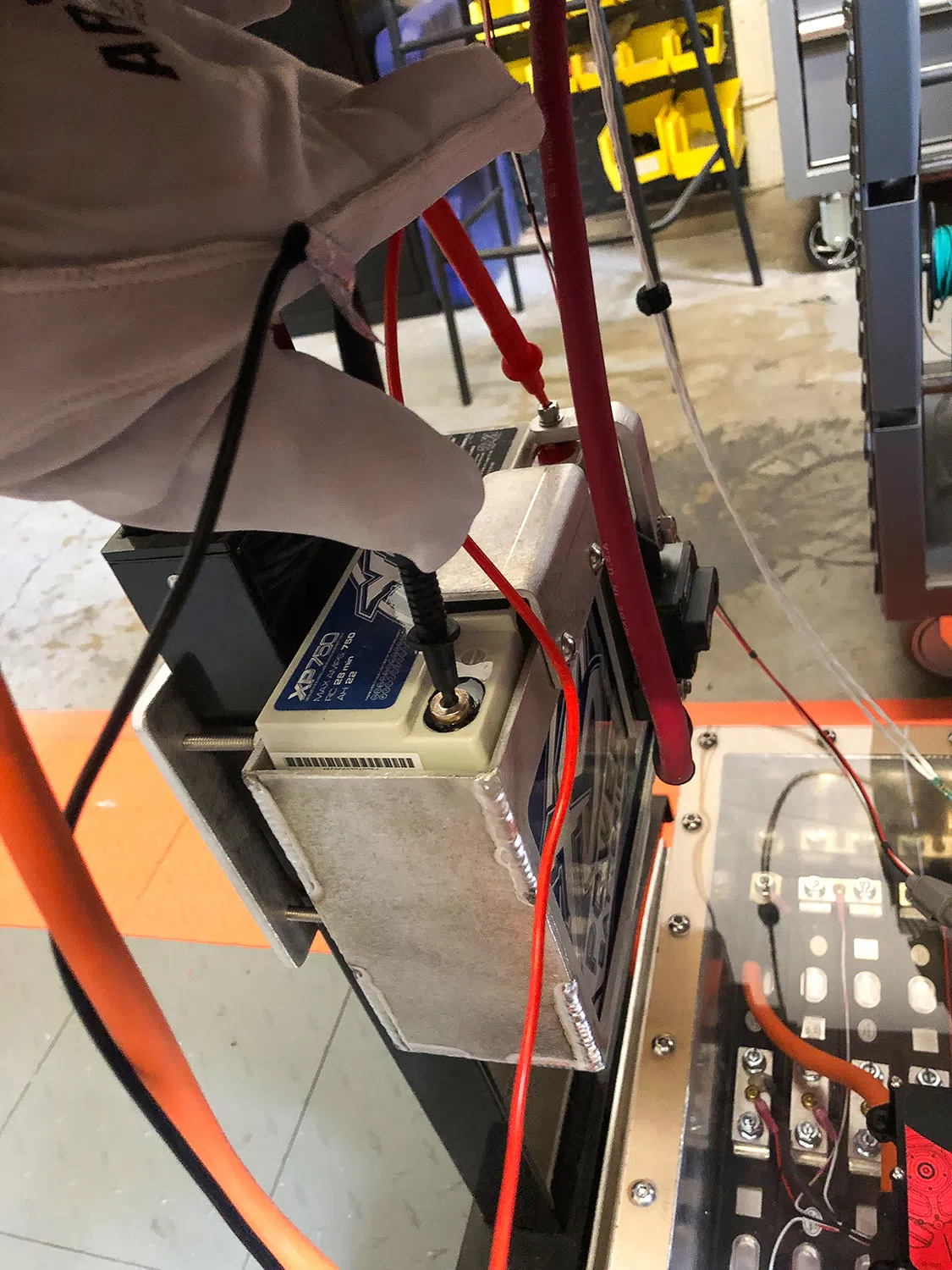
Using a known voltage source, like a 12V battery, test the voltage. If the DMM is working properly, the reading should reflect the known voltage.
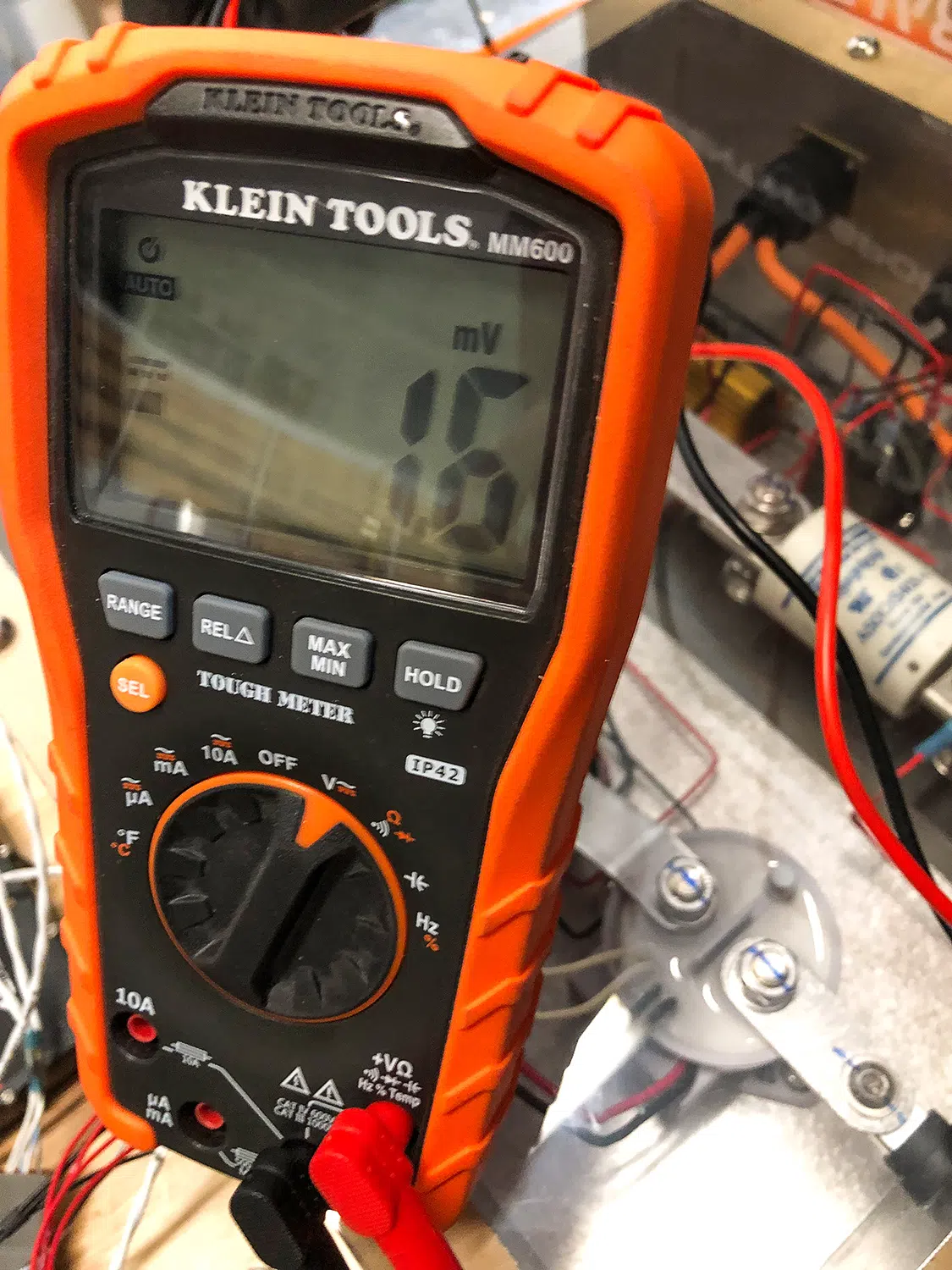
Now, test the voltage of the high voltage component(s) being worked on. The DMM should report a voltage of ~0 volts or something very close to 0 volts, like 1.6 mV, pictured here, that shows a small amount of residual voltage. Residual voltage is common when working with electrical components that contain capacitors and inductors, even if the component is disconnected from power.
To wrap it up, just re-test the voltage of the known voltage source, like the 12V battery again. If the DMM is working properly, you should see the same reading as the first time you tested this voltage source and it is now safe to remove your PPE and begin service.
The best way to work safely with electric circuits, both high and low voltage, is to make sure that no voltage is present at all! Following the steps outlined here will help ensure successful, safe, and efficient servicing and building of EV systems.
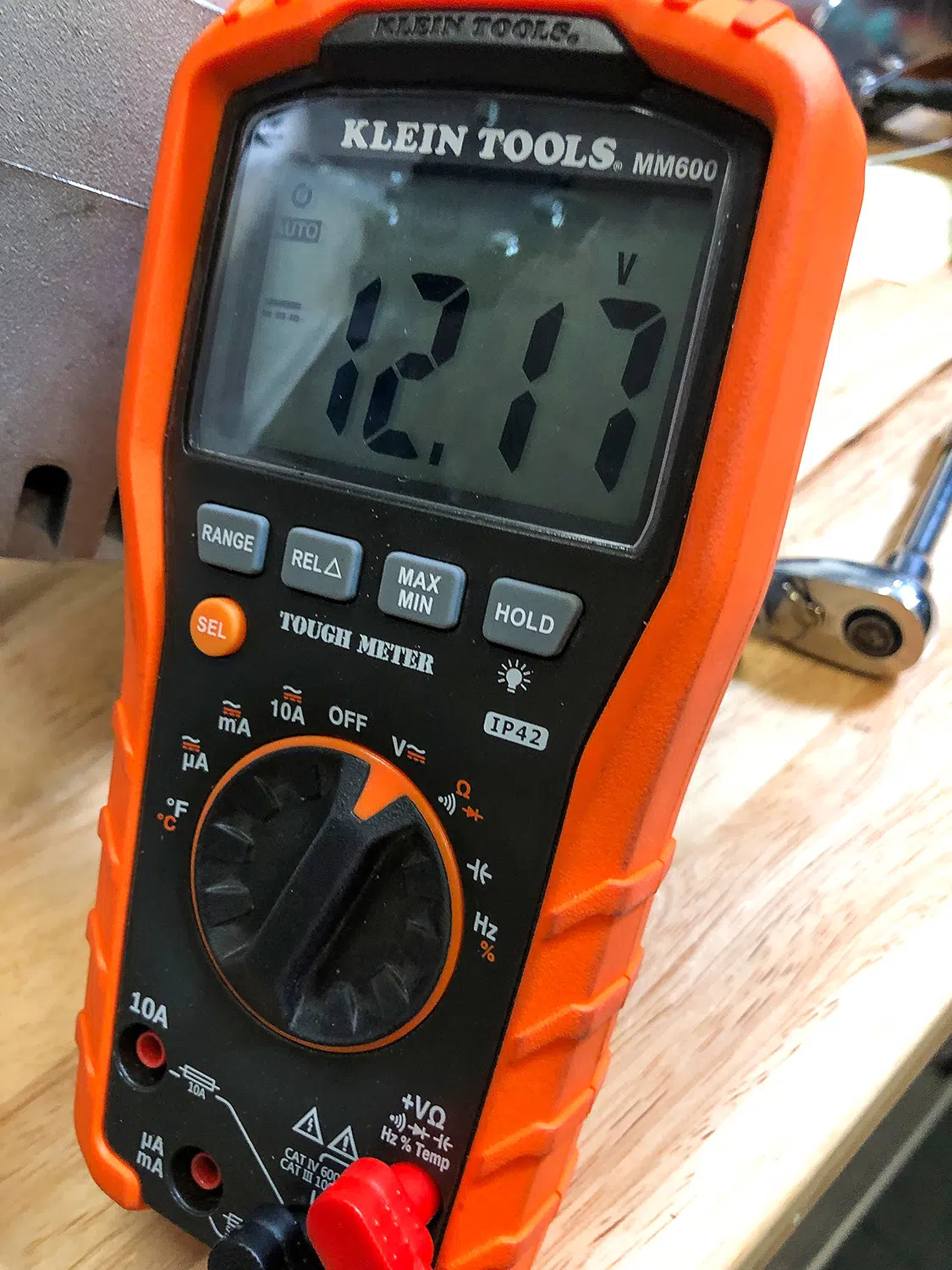
If this last reading is NOT the same as when you first tested it, your high voltage circuit may have blown the fuse to your DMM and could therefore still be live! DO NOT remove PPE until this step reflects the correct voltage. For example, in the photo, the known voltage source was a 12V battery with a reading of 12.17V for the first test. After verifying ~0V on the high voltage component to be worked on, and re-testing on the same battery, one should expect to see the same reading of 12.17V. If that is not the case, do not remove your PPE and restart your disconnection procedures from the beginning.
By: David Korvah, Marketing Manager, Automotive, Avery Dennison
Welcome to a new season of wrench-turning and show-stopping transformations. You’ve poured countless hours into resurrecting that vintage metal, so what better way to ensure its legacy than by giving it the ultimate finish and protection? Whether you’re perfecting a concours-level restoration, preserving a cherished survivor, or simply upgrading your weekend cruiser, Avery Dennison films offer a precision finish and unparalleled defense.
This family of films provides the freedom to achieve a flawless, show-quality look—from period-correct accents to modern protective layers—while offering crucial defense from harsh UV rays, pitting road debris, gravel, and those inevitable parking lot incidents. Get ready to turn heads at the next cruise-in. Here are Avery Dennison’s Top 10 essential films for classic car finishing and protection.
#10 Encore™ Window Film – When protecting your classic’s interior is paramount, Avery Dennison Encore Automotive Window Film delivers superior heat and UV rejection. Encore is available in four shades of rich, neutral black, offering privacy and crucial defense against the sun, blocking 99% of harmful rays. For classic owners, this is key to preventing dashboard cracking and upholstery fading, preserving the vehicle’s originality and value. Encore also enhances safety with superior shattered glass retention and is recommended by the Skin Cancer Foundation.
#9 Encore™ Supreme IR Window Film – Next-level cabin preservation. Encore™ Supreme IR redefines high-performance automotive window tint. Utilizing cutting-edge nanoceramic technology, this film delivers unparalleled heat rejection and exceptional clarity. For drivers of classics—especially those without modern A/C—this film significantly lowers cabin temperature and preserves sensitive materials like vintage leather and vinyl seating. Offered in six shades of deep black, Encore Supreme IR boasts up to 93% selective infrared rejection, superior optical clarity, and is recommended by The Skin Cancer Foundation.
#8 Encore™ Shield IR Window Film – Invisible defense for period-correct glass. This is the answer for enthusiasts who demand sun protection without altering the factory aesthetic. Encore Shield IR Window Film is a completely clear automotive film that offers excellent visibility and formidable heat rejection, blocking 99% of UV rays. It allows you to stay cool and comfortable while protecting your classic’s irreplaceable interior from solar damage, all while maintaining a perfectly transparent, stock look. As with all Encore Window Films from Avery Dennison, Encore Shield is recommended by the Skin Cancer Foundation.
#7 Supreme Wrapping Film™ – The ultimate alternative to a costly paint job. Imagine the power to totally transform your classic with an almost limitless color palette—over 200 shades to be exact. Avery Dennison’s Supreme Wrapping Film is the restorer’s dream for achieving a custom, show-quality finish in high gloss, pearl, satin, matte, iridescent, gloss metallic, metallic, chrome, and more. Use this film to achieve a stunning, deep-luster finish that will turn heads at the annual meet. Best of all, it allows you to radically change your color scheme while protecting the original paint underneath, safeguarding your investment.
#6 Supreme Defense™ Matte PPF – Protective depth for factory paint. If you love your classic’s original color but seek a dramatic, modern edge, Supreme Defense Matte Paint Protection Film (PPF) is your solution. This clear film transforms any glossy finish into a luxurious matte aesthetic. The sleek, modern finish provides a sophisticated look while delivering superior defense for peace of mind, utilizing three layers of protection to guard your precious paint against road chips and superficial dings.
#5 Supreme Wrapping Film™ in Obsidian Black – The deepest gloss black finish. Appearing on our list twice for good reason, this film takes the benefits of Supreme Wrapping Film and delivers them in the darkest, richest, most stunning high gloss black hue available. Obsidian Black achieves a deep, mirror-like gloss that rivals a show-quality piano black paint job. It’s ideal for a full wrap on a vintage luxury cruiser or for creating perfectly defined racing stripes or accent panels on a muscle car or street rod. The ultimate in depth, luster, and luxury is within reach.
#4 Supreme Defense™ Gloss Paint Protection Film – Invisible shield for your investment. For restorers who have just laid down a perfect, deep-luster paint coat, or those preserving valuable original paint, Supreme Defense Gloss Paint Protection Film is an essential layer of protection. This film acts as an invisible force field against the elements, specifically designed to keep your car’s finish brilliant and beautiful. Protecting your valued investment from road rash is critical. This triple-layer protective film resists the impact of rock chips and door dings while preserving the gorgeous shine, ensuring your classic remains a garage queen no matter how often you take it out.
#3 PrismaPro™ Color Change Paint Protection Film – Coming Soon, this is the future of restoration finishing. PrismaPro color paint protection film represents the next generation of PPF, setting a bold new standard for the restyling and restoration markets. It combines Bold Colors, Superior Performance, and Exceptional Defense. Installers appreciate its ease of application, powered by Avery Dennison IntelliTack™ Adhesive Technology, which ensures dynamic 3D conformability—perfectly hugging the intricate curves and recesses of vintage metal. You will love the flawless, high-end paint-like finish with a stunning prism of 10 brilliant high gloss color options. Constructed from enhanced polyurethane, PrismaPro PPF provides exceptional scratch resistance and self-healing properties. Road gravel? Pitting? Door Dings? No longer a concern for your meticulously finished classic.
Here we are. The top two are part of the Avery Dennison Neo Black family of Paint Protection Films. Rich black wraps and accents are timeless and essential for a striking look.
#2 Neo™ Noir Gloss Black Paint Protection Film – Mirror-like depth and heavy-duty defense. Give your restoration the ultimate finish and protection. Neo™ Noir gloss black PPF utilizes advanced polyurethane technology to offer robust defense against rock chips, scratches, and road debris. More importantly for enthusiasts, it provides a deep, mirror-like, wet-look finish that truly rivals a fresh, professional paint job, ensuring your classic commands attention while being shielded from all road hazards.
And…drum roll please; number one on Avery Dennison’s 2026 Top Ten Automotive Performance Films:
#1 Neo™ Matte Black Paint Protection Film – The sophisticated satin/matte finish for true purists. Imagine giving your meticulously finished classic a sleek, sophisticated, non-reflective aesthetic. Neo™ Matte Black PPF transforms any vehicle surface with a velvety smooth satin black hue, delivering understated luxury and contemporary style. Engineered with advanced polyurethane technology, Avery Dennison Neo Matte Black PPF provides unmatched protection for your metal against rock chips, scratches, and road debris, allowing you to confidently take your masterpiece out for a spirited cruise.
And there you have it. Whether you are seeking superior heat rejection to preserve a pristine interior or a complete restyle with powerful colors that offer unparalleled paint protection, Avery Dennison has spent a lifetime creating automotive film solutions to protect your vehicle’s legacy, perfect its finish, and confidently hit the road today. To learn more and find a certified installer near you, visit graphics.averydennison.com. Want to learn to install these films yourself? Avery Dennison offers film installation training classes. Review the options at graphics.averydennison.com/training.
Avery Dennison Corporation (NYSE: AVY) is a global materials science and digital identification solutions company. We are Making Possible™ products and solutions that help advance the industries we serve, providing branding and information solutions that optimize labor and supply chain efficiency, reduce waste and mitigate loss, advance sustainability, circularity and transparency and better connect brands and consumers. We design and develop labeling and functional materials, radio-frequency identification (RFID) inlays and tags, software applications that connect the physical and digital and offerings that enhance branded packaging and carry or display information that improves the customer experience. Serving industries worldwide — including home and personal care, apparel, general retail, e-commerce, logistics, food and grocery, pharmaceuticals and automotive — we employ approximately 35,000 employees in more than 50 countries. Our reported sales in 2025 were $8.9 billion. Learn more at www.averydennison.com.
Images © 2026 Avery Dennison Corporation. All rights reserved. Used with permission. Captions included with this release.
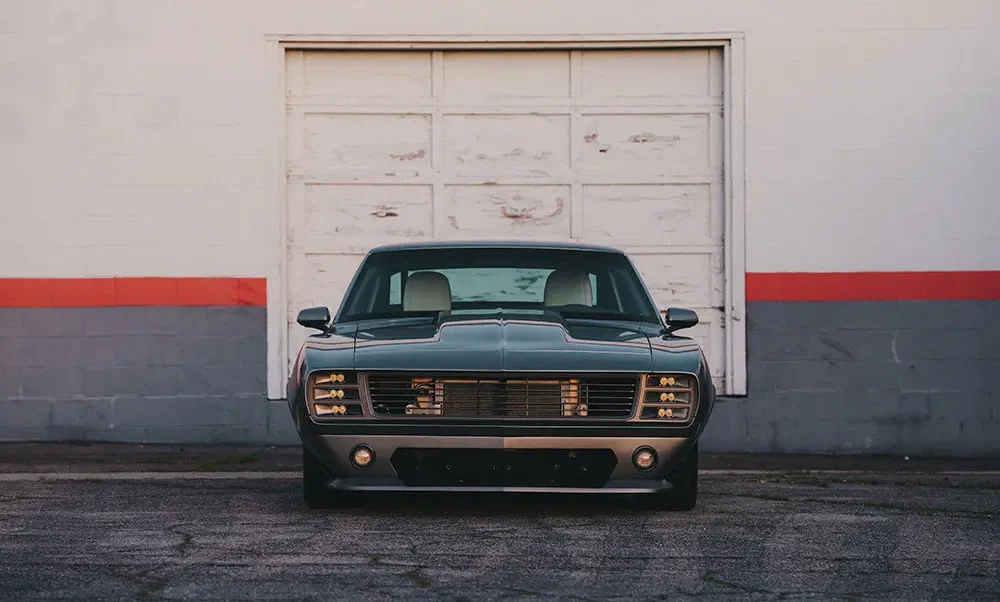
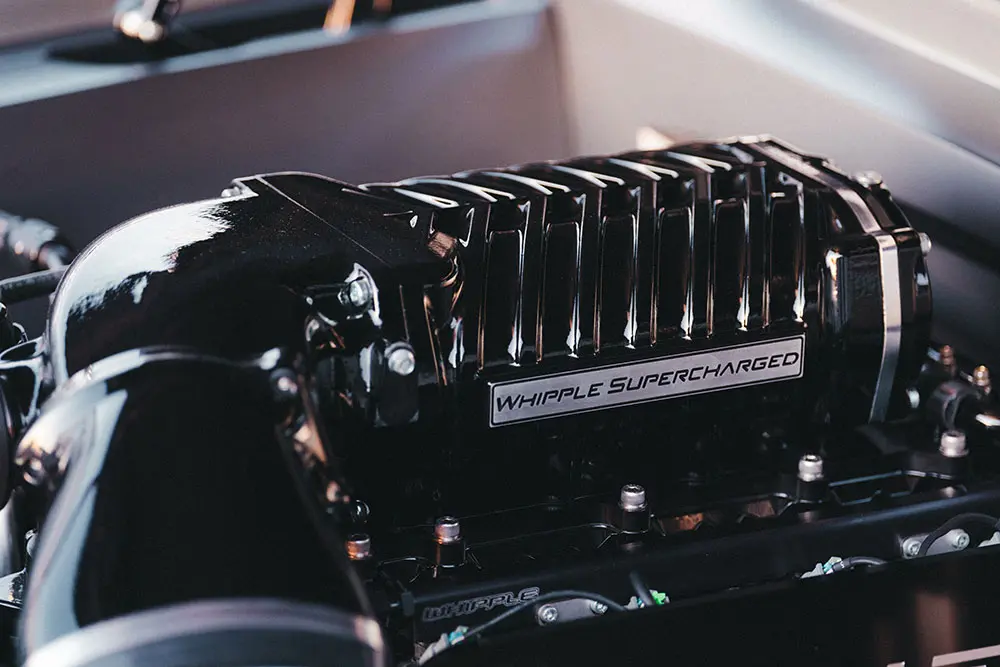
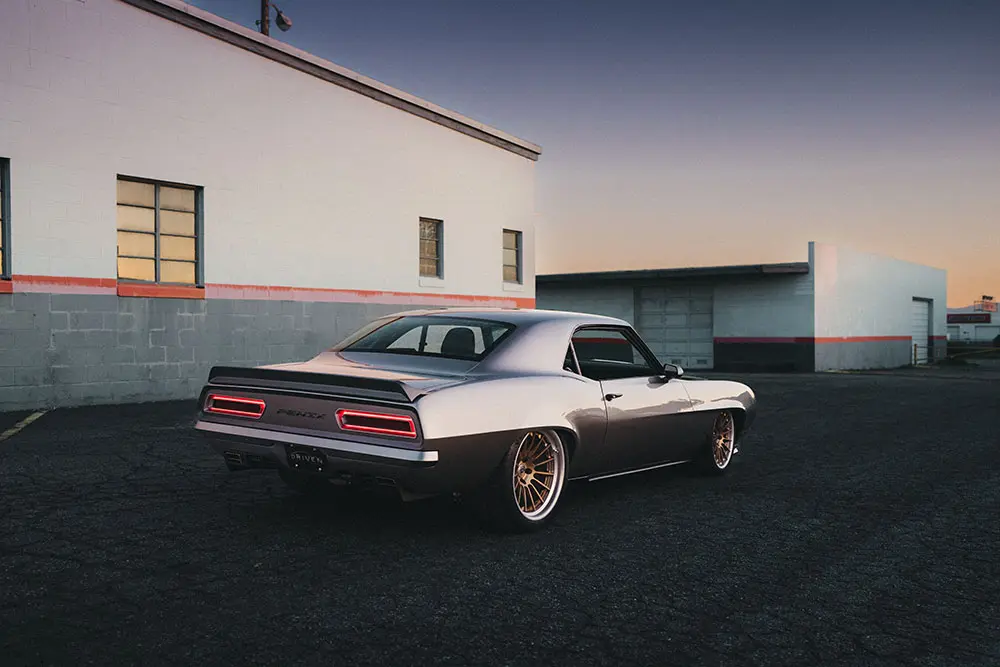
Visitors to the 2023 Grand National Roadster Show taking place in Pomona, CA on February 3-5 will witness the unveiling of the latest work by vehicle designer Sean Smith and a build team led by Driven Speed Shop. Based on a 1969 Chevrolet Camaro owned by Michael Shields, the result is a truly remarkable vehicle that combines luxury and elegance with the astonishing performance of an 1180hp supercharged Chevrolet 427 LS7 V8 engine.
As one of the country’s premier automotive designers with more than 20 years of experience, Smith began his career at American Honda after graduating from Art Center College of Design in Pasadena, California where he majored in Automotive Design. Smith would later work with Saleen Automotive and Rockstar Games, as well as leading muscle car luminaries such as Ringbrothers, SpeedKore and, more recently, Salvaggio Design.
With Smith’s work starring in the Fast and Furious franchise as well as grabbing headlines at events such as SEMA, Goodguys, Grand National Roadster Show and more, his time is divided between commissions from builders around the country as well as his own customers.
In the case of the Fenix Camaro, Smith was approached directly by Shields who was motivated by another Smith-penned Camaro that debuted at the 2019 SEMA Show. Hoping to have his car built to a similar caliber, the pair discussed themes and design direction before Smith developed the mutually agreed sports GT concept. Inspired by vehicles from Bentley, Aston Martin and Porsche, the ’69 Camaro would perfectly blend luxury with performance by combining the highest quality materials with spine-tingling power.
The task of transforming Smith’s pen strokes into metal was assigned to Mikey Dascoli at Driven Speed Shop. The team would meet virtually on a weekly basis to discuss progress and design execution. The goal was to create an understated machine that leaned towards subtly rather than chest thumping, yet wouldn’t be overshadowed by the inevitable wave of ’69 Camaros at most events.
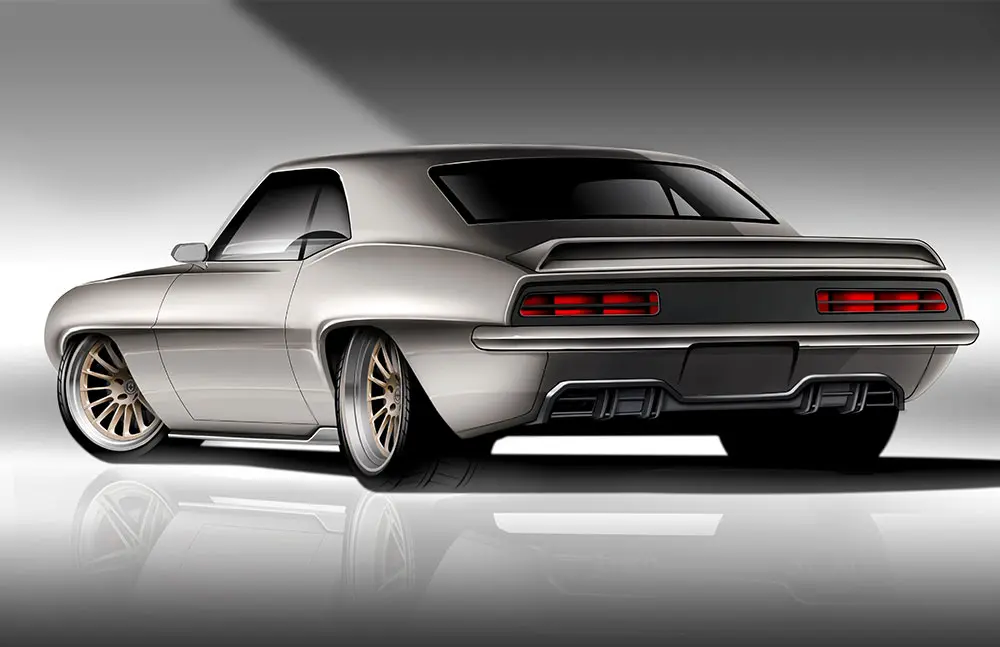
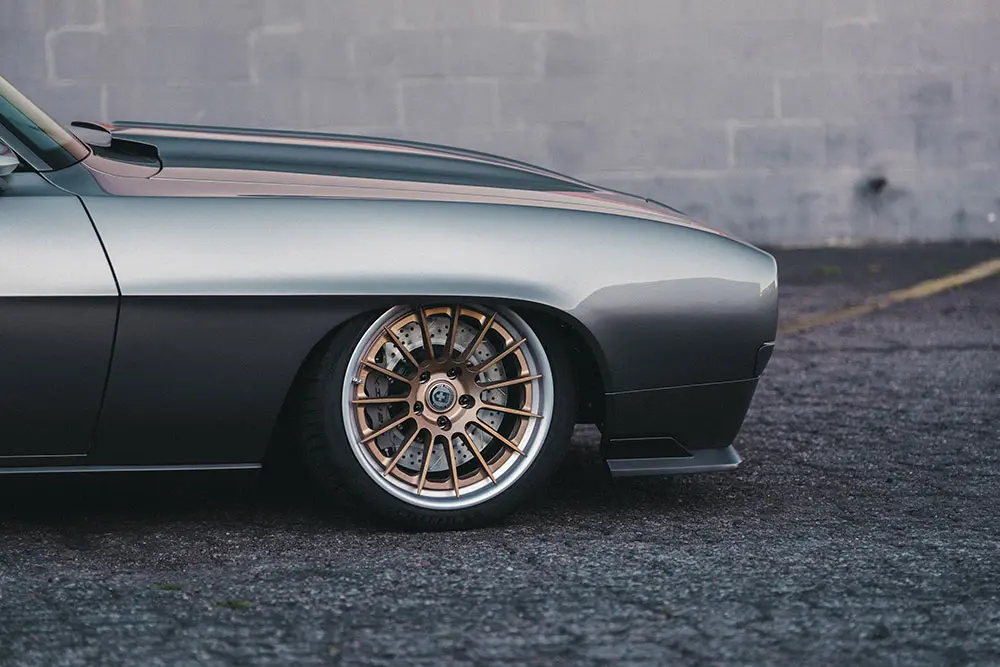
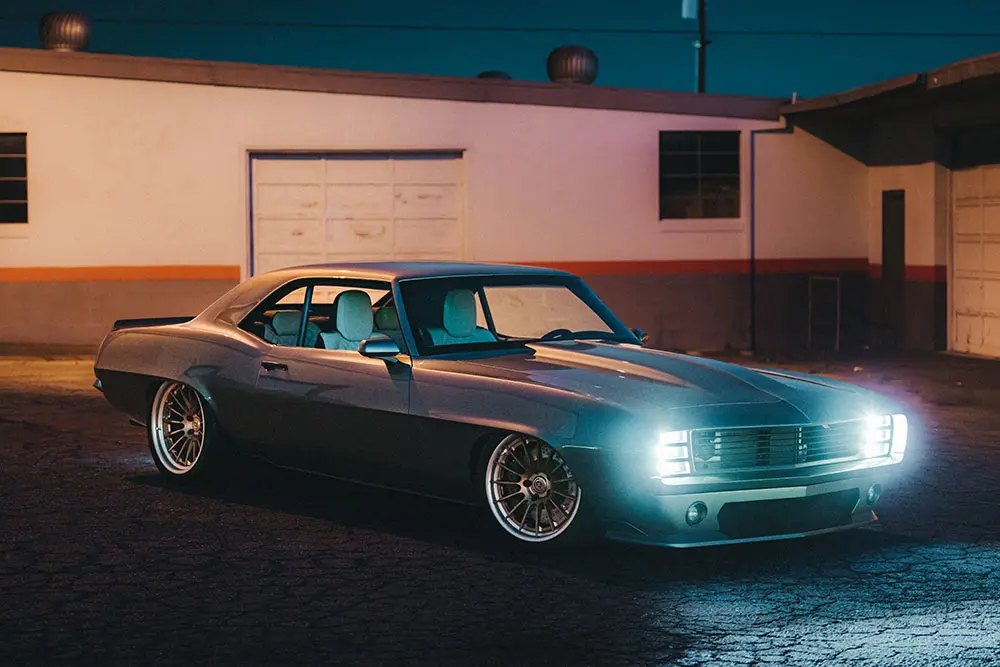
The owner agreed to a stunning silver paint for the body, with Smith creating contrast using both Liquid Champagne and satin Charcoal Grey finishes to highlight some of the car’s details and wheels.
The result is an elegant, timeless combination that turns heads and won’t look out of place at any destination.
The goal was to create an understated machine that leaned towards subtly…
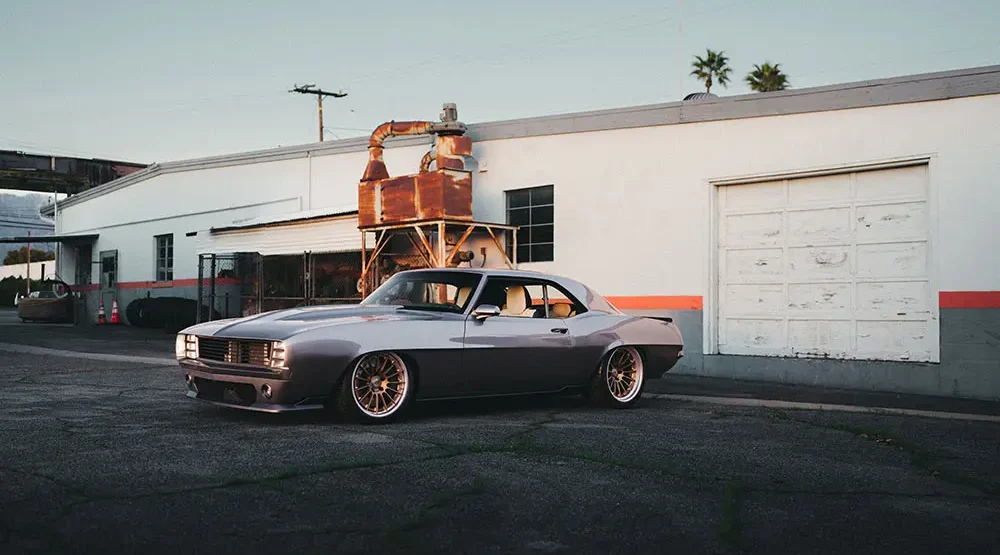
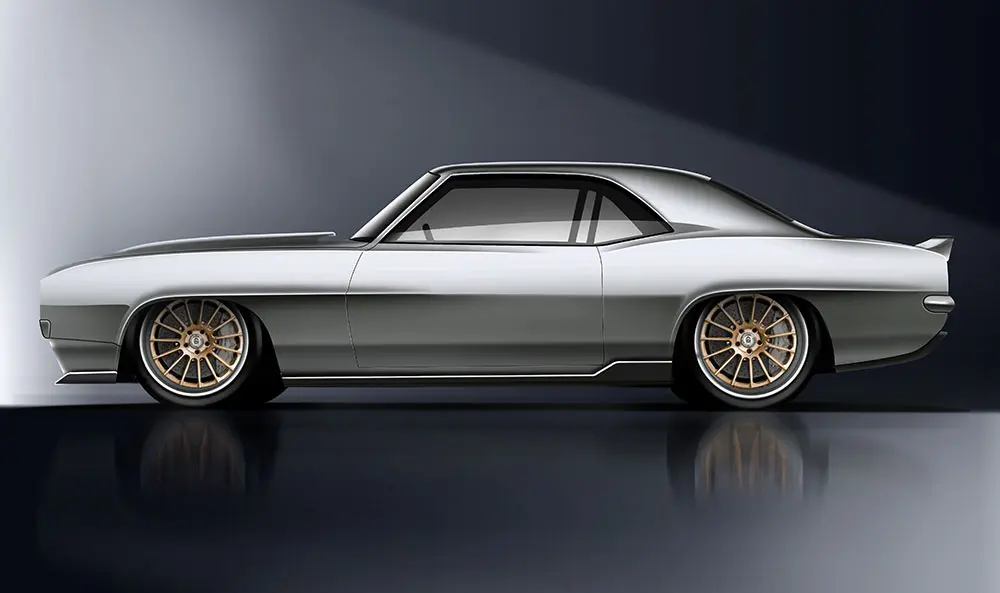
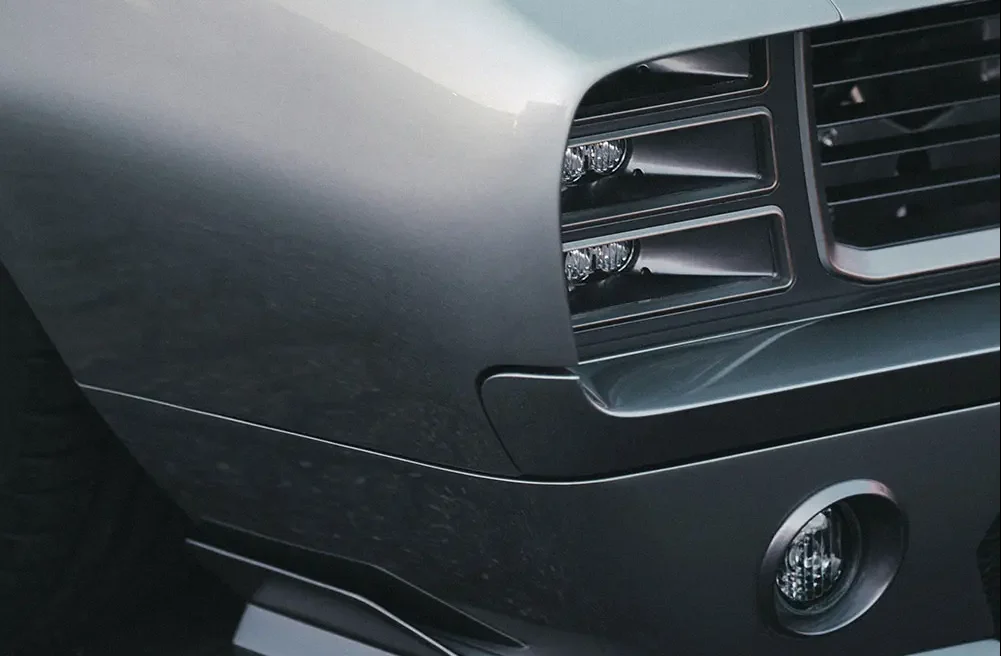
In pursuit of subtle transformations, Driven Speed Shop refined the Camaro’s lines, reproducing Smith’s reimagined front-end by fabricating a front valance with its driving lights, wide intake and aerodynamic splitter. New bumpers were also created for both ends of the car and smoothly integrated into the bodywork. The front grille was machined from billet aluminum based on Smith’s renderings thanks to a collaboration between Dascoli and Patrick Sukraw, who modeled a number of details in CAD, including new headlight units.
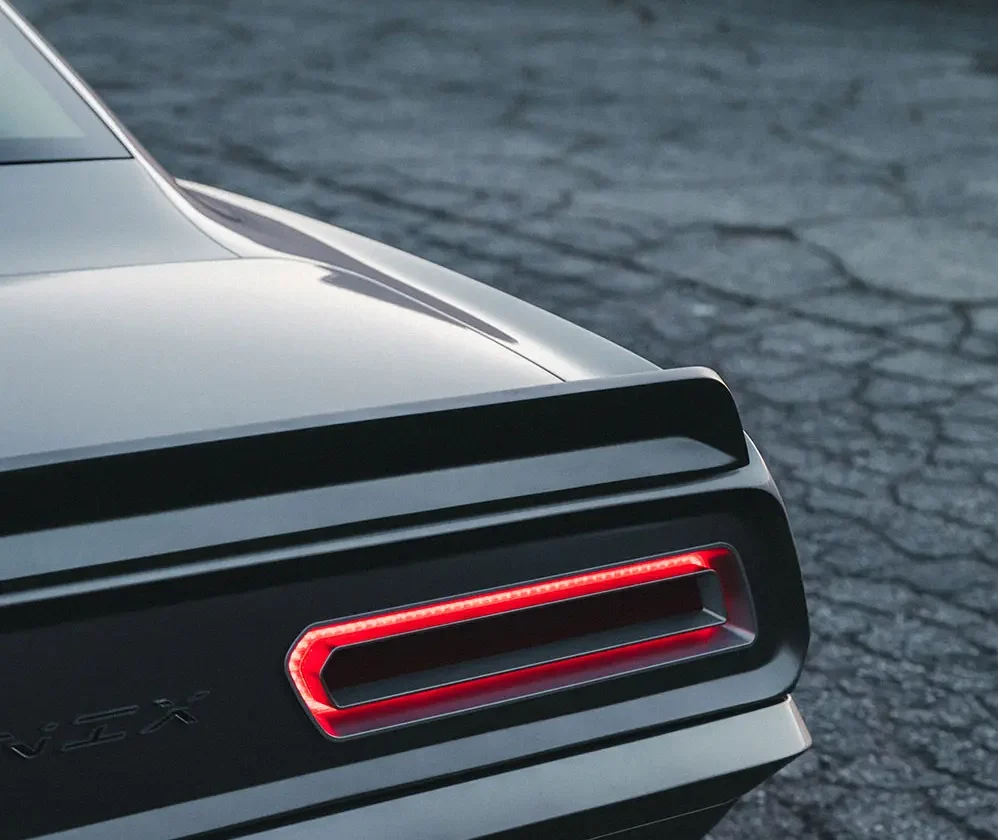
The front splitter is part of the car’s aero system, which was inspired by the winglets on the end of passenger jet wings. The Camaro’s winglets can be found on the front splitter and rocker panels, while the rear-end features a 3D-printed trunk spoiler and diffuser-style rear valance.
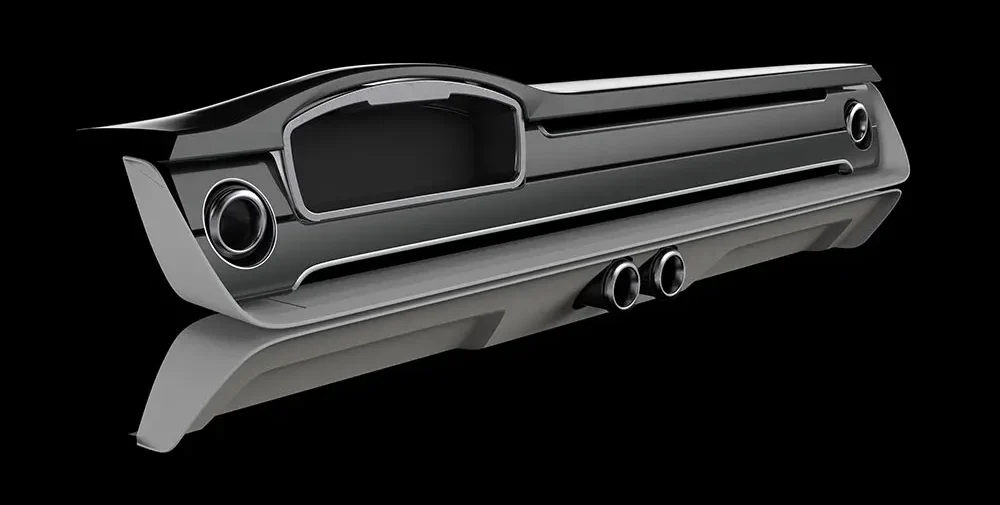
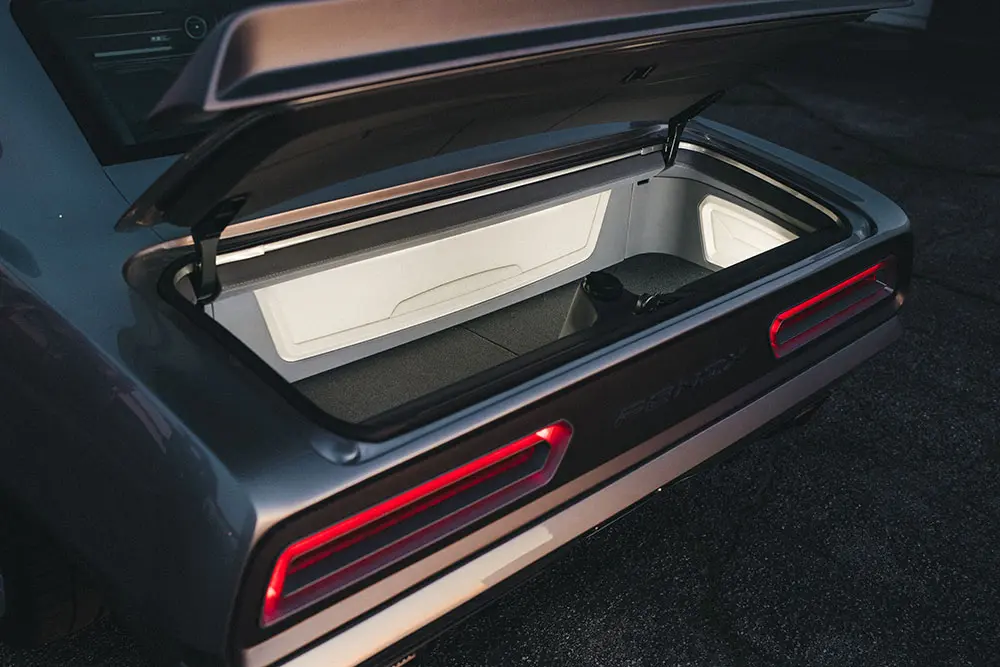
Echoing the front, the rear features a new light panel that houses custom tail lights designed by Smith and 3D machined with custom lenses. The aim was to keep the rear-end simple but appear wider. To achieve this, Smith ensured everything ran horizontally with very few vertical elements to accomplish the effect.
Dascoli and his Driven team reworked the body extensively to ensure crisp fit lines and tight door gaps. They removed the original vents from behind the Camaro’s doors and added billet door handles. Once the body was fitted to the Roadster Shop Fast Track chassis, Driven Speed Shop also fabricated the Camaro’s floors, wheel tubs and trunk.
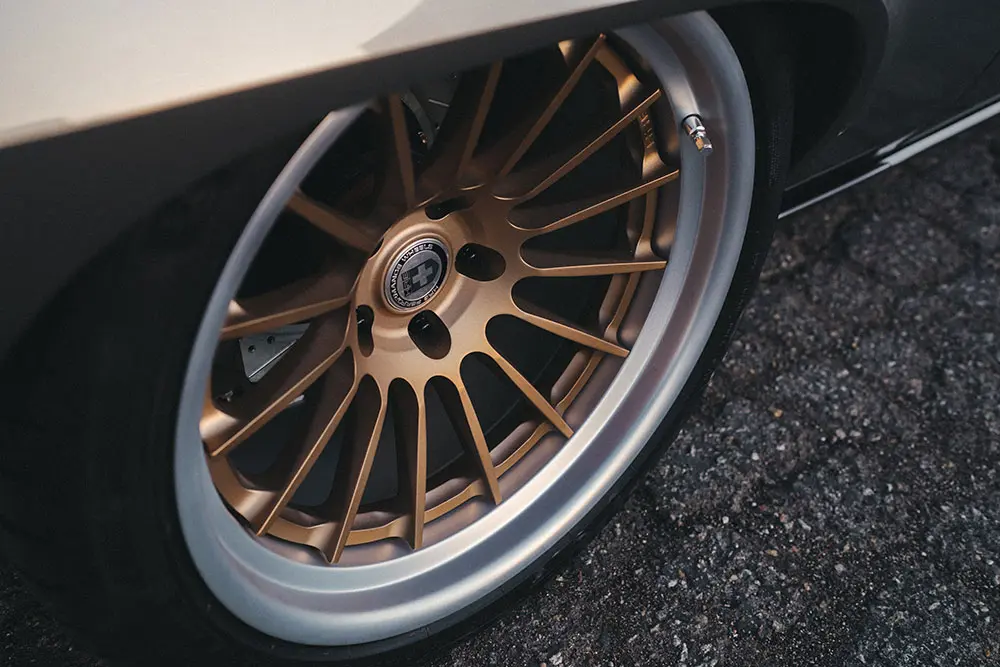
Made from 10-gauge boxed steel, the Roadster Shop frame included RS Fast Track front suspension with C7 Corvette spindle and hub assemblies. It utilized a 1/25” splined front sway bar with C7 end-links and six-piston Baer brake calipers with 14” rotors fitted at each corner. A set of 18×9” front and 19×12” HRE RS103 wheels were then added, equipped with 255/35 and 325/30 Michelin Pilot Sport 4 tires, respectively, in an attempt to harness the power that was to come.
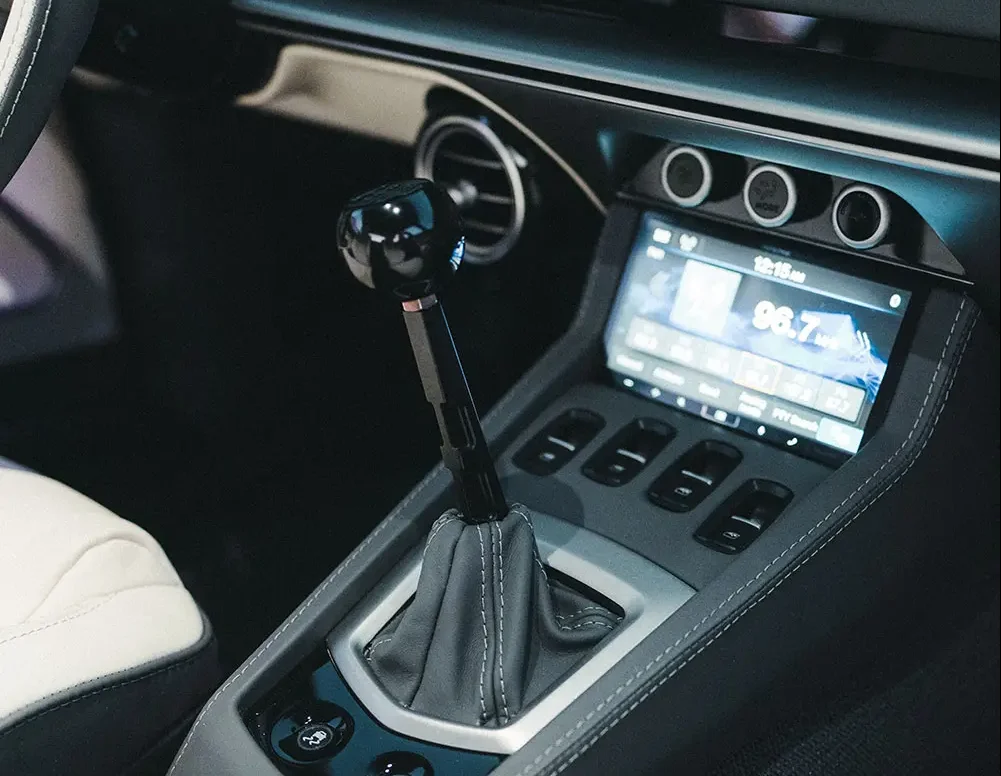
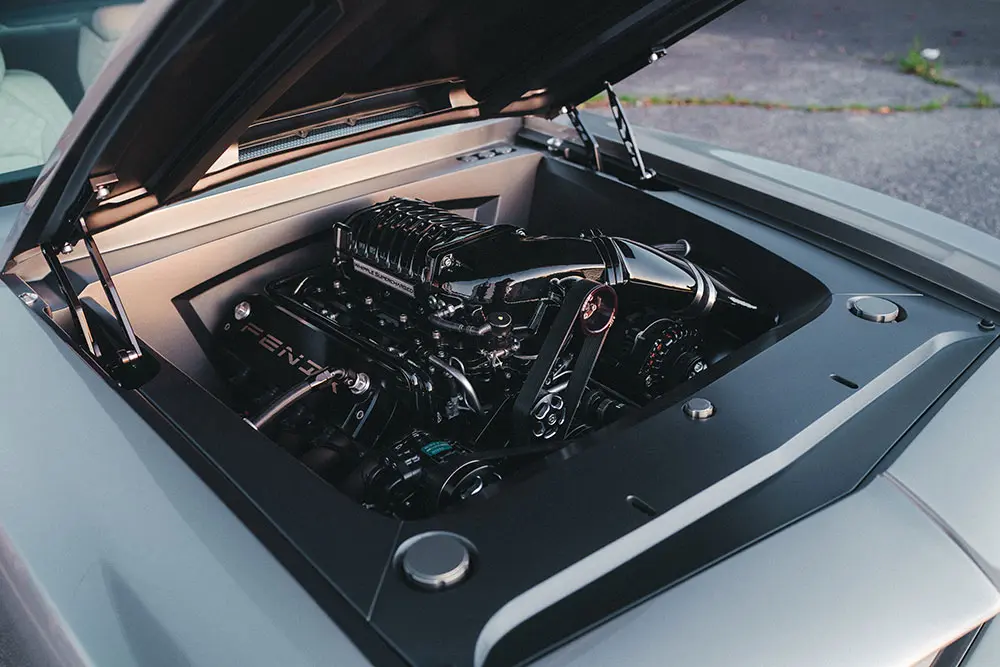
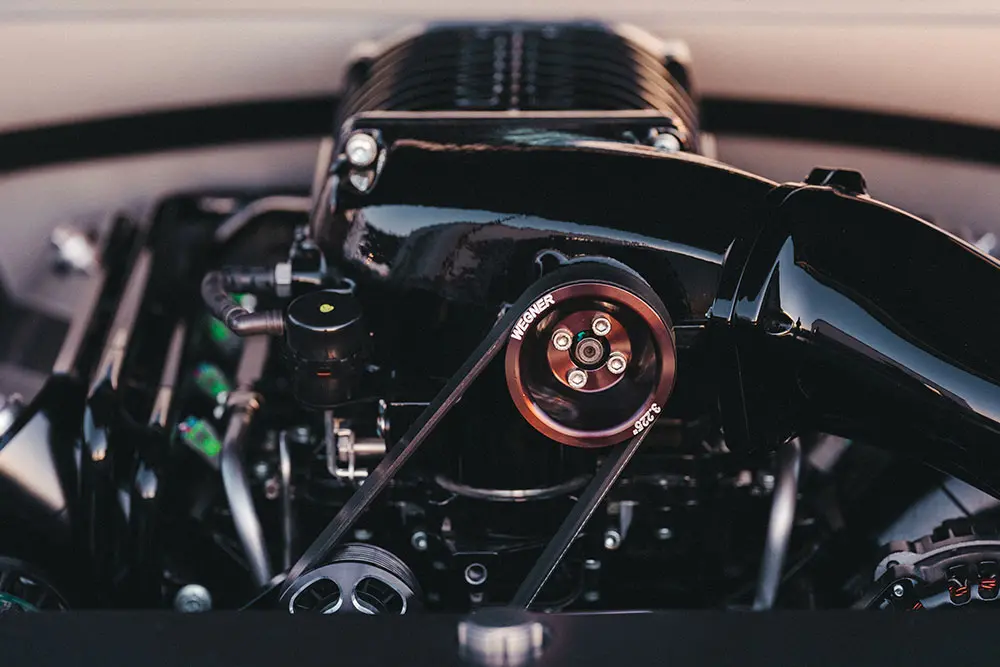
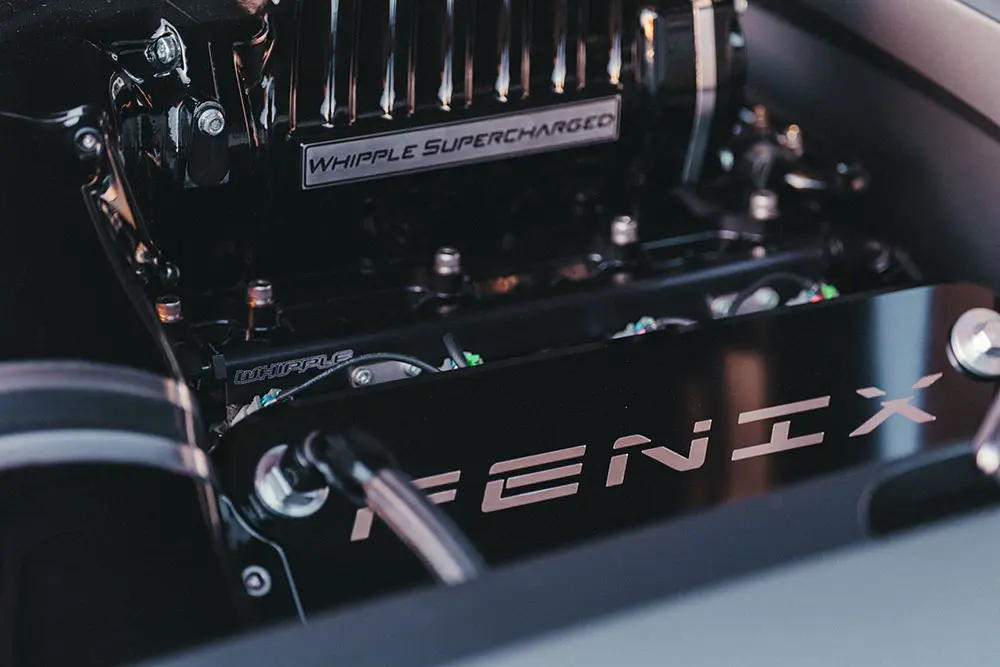
As mentioned, Fenix is powered by a supercharged 427 LS7 V8 built by Wegner Motorsports to develop a dyno-proven 1180hp. It’s mated to a Tremec T56 six-speed from RPM Transmissions and framed within an engine bay fabricated by Driven Speed Shop.
The paint was handled by Kandy Shop Creations in Mesa, AZ using a custom-mixed PPG silver. They also provided the Liquid Champagne and satin Charcoal accents to the exterior and engine bay.
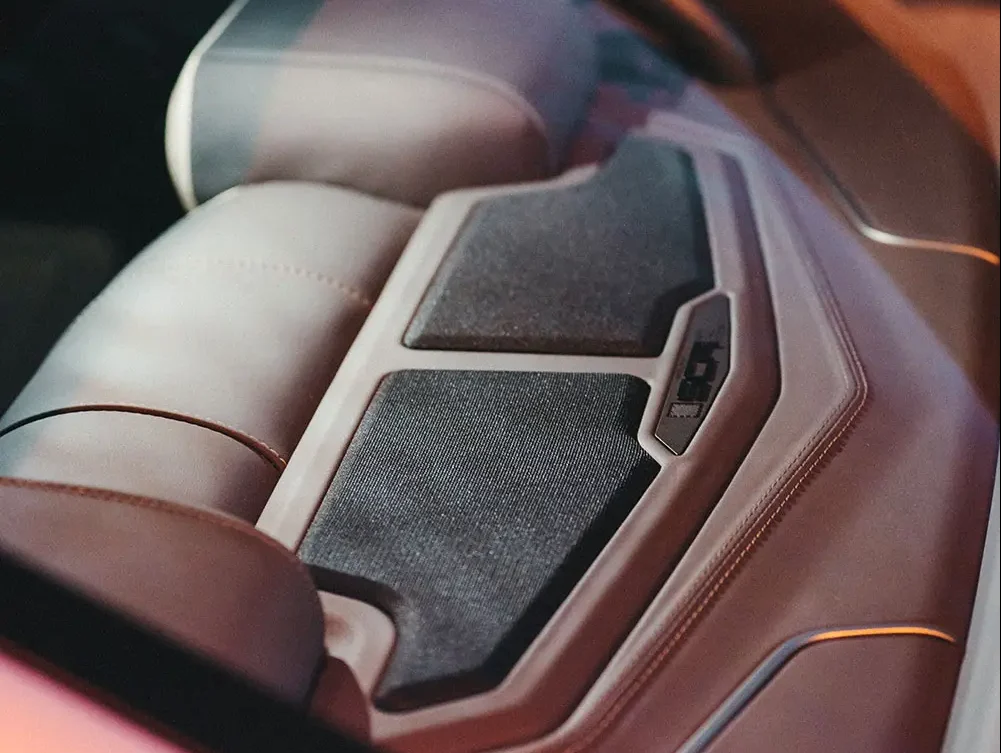
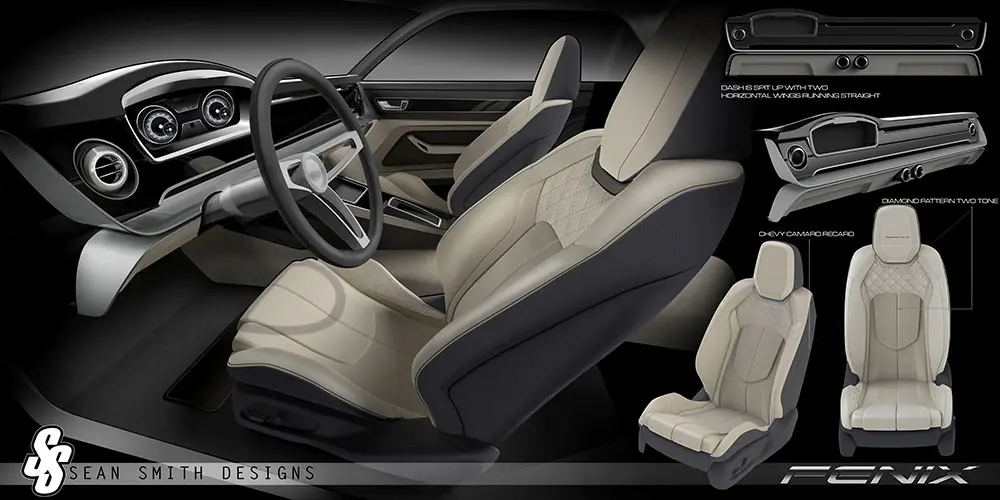
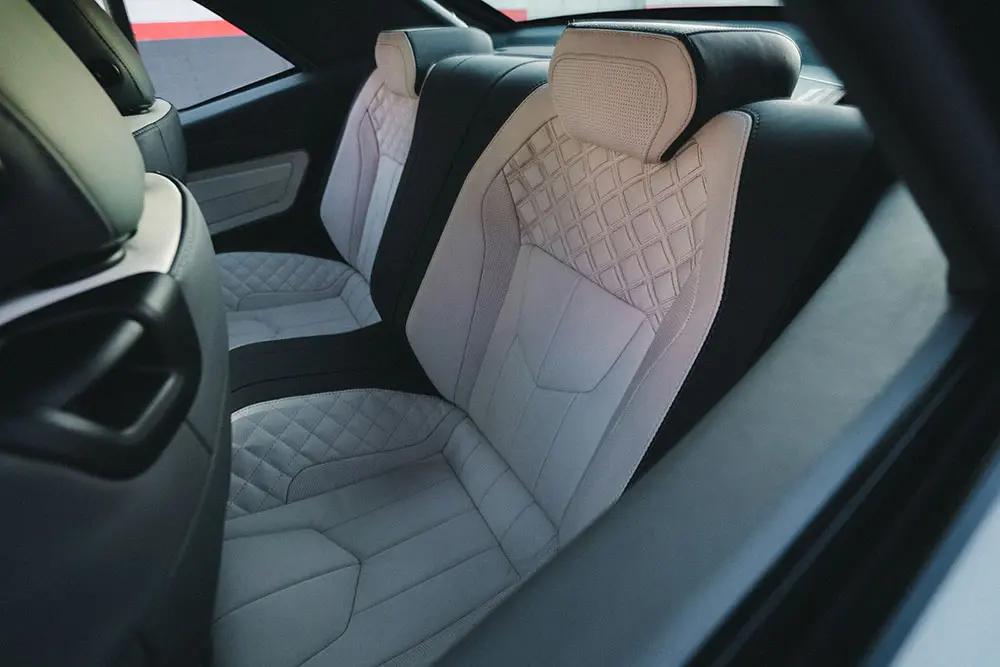
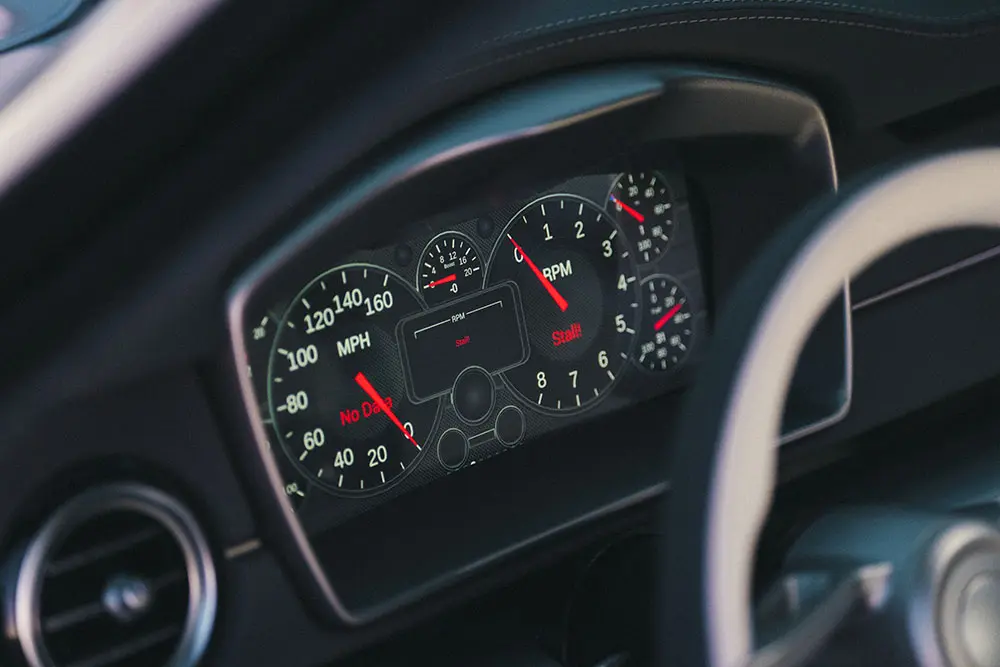
The interior was inspired by some of the owner’s favorite European sports cars, creating a significant departure from the 1969 layout. Smith designed the dashboard with upper and lower wing sections. And after 3D scanning the cabin, Smith’s sketches were transferred into 3D CAD files by Jeff Gardner at JG3D. This allowed the dash, door panels and center console to be precisely machined from modelling foam board. The parts were then supplied to Marco and Mando Flores at Sew Cal Rods in Ontario, CA for trimming and installation.
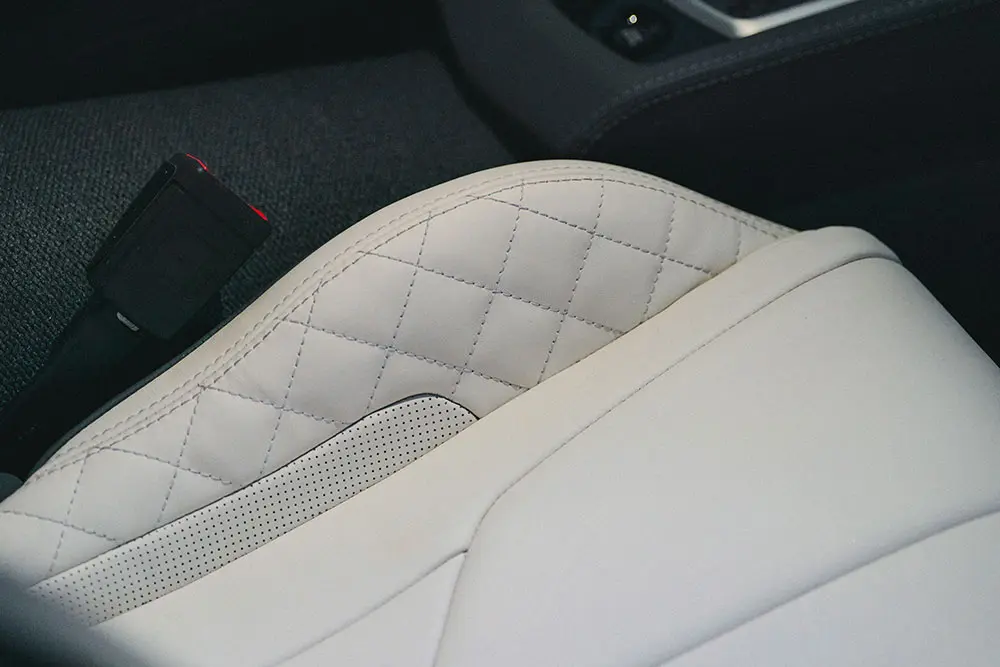
The interior was upholstered in a combination of Charcoal Grey and Creme leather, with Smith introducing a matte Liquid Mercury paint to the bottom of the dashboard and to accent a number of details throughout the cabin.
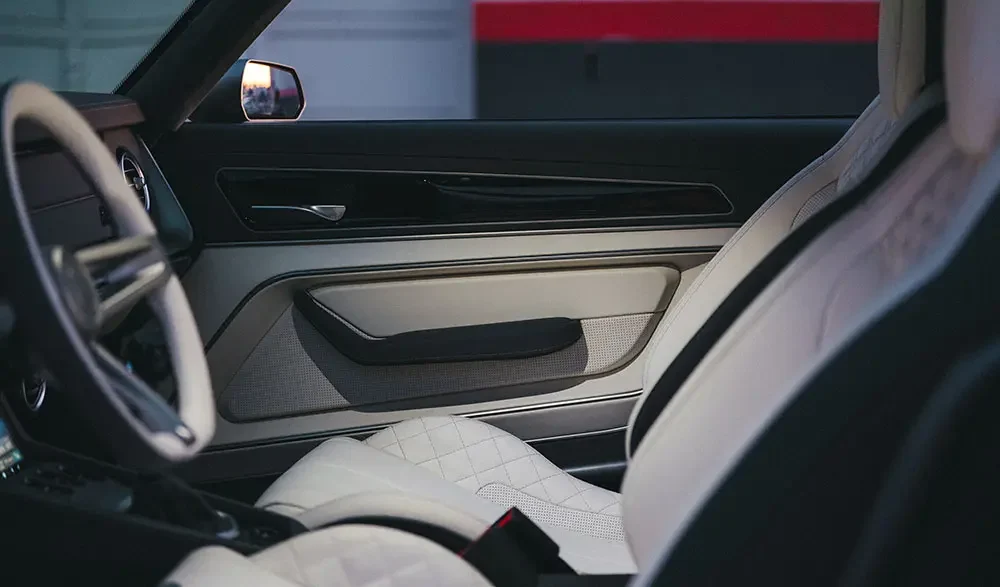
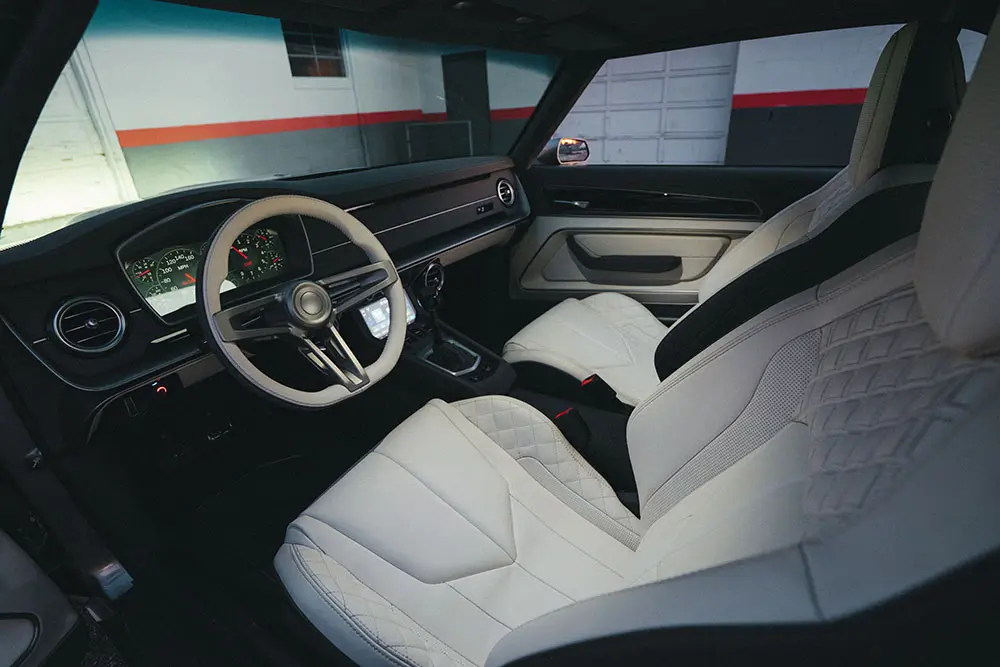
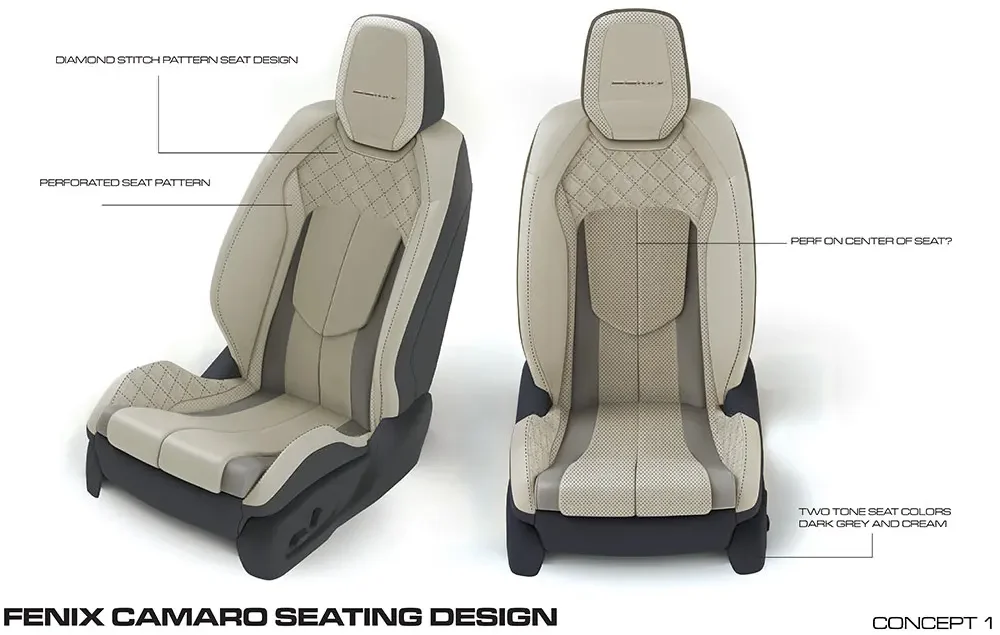
With Creme leather destined for the door panels and seats, Sew Cal formed the seats by hand before adding a unique diamond-stitch pattern reminiscent of modern Bentley interiors. Once the team was finished, only the seatbelts remained of the original Camaro interior, and even they were replaced to ensure a perfect finish.
With their work done, Michael Shields’ 1969 Chevrolet Camaro has been transported to the Pomona Fairplex for the 2023 Grand National Roadster Show where it will take center stage beside the Sean Smith Designs booth. Please pay them a visit if you’re planning to attend the show.
by Sean Smith Designs
Wegner Motorsports supercharged 427 LS7 V8, Tremec T56 six-speed from RPM Transmissions
1180 horsepower at the wheels
Roadster Shop Fast Track chassis, Corvette spindle and hub assemblies, RS Fast Track front suspension with C7 Corvette spindle and hub assemblies, Roadster Shop RS SV by Fox fixed valve coilovers, 1.25” splined front sway bar with C7 end-links
Baer six-piston calipers with 14” rotors front and rear
18×9” front, 19×12” rear HRE RS103 two-piece wheels with HRE FMR barrels, 255/35 R18 front, 325/30 R19 rear Michelin Pilot Sport 4 tires
Sean Smith Designs custom front- and rear-end fabricated with aero pieces from sheet metal by Driven Speed Shop, bumpers repositioned to the body, all panel gaps tightened, custom grille, splitter, front valance, rear panel, rear valance and diffuser. 3D-printed trunk spoiler, billet headlights and tail lights with custom plastic lenses. Custom PPG silver paint by Kandy Shop Creations with Liquid Champagne and satin Charcoal accents
Sean Smith Designs interior fabricated and upholstered Sew Cal Rods with CAD modeled parts engineered by JG3D including machined dashboard, door panels and center console. Custom seats by Sew Cal with custom stitching from AUD. Interior trimmed in Charcoal Grey and Creme leather with matte Liquid Mercury painted accents
seansmithdesigns.studio
drivenspeedshop.com
roadstershop.com
hrewheels.com
sewcalrods.com
If there’s one thing the truck world is susceptible to, it’s trends. Whether it’s the hot new wheel that everyone wants or the latest billet accessory, it doesn’t take long for something to become popular in custom truck world. It’s by no means a detriment to roll with what’s tried and true, but standing out can be downright challenging at times.
Jack Brand wasn’t interested in following trends, but he was interested in having the raddest custom truck possible without following in everyone else’s footsteps. After seeing a truck named Elaine at a local show and falling in love with it, Jack asked the owner about it and the shop that built it. It didn’t take long for him to seek out Jason Noel and his talented crew at Fat Fender Garage to commission their work.
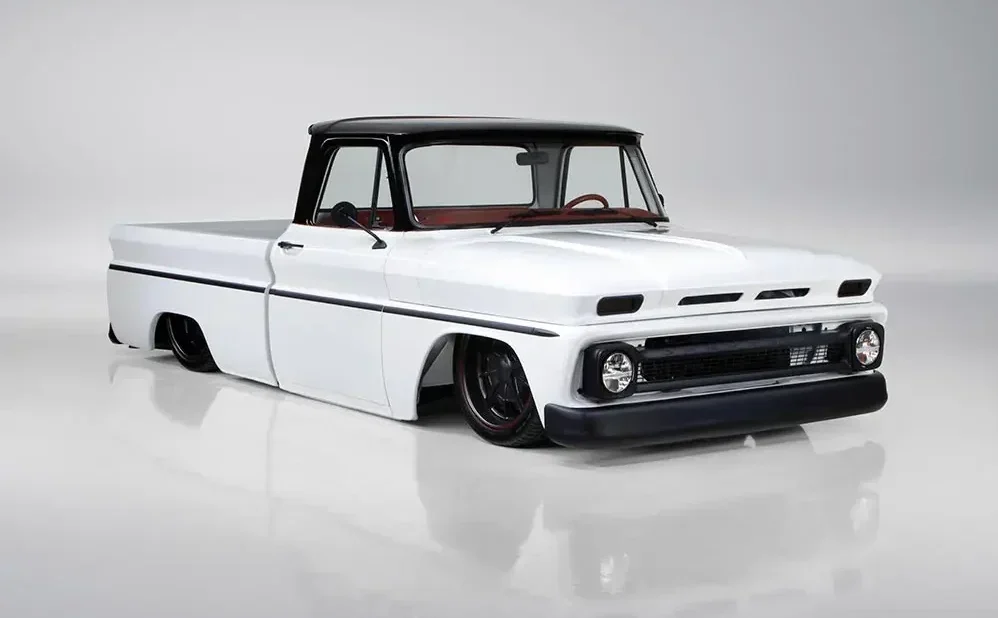
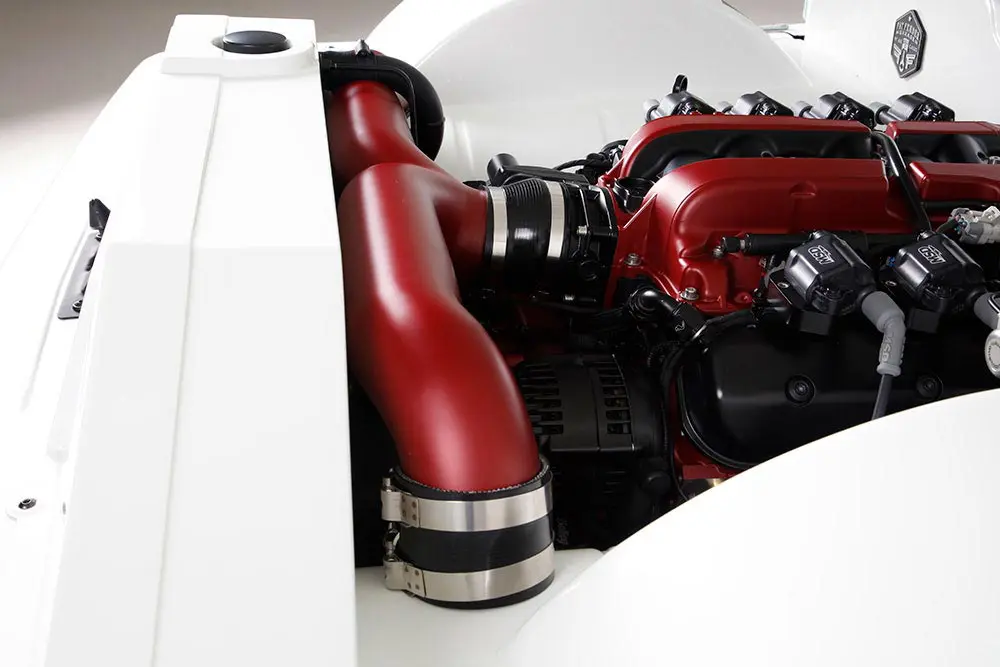
At the time, Jack didn’t even have a truck to build, but luckily for him Jason had a solid candidate already sitting in his shop, a ’65 C10. Jack was ready to rock, and he asked the FFG crew to turn the truck into a distinctive custom ride that wouldn’t soon be forgotten or, possibly worse, mistaken for anyone else’s truck.
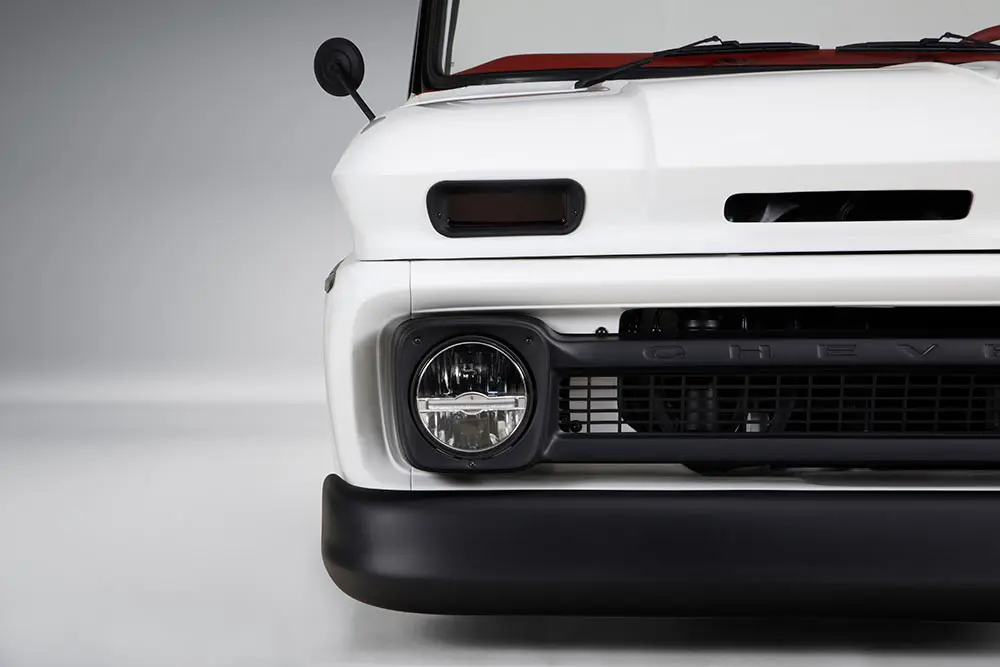
And while the ’65 C10 isn’t the first to wear a black and white theme, some of the processes involved in the build are unique compared to more traditional methods. For example, the use of Cerakote on a lot of the surfaces that would typically be chrome-plated or painted was definitely a venture into the unknown since, well, when’s the last time you’ve seen Cerakote-covered bumpers and trim work?
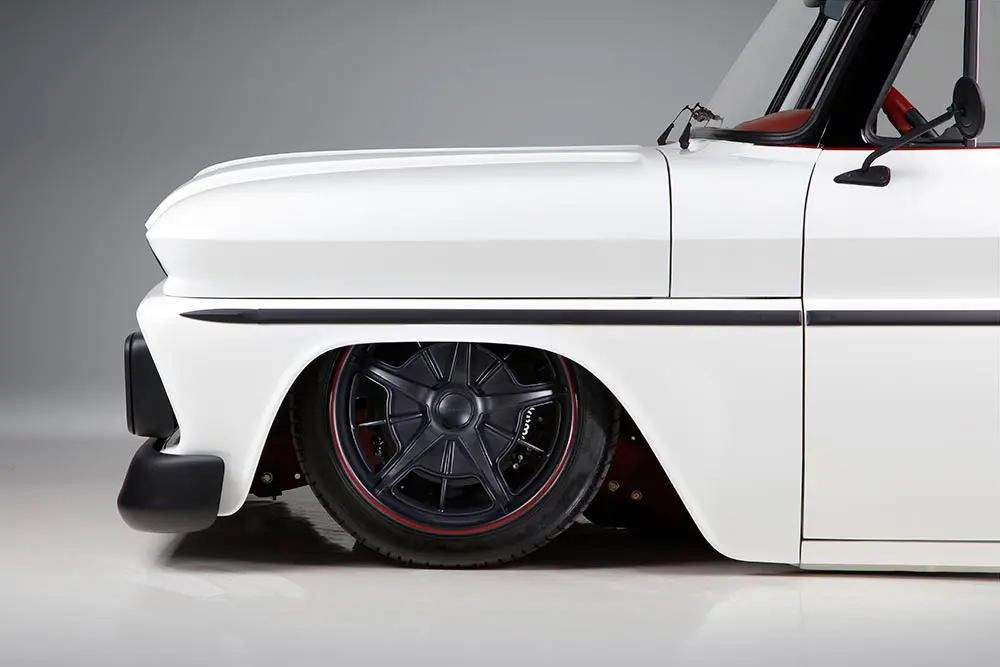
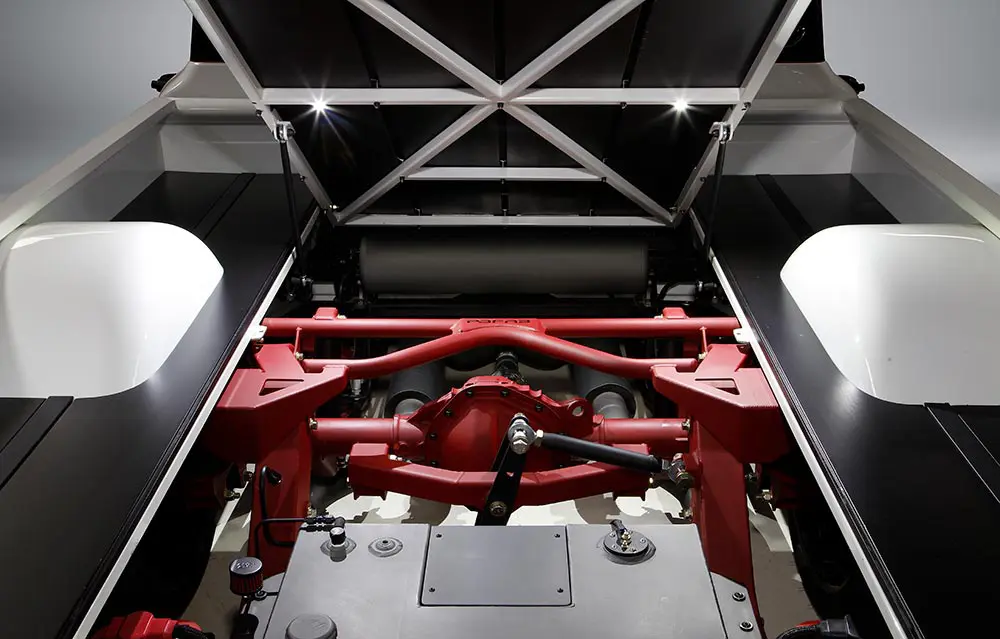
The full custom Porterbuilt chassis certainly isn’t something you see every day, but it was the perfect foundation on which to start the build. With Air Lift Performance Dominator ‘bags, a FLO Airride supply tank, Viair compressors, and Ridetech shocks, the truck was being set up with the best right from the very start. A Boyd Welding fuel tank and 14-inch Wilwood brakes all around finished off the undercarriage to perfection and allowed the truck to be put back on the ground.
Jack didn’t even have a truck to build, but luckily for him Jason had a solid candidate already sitting in his shop, a ’65 C10.
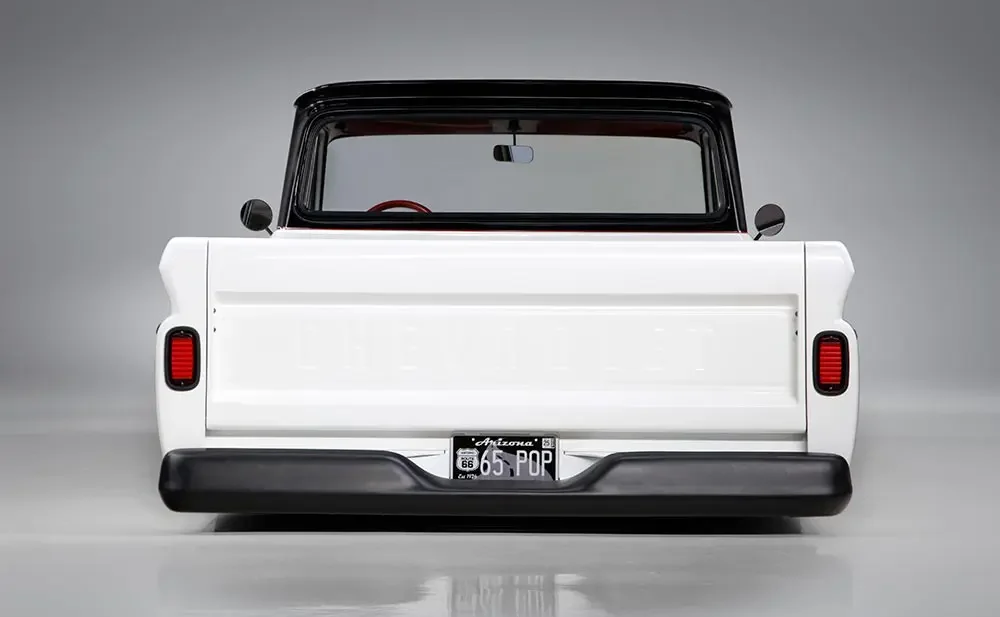
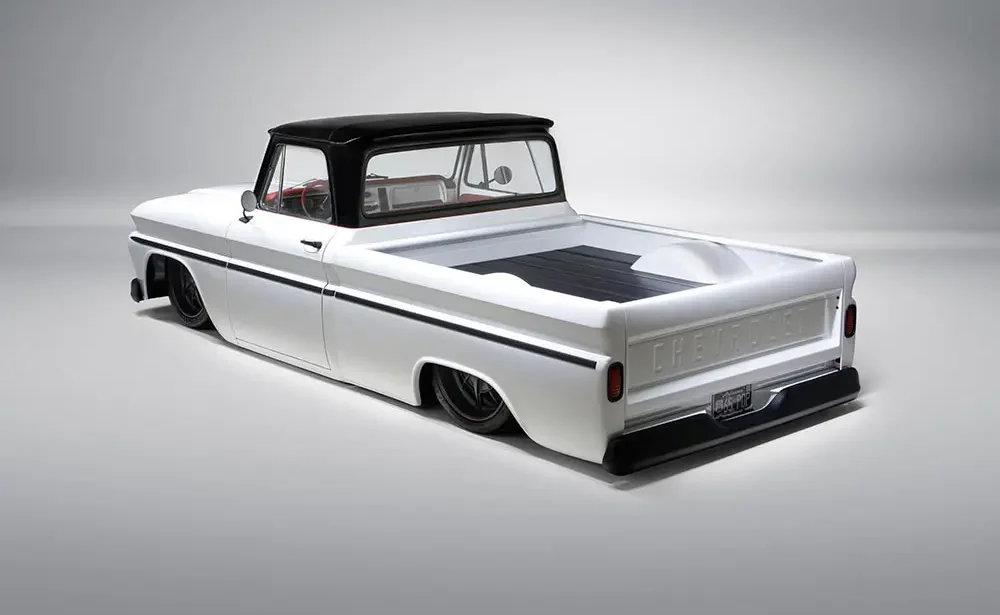
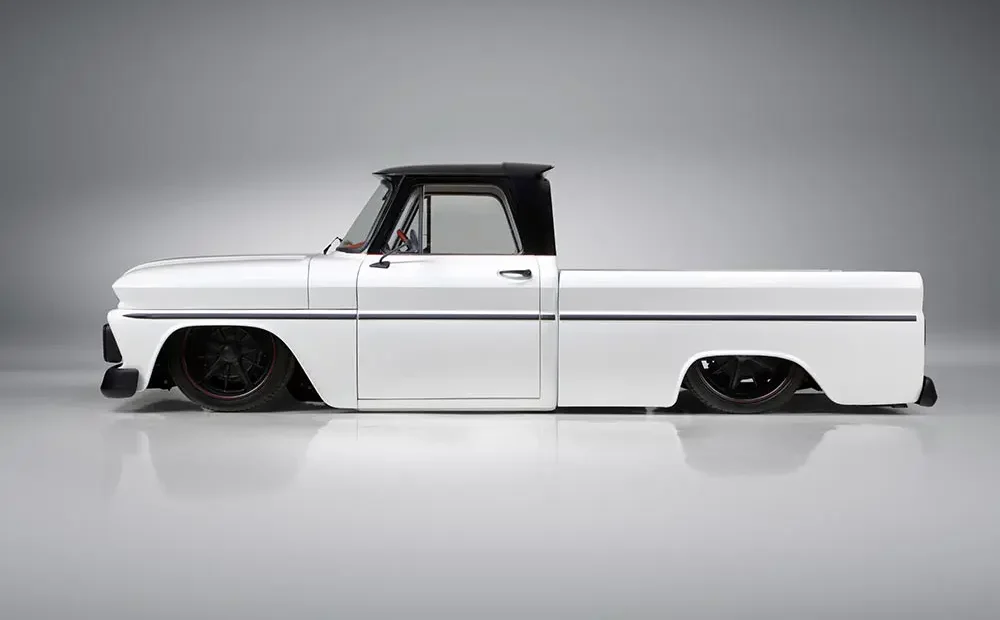
Well, almost. Jack’s C10 would first need a proper set of rollers. There was no skimping when it came to the wheels and tires, and no expense was spared to secure the right combo. Lurking in the shadows of the wheel wells are 22-inch Schott Split Window billet wheels and Michelin Pilot Sport tires measuring 285/35R22.
Between the frame rails, a new crate 6.2L LS3 was matched up to a 6L80 transmission, with Speedtech Performance headers and a custom Borla-based 3-inch exhaust leading away from the cylinder heads and on to the rear of the bed. With 430 horses on tap, the ’65 would now have no problems getting out of its own way, with the added bonus of starting right up each and every time the key is turned.
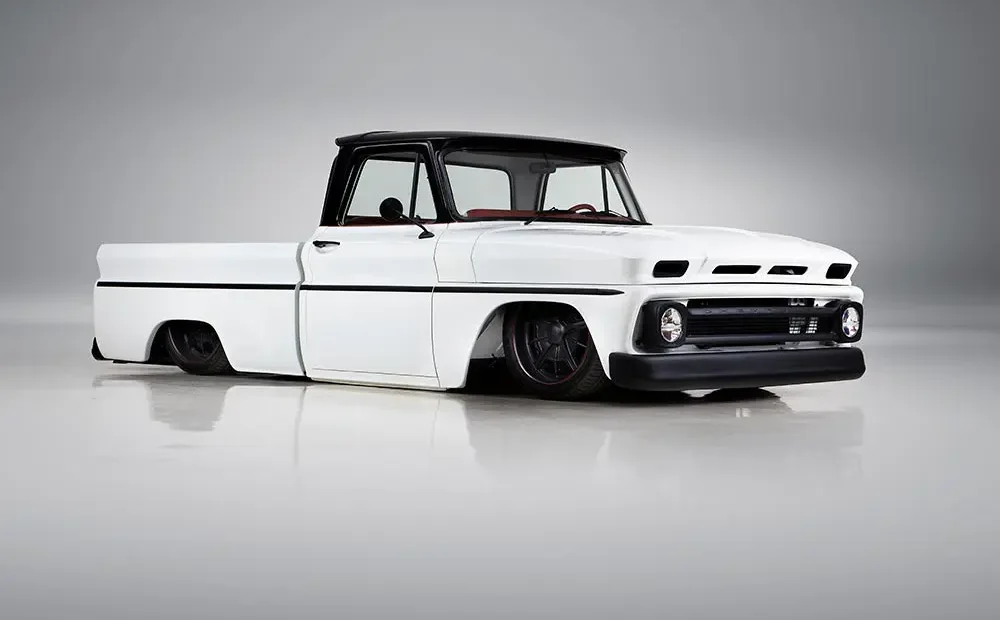
The body is mostly original as far as the sheetmetal goes (aside from some subtle finessing), but it went through extensive restoration in the capable hands at Fat Fender Garage. Not only was the perfectly prepped sheetmetal given generous coats of BASF’s finest Diamont paint, but the grille, bumpers, trim, and other miscellaneous pieces were coated in Cerakote for ultimate durability and a unique look. New inner fenderwells and tubs were fabbed up and painted to match the rest of the color scheme.
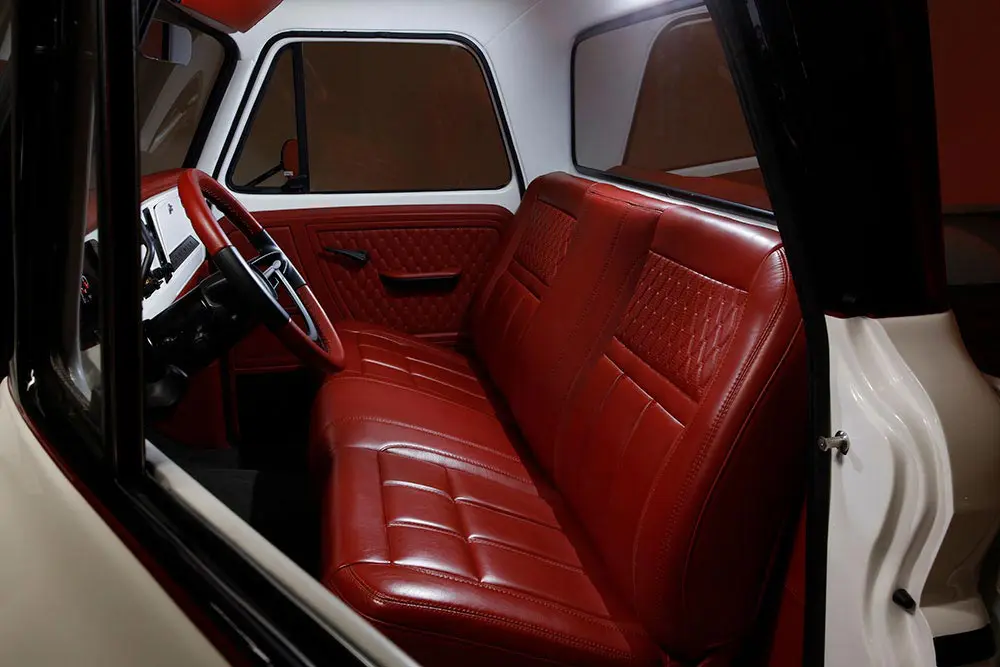
Inside, the main attraction is the original bench seat, which was reshaped and upholstered in-house at Fat Fender Garage in red Relicate leather. A matching dash pad was also constructed and fixed into place, and a Sparc Industries steering wheel was wrapped in even more leather by Adrian at Steering Wheel Art. A set of Dakota Digital HDX gauges replaced the original instruments, offering reliable and instant feedback on the truck’s vitals.
The stunning 1965 C10 dubbed “Irene”, in honor of the owner’s mother.
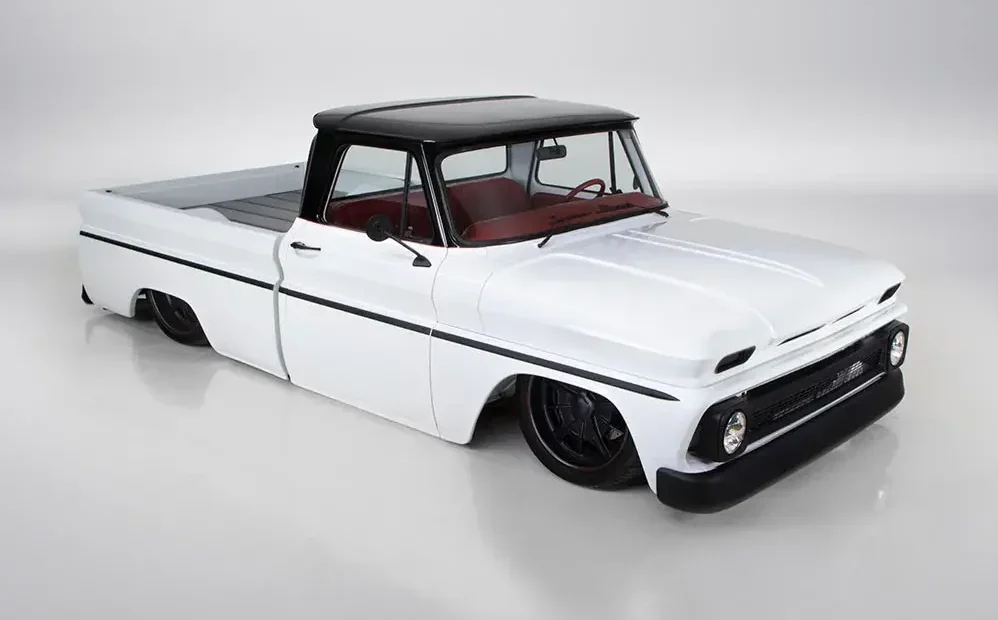
From excavating work to opening his own coffee shop, Jack has put in some long hours in his life, and this C10 is just one of the rewards— the fruits of his labor—that he has allowed himself to enjoy with his wife Becca 100% on board and, as the kids say, “Here for it.”
With Jack hitting every show possible since the truck’s completion, we’re sure it will be inspiring others to build the truck of their dreams as well!
Cerekote, a division of NIC Industries, Inc., is the maker of Cerakote, a ceramic thin-film coating that can be applied to metals, plastics, polymers, and wood. Used on firearms, automotive parts, electronics, sports and fitness equipment, and more, it’s designed to improve durability and resist corrosion. Learn more at cerakote.com.
OWNER:
Jack Brand
Scottsdale, AZ
Chassis/Suspension:
Custom FFG Porterbuilt chassis
Air Lift Performance Dominator ‘Bags
Air Lift Performance 3H Management
FLO Airride billet tank – custom Cerakote by FFG
Ridetech shocks
Fully detailed and coated chassis and suspension by FFG
Engine/Trans:
GM LS3 6.2L crate
Modern vintage LS harness
6L80 trans
Derale trans cooler
MSD Atomic intake
Speedtech headers
3-inch stainless exhaust with Borla mufflers
Boyd fuel cell
3.73 rear w/ TruTac posi
Wheels/Tires/Brakes:
Schott Split Window 22-inch billet wheels
Michelin Pilot Sport tires 285/35ZR22
Wilwood 14-inch brakes
Wilwood billet master cylinder
Body/Paint:
BASF Diamont Paint
All exterior trim/grille/bumpers/badges custom FFG Cerakote finish
United Pacific LED lights
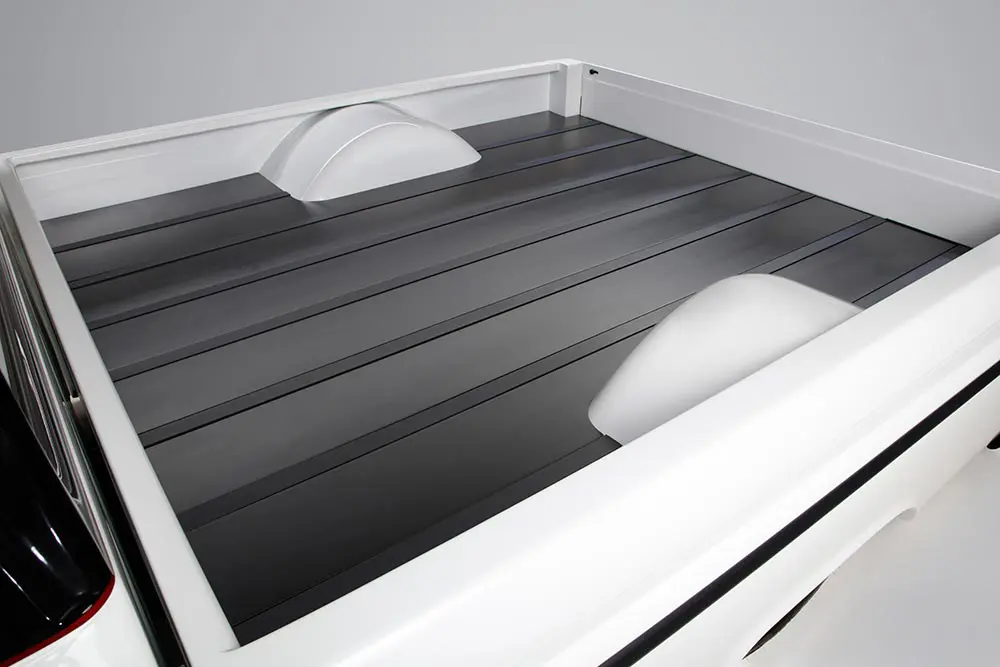
Raised bed floor and custom bedwood kit
FFG raised-bed actuator kit
Interior/Stereo:
Original Bench seat custom shaped and covered with Red Relicate Leather
Custom dash pad
Sparc Industries billet steering wheel
Restomod A/C
Dakota Digital HDX gauges
Retro Sound headunit
Focal Amp and speakers
Interior done in-house at FFG
There seem to be so many service providers, deals, and methods of getting a vehicle on the road in 2026 that it’s natural if you don’t know where to start. For many drivers in the US, it’s about value for money and reliability right now, especially when you consider how much gas prices and other household costs are changing from one month to the next.
With this in mind, we’re going to take a closer look at the flexible world of car leasing so that you can see why we think it’s definitely still worth it in 2026.
If you finance a car with a view to owning it outright at the end of the contract, you will pay more every month than if you lease the same car. This is because the leasing company retains ownership of the vehicle, meaning that you only have to pay for the drop in value of the vehicle during the course of the agreement. Ideal when you want to make sure your household budget goes further during what many feel are uncertain economic times.
When you drive a car for thousands and thousands of miles, you become all too familiar with its sounds, habits, and shortcomings. You get used to having to constantly have it in the shop and always seem to be paying for something or other to be fixed, repaired, or upgraded.
The problem is that you’ve become used to this, and that your household budget is only ever one big bill away from being turned upside down. When you lease, by contrast, there’s no wear and tear on the engine or the brakes and the transmission, meaning that the repairs and servicing become so much more predictable. Perfect when you want to make sure there are no nasty surprises when you have other things you need to be spending your money on.
EVs with better battery ranges, cars with more advanced safety features, and entertainment systems that keep everyone relaxed during long drives are the norm when you lease. It’s this level of flexibility that has seen leasing become not only very popular across the US, but has also seen it disrupt markets where it had previously had a much smaller market share — companies like Vantage Leasing in the UK being prime examples.
Companies choose to lease their vehicles so that their traveling reps and those who are customer-facing can make the best possible first impression. Hardworking families choose to lease because they want to do everything they can to keep their little ones safe by driving with the benefit of the very latest safety technology. Drivers who have to travel long distances also choose to lease because it gives them access to brand-new models that are equipped with potentially life-saving features, such as lane assistant and proximity sensors.
For a long time, drivers in the US have thought that owning a car outright is a smart move, but the truth is that it can cause hurdles when you’re trying to fund an upgrade. Paying less for a lease, and then being able to hand it back at the end of the agreement, is something that contrasts with the cost of buying outright and then having to wait to sell a high-mileage vehicle before you can afford to upgrade.
Property and other valuables tend to appreciate over time, but the value of a car moves rapidly in the other direction because it will become less reliable the older it gets. Leasing makes this the problem of the leasing company, allowing you to focus on getting behind the wheel of a new car every three years so that you can eliminate many of the headaches that come with car ownership.
Talking to a leasing specialist will allow you to discuss your requirements and hear your options, and all in a way that will take your monthly budget into account from the very beginning. By finding a vehicle that is both affordable and fit for purpose, you can get on the road in a way that works for you. Just make sure the fee structure and the mileage cap are both clearly outlined, and you will be able to make a decision that really does take the stress out of driving.