







If your F-250 or F-350 is doing real work, you already know the feeling. Stock tune, clogged DPF, sluggish throttle response at 65 mph with 18,000 pounds behind you. The factory emissions system wasn’t designed with your use case in mind. It was designed to pass a test.
Guys who tow heavy and tow often eventually reach the same conclusion: if you want a truck that actually performs under load, you have to build it that way. And for the 2011–2019 Ford F-250 and F-350 running the 6.7L Powerstroke, there’s a clear, well-proven upgrade path that transforms the truck from a compliant daily driver into a legitimate work machine.
Here’s how to do it right and what to buy first.
The single biggest restriction on a stock 6.7 Powerstroke isn’t the turbo, isn’t the fuel system, and isn’t the injectors. It’s the Diesel Particulate Filter. The DPF is a wall-flow filter that traps soot, regenerates under high heat, and gradually chokes exhaust flow as it ages. For a truck that tows hard in stop-and-go conditions the DPF never fully clears itself, and you end up fighting your own exhaust backpressure every time you get on the throttle.
A DPF delete pipe replaces that restriction with straight pipe and the difference in exhaust flow is immediate. Throttle response sharpens, EGT drops under load, and the engine stops fighting itself.
For the 2011–2022 F-250 and F-350, a quality 6.7 Powerstroke DPF delete kit will include a downpipe-back section designed to replace the factory DPF and CAT without any custom fab work. Choose a 5″ pipe if you’re building for max flow; 4″ works well for trucks that split time between towing and daily driving.
The Exhaust Gas Recirculation system on the 6.7 Powerstroke does exactly what the name says: it recirculates a portion of exhaust gas back into the intake to reduce combustion temperatures and lower NOx emissions. The side effect? That exhaust gas carries oil vapor and soot, and over time it coats the intake manifold, intercooler pipes, and EGR cooler in a thick carbon buildup that progressively robs airflow.
On a high-mileage tow rig, a clogged EGR system is often mistaken for a turbo problem, a boost leak, or even injector wear. In many cases, it’s just carbon restriction, and the fix is either a very messy cleaning job or a proper delete.
A dedicated 6.7 Powerstroke EGR delete kit replaces the EGR valve and cooler with block-off plates and a coolant reroute, sealing the system permanently. The engine breathes cleaner air, intake temperatures come down, and you stop buying EGR coolers every 80,000 miles.
EngineGo EGR kits for the 6.7 Powerstroke are spec’d for both the 2011–2014 and 2017–2025 model years. These are two distinct configurations that share similar pain points but require different hardware. Make sure you’re matching parts to your exact build year.
If you’re already planning to pull the DPF and delete the EGR, the math on a bundled kit starts making a lot of sense. Sourcing individual components like a delete pipe, EGR plates, DEF delete, and a tuner from three different suppliers means three different fitment assumptions, three shipping timelines, and no guarantee the components were designed to work together.
A complete 6.7 Powerstroke delete kit bundles the core hardware into a single package: exhaust pipe, EGR block-off, and in most configurations, the DEF system delete as well. It’s the cleanest way to approach a full build, and it removes most of the guesswork about component compatibility.
EngineGo’s Powerstroke full delete kits cover the 2011–2025 model year range across multiple exhaust diameter and configuration options. If you’re planning to do this build right, starting with a complete kit is the move.
Here’s where guys sometimes get burned: they pull the DPF, block the EGR, and then drive the truck without a supporting tune. The ECU is still looking for feedback from the DPF pressure sensors, the EGR position sensor, and the DEF dosing system. Without a tune, you’ll have a dashboard full of fault codes, a truck that may go into reduced power mode, and no actual performance gain despite all the hardware work.
A diesel tuner unlocks the full benefit of the exhaust and EGR work. It recalibrates fueling, boost targets, and timing to take advantage of the improved airflow. For the 6.7 Powerstroke, the Mini Maxx V2 and H&S Mini Maxx are the most commonly paired tuners with delete builds since they’re truck-specific, flash-and-drive simple, and widely supported in the community.
If you’re sourcing a complete package, look for a 6.7 Powerstroke delete kit that includes a tuner as part of the bundle. EngineGo offers configurations that pair the Mini Maxx V2 with the full delete hardware, which is the most efficient way to spec the build and ensure everything is tested together.
One upgrade that often gets overlooked in the excitement of a delete build is the CCV (Crankcase Ventilation) reroute. From the factory, the 6.7 Powerstroke routes crankcase blow-by gases back into the intake tract, which sounds reasonable until you realize those gases carry oil mist that coats the intercooler, intake pipes, and throttle body over time.
A 6.7 Powerstroke CCV reroute kit redirects those gases away from the intake and vents them externally. It’s a straightforward install, the parts are inexpensive relative to everything else in the build, and it keeps the intake side of your engine significantly cleaner over the long haul. For a truck that’s going to see another 150,000 miles of towing, this is one of those small investments that pays off over time.
For a 2011–2019 F-250 or F-350 6.7 Powerstroke that sees regular towing duty, the full upgrade sequence looks like this:
Stage 1: Exhaust: 4″ or 5″ DPF delete pipe, downpipe-back configuration. Gets exhaust heat out fast, reduces backpressure, and improves throttle response immediately.
Stage 2: EGR delete: Block-off plates, coolant reroute, no more carbon buildup in the intake. Cleaner air in, better combustion, longer engine life between service intervals.
Stage 3: Tune: Diesel tuner matched to your delete hardware. This is what ties the exhaust and EGR work together and delivers real, measurable horsepower and torque gains.
Stage 4: CCV reroute: Low-cost, high-value intake protection. Do it while everything else is apart.
The easiest way to execute this is with a complete delete kit that covers stages 1 through 3 in a single purchase. Browse the full selection of 6.7 Powerstroke delete kits at EngineGo to find the right configuration for your model year and exhaust preference.
There’s a reason the 6.7 Powerstroke has earned a reputation as one of the better modern diesel platforms — the engine itself is fundamentally sound. What holds it back from being a great tow rig at high mileage isn’t the engine design. It’s the emissions hardware layered on top of it.
Remove the restriction. Tune the calibration. Breathe some life back into the engine. That’s the build, and it’s well within reach for any F-250 or F-350 owner who’s ready to stop fighting the factory setup and start actually enjoying the truck.
Browse the complete lineup of Powerstroke delete kits, EGR kits, and CCV reroute hardware at EngineGo, featuring free shipping on all orders.

Photos by Sam Hutchinson
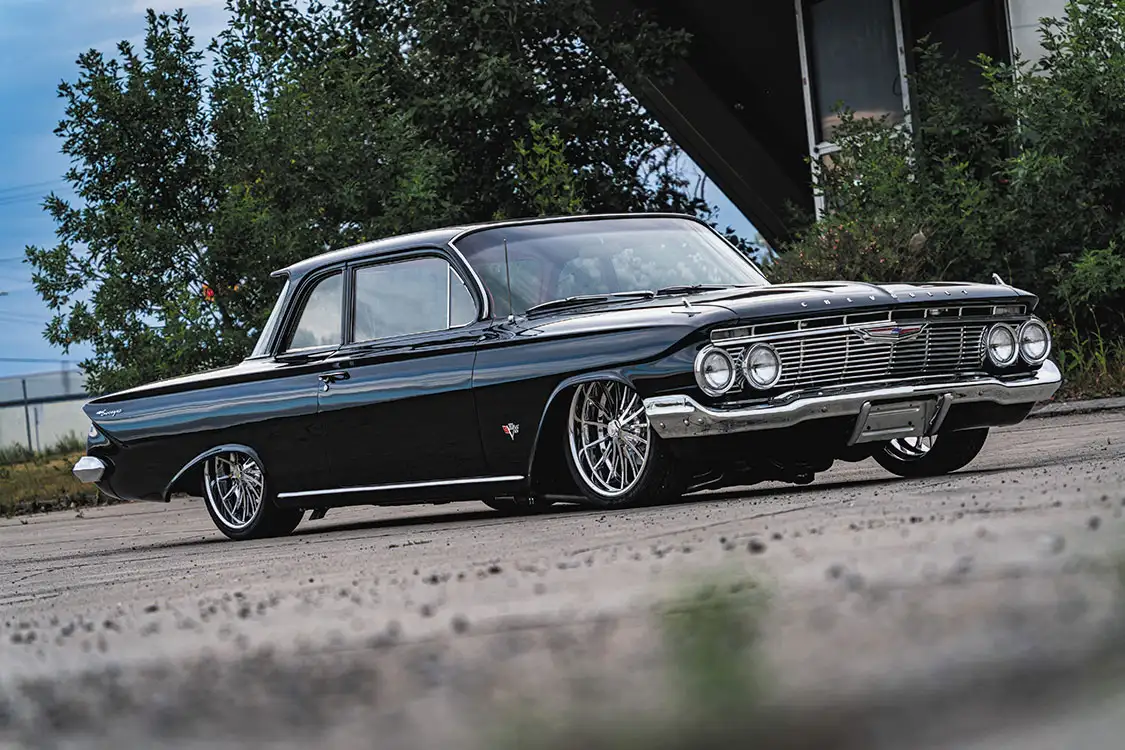
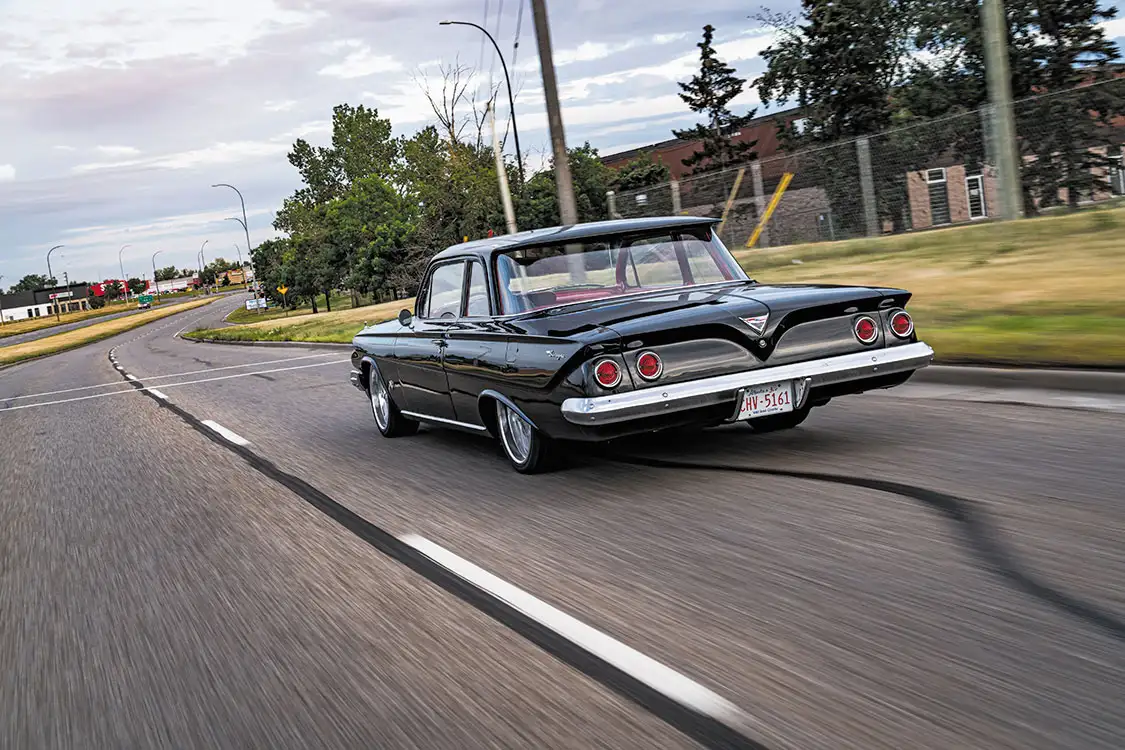
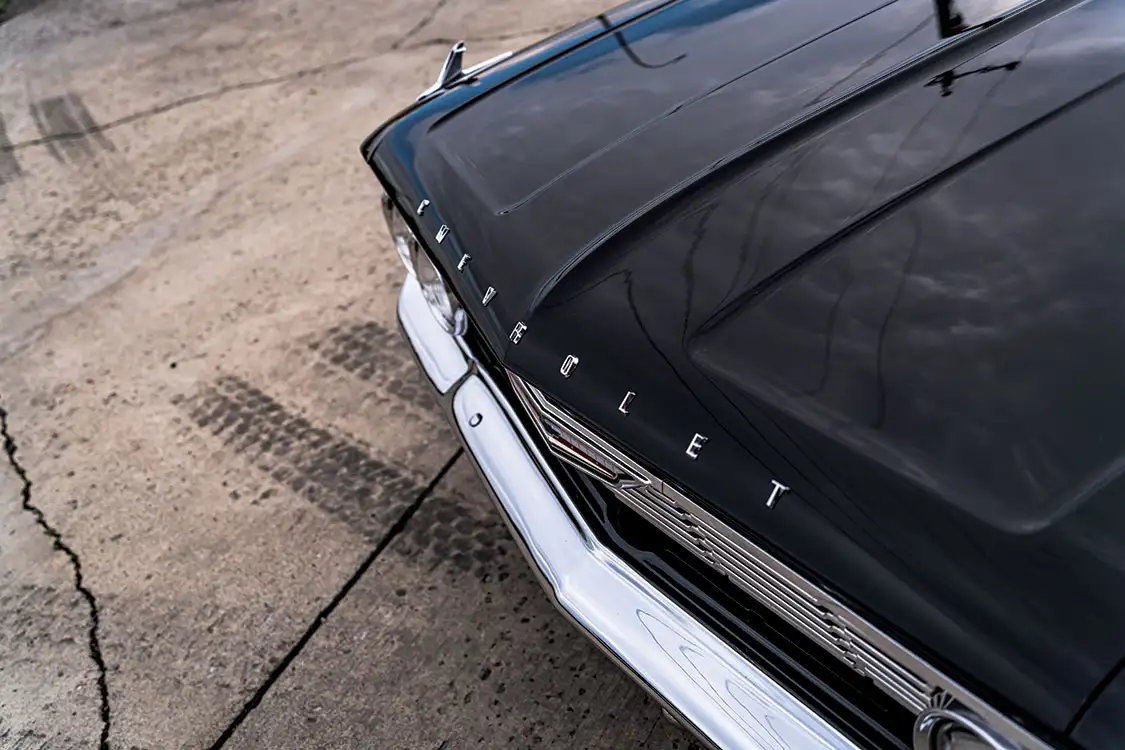
This beautiful 1961 Chevrolet Biscayne Flat Top, owned by Geoff Davis, is more than just a classic car, it’s a family heirloom passed down from father to son. Originally styled with a traditional muscle car look, complete with a raked stance and 15-inch Torque Thrust wheels, Geoff decided it was time for a modern refresh while keeping its old-school charm. He enlisted the help of Sam Hutchinson from Epic Rod and Custom in Calgary, Canada, to make his vision a reality.
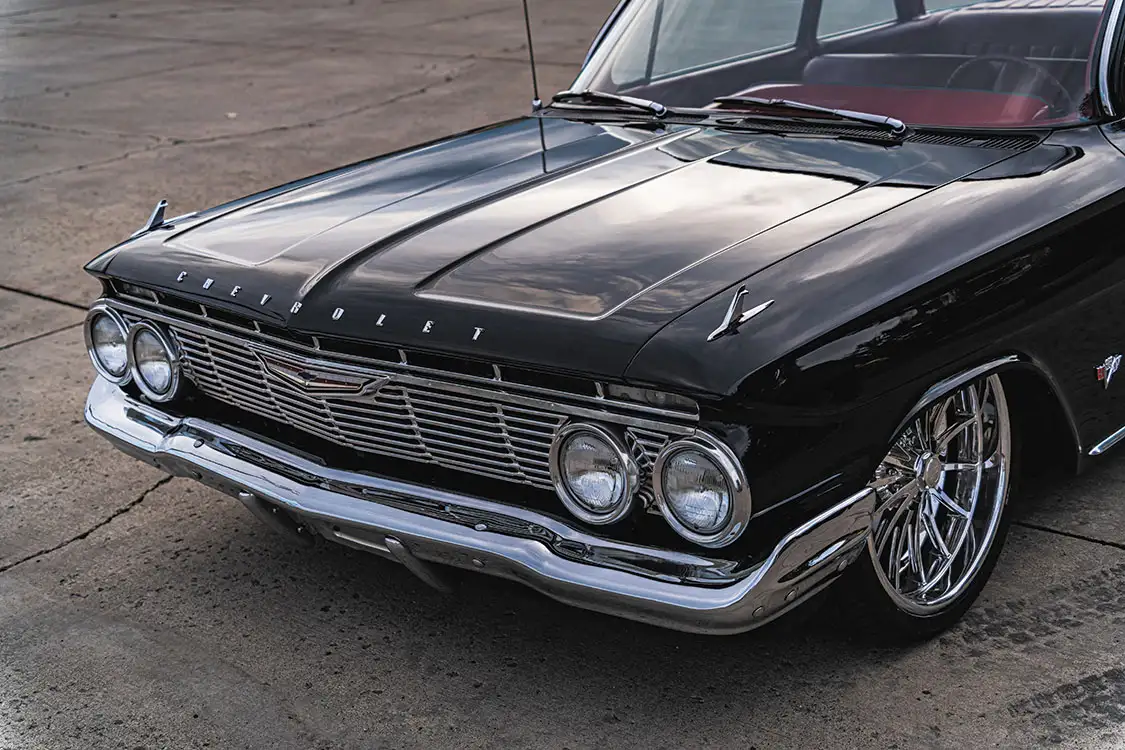
Under the hood, the 383 Chevy stroker engine received some much-needed attention. The engine was serviced, and a few worn-out parts were replaced. Updates included a Pertronix electronic ignition system and an electric fan conversion for improved cooling. All oil leaks were repaired, and a full electrical cleanup was done, ensuring everything ran like new.
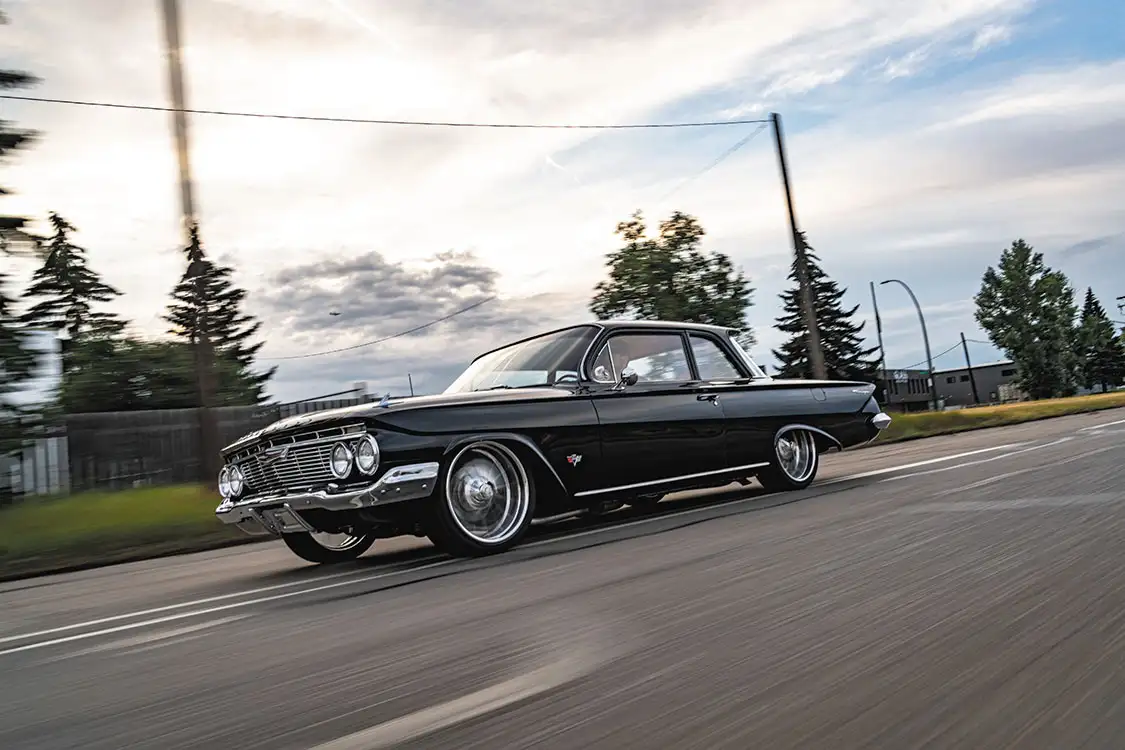
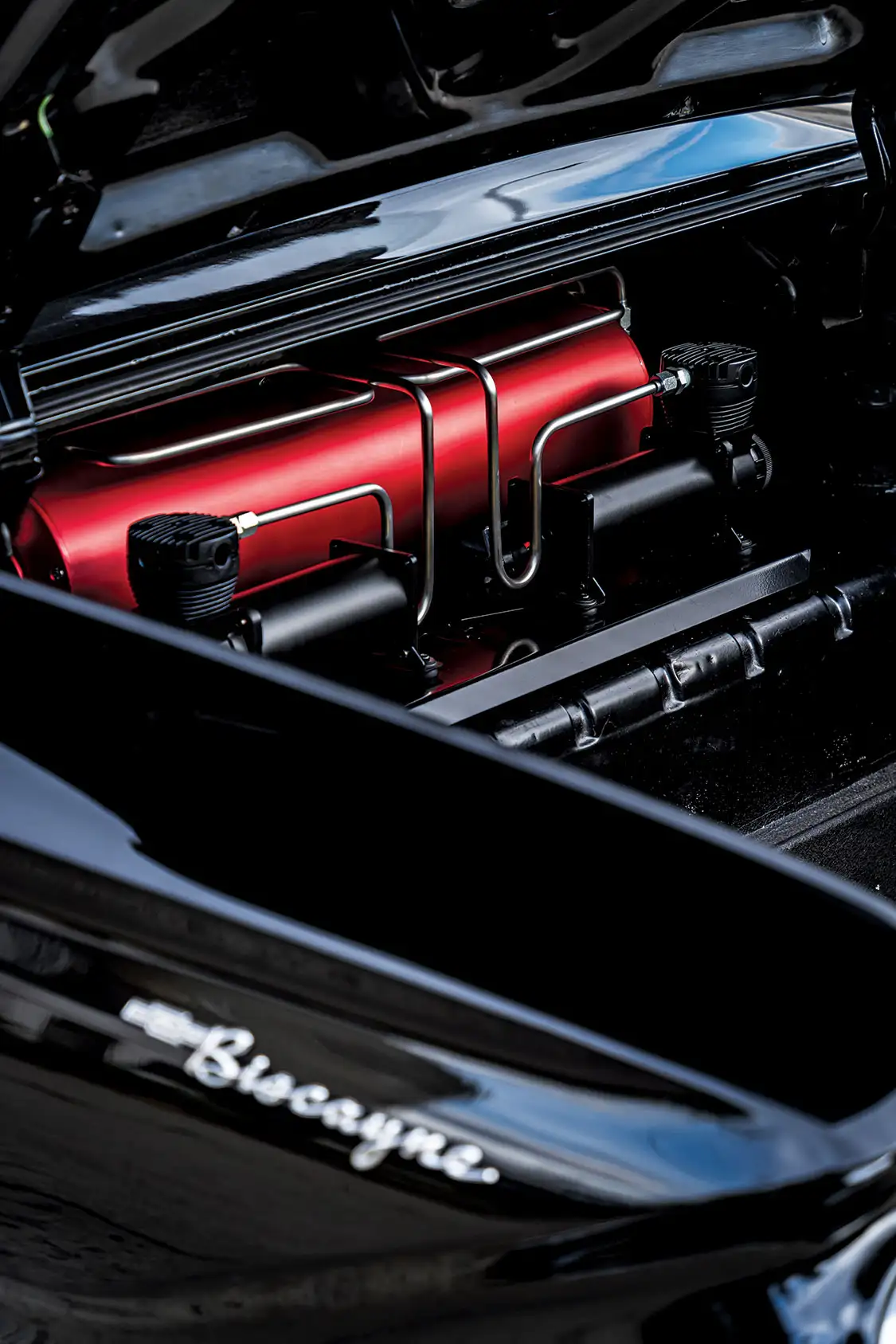
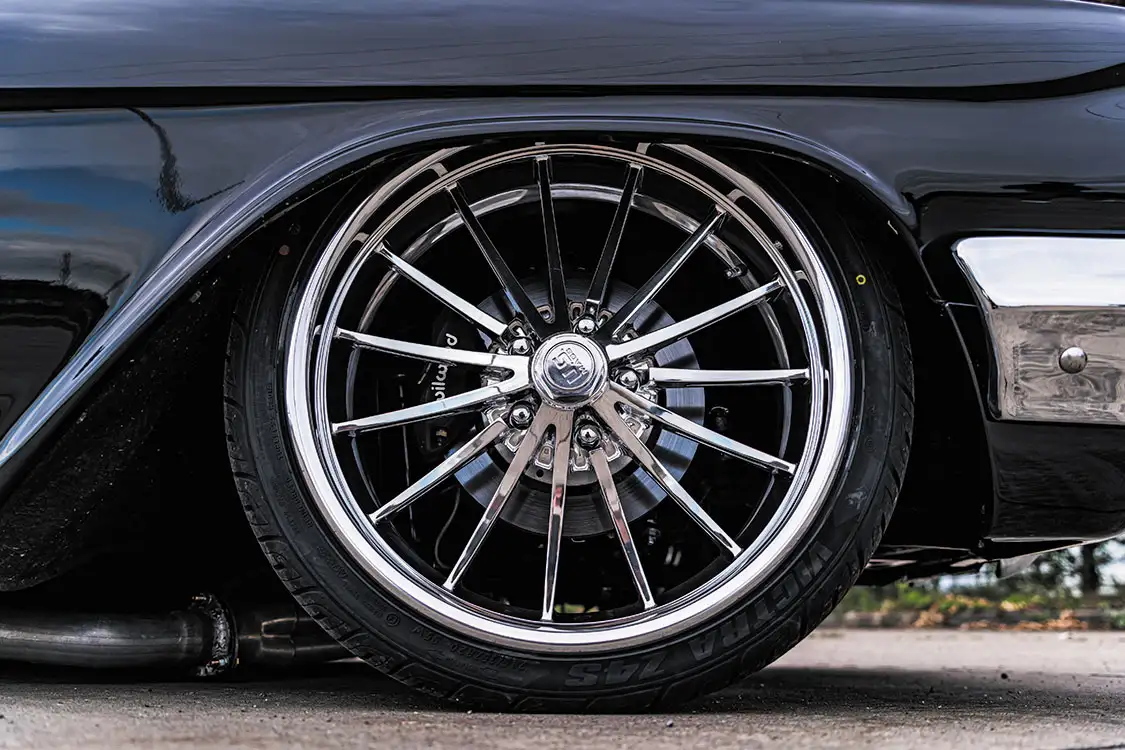
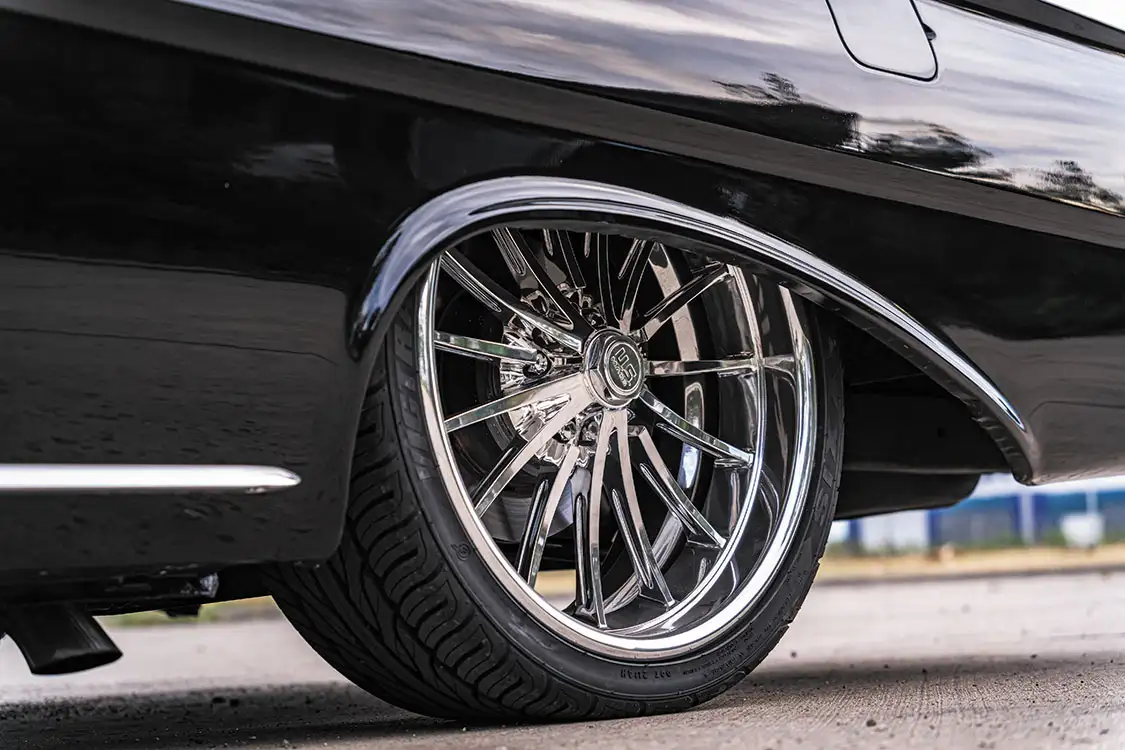
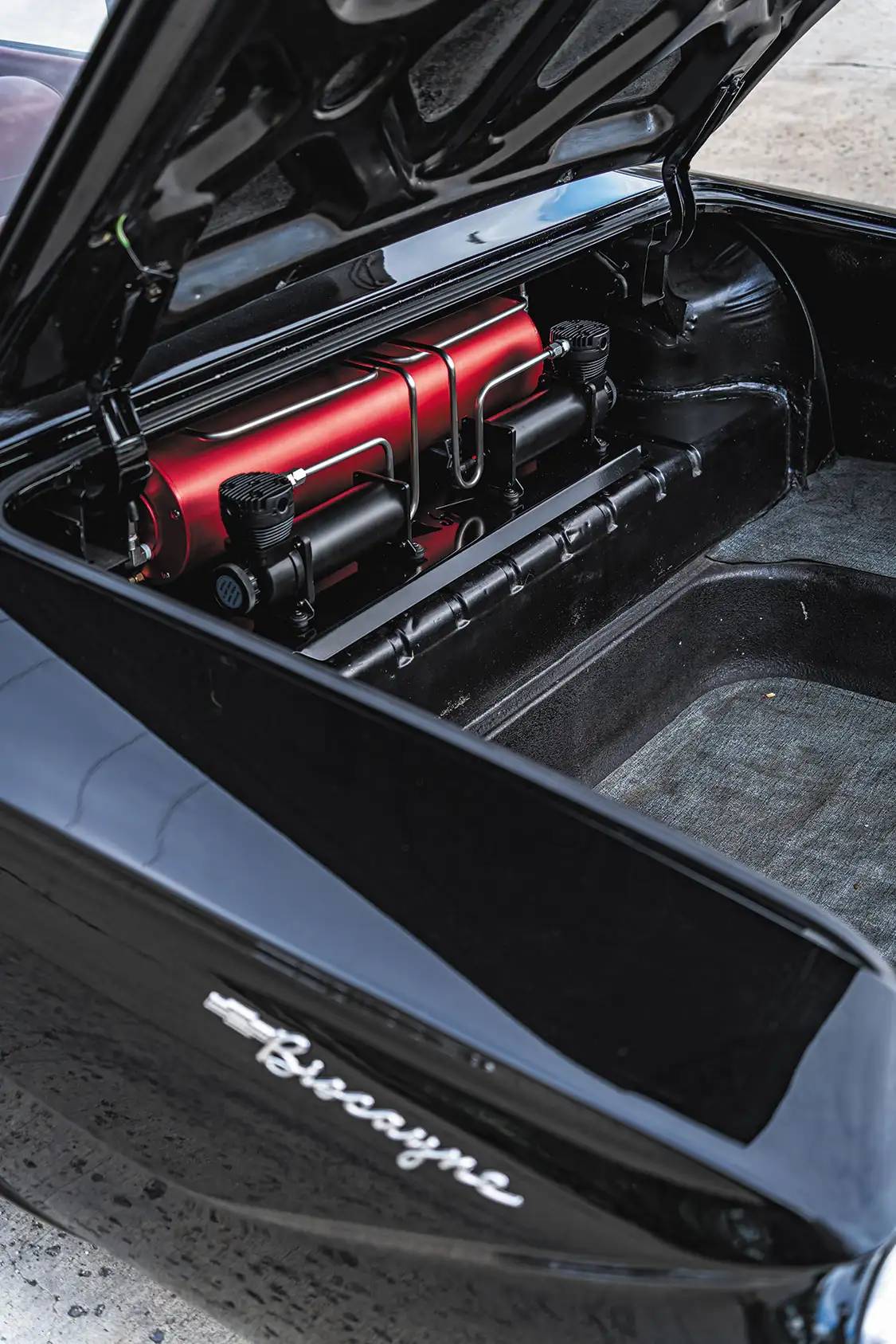
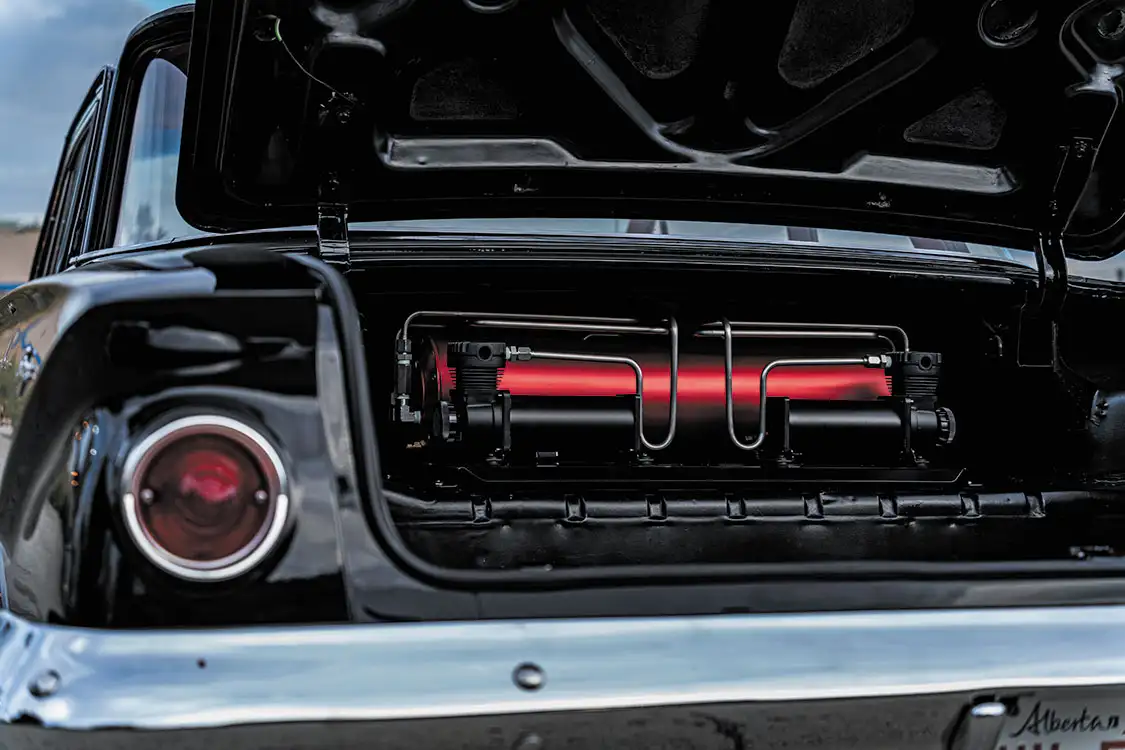
One of the major upgrades was the suspension. Sam and his team installed custom-fabricated air ride suspension with Slam Specialties SS7s and an ALP 3H leveling system. The air ride system is paired with an Epic Aura aluminum tank and dual Viair 480c black compressors, giving the Biscayne a smooth, modern ride. To enhance the car’s stance, the 15” wheels were swapped for 20×8.5 US Mags Heritage 2-piece forged wheels wrapped in Maxxis Victra tires, providing both style and performance.
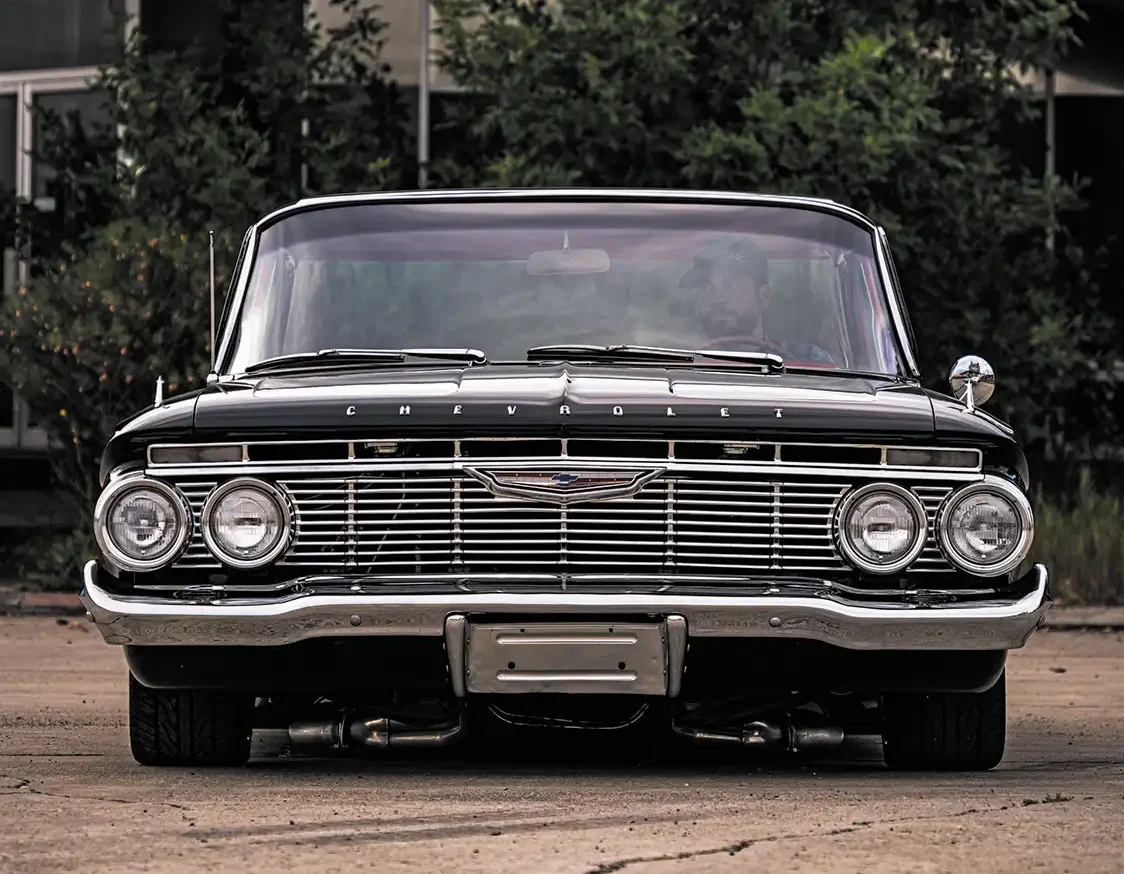
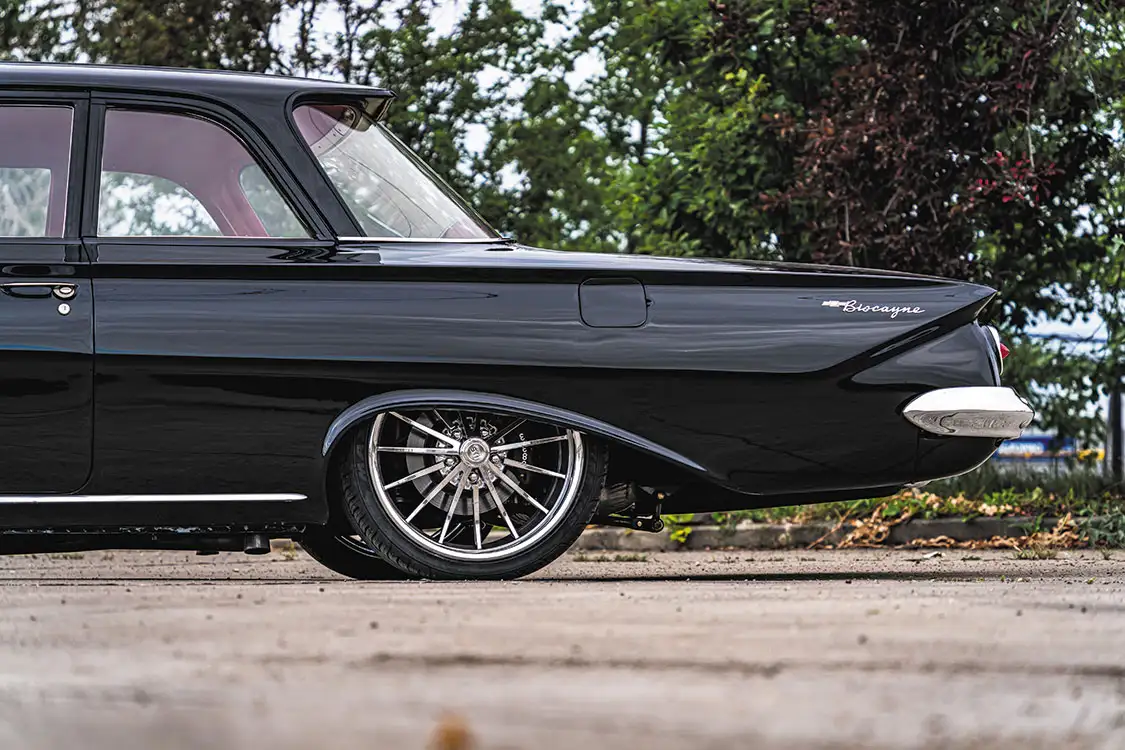
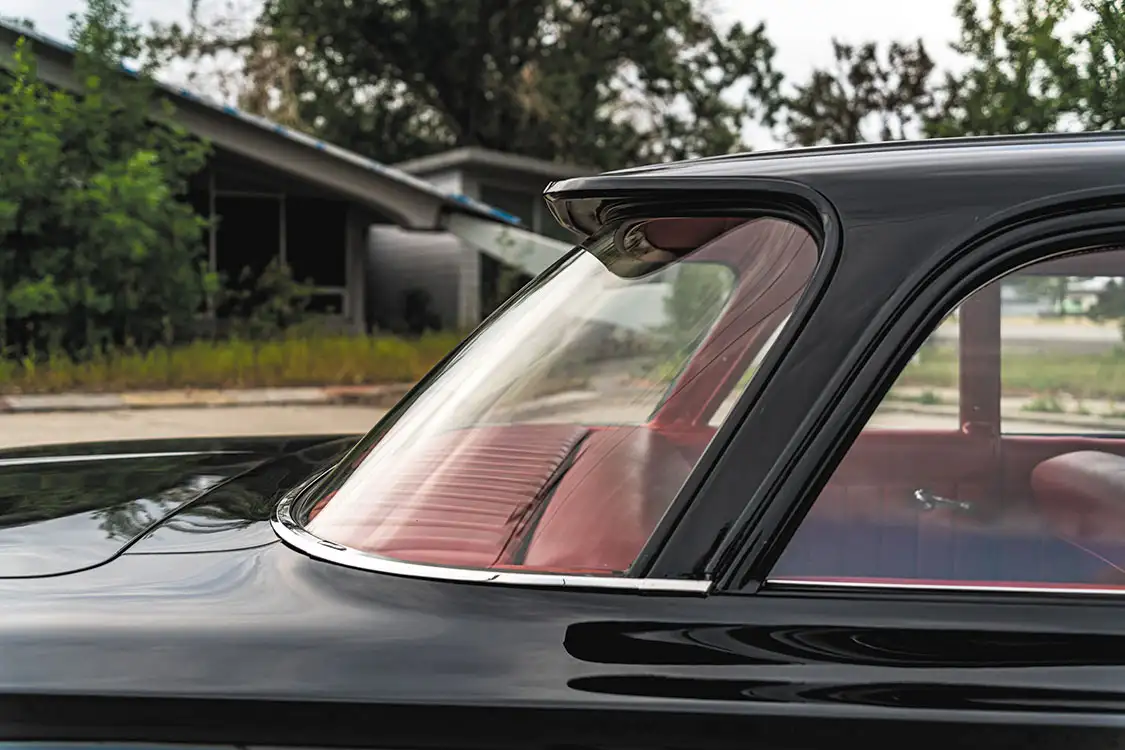
The drivetrain is classic muscle, featuring a Muncie 4-speed transmission, a Ford 9” rear differential, full-length headers, and a 2.5” exhaust system with FloPro mufflers. This setup not only provides solid power but also gives the car a deep, aggressive exhaust note.
Braking was also upgraded, with Wilwood 12.19” front and rear disc brakes paired with a power brake conversion to improve stopping performance.
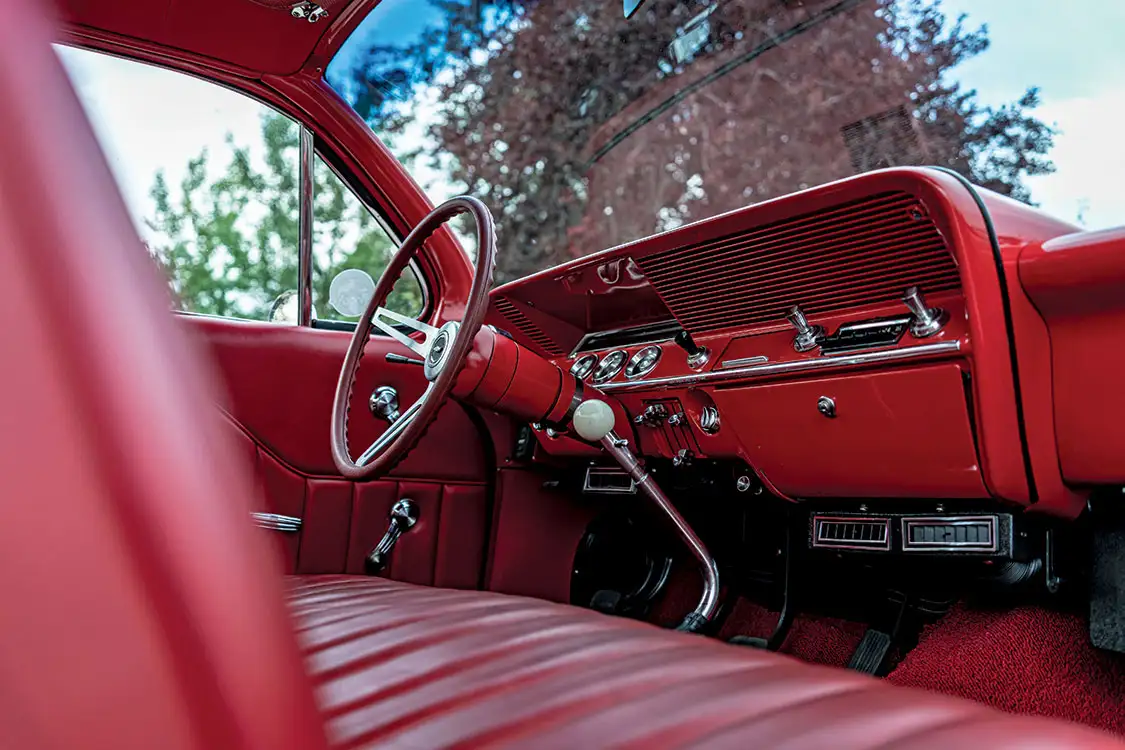
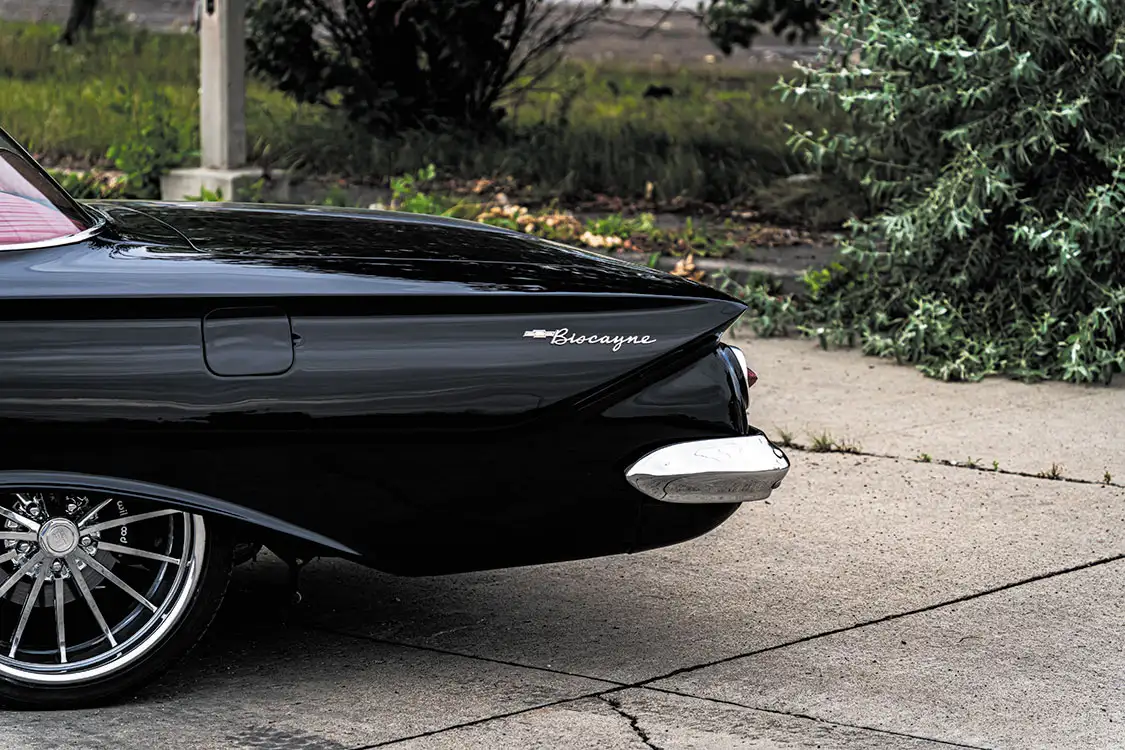
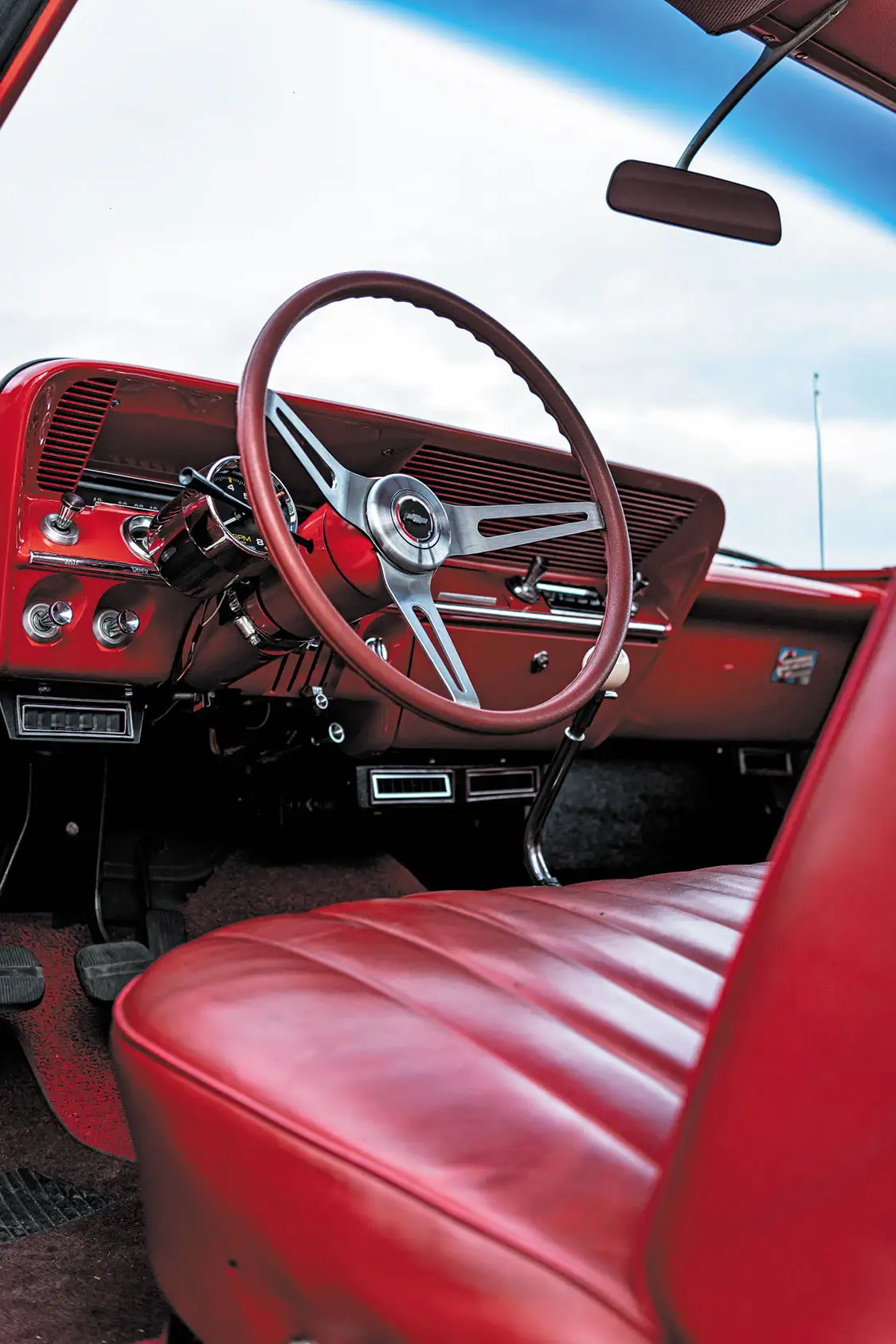
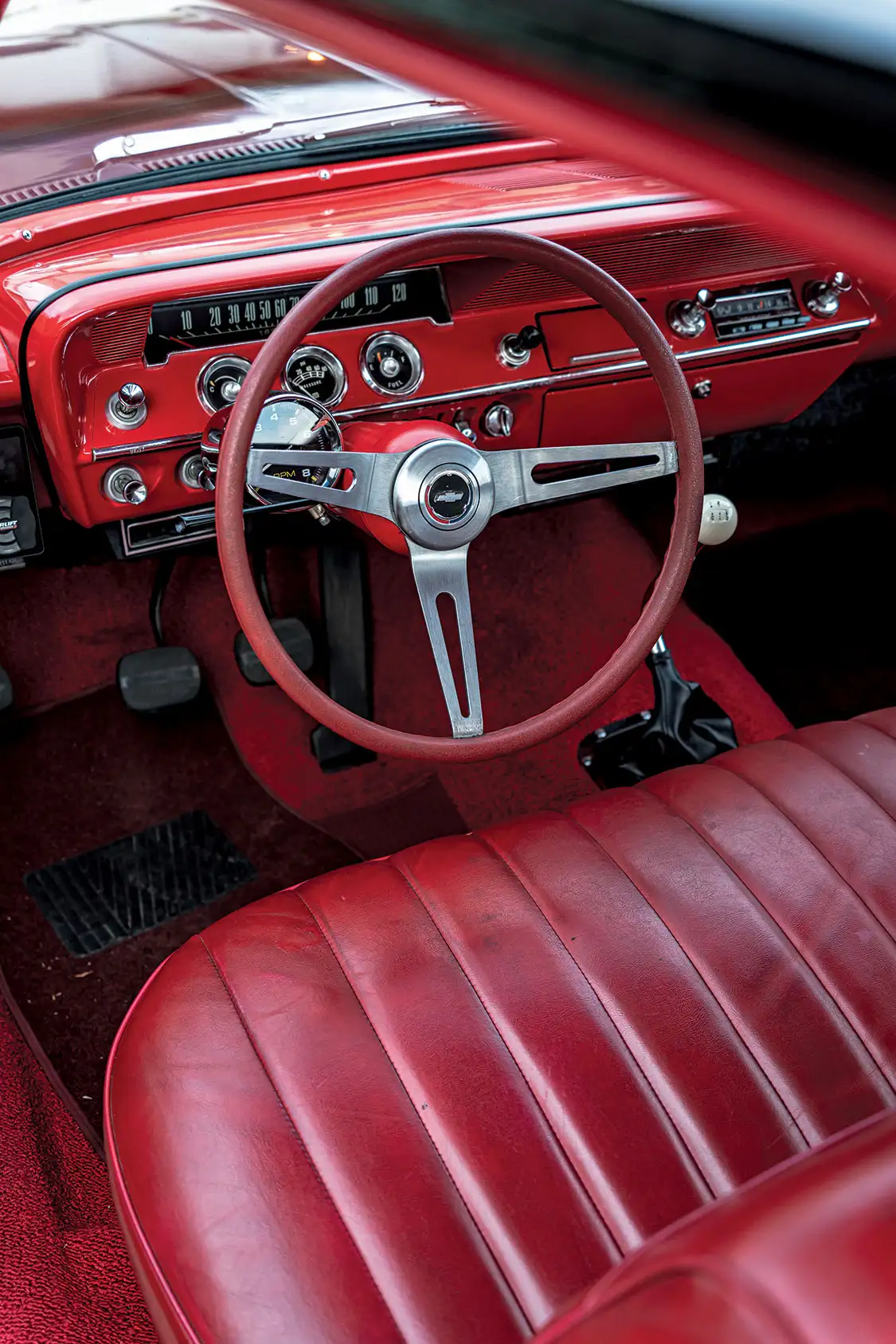
Inside, the Biscayne features reupholstered Hot Rod red bench seats and updated door panels, giving the interior a fresh yet classic look. The trunk was fitted with closeout panels hiding a pair of Rockford Fosgate subs. The stereo system includes a retro-fit radio with Bluetooth control, Rockford door and package tray speakers, and a Rockford 10” shallow sub powered by a 600W amp, ensuring the car sounds as good as it looks.
Thanks to Sam Hutchinson’s expertise at Epic Rod and Custom, this 1961 Biscayne now boasts a perfect balance between vintage muscle and modern performance, ready to hit the road with a fresh look and feel.
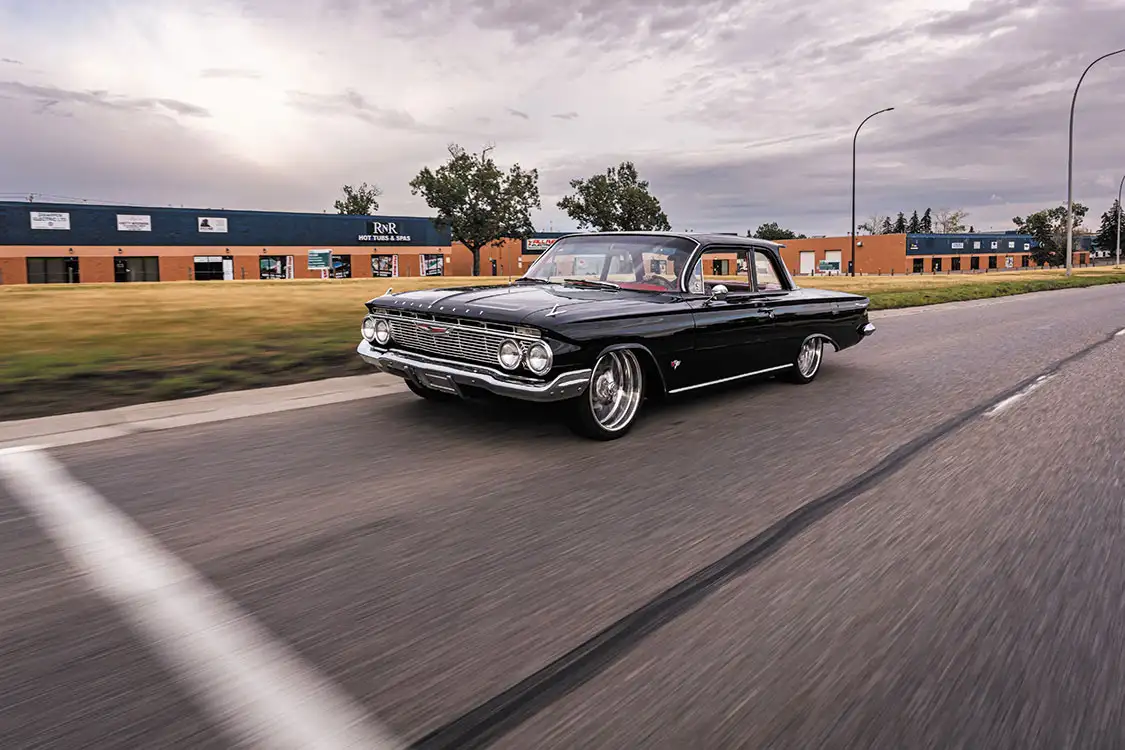
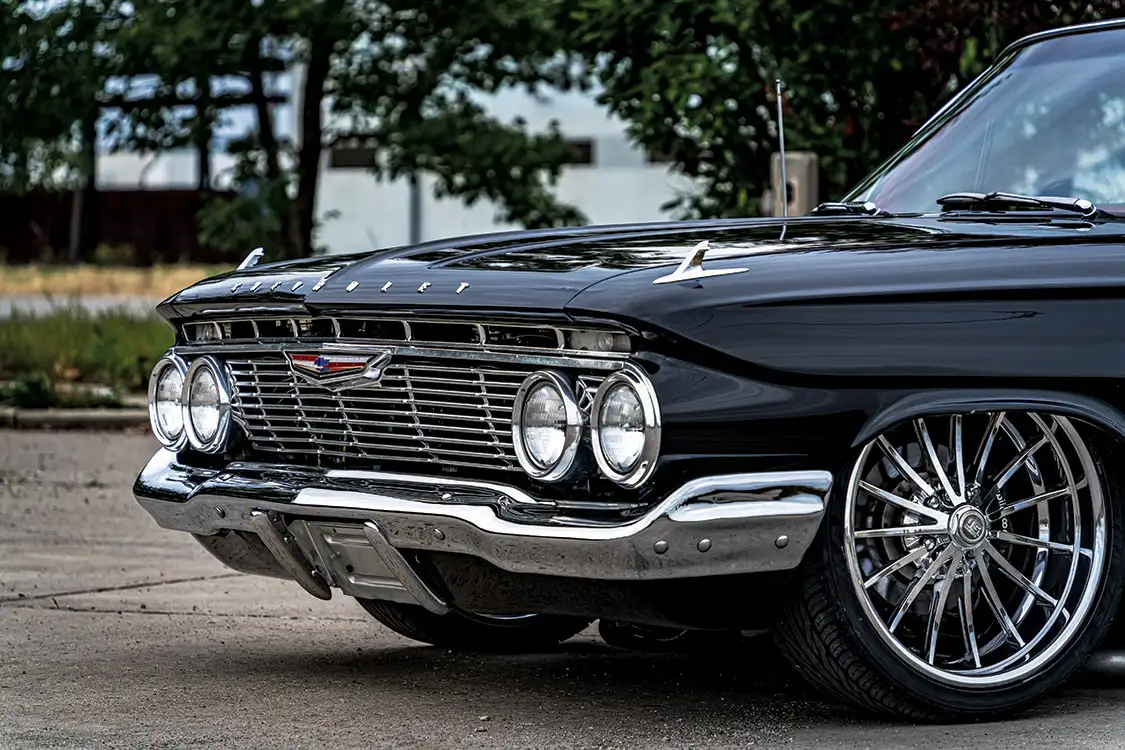
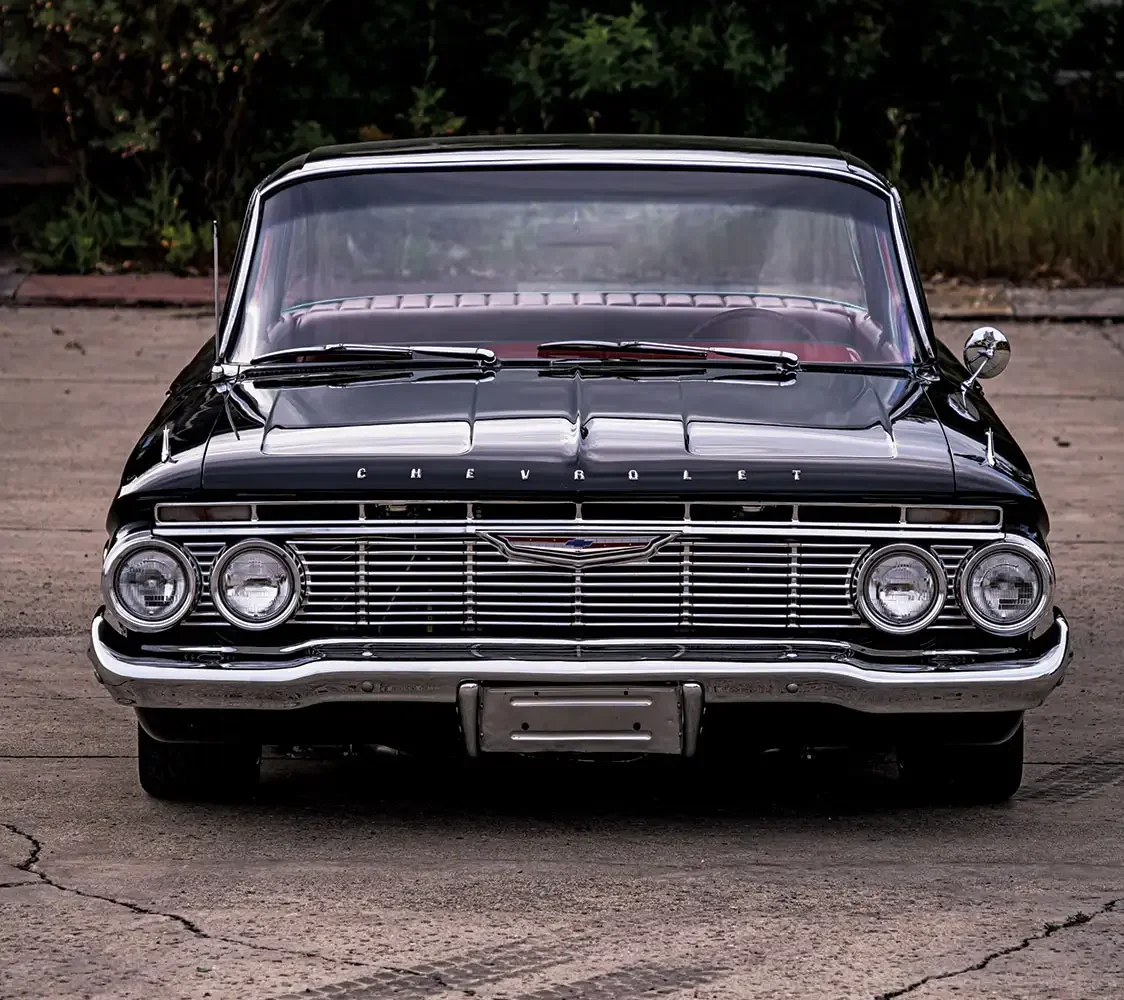
It’s 1973, and President Richard Milhous Nixon is reelected to a second term and suspends offensive action in North Vietnam, ultimately ending the U.S.’s involvement in the Vietnam War. It wouldn’t be long, however, until he is caught in the middle of the infamous Watergate scandal. His presidency would be cut short the following year when he is impeached and removed from office.
In the musical world, DJ Kool Herc introduces hip hop to the world from Sedgwick Ave. in the Bronx. Elvis Presley’s popularity holds steady, with his televised concert in Hawaii attracting more viewers than the Apollo moon landings, though the event is censored in communist Eastern Bloc countries. Meanwhile, The Godfather wins an Academy Award for Best Picture, but horse head aside, it’s The Exorcist that disturbs audiences like no film before it with the most disgusting display of pea soup to date.

Federal Express begins operations, delivering 186 packages on its inaugural day. We’re guessing that the number of packages they were supposed to deliver was much higher. On a broader scope, rising inflation and the oil crisis take their toll on the economy in big ways, causing layoffs in associated industries.
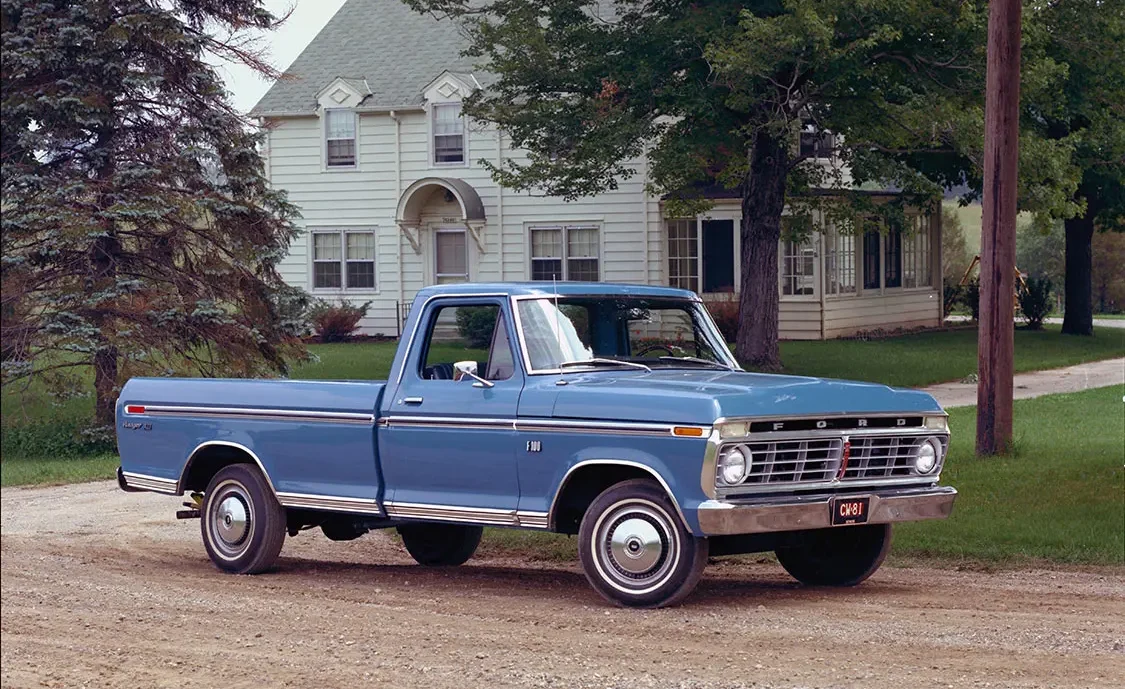
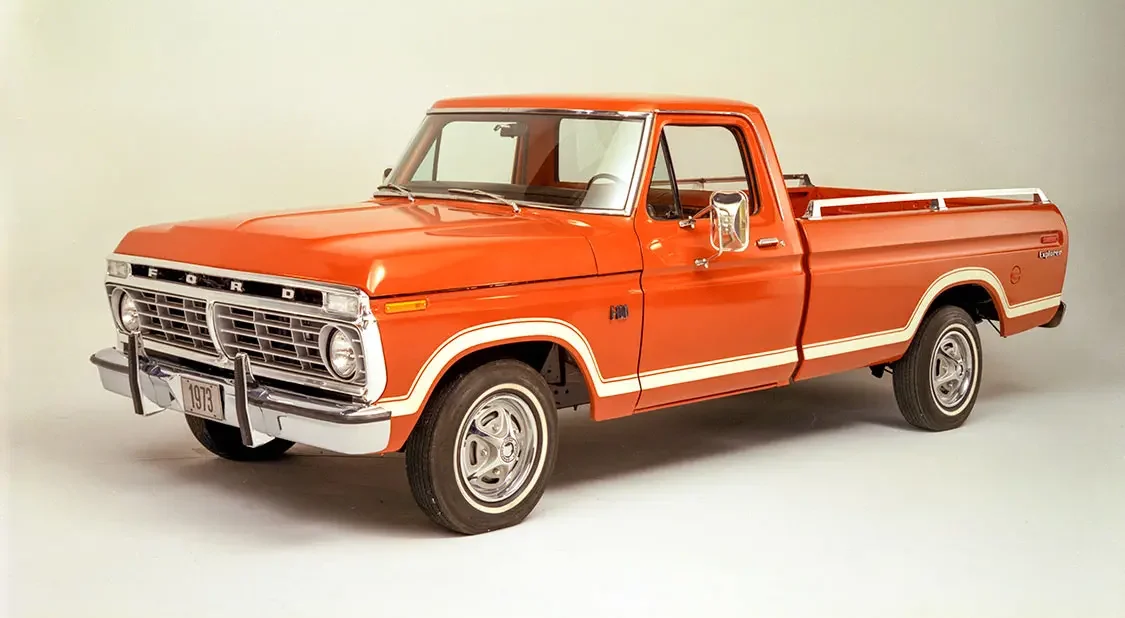
For Ford trucks, this would also be a year of change. The redesigned F-Series would go through a series of updates and would be the last generation to be based on the 1965 chassis design, although it now rode on a longer wheelbase.


The new F-Series was not as drastic a change as with generations before it, but it was definitely a fresh take on Ford’s popular pickup line, especially with the addition of the crew cab. The dramatic beltline was inverted, or “dented,” to juxtapose against the previous “bump” in the sheetmetal, and surrounding sheetmetal was resculpted, with galvanized steel being used in key places to reduce corrosion. Curved side glass was a new feature, as was slightly tilted rear glass (to minimize rearview reflections at night).
The redesigned F-Series would go through a series of updates and would be the last generation to be based on the 1965 chassis design, although it now rode on a longer wheelbase.


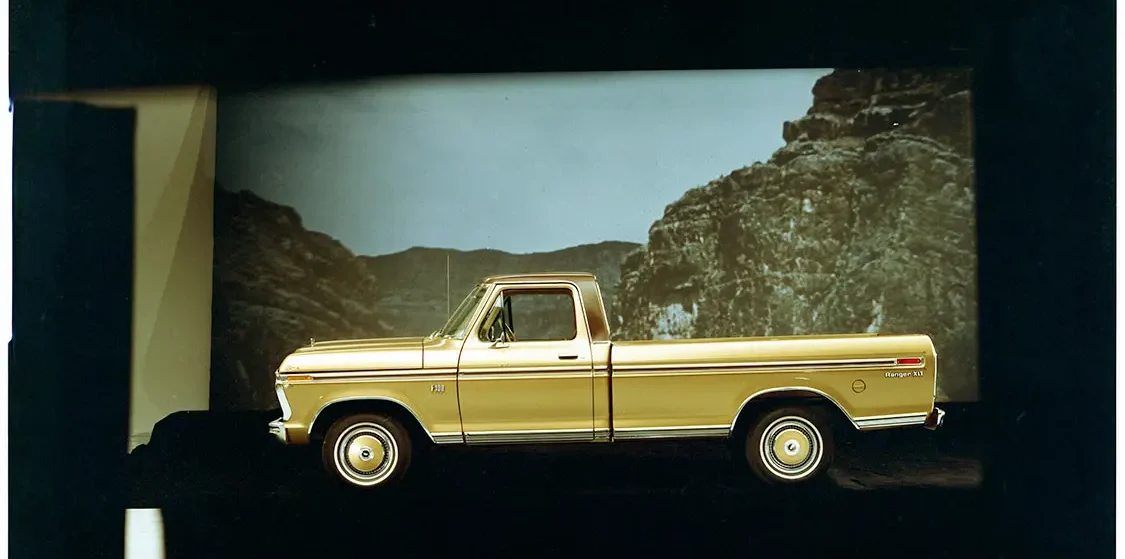
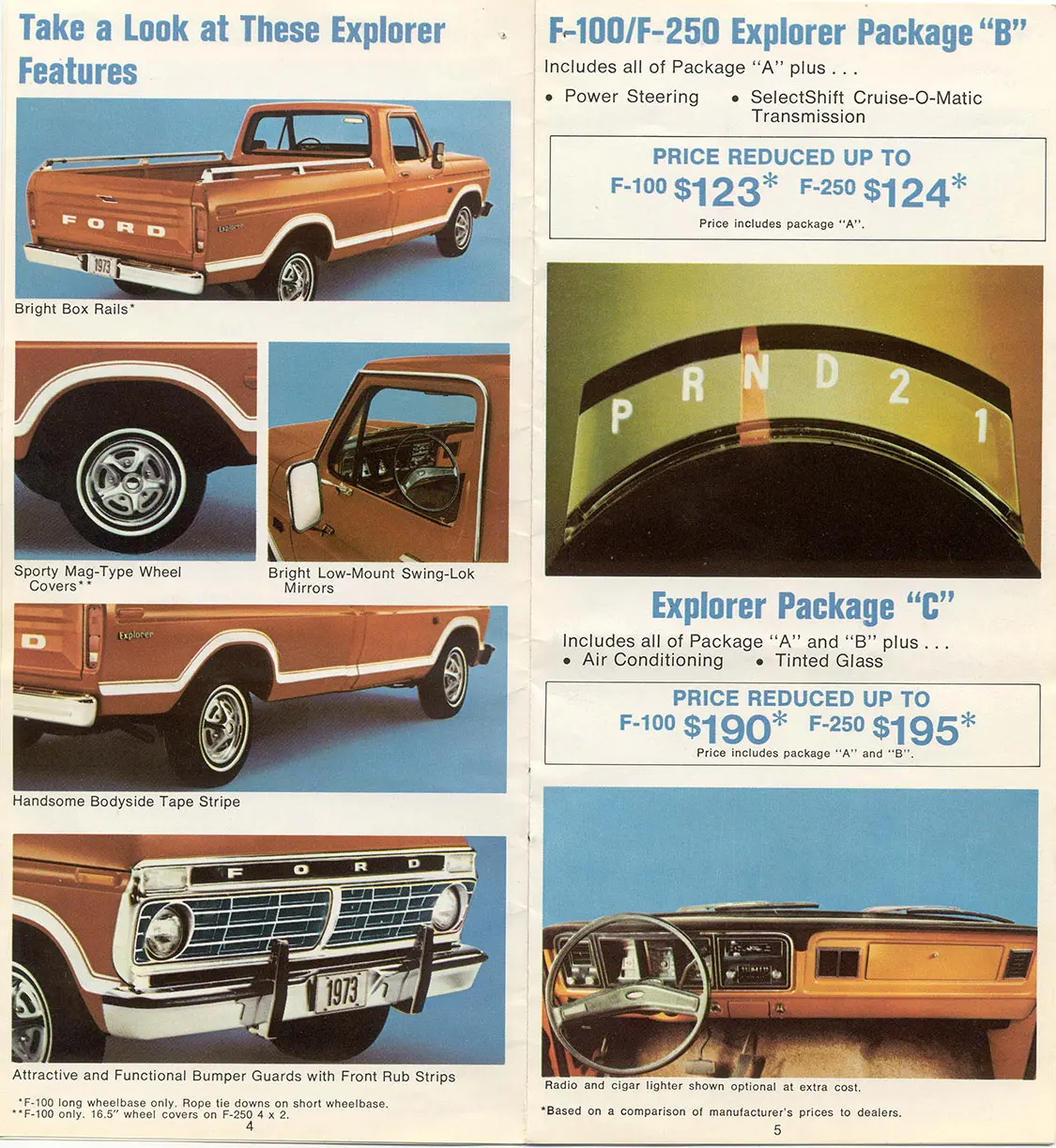
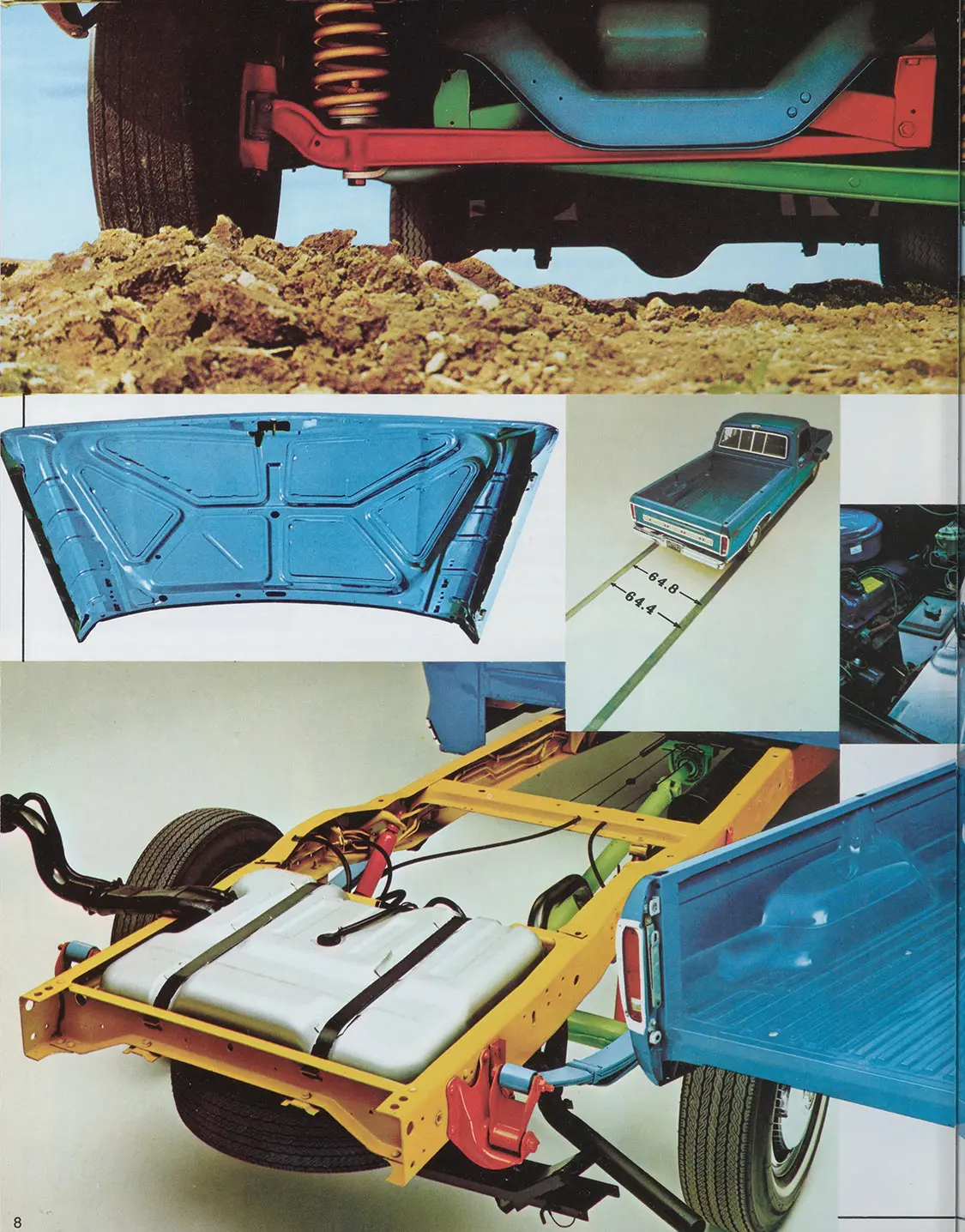
Inside, A/C vents were now an integrated part of the dashboard assembly instead of under-dash add-ons, and there was now room for a larger glovebox thanks to the heater blower being relocated to the engine compartment. Another major change was that the fuel tank was now located under the truck instead of inside the cab.
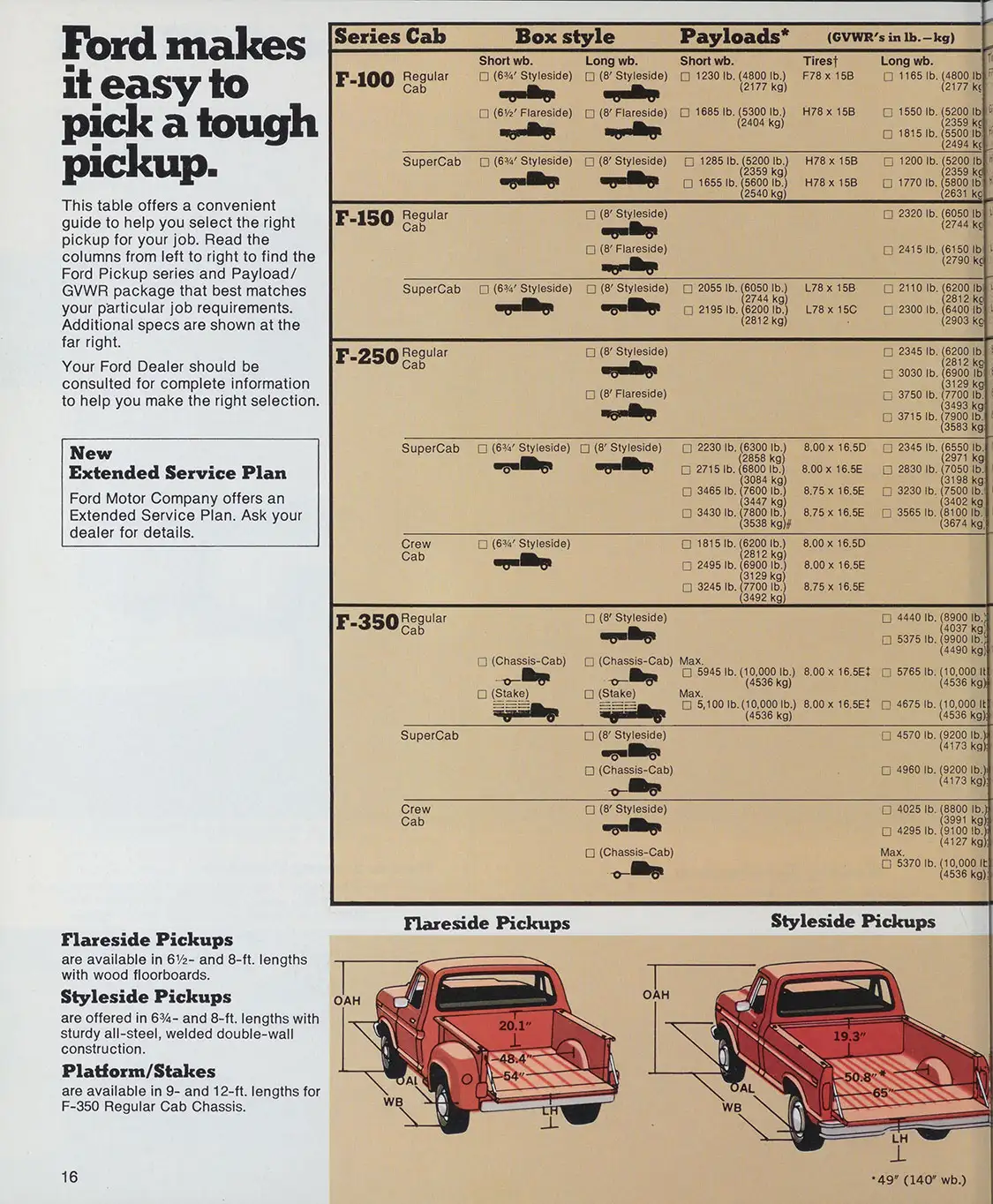
Two-wheel drive trucks now also came standard with disc brakes, and the rear axle was widened a total of 4 inches to more closely match the front track width. The ’73 model year also saw the introduction of the F-350 V-8, which featured a longer wheelbase and heavier duty suspension. A variation for the F-350, the “Super Camper Special,” added provisions for slide-in campers.

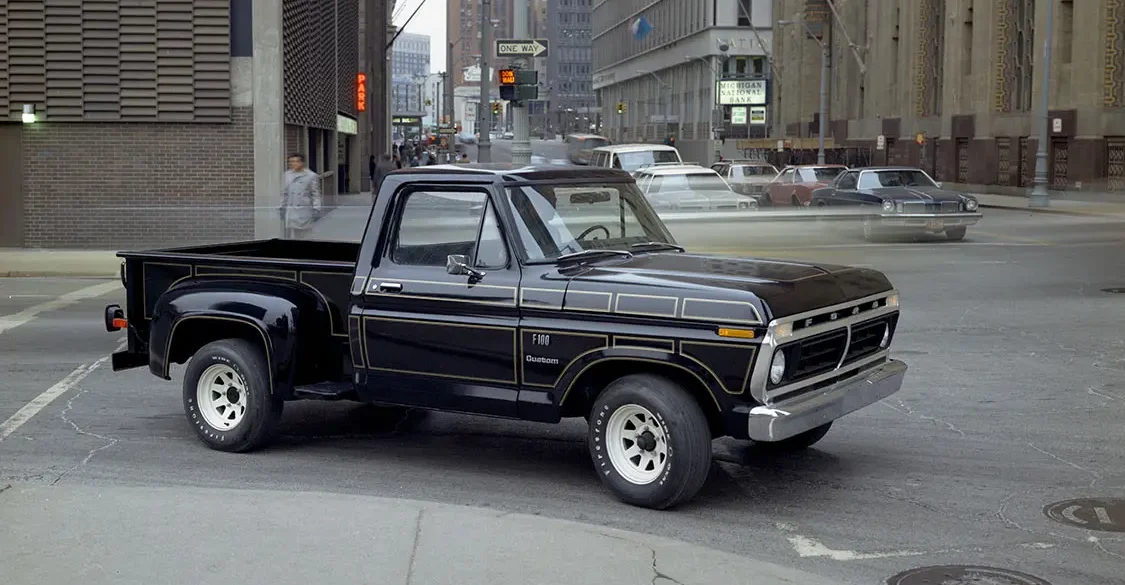
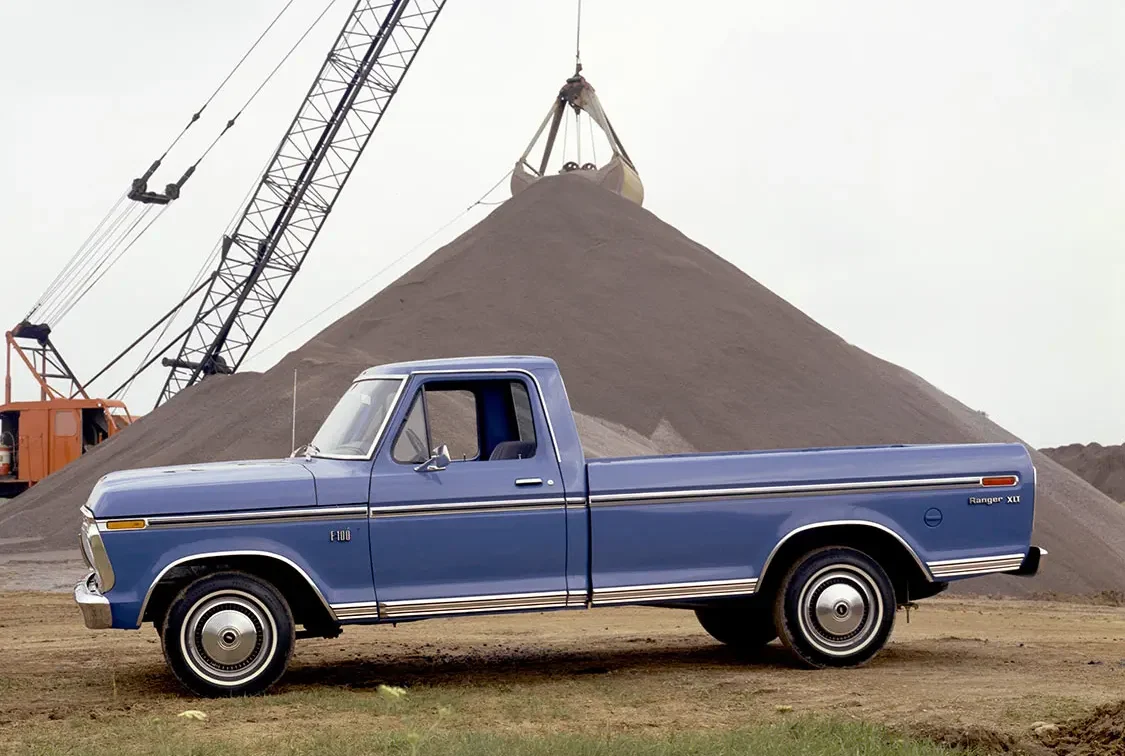
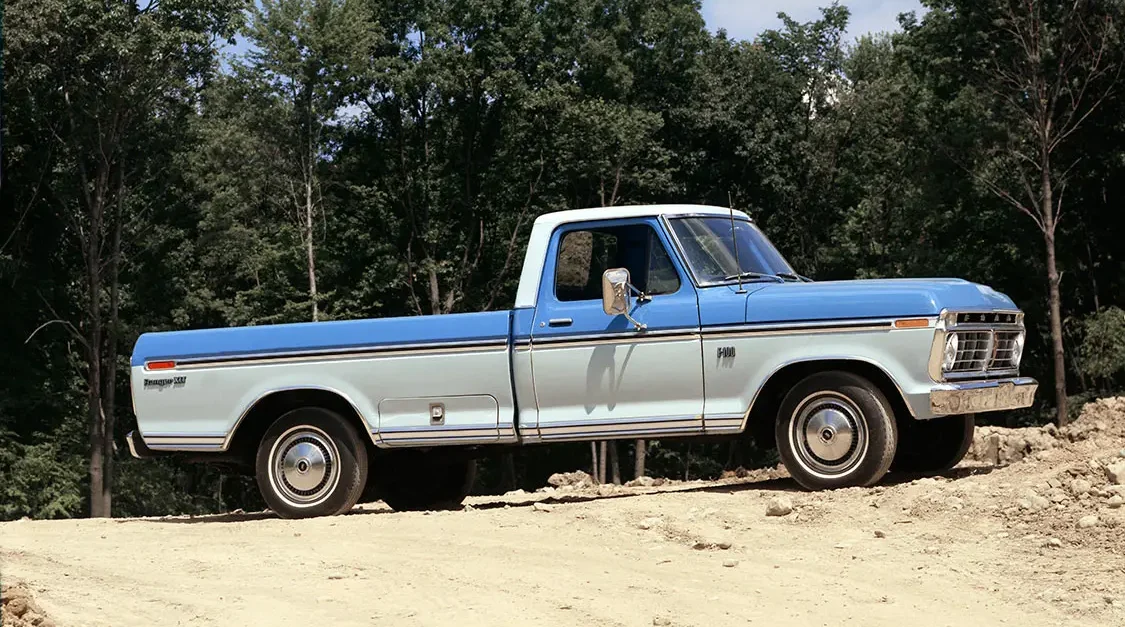
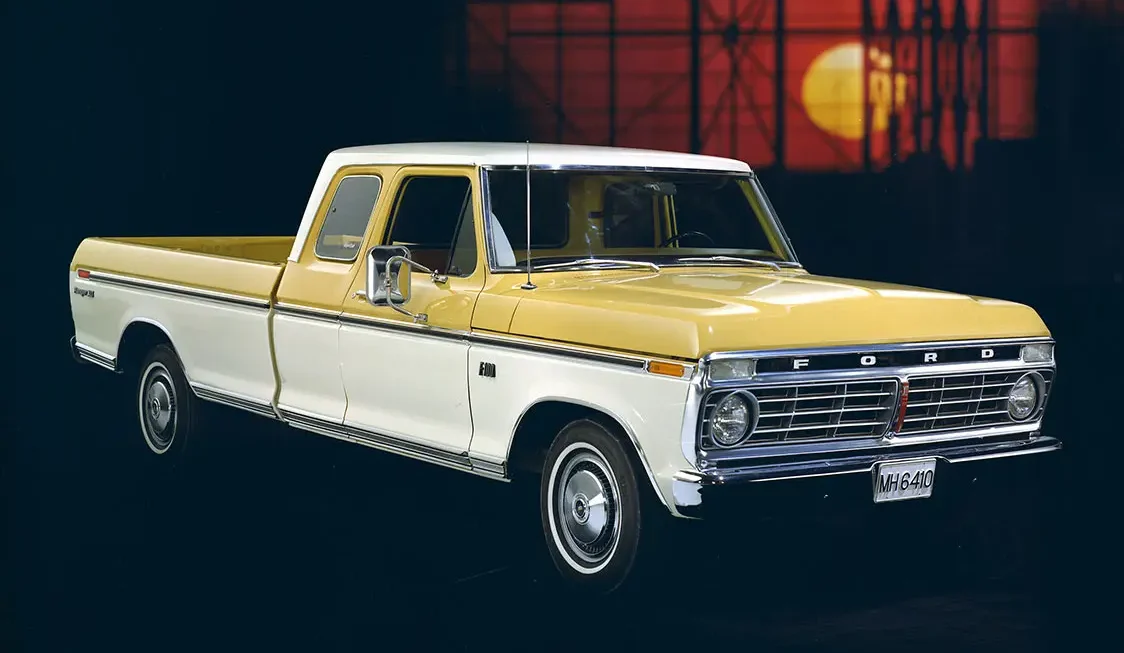
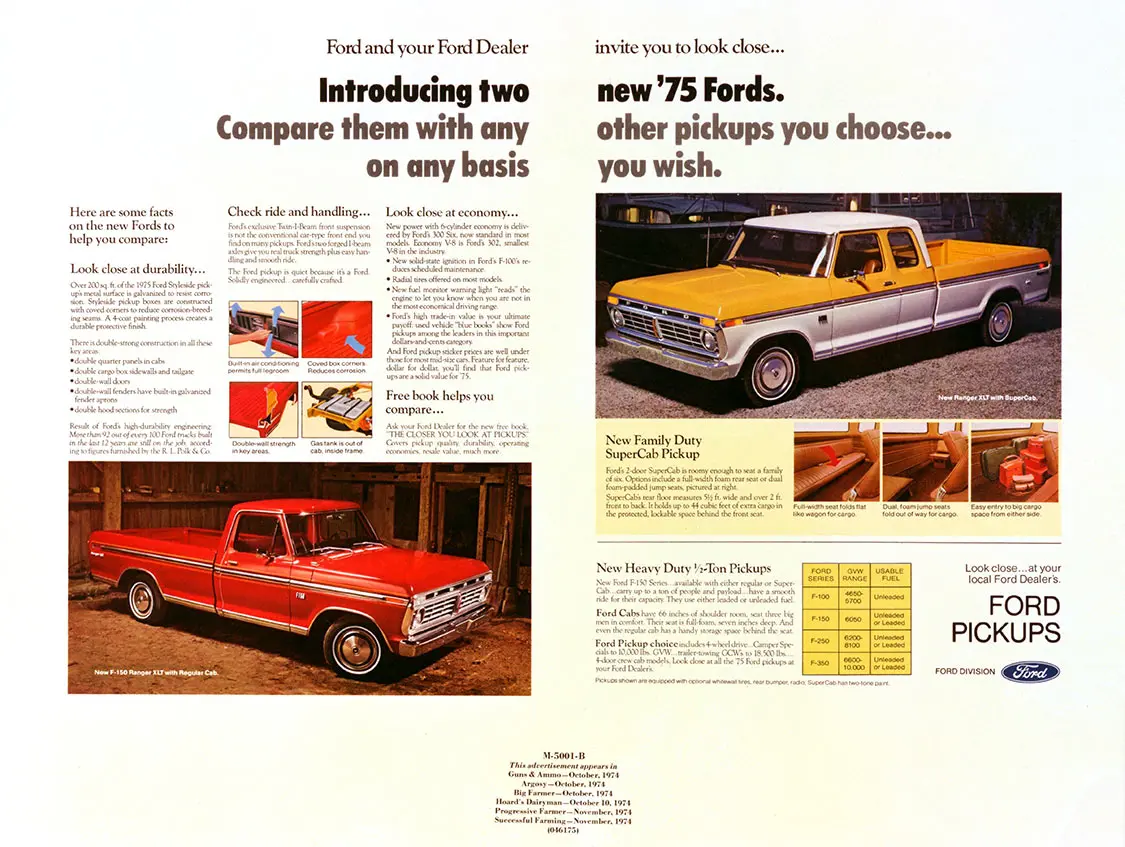
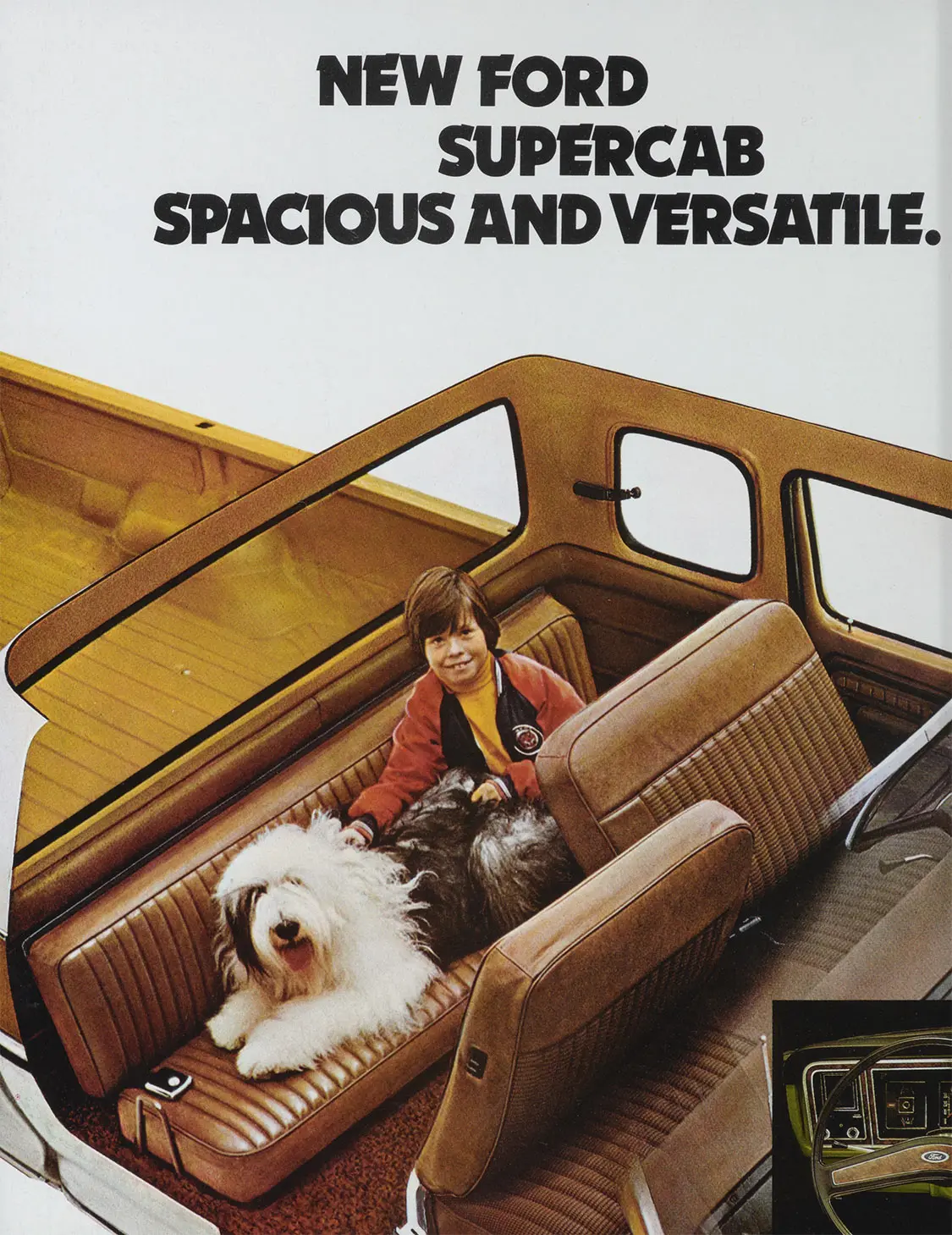
The year 1974 was a big one as well, with the SuperCab (extended cab) F-Series hitting the market, and the ’75 model year trucks could be had as a heavier, heavy-duty F-150.
As emissions laws become more stringent, the F-150 put itself in a different weight class, which eased certain restrictions that were mandated on lighter duty F-100s.


All years of the F-Series, up until the ’77 model year, could be had with the 240 or 300 cubic-inch inline sixes, the 302 V-8 Windsor, a 360 or 390 FE V-8, or the large 460 385-series V-8. Choices for ’77-’79 models consisted of the 300 CID I-6, the 302 Windsor, the 351M V-8, 460 385-series V-8, or the 400 CID V-8.
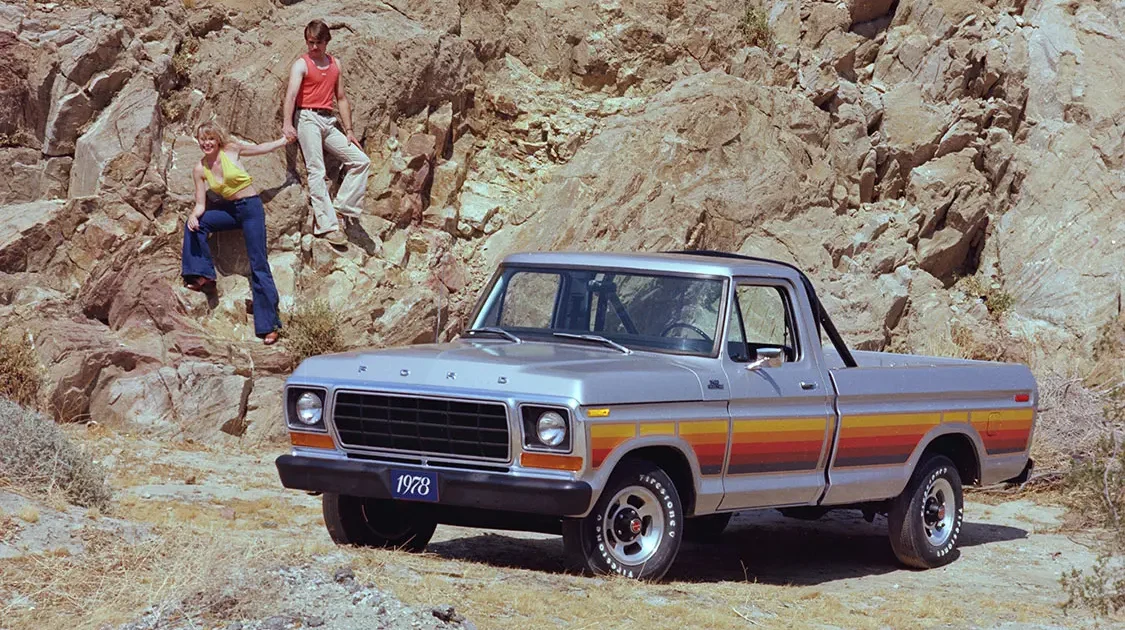
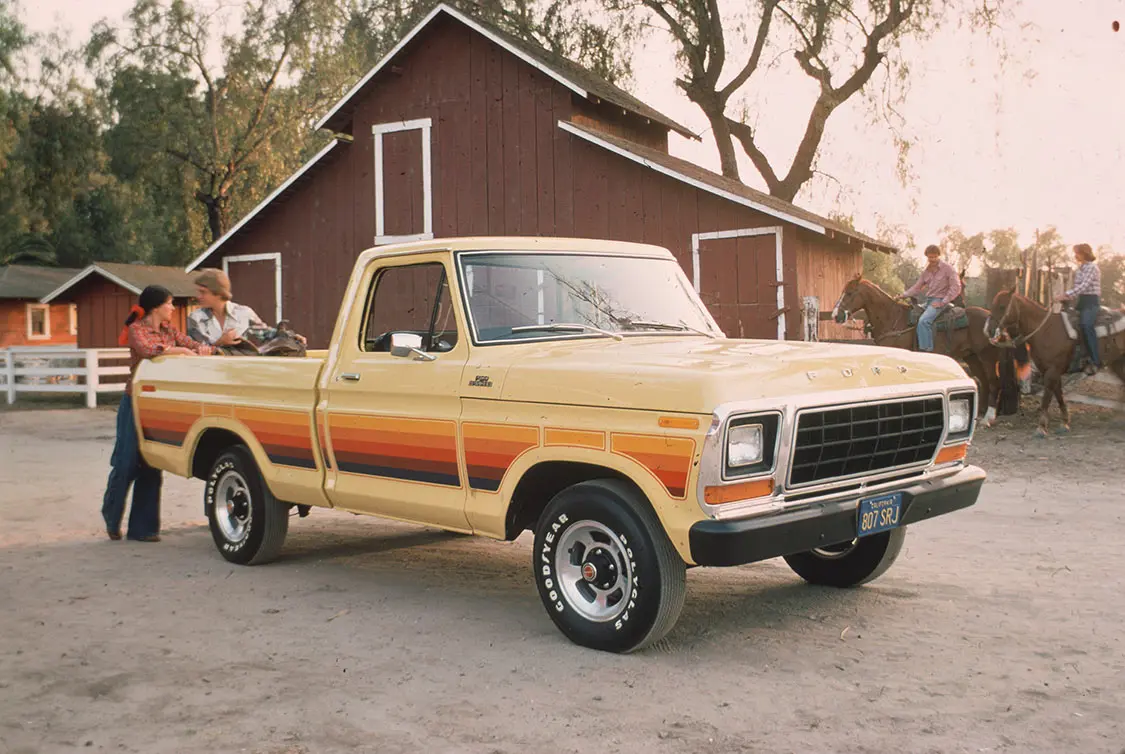
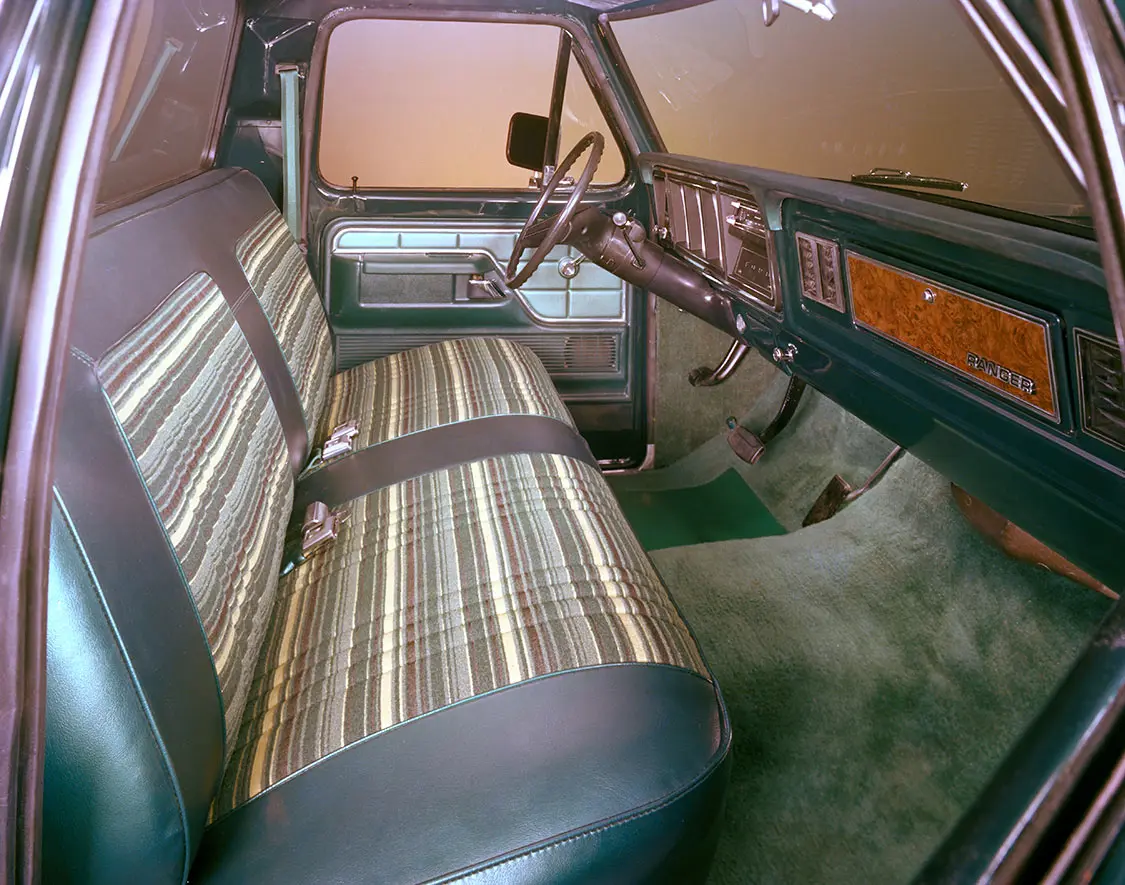
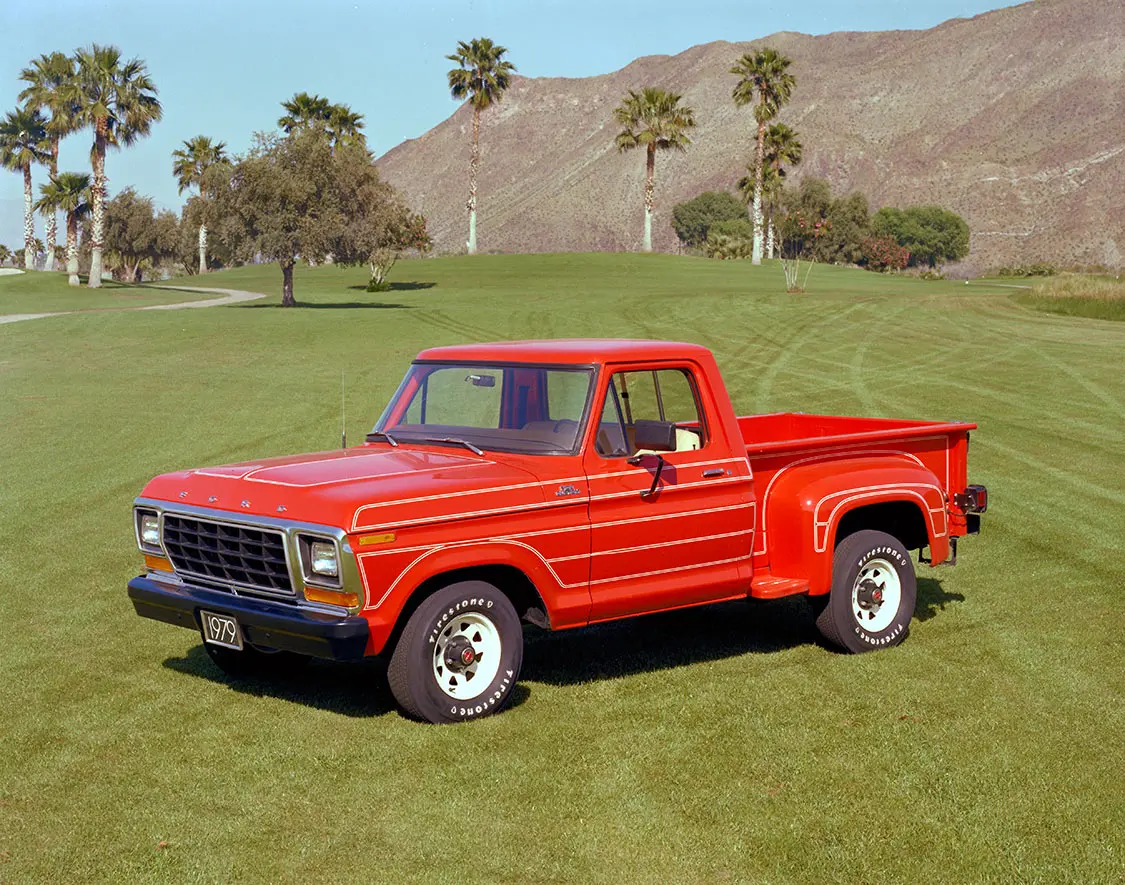
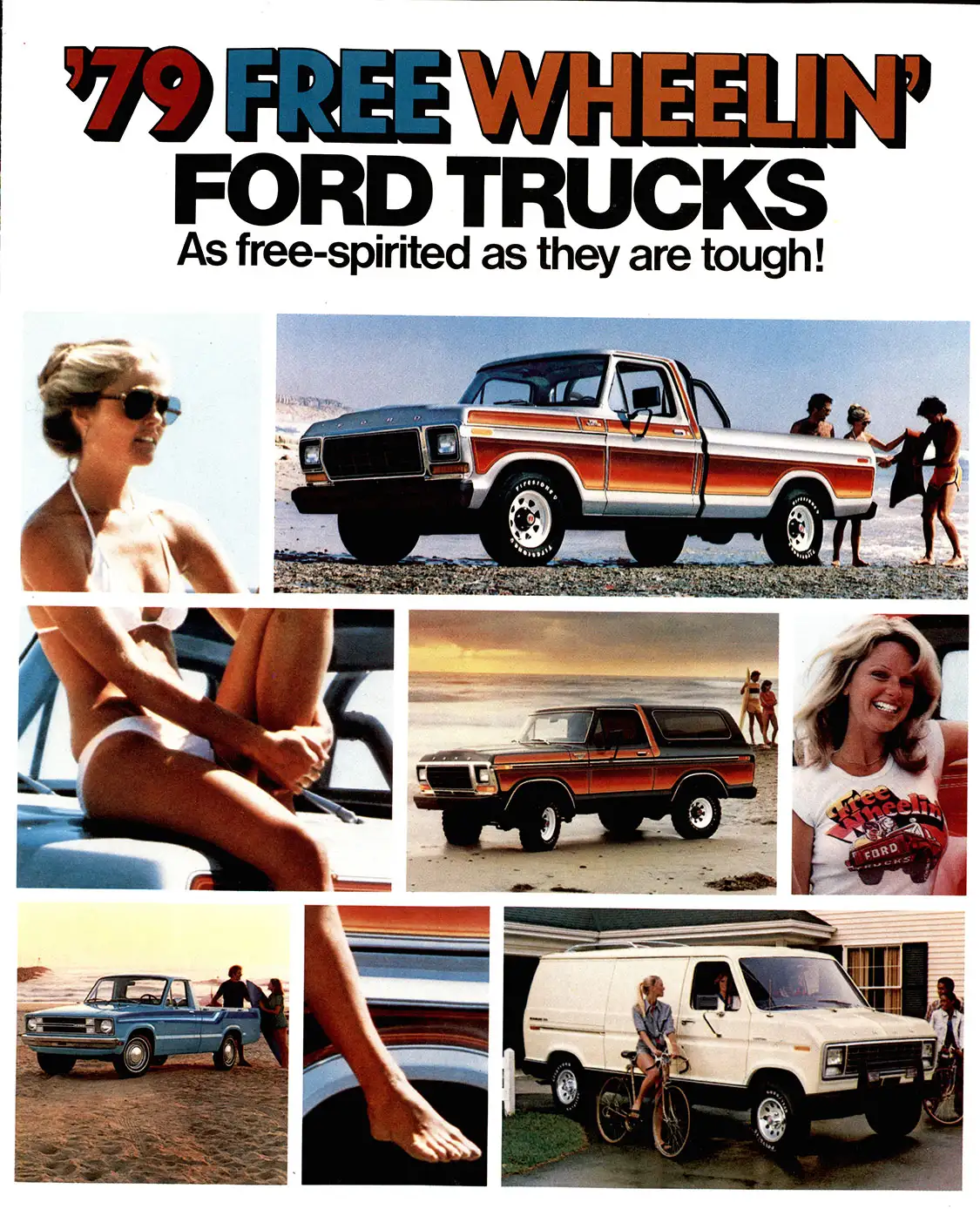
When the ’76 models arrived at dealerships, they featured an updated grille, while ’77s received even more exterior trim updates. Completely redesigned grilles appeared in 1978, both for the Custom trim and the Ranger/Ranger XLT/Ranger Lariat trim levels, which could now be optioned with rectangular headlights. They became standard for 1979.


Over the course of its run, the “dentside” Ford trucks became more refined, while also becoming much tougher in all the right places, making it a bestseller year after year. And, of course, we love how great they look when given a custom touch!

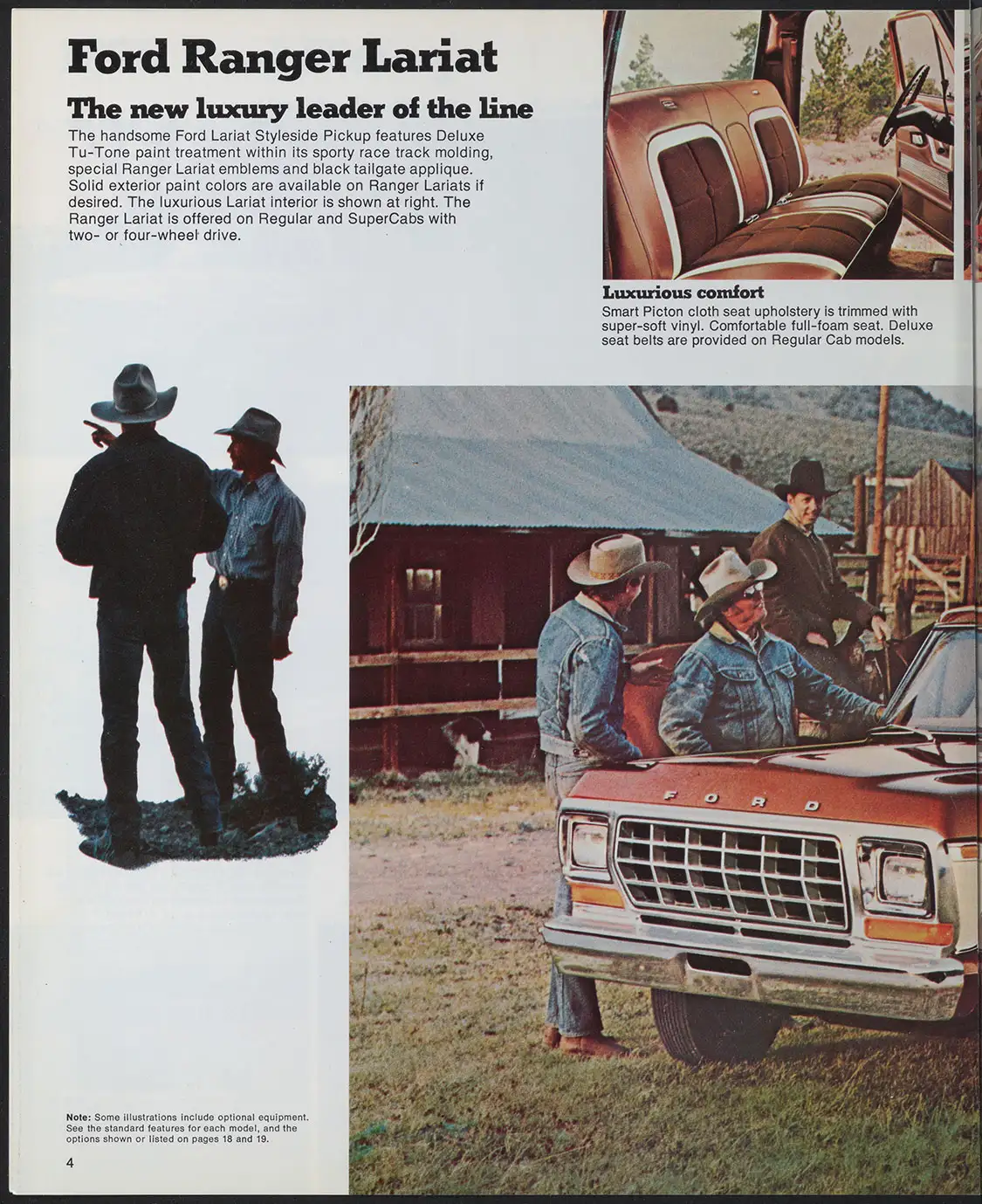
We hope you’ve enjoyed this series of retrospection on the Ford F-Series over the past few issues of F-100 Builders Guide and we hope to bring more series like this to you in the near future! As always, thanks for the continued support from the Ford Motor Company Archives for providing us with these amazing historical documents and images to share with you!
Over the course of its run, the “dentside” Ford trucks became more refined, while also becoming much tougher in all the right places, making it a bestseller year after year.



Performance cars may evoke concerns over elements like horsepower, suspension systems, or even technique.
Tires? Not until there’s a problem. Trouble stopping, wiggle in the rear end, no feel in the steering. That’s when it hits you: there’s more to the round, black things at the corners of your car beyond holding up the wheels.
Performance tires are how the car speaks to you. They help keep everything moving, yes, but they also hone that movement so it feels right, where it feels right.
It’s not the most shocking thing at first. Rather, it’s something that accumulates momentum when you consider it.
Performance tires are designed to put more rubber on the pavement. This is accomplished through specific rubber compounds and tread patterns designed for traction above wear life. The result is a car that is more “planted”, especially when turning or stopping.
There isn’t a tiny bit of lag that can be found on more regular tires. Here, inputs show up a bit more immediately. The car is more stable when pushed hard. This is another little thing, but it can result in a significant connection between you and your steering wheel.
It’s often said that performance tires aren’t very practical unless you’re speeding around corners and switching lanes with a minimum of fuss. That’s not quite right.
Having a better grip at lower speeds increases stability and decreases any margin of error at the limit, even if all you’re trying is to come to a controlled stop or stay on the road in a rainstorm. It’s less about going places and more about getting things stopped in a hurry if you need to.
That doesn’t mean they’re quiet-riding luxury items. Expect a firmer ride and faster wear than a standard passenger car tire.
What’s changed isn’t just the tires. It’s a driver’s perspective.
Now, more people see their tires as something that’s part of the fun, rather than just a wear item. Instead of waiting until they have to make a replacement, they’re looking to make an upgrade with tires that offer the kind of performance they want.
That means that today, it’s easier to find tires that can suit different styles. Some people will prefer tires that offer more handling bite, while others will prefer something friendlier with less noise, and some will want something in the middle. Auto parts stores and tire shopping home pages like Priority Tire, for instance, have solutions available that have enough size and style variance to make sure a driver doesn’t have to try dealing with just a single kind of tire.
Another element that doesn’t come into play as much? How and where you drive.
Performance tires usually perform best in the heat of the summer. If you’re in a relatively stable, dry environment, you might notice everyday handling improvements. If your location is typically cold or frequently inconsistent, you might not be able to take advantage of everything they have to offer. That’s when all-season tires start to seem a lot more attractive.
There’s no such thing as better, just a question of what fits your lifestyle.
Performance tires are not for everybody (and they don’t pretend to be). What they do offer is a subtle step up: more confident performance, more feedback, higher levels of engagement.
For some people, these things are immaterial. For others, they are what differentiate a car that gets you there from one that you enjoy on the way.
And once you start enjoying it… It’s tough to go back to not!
Photos By Larry Chen
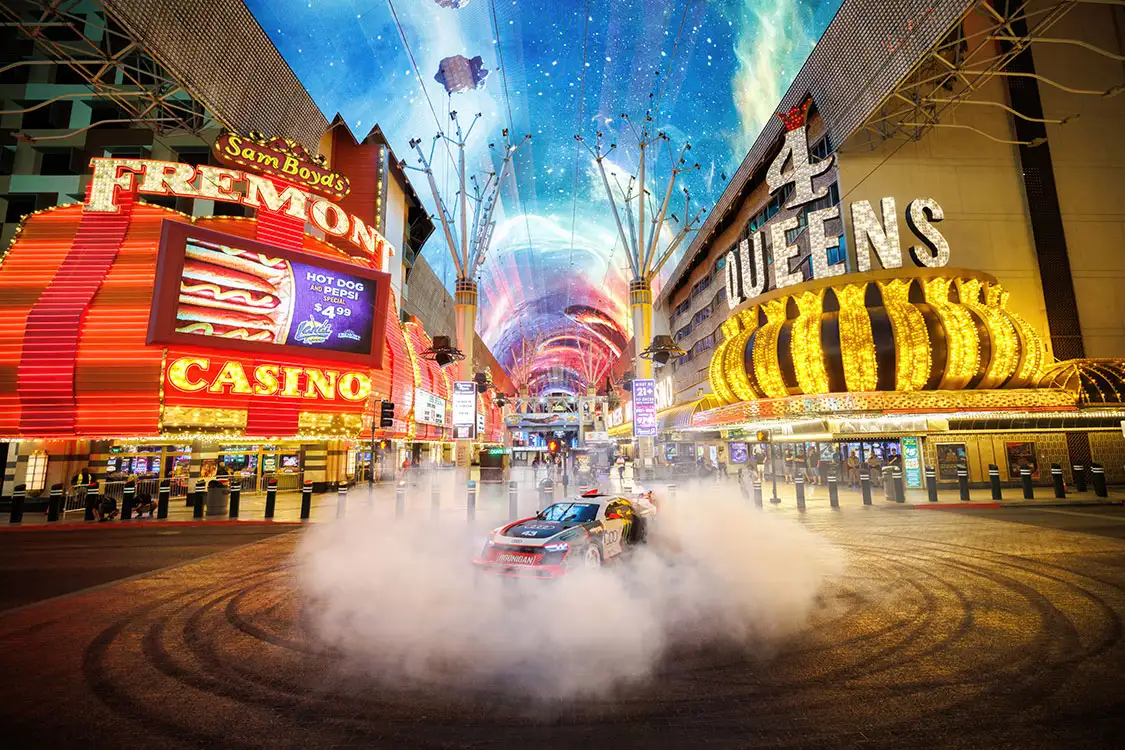
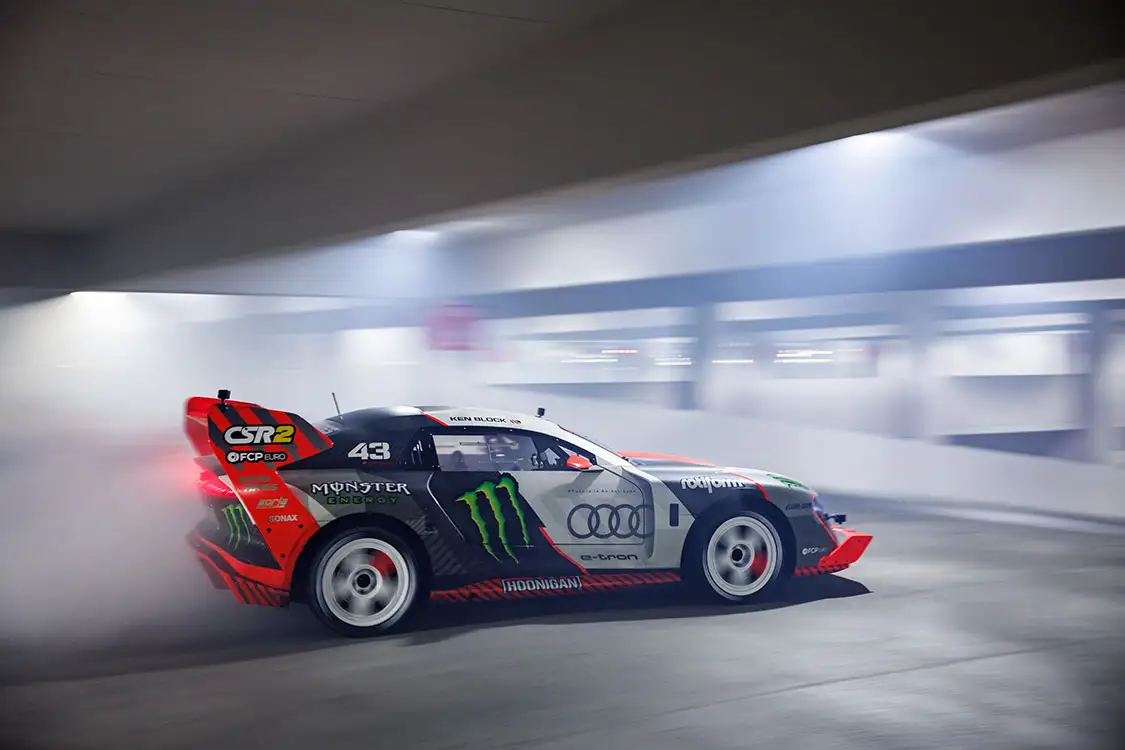
You know what they say, “Go big or go home.” When it comes to electrifying the race scene, Ken Block didn’t just settle for going home—he went high-voltage in a one-of-a-kind, jaw-dropping manner! His Hoonitron takes inspiration from the 1987 Audi Sport Quattro S1 Pikes Peak car.
This stunning machine results from a thrilling challenge posed to Audi to build an electric prototype to cater to the specific needs of the legendary driver himself. This project was an excellent opportunity for Audi to showcase the essence of “Vorsprung durch Technik” in an entirely new environment. The S1 Hoonitron boasts an all-carbon-fiber chassis enhanced by massive downforce-generating wings on either side.
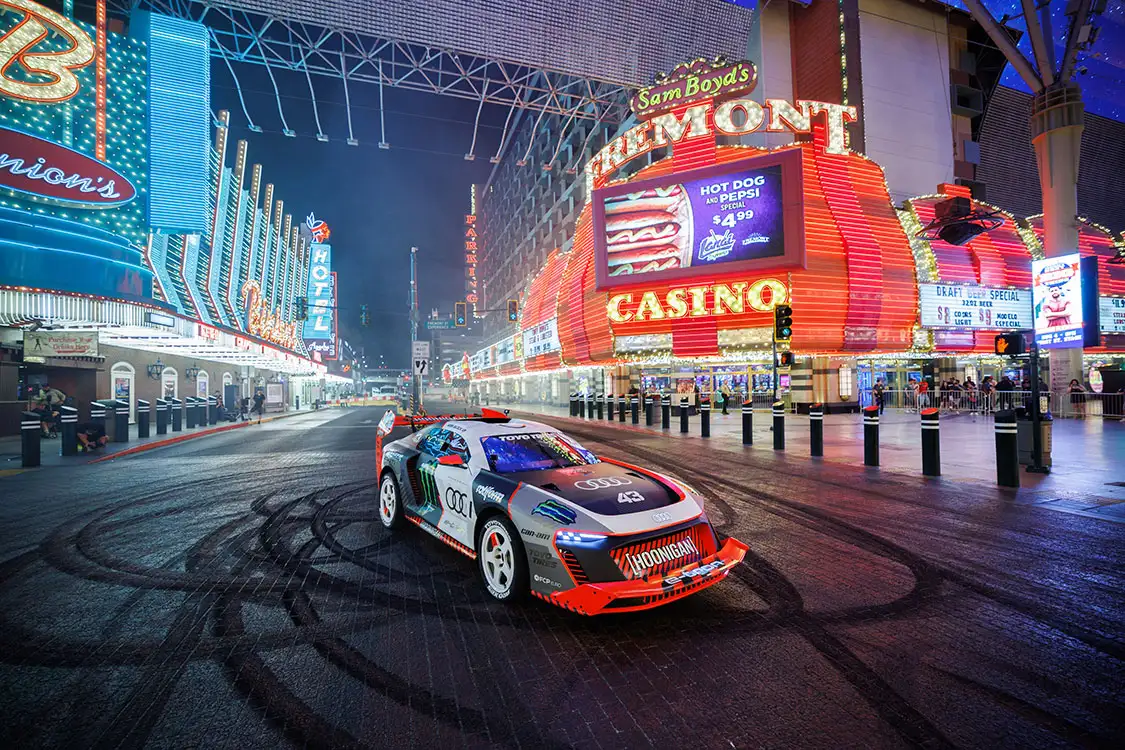
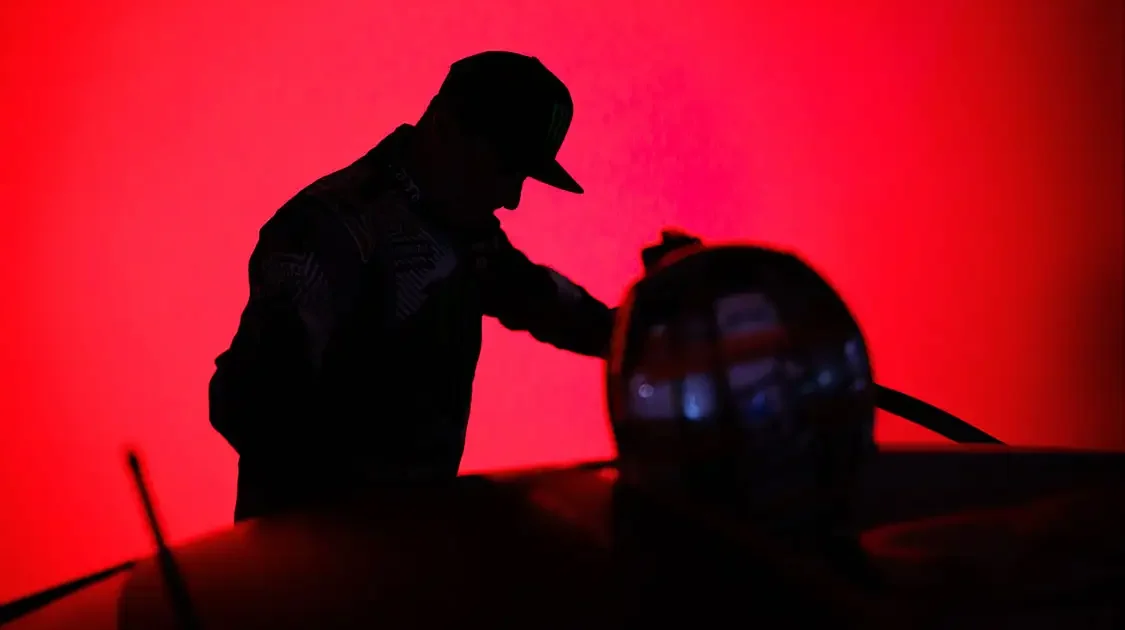
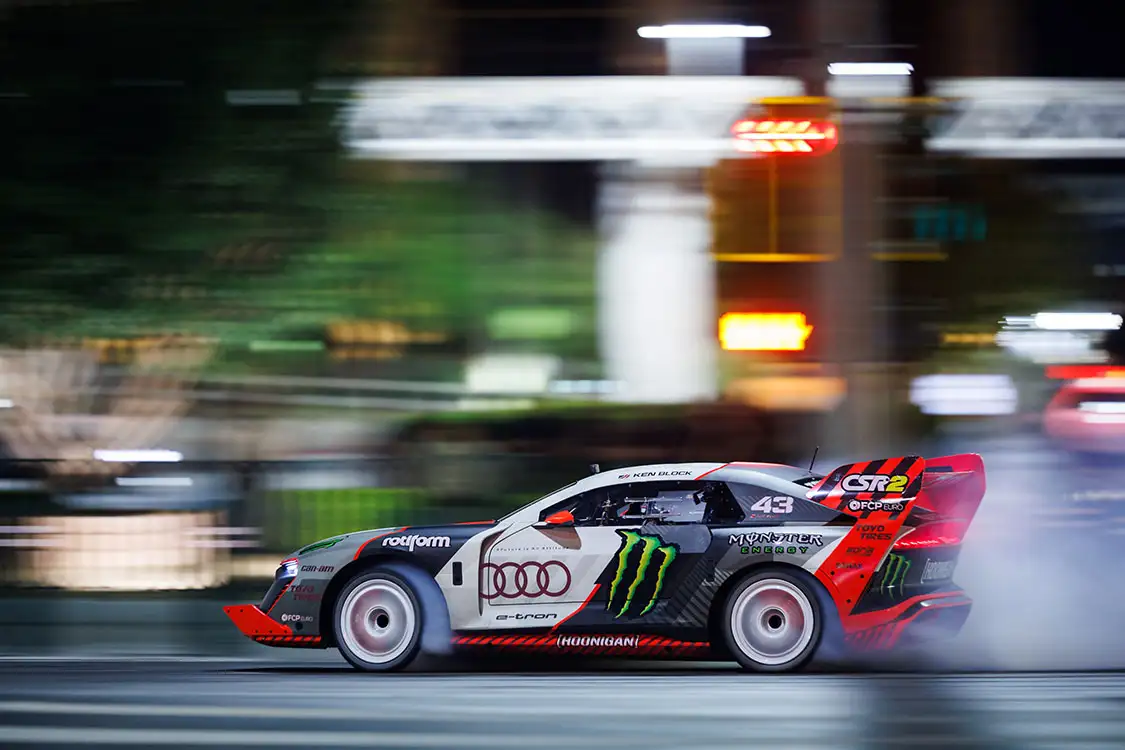
The car is powered by Audi’s Formula E motors, similar to the Audi RS Q e-tron, but with a twist! Instead of using the Formula E battery pack, the S1 Hoonitron runs on four 17.3-kWh lithium-ion battery packs initially intended for use in the Audi Q7 e-tron.
When the motors run at 800 volts, the S1 Hoonitron generates a mind-boggling combined 3,000 Nm/2,212 lb-ft of torque! During the filming of the Electrikhana video in Las Vegas in 2022, the car burned through 100 tires—2.5 times the number of tires that Block typically uses while filming a gymkhana video.
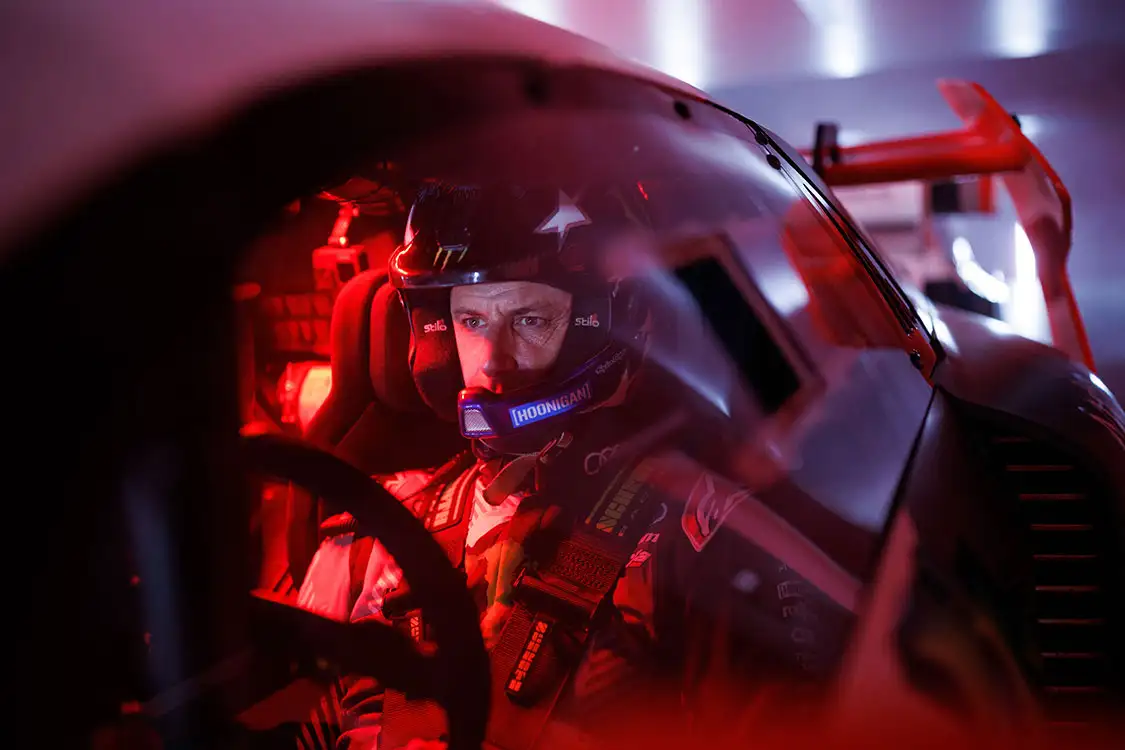
So, what’s the most significant difference between the S1 Hoonitron and Block’s previous vehicles? “Instant torque,” according to the man himself. Unlike traditional race cars that require a process of 4 to 5 seconds to build boost, the S1 Hoonitron provides instant acceleration with just a simple mash of the throttle pedal.
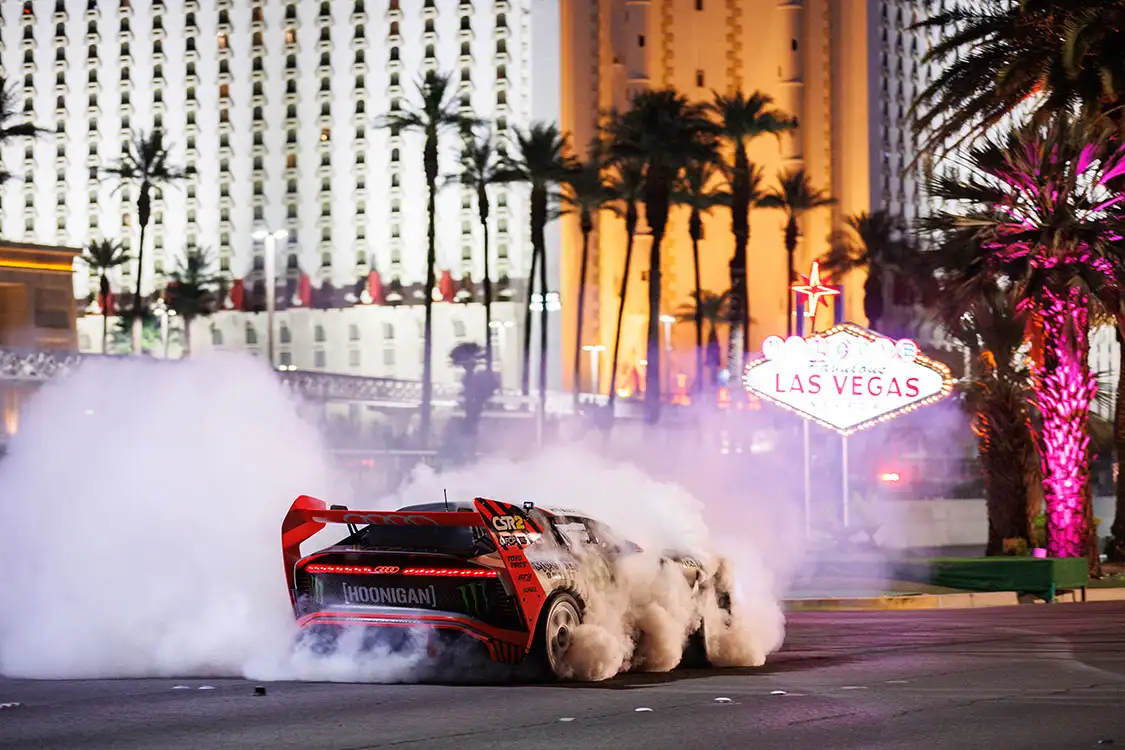
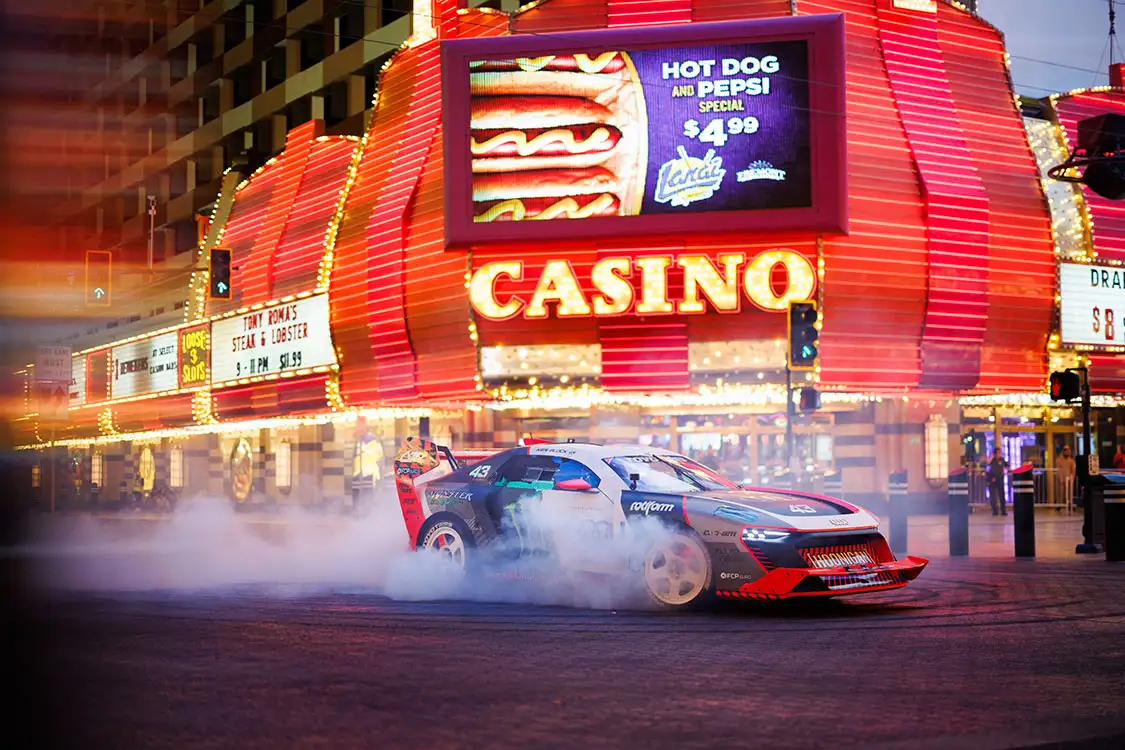
“Progress is my motivation,” Block says. “Since last year, I’ve been part of the Audi team, which is a dream come true. Technologically, this is by far the most advanced drift car I have ever driven. The components in the overall package of the car are beyond my expectations. For me, this is the future, and I look forward to playing a part in creating it.”
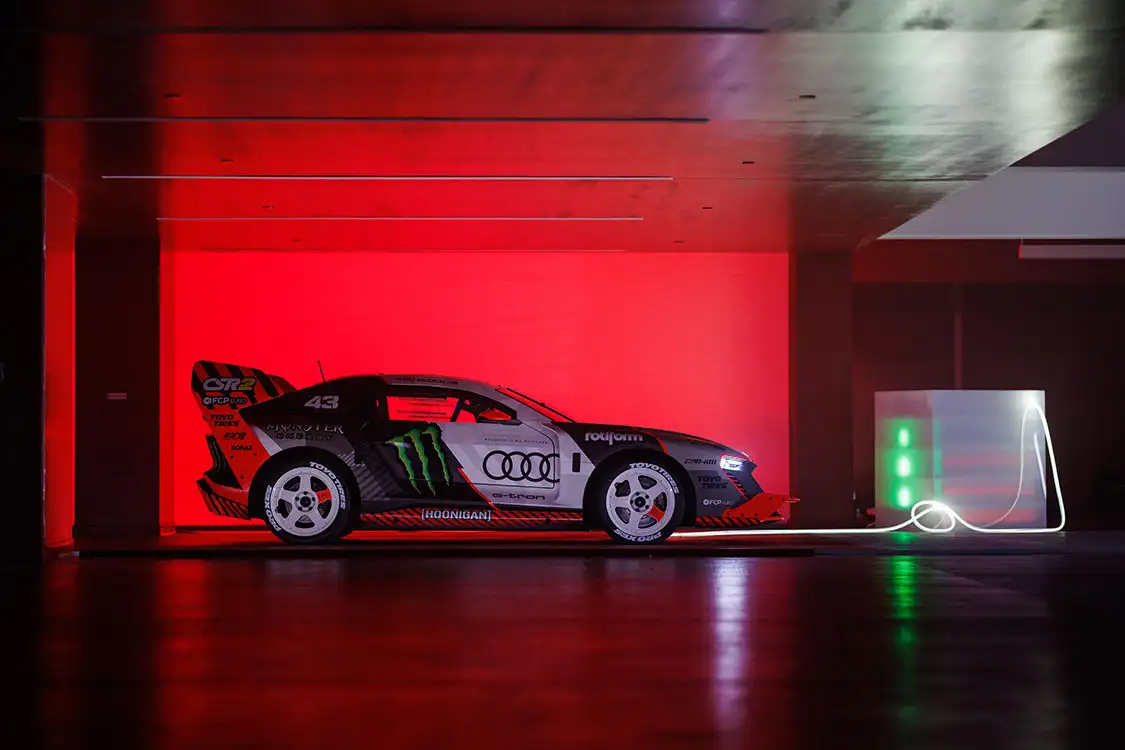
The car features a dual cooling circuit, one for when the car is in motion and the other that connects to a service box that houses the S1 Hoonitron’s DC fast charger. As a result, battery life wasn’t a concern during filming, and Block and his team believed that they could have made do with just two battery packs instead of four.
Now, the elephant in the room: the cost of building this electric marvel, you ask? Well, the Hoonigan team we spoke to doesn’t know the exact amount spent by Audi, but they estimate the figure to be between $10 to $12 freaking millions!
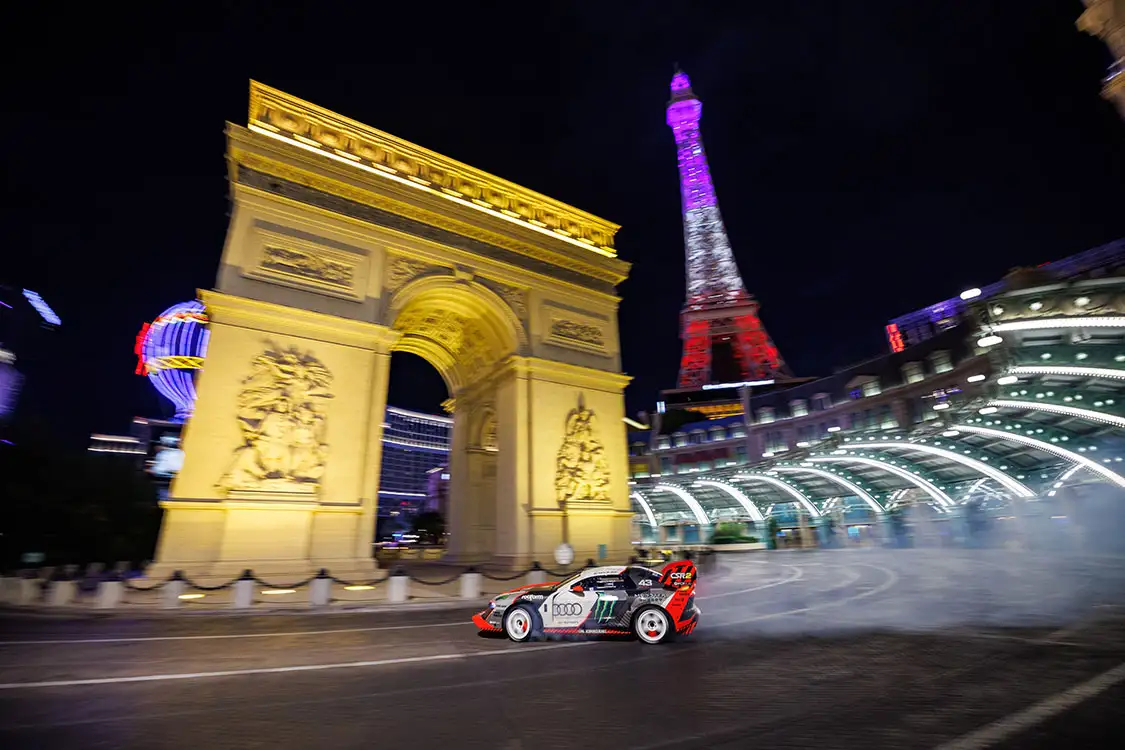

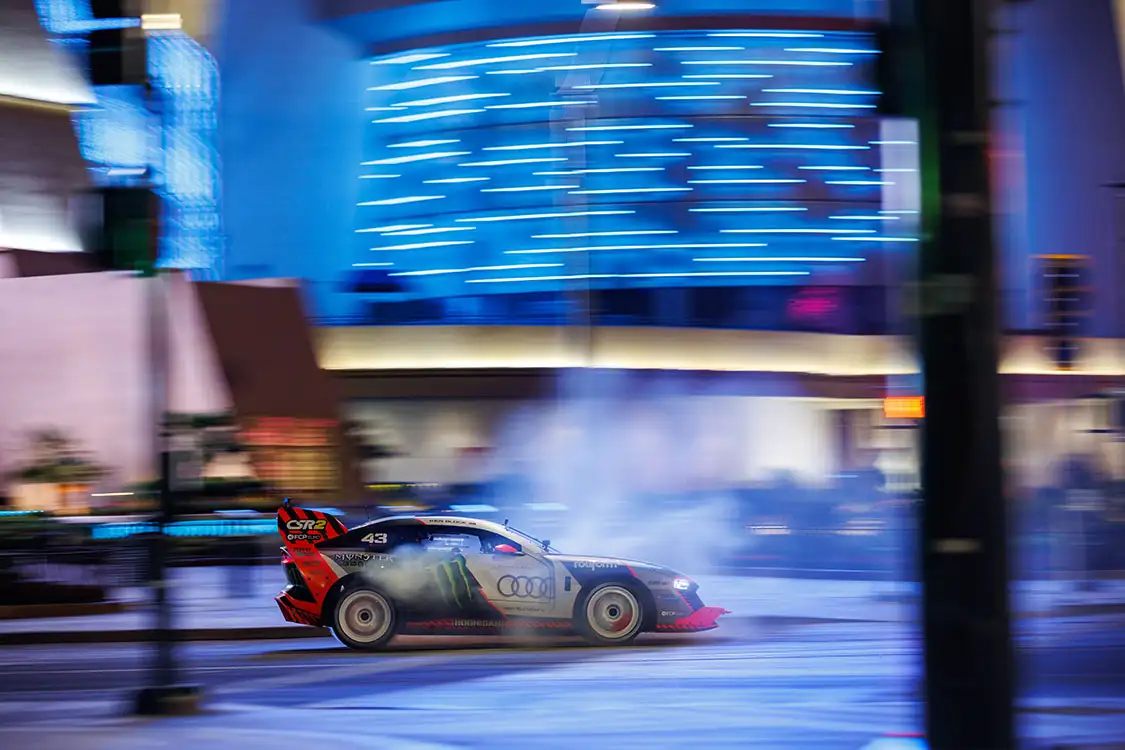
Now for that price, you get an awesomely cool-looking ride! The livery design of the car is a collaboration between Audi and Hoonigan Racing Division.
“We picked the key features and characteristics, and we tried to boost their impression with the livery design,” Block says. “I see Audi as the geniuses behind the car and us as a racing team, so like any racing team would, we’ve added our spin on the livery.”
For me, this is the future, and I look forward to playing a part in creating it.
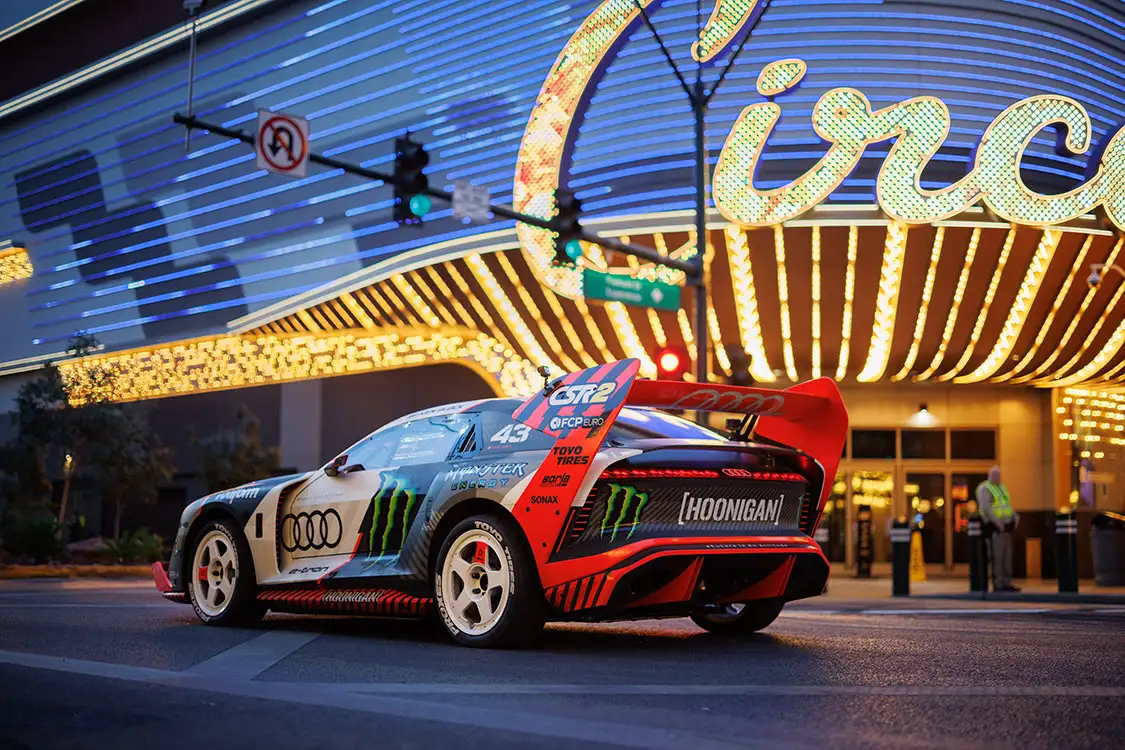
The project was initiated in March 2021 with the challenge of building a fully electric vehicle that could drift and pay homage to the rally legend, all within a matter of months. Leading the project was Stefan Murrweiss, a 50-year-old vehicle developer of Audi Sport series models who had more than 20 years of experience working at Audi. Despite his lack of familiarity with Ken Block and his drifting videos, Murrweiss took on the challenge and assembled a team of experts to build the Hoonitron.
One key team member was Bastian Rosenauer, who played a central role in the creation of the Hoonitron. With over eight years of experience in shell construction for high-performance projects and coordination of prototypes in customer racing, Rosenauer was responsible for the concept development and implementation of the Hoonitron.
We started from scratch. We had to figure out what would work for me and what I wanted the car to do.
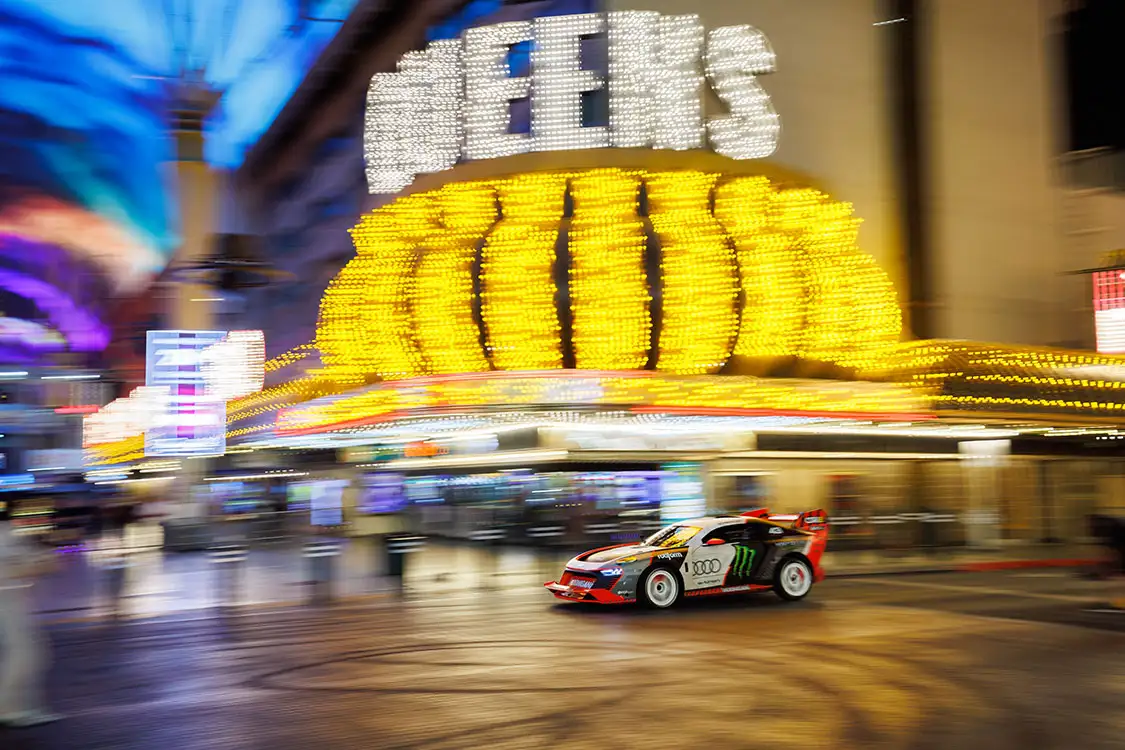
Due to the pandemic, the development and construction of the Hoonitron took place in various living rooms, home offices, and kitchens, with team members participating in weekly video calls to discuss and lay out the project’s progress. With just under eight months to complete the project, the team had to be efficient and make the most of their time.
To save time, the team considered using an existing vehicle chassis as a base, but the specifications for the wheelbase and proportions were too demanding. So instead, the team decided to design a new shell that would suit the existing components, including the chassis, battery, and ideas from Ken.
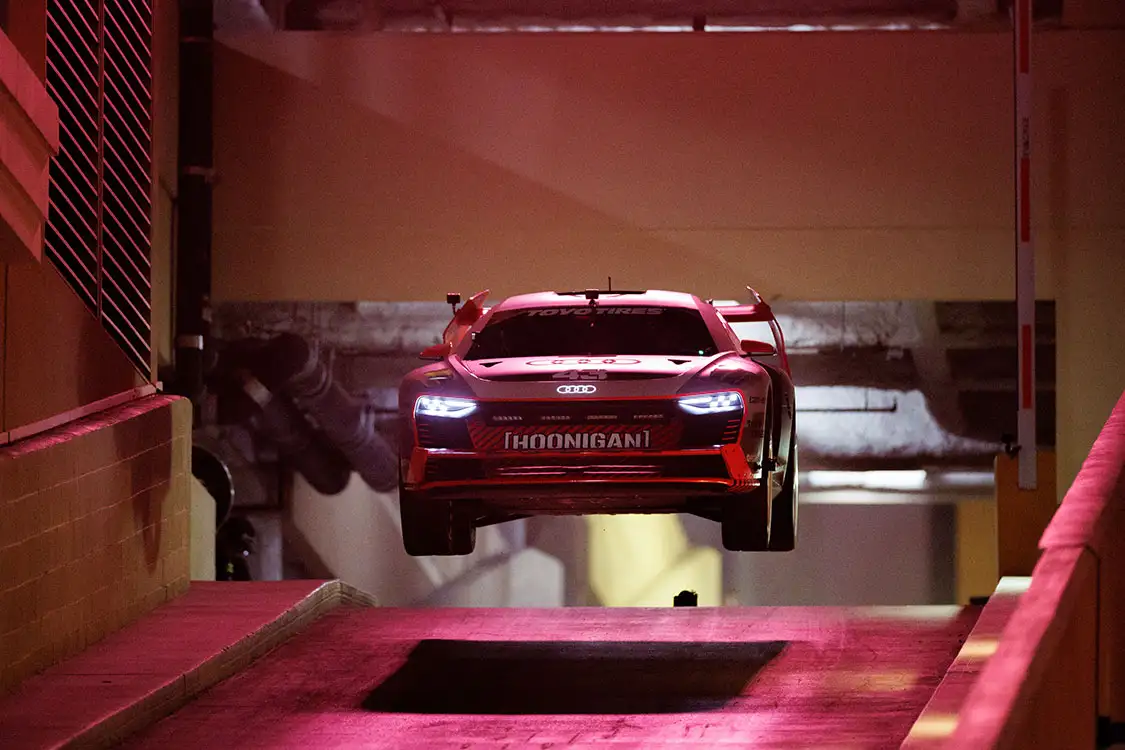
Sascha Heyde, an exterior designer at Audi, was driving the design process forward. Heyde’s retro-futuristic design, which Marc Lichte, Audi’s chief designer, managed, set the course for the Hoonitron’s final look. The car’s proportions were similar to those of the Sport Quattro S1, with features like flared wheel arches, Quattro blisters, and front and rear spoilers appearing on the Hoonitron. However, the low vehicle height was a sticking point in the discussions between Murrweiss, Rosenauer, and Heyde, but it ultimately became one of the most futuristic aspects of the car.
The Hoonitron was designed to be a robust, functional vehicle that would showcase the extremes of what e-technology could do.
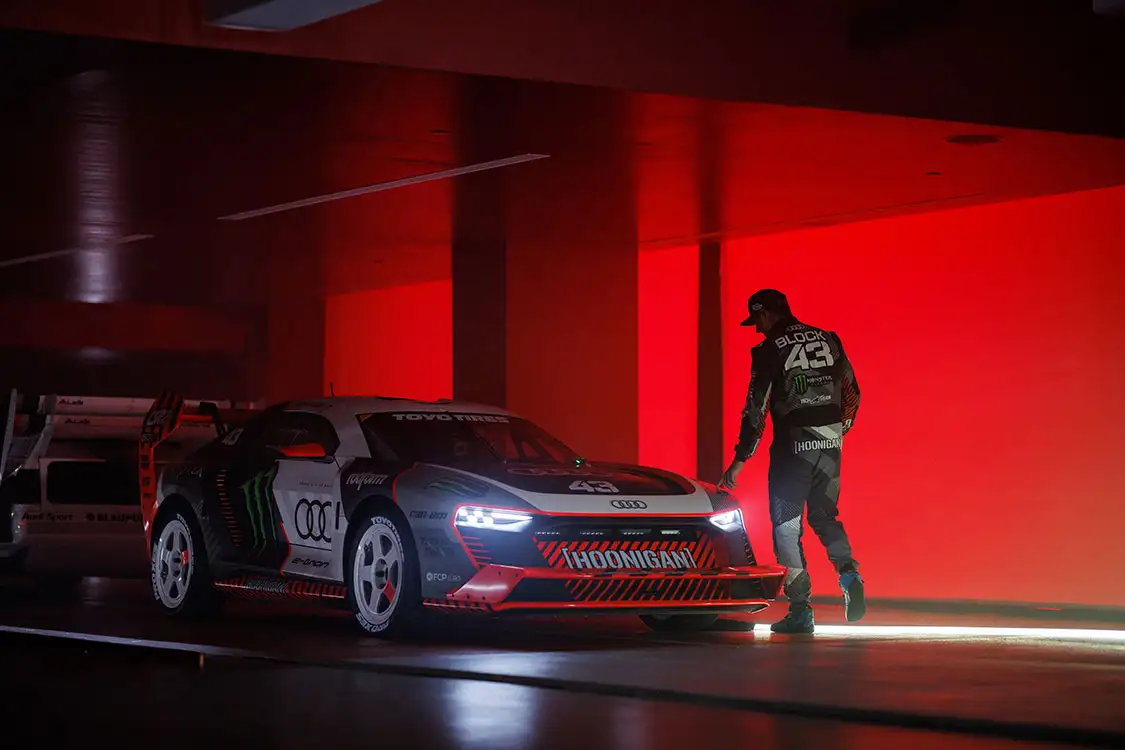
The Hoonitron was designed to be a robust, functional vehicle that would showcase the extremes of what e-technology could do. In just 10 weeks, the design process was complete, and construction was ready, with the remaining time used to procure parts, assemble them, and carry out necessary tests. The result was a tribute to the legendary Sport Quattro S1 that captured its soul while showcasing the possibilities of e-technology.
It was on Nov. 11, 2008, when the world was introduced to Ken Block and his awe-inspiring driving skills. Gymkhana Practice hit YouTube, and the video quickly went viral, capturing the attention of millions. Just 1 minute and 22 seconds in, Ken pitched his Subaru sideways at a breathtaking speed, showcasing his driving talent and making a lasting impression on viewers.
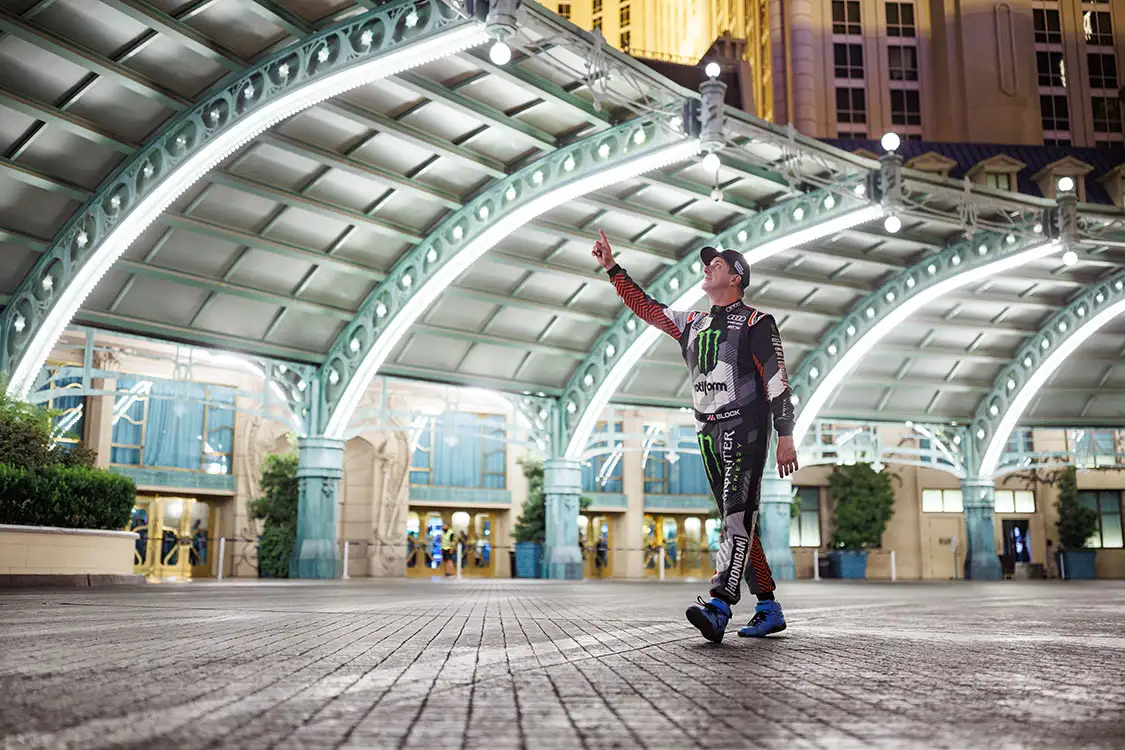
Ken Block was a larger-than-life figure, both in personality and physical stature. In person, he was warm and friendly, exuding confidence without a hint of arrogance. His childhood hero was Colin McRae, and it was his love for rallying that inspired him to pursue his passion after selling his share of DC Shoes in 2005.
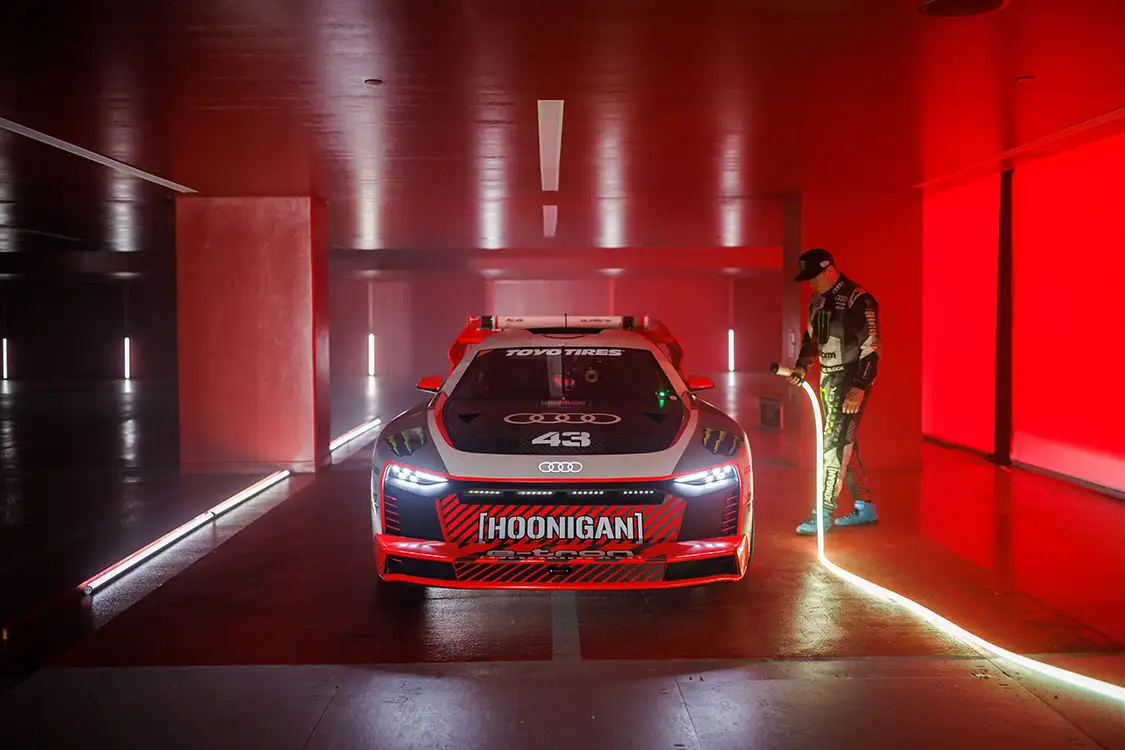
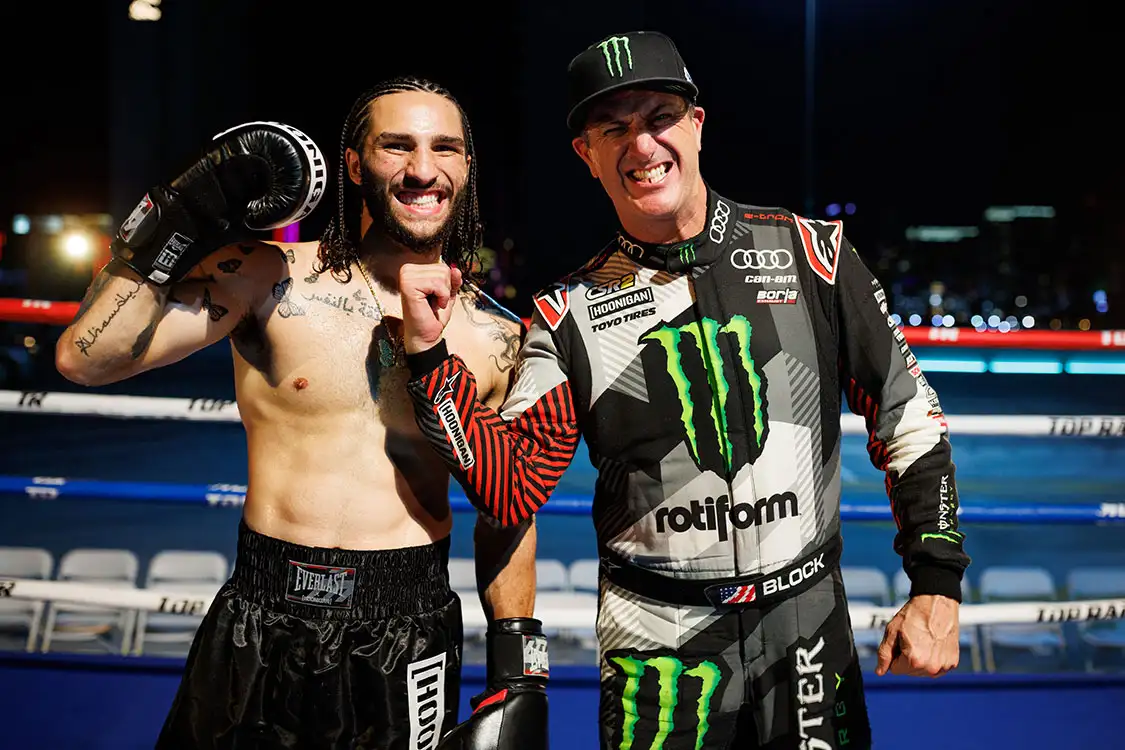
Although performing wild stunts in rally cars was not a new concept, with events like Nitro Circus and X Games already incorporating it, Ken set himself apart with his focus on filming and presenting his skills in a 5-minute video for the internet to enjoy. This marked the birth of the now-iconic gymkhana series.
Ken’s first major exposure came in 2007, when he demonstrated his driving abilities in a snow park in New Zealand, jumping alongside snowboarders. The incredible footage left audiences in disbelief and marked the beginning of his rise to fame. Despite suffering a fractured vertebra, Ken’s determination and passion for rallying continued to inspire and captivate fans worldwide.
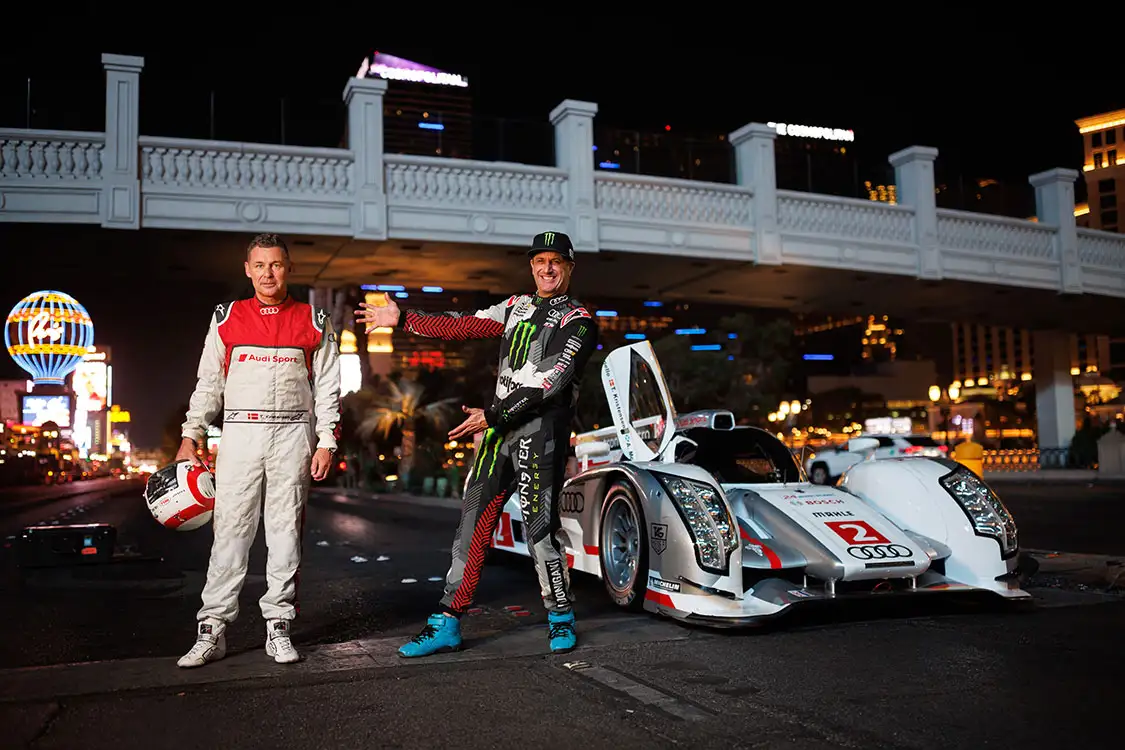
Only two months after the release of the Electrikhana video, Ken Block passed away from a tragic accident. In addition to his success in action sports (he co-founded sneaker giant DC Shoes), Ken excelled early on in the world of rallying. He began competing in the sport in 2005 and quickly made a name for himself as a skilled and competitive driver.
He competed in multiple rally events around the world, earning numerous podium finishes and even winning several championships. He was a part of the World Rally Championship, and his driving skills were highly respected by his fellow competitors. He was also known for his unique driving style, often described as “aggressive yet controlled.”
But not just his skills on boards and behind the wheel made Ken a household name. He was also a marketing genius. He founded Hoonigan Industries, a marketing and media company specializing in action sports-inspired automotive content. Under his leadership, the company produced some of the most iconic and viral marketing campaigns of the 21st century. Ken’s ability to connect with the audience and create content that resonated with them was unmatched. He was a master at creating viral content that would go on to be shared and viewed by millions worldwide.
Ken was a trailblazer who pushed the boundaries of what was possible, and his legacy will live on through his contributions to the world of action sports and cars in general. He inspired countless fans to pursue their passions and push the boundaries of what is possible.
Audi S1 Hoonitron
Vehicle Type: Electric Rally Car
Inspiration: 1987 Audi Sport Quattro S1 Pikes Peak
Chassis: All-carbon-fiber composite monocoque
Downforce-Generating Wings: Enormous, located on either side of the chassis
Powertrain: Formula E motors, one per axle, powered by four 17.3-kWh lithium-ion battery packs
Voltage: 800 V
Power: 1043 kW/1.400 hp
Combined torque: 3,000 Nm/2,212 lb-ft
Tires Used during Filming: 100
Launch Control: None required, instant torque with the throttle pedal
Cooling Circuits: Two, one for running and one for charging through a service box
Battery Life: No issues encountered during filming; potentially could have used two battery packs instead of four
Estimated cost: $10 to $12 million
Note: Not for sale, one-of-a-kind built for legendary driver Ken Block
Thank you: Larry Chen at larrychenphoto.com
A‘67 Chevelle SS That Keeps Its Cool
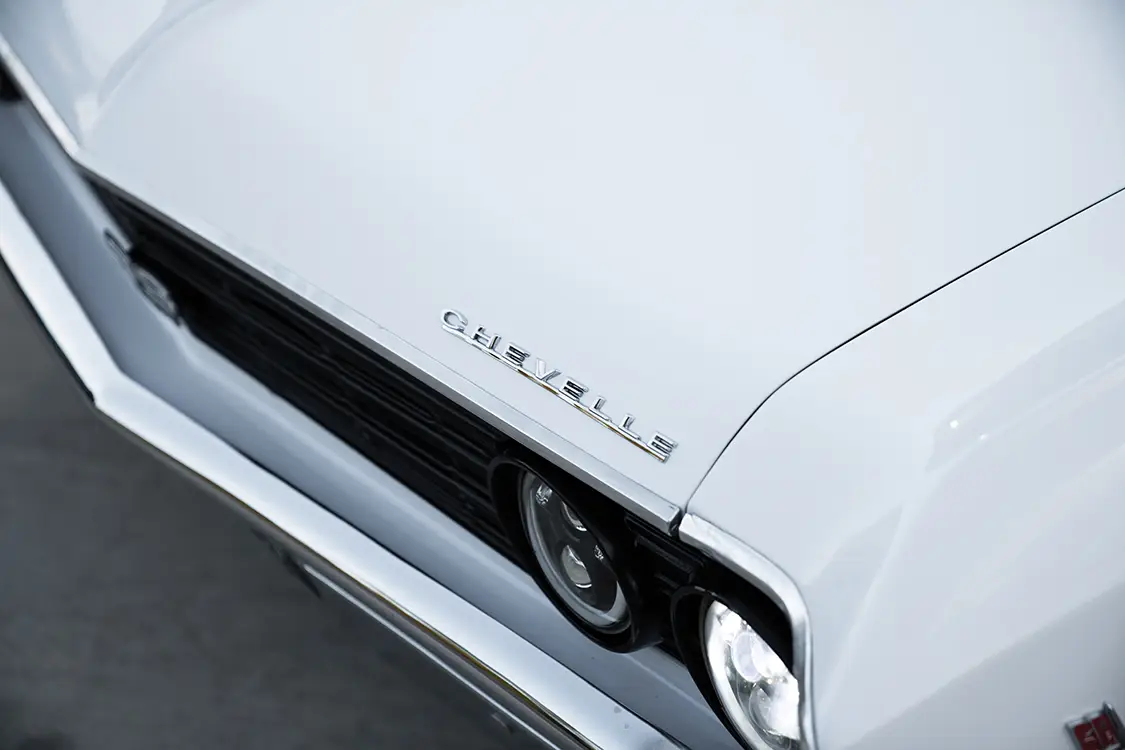
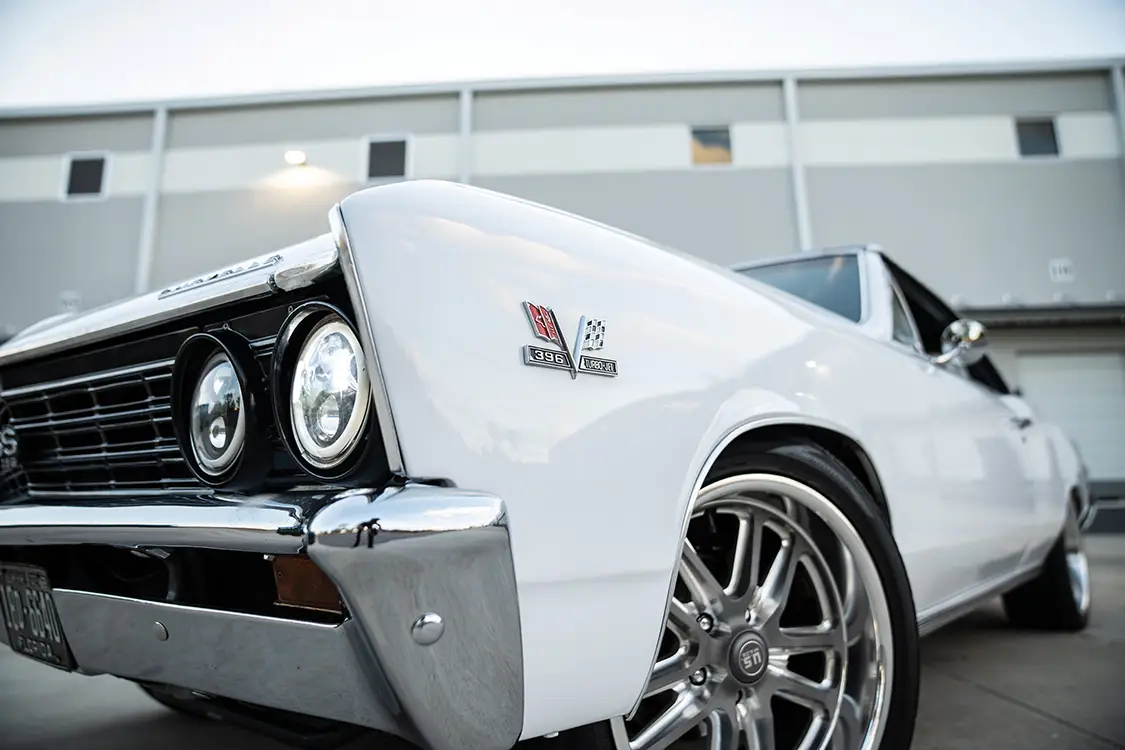
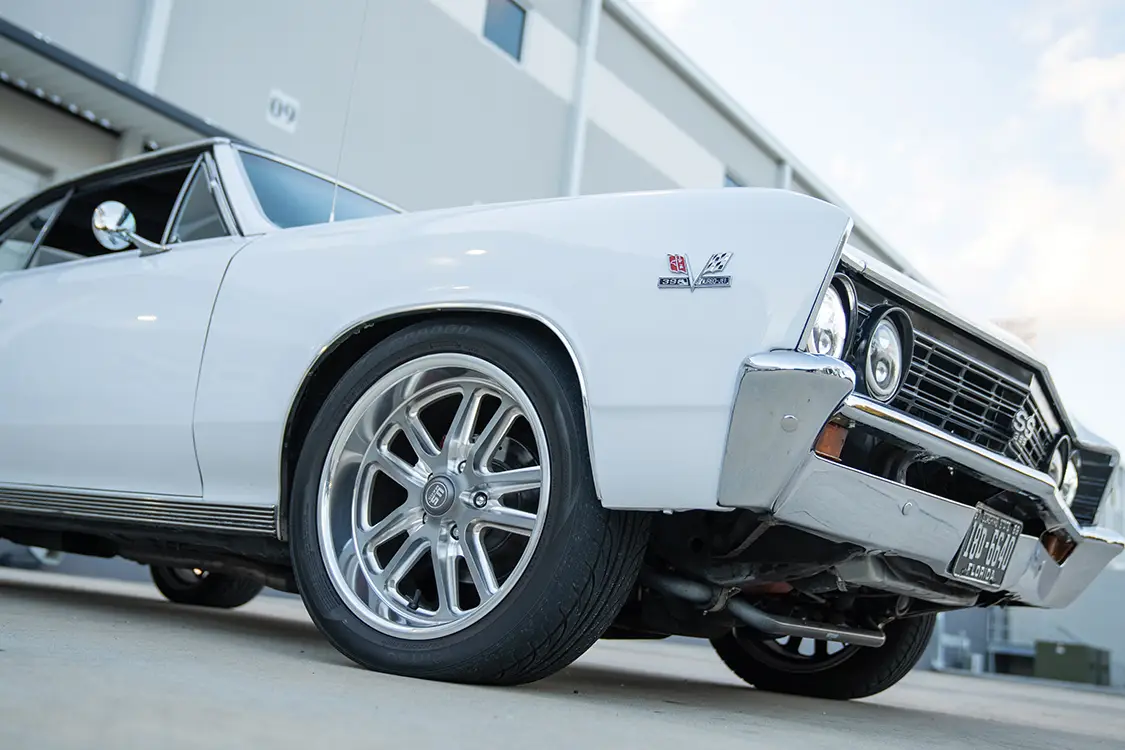
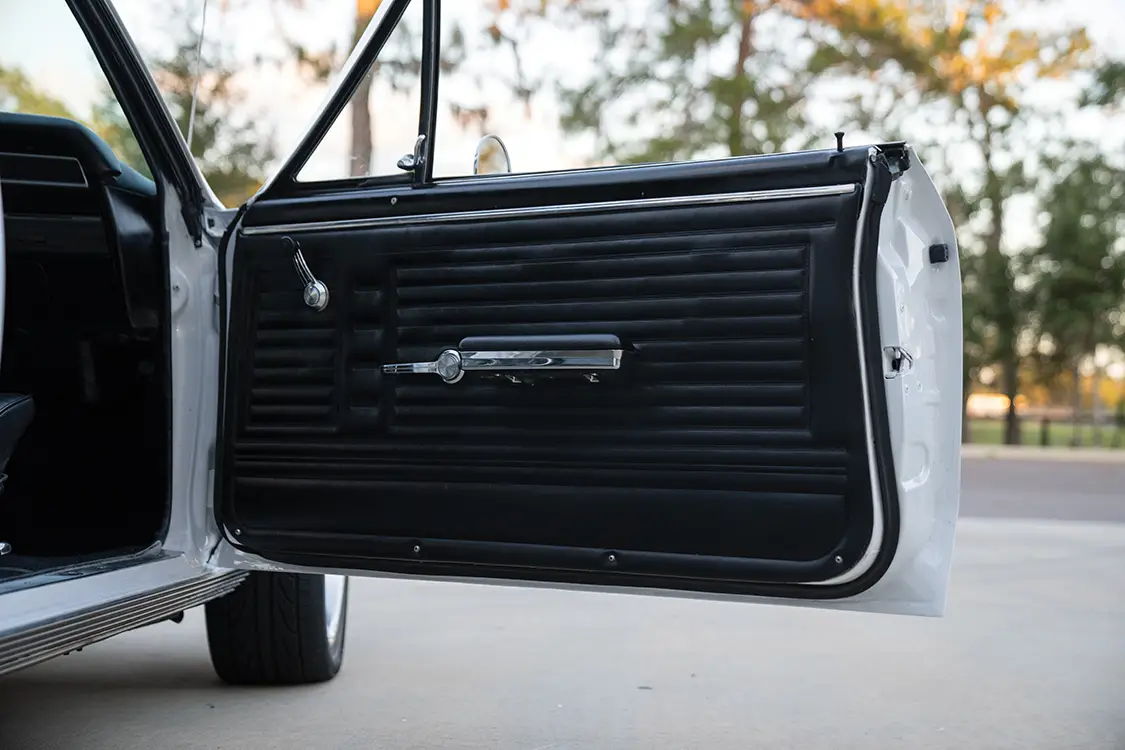
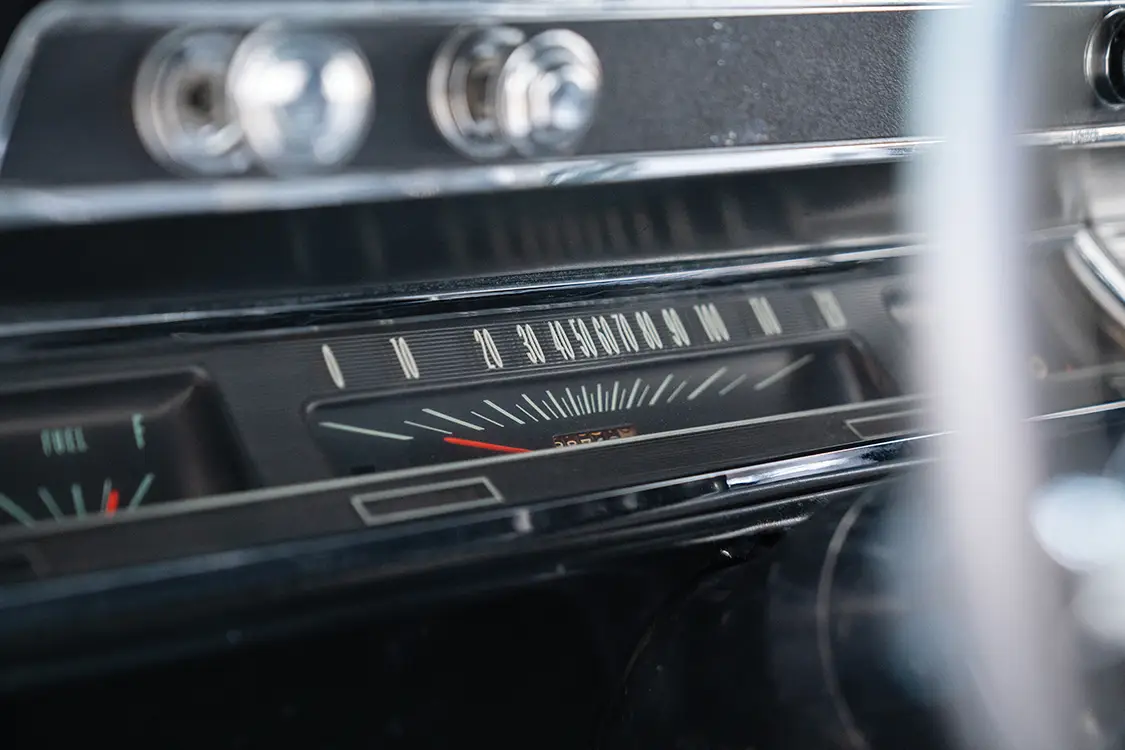
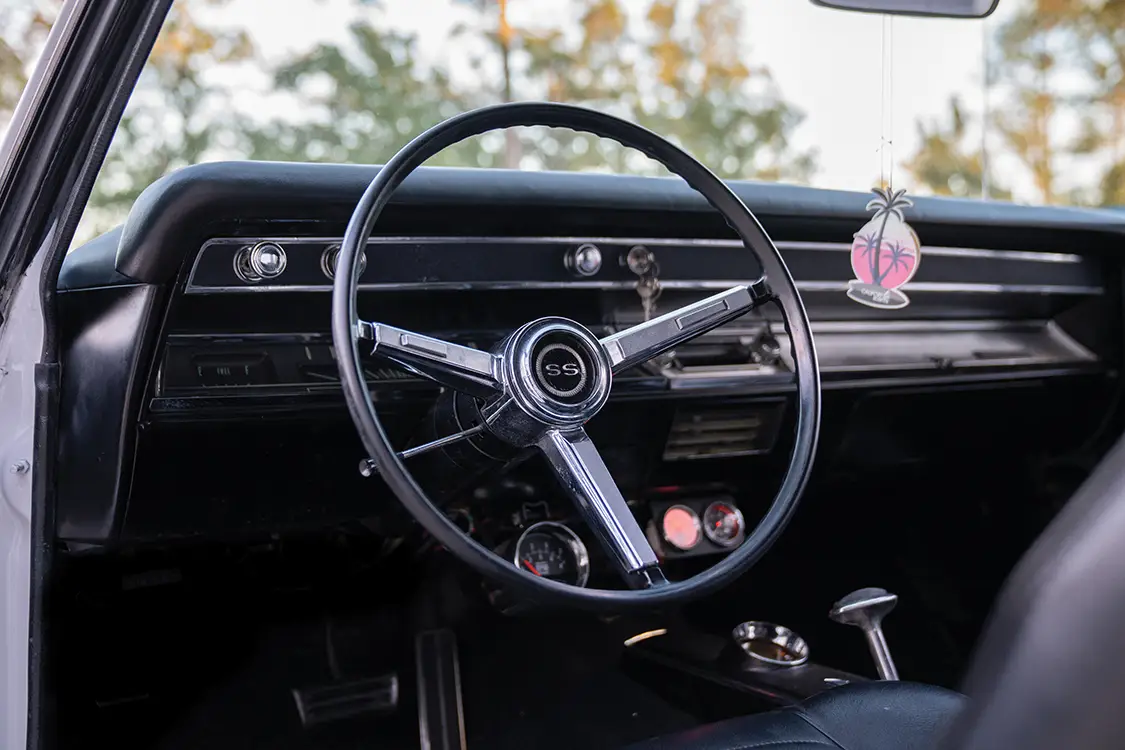
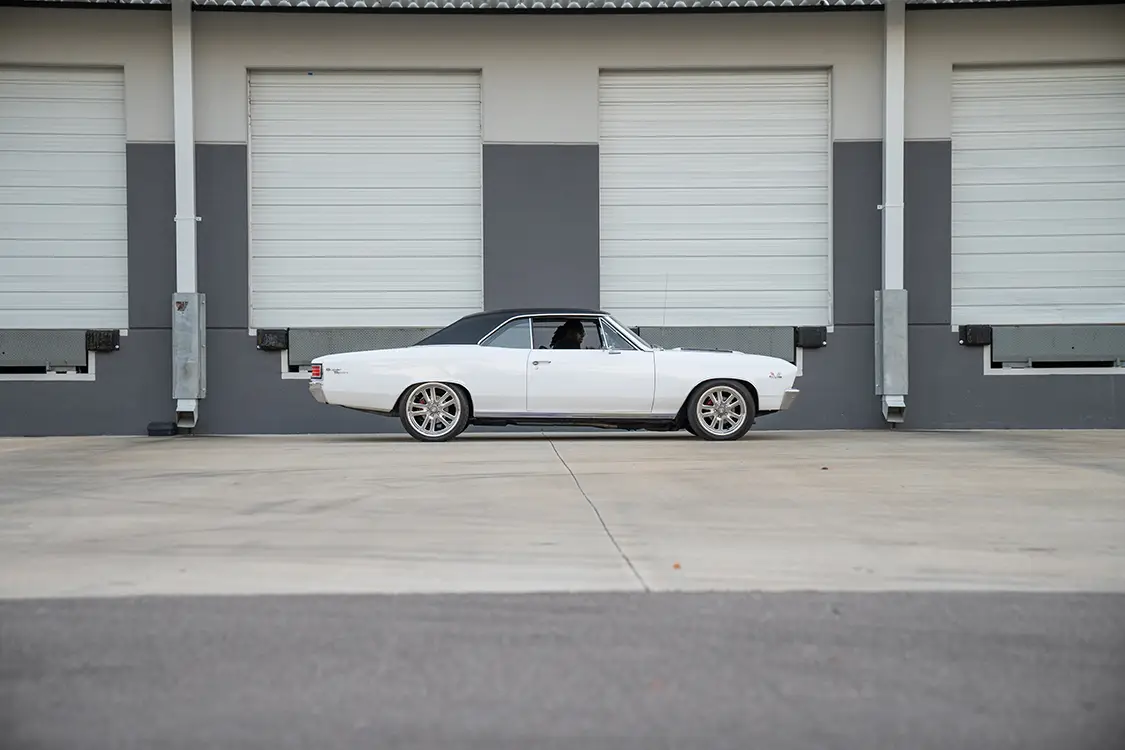
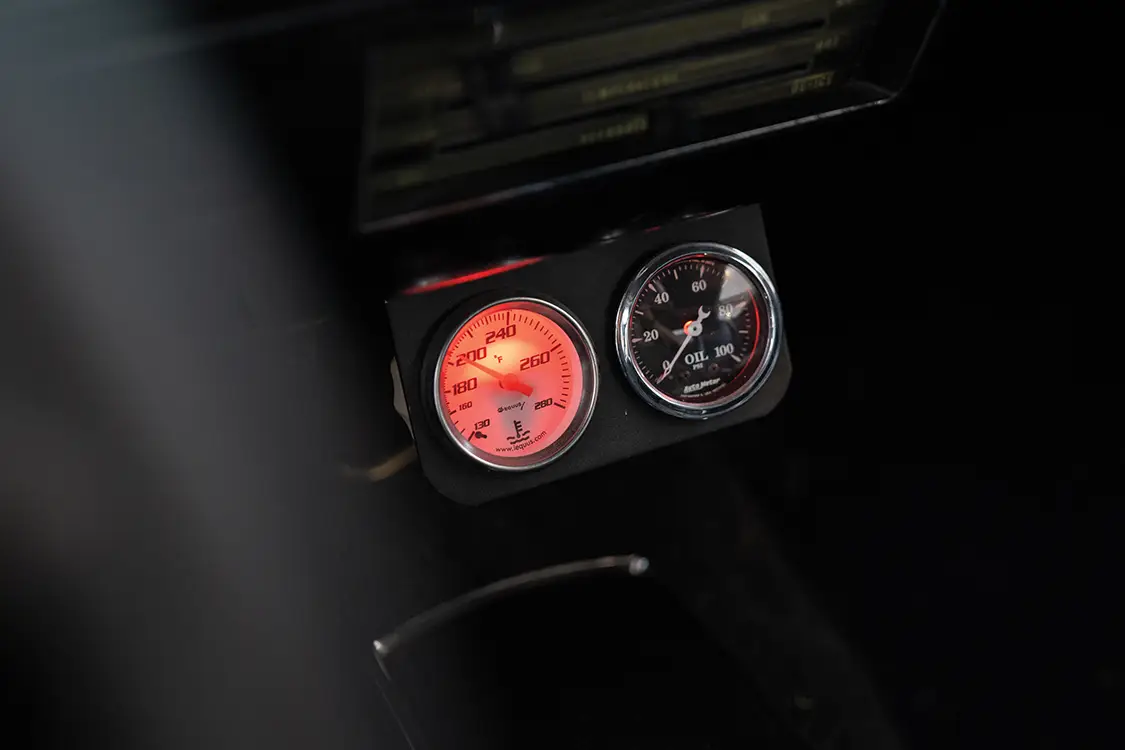
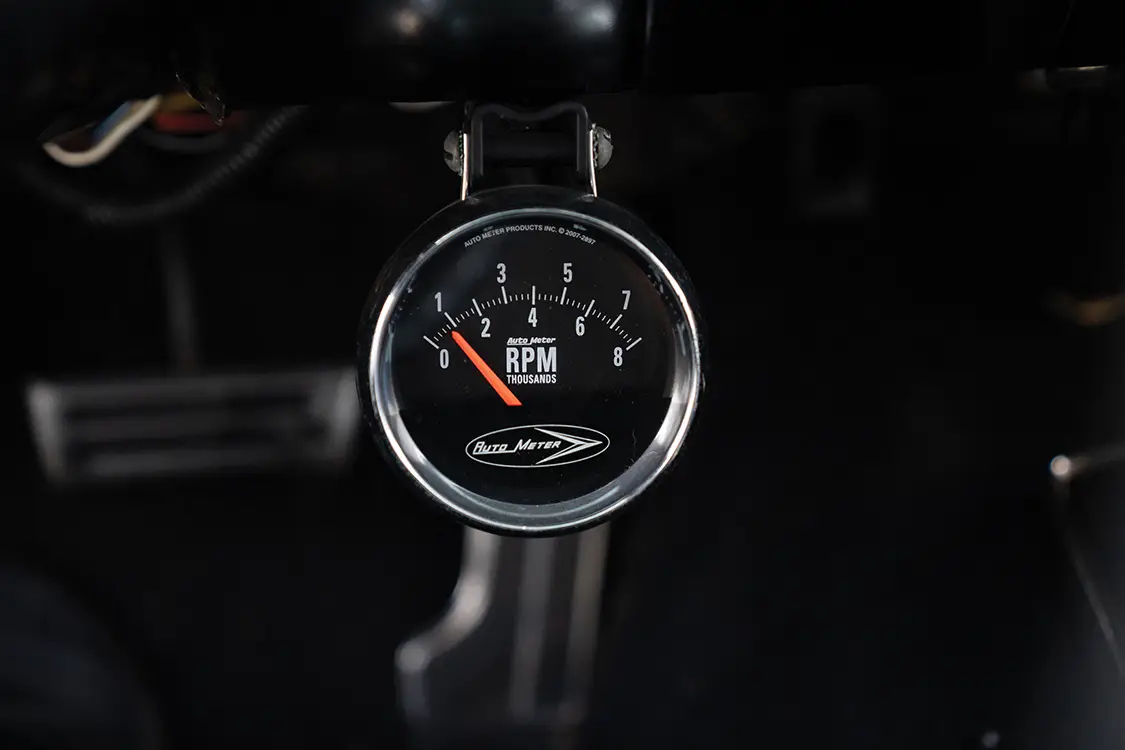
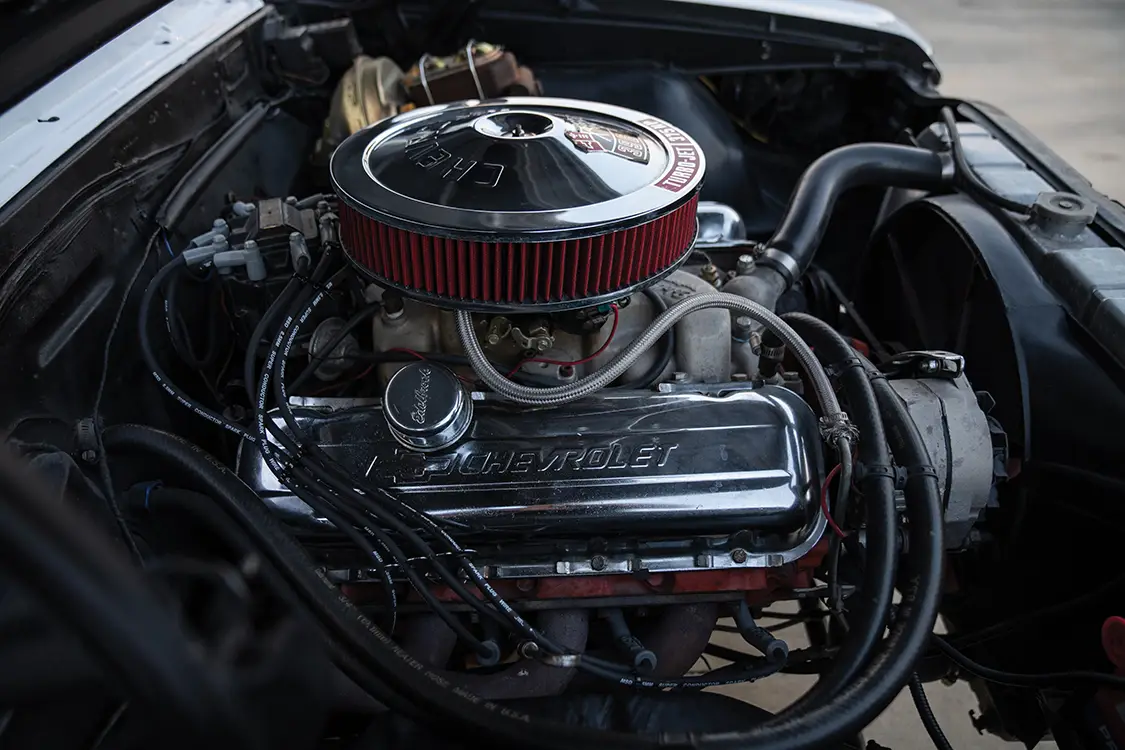
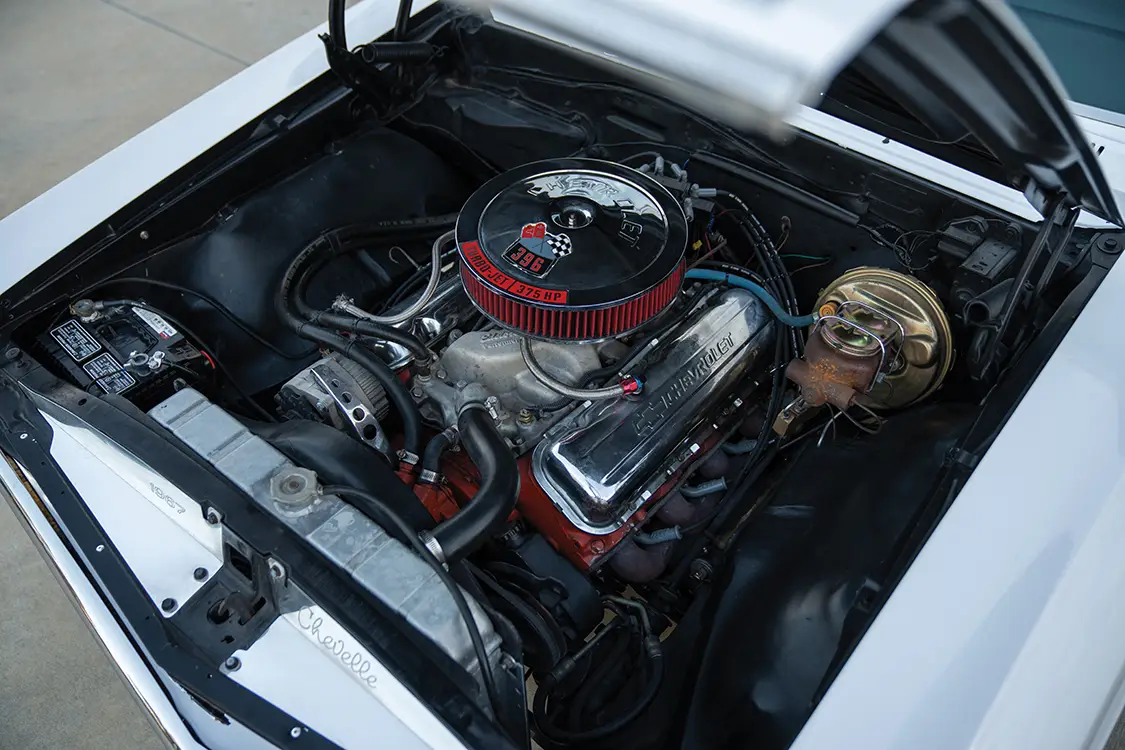
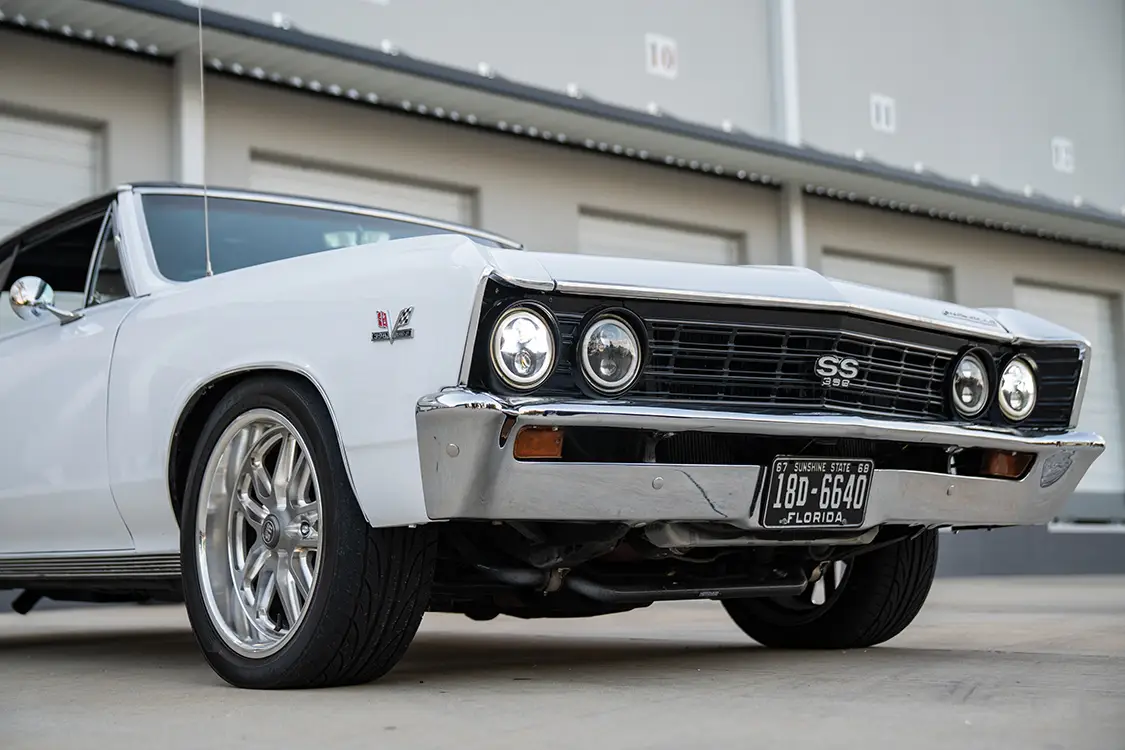
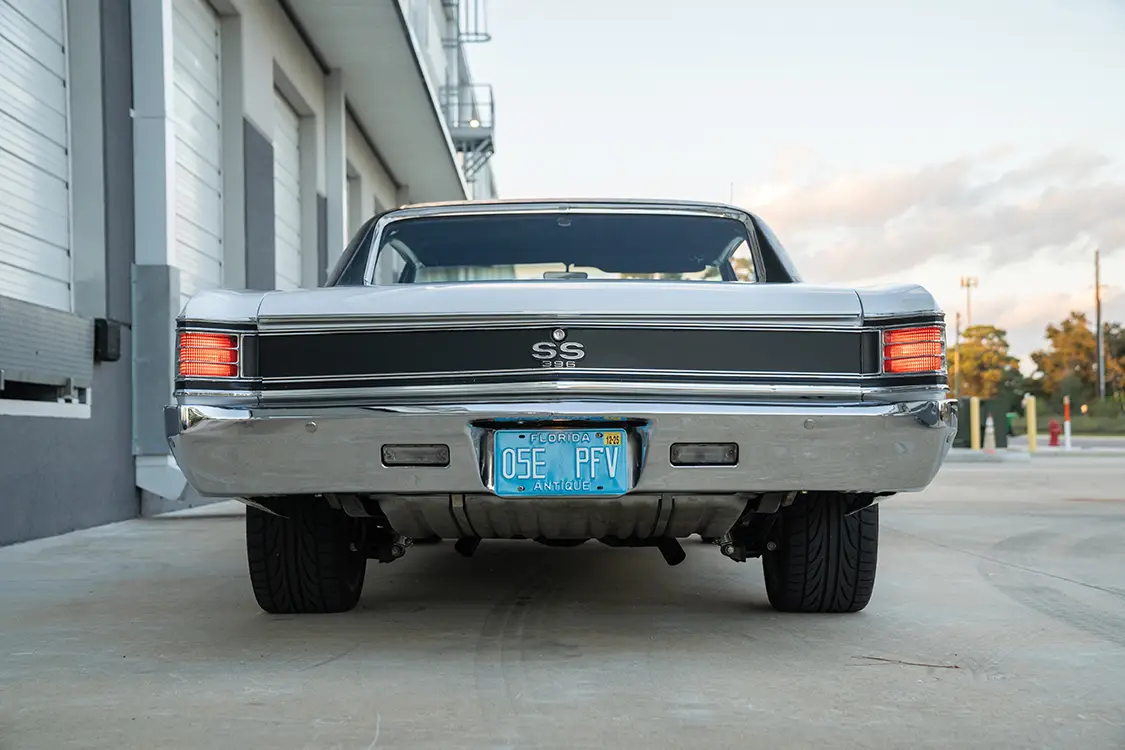
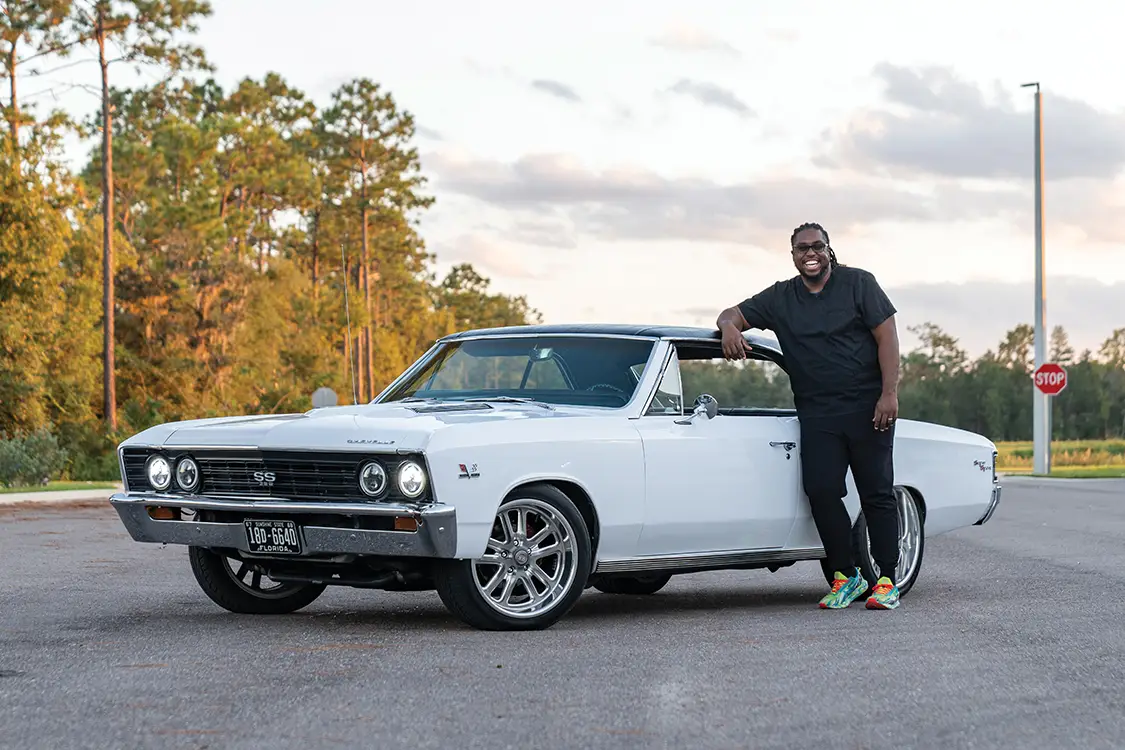
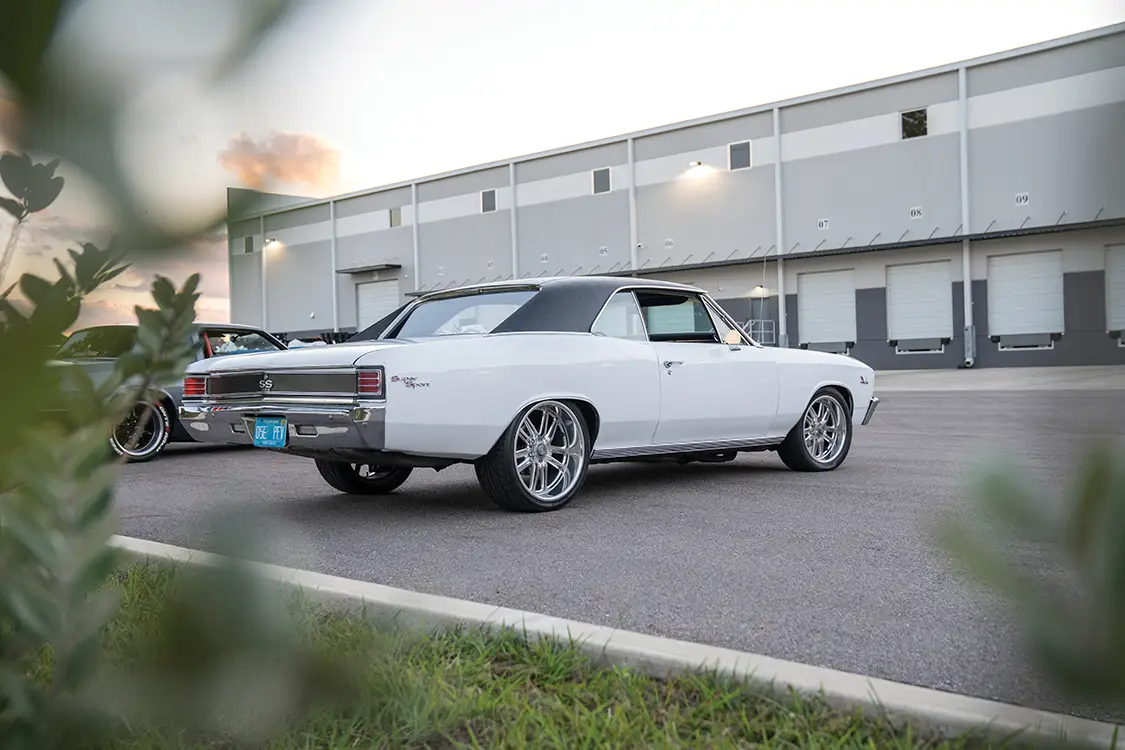
In a hobby often defined by excess, Jessie Thomas’s 1967 Chevrolet Chevelle SS stands out precisely because it refuses to shout. Known as “Pearl,” the big-block Chevelle wears a coat of modern White Diamond Tri-Coat that shifts from bright white in the Florida sun to a subtle pearl under show lights. The paint, expertly applied by Erek Larson in Titusville, covers a body that remains remarkably faithful to its original design. The factory bumpers are the originals, simply refinished in satin black for contrast. Aftermarket headlights are the only visible concession to the 21st century; everything else is pure 1967 attitude.
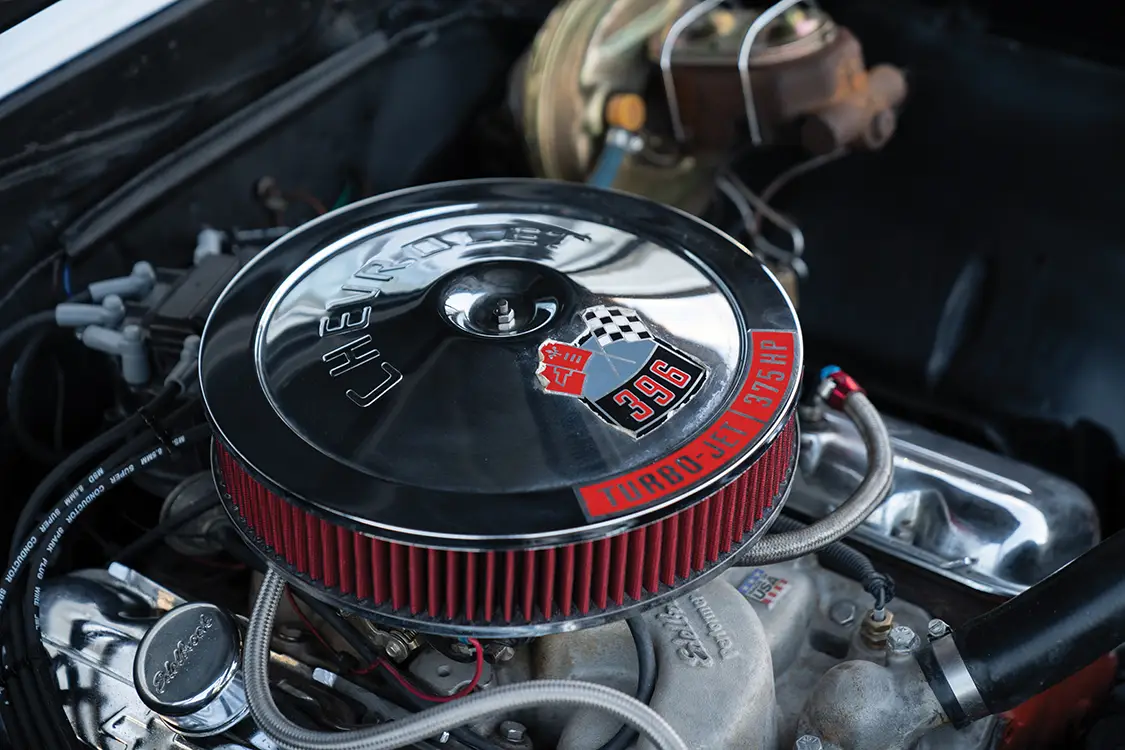
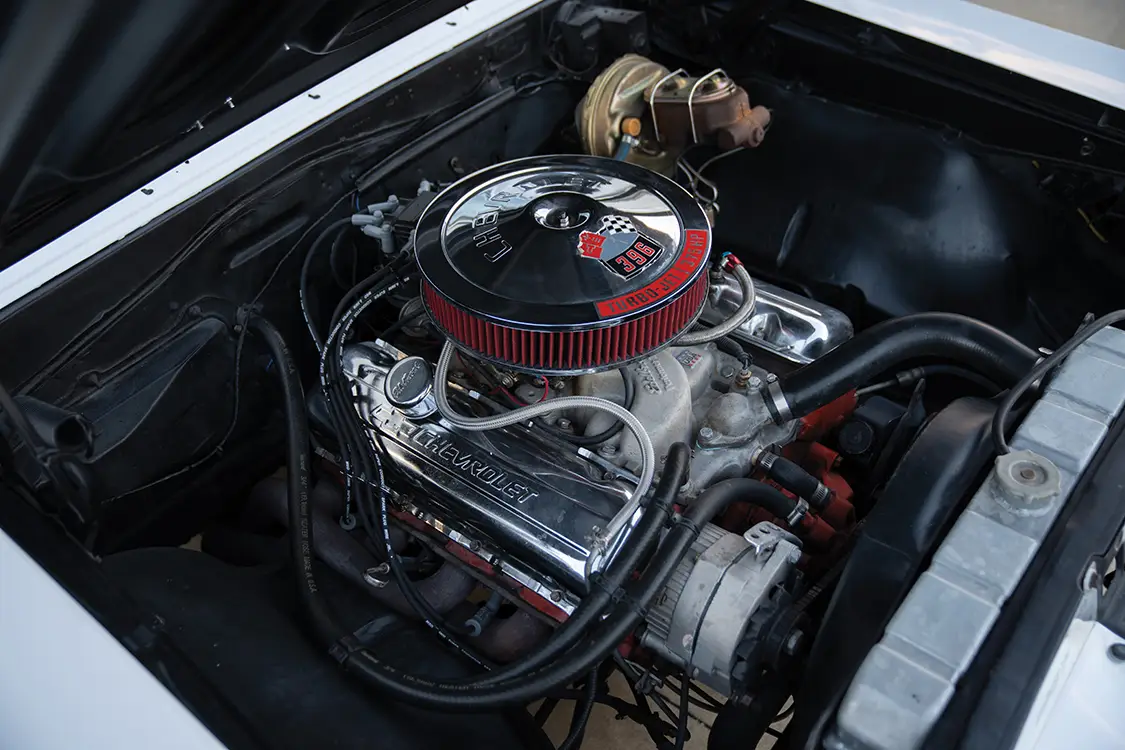
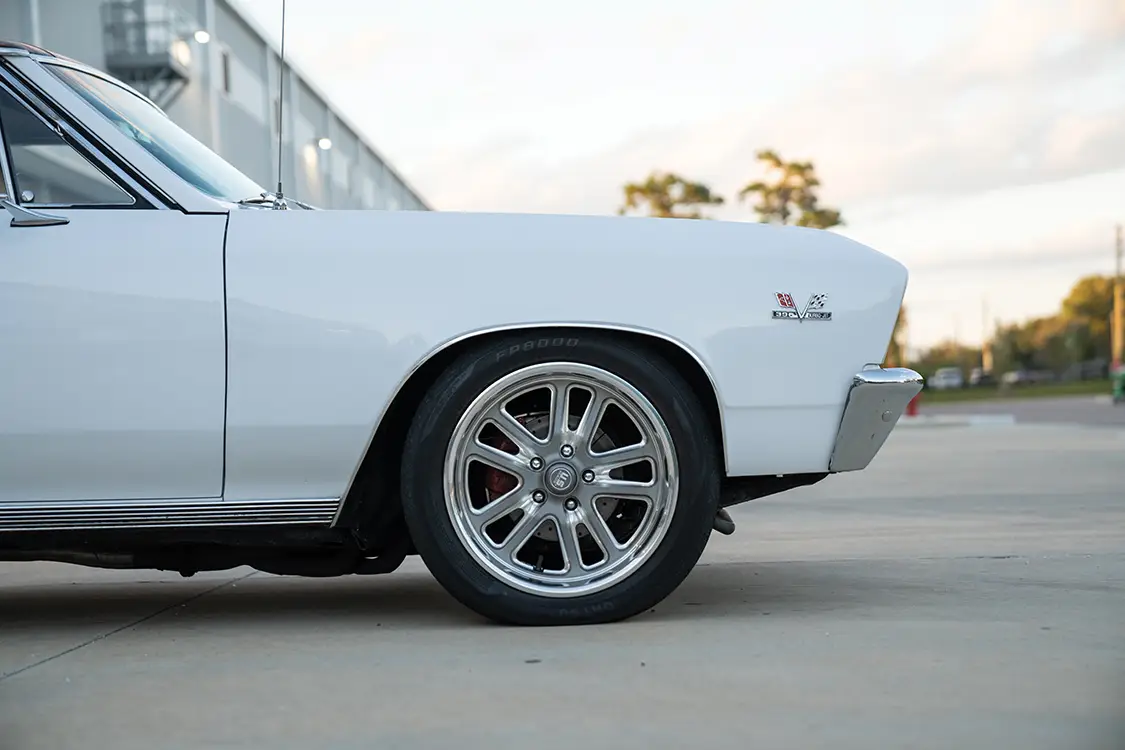
Under the hood sits the car’s original 396 cubic-inch big-block, rebuilt and detailed to better-than-new condition. An Edelbrock Performer intake and 650-cfm carburetor feed the engine, while Hooker headers route spent gases into a clean 3-inch system that exits discreetly behind the rear axle. A GM HEI distributor handles spark duties, and a TH400 automatic with a 2,800-rpm stall converter puts power to the pavement through a set of US Mags U131 “Bullet” wheels (18×8 front, 20×9 rear) wrapped in Nitto NT555 rubber.
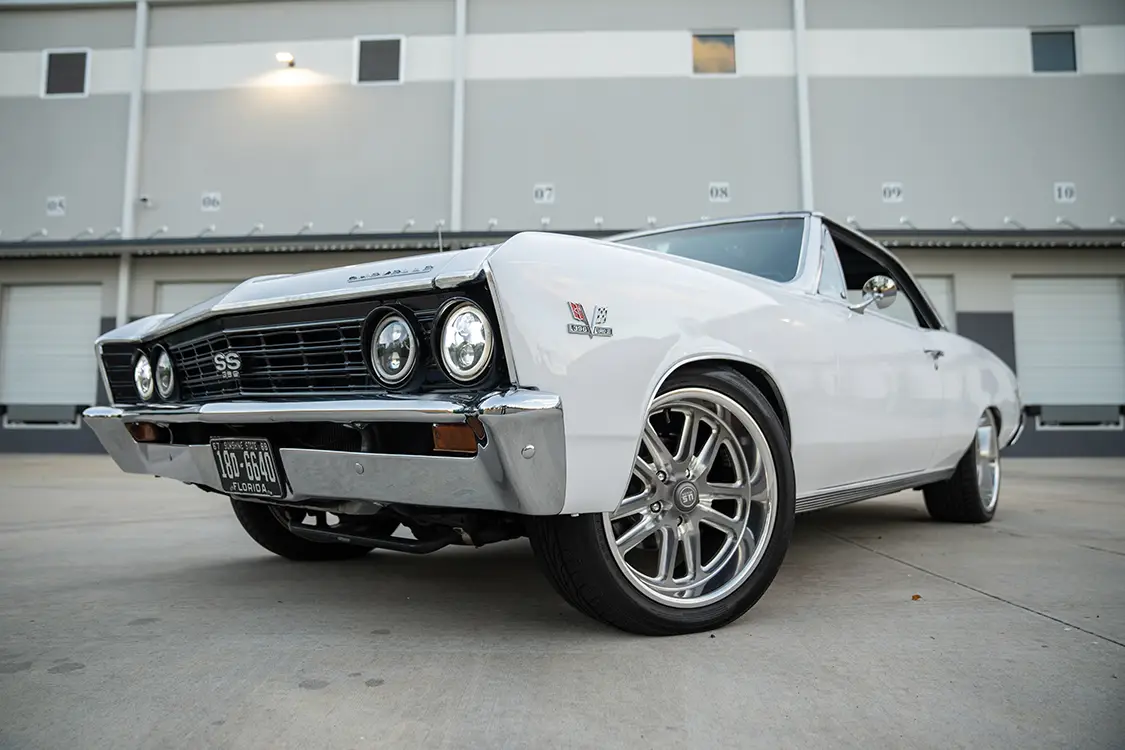
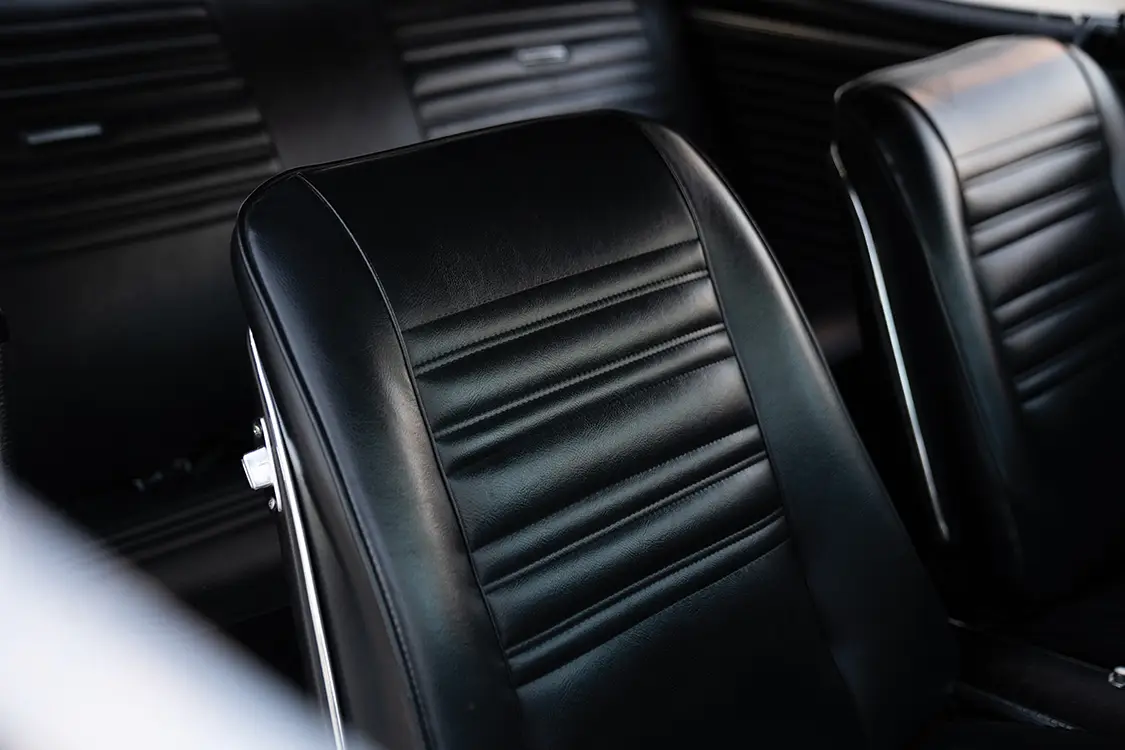
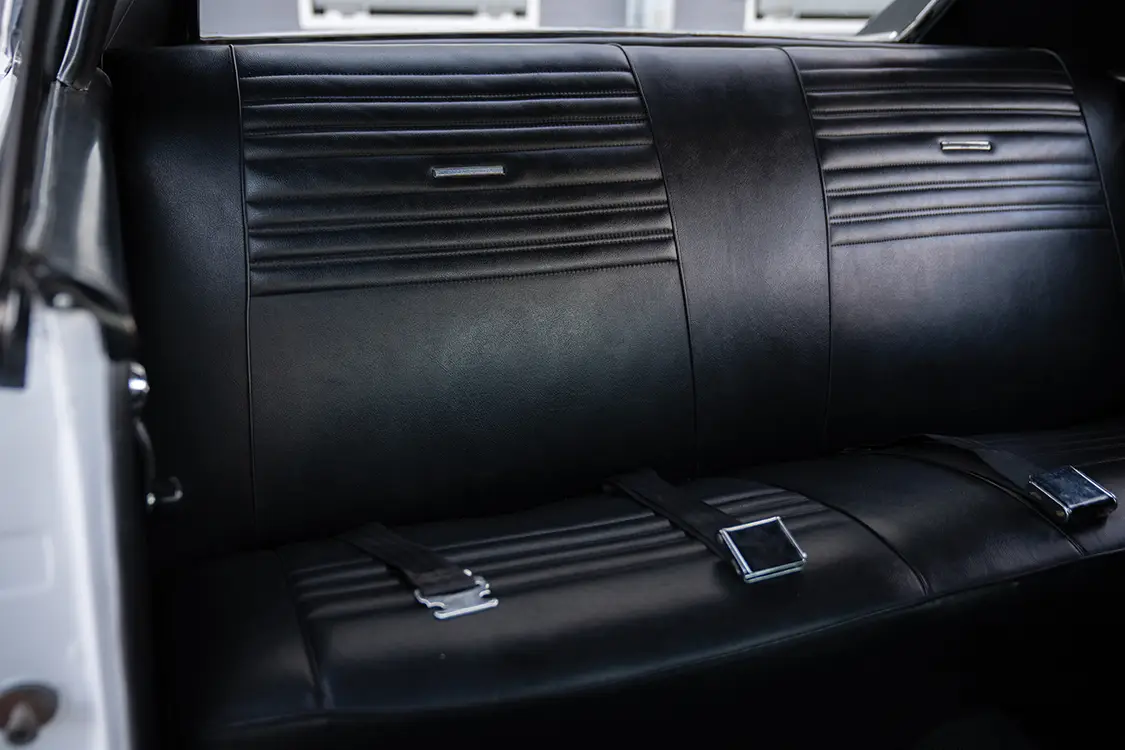
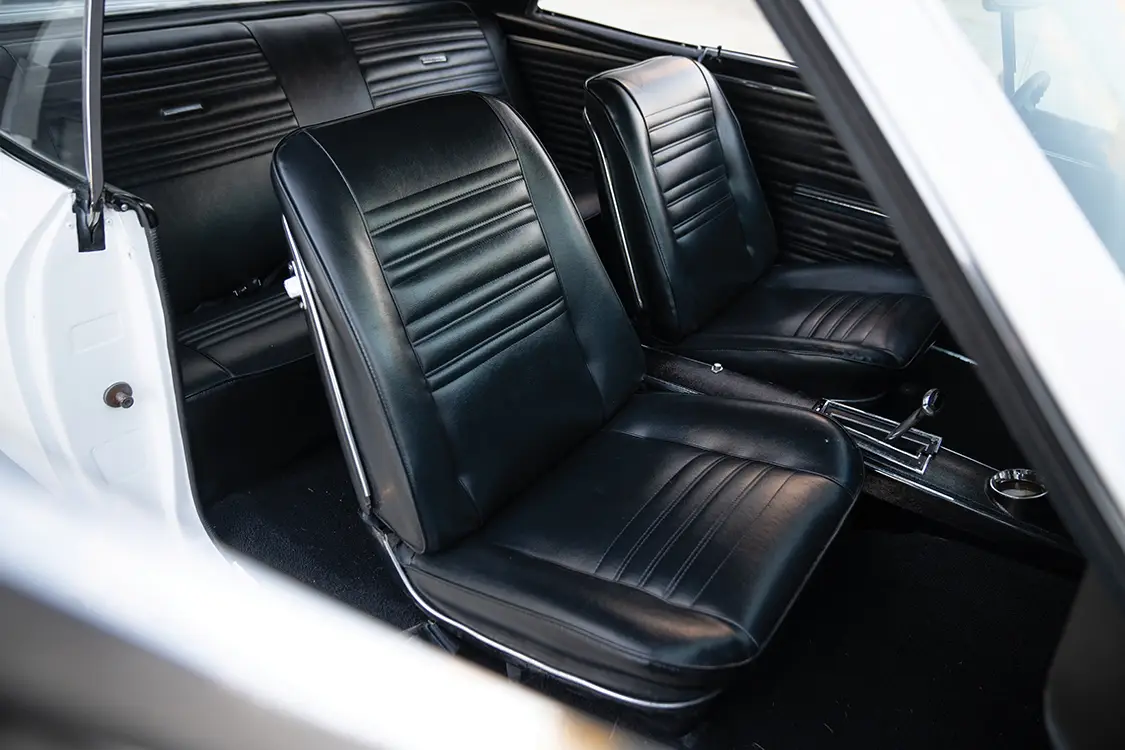
Ride height and handling are managed by Excel G front shocks and Viking double-adjustable rear units, giving the Chevelle a purposeful stance without sacrificing drivability. Inside, the factory black vinyl interior remains untouched aside from routine refurbishment; Jessie and his wife Alexis wanted the cabin to feel exactly as it did when the car rolled off the St. Louis line nearly six decades ago.
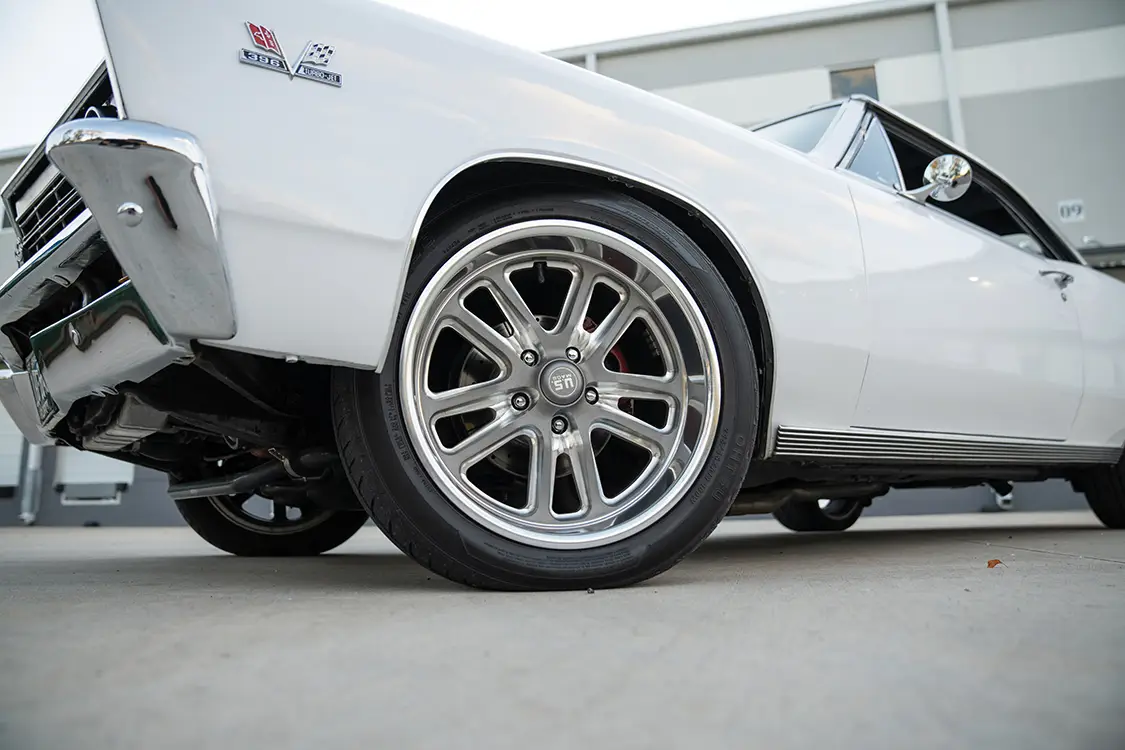
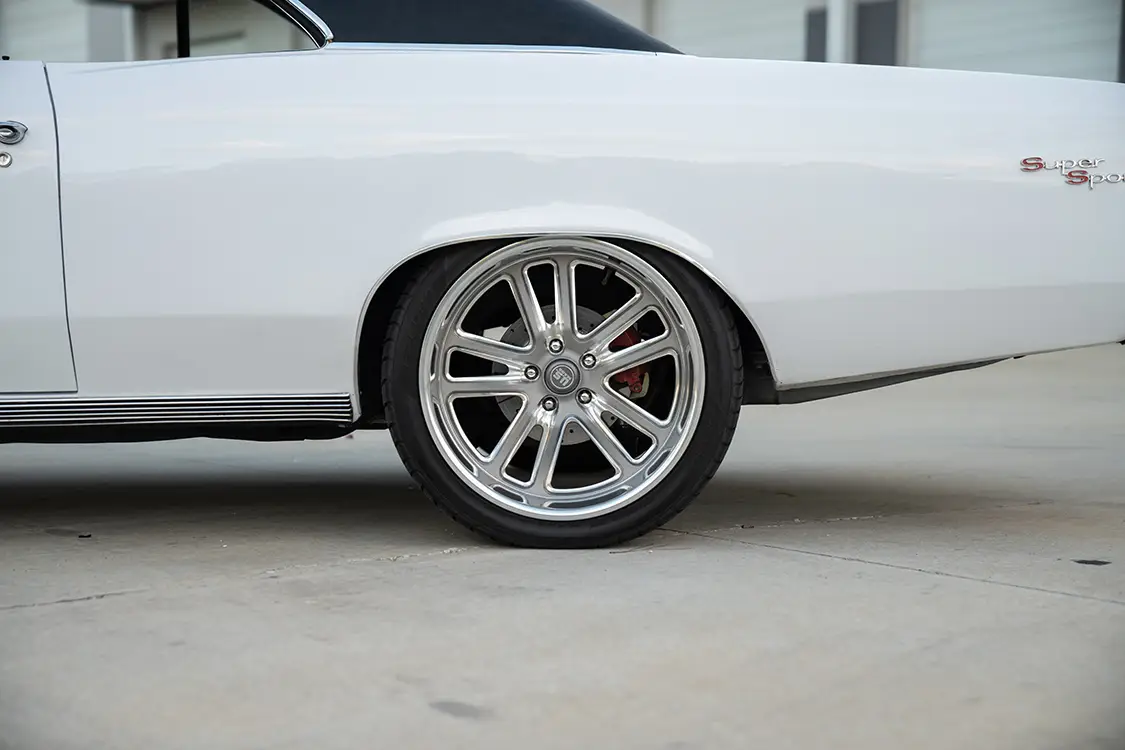
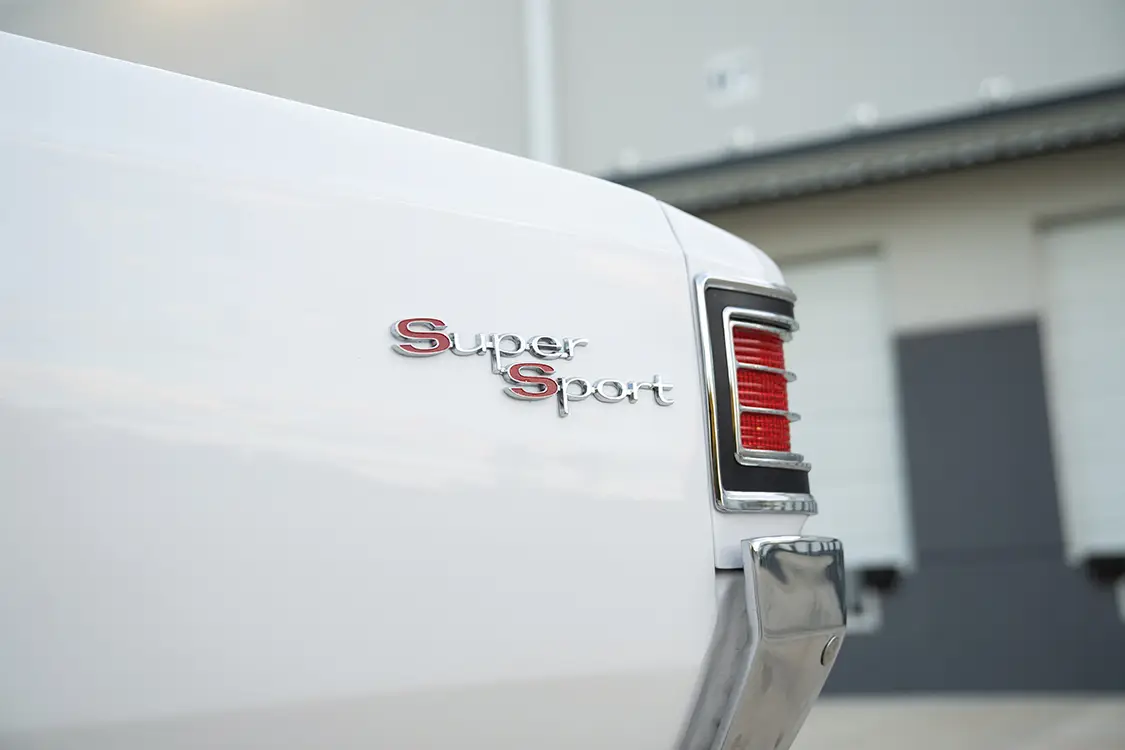
The three-year build wasn’t without its challenges. “Finding a trustworthy shop for the heavy lifting and convincing my wife that it was all worth it,” Jessie laughs, ranking those hurdles about equal in difficulty. The solution, like many of us have discovered, was networking within Ocala’s tight-nit car commuinity like the guys at Whole 9 Yard Automotive, LLC, and by learning to turn wrenches himself to turn more wrenches himself.
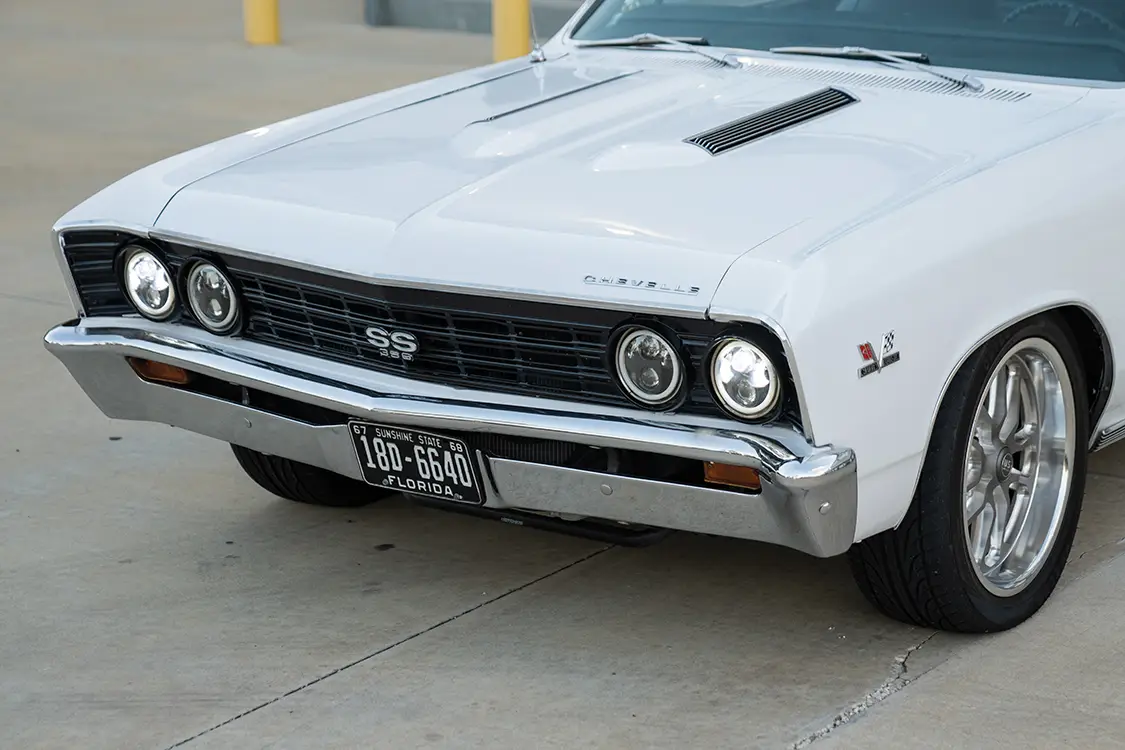
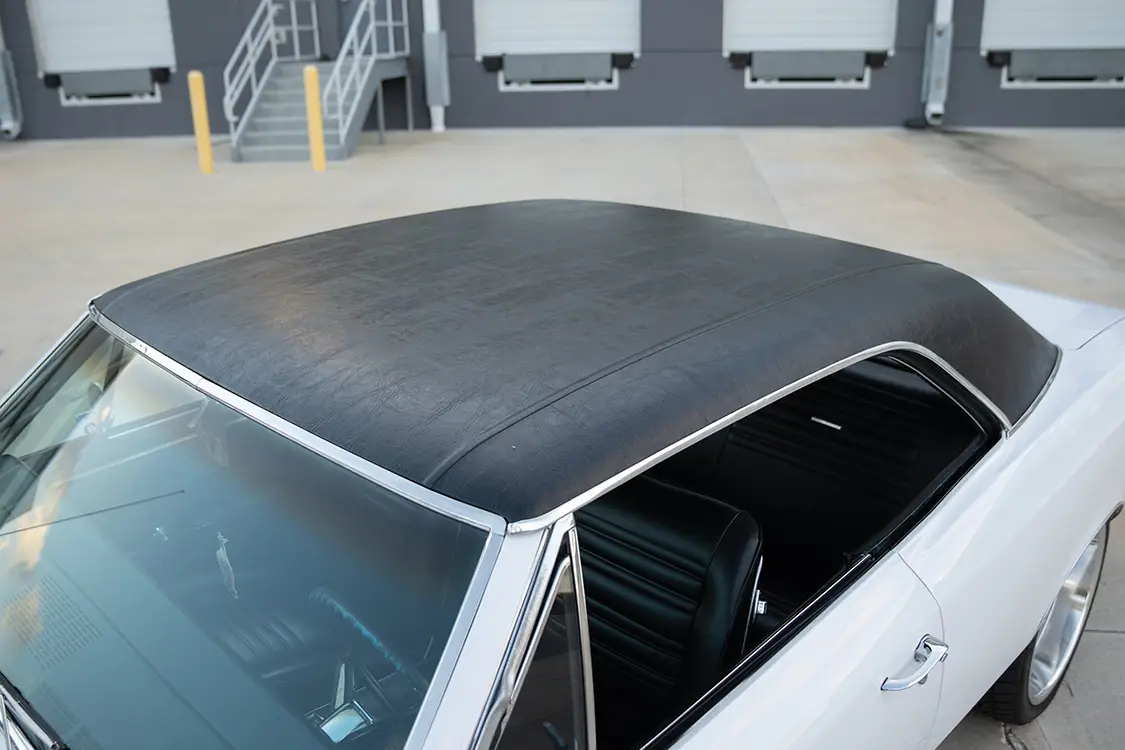
The result is a Chevelle that embodies restraint in an era of over-the-top restomods. “I wanted to keep it simple,” Jessie explains. “No widebody kits, no billet everything; just a clean, strong big-block car that looks right and drives right.”
That philosophy has served Pearl well at every local Ocala show it has attended, where the combination of classic proportion and subtle modern touches consistently draws admirers. Yet Jessie already has the next chapter planned: an LS swap topped with a Whipple supercharger. Some temptations, it seems, are impossible to resist forever. And with his supportive wife, Alexis Thomas, by his side, we believe it will happen sooner than later.
For now, though, Pearl remains a refreshingly honest example of what happens when an owner respects the car’s heritage while still making it his own. In a world of seven-figure trailer queens, Jessie Thomas and his white 1967 Chevelle prove that sometimes the coolest builds are the ones that never try too hard to be cool.
In a scene where there is such a definitive line drawn in the dirt that divides lowered and lifted trucks, it’s refreshing to meet a guy who proudly stands with a foot on BOTH sides. Cody Fordahl of Brentwood, California, is a dead-set Ford fan—and why wouldn’t he be based on the first four letters of his last name? He has Blue Oval heritage imbedded in his blood (although there is no relation, it just happens to be a cool coincidence).
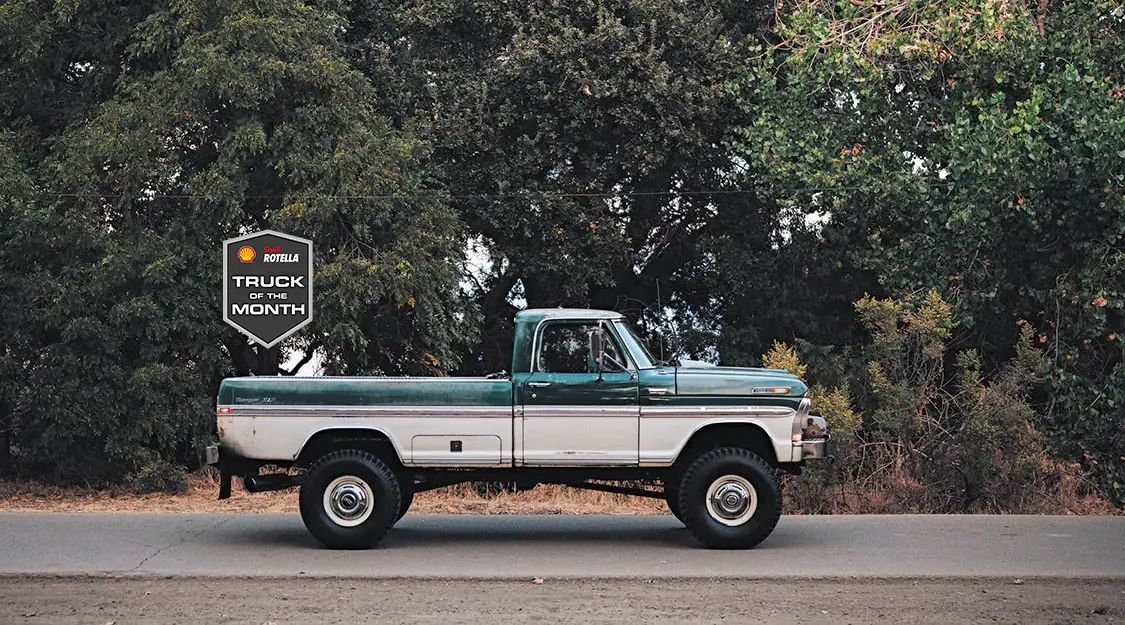
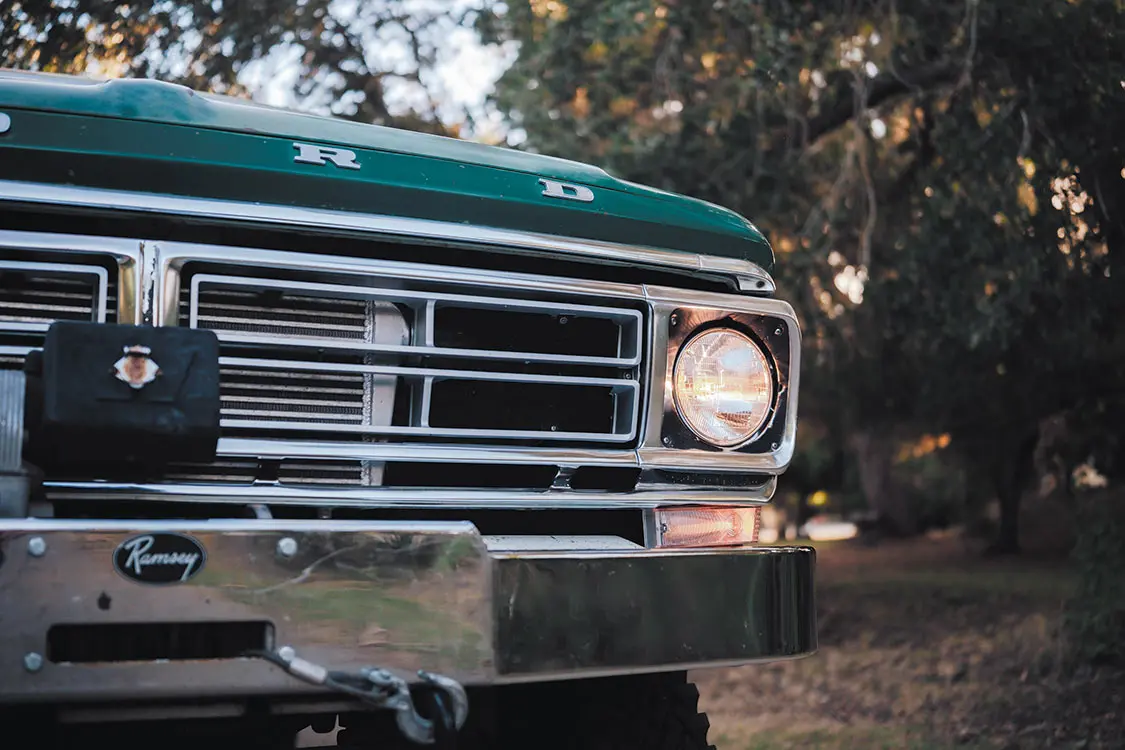
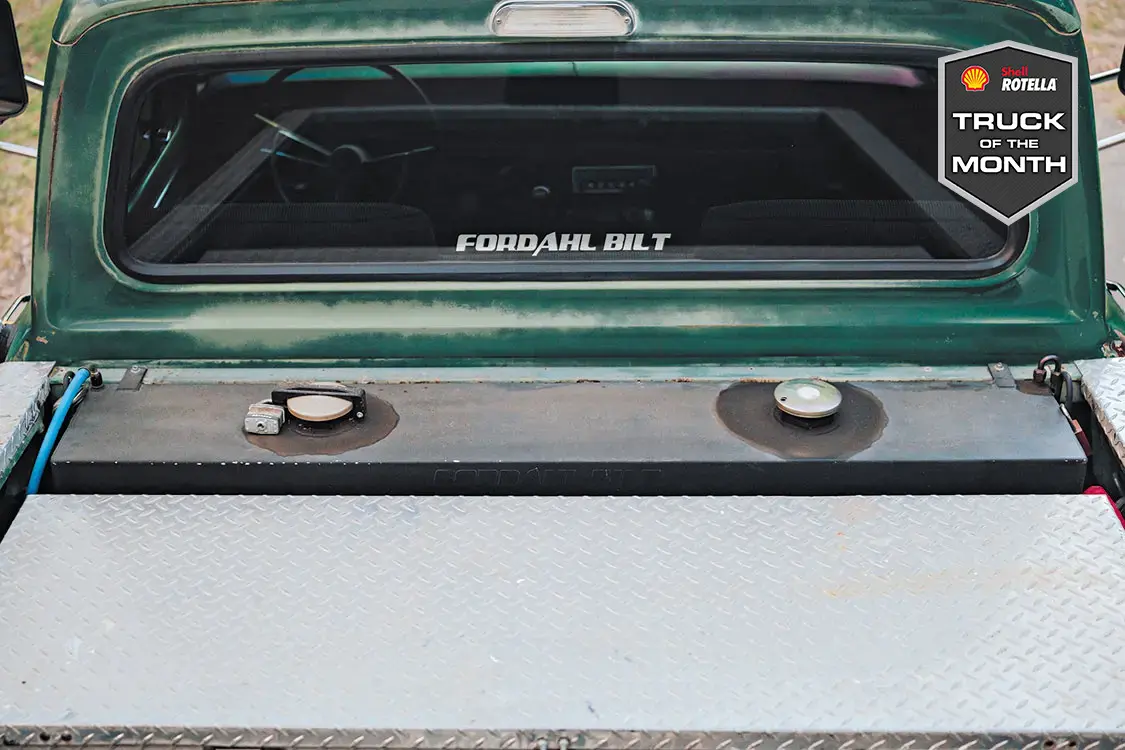
While there is no question about his brand loyalty, he didn’t bother choosing which type of truck to pledge his unwavering allegiance to. What he does spend most of his time focusing on is keeping his interests pure. He sticks to what he likes, which ranges within the realm of 1967-1997 Ford trucks, with very little to no deviation from that path whatsoever. With that approach, Cody has been able to develop a unique style of truck building and parts development that he practices on under his ever-evolving Fordahl Bilt branding.
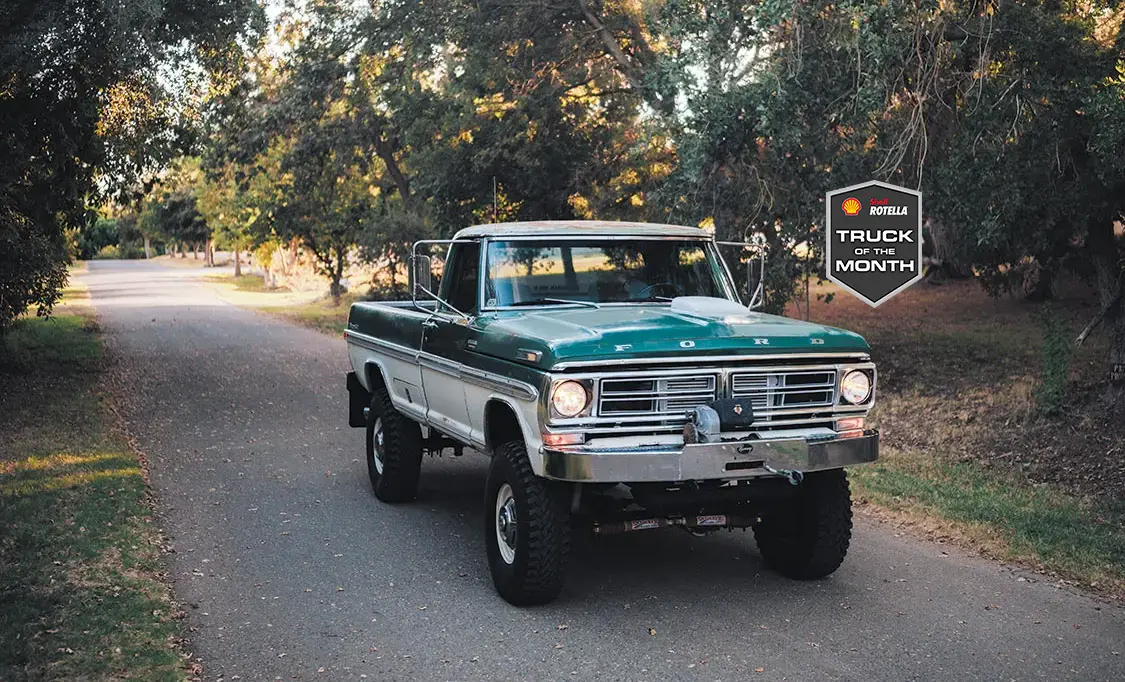
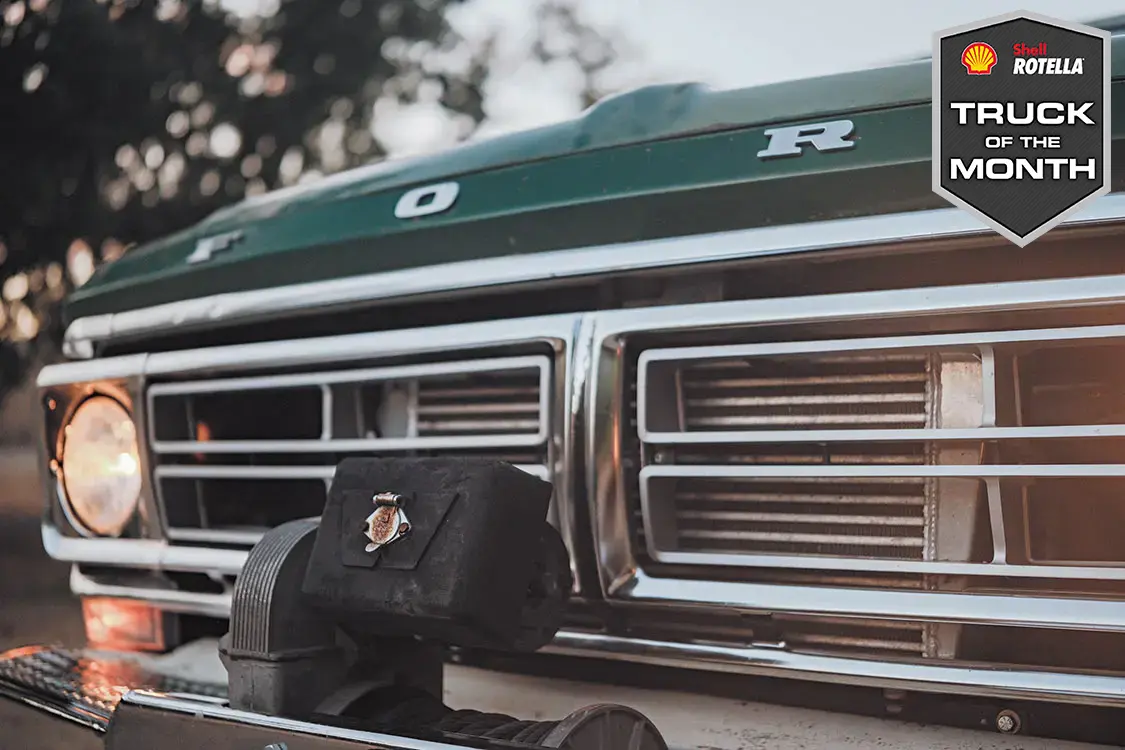
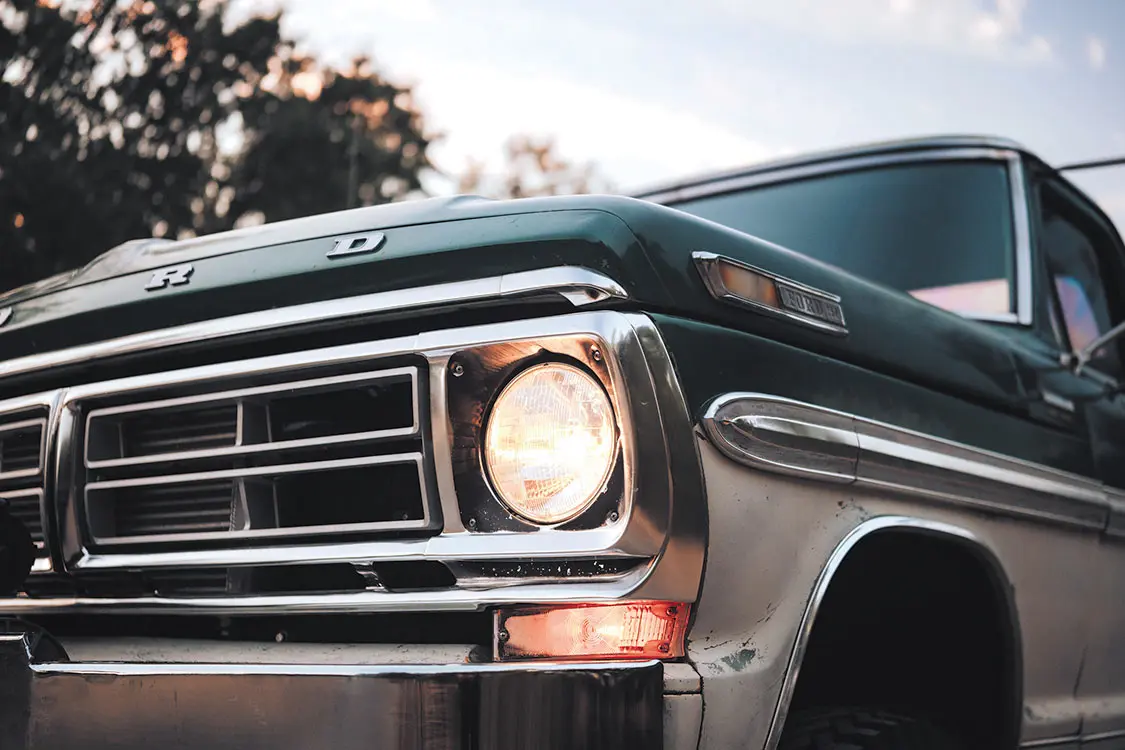
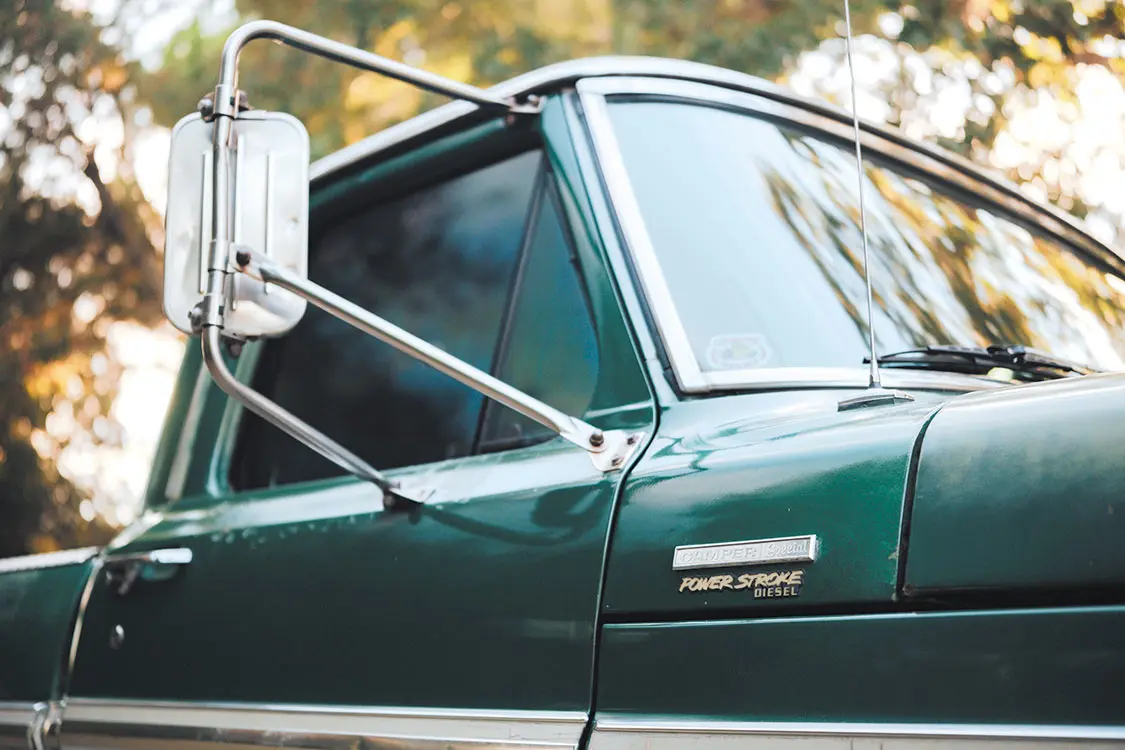
If you’ve paid attention to anything that Cody has built over the years, you must have noticed another one of his specialties is a dedication to Powerstroke diesel performance. He has applied his interest in coal rolling power in the creation of his award-winning ‘bagged Ford Bumpside that he built off-and-on over the years, but we will instead aim our focus on another truck that has gained arguably more attention for Cody—his Highboy 1972 Ford F-250.
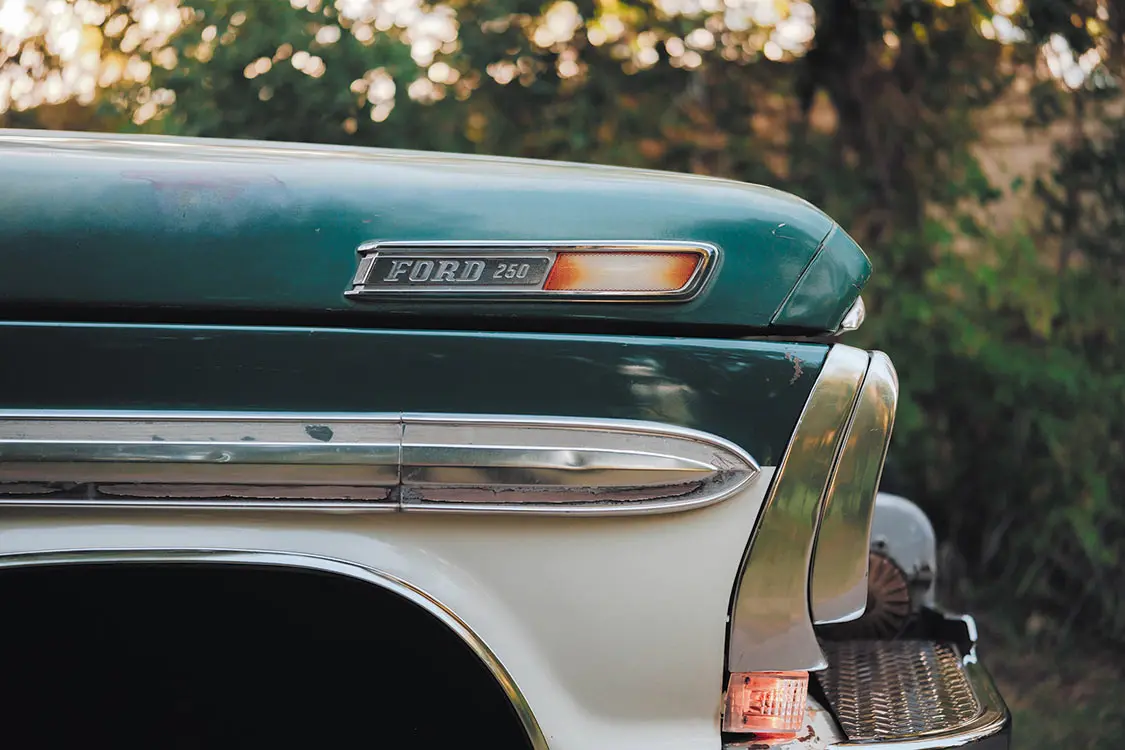
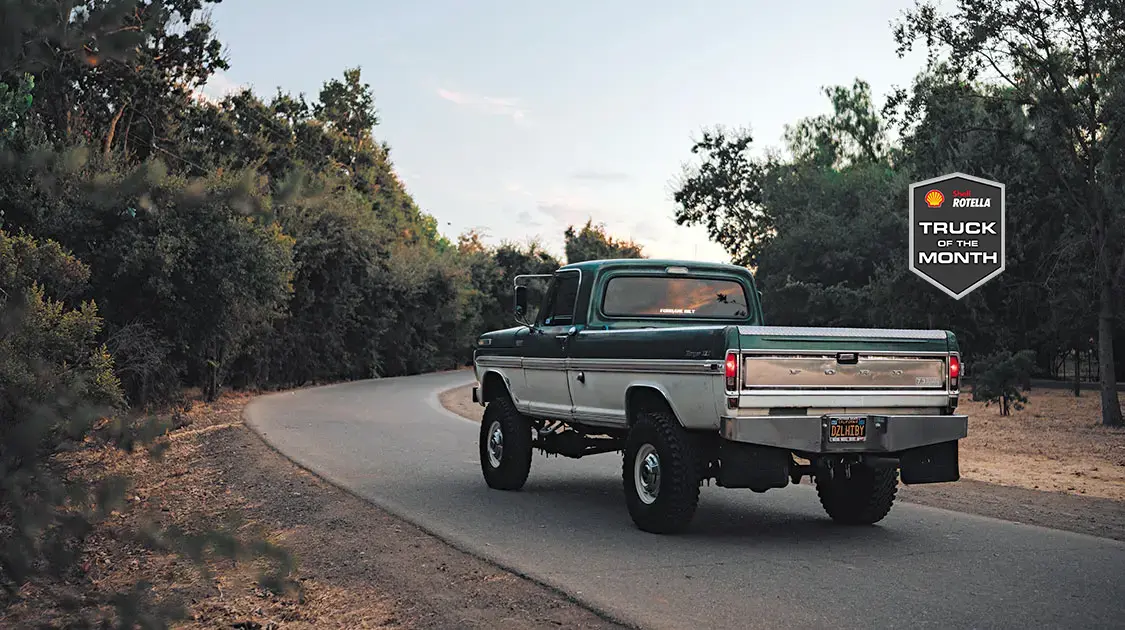
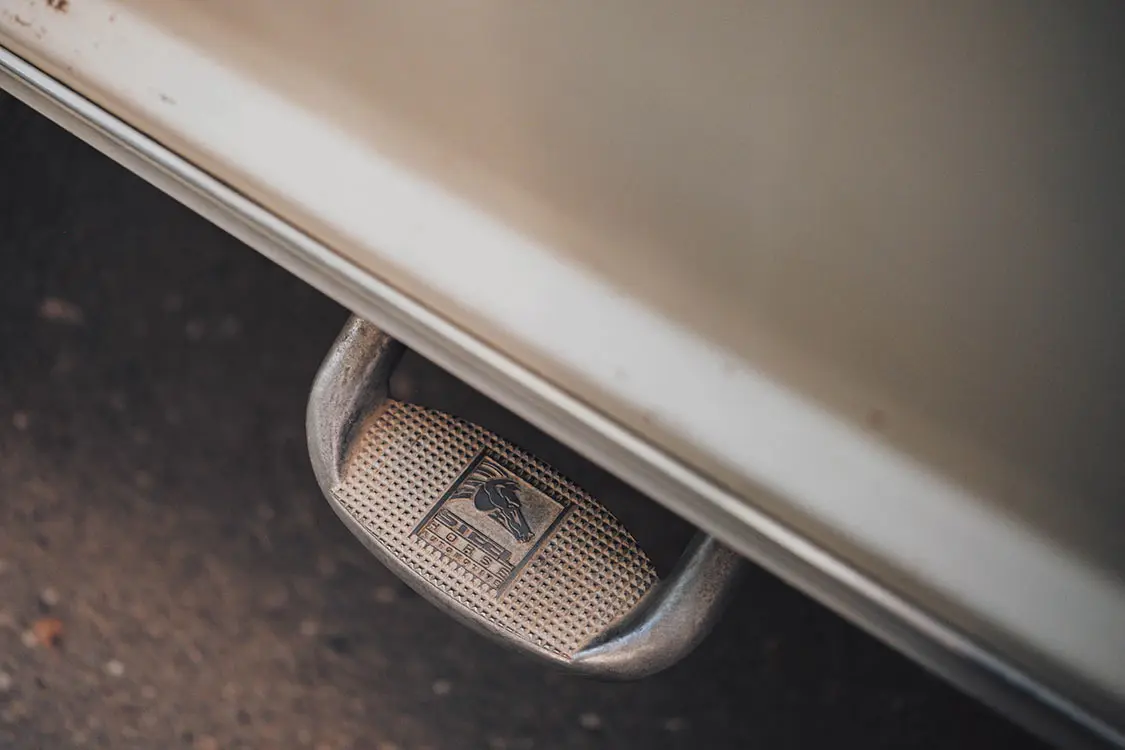
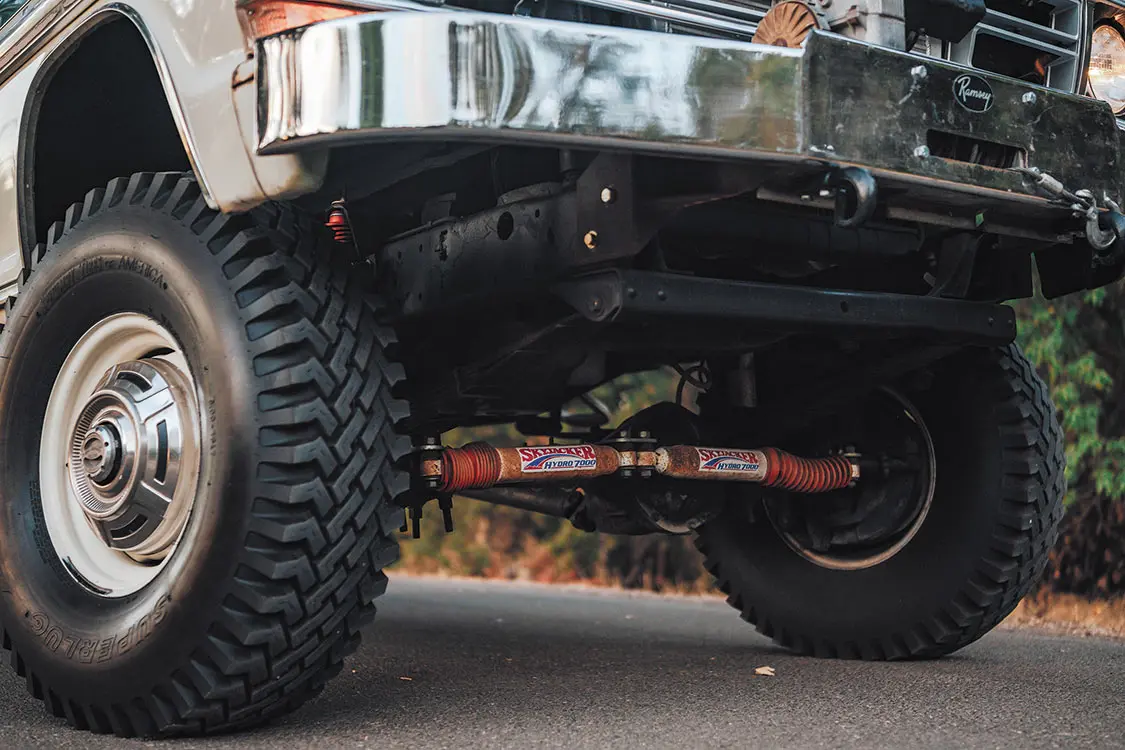
Looks-wise, this truck is a perfectly preserved driver. The original two-tone paint had only a very light patina on it from the start and has since been buffed and polished to release the oxidization from the factory luster. The Ranger XLT package the F-250 sports adds the right touch of utility to its façade, as does the capable all-around 4-inch lift with meaty STA tires. While all these attributes attached to Cody’s Ford pickup are attractive enough in their own right, it’s what lies underneath the hood that creates this truck’s main source of excitement and sheer desirability.
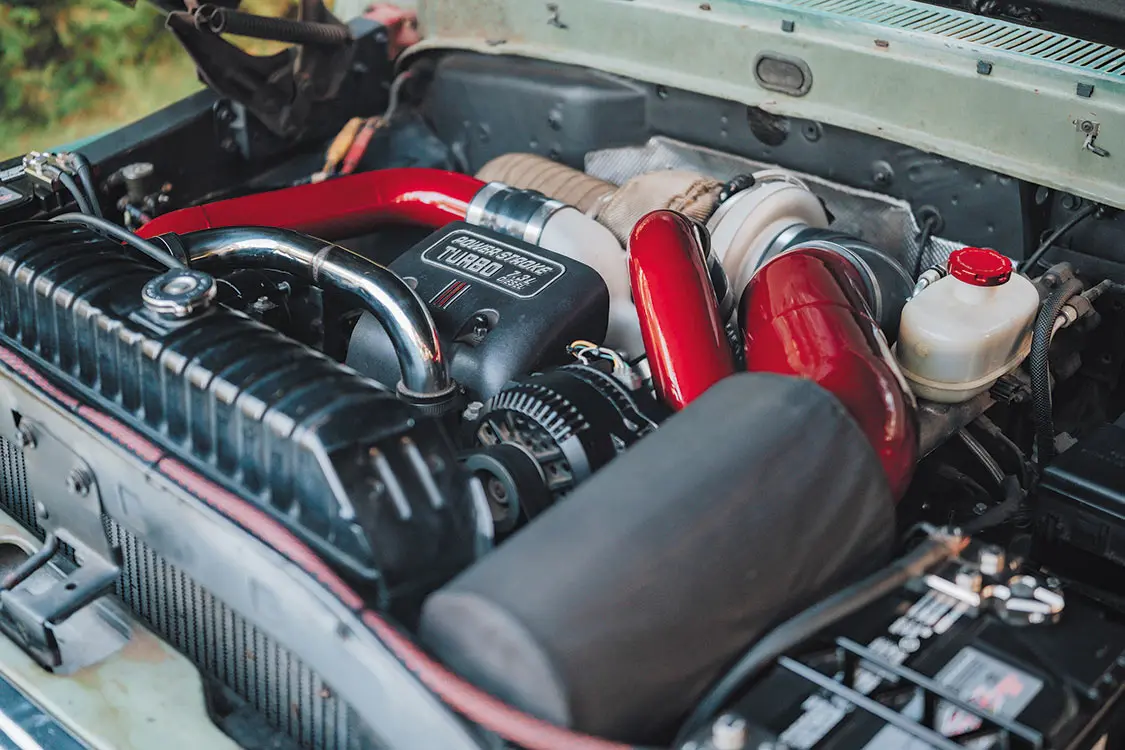
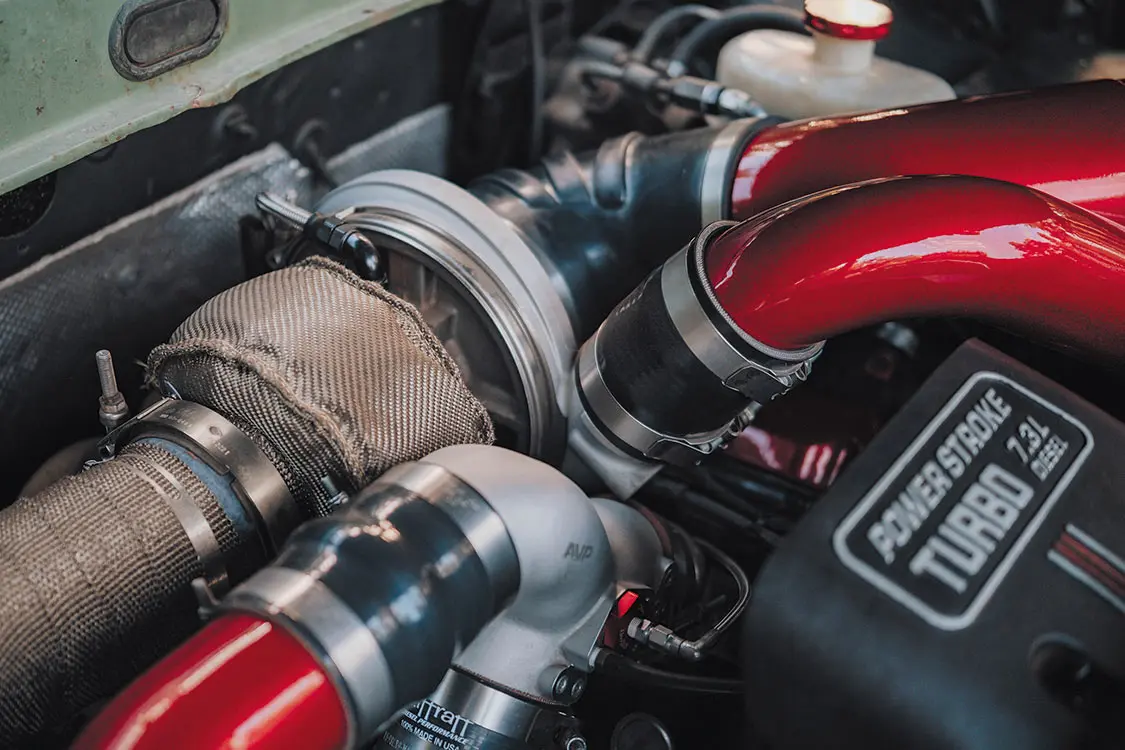
We have already mentioned that Cody is a diesel guy, but you really must look at how naturally the 1997 7.3 Powerstroke engine fits within the bay to understand the full scope of his enthusiasm. To make it work, Cody built his own engine mounts and assembled his own standalone engine harness and electric fuel supply system.
“You’d be surprised at how well these engines fit into these trucks,” Cody says. “This one is still sporting the original firewall and radiator from the 1972 truck, and it still had just enough room to use the 7.3 clutch fan for cooling, and it does great. Even all three original driveshafts were never lengthened or shortened; it was literally meant to be. I strongly agree that the ’97 engine is much easier to work on inside of the ’72 engine compartment. Everything is easily serviceable, which is great since I like to use this truck for trailer hauling during long road trips.”
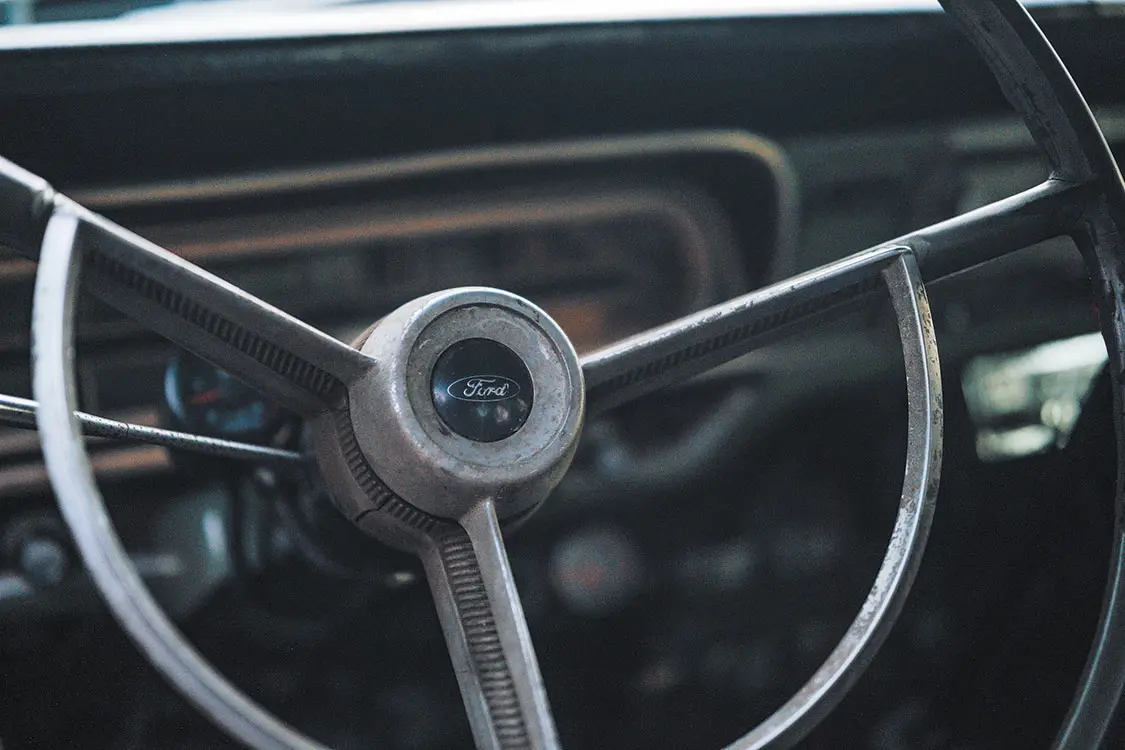
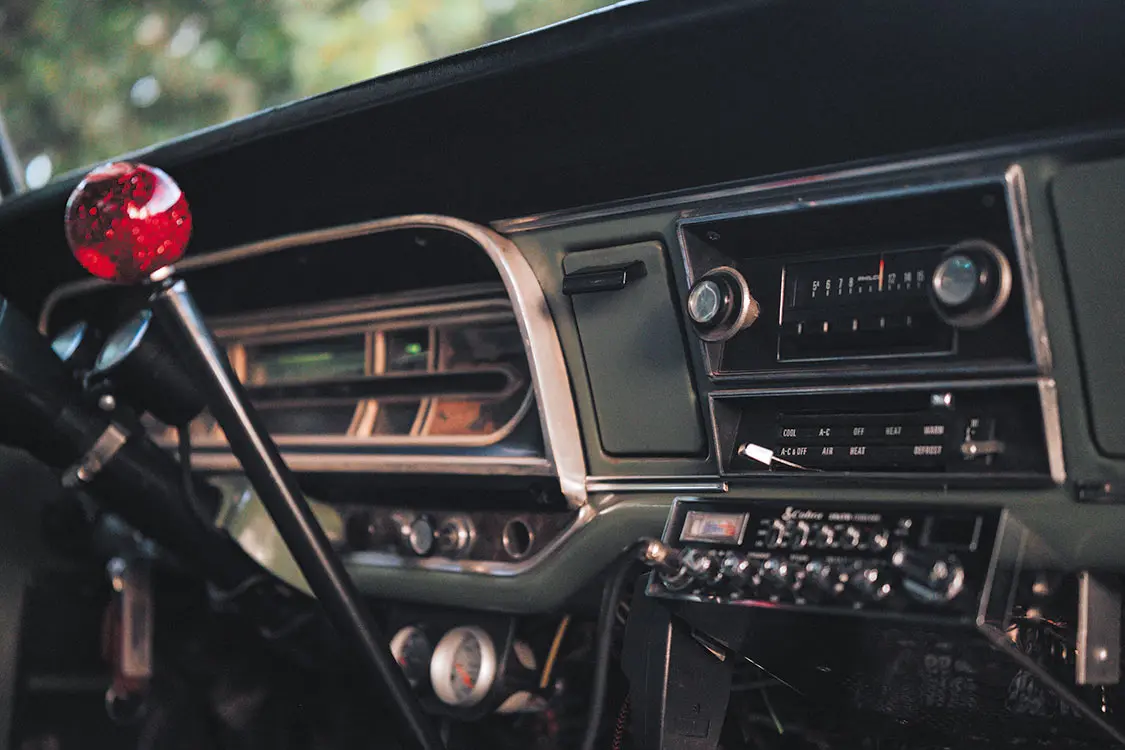
To add to the prowess of the freshly implanted engine, Cody also fabricated his own front mount intercooler and piping, a 5-inch intake as well as a full custom 4-inch exhaust system. The 7.3 has also been upgraded with a RicanBuilt T4 mount, a billet compressor wheel inside the Super Duty turbo, a CNC Fab 4-line fuel kit, an AirDog 165 5G lift pump, a Hydra chip with JeliBuilt tuning, and the necessary components from RiffRaff Diesel to reseal the bottom end. Best of all, the factory High-Boy mount and crossmember allowed for a ‘97 ZF5 five-speed manual transmission to be bolted right into place.
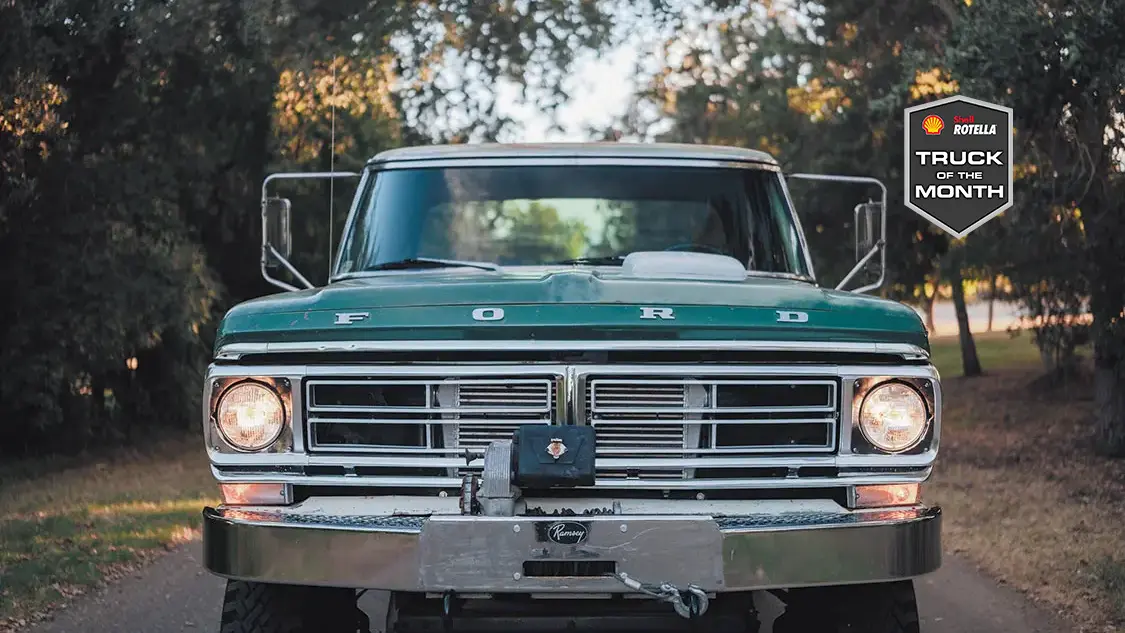
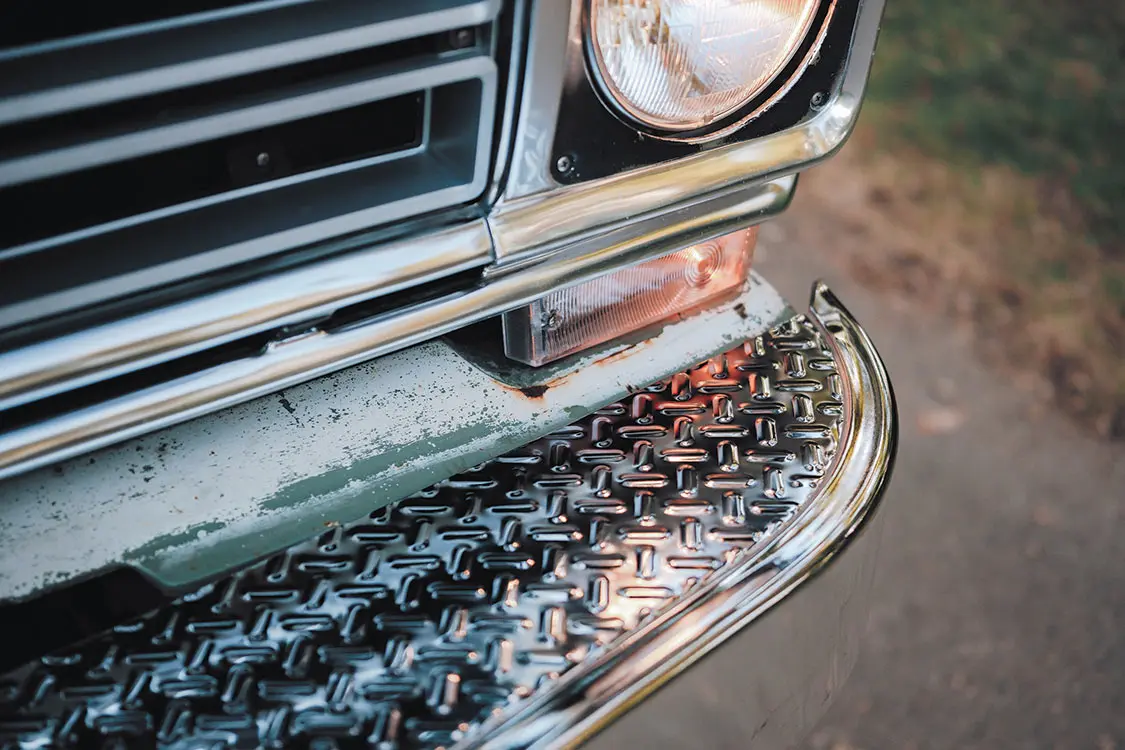
To get the truck sitting at just the right ride height, Cody removed 4 inches from the F-250’s previous lift and created his own leaf packs to gain a total of 4 inches of even lift all around. Skyjacker front and rear shocks along with a stabilizer help achieve an optimum ride quality, and the 9.00×16 Super Lug bias ply tires that wrap the factory 16-inch steel wheels give the F-250 the exact aesthetic he was looking to create.
Even though there is still some work left to do inside of the cab, Cody is very happy where the truck is currently.
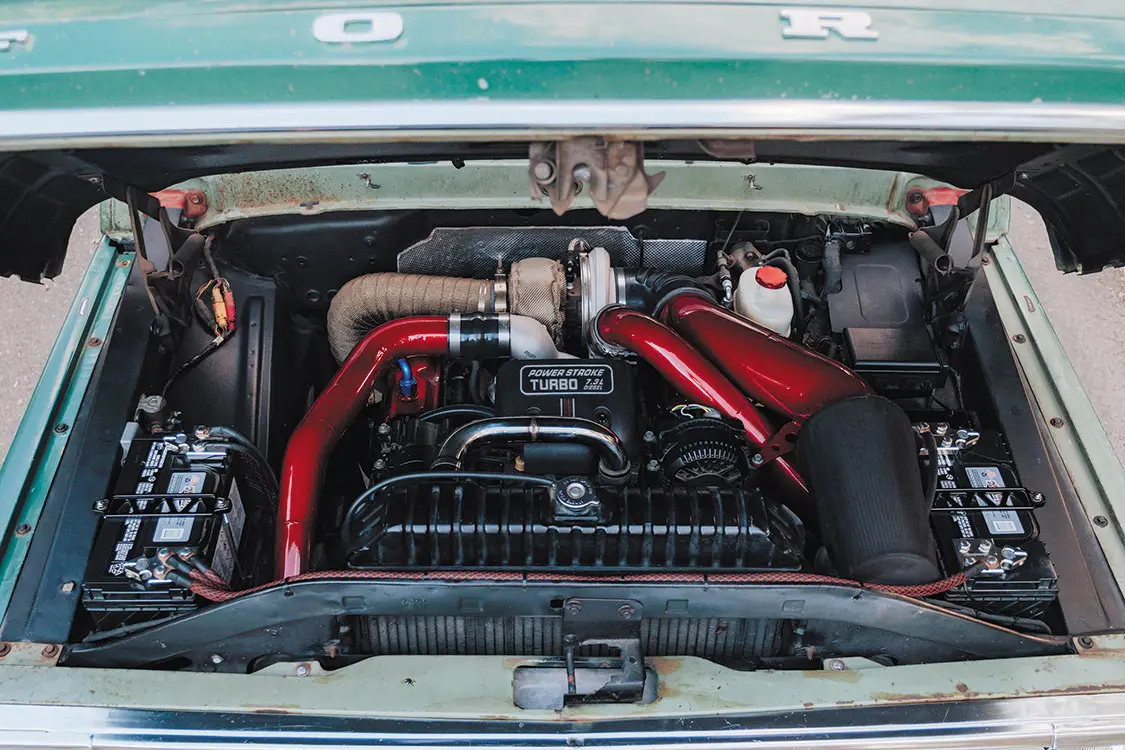
“My goal with this build was to keep it as close to ’70s period-correct style on the outside with a touch of contrasting ‘modern’ performance under the hood,” he states. “I think of it along the lines of a sleeper truck. I love when people walk by and peek at the engine and are surprised that it isn’t a traditional Cummins swap like most of these trucks tend to be.”
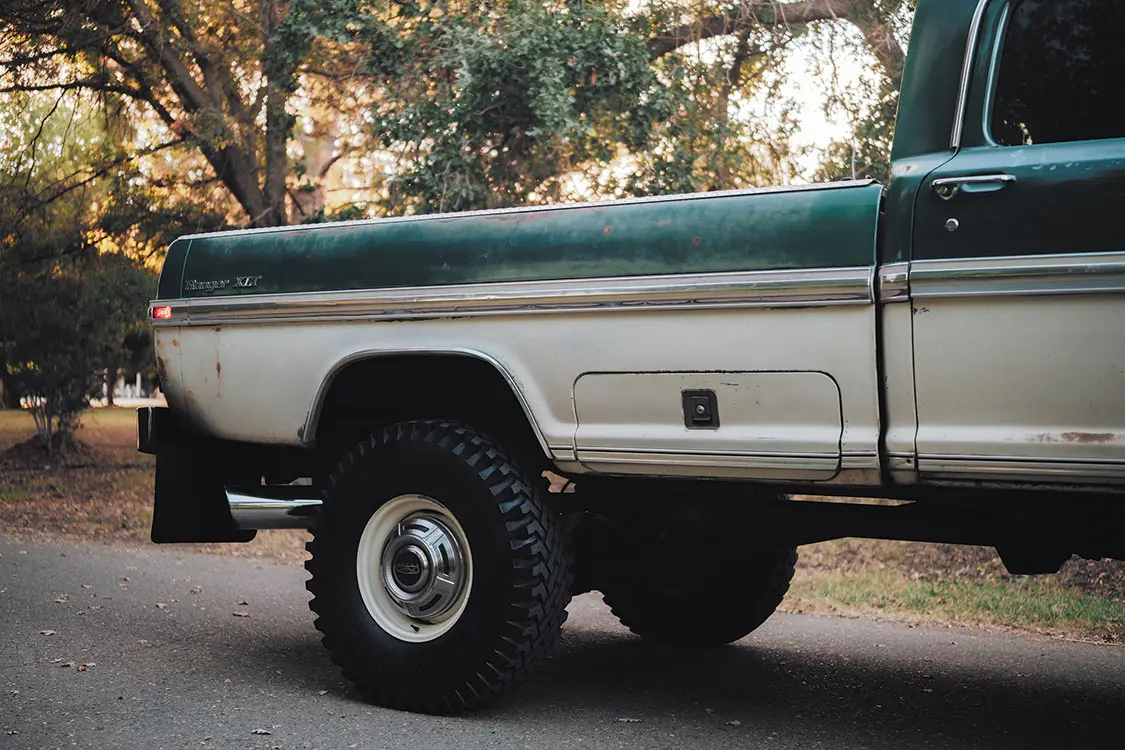
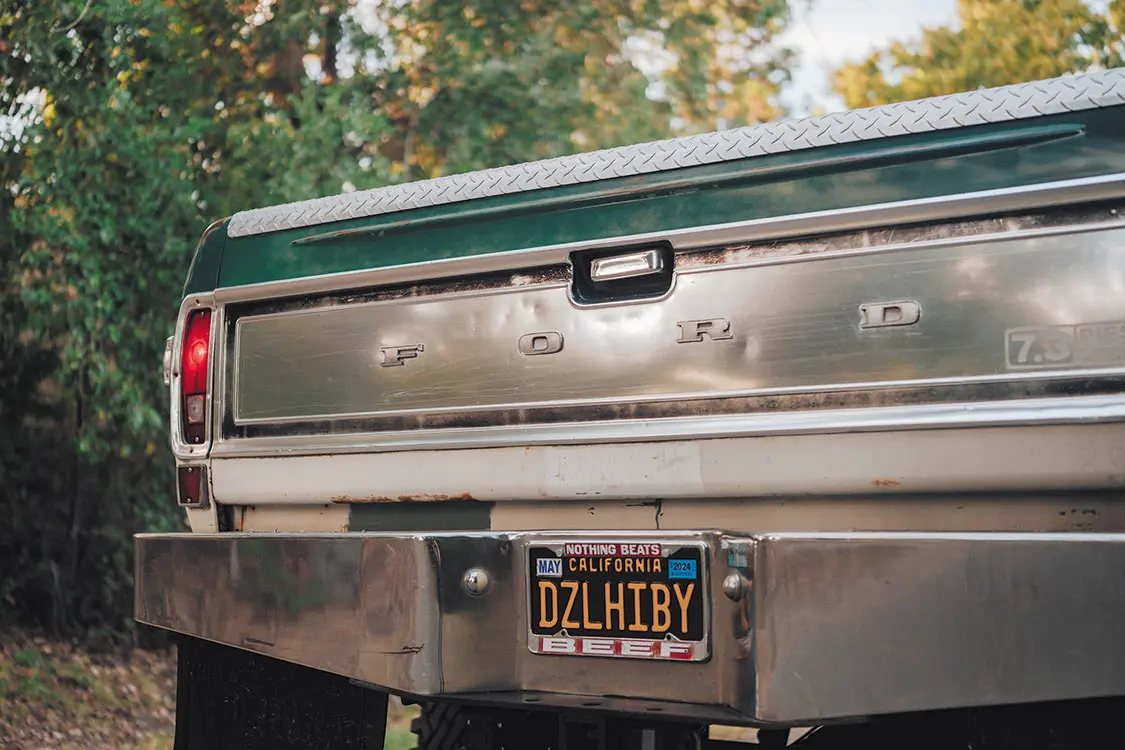
While Cody has put a lot of work into his Highboy, he has also gone the extra mile to build parts that can help others conduct similar engine swaps. Fordahl Bilt specializes in individual swap components for 1967-1997 Ford trucks and Powerstroke conversions but can also help with full builds as well. Cody doesn’t see the line of separation between the lowered and lifted crowd. He instead maintains a laser focus on pushing the boundaries of unadulterated diesel performance for his preferred vintage of pickups that can hopefully benefit others with a similar passion for the same rides.
OWNER
Cody Fordahl
Brentwood, CA
ENGINE & TRANSMISSION
CHASSIS & SUSPENSION
WHEELS, TIRES & BRAKES
BODY & PAINT
INTERIOR
Photos By DAN CORONADO
No, sir, this is not your grandma’s ’Stang. This classic beauty has been given a jolt of electricity that will make gas-guzzling purists faint. Meet Eddy Borysewicz of ReVolt Systems in sunny Oceanside, California. This dude knows how to make old-school muscle go electric with a touch of wit and style.
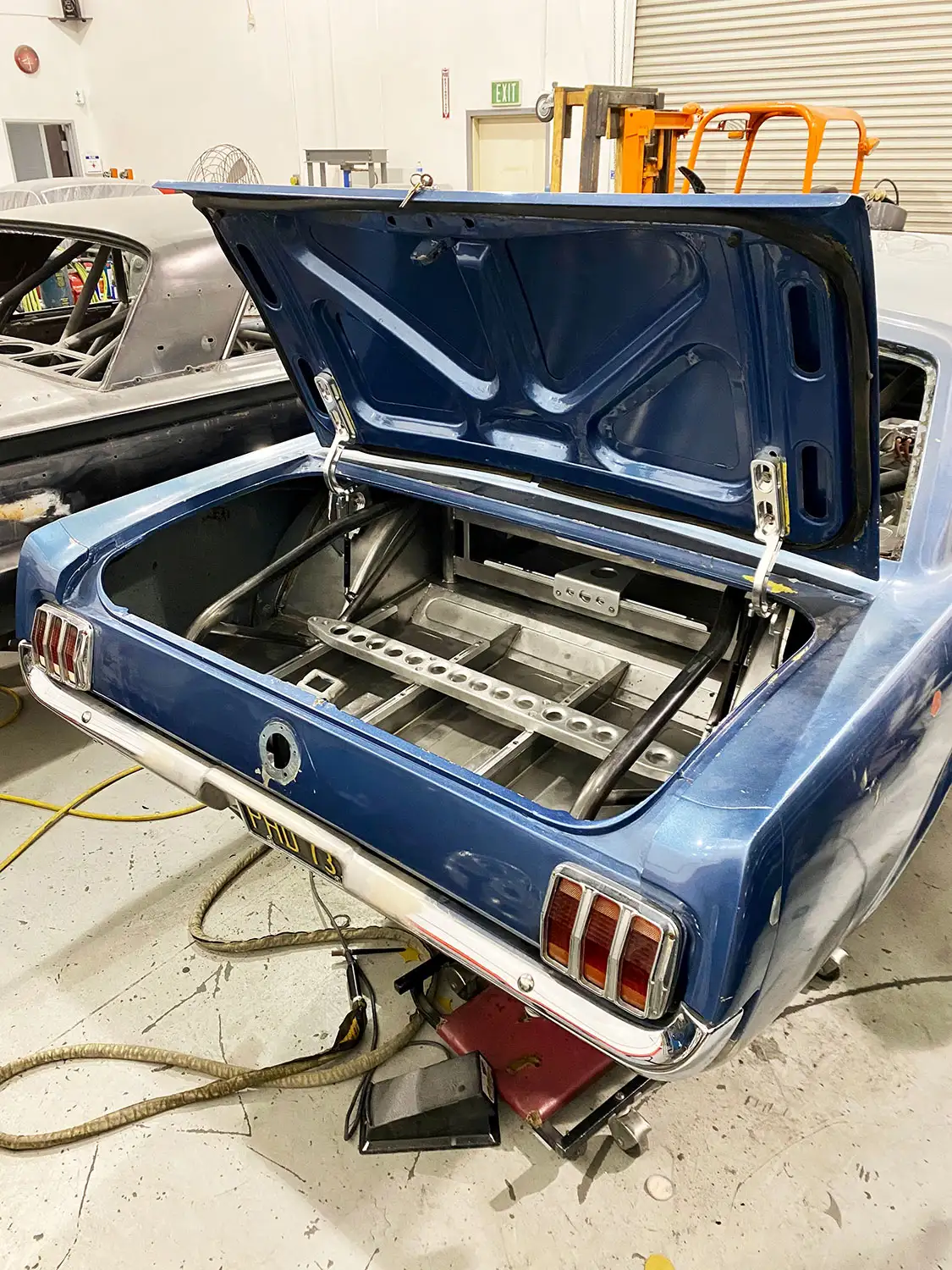
When Eddy stumbled upon a pristine ’65 Mustang, he saw more than just a pretty car. He saw a canvas for his electric masterpieces, and he got to work gutting it.
ReVolt proves that electrifying classic muscle cars are no different than what hot rod builders were doing a generation ago.
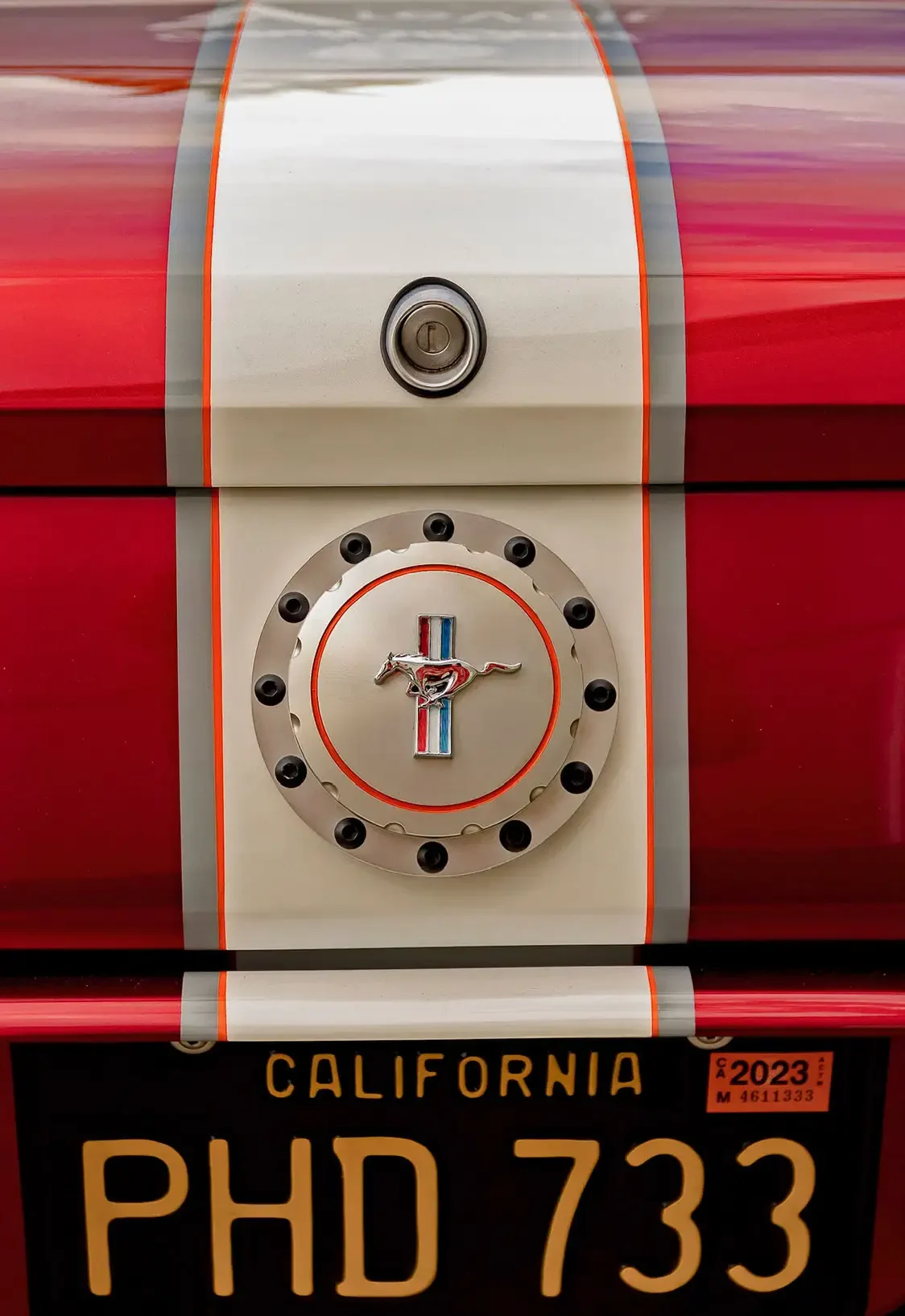
Ah, the Ford Mustang. A classic, a beauty, a true American muscle car. But, as with anything, time marches on, and sometimes even the greatest of things need a little sprucing up. That’s where Eddy came in with a plan to give this steed a modern makeover fit for a new era.
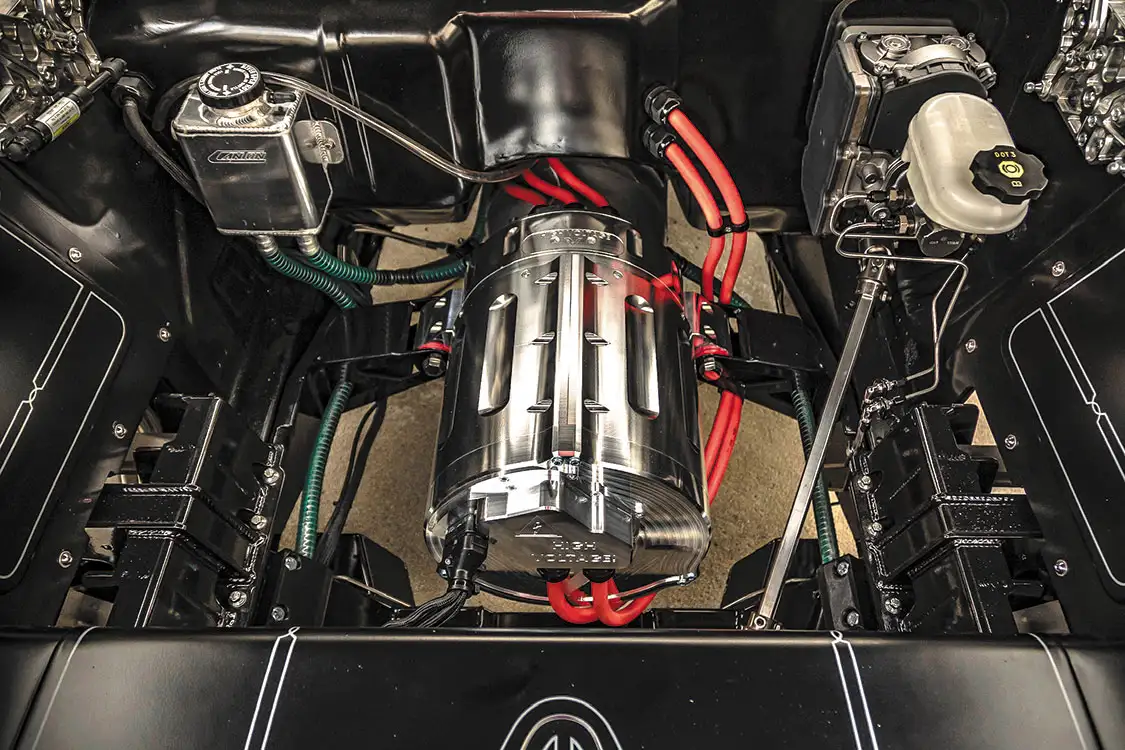
First up on the list? Designing the ReVolt CR-43 “crate” motor capable of 450 kW/600 hp and 1,085 Nm/800 lb-ft torque. It can be used with factory LS mounts and connects to the existing driveshaft for instant torque. The core of the CR-43 is a refurbished Tesla Model S motor and a Torque Trends 1.9:1 reduction box, ensuring exhilaration and quick acceleration.
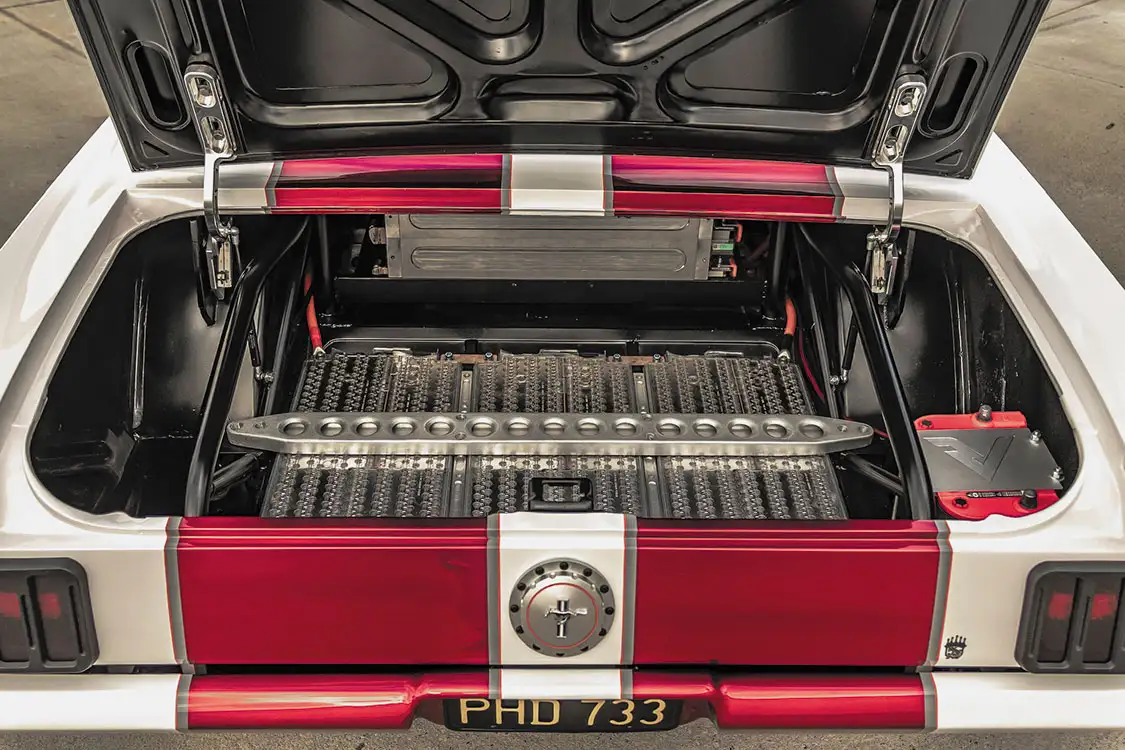
The came time to toss the old chassis system out the window (or, you know, somewhere more appropriate). With Eddy’s design for a brand spanking new drivetrain, complete with a battery pack the size of a small island, it only made sense to start fresh.
Enter the suspension experts at Roadster Shop with their SPEC Series chassis ready to take on the task. This bad boy boasts a rack-and-pinion front, rear 4-link, four-wheel double adjustable coilovers, custom Pro spindles and front sway bar from Roadster Shop, and an array of other suspension components, all with one goal in mind: giving the Mustang superior performance handling and ride quality that’ll make your grandma jealous.
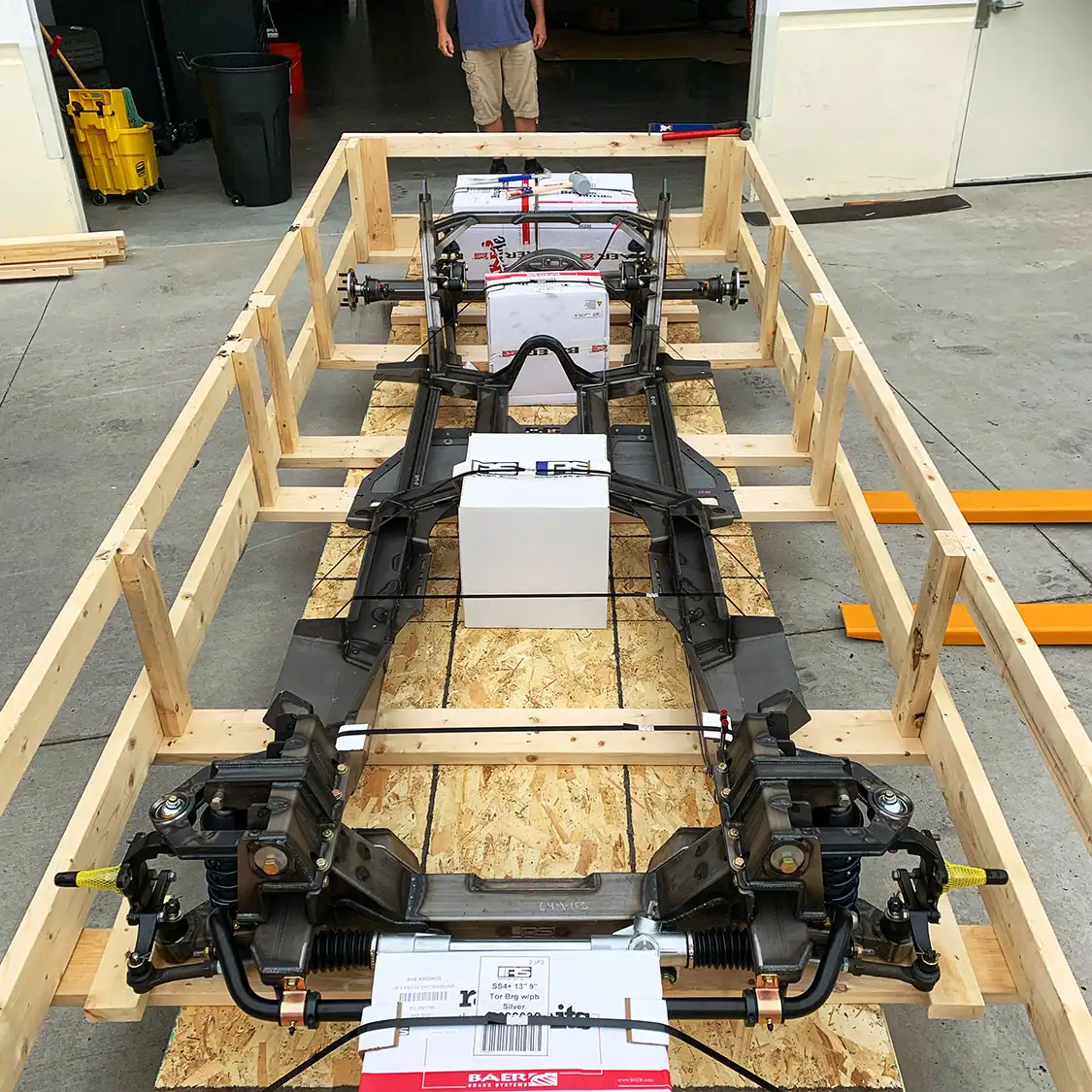
But the ride quality isn’t the only thing Eddy set his sights on. No, sir. He also had his eye on some fresh wheels and tires. And boy, did he find a doozy: 18×8 in the front and 19×12 in the rear, Billet Specialties and Nitto tires, respectively, do just the trick to make this Mustang stand out in a sea of mundane vehicles.
Last but certainly not least, Eddy knew that with all the power he planned on bestowing upon the Mustang, stopping was just as important as going. And that’s why the braking system received a much-needed upgrade. Say hello to Baer’s 12-inch 4-piston calipers with regenerative braking, ready to ease this pony car to a screeching halt. Because let’s face it, who wants to be cruising down the highway only to realize they can’t stop? Not Eddy, that’s for sure.
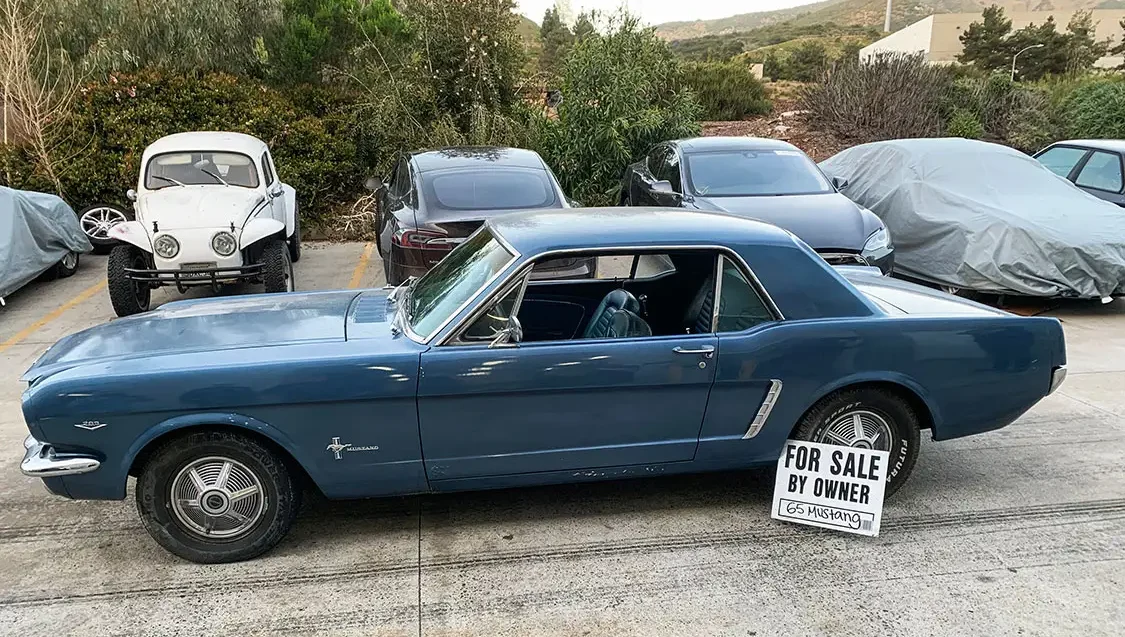
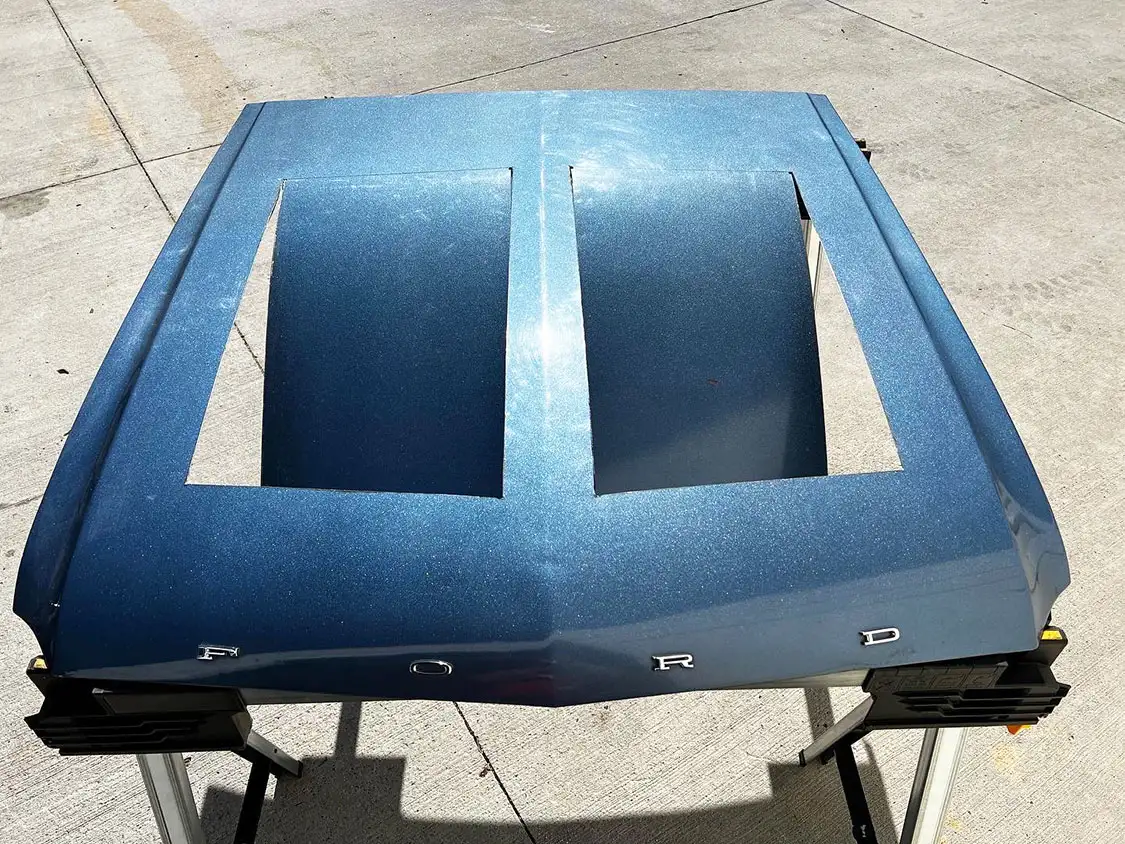
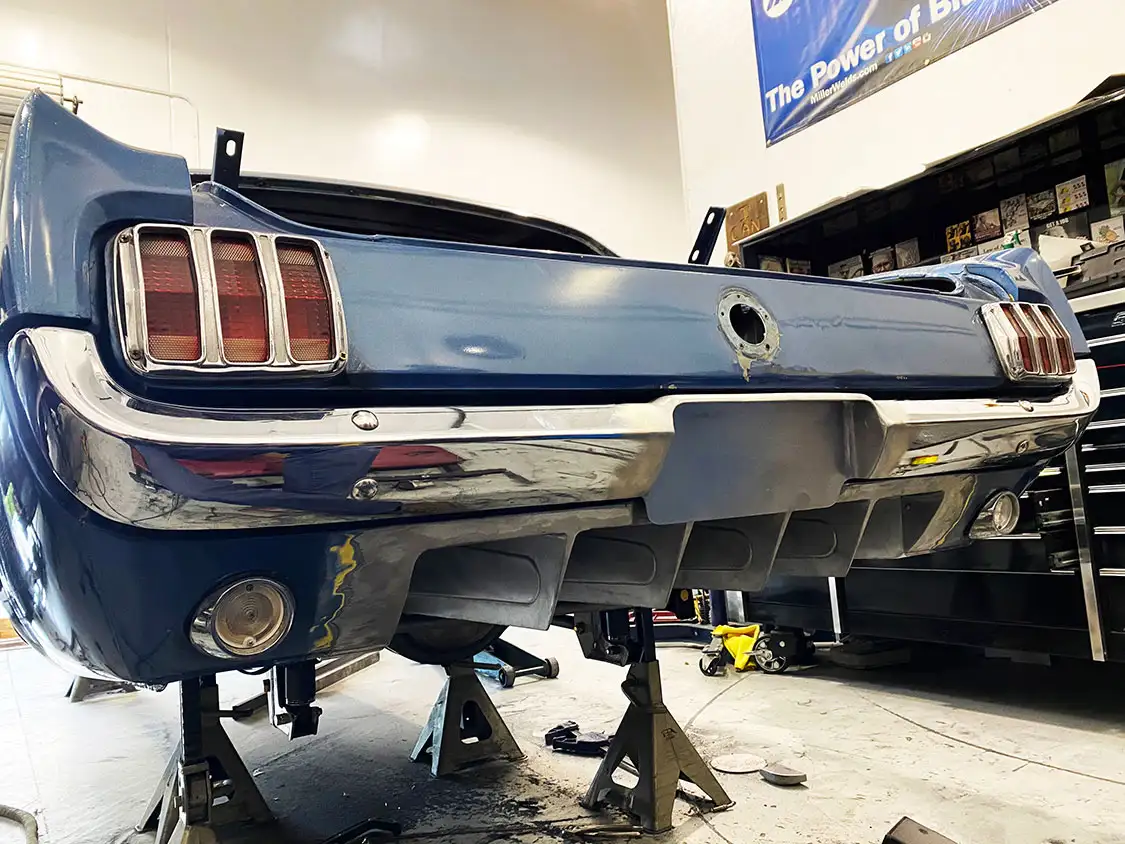
The electric drivetrain was a collaboration with Legacy EV, which designed a custom battery pack with a bit of help from AVS Fabrication for some bead-rolled metalwork under the hood and trunk lid.
If you thought a custom battery pack was just a simple addition to an electric drivetrain, you thought wrong, my friend. ReVolt Systems and Legacy EV have pulled out all the stops to create the ultimate prototype for their 1965 Mustang build.
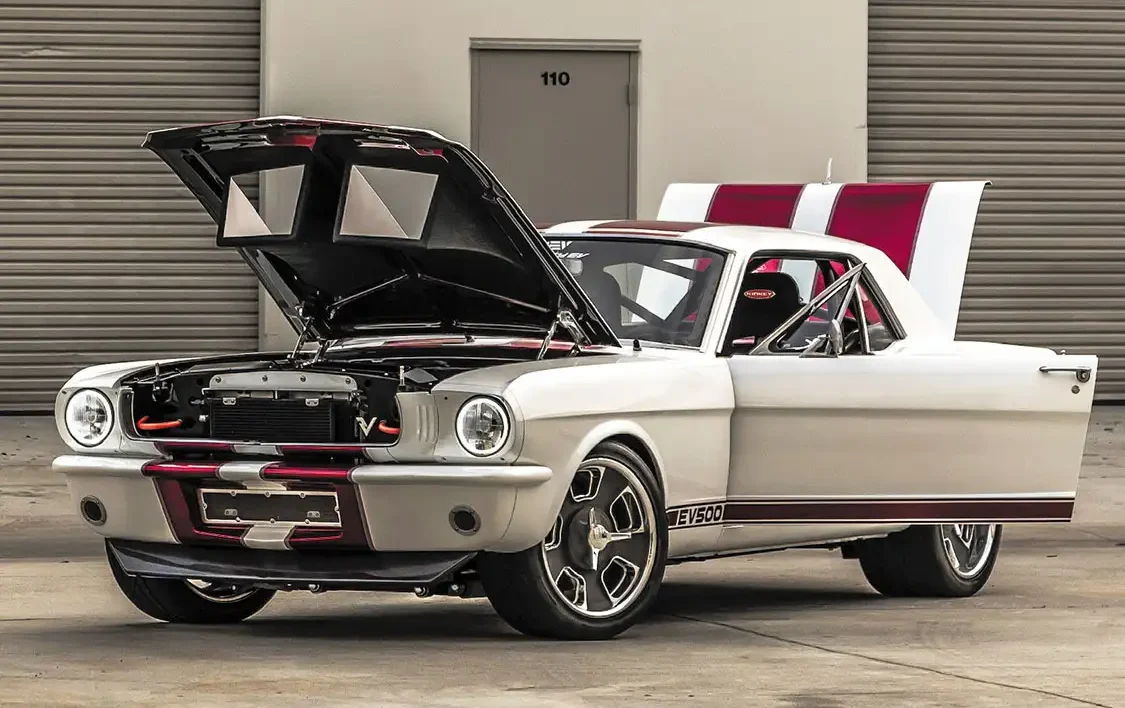
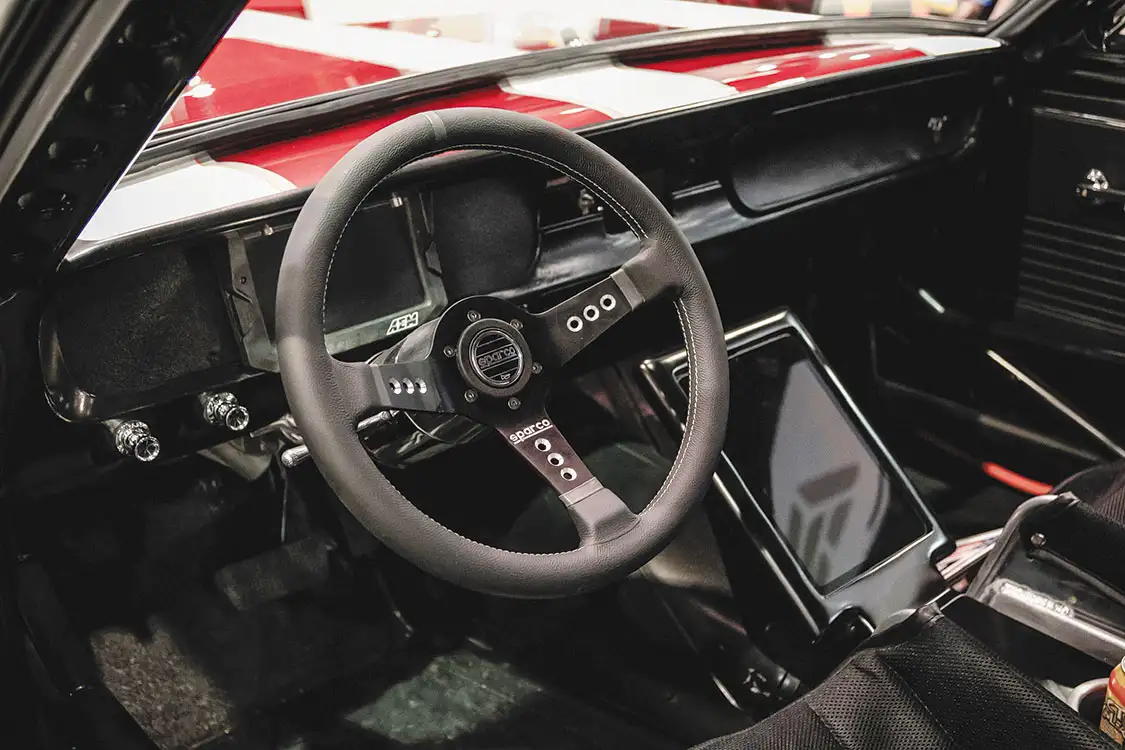
The custom metalwork alone is a work of art, with bead-rolled panelling under the hood and throughout the interior, one-of-a-kind wheel tubs, bumpers, and an impressive roll cage. But it wasn’t just about looks, oh no. The team had to tackle the challenge of placing the batteries in just the right spot for optimal weight distribution. And when they finally got that sorted, they moved on to even more extensive fabrication jobs that elevated the Mustang to a whole new level.
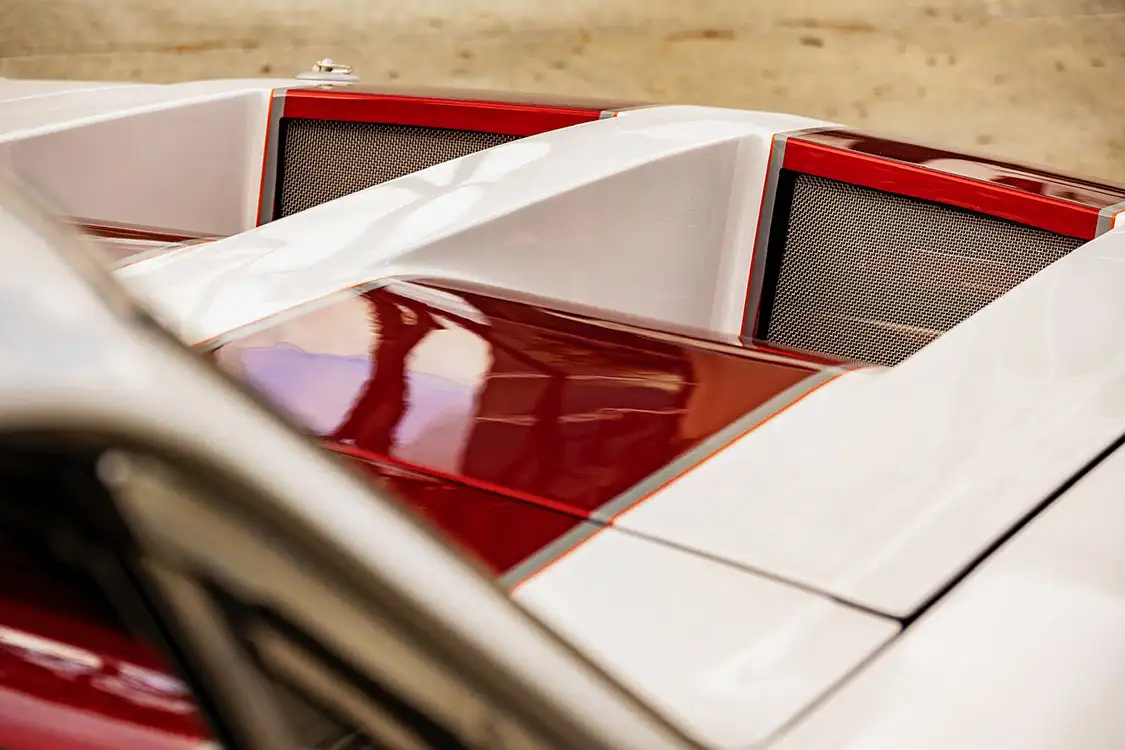
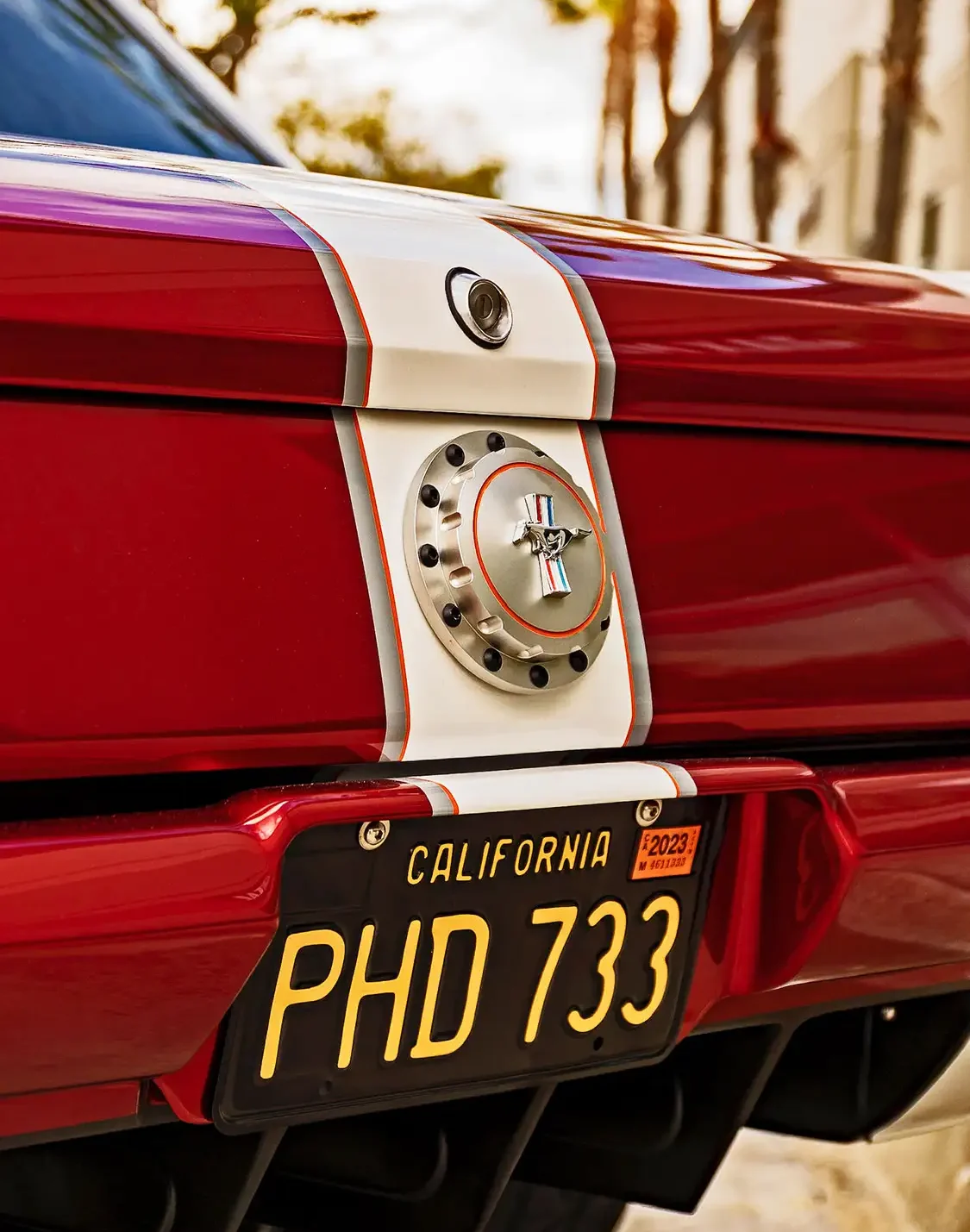
Hot Dog Kustoms’ Pete “Hot Dog” Finlan put the finishing touches on the bodywork before the final paint job was applied, with a pearl white base and red accents.
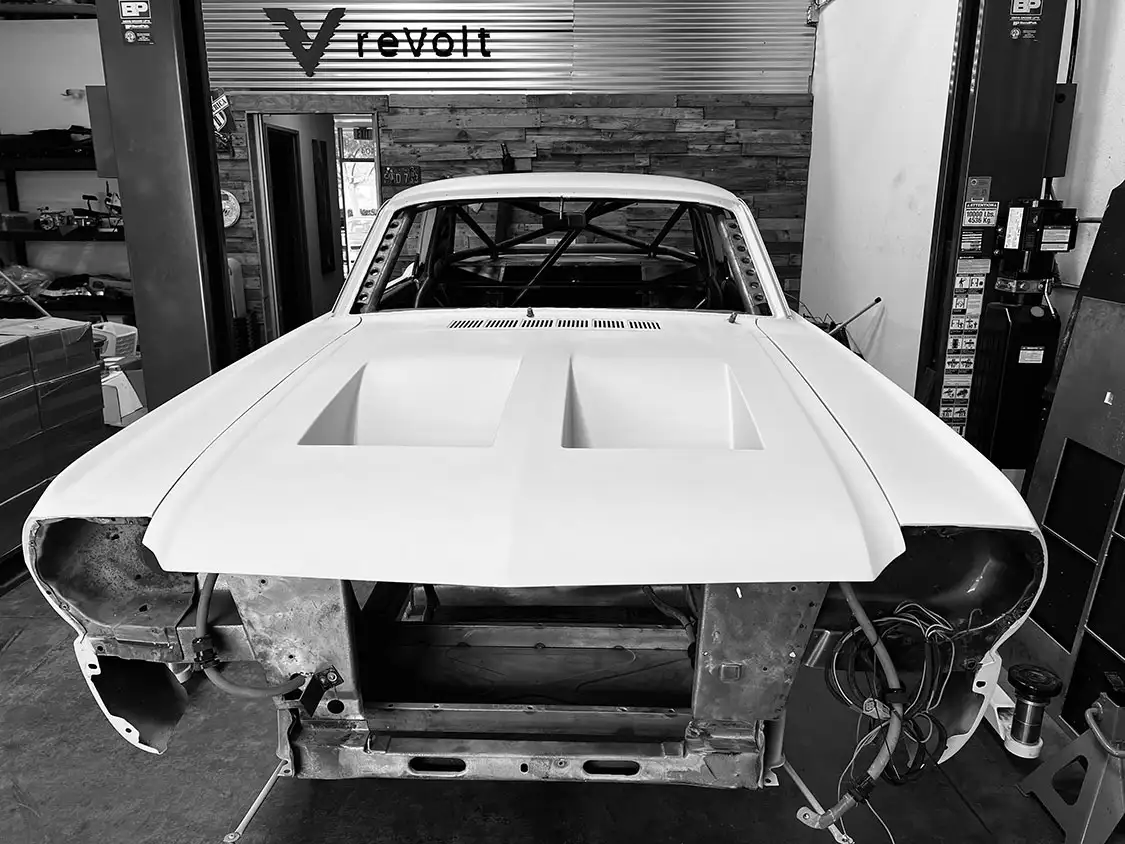
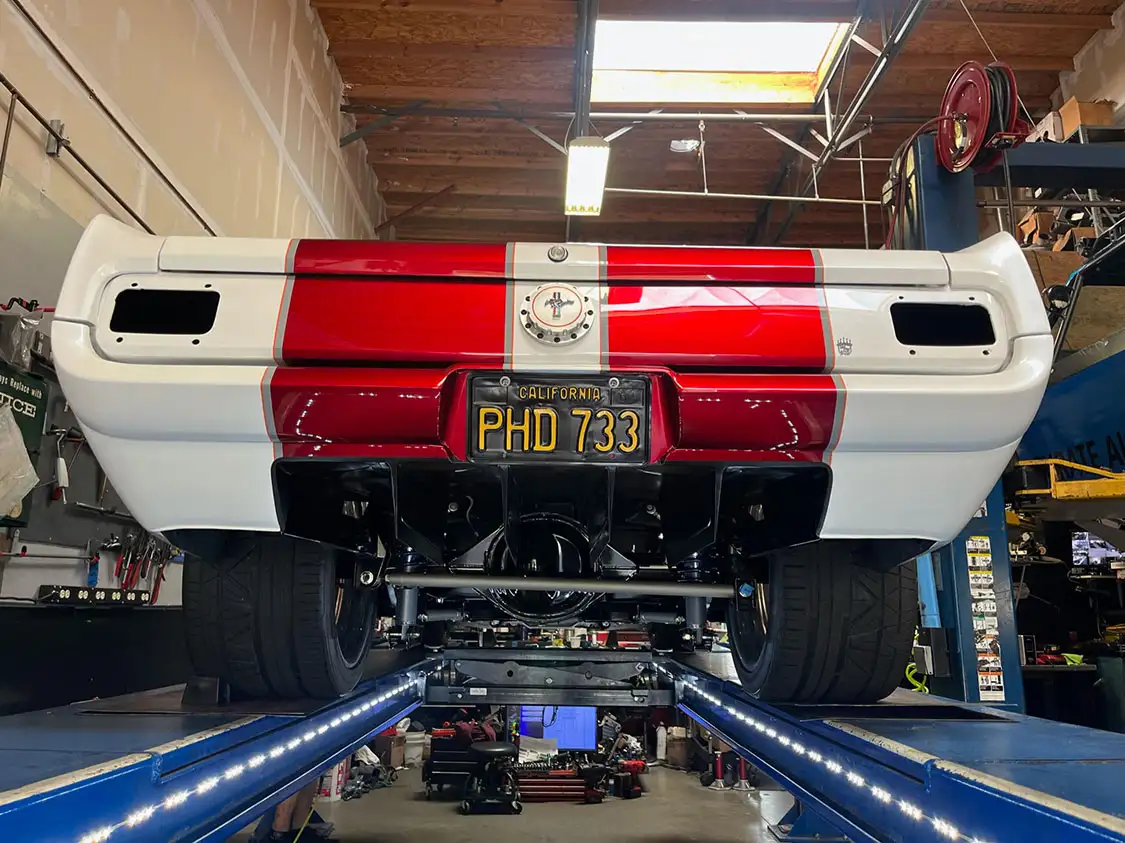
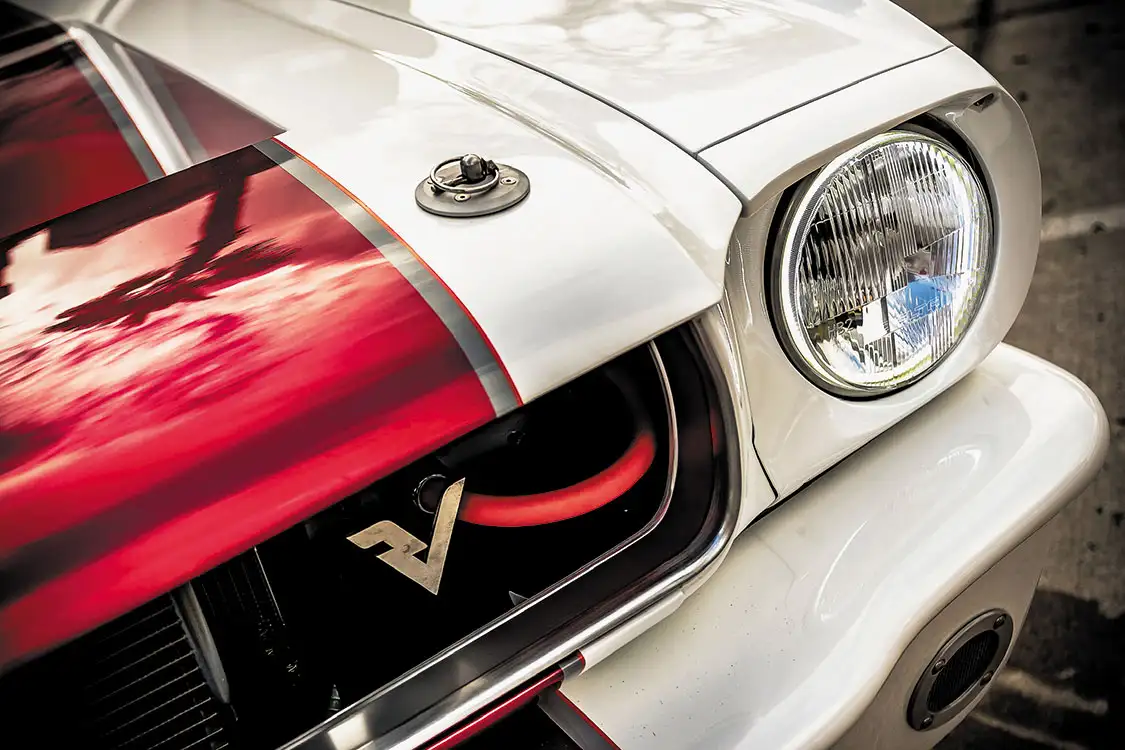
In the meantime, Rex Upholstery was doing its magic on the interior. This cockpit is packed with top-notch components, from the sleek and comfortable seats to the cutting-edge AEM EV gauges and the sporty Sparco steering wheel. Don’t need A/C? Roll down the windows and feel the wind in your hair. The custom-painted dash is a work of art, and the iPad radio head unit is the cherry on top.
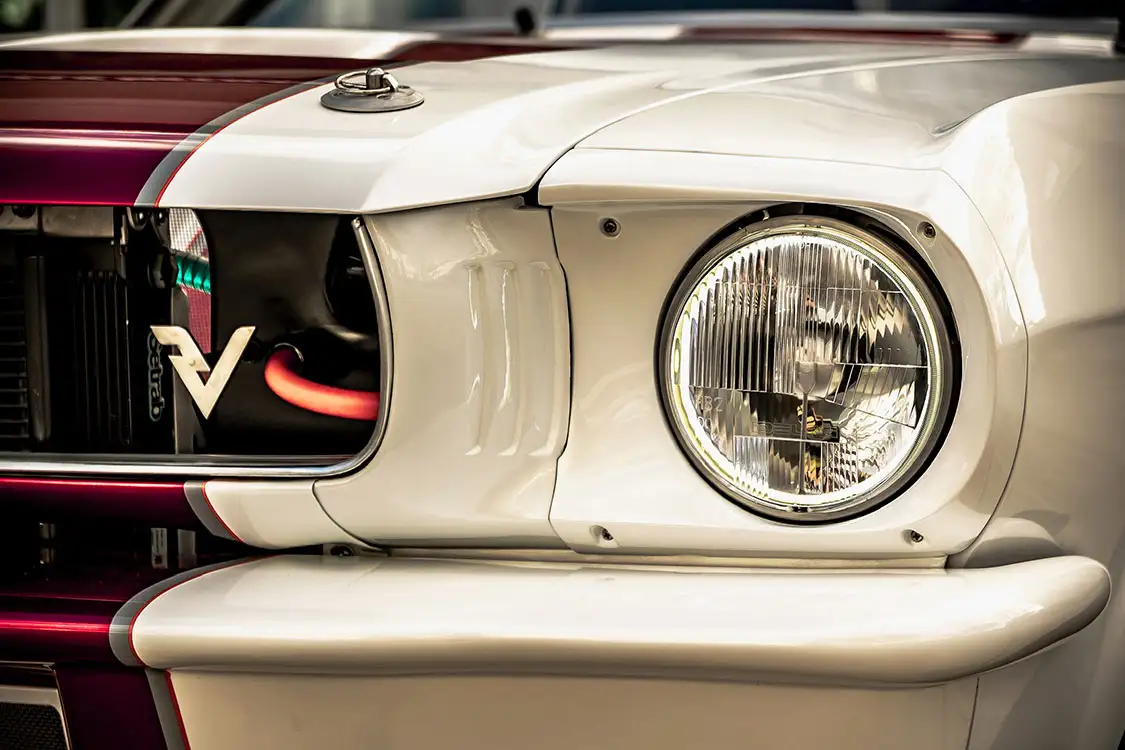
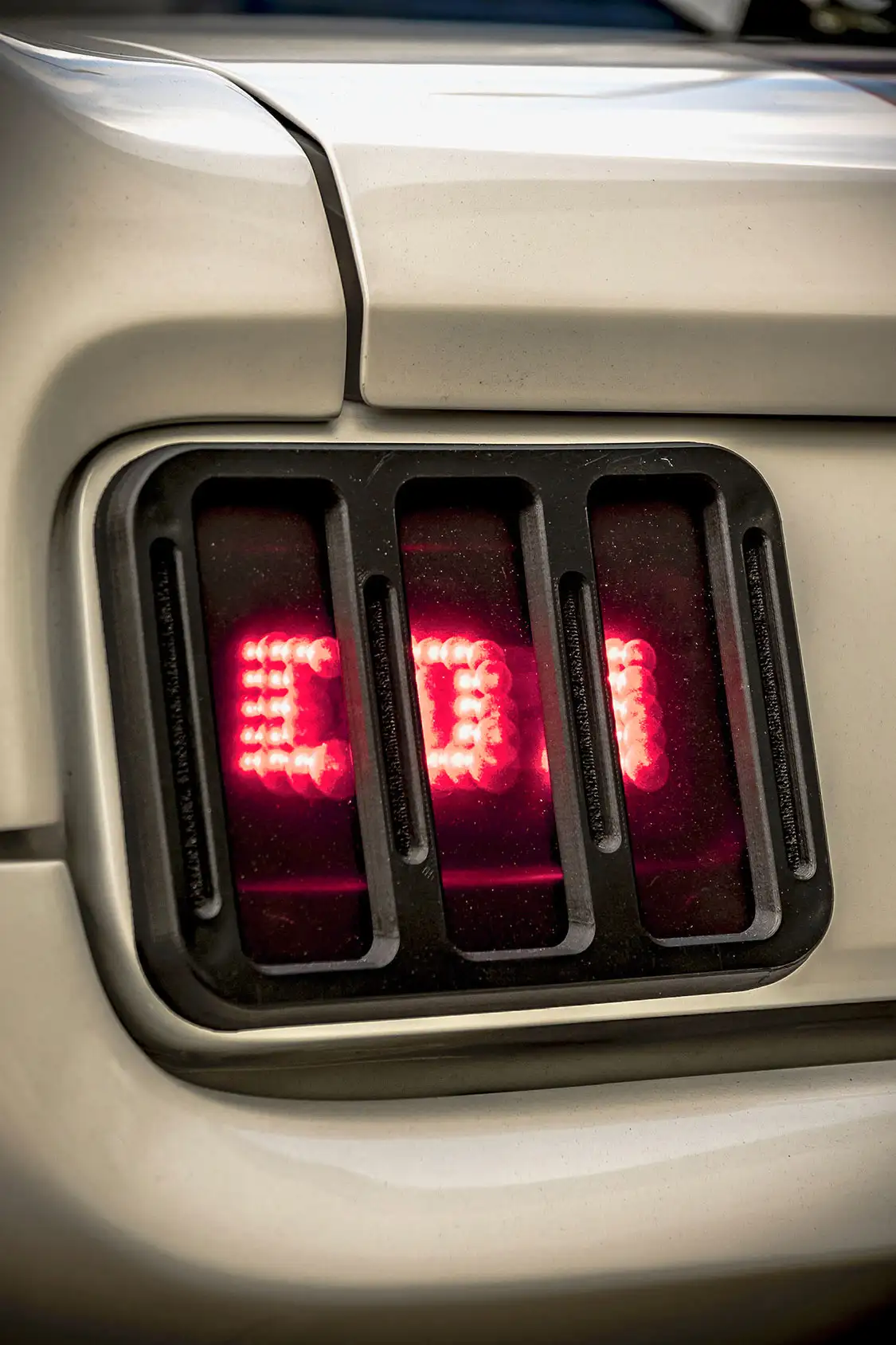
From the custom diffuser by AVS Fabrication to the custom carbon hood by Airtech Design, this Ford Mustang is a true head-turner. The LED 7-inch headlights are bright and bold, while the custom Revolt Systems LowPro 65 Billet aluminum taillights complete the sleek and stylish look.
This Mustang is more than just a pretty face; it’s a trailblazer in the EV restomod world. From showcasing at events like SEMA 2021 and local car shows to the countless hours and custom work that went into it, this Ford is sure to turn heads and leave a lasting impression.
And for those considering building a similar EV, the team has some words of wisdom: plan ahead, take your time and seek out the pros for good knowledge. This is a new and vastly different world compared to traditional gas engines, so keeping an open mind and prioritizing safety when working with high-voltage systems is essential.
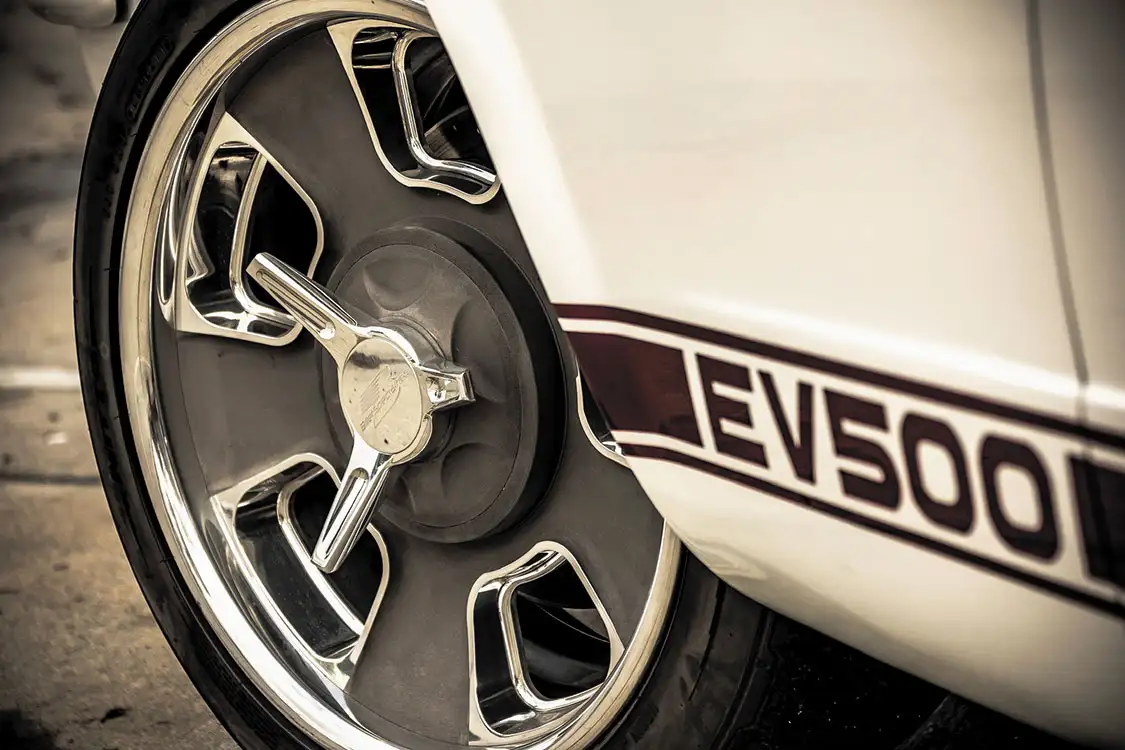
So hold on tight, as ReVolt Systems and their talented partners are far from finished with their electric conversions journey. Instead, get ready to be wowed by their upcoming builds, just as sick as this clean-as-hell ’65 Mustang. And they’re doing it with a witty touch that’ll make even fuel fans smile.
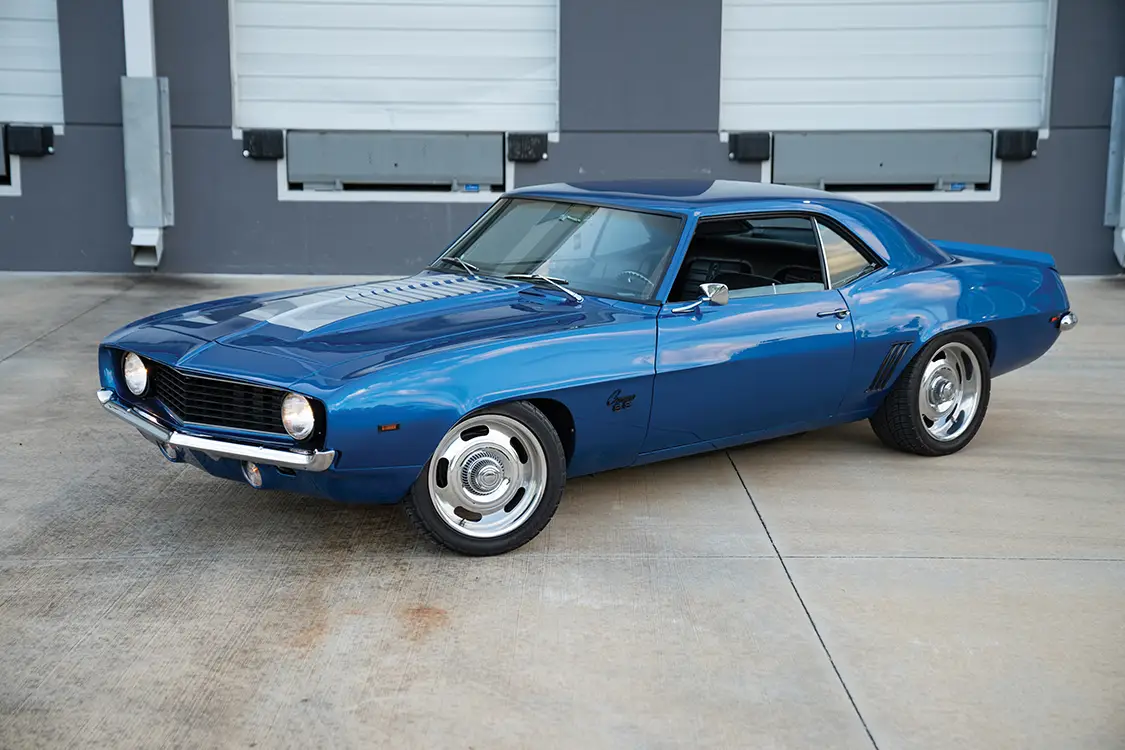
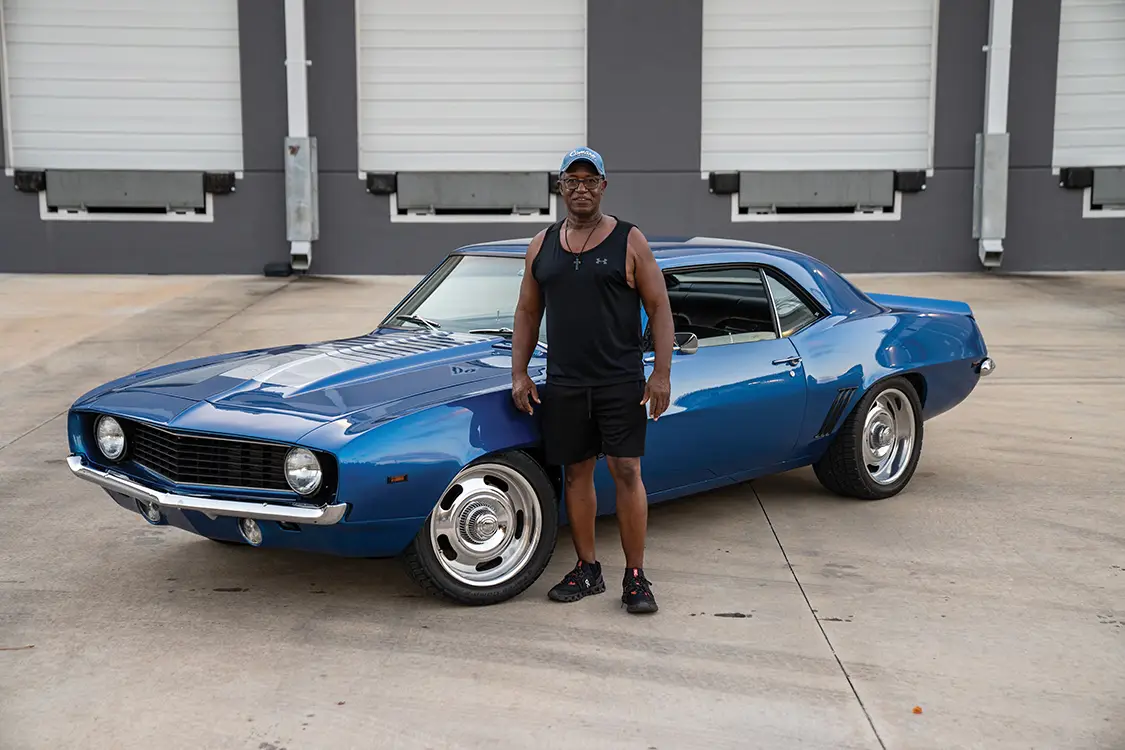
Jerry Jenkins’ 1969 Camaro
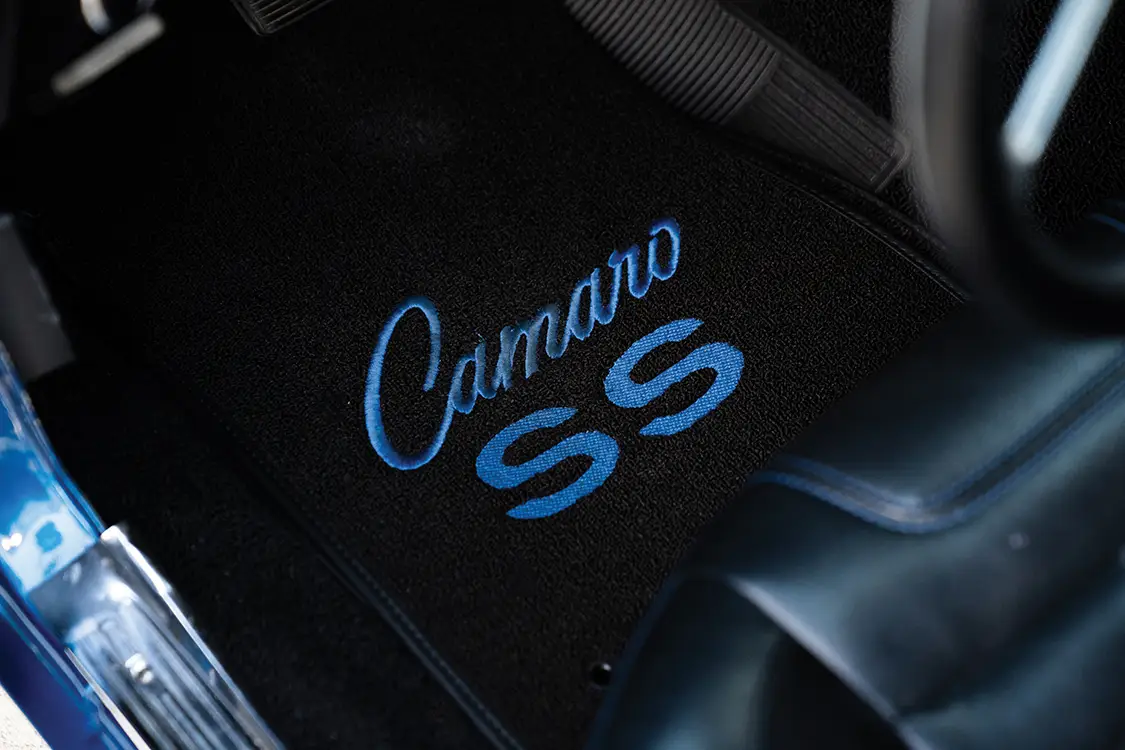
Jerry Jenkins calls it “The Beast,” and the name is not bravado. It’s recognition. Since the day he earned his driver’s license at fifteen, Jenkins had carried a single image in his mind: a 1969 Camaro finished in Laguna Blue. Forty-five years in telecommunications kept the lights on, but retirement finally gave him the time, and the budget, to turn that teenage vision into steel and horsepower.
Two intense years and north of eighty thousand dollars later, The Beast emerged.
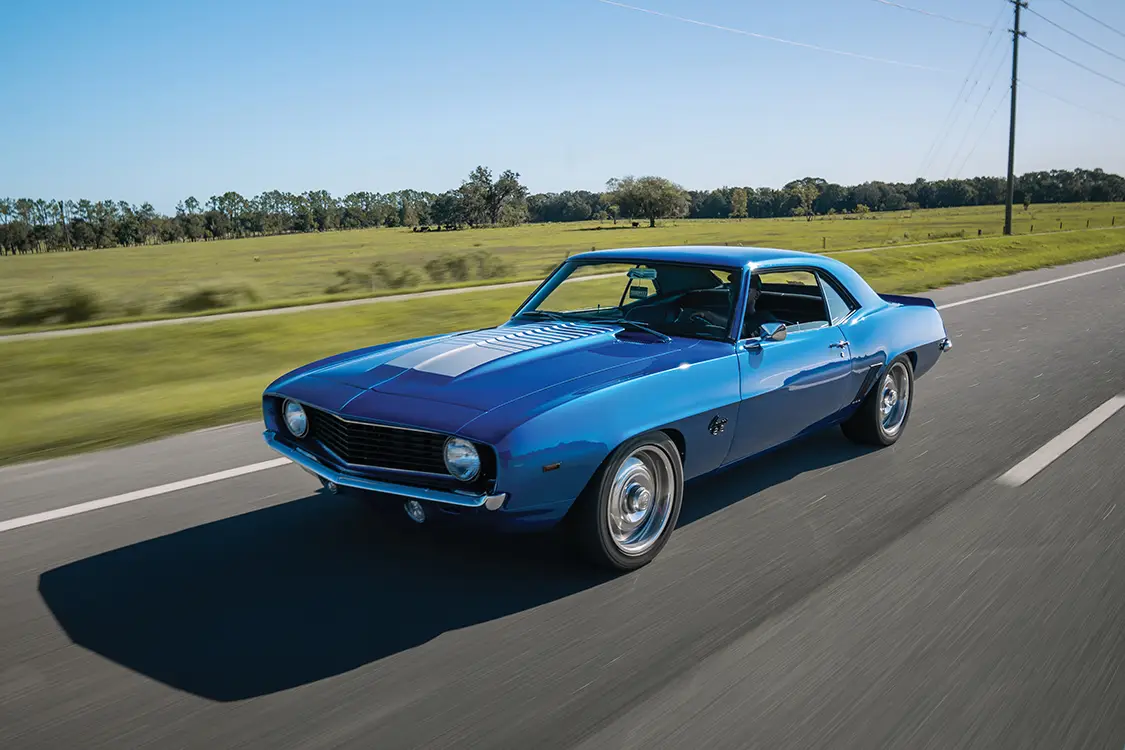
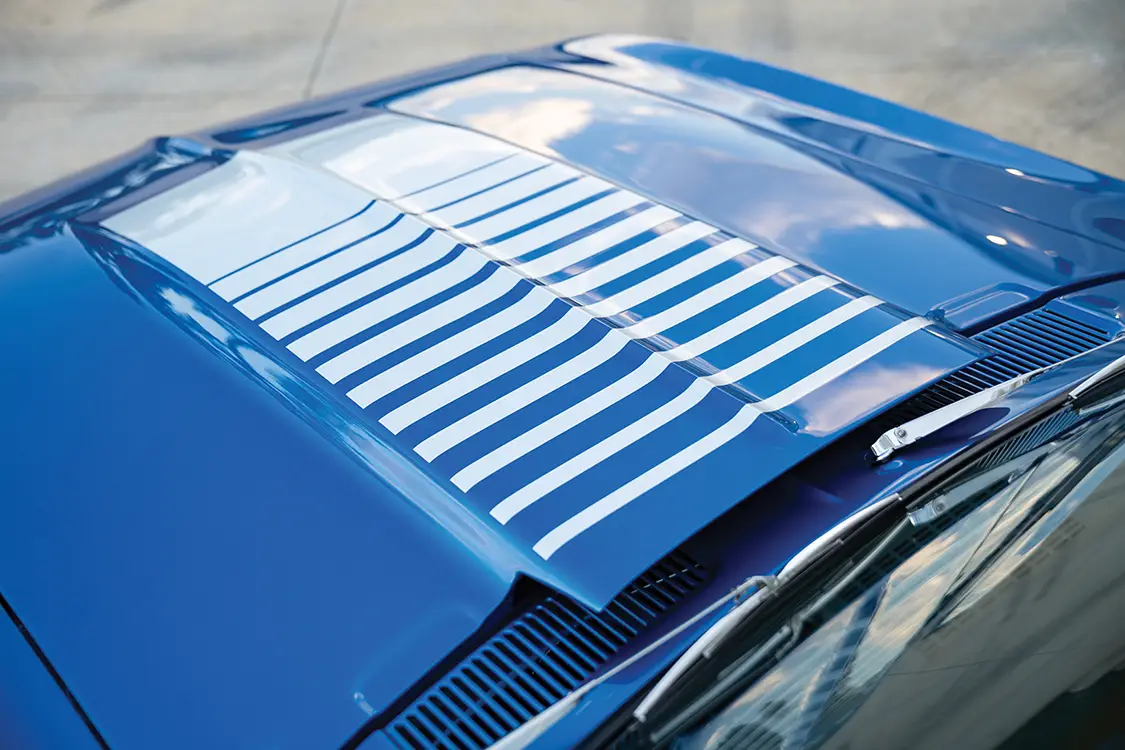
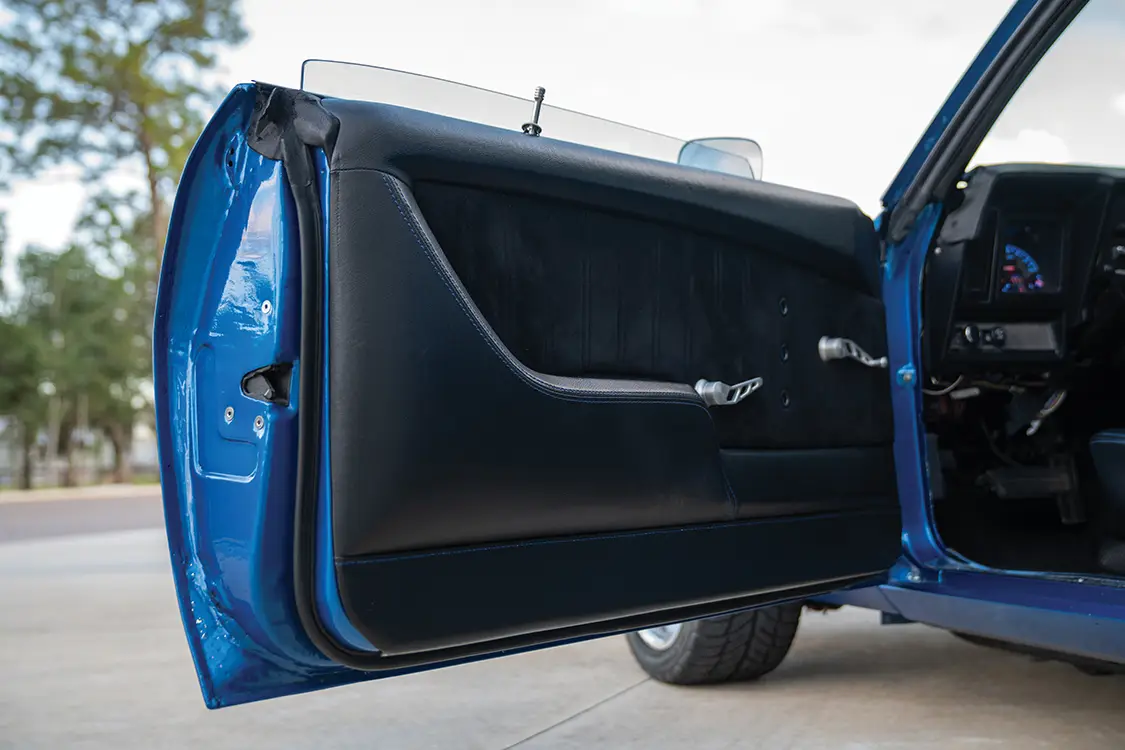
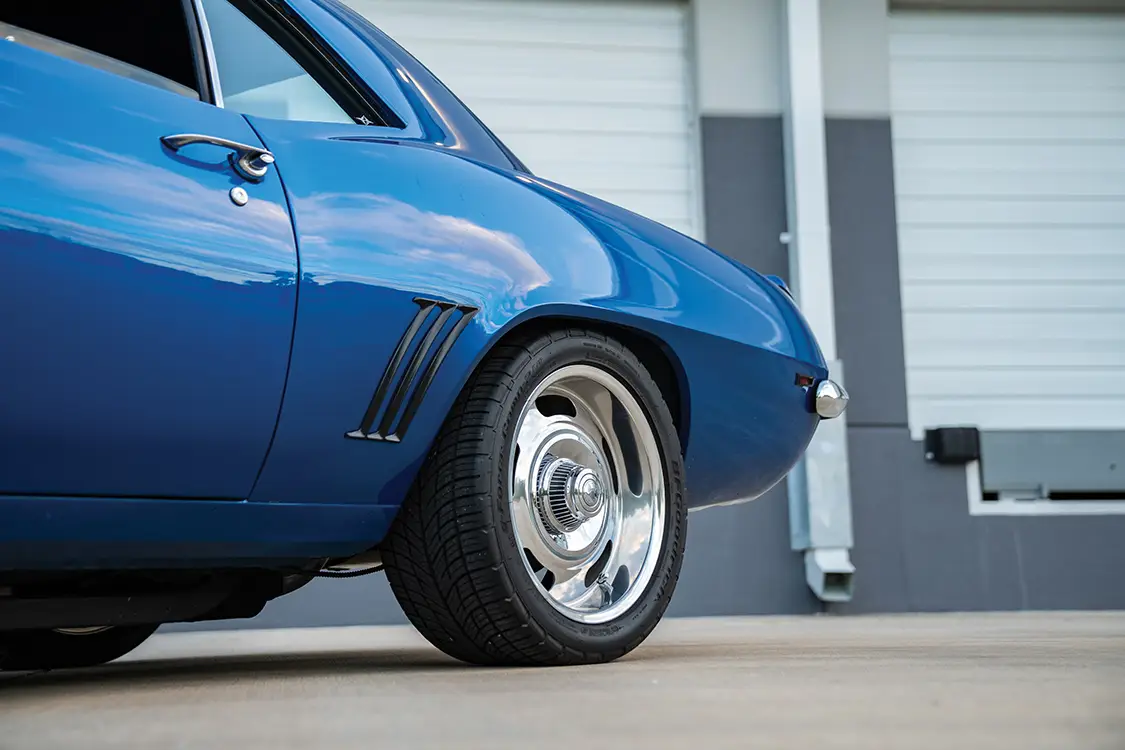
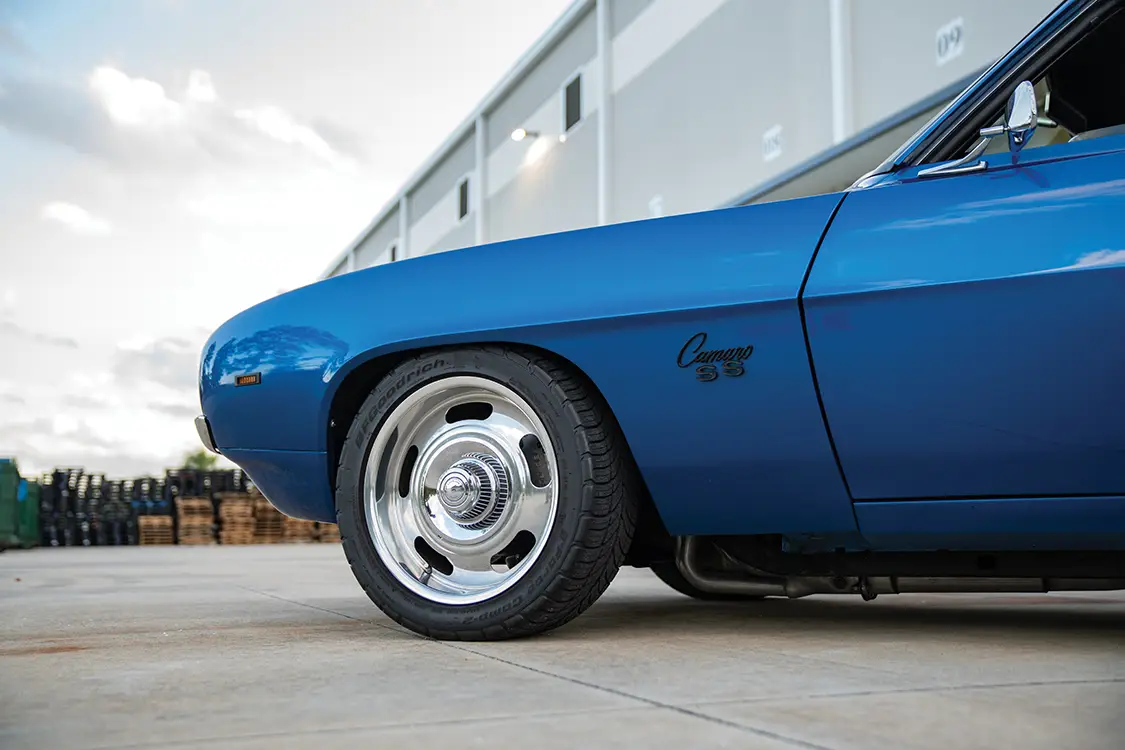
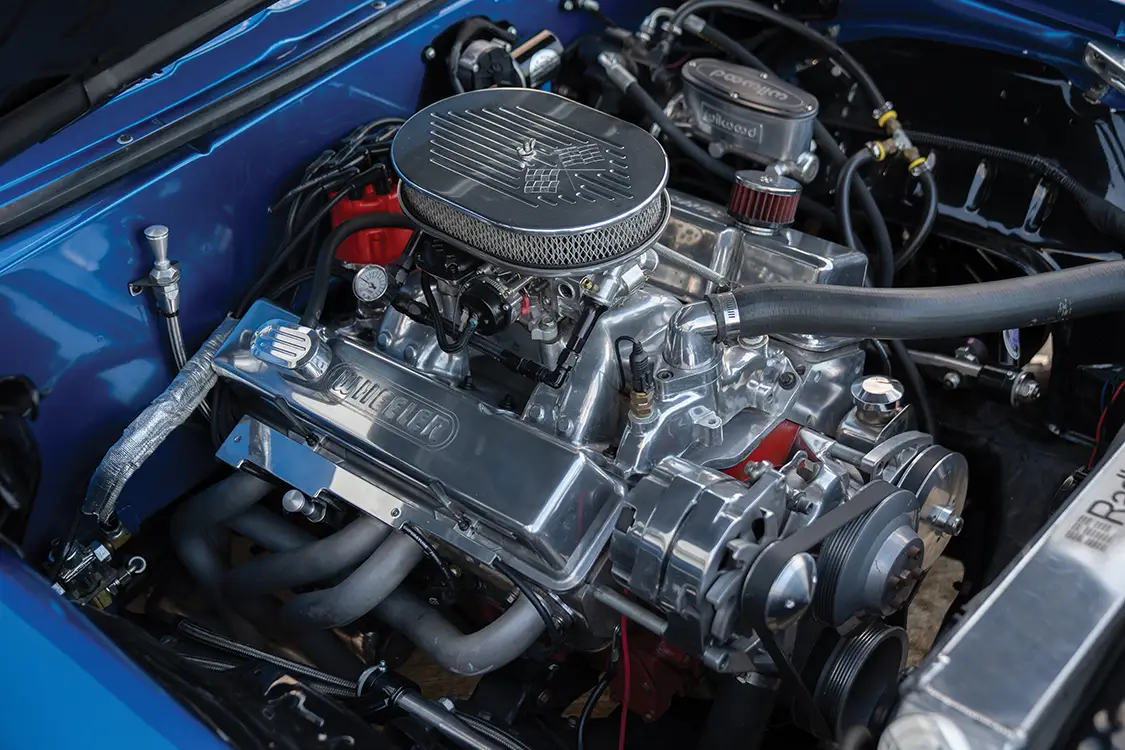
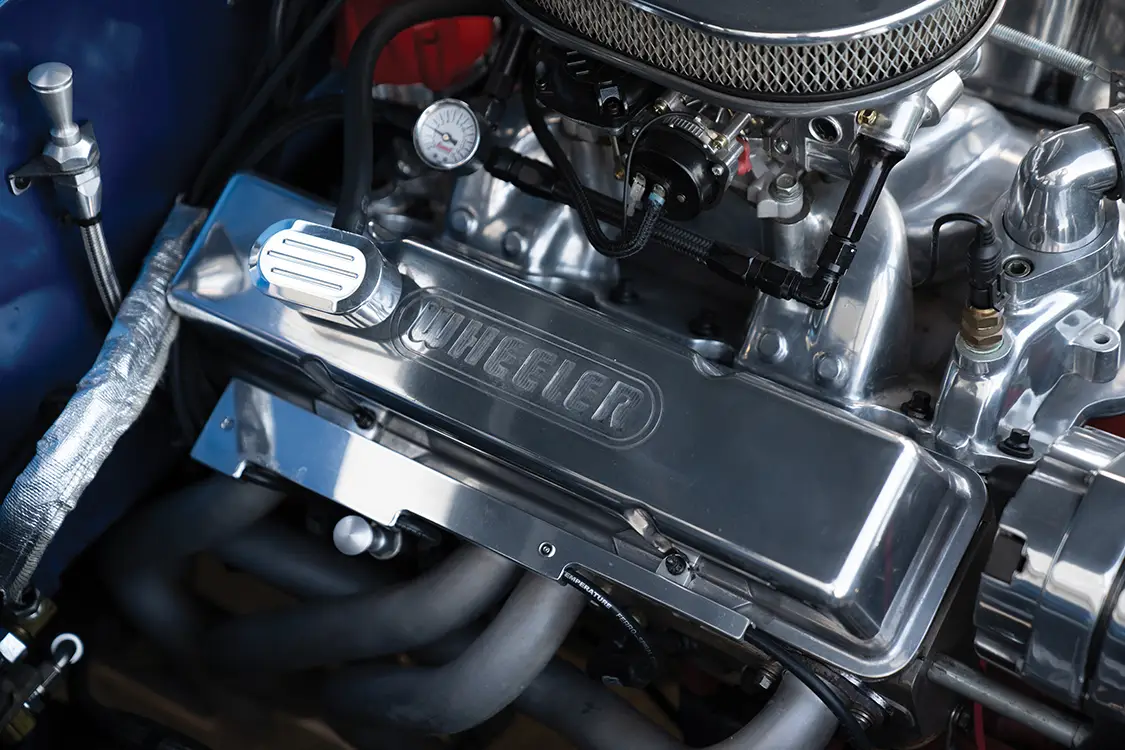
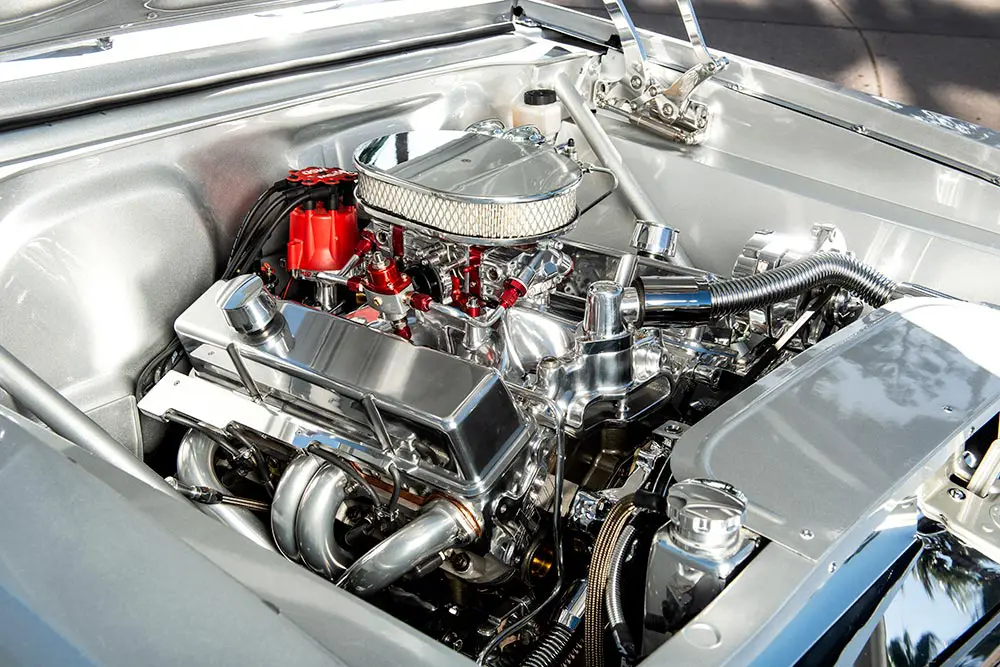
The exterior is pure 1969 at first glance. Stock bumpers and grilles maintain the factory silhouette, while the Laguna Blue paint, laid down with a custom Jerry-designed hood stripe, provides the signature pop. Beneath that classic skin sits a GM 383 stroker crate engine, balanced and blueprinted by Wheeler Motorsports in Jacksonville, Florida. A Comp Cams bumpstick with .547 lift and 288 degrees of advertised duration, a custom intake, and a Holley Street Avenger 670-cfm carburetor feed the small-block. Hooker 3-inch headers flow into a full custom exhaust, while an MSD 6AL digital box and a Radiator Technologies four-row aluminum core with dual electric fans keep everything cool and ignited.
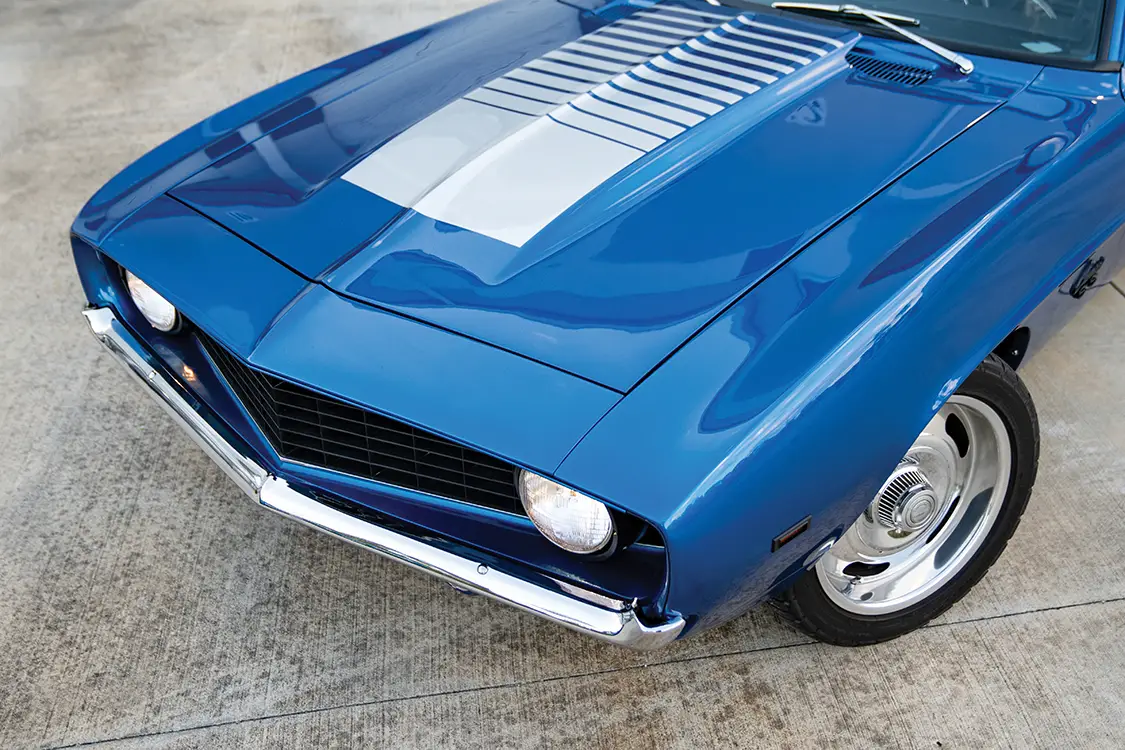
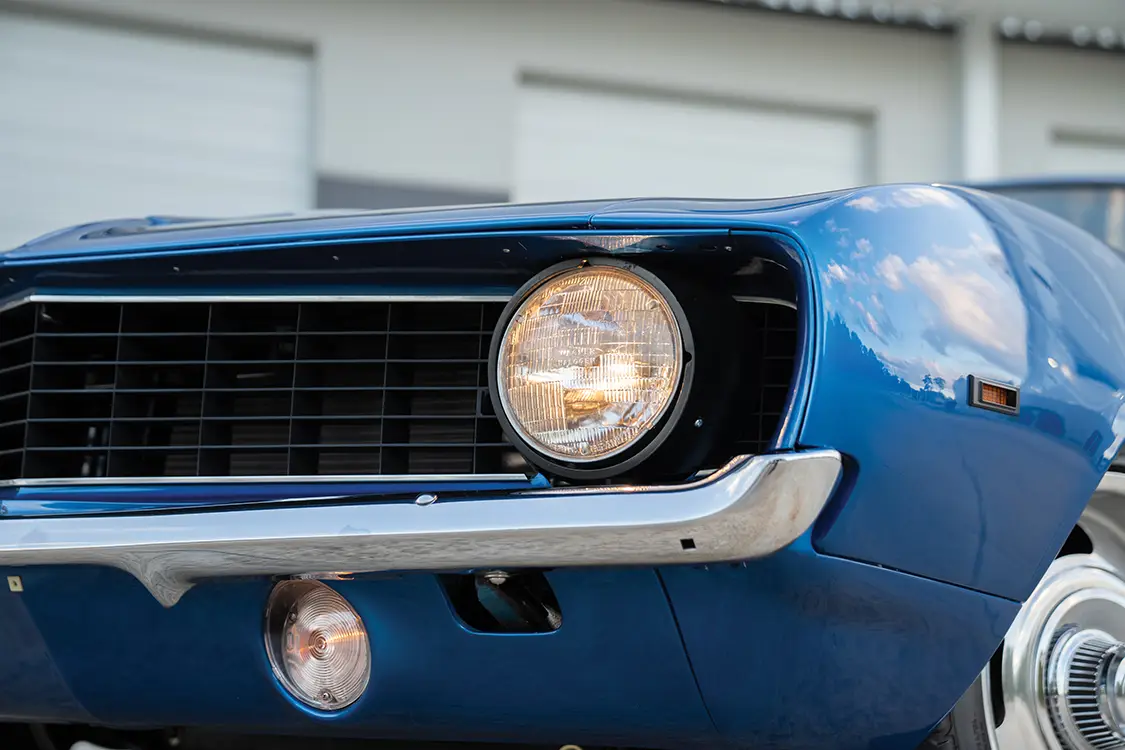
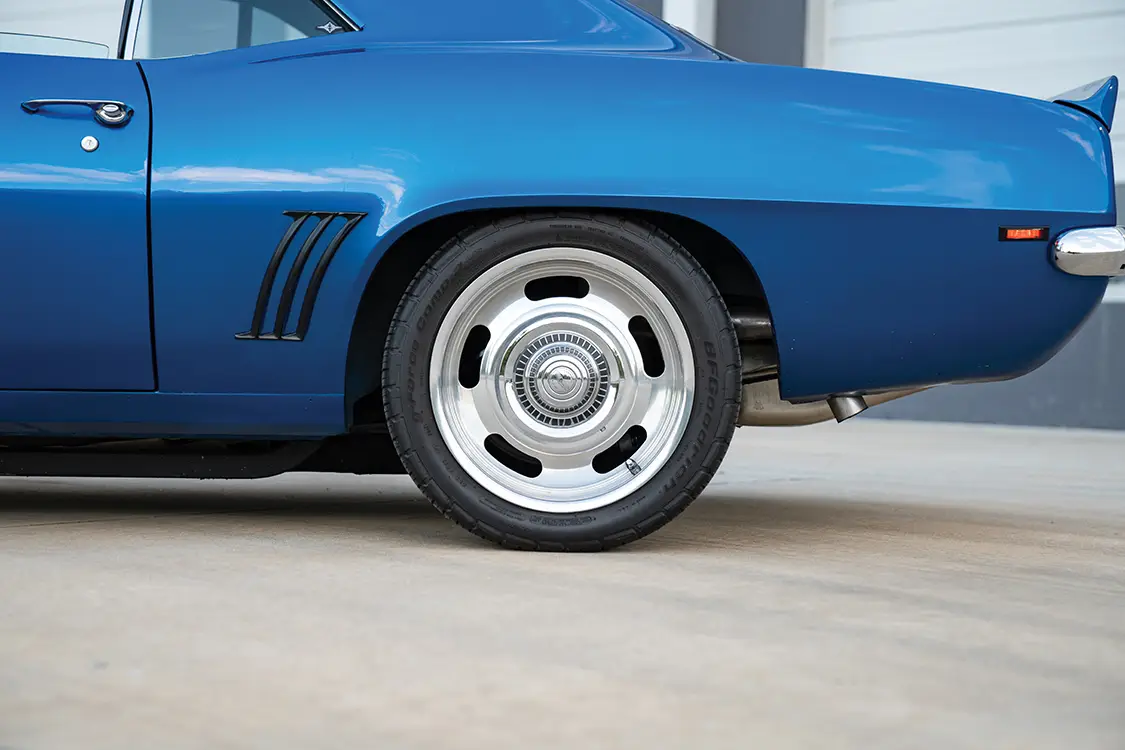
The chassis remains a stock subframe, but Jerry reinforced it himself with welded frame-connector braces, Koni front springs, Detroit Speed shocks front and rear, dropped upper and lower control arms, and a 1-inch front sway bar. Every bolt, he insists, felt his own torque wrench. American Racing 17-inch polished Rally wheels wrapped in BFGoodrich g-Force Comp-2 tires (245/45-17 front, 275/40-17 rear) for grip that matches the car’s attitude.
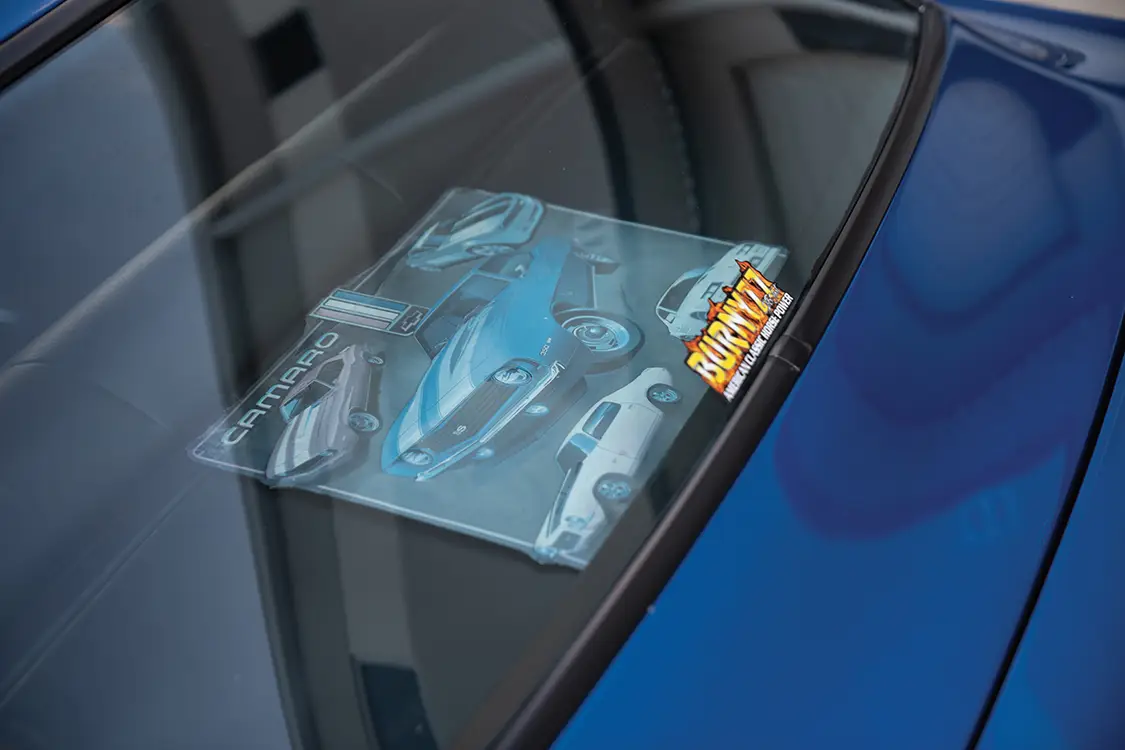
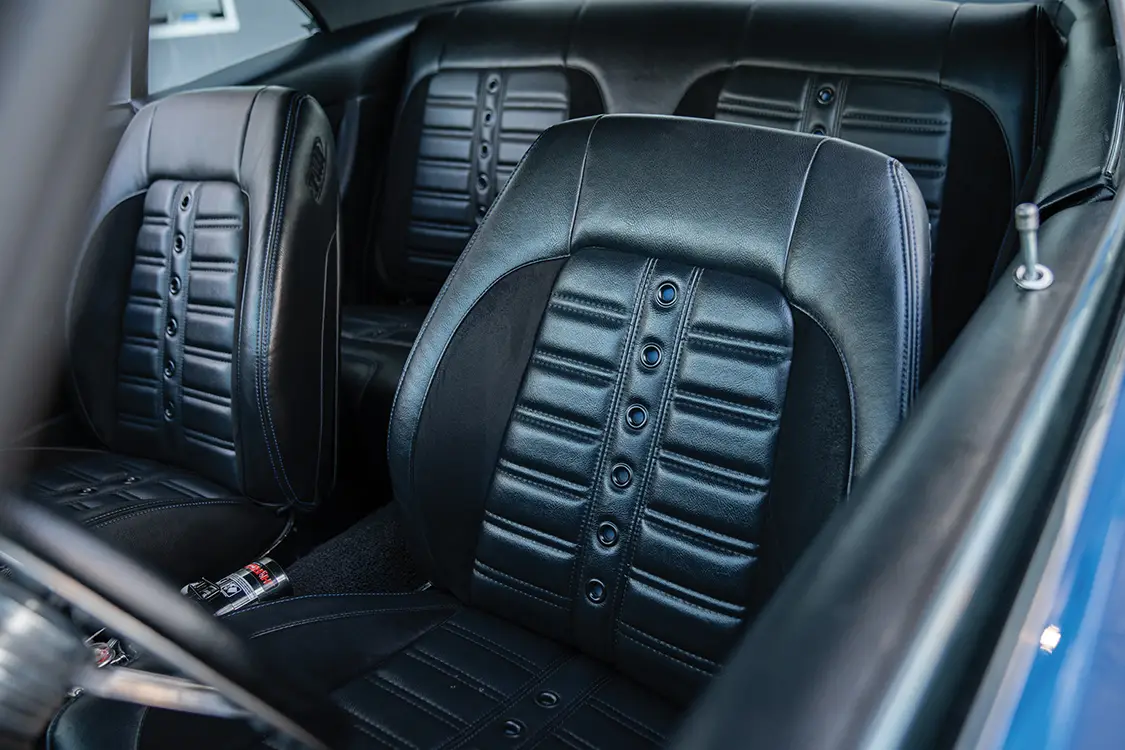
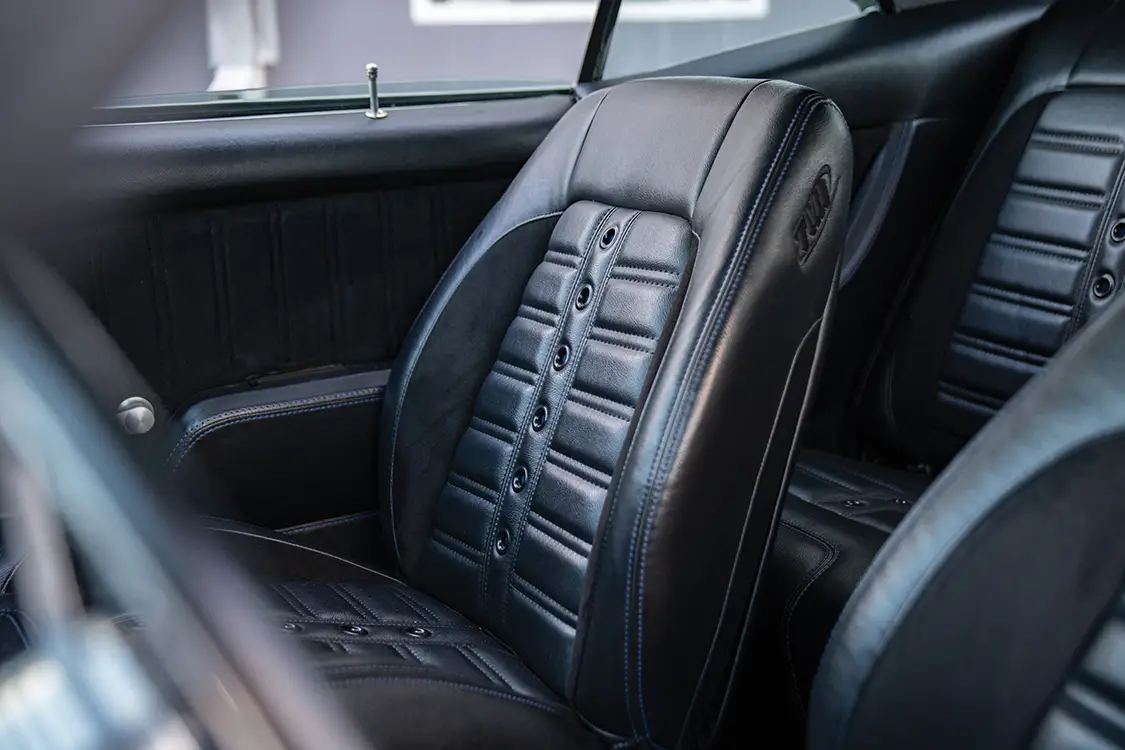
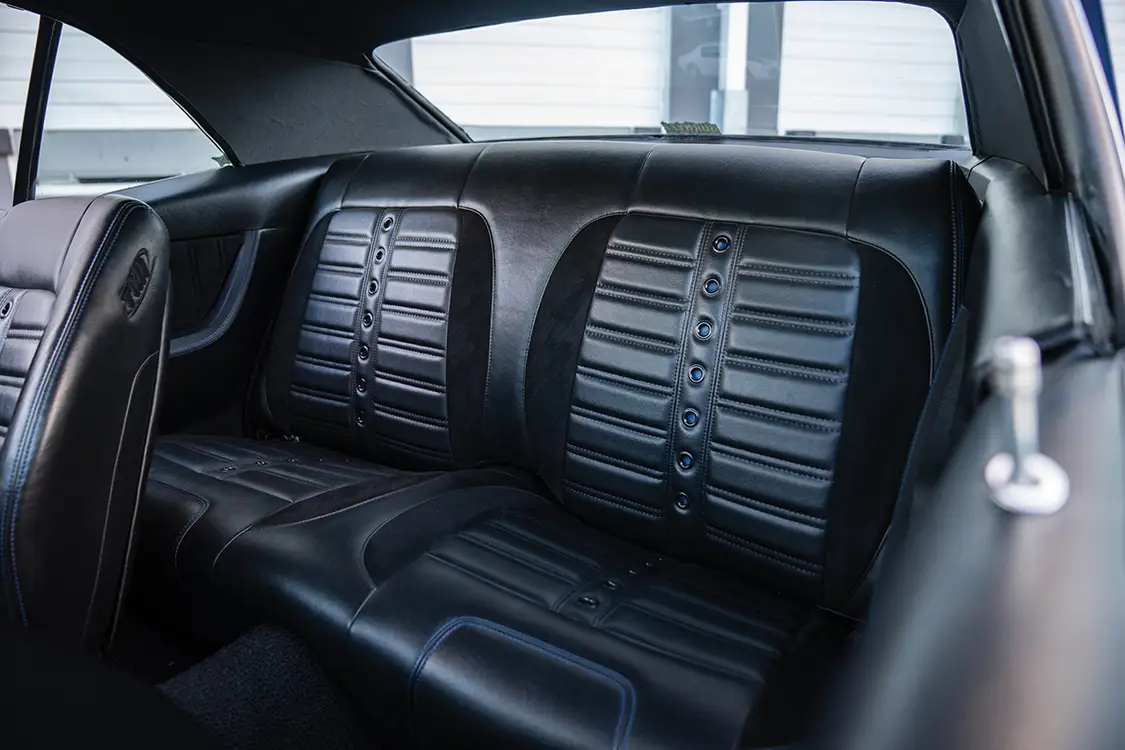
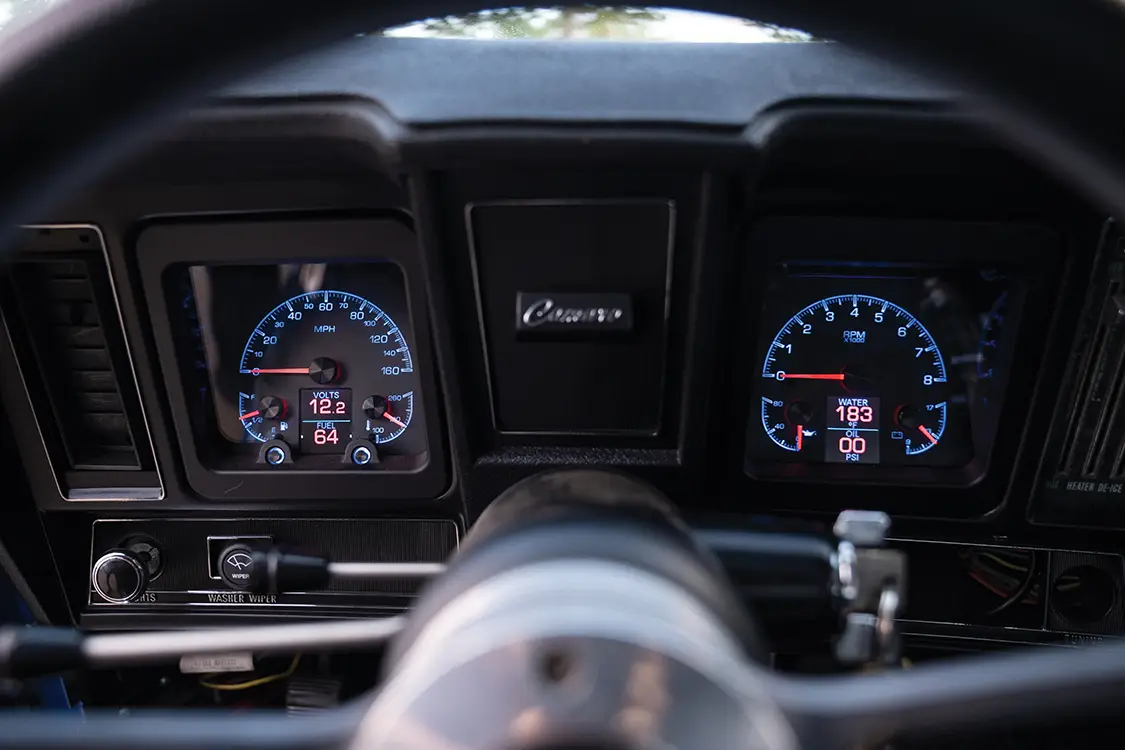
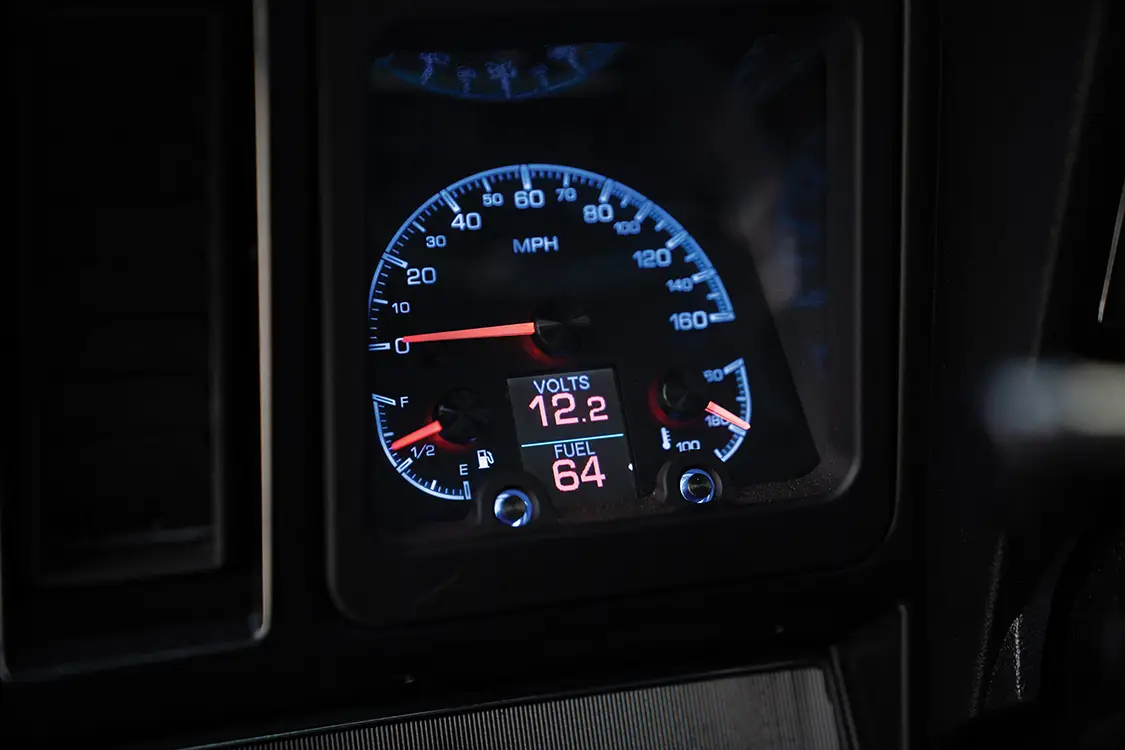
Inside, TMI Sport-VXR seats with black-and-blue stitching, installed by Shoupe and Son Upholstery in Ocala, anchor a cockpit finished with Dakota Digital VHX gauges, an Ididit tilt column, and a 14-inch billet wheel wrapped in black leather.
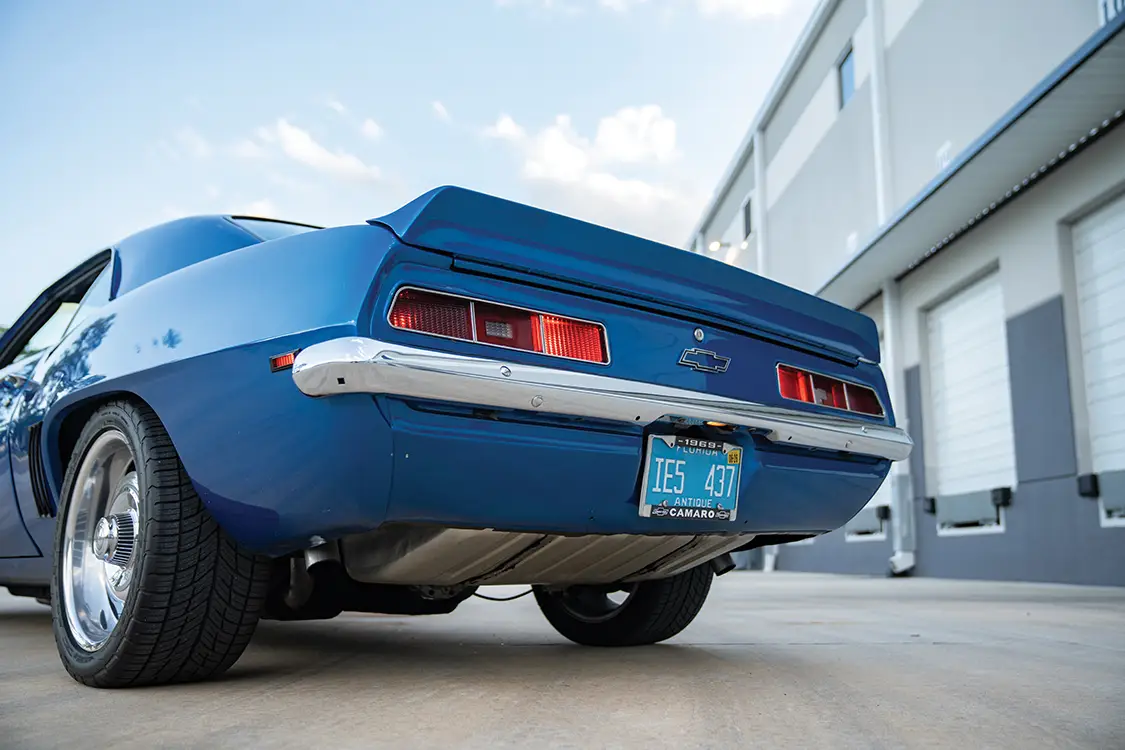
The résumé speaks for itself: six trips to the SEMA Show, Cruisin’ the Coast, Emerald Coast Cruizin’, Daytona Turkey Run, LS Fest, Barrett-Jackson, Mecum, and Shades of the Past—plus every major local Ocala gathering. Trophies follow, but Jenkins measures success differently.
“I learned that every screw, nut, and bolt has to have my finger on it to make sure it’s right,” he says. “Patience and a big checkbook help, too.”
In a hobby where cars are often trailered and pampered, The Beast is driven, hard and often, exactly as a fifteen-year-old boy once imagined it should be. After half a century, Jerry Jenkins finally has his dream Camaro. And yes, it earned its name.
Growing up in Southern, California with a fairly large age gap between myself and my two older brothers, I had the privilege of watching my brothers build some amazing cars in my parent’s garage, throughout the course of my childhood. Every penny my brothers earned from after school and summer jobs would be spent wrenching on their cars, for weeks on end. Asking questions, watching them wrench, and the pure excitement as they fired them up, rattling the windows in our parent’s and neighbor’s house, placed a smile on my face I could not begin to explain!
Then on that one special Saturday night at the age of 13 years old, my oldest brother asked if I would like to take a ride prior to him heading off to Whittier Blvd. to cruise and find a few races as they did every Saturday night. Excited beyond belief, I hopped in my brother’s car and we proceeded to drive over to the oil fields in Santa Fe Springs, CA, better known as the industrial section today. No idea what I was in for, my brother came to a complete stop dead center in the middle of the street. Curious as to why we’re in the middle of the road and before I could even ask, the engine revved, the clutch was dumped, my head whipped back as the car begin to shift to the right. Like a kid in the candy store, smiling ear-to-ear, my brother slammed the shifter into 2nd as he steered slightly back to the left and proceeded into 3rd, the sound the engine made, the smoke in the street and inside the car, was a feeling of pure adrenalin like I’ve never felt before. Holding on for dear life as we headed into 4th, I knew horsepower and muscle cars were in my blood for life!
I made the decision to tear down the entire car
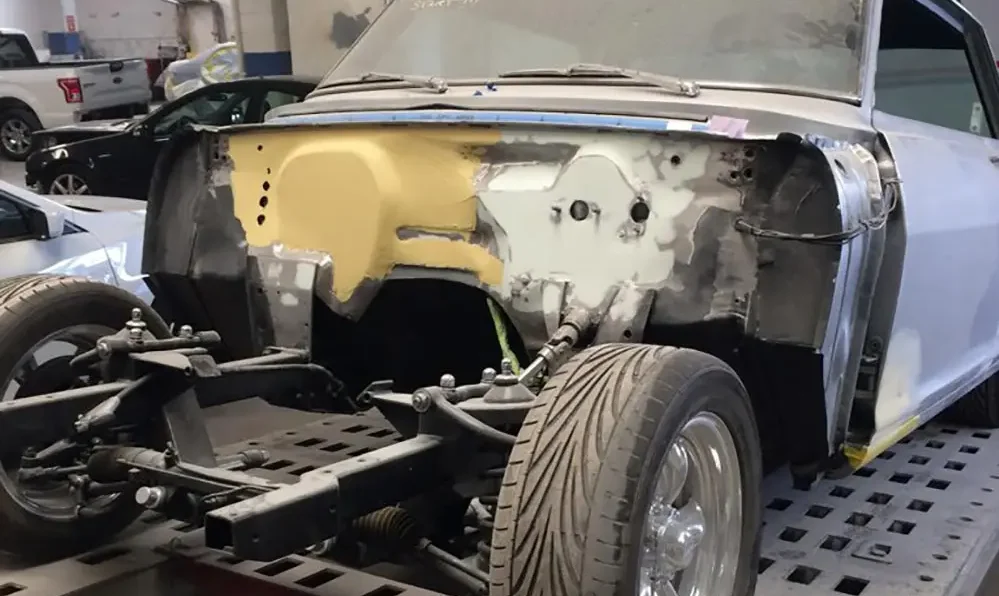
Eager to build something different and slighter smaller to accommodate the build within my two-car garage, I set out to find an early Chevy Nova. After months of searching, I purchased the 65 Nova nearly 4 years ago from a gentleman in Chicago, IL where I had the car immediately shipped back to my residence in Southern CA.
Coming from a 55 Chevy with a blown big block with nearly 850 horse that I sold 6 years ago to assist with our kid’s college funds, I found driving the 65 Nova with its mild built 350, 325 horse to be quite boring to say the least.
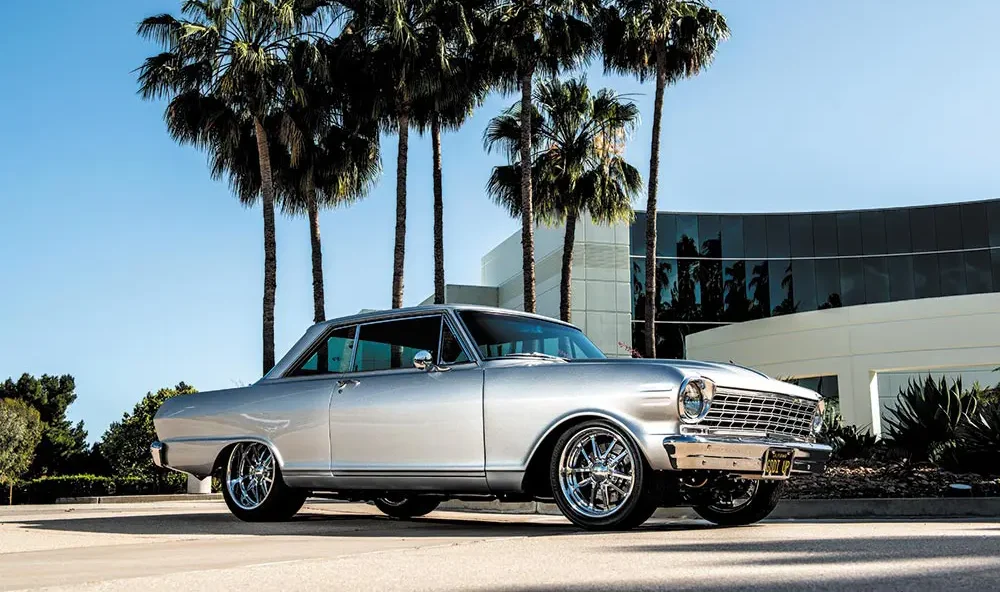
Determined to build one of the nicest 65 Nova’s on the street, I made the decision to tear down the entire car to the shell by removing the engine, suspension, interior, wiring and glass, assuring all I had left was a body and empty canvas. Assuring the Nova had the perfect look and stance, the car was then mini-tubbed and fitted with TCI 4-Link Suspension out back and TCI Mustang 2 Rack/Pinion Power Steering up front.
Staying within the silver theme that was on the car when purchased, the car was then shipped to Auto Perfections in La Habra, CA where Loy, (owner) personally spent nearly 6 months welding, grinding, aligning every gap/seam to flawless perfection, followed by filling in every spot weld on the entire body and blocking for countless hours. With the car now laser straight, the entire car was sealed, re-blocked, followed by applying the custom mix, 2-Stage Silver Metallic, cut and buffed to a deep mirror finish.
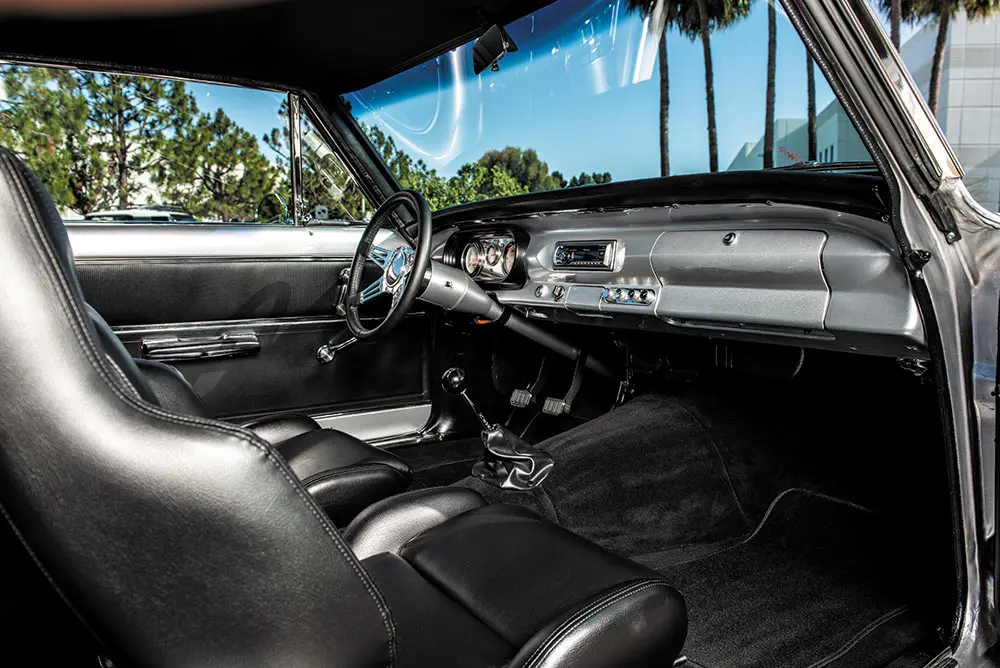
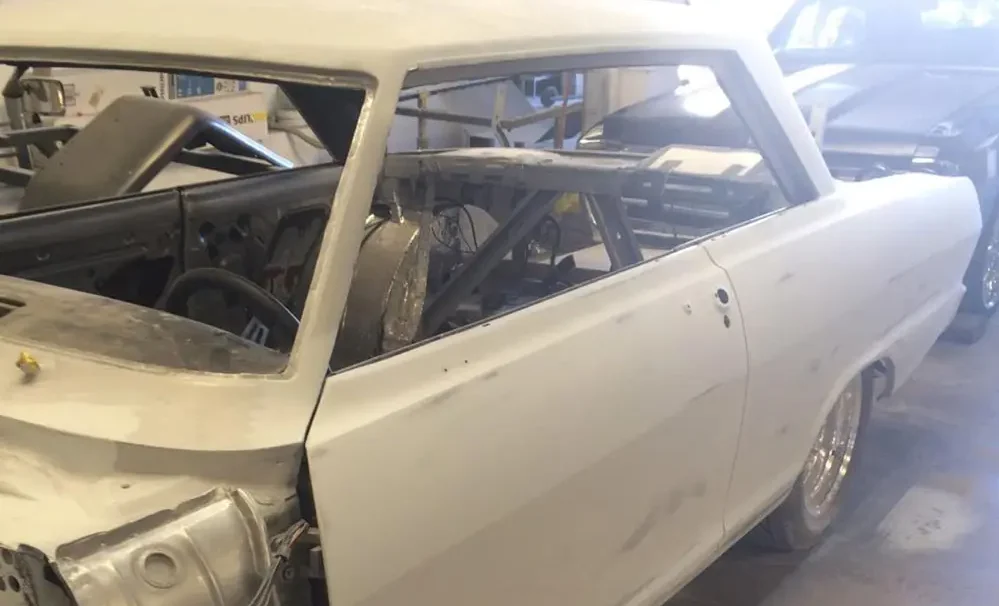
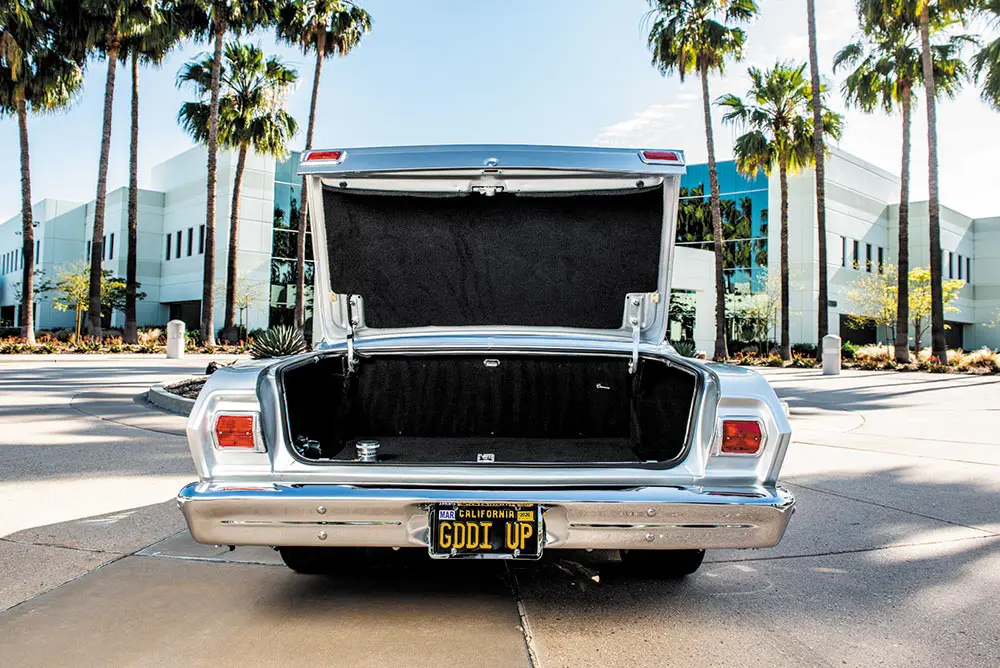
With the body now back in my garage, this is where my own personal fun and countless hours began: covering and bagging the entire car, assuring it’s well-protected from any future overspray or scratches. With the car now bagged and ready to go, POR-15 was applied to all floor and trunk pans, followed by the same 2-Stage Silver Metallic, matching the exterior of the car to perfection. Requiring the ultimate look, the front, and rear suspension was finished to a mirrored perfection with 2-Stage Maserati Metallic Black with 10% silver metallic flake.
Starting with the front suspension install, the steering linkage was fitted with polished stainless U-joints and a chrome steering shaft. Assuring the rear can accommodate the future horsepower, the back was fitted with a custom, narrowed 9” differential with Eaton Tru-Trac Posi, 31 Spline Mosier Axels, and fully-polished aluminum pinion retainer. Requiring plenty of stopping power, all four corners were then fitted with Wilwood 12” slotted/drilled disk brakes and fully-polished brake lines. The undercarriage detail would not be complete without installing all fully-polished stainless fuel tank, and every single nut and bolt is polished stainless or chrome.
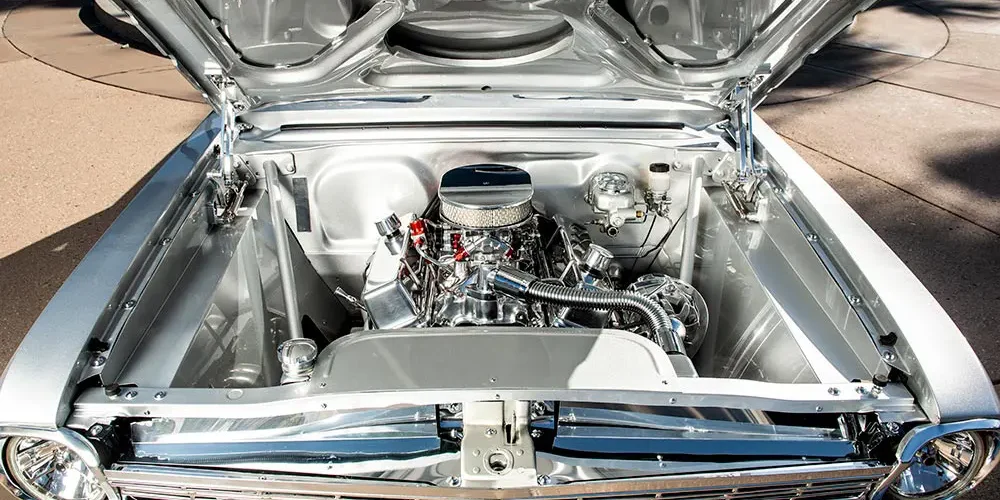
Thanks to the hands of Bobby at BC Performance in Santa Fe Springs, CA for building a fully custom motor, the stroked 423 SBC received a new Dart block, Scat, forged pro-series crank and rods, custom solid roller cam, Carrillo forged pistons, AFR 220cc heads, MSD ignition, and Edelbrock Vic. Jr. manifold with Quick Fuel carburetor, making slightly over 600 horse and 595 ft lbs. of torque. Assuring we have plenty to polish, the entire exterior of the AFR heads, manifold, water pump, alternator, pulleys, valve covers, Wilwood master cylinder, air cleaner, Griffin aluminum radiator, to the Billet Hood Hinges are fully polished. Assuring the engine runs cool year-round, duel Spal electrical fans and adjustable temp. control was installed.
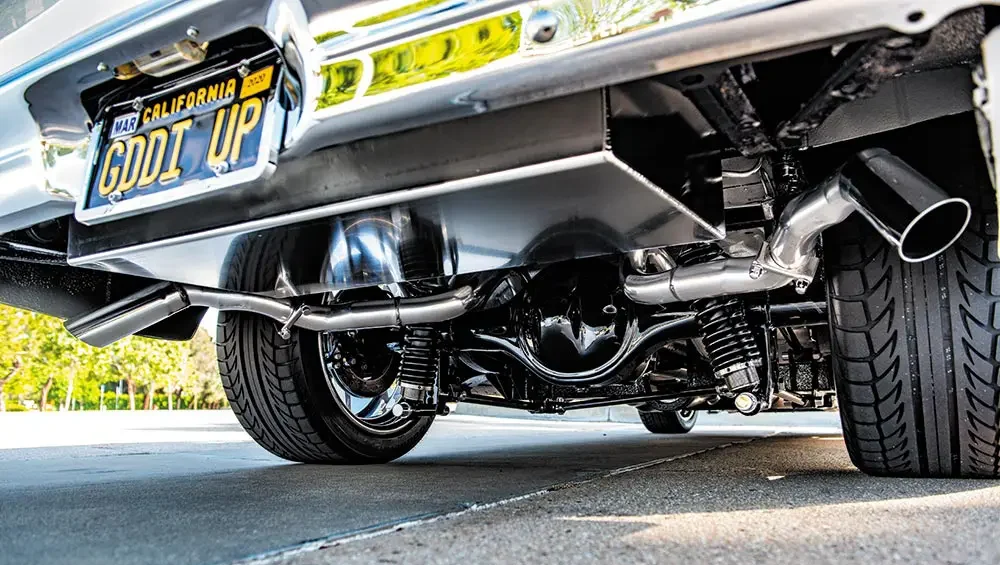
Thanks to the extra set of eyes and hands from a dear friend, we installed the engine accompanied by a McLeod billet flywheel, RST twin disk hydraulic cluck, backed by a Tremec TKO 600 transmission coated to match the undercarriage of the car. The engine was fitted with 1-3/4” fully-polished, ceramic coated headers and fully-polished 2-1/2” exhaust fitted with 12” Dynomax bullet mufflers, assuring the old-school hot rod sound is still alive!
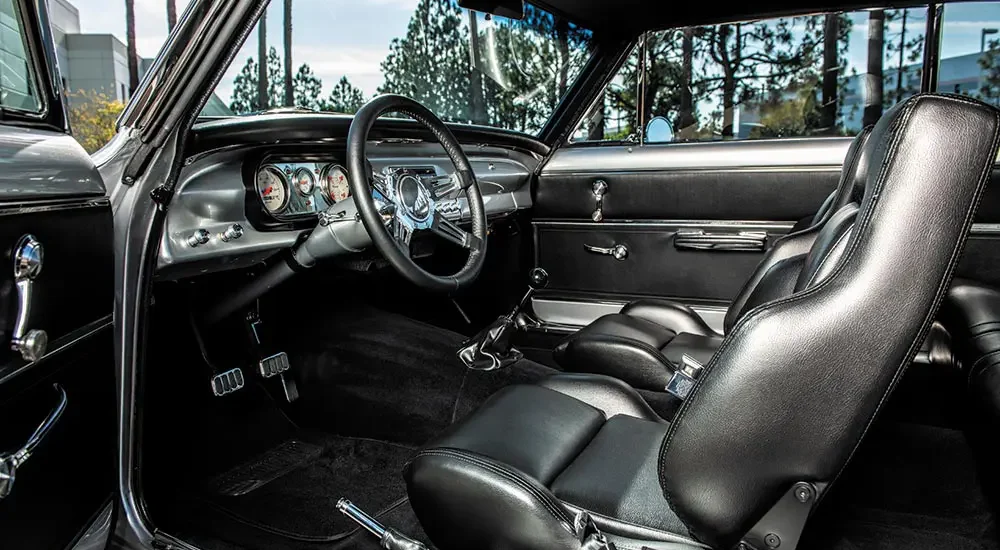
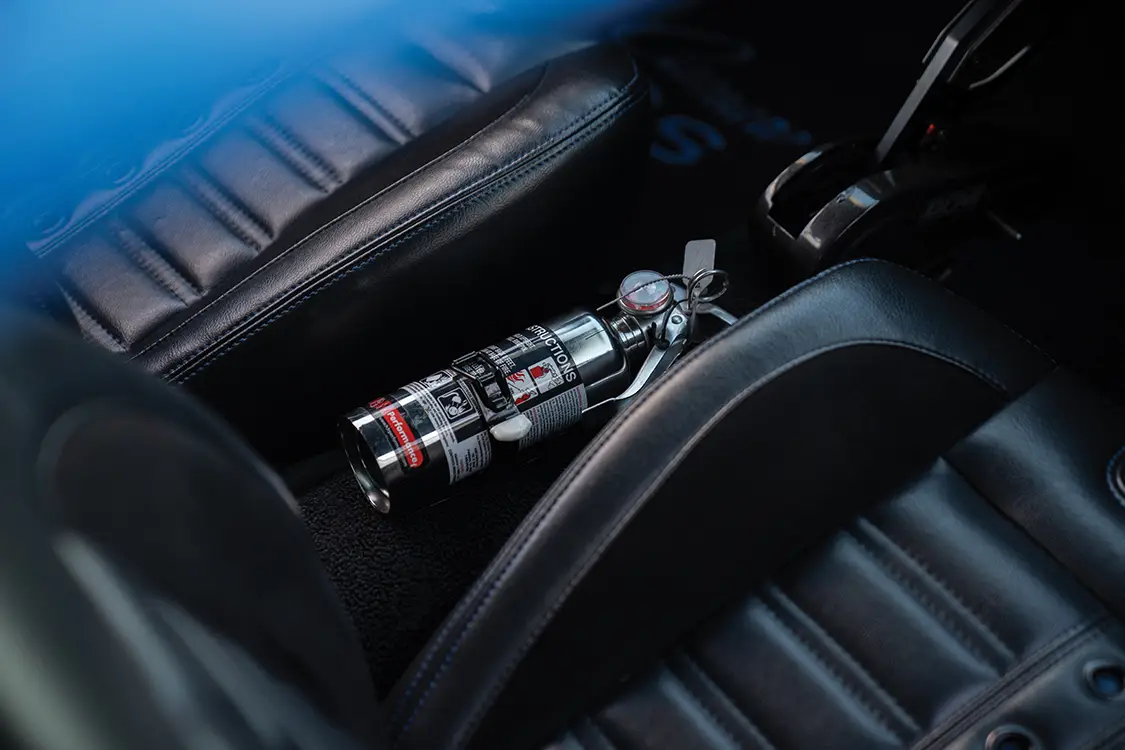
The car was then fitted with all new rubber seals, window regulators, tinted glass, fully polished gauge cluster with white-faced Dolphin gauges, tilt steering column and all-black leather interior followed by a fully carpeted trunk and chrome fire extinguisher.
Assuring a slightly different look from the traditional ‘65 Nova, the car was completed by installing a ‘63 grill with lower blinker signals, custom-fitted Budnik Knives Wheels, 18” X 10” rears, 17” X 7” fronts, mounted on 225 and 275 BF Goodrich tires to complete the show-quality build. Every wire in the entire engine bay and undercarriage of the car was painstakingly hidden, leaving the human eye to wonder where are the wires on this car?