







Whether it’s a new rattle under the hood or a dashboard warning light, every car will need a part replacement sooner or later. Back in the day, fixing a car meant resigning yourself to whatever price your local garage or dealership quoted. You paid the premium, swallowed the bitter pill, and moved on.
But times have changed. The internet makes it easy for drivers to find and buy their own auto parts. Unfortunately, it doesn’t make it as easy to find the best deal. There are thousands of shops, different shipping costs, and confusing words. To find the best price, you need a good plan.
If you want to save money on car repairs, remember one simple rule: buying a brand-new part when a used one works just as well is leaving money on the table.
Car parts come in three main quality levels. Choosing the right one keeps you safe and saves you cash.
OEM means Original Equipment Manufacturer. These parts are made by the same company that built your car. If you drive a Ford and buy an OEM water pump, it is the exact same part your car had when it was new.
These are brand-new parts made by other companies, not the original factory. This market is huge. Some aftermarket parts are excellent and fix old design flaws. Other parts are cheap, unbranded, and can break quickly.
Some people think used parts are risky or dirty. Today, that is not true. Modern auto recycling is a clean, professional business. Recycled parts are tested, cleaned, and cataloged before they are sold.
Buying used parts is a smart move for drivers. This is especially true for big, expensive repairs. For example, if your engine breaks completely, a brand-new factory engine will cost too much money. Instead, searching for the cheapest car engine to buy will lead you to a tested used engine. You get a real factory engine for a fraction of the new price.
Safety First: Never buy cheap or used parts for systems that help you stop, steer, or stay safe in a crash.
Follow this simple process to help you choose:
Buying a used alternator or a recycled side mirror can save you, on average, 50% compared to new dealer prices.
Shopping online offers huge savings, but you have to be careful. Follow these tips to find the exact part you need and avoid overpaying:
Do not search for a part using just the year and model of your car. Factories often change parts in the middle of the year. Instead, find your 17-digit VIN on your dashboard or registration document. Use it to find the exact part number you need. This stops you from ordering the wrong part and wasting money on unnecessary returns or replacement shipping costs.
If a website doesn’t support VIN searches, make sure to provide your exact engine size and code in addition to the vehicle model.
A part might look like a great deal at $45. But if the seller adds $60 for shipping at the end, your bargain is gone. Always look at the total price with shipping and taxes included before you buy.
Checking dozens of different websites takes too long. It is tiring, and you might miss the best price. To shop the right way, you should use a website that searches many stores at the same time.
Nowadays, technology makes finding car parts easy. Instead of spending hours calling local scrap yards, drivers can use tools like PartHunt24.
PartHunt24 is a used car parts price comparison website. It connects drivers with a huge network of trusted parts suppliers and recyclers and makes it simple to compare car parts prices.
You do not have to do any hard work. Just type in your vehicle details. The website instantly searches thousands of parts inventories for you.
PartHunt24 shows you all the options in one place. You can compare the price, condition, mileage, and shipping costs of the parts side-by-side. It takes the risk out of buying used parts. You get a reliable part at a price you can afford.
Sometimes, despite your best efforts, a part simply does not fit. Before you click the buy button, always check the seller’s return rules. Can you send the part back if it is wrong? Who pays for the return shipping? Trusted sellers give you a clear window (usually 14 to 30 days) to return an item.
It is tempting to just sort your search results from lowest price to highest price. But the absolute cheapest part online often comes from an unverified seller with zero warranty. If a part breaks after one week, you have to buy it again and pay your mechanic twice for the labor. True value means finding a fair price on a part that lasts.
When you buy a part like a water pump or a brake caliper, it rarely comes with the necessary gaskets, seals, or fresh bolts. Drivers often forget these small items. Then, they have to stop their repair halfway through to run to a local shop. Always read the product description closely to see exactly what is included in the box.
You will get the fastest and most accurate results if you gather your vehicle’s paperwork before you open your web browser. Spending five minutes preparing will save you hours of frustration later.
Take Clear Pictures of the Broken Part
If you can see the damaged component under the hood or behind the wheel, take a few high-quality photos with your smartphone. Zoom in on any stamped logos, serial numbers, or barcodes. When you look at listings online, you can visually compare your photos with the seller’s images to make sure they match.
Know Your Engine Code and Trim
Cars that look identical from the outside can have completely different components underneath. A base model sedan may use different brake pads and filters than the sport version of the same car. Write down your exact trim (such as SE, Sport, or Limited) and your specific engine size (like 2.0L or V6).
Check Your Owner’s Manual for Exact Terms
Different shops use different words for the same item. One site might call a part a “stabilizer link,” while another calls it a “sway bar link.” If your search results look empty, consult your factory owner’s manual to find the official industry terms for the system you are trying to fix.
Keep Your VIN Number Ready
Your Vehicle Identification Number is one of the most useful tools during the search process. Many online stores allow you to enter the VIN to filter compatible parts automatically. This reduces the risk of ordering the wrong component and helps you avoid unnecessary returns or installation problems.
Take Control of Your Repair Bills
Car repairs are a part of life, but you do not have to overpay. When you know the difference between OEM, aftermarket, and used parts, you can make the best choices for your budget.
Do not leave your hard-earned money on the table. Sourcing your own parts is a skill that saves you hundreds of dollars every single year. The next time your car needs a fix, treat it like any other smart purchase.
Take a few minutes to do your research, figure out the best quality tier for the job, and use tools like PartHunt24 to run a quick car part price comparison. You will keep your vehicle running smoothly, stay completely safe on the road, and keep your bank account happy.

Photos by Jerome Andre
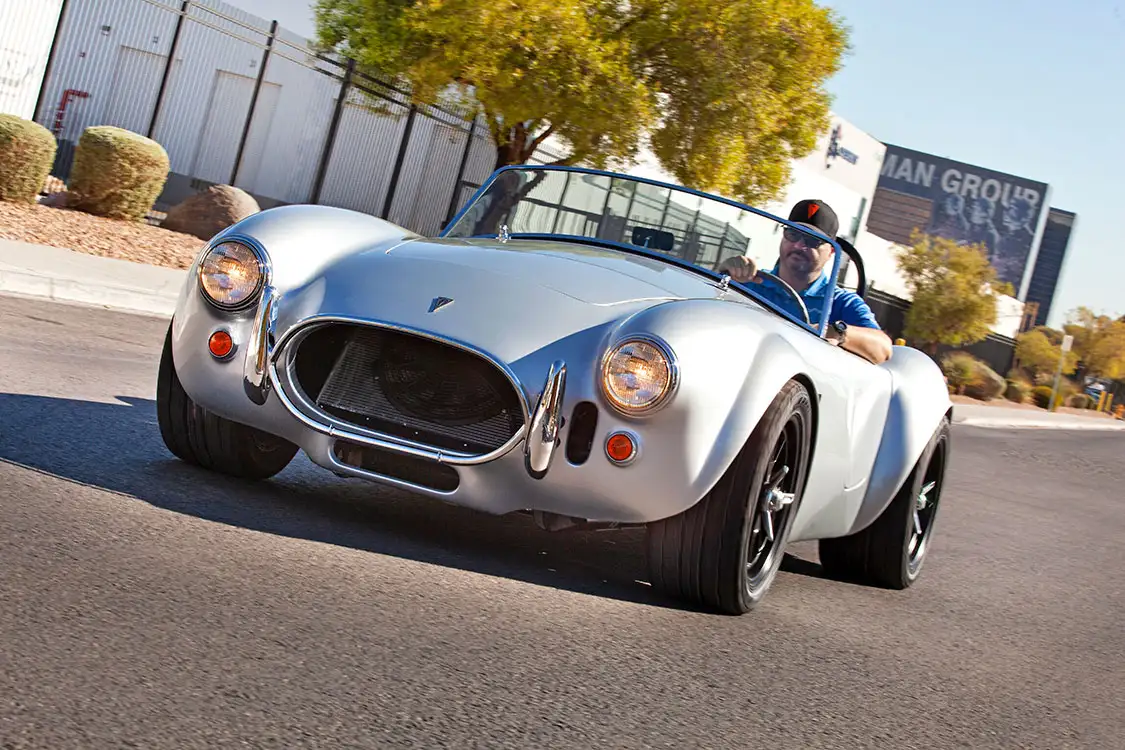
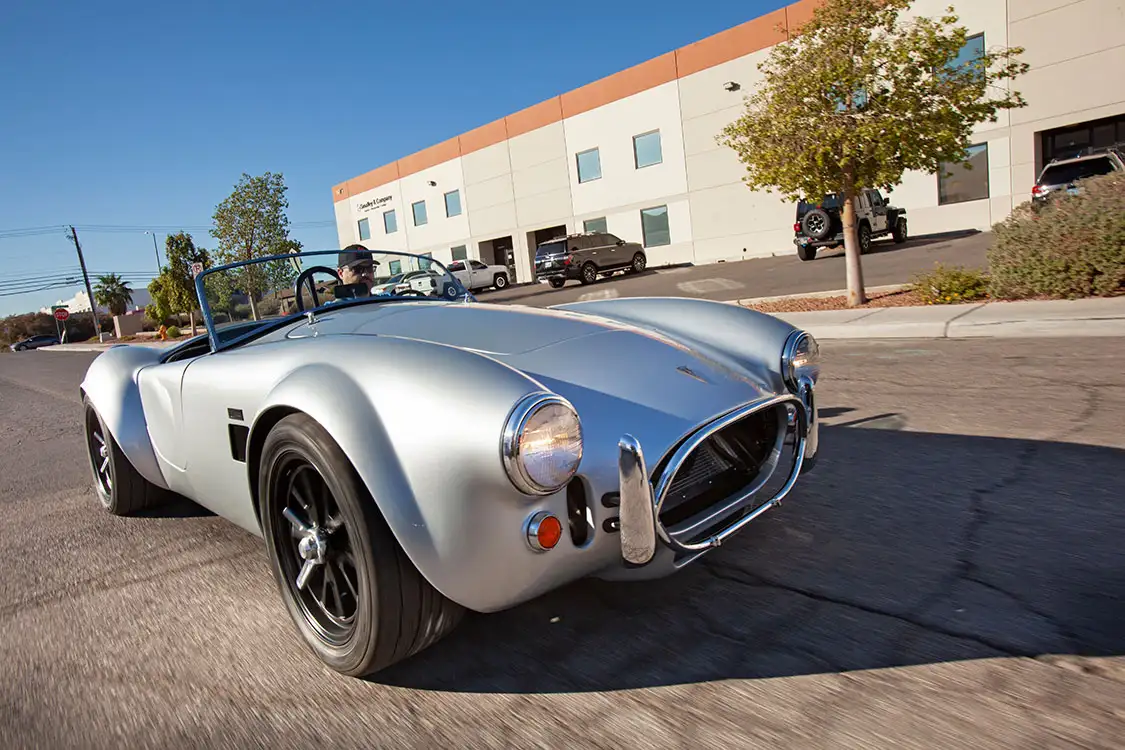
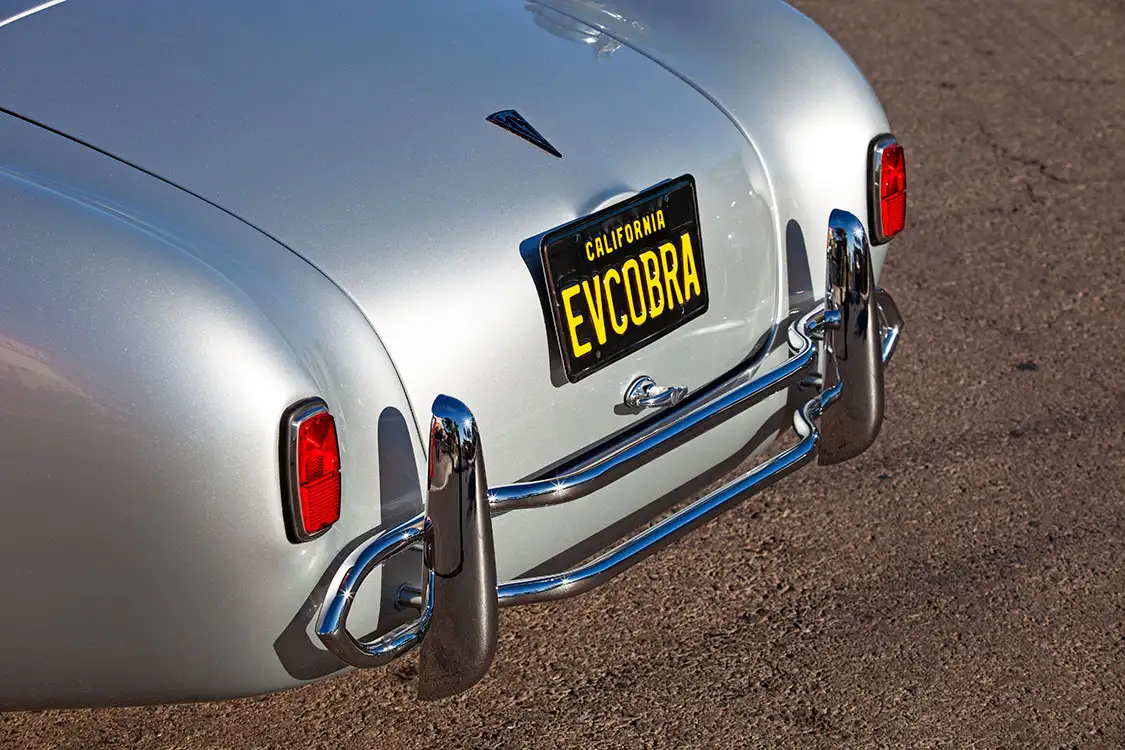
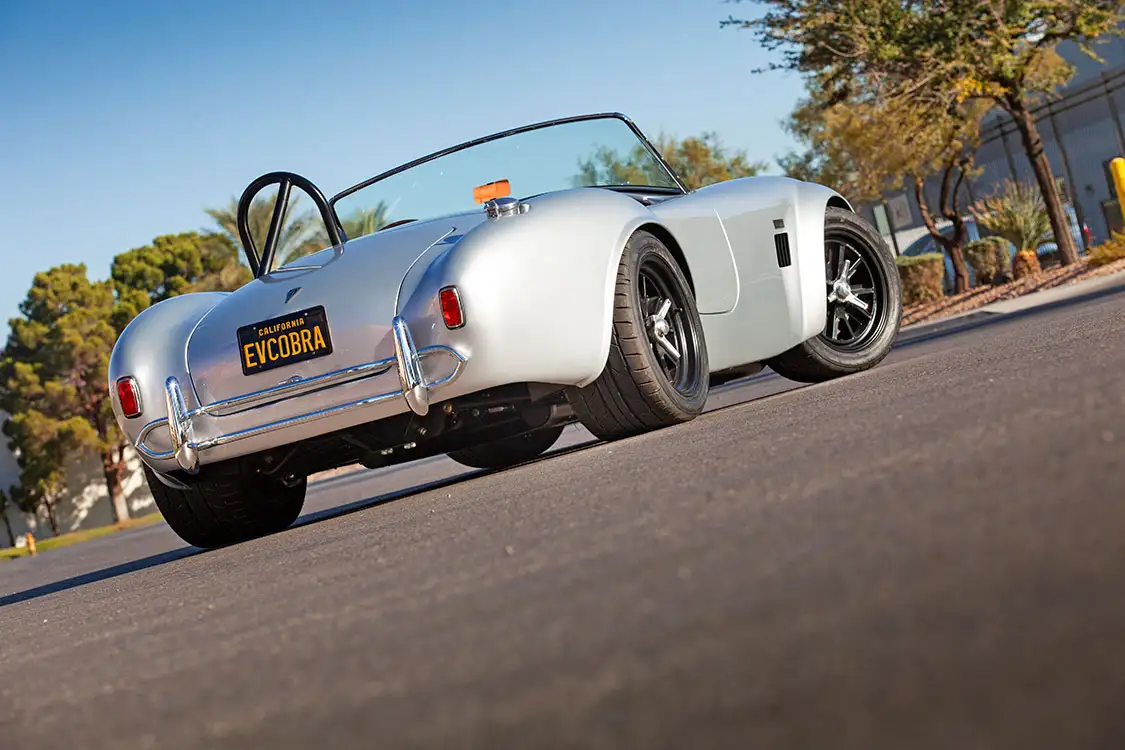
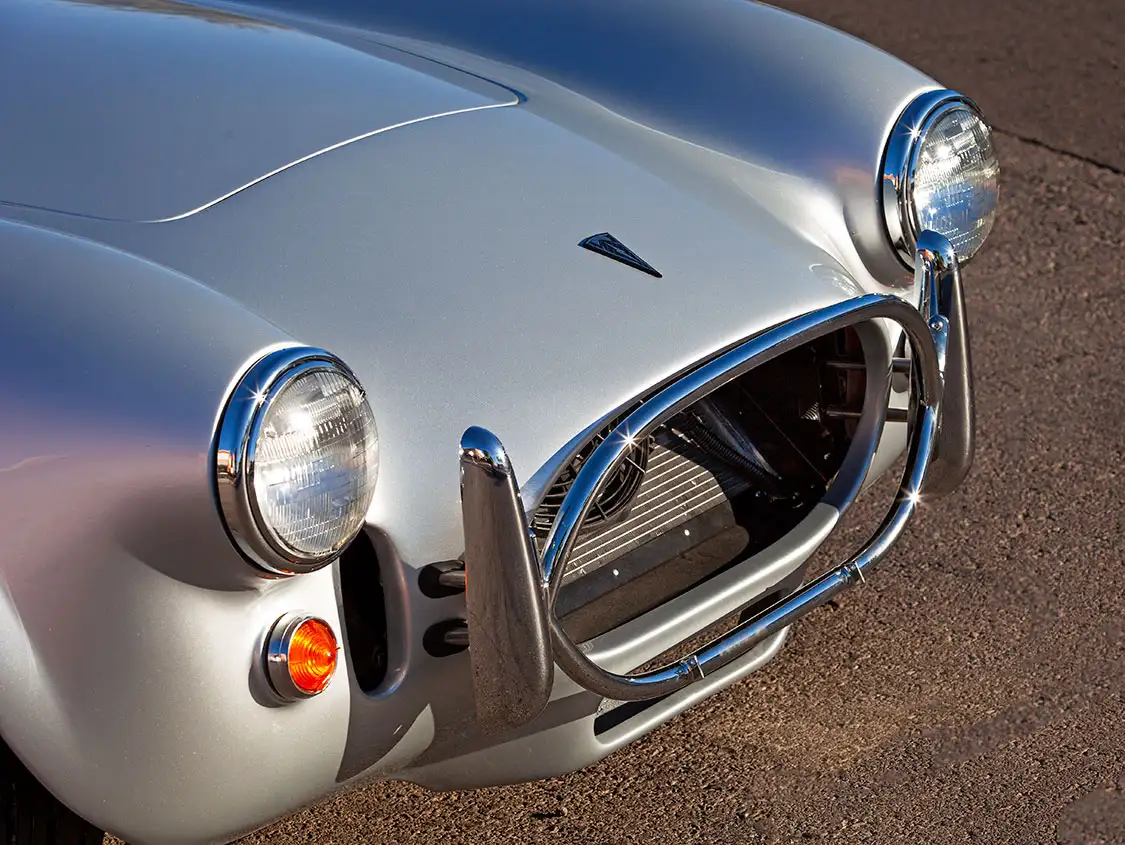
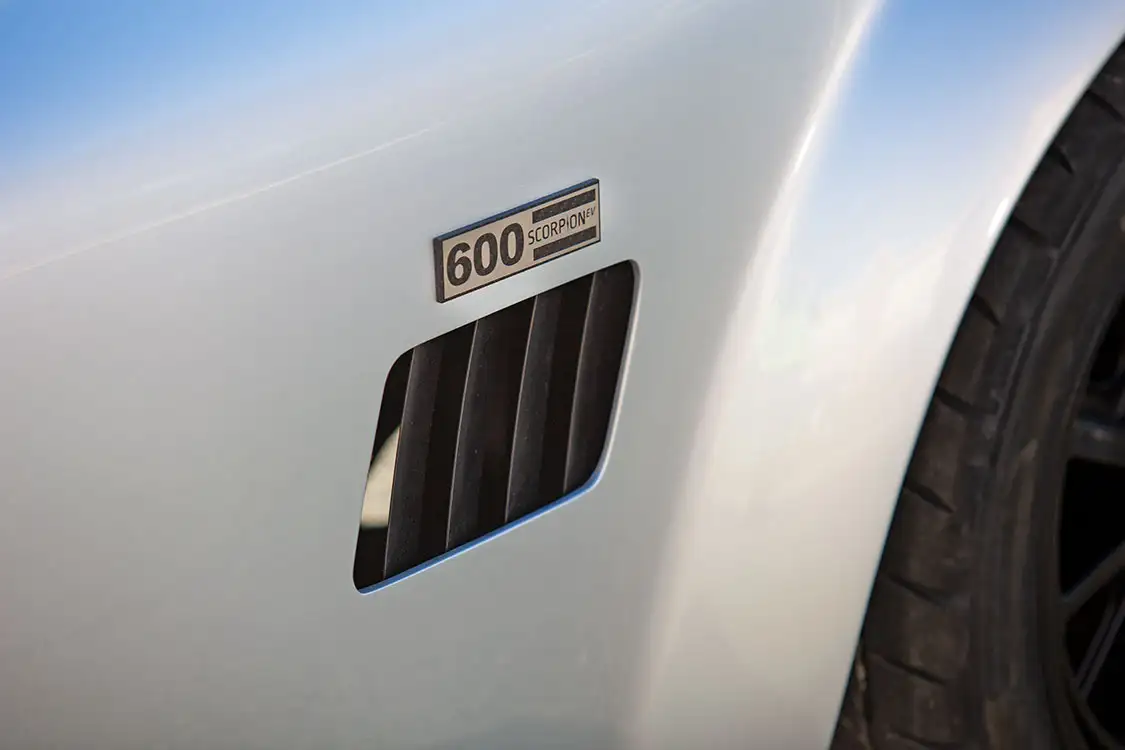
An automotive revolution is taking place in the heart of Temecula, California. Bill Cardoso, chief executive officer of Creative Electron and Scorpion EV who earned a doctorate in electrical and computer engineering, has breathed new life into an iconic sports car, transforming it into a silent predator of the twisty roads and tracks. Meet the “Silver Scorpion,” a 2022 Scorpion EV Scorpion 600. This beast seamlessly merges the timeless design of a Cobra with the cutting-edge technology of a Tesla powertrain.
The genesis of the Silver Scorpion arose during the COVID-19 lockdown as a passion project between Cardoso and his 11-year-old son. Being sensitive to loud noises, his son could not join him in the exhilarating drives offered by traditional sports cars. Determined to bridge the gap between his love for Cobras and his desire for a quiet driving experience, Cardoso embarked on an ambitious mission to create an EV Cobra like no other.
The foundation for the Silver Scorpion was laid upon a Factory Five Racing MKIV roadster chassis, meticulously modified and optimized for electric performance. Utilizing the expertise of Scorpion EV and the engineering prowess of Factory Five Racing, the team embarked on a six-month journey that would result in a true marvel of engineering.
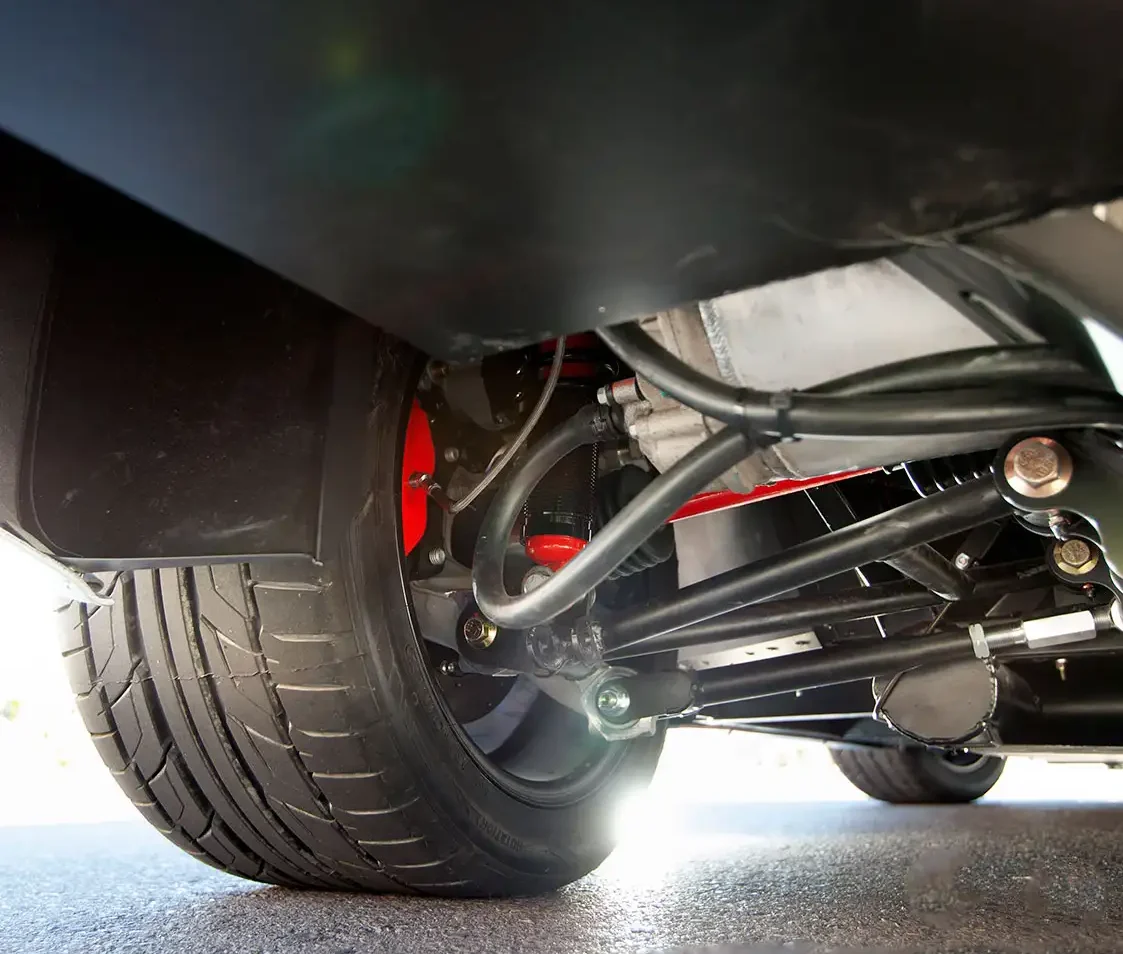
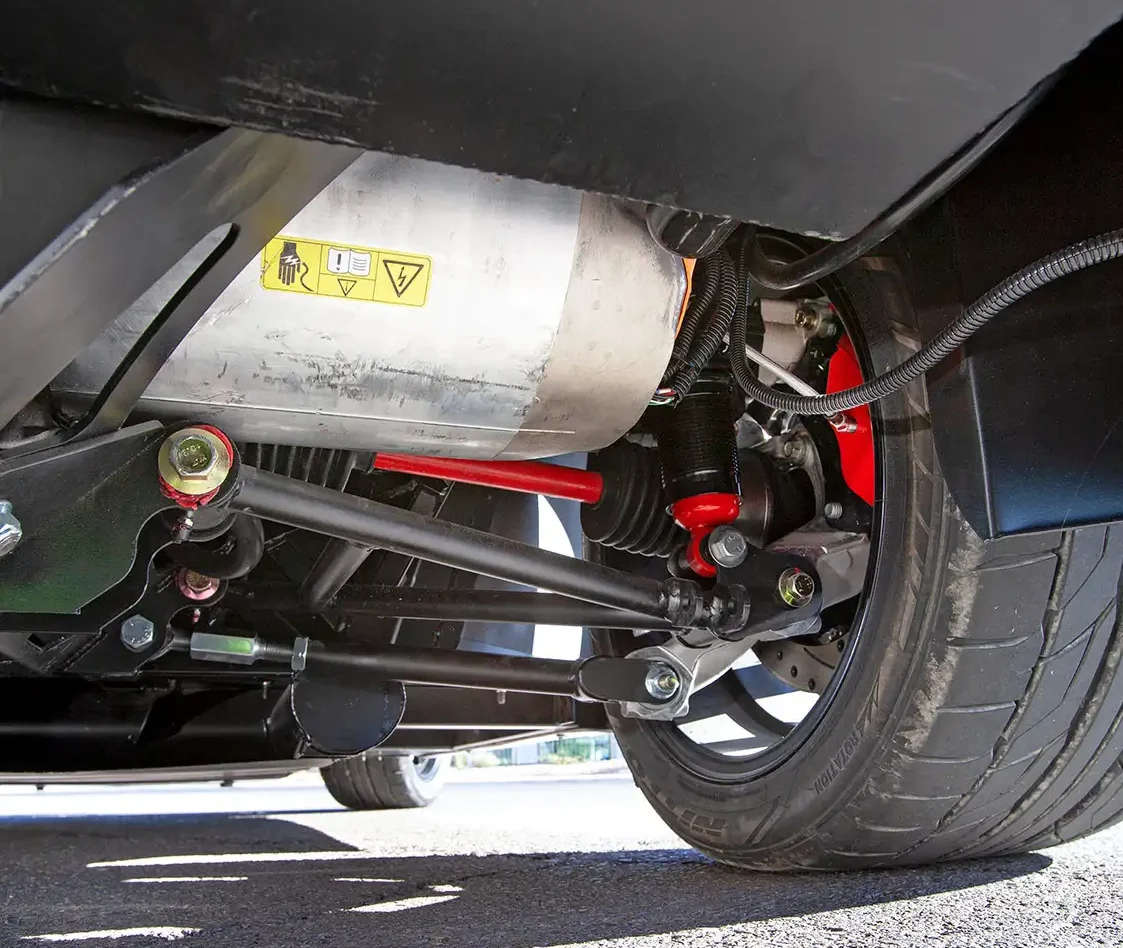
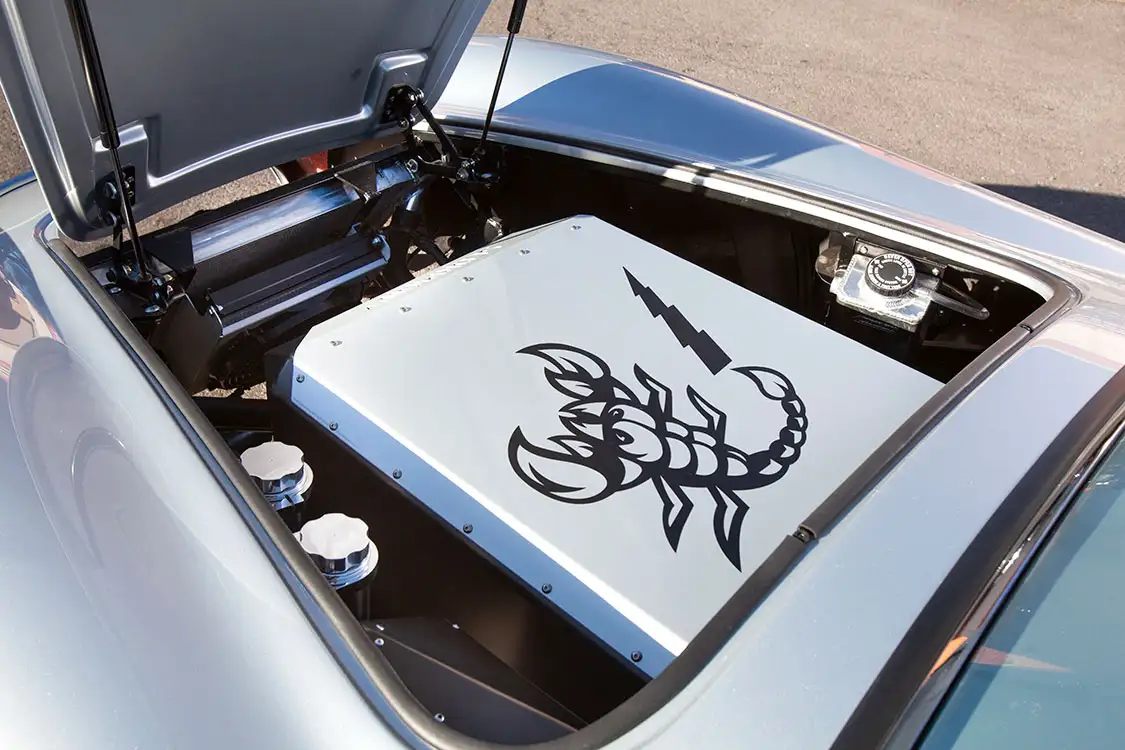
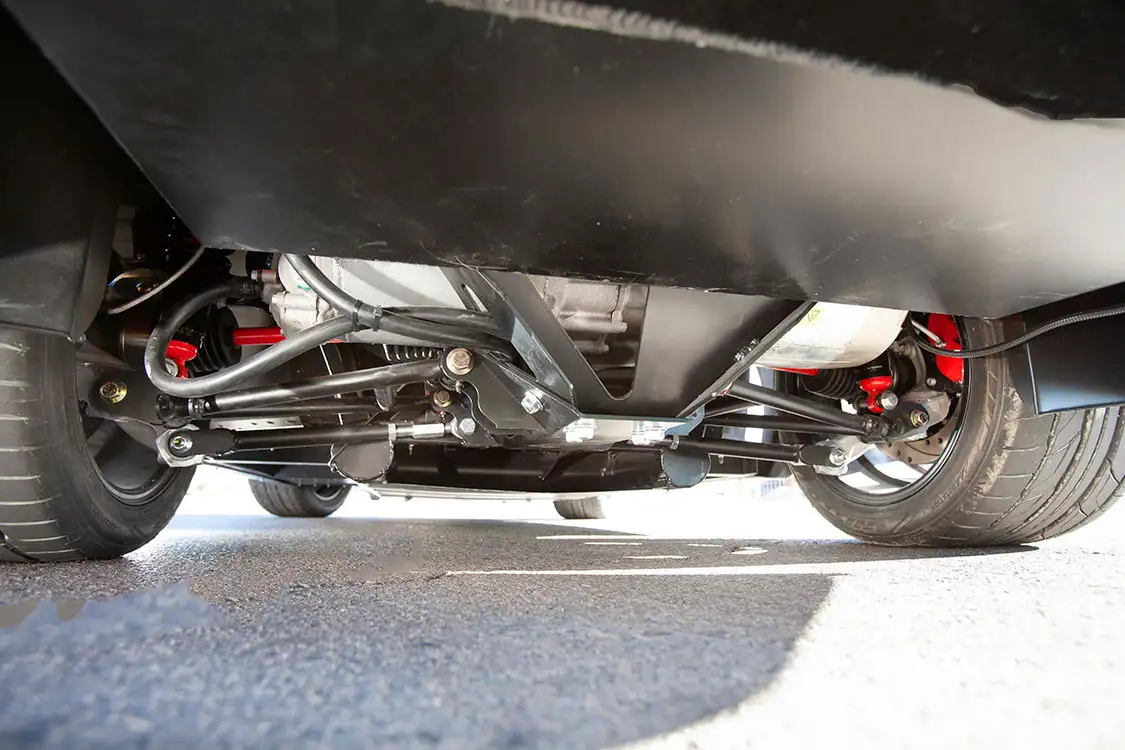
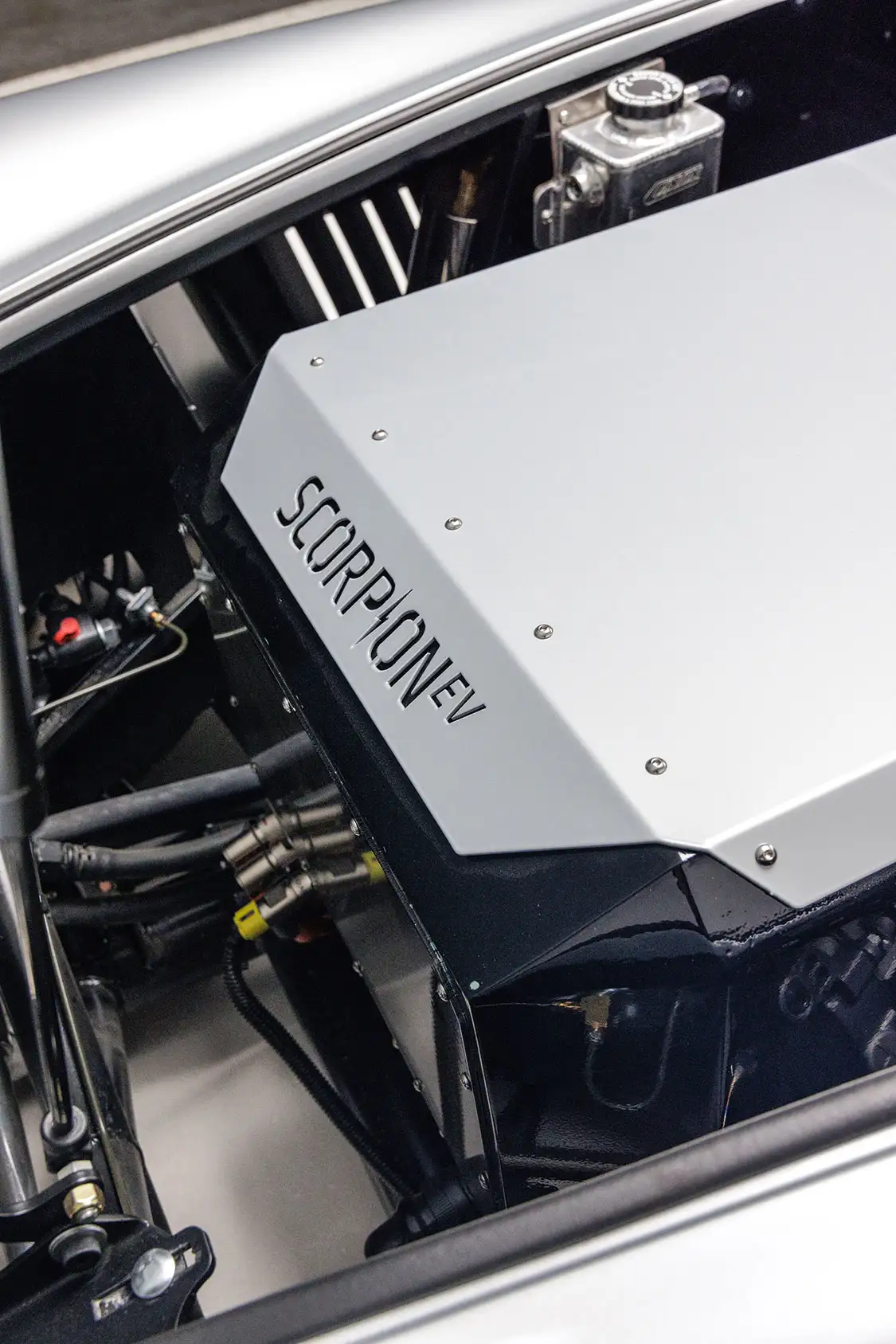
At the heart of the Silver Scorpion lies a 2019 Tesla Model S Performance motor, generating a staggering 550kW or 740hp and 1.100+Nm/812 lb-ft. The custom-built motor and transmission mounts, designed based on the independent rear suspension of the Factory Five MKIV roadster, allowed for seamless integration of the Tesla powertrain. The result? A mind-boggling 0 to 60 time of just 2.5 seconds firmly established the Silver Scorpion as a force to be reckoned with.
Powering this venomous predator is a custom battery system consisting of 16 Tesla S battery packs that provide 90 kWh. Strategically placed at both the front and rear of the vehicle, these battery packs maintain a perfect 50/50 weight distribution, ensuring optimal handling and performance. With a highway range of 350 miles and a city range of 400 miles, the Silver Scorpion eliminates range anxiety and opens up a world of possibilities for its owner.
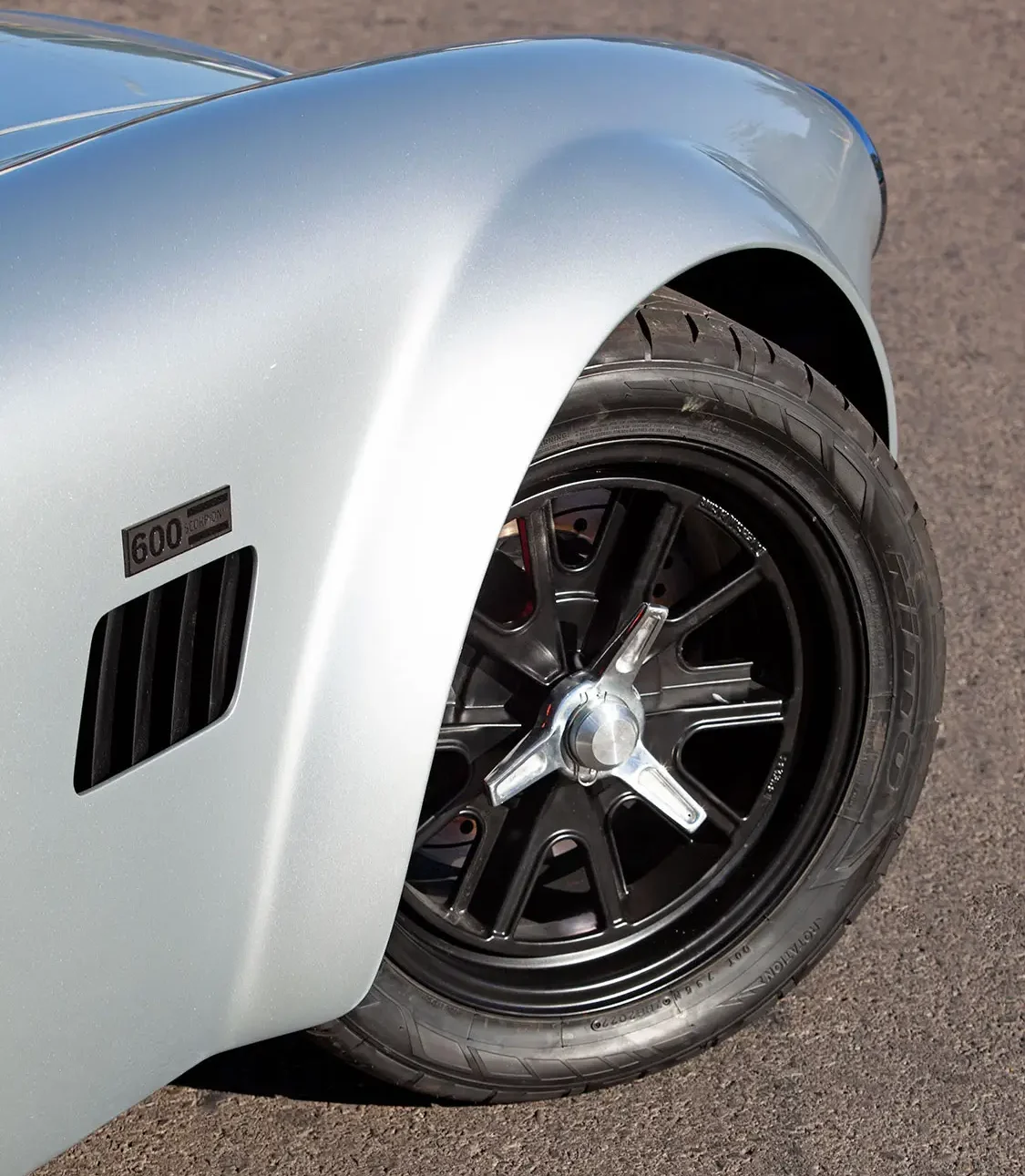
While the mechanical prowess of the Silver Scorpion is unquestionable, its aesthetics are equally captivating. Adorned in a mesmerizing Mercedes Iridium Silver paint, the Silver Scorpion proudly retains the iconic body design of a Cobra, staying true to its heritage. The sleek lines and unmistakable silhouette draw the attention of onlookers, who can’t help but be captivated by it.
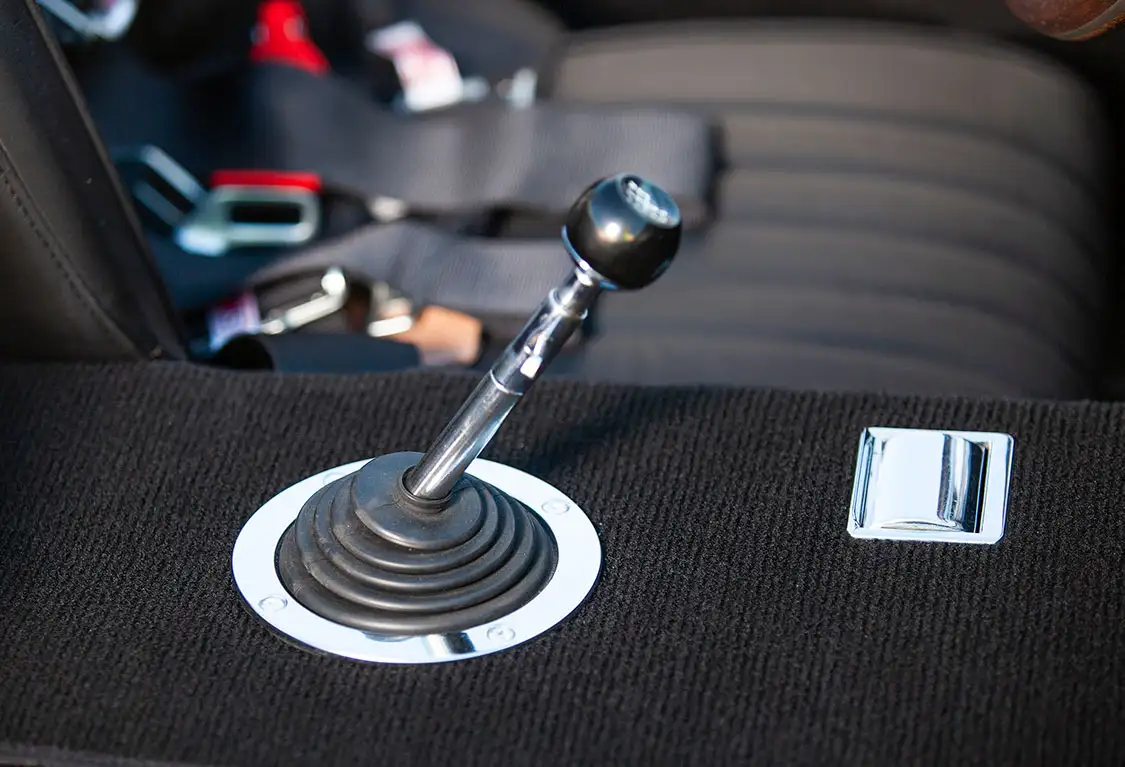
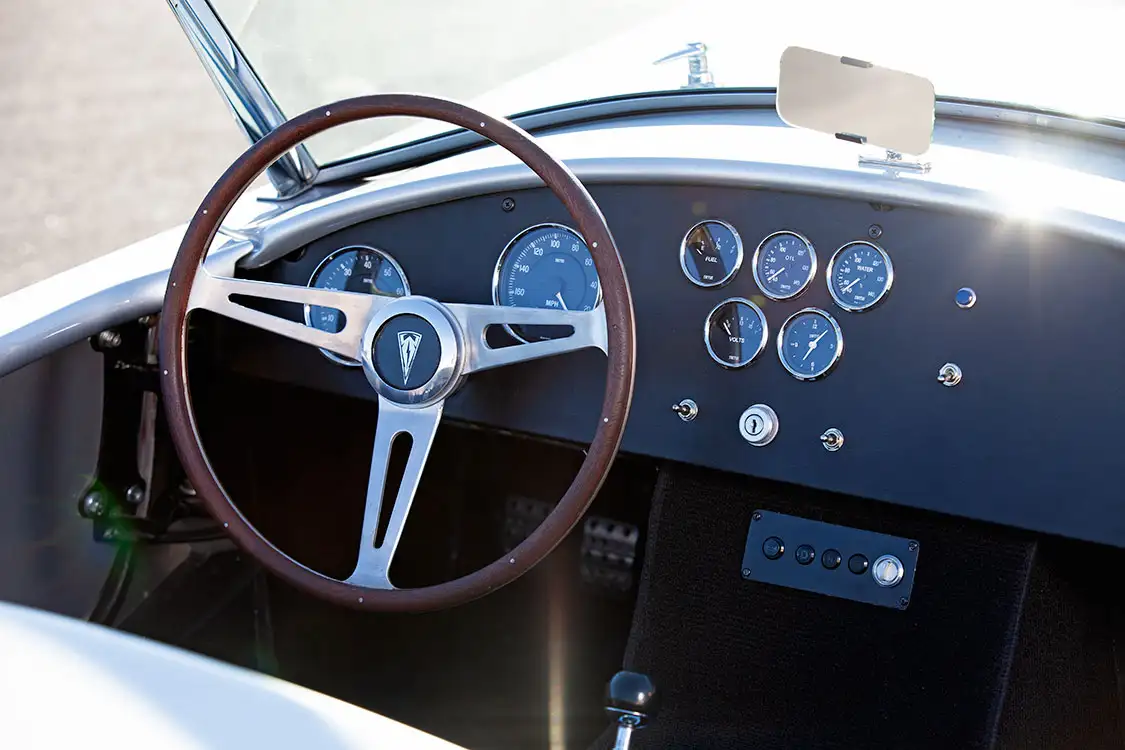
Inside the cockpit, the Silver Scorpion offers a harmonious blend of classic Cobra elements and modern amenities. Factory Five traditional Cobra barrel seats provide a comfortable and supportive driving experience, while the custom mahogany wooden steering wheel exudes elegance and sophistication. Embedded on the center console are controls for various functions, including turn signals, headlights, and the horn, seamlessly integrating modern technology into the timeless design.
Cardoso’s vision for the Silver Scorpion extends beyond his enjoyment. The passion project has evolved into Scorpion EV, a company that aims to allow others to experience the thrill of driving a quiet Cobra. The Silver Scorpion has appeared at prestigious events such as the London Cobra Show, Fully Charged San Diego, and the SEMA Show, captivating enthusiasts and skeptics alike.
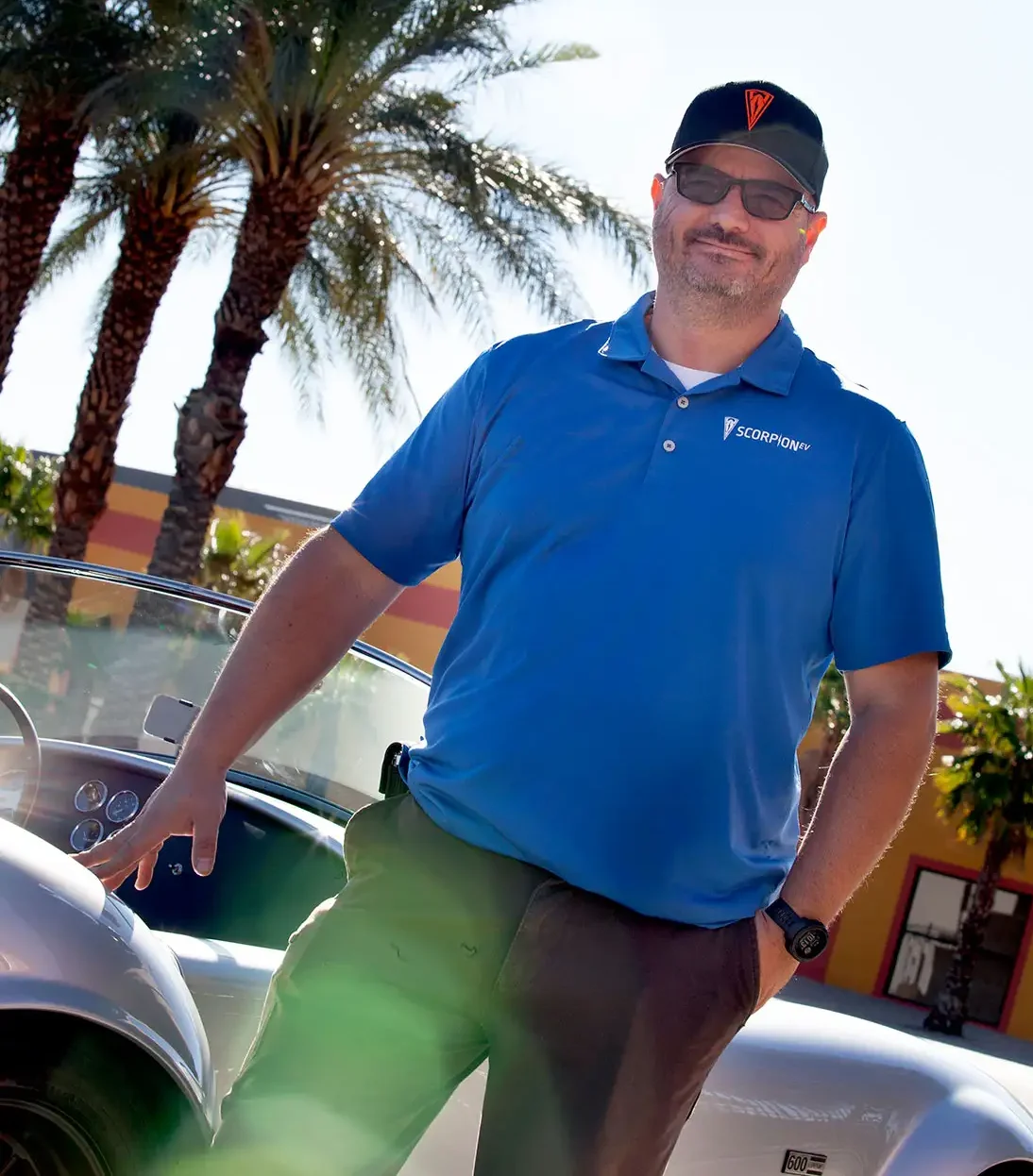
The Silver Scorpion is a testament to the incredible possibilities at the intersection of classic design and modern electric technology. Yet, Cardoso was just getting started! He has just introduced his complete conversion package to convert your own Cobra or car of your liking.
Unlike other conversion kits, Venom is an all-in-one solution that seamlessly integrates into the engine bay, utilizing standard engine mounts and connecting to the existing clutch, transmission, drive shaft, and differential. With its user friendly design, Venom offers a hassle-free and straightforward conversion experience.
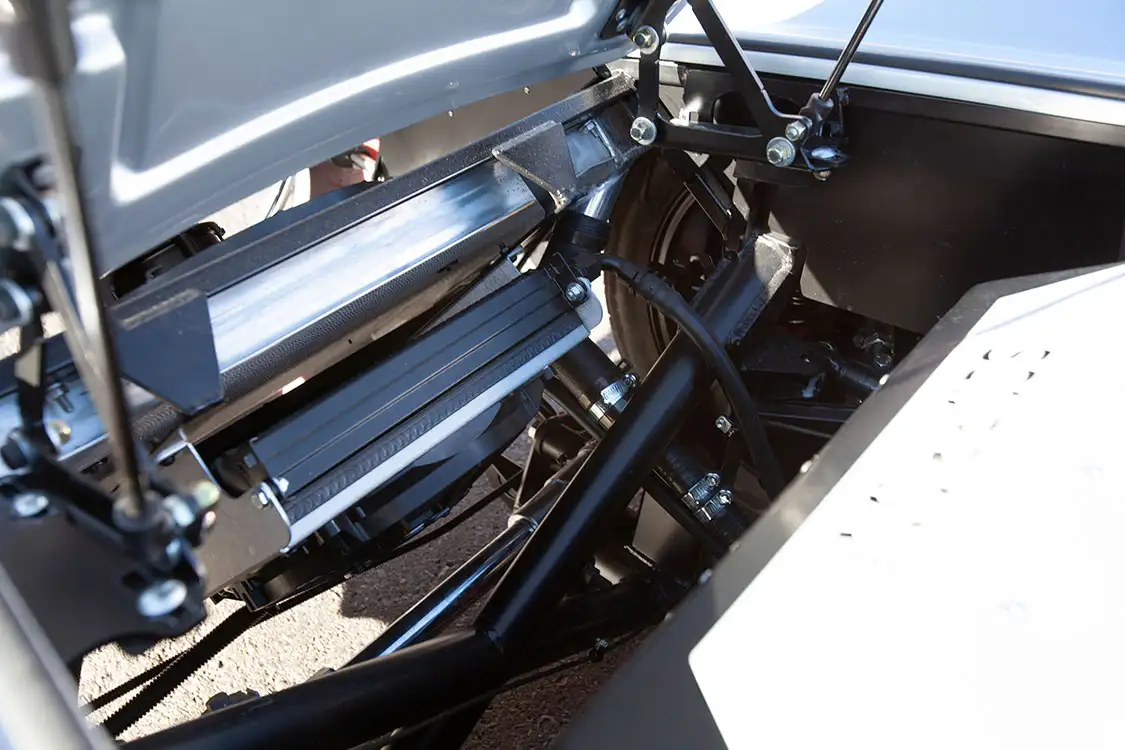
Compact and powerful, the Venom kit is approximately the size of a small block Ford/GM engine and weighs 770 pounds/350kg. Its heart lies in the Hyper 9 motor, combined with seven Tesla S battery packs, boasting a total capacity of 45 kWh and generating an impressive output of around 125kW/170hp.
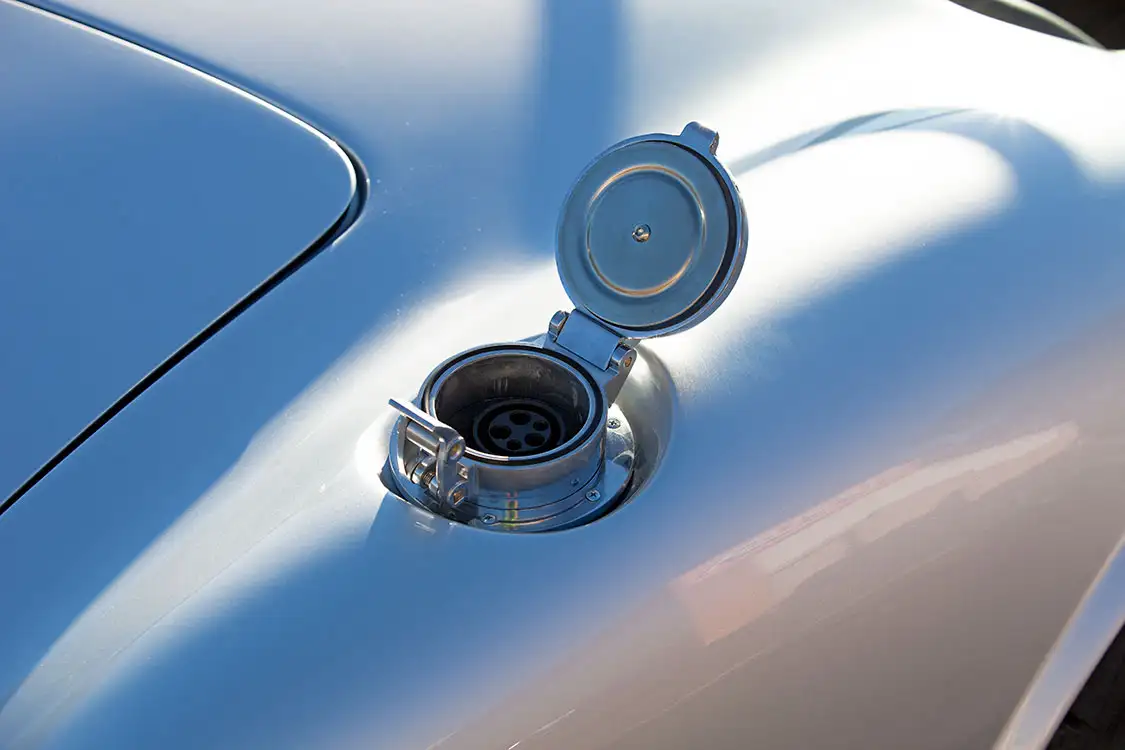
The Venom kit includes an Elcon 6.6kW charger and a DC/DC converter to ensure efficient charging. The battery pack is effectively managed by an Orion BMS2, optimizing performance and maintaining the system’s longevity. With three connectors, including a 31-pin I/O connector for seamless dashboard integration, a 12V battery input, and a J1772 connector for convenient charging, the Venom kit offers a comprehensive and streamlined conversion solution.
The Venom EV conversion kit opens up a world of possibilities for car enthusiasts and individuals seeking to embark on an eco-conscious journey. With its user friendly installation process and impressive performance capabilities, Venom paves the way for much more straightforward conversion for DIYers and the trade. And we could not be more supportive of this exciting evolution.
Bill Cardoso
Motor & Drivetrain
Chassis/Suspension
Wheels, Tires, & Brakes
Body/Paint
Interior
Contact
Scorpion EV
scorpion-ev.com
Photos By Brandon Burrell
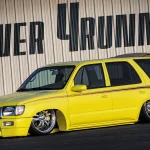
Show-stopping, ground-scraping Toyota 4Runners are few and far between, which makes the ones that stand out much more memorable for those keeping count. Toné LeVeck of TLC Fabrication in Las Vegas had taken his time building up his once-wrecked 2000 4Runner, but he was good about stopping to document the process in its entirety on his Instagram account (@tlc_fab). The series of posts he put together is quite the collection and proof to never give up on a “totaled” vehicle that was most likely destined for a scrapyard.
Everyone loves the story of a deserving underdog taking home the W, and this one here does not disappoint.

Patrick Miller of Liberty, South Carolina, was located some 2,000-plus miles away from Las Vegas city limits, but he took notice of the low-as-hell Toyota and submitted his proposal. After some deliberation, Toné weighed out the situation of saying goodbye to the truck that he had previously admitted to being his finest build to date. The decision was tough, but the influx of cash flow could really help push other projects he had in mind within his fabrication business.
Ultimately, a deal was reached, and Patrick was officially the new owner of the 4Runner. While he did have an idea of what he could do to make the truck his own once he transported it back to his home turf, we’ll hold off on examining those plans in order to analyze how the truck’s progress reached this point.
Before Toné started with the custom overhaul, he made sure to post a “before” photo of the 4Runner with a smashed up frontend sitting lifeless and hopeless on the back of a tow truck. This sad picture is used thereafter to contrast any and all major accomplishments made to the truck, which are large milestones since Toné only worked on the 4Runner when he had time away from time-consuming shop jobs.
Once the disassembly process commenced, Toné figured it would be much easier to order a complete custom chassis for the rebuild instead of even attempting to utilize the original frame. To help with this, he called on MetalWorks Classics for an Art Morrison chassis that would be custom-tailored to fit the 4Runner perfectly while affording it the ability to be further customized with quality air-ride components along with one-off upper and lower A arms for the front and a rear 3-link system that Toné was planning to cook up special for the project.
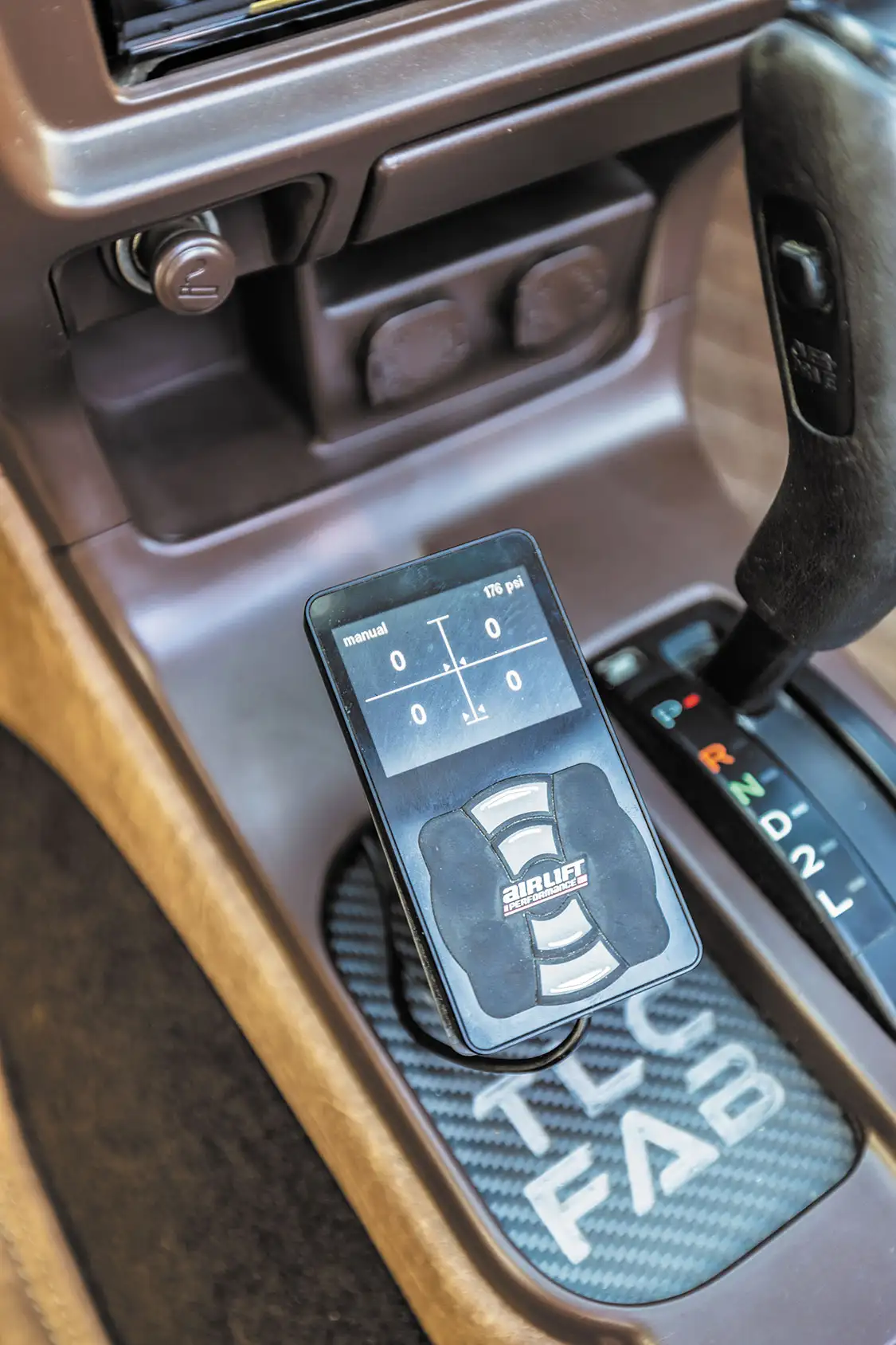
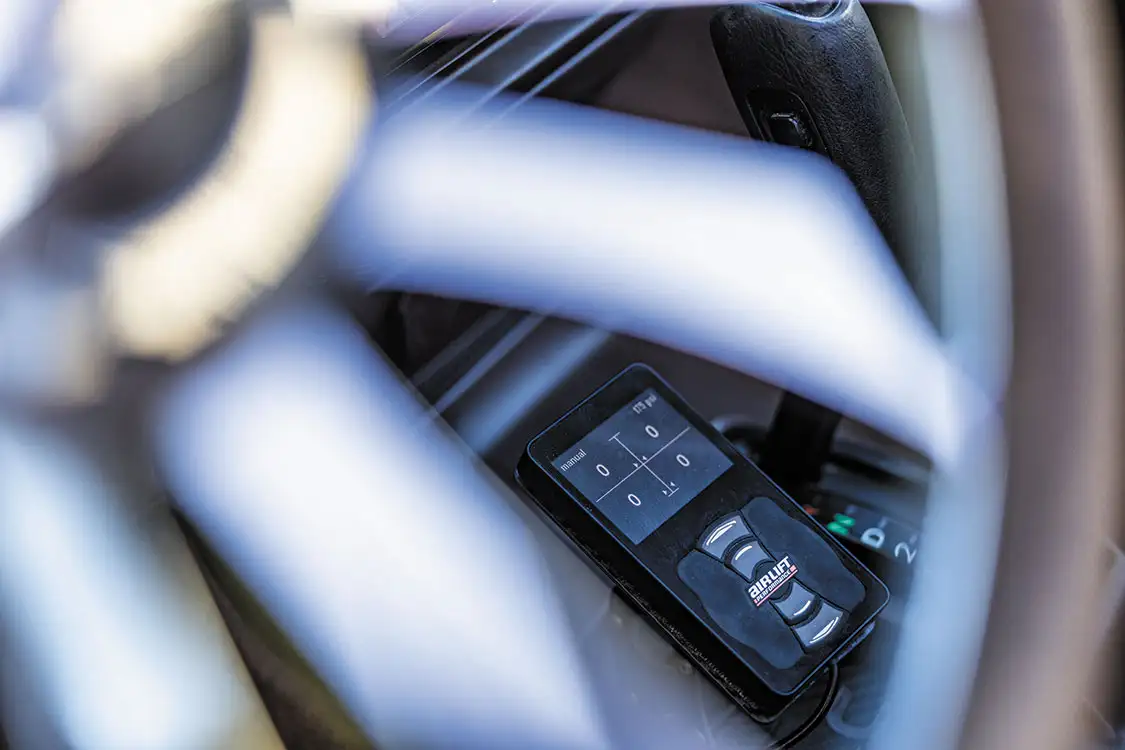
When the frame was delivered, it was immediately outfitted with Ridetech Shockwave ‘bags at the front and Air Lift ‘bags at the rear, along with a 3H air management package to create user friendly altitude adjustments. Fresh braking components were assembled and plumbed, and a suitable set of wheels and tires were paired and mounted. Before he knew it, Toné was looking at a built-to-spec rolling chassis that would serve as a proper foundation for rebirth of his old Toyota.
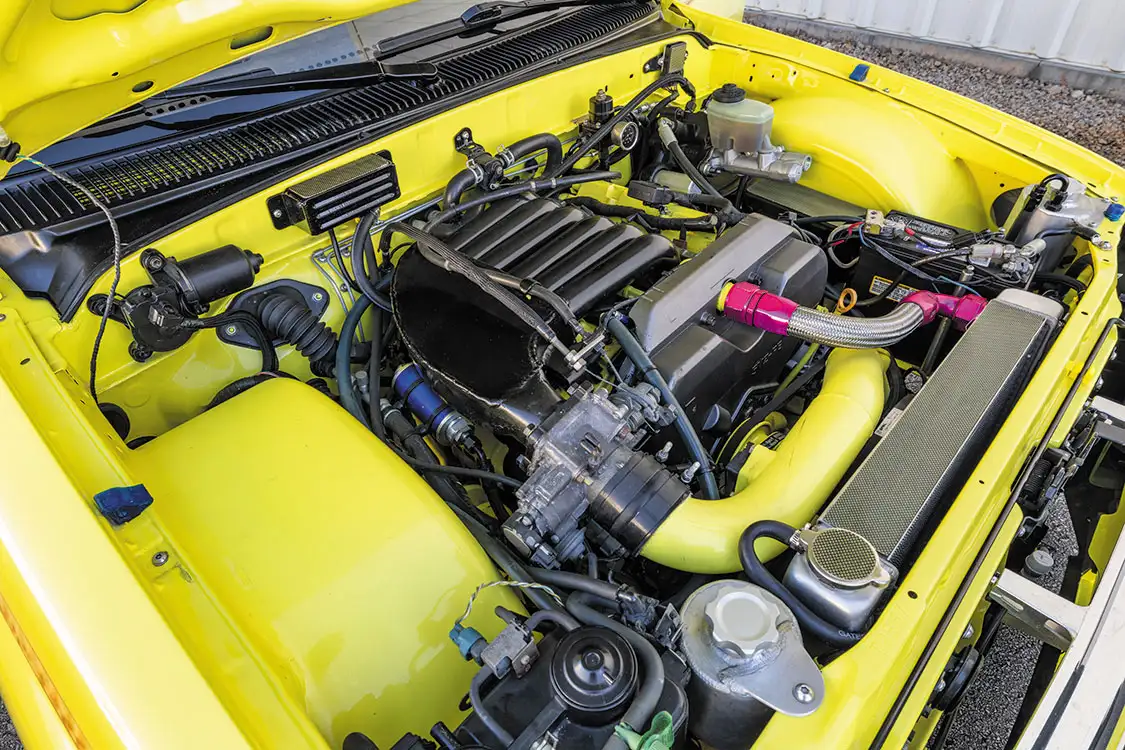
The factory engine was still good to run, but it was fully cleaned up and replanted between the frame rails. Toné planned to slam the 4Runner as low as possible, so he conducted a stock floor body drop and had to subsequently whip up a custom air intake that would be able to clear the hood. All the body panels that were mandatory to be replaced were swapped out, and a good deal of necessary bodywork was tackled, but Toné was more excited to customize the Toyota’s exterior landscape as much as possible. A full ragtop project was soon wrapped up, and front and rear custom wheel tubs were created to properly round out the one-off additions before the 4Runner officially entered the stage of final prep before paint.
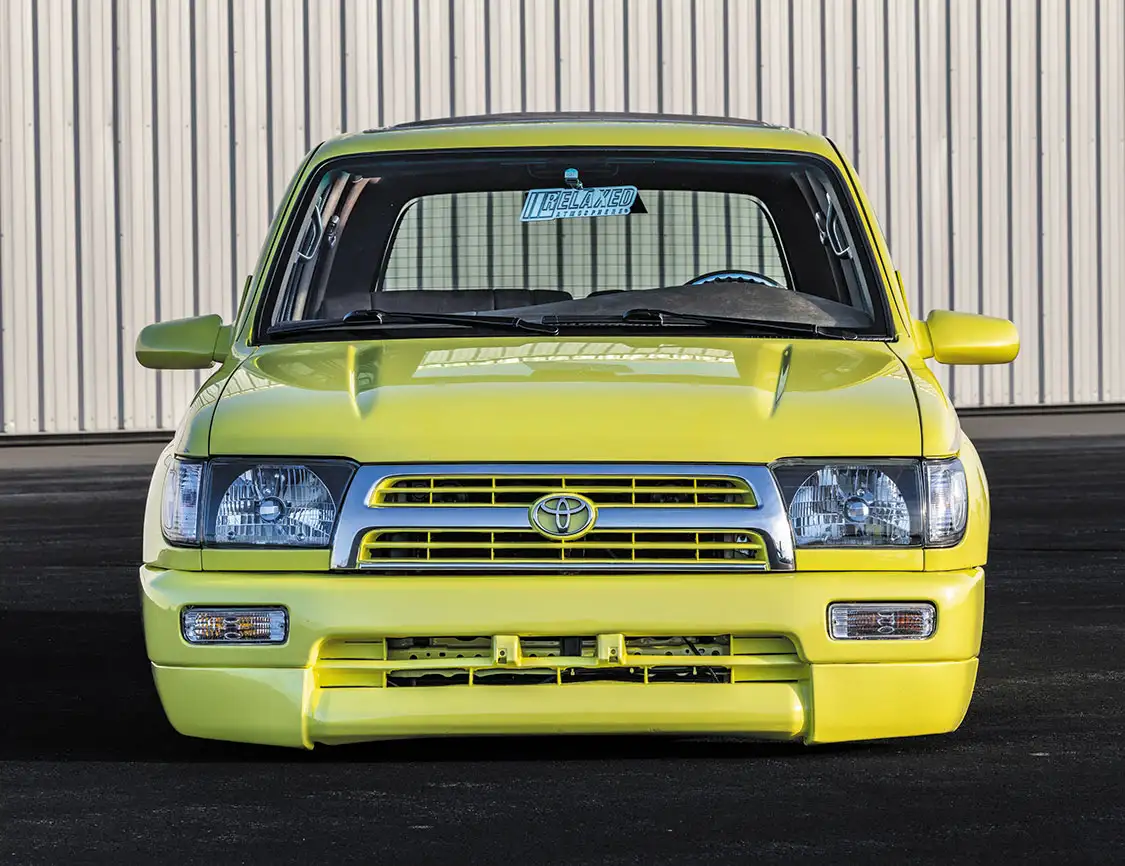
When it finally reached the point of being sprayed, Toné covered all his bases by also painting the entire chassis and select components under the hood. The bright yellow hue he selected turned out to be the perfect color choice to make the truck stand out even more from the crowd.
While there was a ton more work to Toné’s credit made to the 4Runner to bring it to this level, this is about the condition it was in when Patrick got his hands on it. The fact that the Toyota was already fully assembled and painted influenced his decision to make an offer on the truck, but Patrick still had some work to do such as altering the final paint scheme and finishing off the interior.
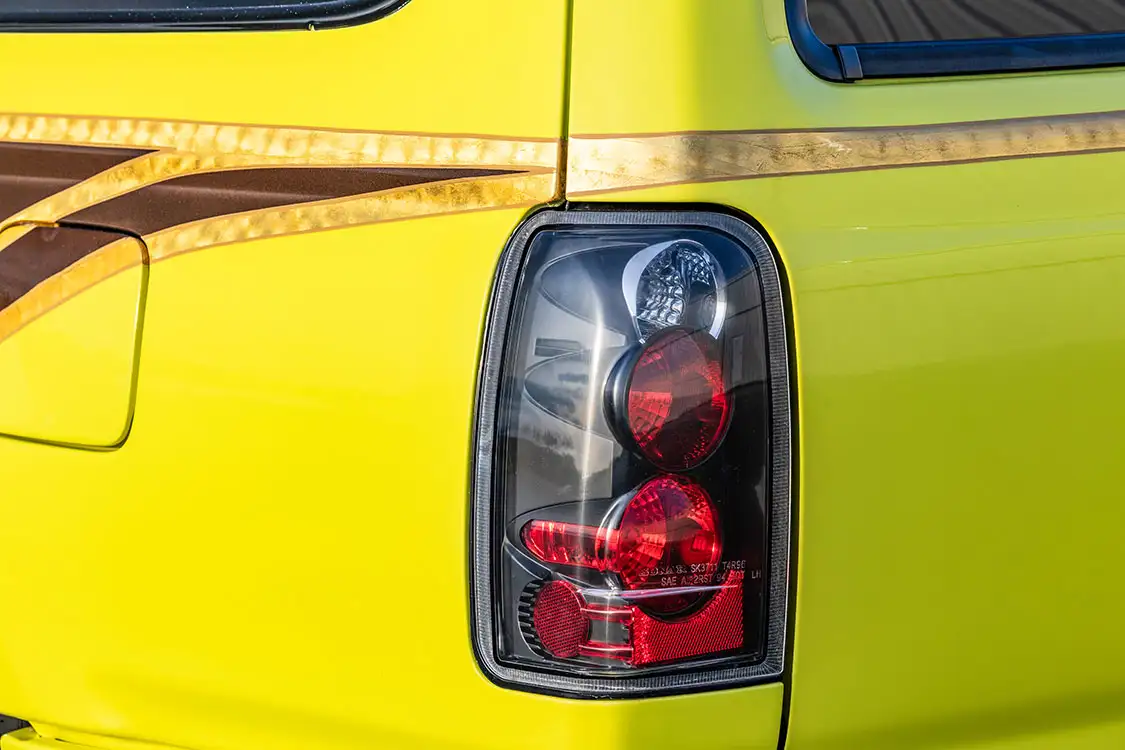
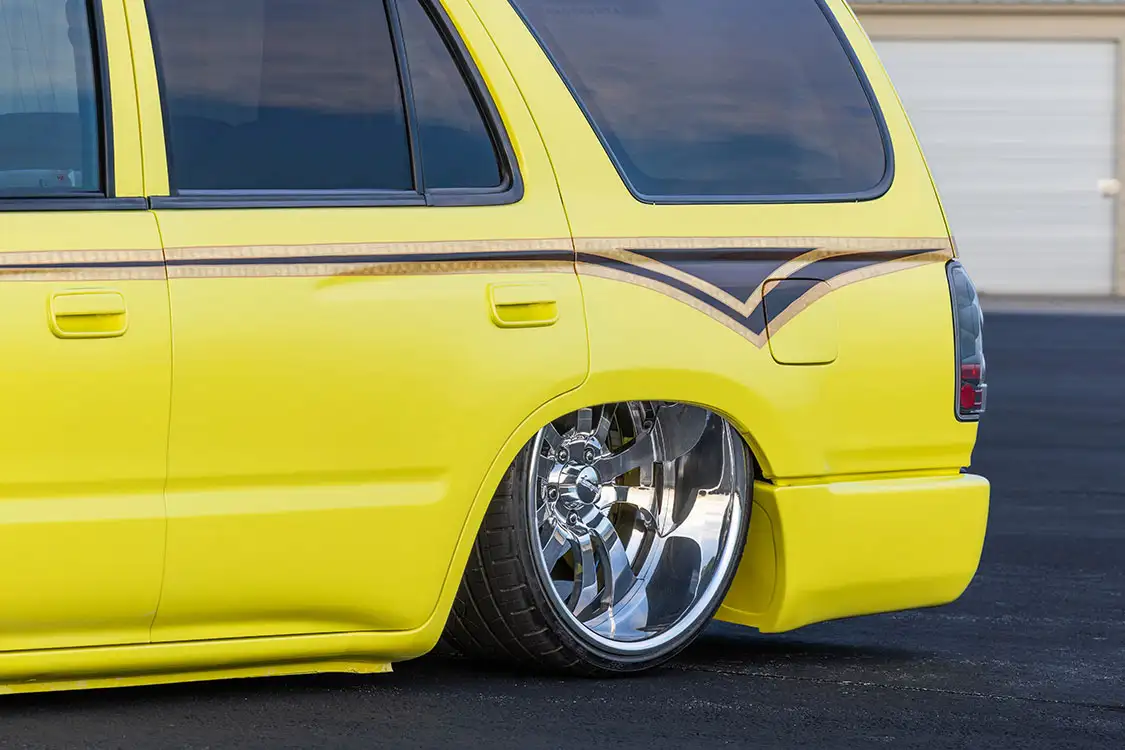
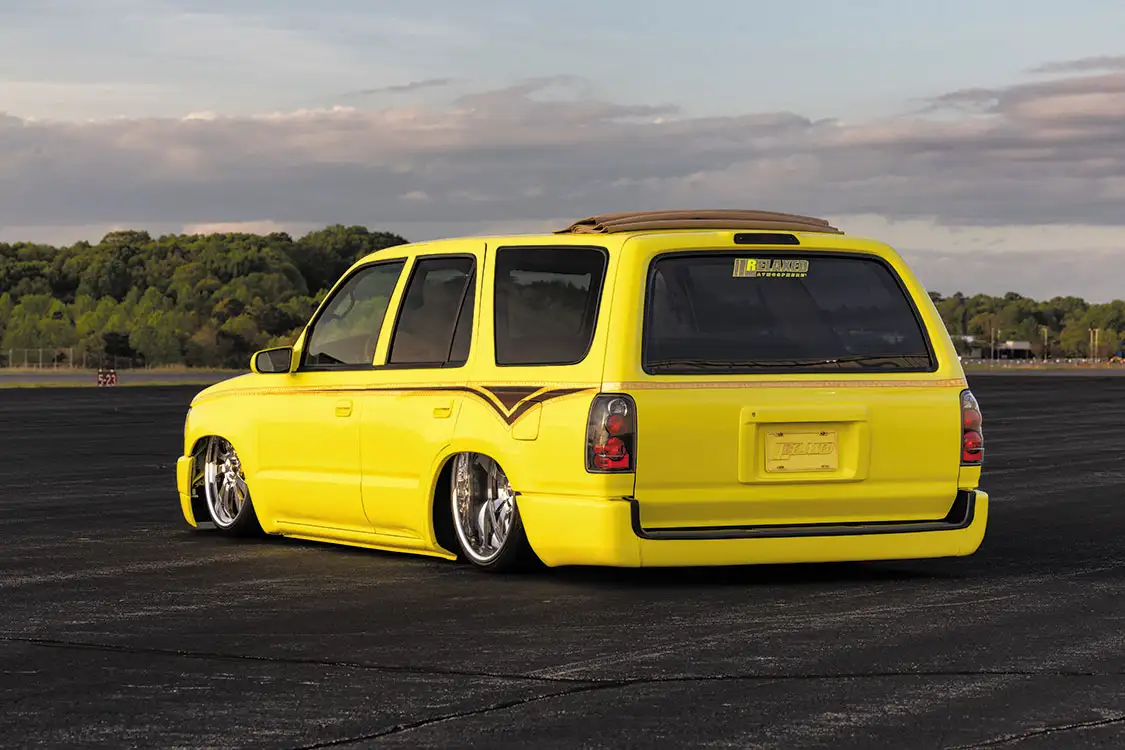
Patrick stayed within the existing yellow color palette for the final stage of the 4Runner’s coloring, but to add a break to the monotony, he recruited Charles Tyre to add some 23k gold leaf trim that frames House of Kolor Root Beer accent paint. This simple yet stylish detail work runs across each side as well as the rear end. The changeup wasn’t too drastic, but it was just enough to alter the overall feel of the exterior, which was exactly what Patrick was looking to accomplish.
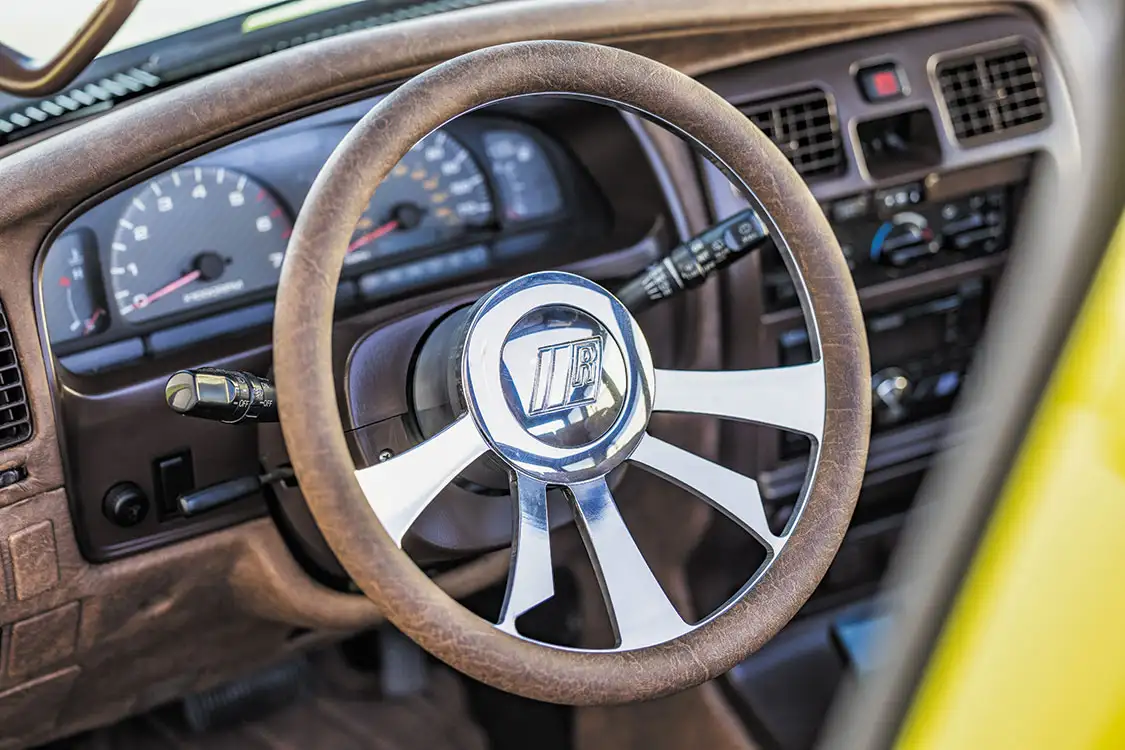
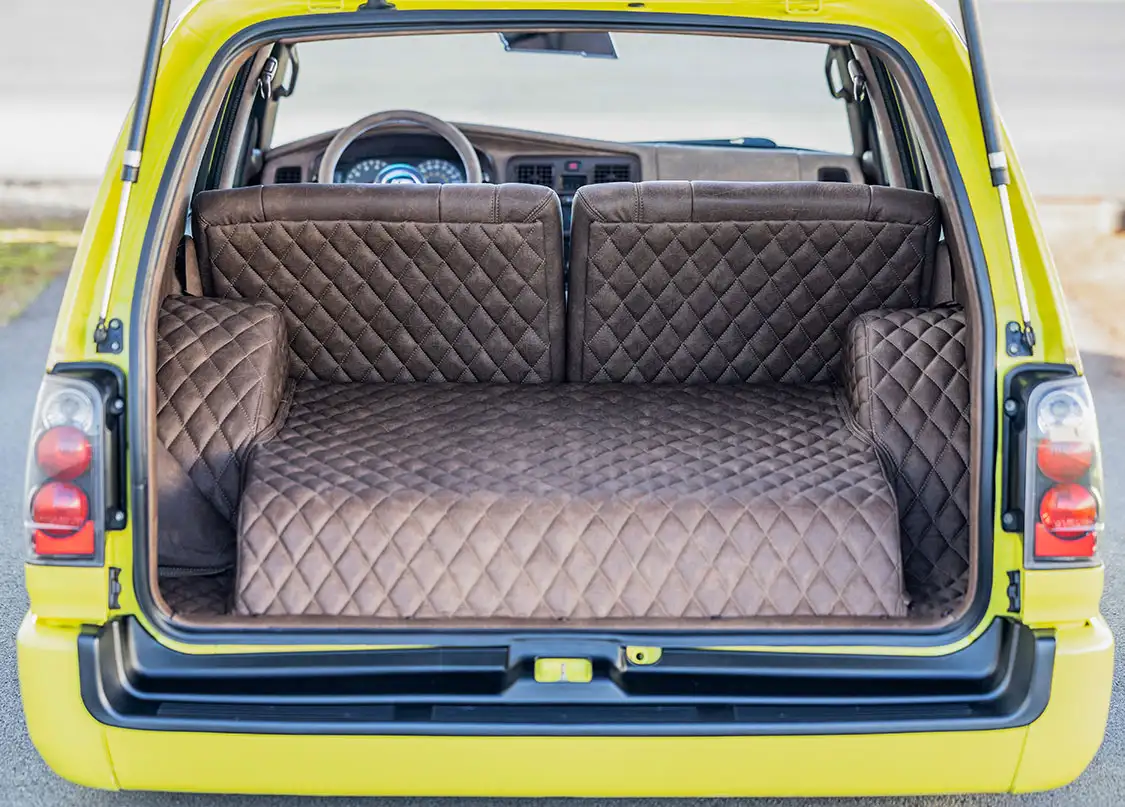
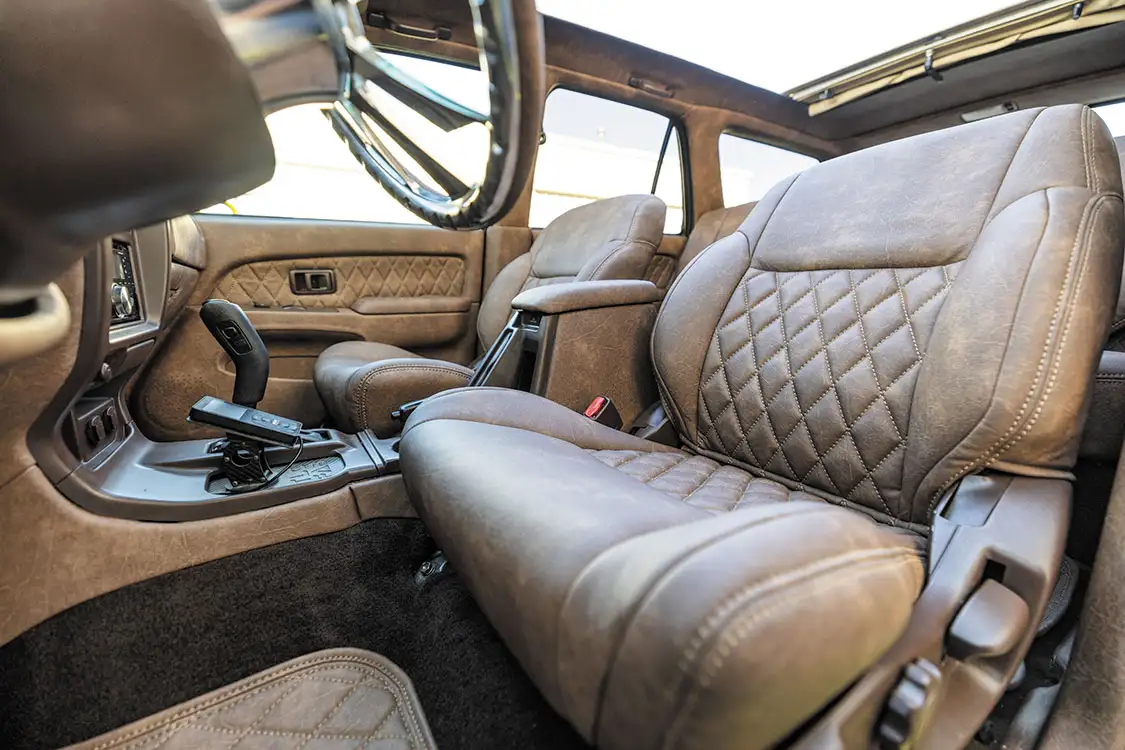
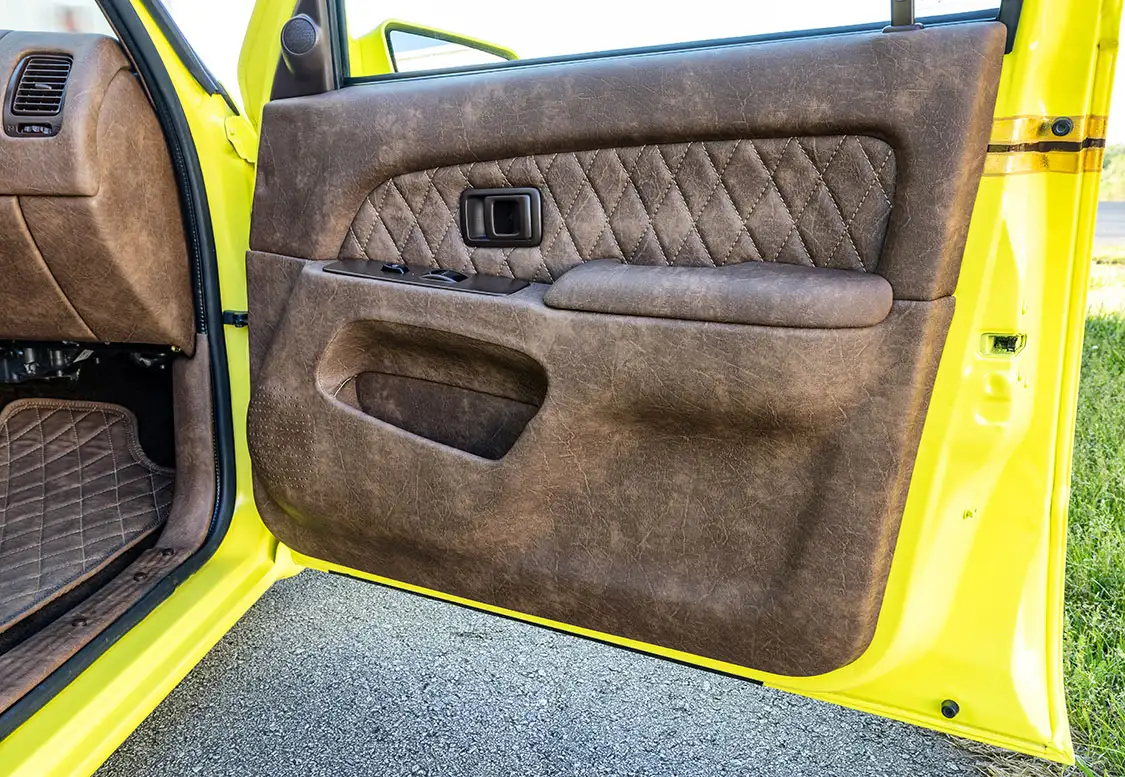
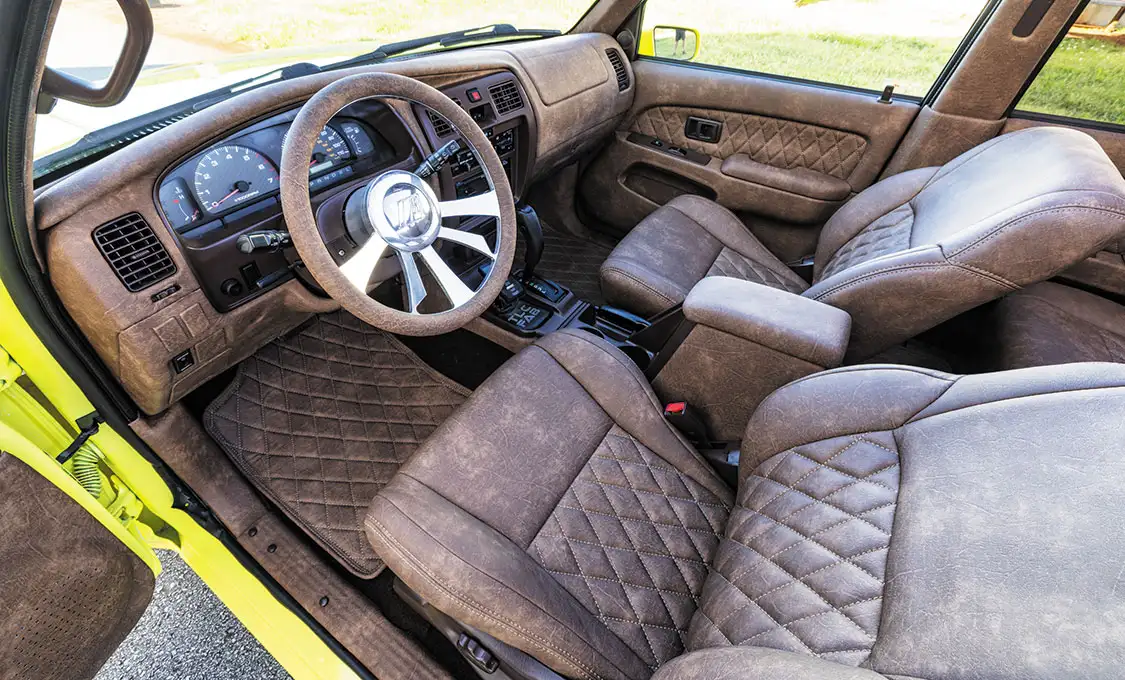
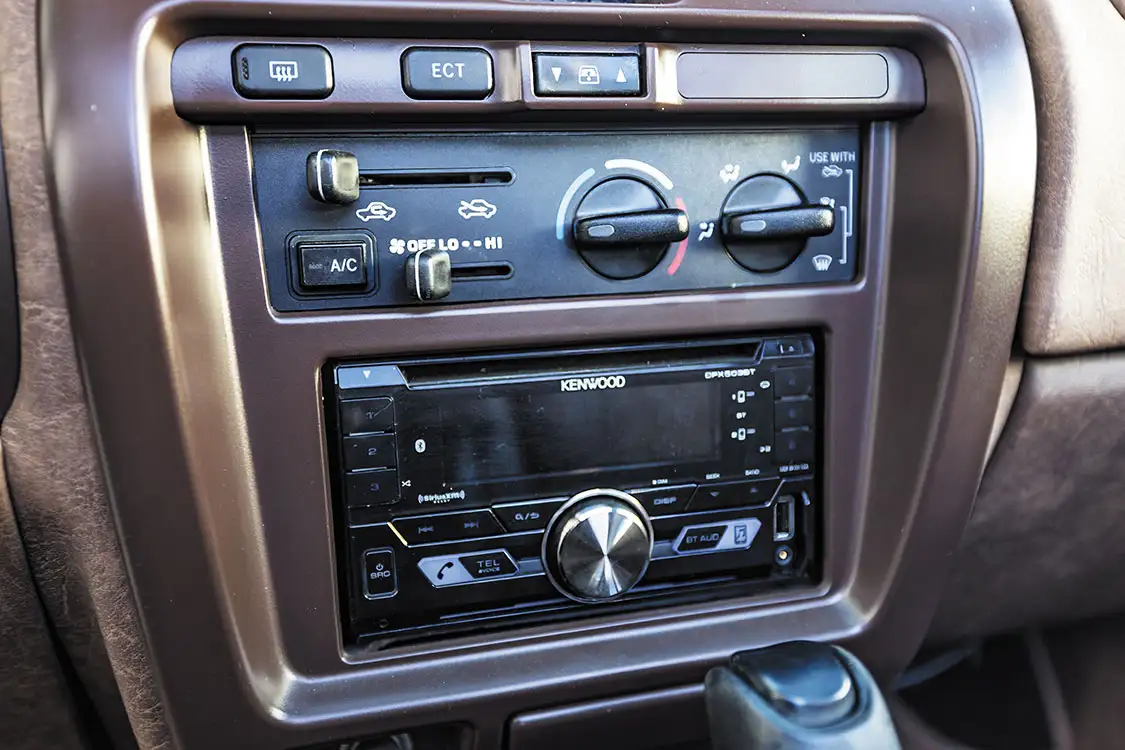
Inside the cab, a few previous modifications had been made but Patrick was looking to completely overhaul the space. To assist with this, he reached out to Rafa Tapicero to completely transform the Toyota’s front bucket seats and rear bench with distressed leather complete with diamond pattern stitching to finish off the look. The same leather was used to wrap the entire dash and door panels as well as the entire rear cargo space. Even matching floor mats have been created to pull off the cabin’s full metamorphosis.
Even though this 4Runner is now officially completed and under new ownership, it still maintains everything else that made it great before it changed hands. Everyone loves the story of a deserving underdog taking home the W, and this one here does not disappoint. This Toyota was at the tipping point of possibly being put out to pasture, but it was thankfully saved by a handful of diligent caretakers who have extended its life for all to enjoy for the foreseeable future.
Owner
Patrick Miller
2000 Toyota 4Runner
Liberty, SC
Relaxed Atmosphere
Engine & Powertrain
Chassis & Suspension
Wheels, Tires & Brakes
Body & Paint
Interior & Stereo
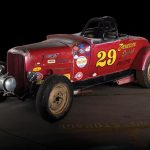
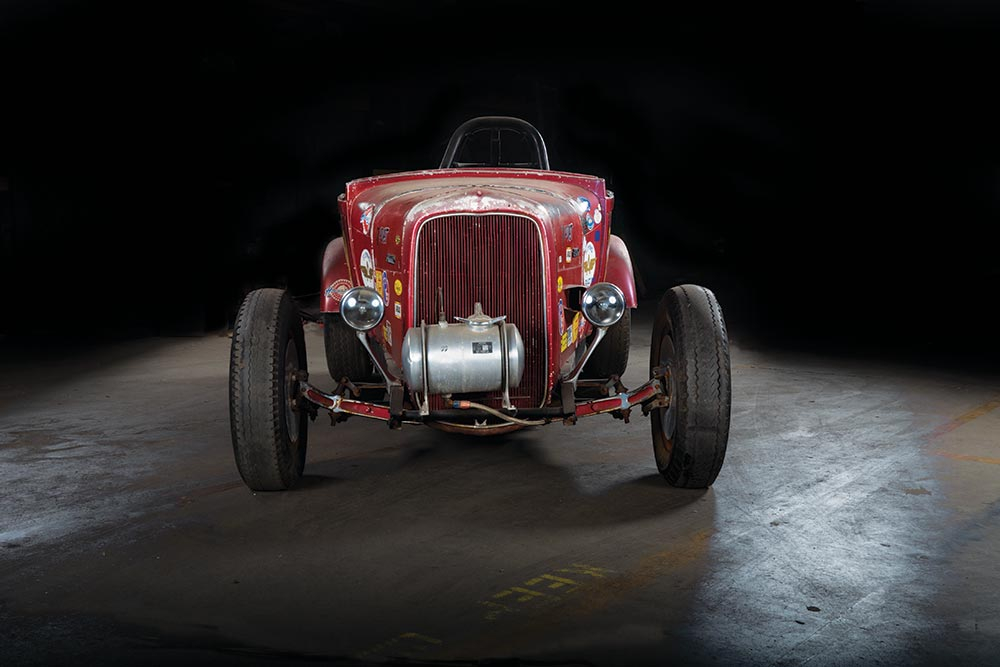
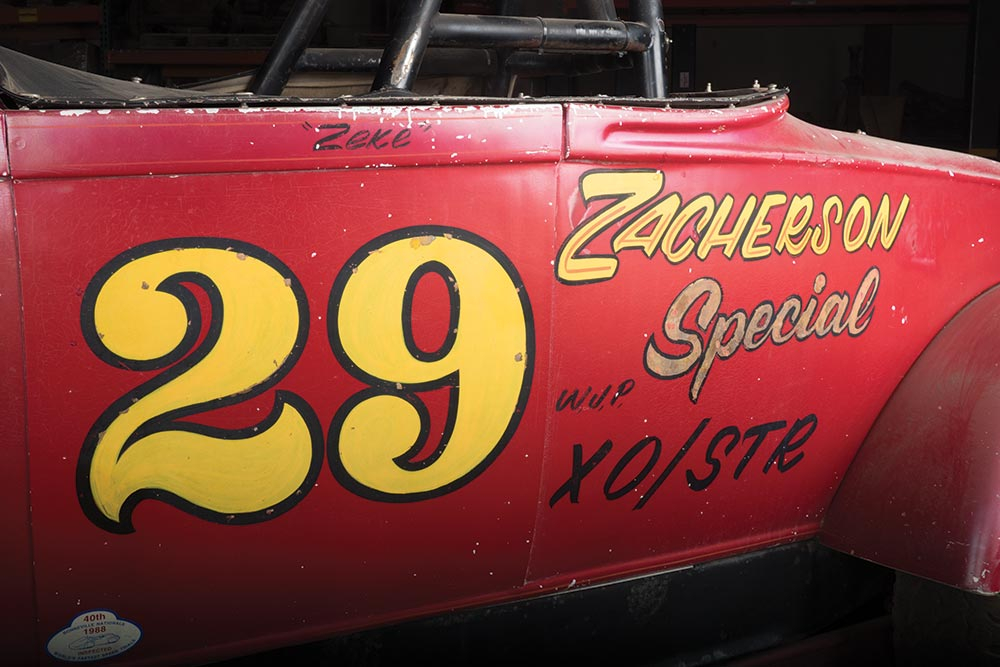
Zeke Zacherson’s ’29 roadster was part of the retro movement at Bonneville before there was a retro movement at Bonneville. Zeke chose to do battle in a class designed specifically for engines designed before 1959 at a time when the latest and greatest engine technology was all the rage. His ’29 Ford roadster is an icon of the return to the roots of hot rodding.
Fashion trends come and go in a flash. The must-have outfit for spring is no longer acceptable come fall. The same can be said for engine choices at Bonneville, although the trends on the salt follow a much longer cycle. The history of land speed racing at Bonneville is also a history of the highest performance engines available at the time. Interest in land speed racing was huge in the ’50s and ’60s, with advancements in automotive technology pushing records higher and higher. By the mid-’70s the automotive world shifted emphasis from performance to economy, and this malaise had crept into the scene at Bonneville. Participation dropped off to all but a few die-hards running their cars using the latest technology. Fewer still looked back in time to nearly forgotten engine designs. When Zeke acquired the Bonneville veteran roadster he became one of those few.
THE HISTORY OF LAND SPEED RACING AT BONNEVILLE IS ALSO A HISTORY OF HIGHEST-PERFORMANCE ENGINES AT THE TIME.
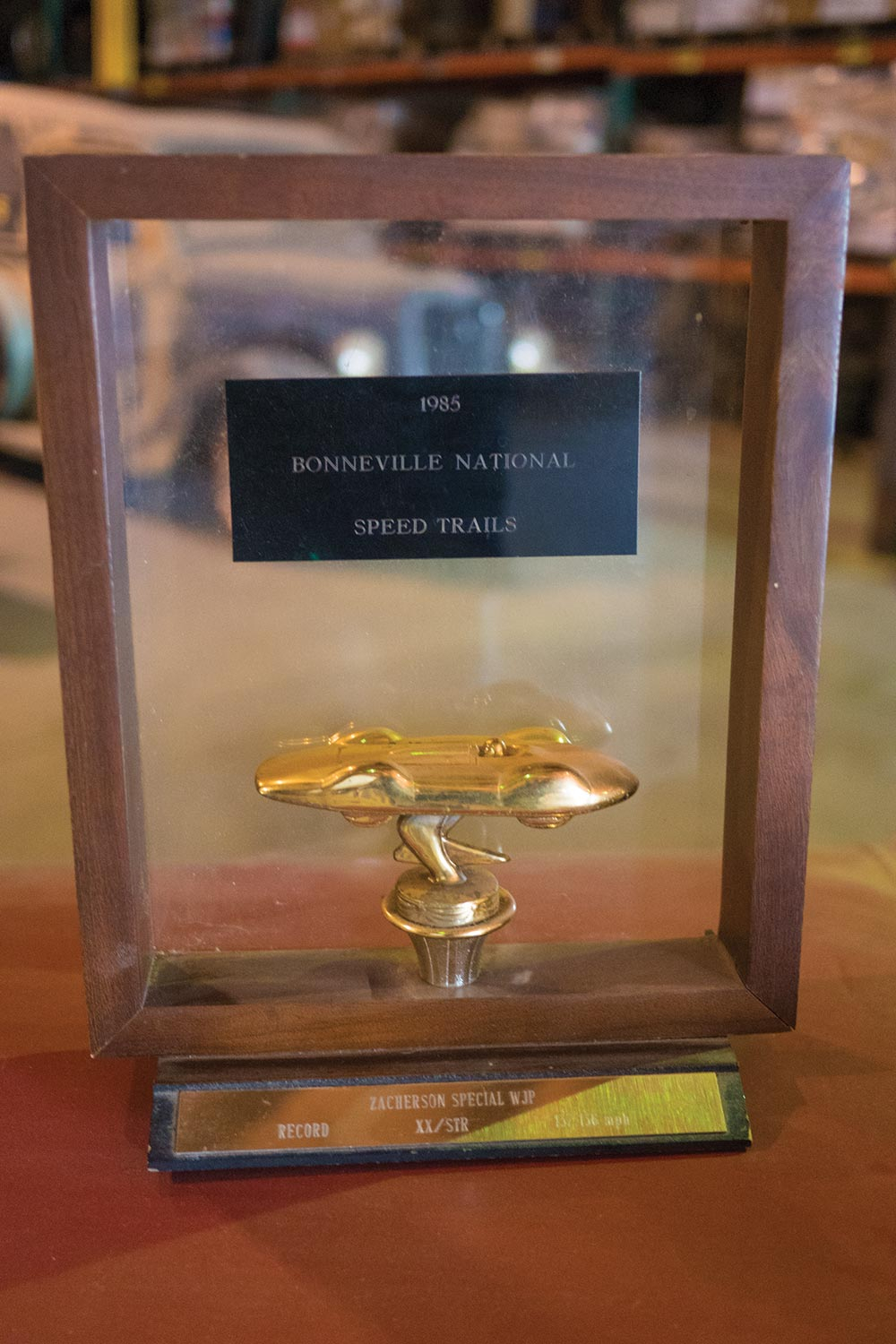
Zeke caught “Salt Fever” in the mid-’70s when a friend let him drive a small-blockpowered roadster. After hitting 149-mph, Zeke was hooked and vowed to return with his own car. Previously the governing bodies had seen an opportunity to bring more competitors to the start line by creating a new class for older engine designs. Zeke seized this opportunity by retuning to the salt with his street-driven ’38 Chevy sedan converted to race car duty and managed to set a couple of records. Armed with knowledge gained setting the XXO/Sedan class records and hungry for more, Zeke started looking for a car to compete in the Roadster body class (Bonneville classes are divided by engine type/displacement and body style).
The roadster Zeke found had started life as a magazine project feature. Frank Oddo, a long-time automotive journalist and hot rodder, built the #29 roadster in the mid-’70s while documenting the build for series of articles in Street Rodder magazine. Once completed, Frank took it to Bonneville and went faster than 180 mph with a blown small-block Chevy V-8, from the legendary Bonneville figure Bruce Geisler, under the hood. The project and story complete, the car was sold to Lloyd Arnold, who replaced the potent small-block with a four-cylinder Pinto engine. Lloyd campaigned the car off and on until selling it to Zeke in 1983.
FEWER LOOKED BACK IN TIMETO NEARLY FORGOTTEN ENGINE DESIGNS. WHEN ZEKE ACQUIRED THE BONNEVILLE VETERAN ROADSTER HE BECAME ONE OF THOSE FEW.
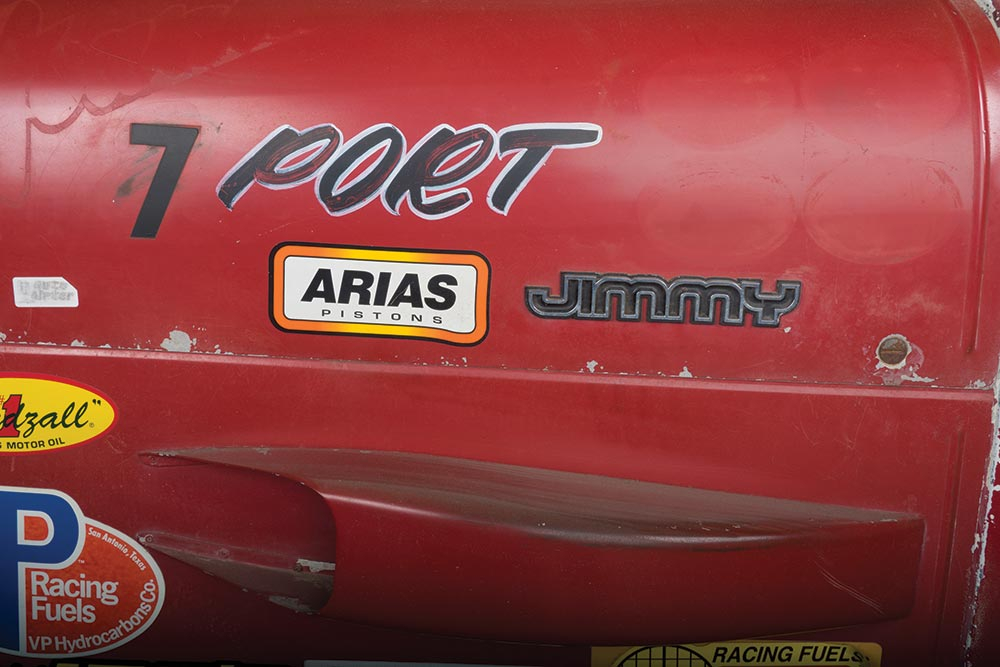
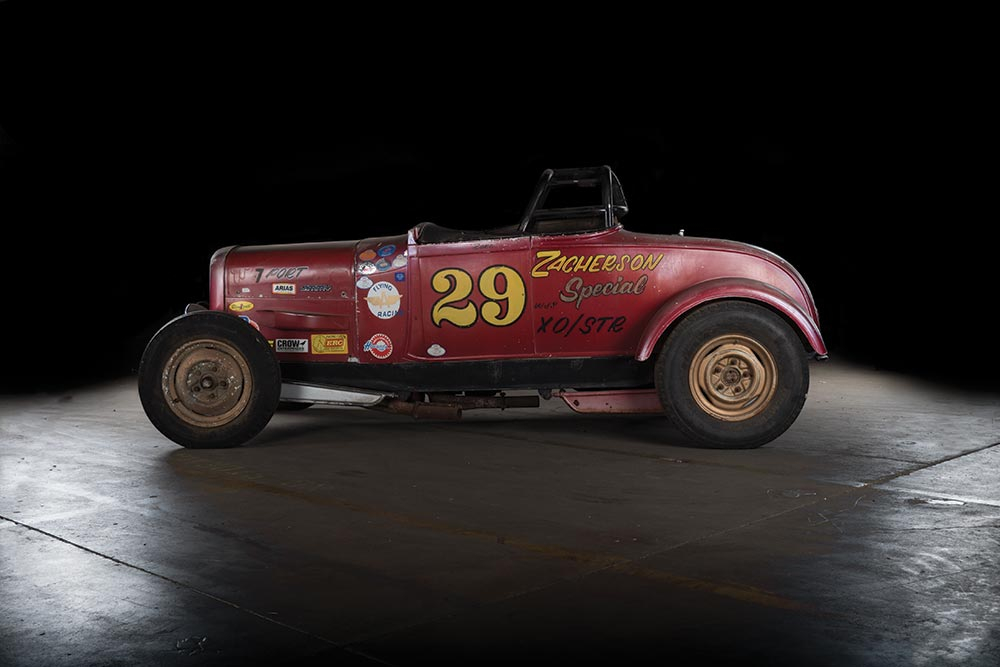
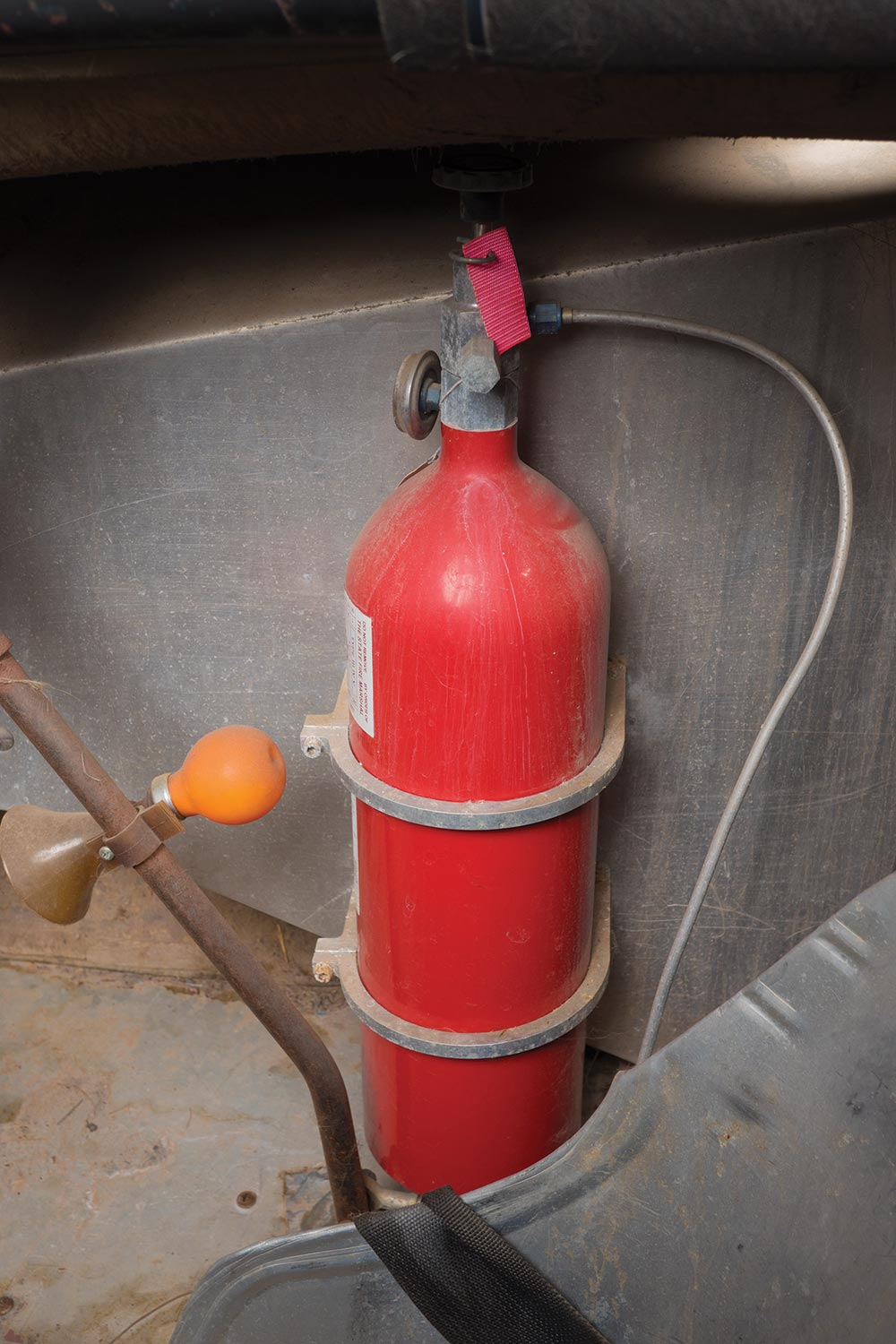
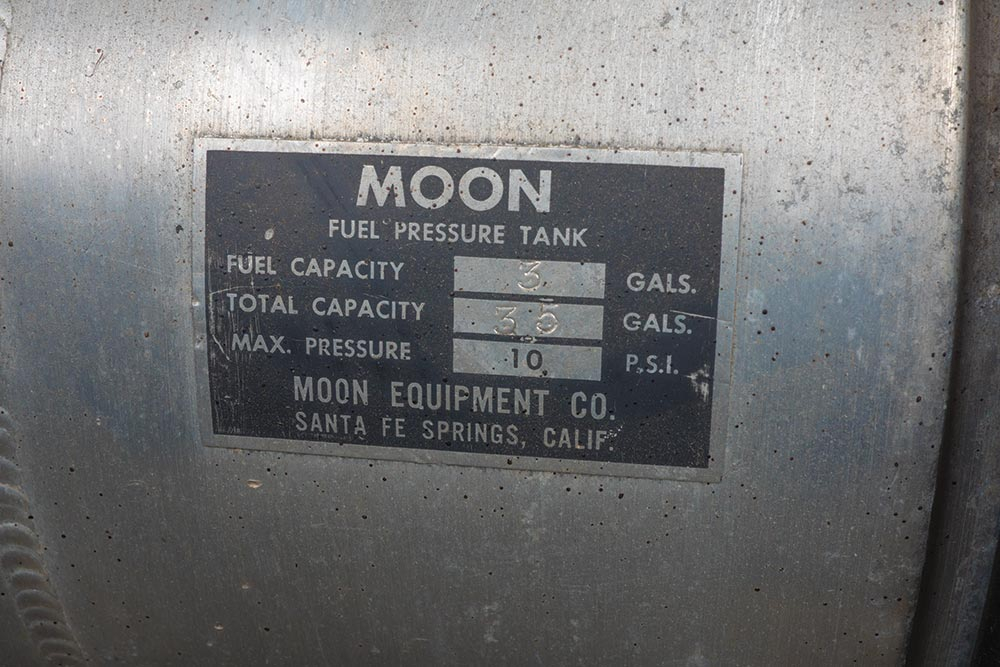
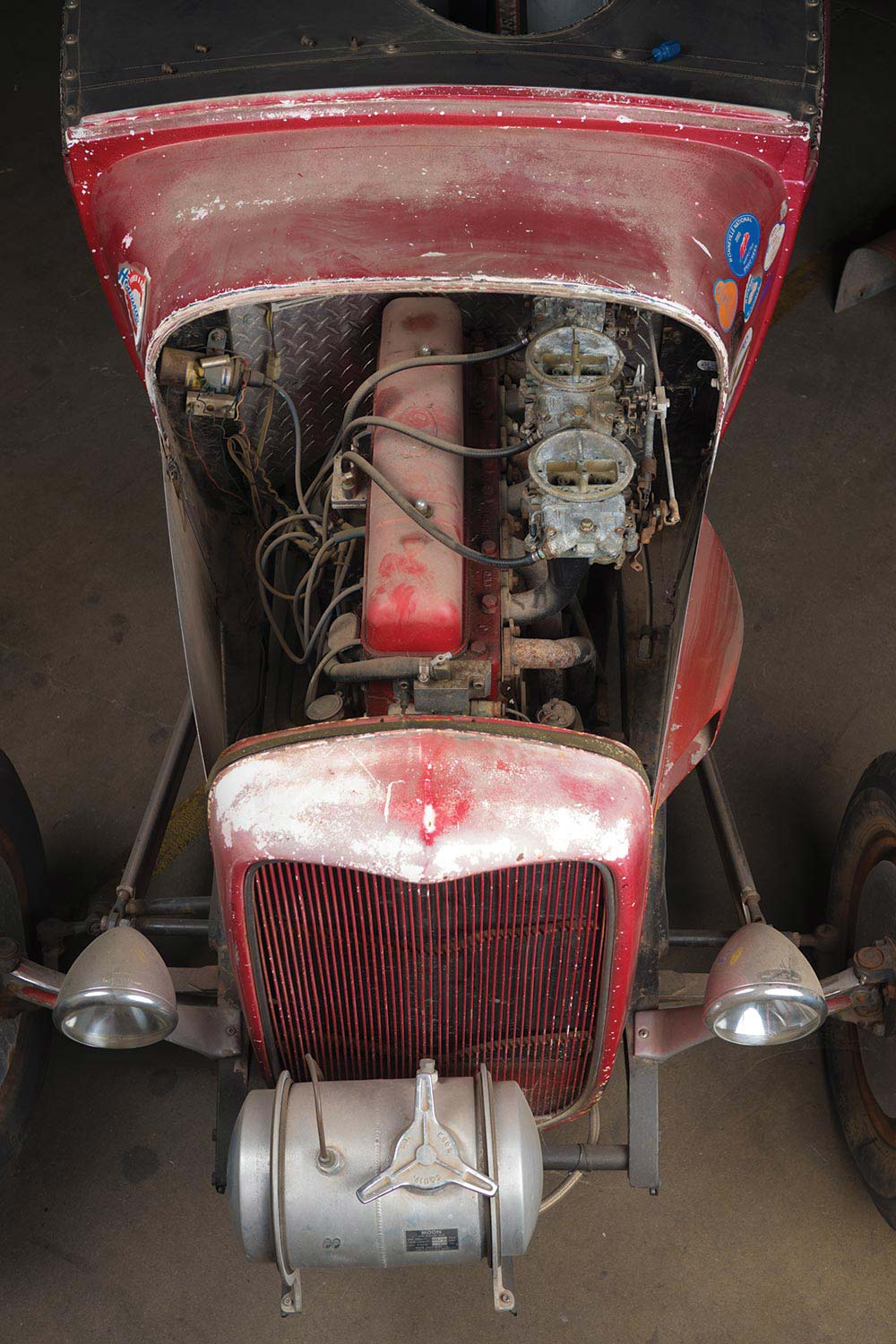
Zeke set about tearing the car down to the bare frame and replacing the four-cylinder plant with a GMC 302-ci inline six-cylinder engine acquired from Clifford Performance, a leading supplier of inline six-cylinder performance parts. The 302-ci GMC truck engine, originally fitted to 2.5-ton military trucks affectionately known as Deuceand- a-Halfs, had proven a potent hot rod engine in the early-’50s, powering the first car to break 150 mph on the drag strip and setting many land speed records. In stock trim, the engine was good for about 150 hp with solid low-end torque. This rivaled the newly introduced Ford Y-block V-8 and Chevy small-block V-8, although the inline six-cylinders were soon eclipsed once hot rodders realized the potential horsepower lurking in the V-8 motors. While the truck engines were praised for their sturdy blocks and nearly indestructible nature, they belonged to a family of engines that had its roots in the ’20s and carried with them a power-robbing head port design.
The venerable truck engine sported “siamesed” exhaust and intake ports in the head. Cylinders 2 and 3 and cylinders 4 and 5 shared a single exhaust port, while cylinders 1 and 6 enjoyed their own. The picture on the intake side was even worse where only three ports were shared between each pair of adjacent cylinders. Compounding this further, the stock intake manifold design favors the middle intake port, delivering less fuel and air to the front and rear cylinders.
ONCE COMPLETED, FRANK TOOK IT TO BONNEVILLE AND WENT FASTER THAN 180 MPH WITH A BLOWN SMALL-BLOCK CHEVY V8, FROM THE LEGENDARY BONNEVILLE FIGURE, BRUCE GEISLER, UNDER THE HOOD.
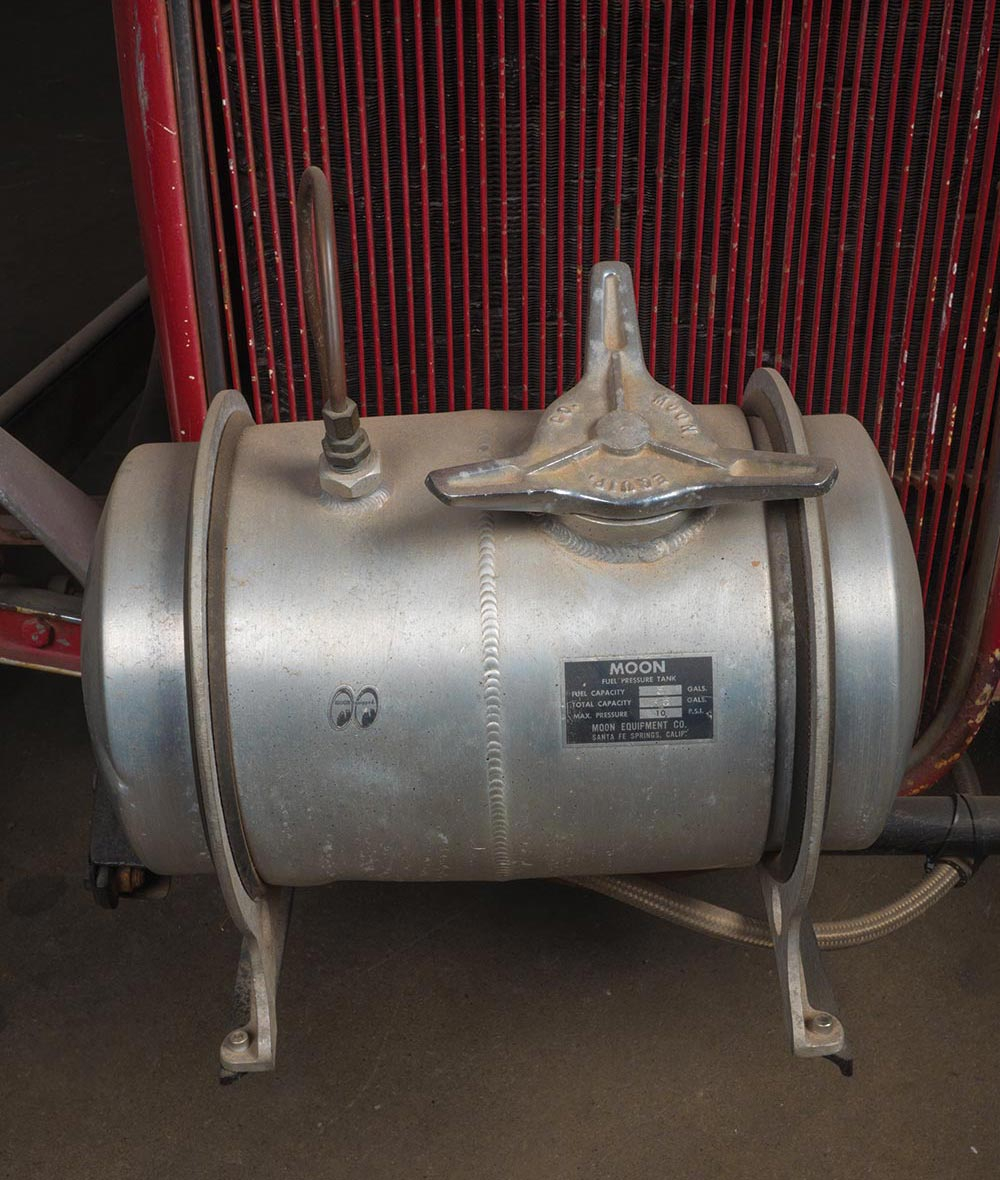
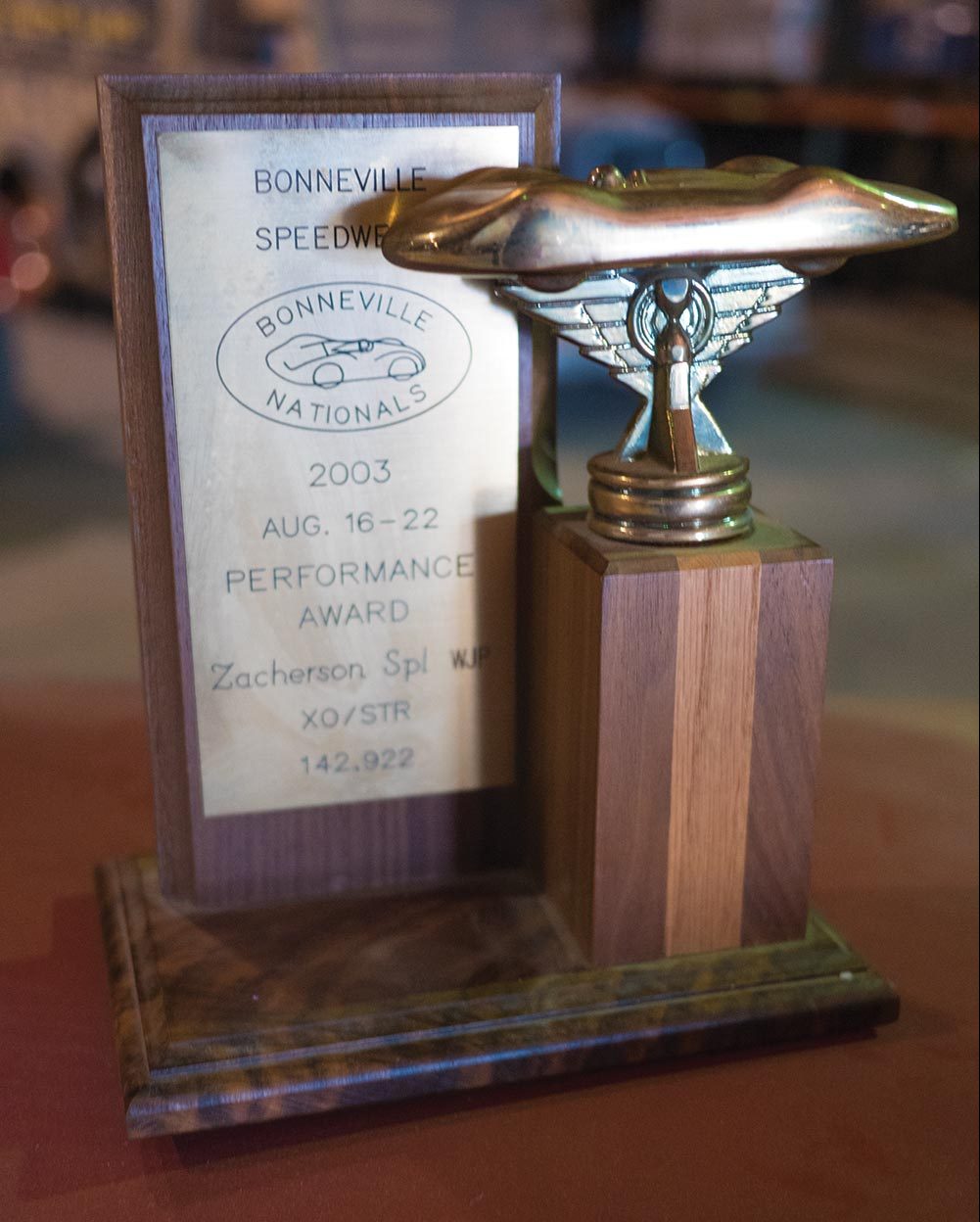
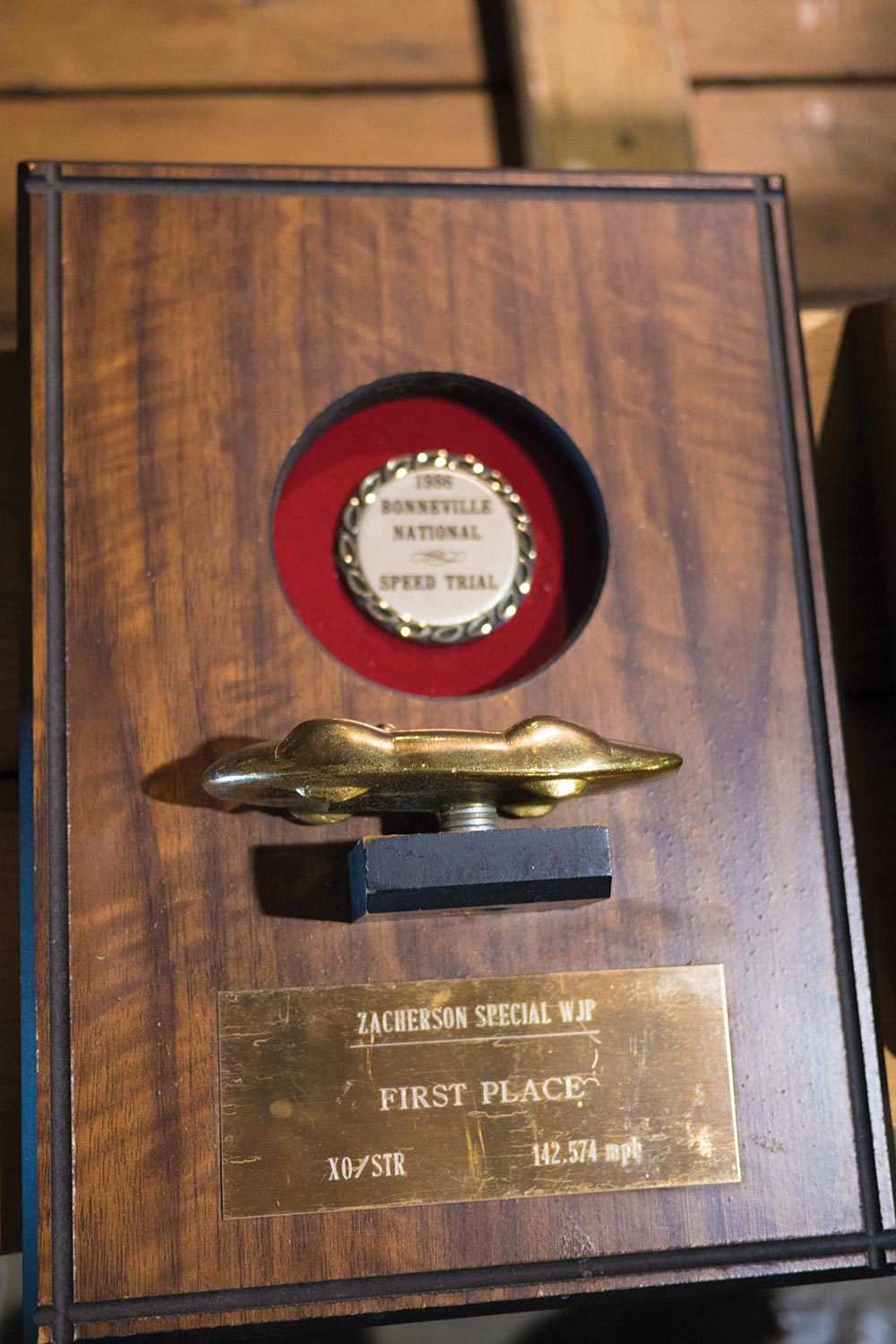
Wayne Horning, a mechanical engineer at Lockheed Aircraft, recognized these shortcomings in the late- ’30s and drew up plans for a better-breathing head. While World War II put a hold on his plan to hot rod the Chevy sixcylinder, soon afterwards he produced heads that did away with the antiquated port design.
Other manufacturers took up the cause of the inline engine, notably Howard Johansen of drag and land speed racing fame. He produced cross-flow heads with 12 ports, one port for each intake and exhaust valve, that boasted 1 hp per cubic inch of displacement in street trim.
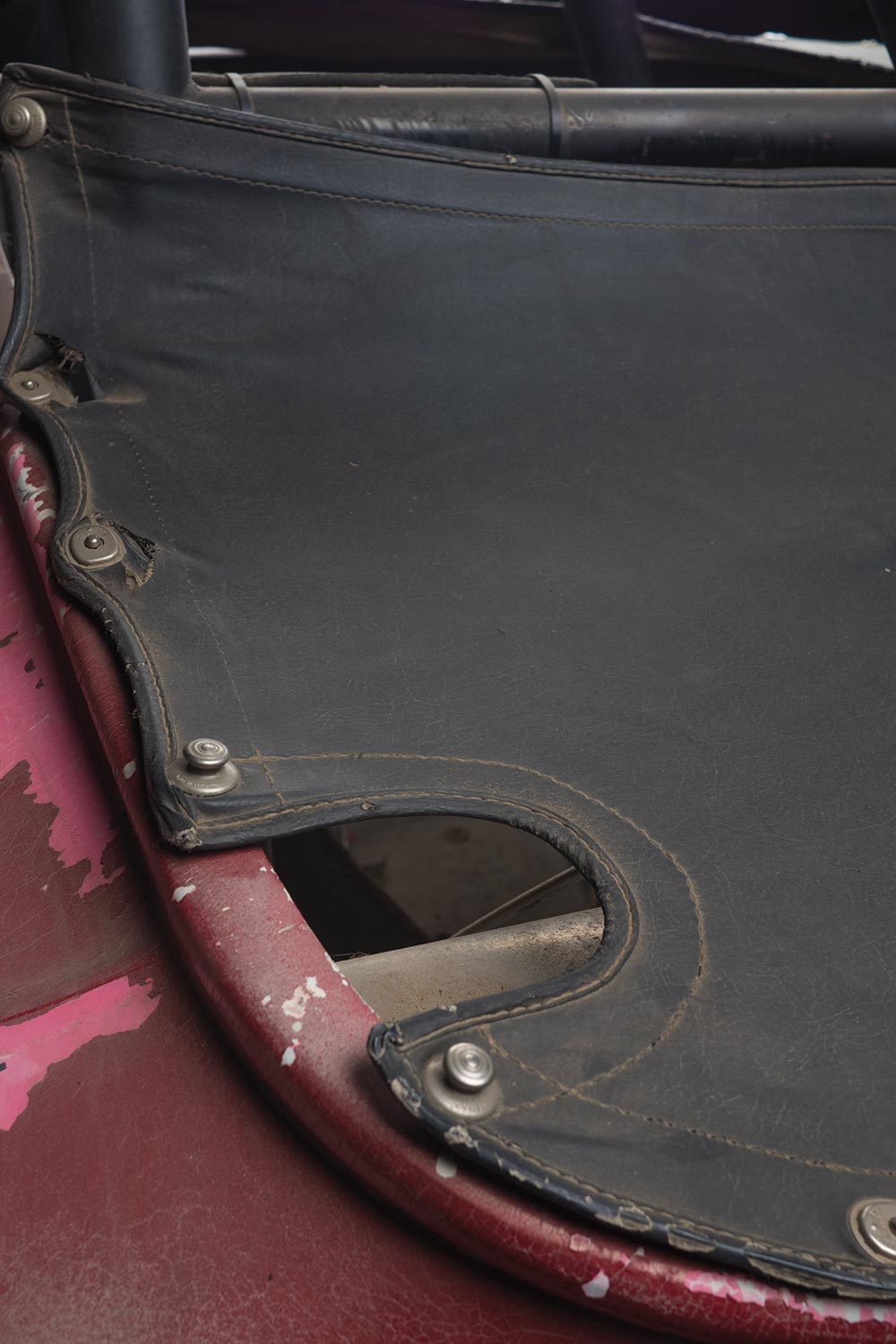
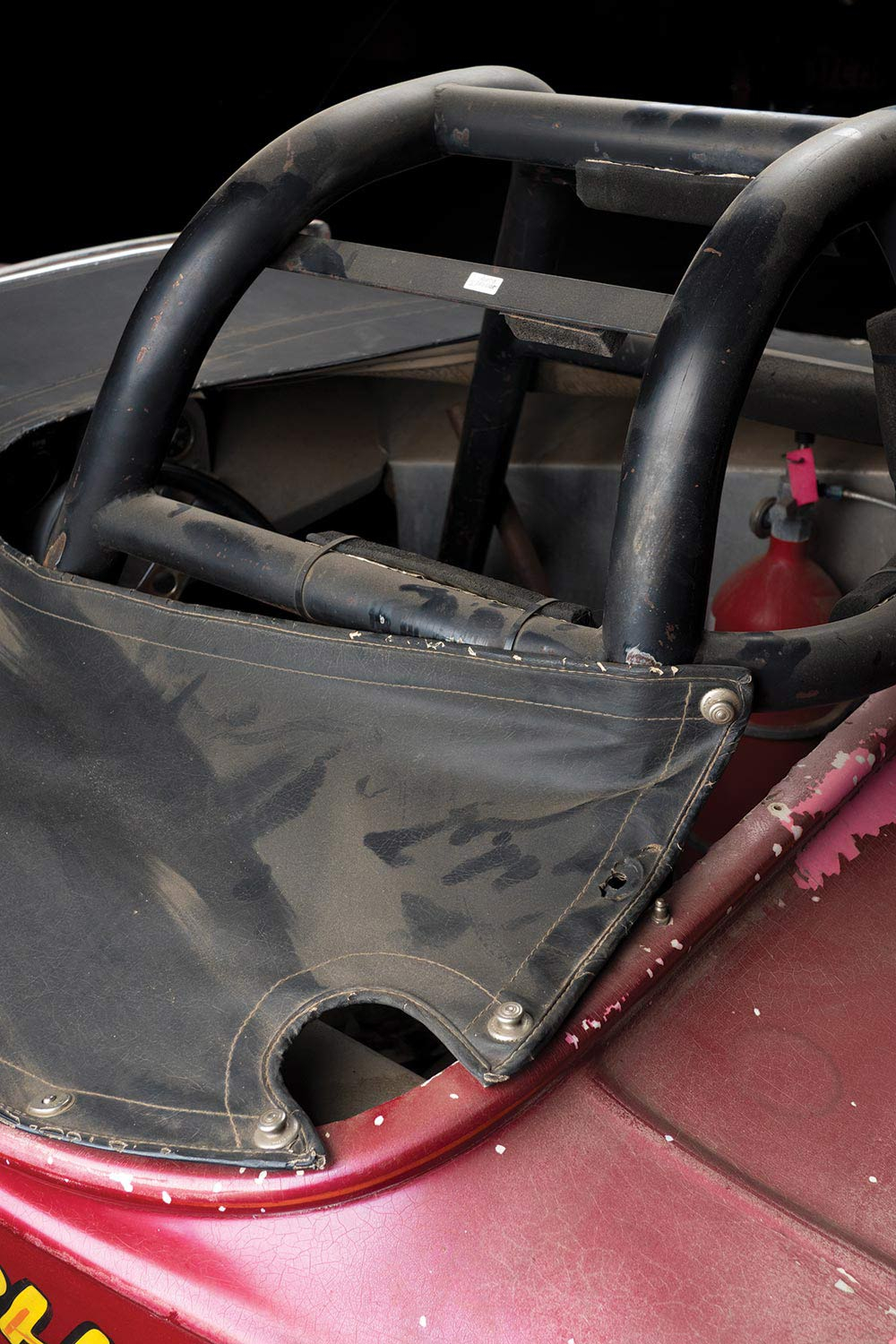
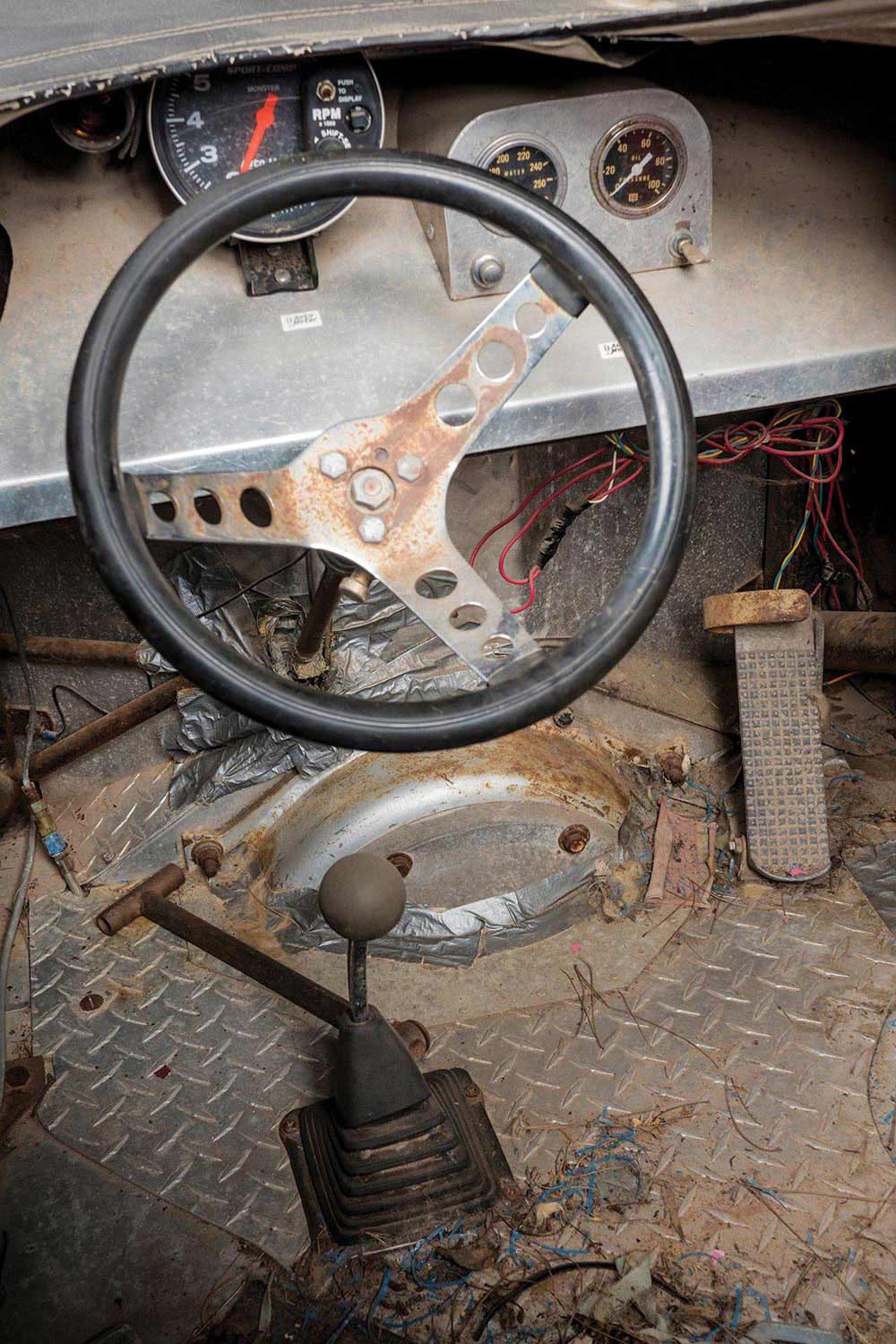
Zeke collected a couple of Howard 12-port heads throughout the years and chose to run them on his 302 GMC motor. He fitted the engine with a Howard 380 cam and 14:1 compression pistons to match. Then he fabricated his own intake and backed up the revived mill with a 1955 Chevy three-speed transmission and Ford 9-inch rearend with .325 gears. He then updated the roll cage to meet new regulations from the SCTA (Southern California Timing Association, one of the governing bodies of land speed racing) and removed nearly 1,100 pounds of lead that had been bolted to the frame in an effort to gain rear wheel traction. The fiberglass body had been stretched 11% in the hood but retained an original grille shell per SCTA rules.
THE VENERABLE TRUCK ENGINE SPORTED “SIAMESED” EXHAUST AND INTAKE PORTS IN THE HEAD.
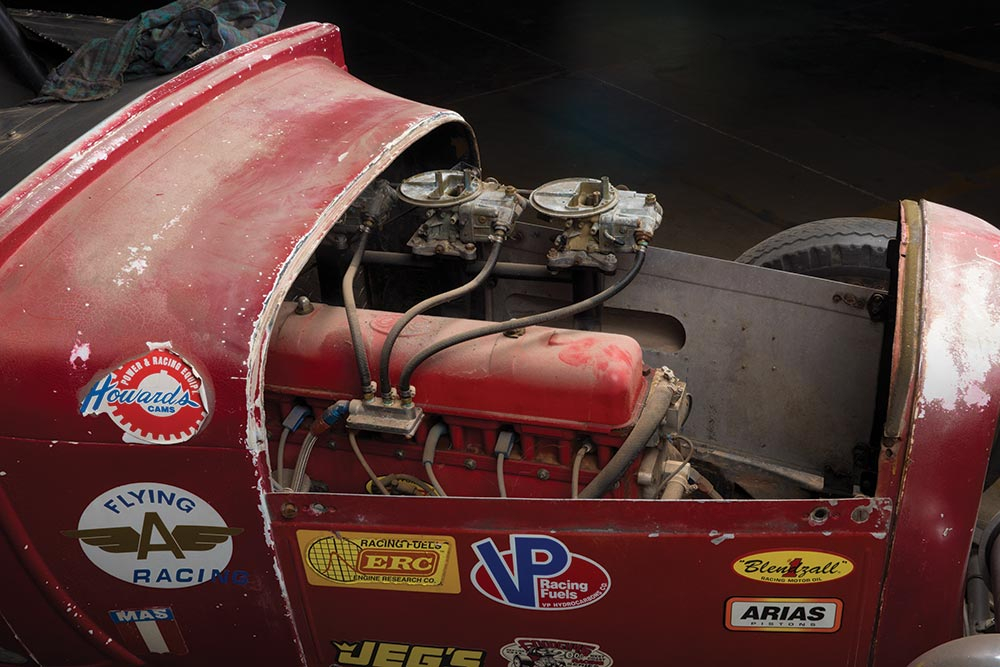
In this configuration, he went to Bonneville and quickly set records. Another rule change split the use of specialty and stock heads into separate classes, and Zeke set records in both in the same day by changing heads. Zeke took the roadster to run at El Mirage dry lake bed in Southern California and set a record using a stock head on the GMC 6, but the governing body at the race would not certify it since he was not a member of one of the clubs that run the event.
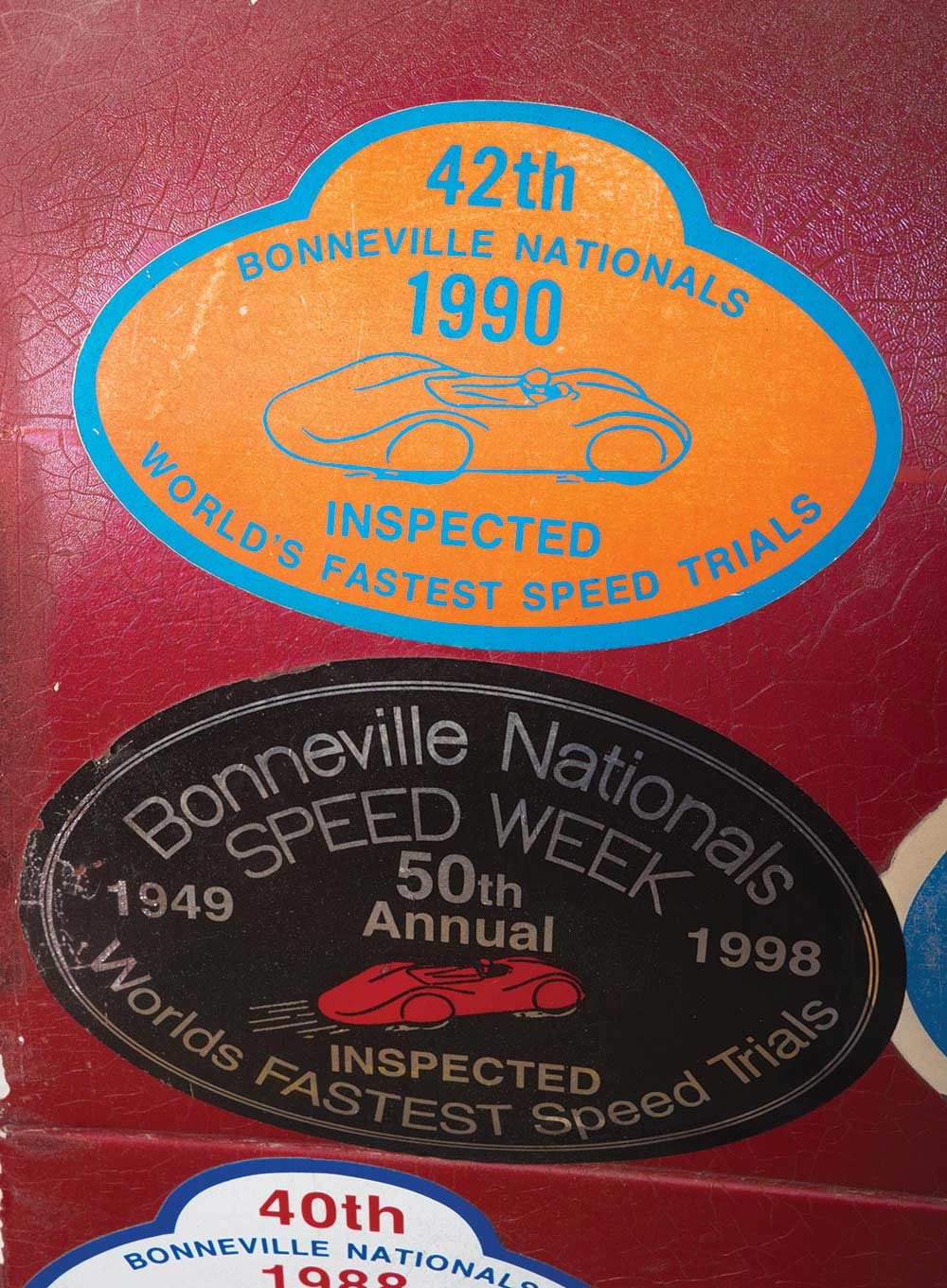
The #29 Zacherson Special even made a couple of appearances on the drag strip. Zeke and the car became a fixture at Bonneville throughout the years, setting records from the mid-’70s until the late-’90s. Pictures of the car have graced four calendars and even the pages of an ’80s issue of Penthouse magazine.
The retro craze that Zeke helped usher in took a firm grasp of the minds of Bonneville racers. Interest in the roots of land speed racing and hot rodding is stronger now than ever before. Flathead V-8, vintage inline four- and six-cylinderpowered cars now attract more attention than their modern counterparts in the Bonneville staging lanes.
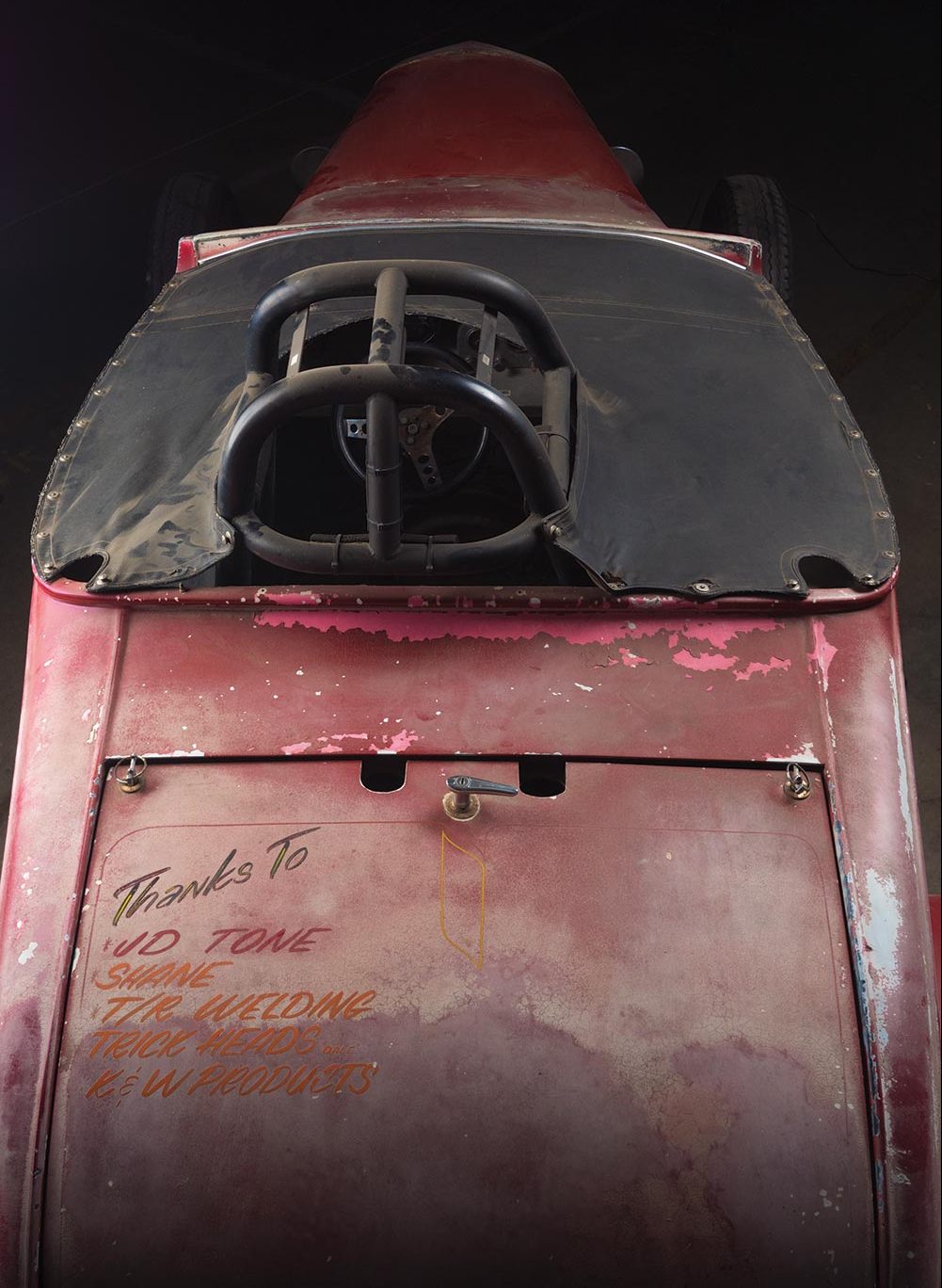
Eventually both Zeke and the roadster started to grow long in the tooth. What once was a vanguard of a retro movement on the salt became just another old race car, so Zeke hung up his helmet. When Joe Fazio, owner of SoCal Speed Shop Sacramento, heard that the #29 Zeke Zacherson Special was available for sale he jumped in to preserve this piece of land speed racing history. It now resides in Joe’s collection waiting for its next chance to bring the roots of hot rodding to yet another venue.
THE RETRO CRAZE THAT ZEKE HELPED USHER INTOOK A FIRM GRASP OF THE MINDS OF BONNEVILLE RACERS. INTEREST IN THE ROOTS OF LAND SPEED RACING and hot rodding is stronger NOW than ever before.
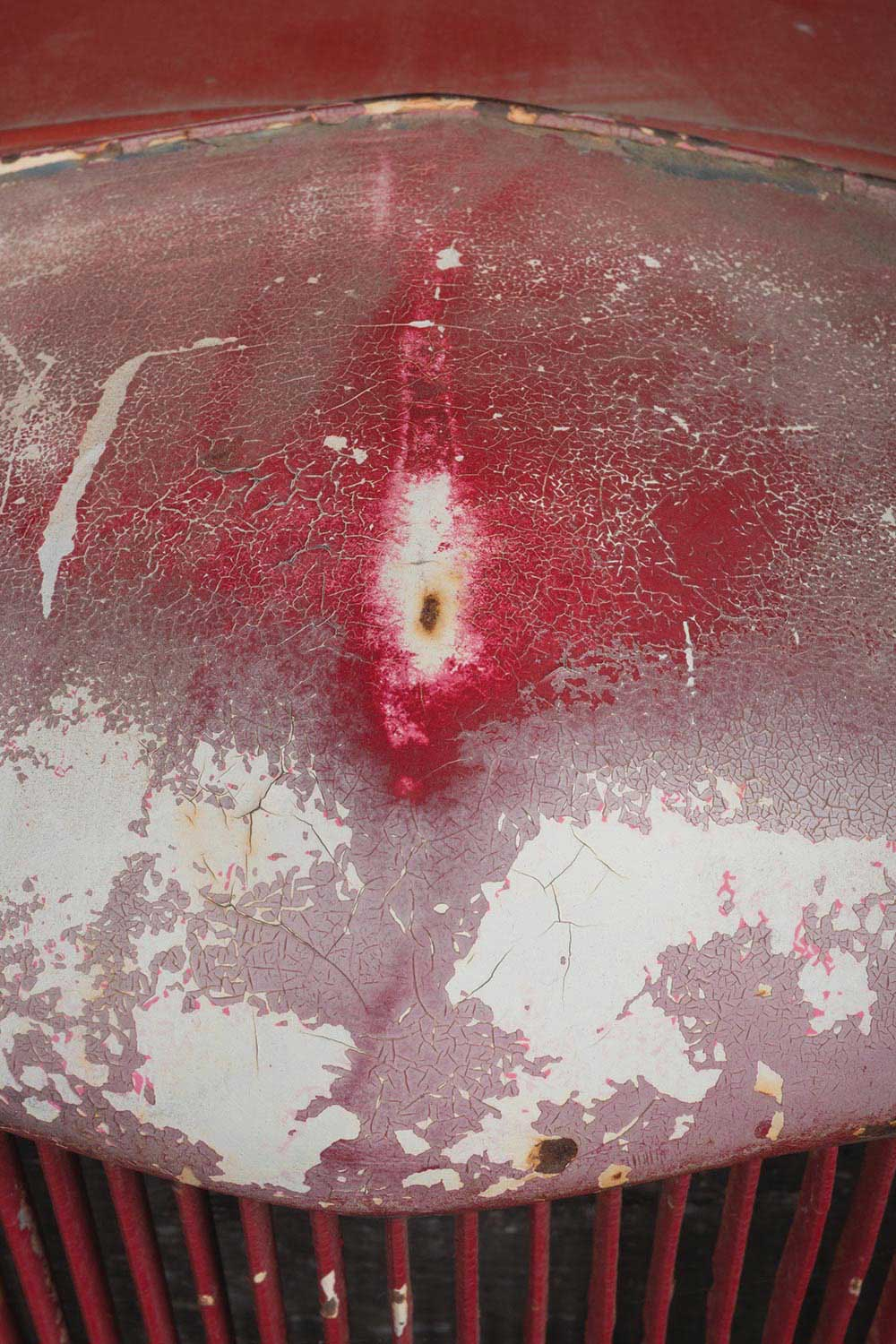
BACK IN THE DAY when guys and gals cruised boulevards religiously in their cars all across America there would always be one ride that received more attention than the rest. Some of the most popular customs were 1949-51 Mercurys with their low, long bodylines; round, fat fenders; wide horizontal grilles and wraparound bumpers. They’re still considered the ultimate lead sled.
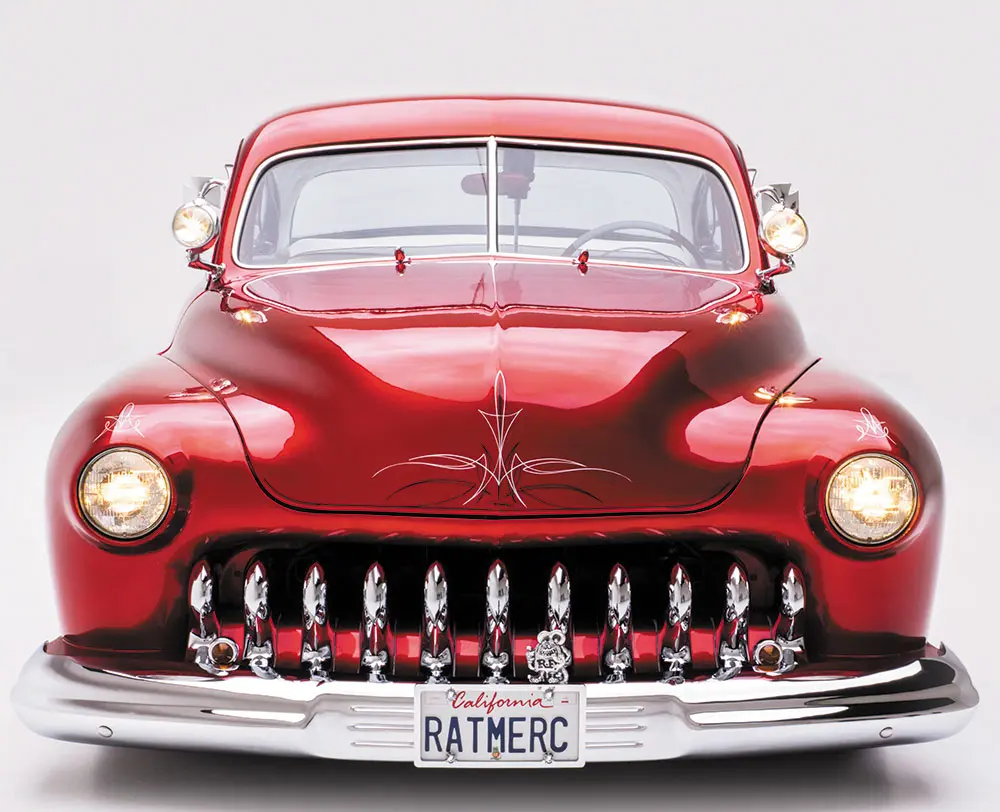
Cisco Farias, who resides in Mission Viejo, California, has always had a passion for cool custom cars. He wanted to own and build a ’50s-style custom, so Cisco purchased a ’51 Mercury two-door coupe. He’s been a longtime fan of Ed Roth, who created Rat Fink in 1963. The evil-looking cartoon rat has been an iconic hot rod creature for more than 50 years. Roth was also known for many wild and crazy custom car creations like Outlaw Bandit, Beatnik Bandit, Rotar, Tweety Pie, Mysterion and Orbitron. Cisco was inspired by Roth’s work to build RatMerc.
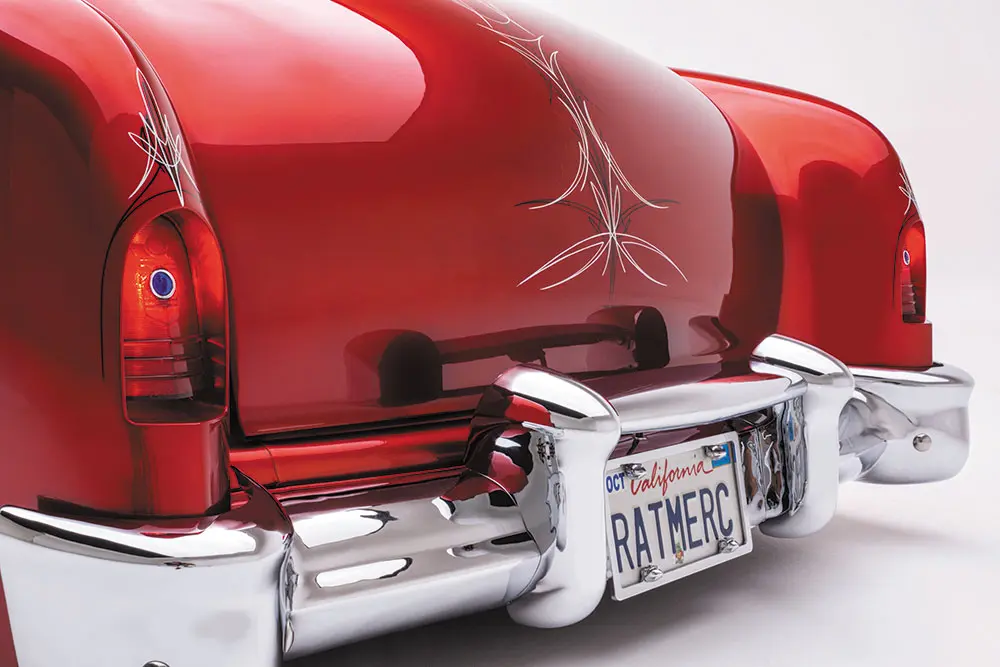
After obtaining the Merc’s pink slip, the creative journey began. Starting from the ground up, RatMerc’s pneumatic adjustable vertical stance was accomplished by Ponch “The Bag Man” Silva in Anaheim, California, via a pair of Bag Man 2-inch drop spindles, bellows-style airbags and Pete & Jake’s gas-filled shocks. A pair of ABS front disc brakes with 12-inch rotors, singlepiston calipers and an ABS electric power brake master cylinder stop the front end’s rotating mass. The rear suspension’s action was accomplished by installing a Total Cost Involved (TCI) 4-link and track bar setup that anchors the Ford 9-inch rearend that was stuffed with 2.47 gears. Two and half-inch C-notches were cut in the rear frame rails to allow the rearend housing more negative suspension travel, and a pair of Bag Man bellows-style airbags and Pete & Jake’s gas-filled shocks handle the rear suspension’s action. A set of Wheel Smith chromed Smoothies (15 x 7) wheels were wrapped with Coker BF Goodrich Silver Town whitewall radial (P185/70R-15) rubber for style and grip.
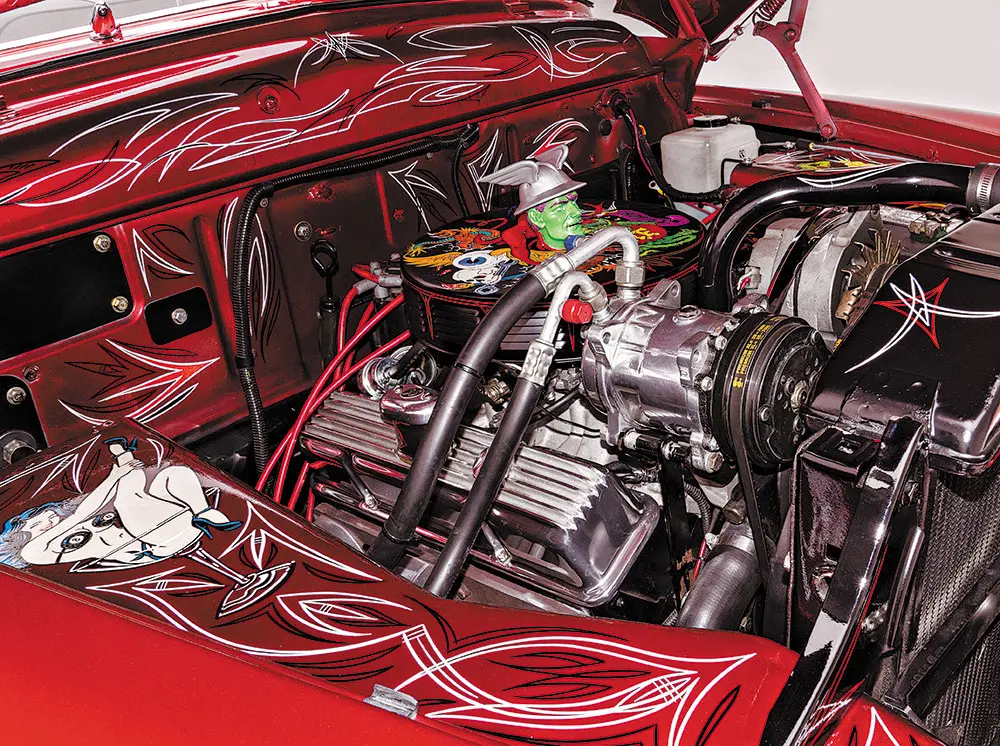
Bill Schuster & Sons in Laguna Beach, California, was responsible for dropping the 2012 GM Performance Parts Chevy 350-ci crate engine and GM Turbo 400 automatic transmission between the frame rails. Then the engine and transmission were wired, plumbed and tuned for maximum performance.
CISCO CAN BE SEEN AT MANY SOCAL CRUISE NIGHTS AND CAR SHOWS ROLLING IN HIS IMMACULATE CANDY APPLE RED ’51 RATMERC THAT TOOK SIX YEARS TO COMPLETE.”
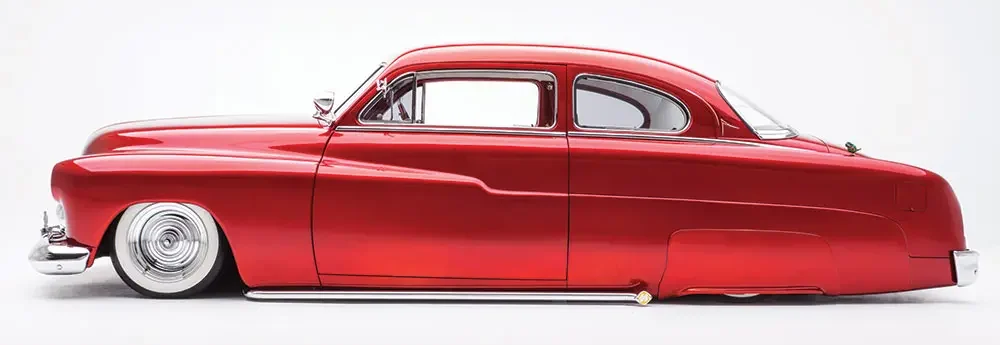
Numerous custom body mods were accomplished by Frank’s Body Shop in Henderson, Nevada, including shaving the door handles, frenching the headlights and taillights, and installing a 1953 DeSoto grille and a custom pair of rear wheel skirts. The crew at Frank’s Body Shop applied primer, and then block-sanded every square inch of the Merc’s skin smooth and straight. House of Kolor sealer was applied to serve as a barrier between the basecoat and primer. The incredible color was achieved by spraying House of Kolor Orion Silver Pearl and then covering it with House of Kolor Candy Apple Red. After color sanding the basecoat, it was buried in eight coats of House of Kolor Clear.
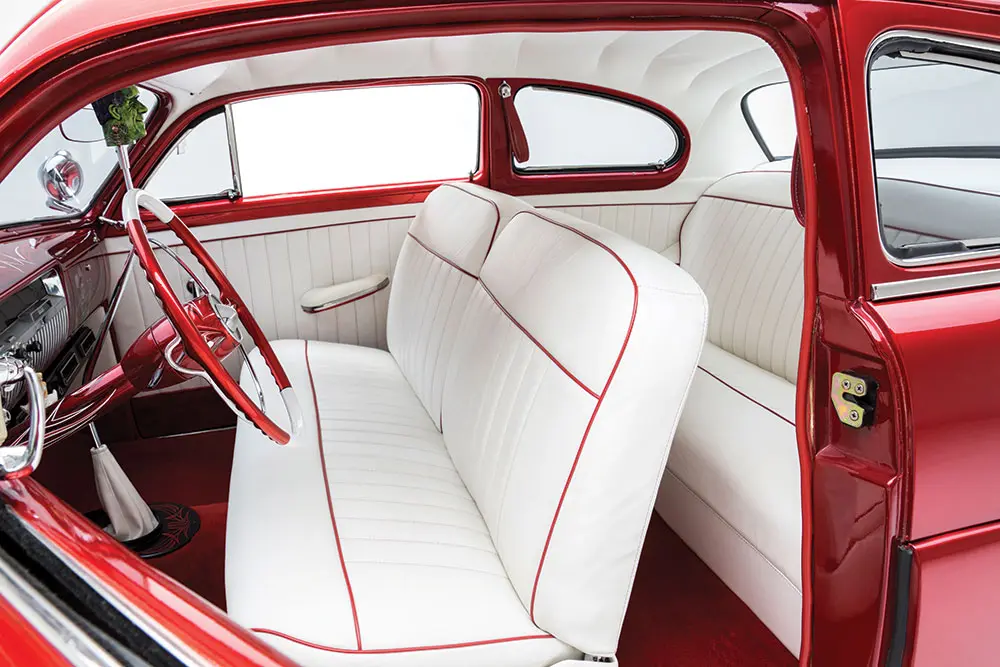
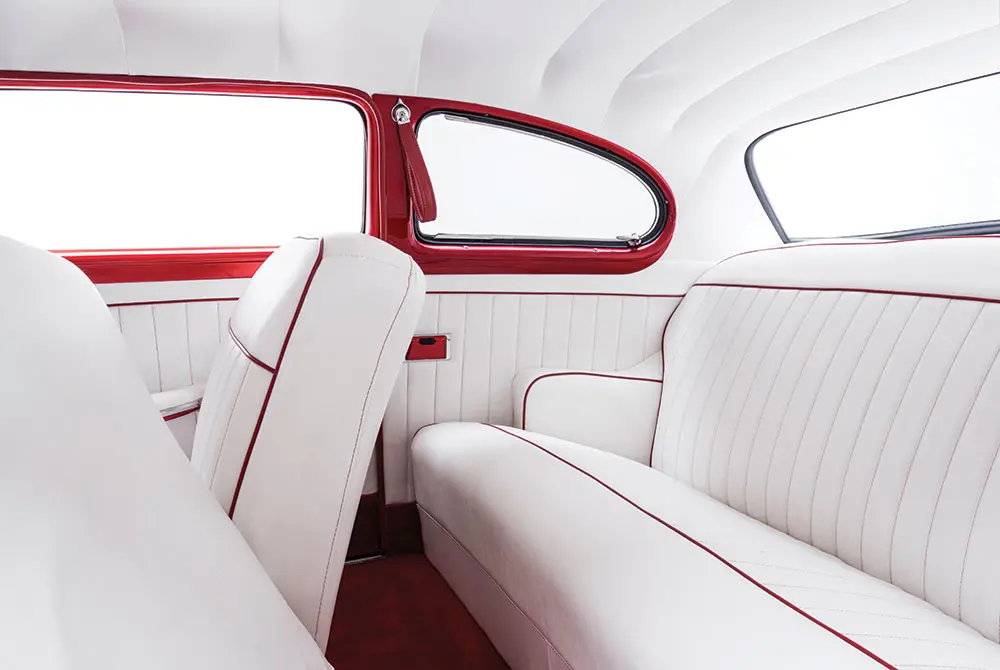
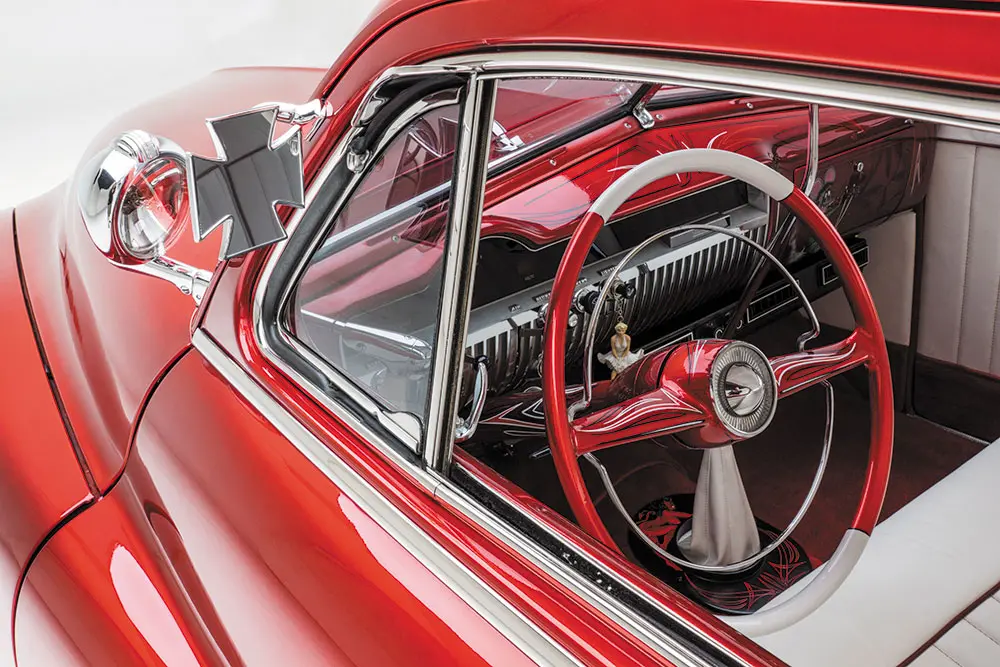
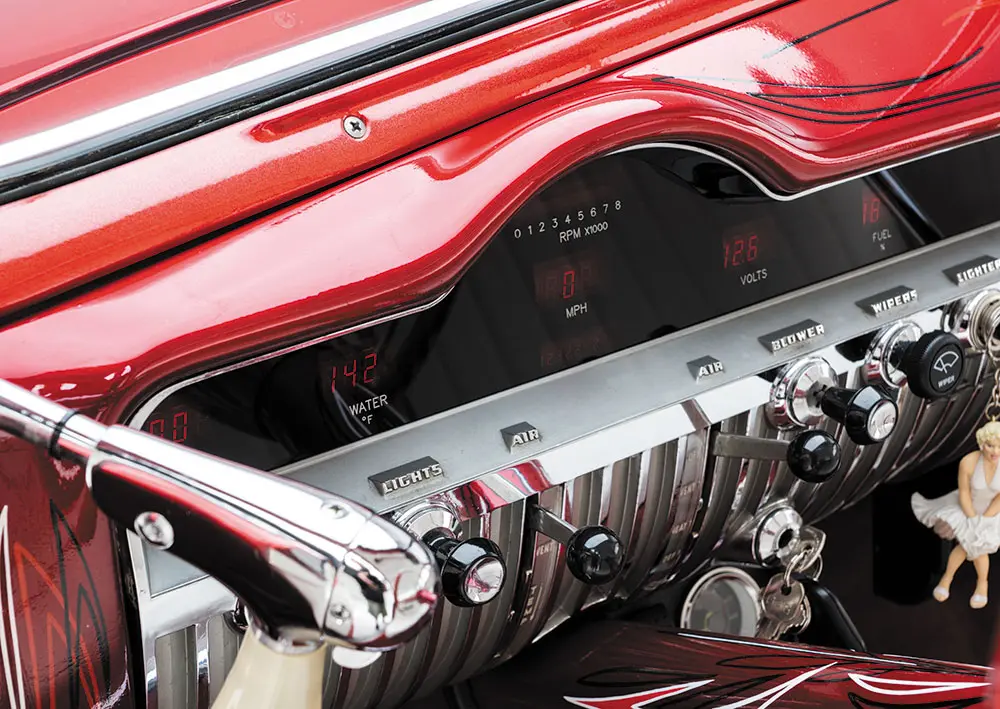
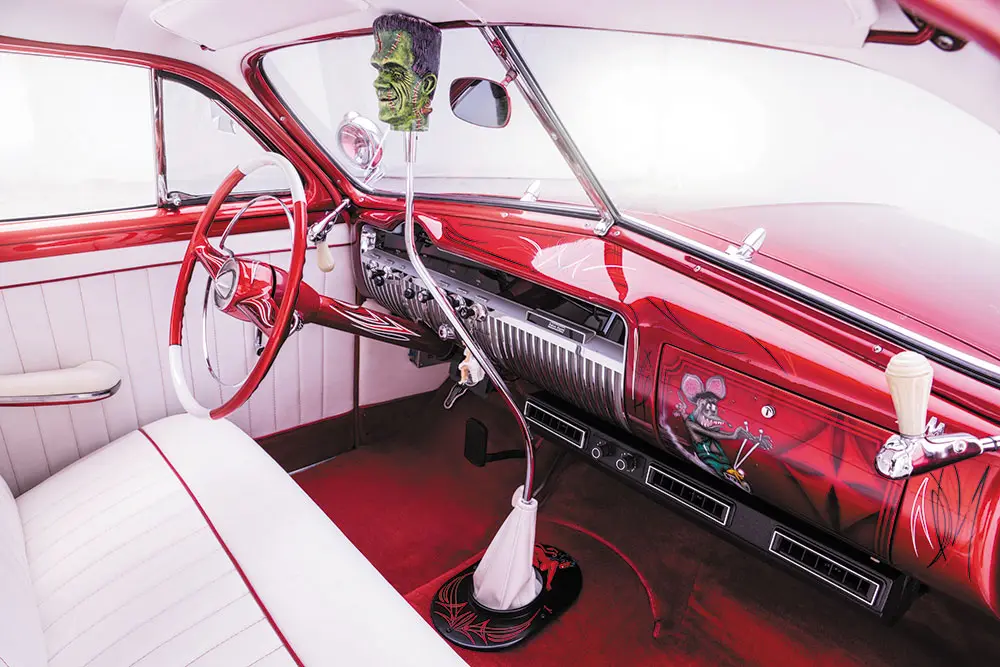
Just as the exterior showed its ’50s custom styling, the interior was just as period correct. The factory dash received Dakota Digital gauges, Vintage Air under-dash vents. The factory steering column was capped by the refurbished original 18-inch diameter steering wheel. A layer of Dynamat sound deadening material was laid down to help eliminate engine heat and road noise. The Merc came from the factory with no radio, so that was the way Cisco kept it—no audio.
Cisco can be seen at many SoCal cruise nights and car shows rolling in his immaculate Candy Apple Red ’51 RatMerc that took six years to complete. RatMerc is definitely not a trailer queen.
OWNER: Cisco Farias, Laguna Beach, CA
BUILDER: Bill Schuster & Sons Laguna Beach, CA and Ponch “The Bag Man” Silva, Anaheim, CA
FRAME: Stock
REAR FRAME RAILS: The Bag Man 2 ½-inch C-notches
FRONT: Bag Man control arms kit, 2-inch dropped spindles and bellows-style airbags; Pete & Jakes gas-filled shocks; Bag Man solenoids, manifold, valves, compressor, air tank and air-lines
STEERING: Manual
REAR: Total Cost Involved (TCI) 4-link with track bar, Bag Man bellows-style airbags, Pete & Jakes gas-filled shocks
REAREND HOUSING: Ford 9-inch stuffed with 2.47 gears
FRONT: ABS 12-inch disc brake rotors, single-piston calipers and electric master cylinder
REAR: ABS 12-inch disc brake rotors and single-piston calipers
FRONT: Wheel Smith chrome Smoothies (15×7)
REAR: Wheel Smith chrome Smoothies (15×7)
Coker BF Goodrich Silver Town whitewall radials
FRONT: P185/70R-15
REAR: P185/70R-15
ENGINE
Bill Schuster and Sons Laguna Beach, CA
GM Performance Parts Chevrolet 2012 350-ci crate engine
CARBURETOR: Carter AFB Competition series
INTAKE MANIFOLD: Edelbrock Performer, aluminum
HEADERS: Sanderson 2-inch diameter, block hugger, ceramic coated
MUFFLERS: Speedway Motors Smithy 22-inch glass packs
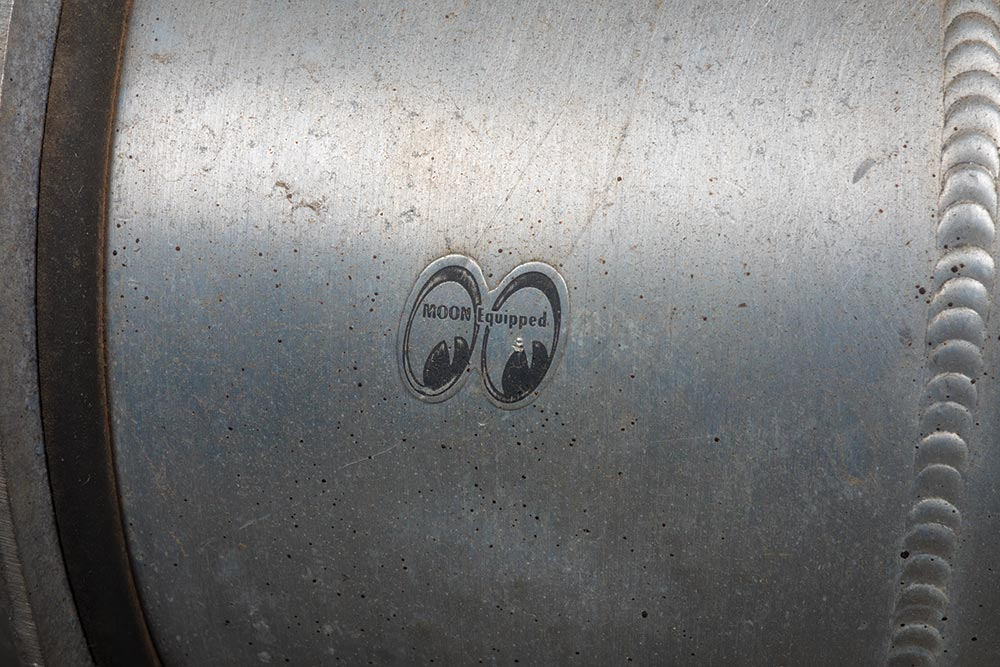
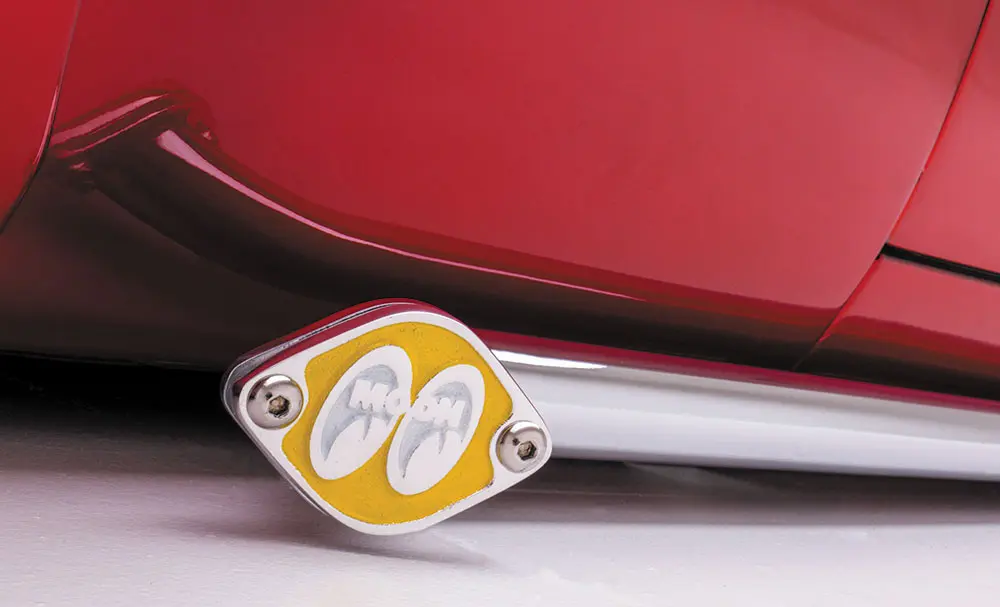
SIDE EXHAUST: Mooneyes lake pipes
TRANSMISSION: GM Turbo 400 automatic
Frank’s Body Shop Henderson, NV
DOOR HANDLES: shaved
HEADLIGHTS: Frenched
REAR SKIRTS: custom
FRONT BUMPER: 1951 Merc Custom
REAR BUMPER: 1951 Merc Custom
GRILLE: 1953 DeSoto SIDE MIRRORS: Mooneyes iron cross
SPOT LIGHTS: 1951 Mercury factory
PAINT: House of Kolor Candy Apple Red over Silver Pearl
PAINTER: Frank’s Body Shop Henderson, NV
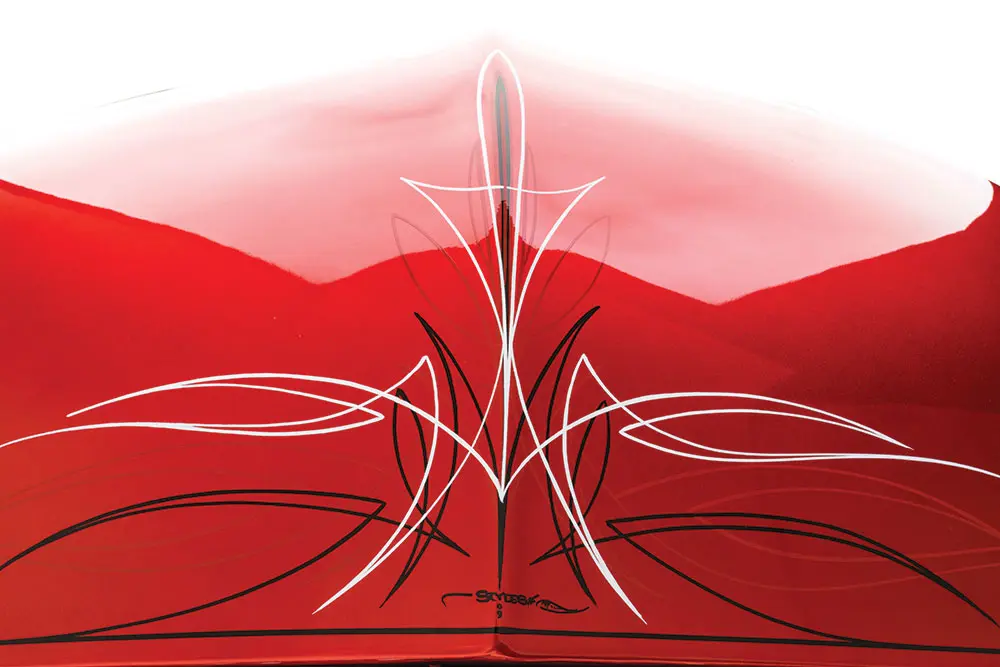
PINSTRIPING: Jimmy C Customs, styles, pinstripping and customs
Mission Viejo Interiors, Mission Viejo, CA
SEATS: White Italian leather, with tuck-n-roll inserts and red piping
DOOR PANELS: White Italian leather, with tuck-n-roll inserts
HEADLINER: White Italian leather
CARPET: Red
STEERING WHEEL: 1951 Mercury factory
SHIFTER: Lokar long gooseneck
GAUGES: Dakota Digital
AIR CONDITIONING: Vintage Air
Truck operations rarely leave room for unexpected stops. Long routes, heavy cargo, and tight delivery schedules put constant pressure on equipment and maintenance teams. Even a small failure may delay deliveries and increase operating costs. Because of that, more transport companies focus on preventive maintenance instead of reacting only after problems appear.
A well-planned replacement strategy helps keep trucks moving and improves fleet performance.
Some components need attention more often because they work under constant stress during daily transport operations.
The most frequently checked areas include:
Regular inspections make it easier to identify wear before it turns into a larger problem.
Many transport companies use stores such as Big Rig World when looking for truck parts, maintenance components, and equipment dedicated to long-haul fleet operations.
Unexpected breakdowns during transport often cost more than planned maintenance. A truck standing on the route affects schedules, customers, and overall fleet efficiency.
Routine inspections help companies:
This approach gives operators more control and reduces emergency repairs.
Many transport businesses keep frequently used components available in their own service areas. This helps shorten repair times and avoids waiting for deliveries.
Commonly stored parts include:
The right stock level depends on fleet size, route type, and operating conditions.
Choosing parts only by price may reduce costs at first, but it often leads to shorter service intervals and more maintenance work later.
When selecting components, companies should consider:
Good-quality parts usually improve reliability over longer periods.
Companies that track wear patterns and plan replacements in advance usually experience fewer emergency stops.
More operators now combine maintenance schedules with monitoring systems and service records. This helps detect risks earlier and prepare repairs before failures happen. Good maintenance planning also improves workshop organization and vehicle availability.